Feeders and Mineral on Iowa Public Ground
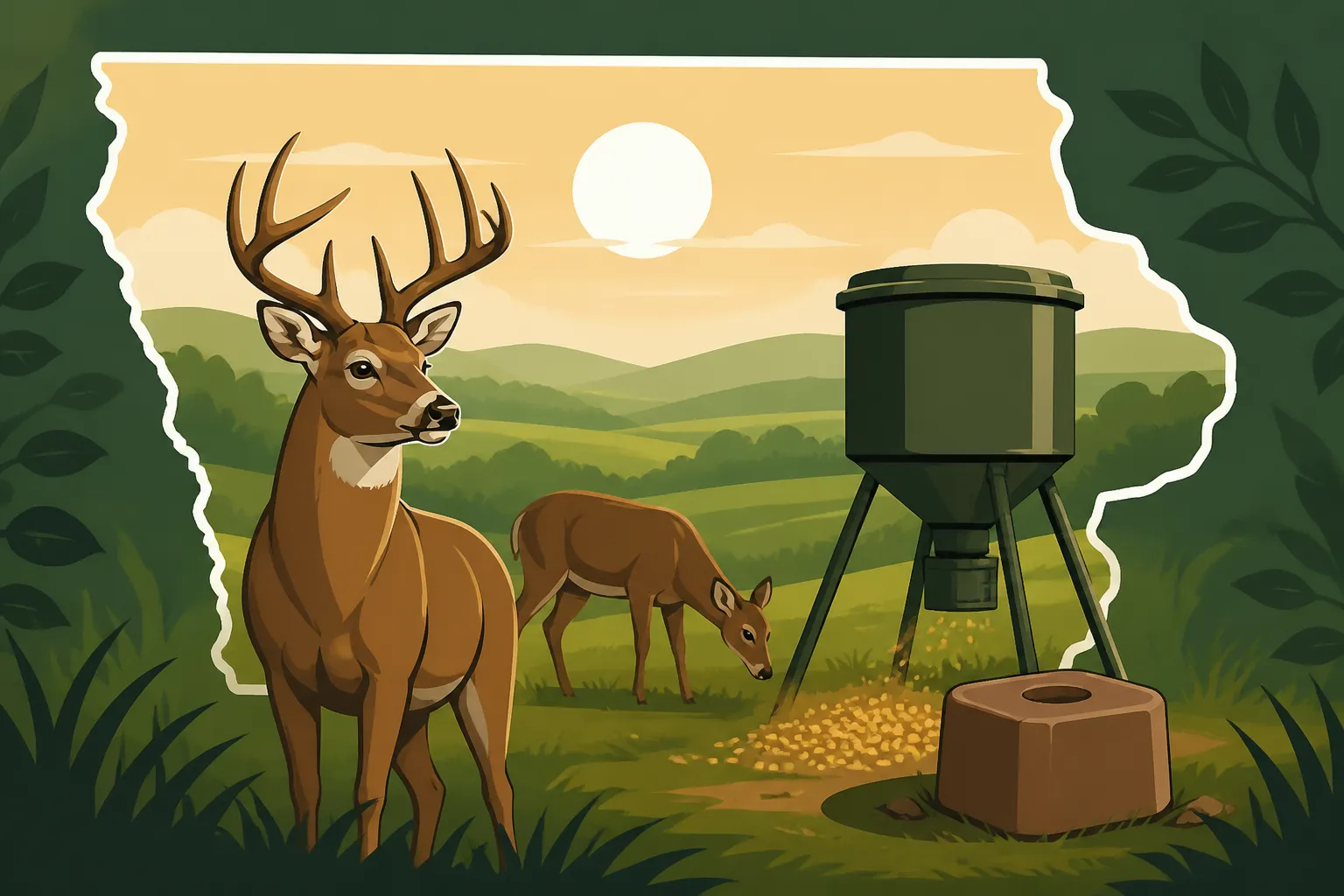
It's completely understandable to look for any advantage you can get when you're pursuing whitetails, especially those legendary Iowa giants. You see products everywhere promising to bring deer right to your stand, and the thought of giving nature a little boost, especially on those tough public land hunts, is certainly tempting. However, when it comes to feeders and mineral licks on Iowa's public hunting ground, the rules are very clear, and understanding them is crucial for a legal and ethical hunt. This guide will walk you through exactly what Iowa's baiting regulations mean for public land hunters and offer legal, effective alternatives to help you find success.
The Allure of Attractants: Why Hunters Seek an Edge
Every hunter, at some point, has probably dreamed of finding that magic bullet—a way to consistently pull deer into their hunting area. Whether it's the frustration of slow days, the desire to put food on the table, or the ambition to tag a true trophy, the idea of enhancing your hunting spot with supplemental feed or minerals holds a strong appeal. It feels like a logical step: if deer need nutrition, and you provide it, they'll come.
The Dream of Boosting Your Odds
We all want to increase our chances, right? Watching videos of deer piling into a feeder or seeing trail camera pictures of bucks hitting a mineral lick can make you think, "If only I could do that on my hunting spot!" The sheer convenience of placing something out and having deer show up regularly is a powerful draw. It seems like a shortcut to consistent deer sightings and a way to improve the health and antler growth of the local herd. For hunters who are time-strapped or facing heavily pressured areas, this kind of supplemental attraction might feel like the only way to compete.
You might even be thinking about how it could help you get better pictures of deer, understand their patterns, or simply keep them around your property longer. The marketing for these products is often very persuasive, showing impressive results. It’s easy to get caught up in the idea that these attractants are just another tool in your hunting arsenal, similar to a good pair of binoculars or a grunt tube. And on private land, where rules often differ, this can sometimes be true, opening up a different set of considerations for landowners.
The Reality of Iowa's Public Land
Here's where the dream often collides with reality, especially for those of us who spend a lot of time on Iowa's public hunting grounds. While the desire to attract and hold deer is universal, the methods legally available to achieve that goal are vastly different between private and public land in Iowa. The stark truth is that the use of feeders, mineral licks, and any form of baiting is strictly prohibited on all public hunting land in Iowa. This isn't just a recommendation; it's a regulation that carries serious consequences if violated.
This reality can be a tough pill to swallow, particularly if you’ve seen or heard of these tactics being used elsewhere. It means that the strategies you employ on public ground must lean heavily on your scouting skills, understanding of deer behavior, and ability to read the landscape. There are no shortcuts with corn piles or mineral blocks when you're hunting state forests, wildlife management areas, or Iowa's Habitat and Access Program (IHAP) lands. The playing field is leveled, and success relies on your woodsmanship rather than artificial attractants.
Iowa's Strict Stance: What "Baiting" Really Means on Public Ground
Iowa takes a very firm stance on baiting for deer, particularly on its public lands. This isn't to say that the state doesn't want hunters to be successful; rather, these regulations are rooted in principles of fair chase, herd health, and ensuring a level playing field for all who share our cherished public hunting spaces. Understanding the precise definition of "baiting" and why these rules exist is paramount for any ethical and legal hunter.
Defining Bait and Attractants
In Iowa, "bait" is generally defined as any material, whether edible or not, that is used to attract or entice wild animals. This isn't just limited to corn, apples, or other food items that deer might eat. It extends to mineral licks, salt blocks, protein pellets, and even some highly scented commercial attractants that are designed to lure deer in. The key is intent: if you've placed something out with the purpose of drawing deer to a specific spot, it most likely falls under the definition of baiting.
It's a common misconception that if deer aren't actively consuming it, or if it's "just" a mineral block, it might be okay. That's simply not the case on public land in Iowa. The regulations are designed to prevent any artificial manipulation of deer movement or concentration. Even a small mineral block, which seems harmless, is still considered an attractant and therefore illegal on public hunting grounds. You can find more specific details about these restrictions, including what constitutes an illegal baiting site, by exploring resources like Iowa Public Land Baiting Rules.
Let's break down some common items and practices:
| Item/Practice | Public Land Legality in Iowa | Explanation |
|---|---|---|
| Corn Pile / Grain / Food Scraps | Illegal | Any placed food intended to attract deer. This includes leftovers, pet food, or agricultural products not part of normal farming operations at that site. |
| Mineral Block / Lick | Illegal | Designed to attract deer for mineral intake, it's considered an attractant. This applies to all forms, including granular mineral supplements. |
| Salt Block | Illegal | Similar to mineral blocks, salt is a powerful attractant and falls under the baiting prohibition. |
| Commercial Scent Attractants | Generally Legal | Scent-based lures, such as deer urine or synthetic curiosity scents, are typically not considered bait as long as they do not contain edible material or provide a nutritional supplement, and are not meant for consumption. Always check current regulations for specifics. |
| Food Plots | Illegal (on public land) | While legal and popular on private land, establishing food plots on public land is generally prohibited as it constitutes altering the habitat to attract game. |
This table serves as a quick reference, but remember, laws can be nuanced. If there's ever a question, assume it's prohibited on public land or consult the Iowa DNR directly.
Why the Rules Exist: Fair Chase and Herd Health
The regulations against baiting on public land aren't arbitrary; they're in place for several critical reasons that benefit both the deer herd and the hunting community. One of the primary motivations is to uphold the principle of fair chase. Fair chase is a cornerstone of ethical hunting, meaning that hunters should not have an unfair advantage over the animal. When deer are habituated to a stationary food source, they become predictable and easier targets, which many argue diminishes the challenge and inherent value of the hunt. It shifts the emphasis from skill and woodsmanship to simply waiting at a feeding station.
Beyond ethics, public health of the deer herd is a major concern. When deer congregate unnaturally at bait sites or mineral licks, the risk of disease transmission skyrockets. Chronic Wasting Disease in Iowa Deer (CWD) is a persistent and devastating neurological disease that can spread rapidly through direct contact or contaminated environments. By preventing artificial concentrations of deer, Iowa aims to slow the potential spread of CWD and other illnesses, protecting the long-term health and viability of the state's deer population. For more details on regulatory considerations, you might look into Natural Resource Commission Rule Meetings, where these decisions are often discussed.
Furthermore, baiting on public land can lead to increased conflicts between hunters. If one hunter establishes a bait site, it can draw deer away from other hunters who are playing by the rules, creating resentment and an inequitable distribution of hunting opportunities. It also often results in over-pressuring certain areas, making deer more nocturnal and harder to hunt for everyone in the long run.
Consequences of Violating Baiting Regulations
Ignoring Iowa's baiting regulations on public land is not just an ethical misstep; it's a serious legal offense with tangible penalties. If caught, you could face fines, forfeiture of your hunting equipment (including your firearm or bow), and even the loss of your hunting privileges for a significant period. These consequences are designed to be deterrents, underscoring the importance of adherence to the law.
Imagine spending months scouting, preparing your gear, and finally getting out into the timber for opening day. Now imagine losing your hard-earned hunting license and facing a hefty fine, all because you tried to bend the rules with a bag of corn. It's simply not worth the risk. Enforcement officers are well-versed in spotting baiting activity, often using surveillance and responding to tips from observant, ethical hunters. The best way to ensure you have a legal and enjoyable hunting season is to strictly adhere to all regulations, especially those concerning baiting on public land.
Beyond the Bucket: Legal Strategies for Public Land Success
So, if you can't put out feeders or mineral blocks, how do you successfully hunt deer on Iowa's public land? The answer lies in honing your traditional hunting skills, becoming a student of the land, and understanding natural deer behavior. It's about working smarter, not harder, within the legal framework. This approach often leads to more rewarding hunts and a deeper connection to the natural environment.
Deep Dive into E-Scouting and Physical Scouting
The foundation of successful public land hunting in Iowa is meticulous scouting. You don't need a feed pile to know where the deer are; you need to know how to interpret the landscape they live in. Start with what's often called "e-scouting"—using mapping tools from the comfort of your home. Platforms like onX Hunt or GoHunt allow you to scrutinize aerial imagery, topographical maps, and public land boundaries. You can identify potential bedding areas, likely travel corridors, natural funnels, and water sources without ever stepping foot in the woods. Look for changes in timber density, drainage ditches that act as deer highways, or the edges of dense cover that border agricultural fields. Reading Aerial Imagery for Bedding Cover is a fantastic starting point for this.
Once you've identified promising areas on your digital maps, it's time for boots-on-the-ground scouting. This means walking the areas you've pinpointed, looking for actual deer sign: rubs, scrapes, tracks, and droppings. Pay attention to how deer move through the terrain. Are there subtle elevation changes, thickets, or creek bottoms that offer cover and dictate their paths? Scouting Iowa Public Land Before the Opener can provide a comprehensive approach to getting this done effectively. During the pre-season, focus on finding those key natural food sources that deer will be utilizing during your hunt.
Understanding Natural Food and Cover
Deer are creatures of habit, driven by their needs for food, water, and cover. On public land, your job is to find where these three elements converge naturally. Iowa's landscape, even its public parcels, is rich with diverse food sources. In the early season, deer might be focused on various soft mast (like acorns, wild grapes, or apples from old homesteads) or browse (tender shoots and leaves). As the season progresses into late fall and winter, attention often shifts to hard mast, waste grain in picked crop fields adjacent to public ground, or evergreens that provide year-round browse.
Understanding the cycle of natural food sources is critical. For example, a stand of oaks dropping acorns can be a magnet in early to mid-fall, but once those acorns are gone, deer will move to the next available food. Similarly, knowing where thick cover like Cedar and Locust Thickets as Bedding Cover or dense CRP Grass and Where Bucks Bed exists is vital. Deer will bed in these areas for security and only venture out when hungry or to breed. Your ability to find and interpret these natural resources is your biggest asset.
Capitalizing on Habitat Features and Travel Routes
Deer use topography and vegetation to their advantage, creating predictable travel routes between bedding, feeding, and watering areas. Your goal is to identify these natural funnels and pinch points. Think about how deer will navigate a ridge system, cross a creek, or move along the edge of a thick bedding area. Features like saddles between ridges, narrow timber strips connecting larger blocks of woods, or even fence crossings can be high-traffic zones. Hunting Saddles and Pinch Points in Rolling Timber is an excellent resource for understanding these dynamics.
Consider the prevailing wind and thermal currents in your chosen area. Deer rely heavily on their sense of smell, so understanding how air currents move through the terrain is paramount. In river bottom areas, for instance, thermals often rise in the morning and fall in the evening, affecting how deer approach and leave certain spots. By setting up in locations that funnel deer past you while keeping your scent out of their primary travel lanes, you drastically increase your chances. Also, think about how hunting pressure might influence these routes. Hunting Pressure Patterns on Iowa Public Land explores how deer adapt to human activity, often moving more cautiously or at different times.
Ethical Use of Technology
Even without bait, modern technology offers incredible tools to help you become a more effective public land hunter. We've already touched on mapping apps like onX Hunt, which can be invaluable for pinpointing property lines, identifying habitat features, and even tracking your movements. These apps often have layers that show public land boundaries, helping you avoid accidental trespass and ensuring you're hunting legally. E-Scouting Iowa Farm Country From Home is a powerful technique that relies heavily on these digital resources.
Trail cameras are another fantastic tool, and they are legal on Iowa public land as long as they are not used in conjunction with bait. Deploying cameras on rubs, scrapes, or natural travel corridors can give you incredible insight into deer movement patterns, preferred times of day, and the specific bucks in an area. Remember to place them discreetly and be mindful of other hunters. For best results, consult resources on Trail Camera Placement on Iowa Public Land to maximize their effectiveness. Used ethically, technology can significantly enhance your understanding of deer activity without breaking any baiting rules.
| Legal Public Land Scouting/Hunting Tools & Tactics | How They Help |
|---|---|
| Mapping Apps (onX Hunt, GoHunt) | Identify property lines, access points, timber features, water sources, elevation changes, and potential deer funnels. Plan routes without disturbing deer. |
| Binoculars/Spotting Scope | Glass distant food sources, observe deer movement from afar, and identify potential bedding areas without alerting game. |
| Trail Cameras (without bait) | Monitor deer activity, identify individual bucks, determine travel patterns, and understand timing of movement on natural sign like scrapes or rubs. |
| Scent-Free Clothing/Washes | Minimize human odor, which is critical for getting close to deer without detection, especially in pressured environments. |
| Wind Checker | Accurately determine wind direction to plan your approach and stand placement, ensuring your scent is carried away from deer. |
| Detailed Physical Scouting | Confirm e-scouting observations, find fresh sign (tracks, rubs, scrapes), locate natural food sources, and identify bedding areas. |
| Understanding Weather Patterns | Predict deer movement based on cold fronts, rain, snow, and wind shifts, allowing you to be in the right place at the right time. |
By embracing these legal and ethical strategies, you not only stay compliant with Iowa's regulations but also develop a deeper set of hunting skills. Success on public land, without the aid of artificial attractants, is incredibly rewarding and a testament to your dedication and understanding of the wild. It might be challenging, but the sense of accomplishment is unmatched when you connect with an Iowa whitetail that you've outsmarted on its own terms.
Disclaimer
This article is for general informational purposes only and does not constitute professional advice. Laws, prices and regulations vary by location and change over time. Consult a qualified professional for guidance on your specific situation.