Driftless Area Public Land in Iowa
Hunting the rugged, bluff-ridden terrain of Iowa's Driftless Area can feel like stepping into a different state, and many hunters struggle to pinpoint exactly where they can legally access public ground that truly reflects this unique landscape. This guide is dedicated to helping you unravel the mysteries of public land access in Iowa's Driftless region, equipping you with the knowledge and tools to confidently explore and hunt these unique, often overlooked, and incredibly rewarding lands. We'll delve into the specific types of public areas available, how to locate them, and practical strategies for pursuing game in this distinctive, challenging environment.
Understanding the Iowa Driftless Area's Unique Landscape
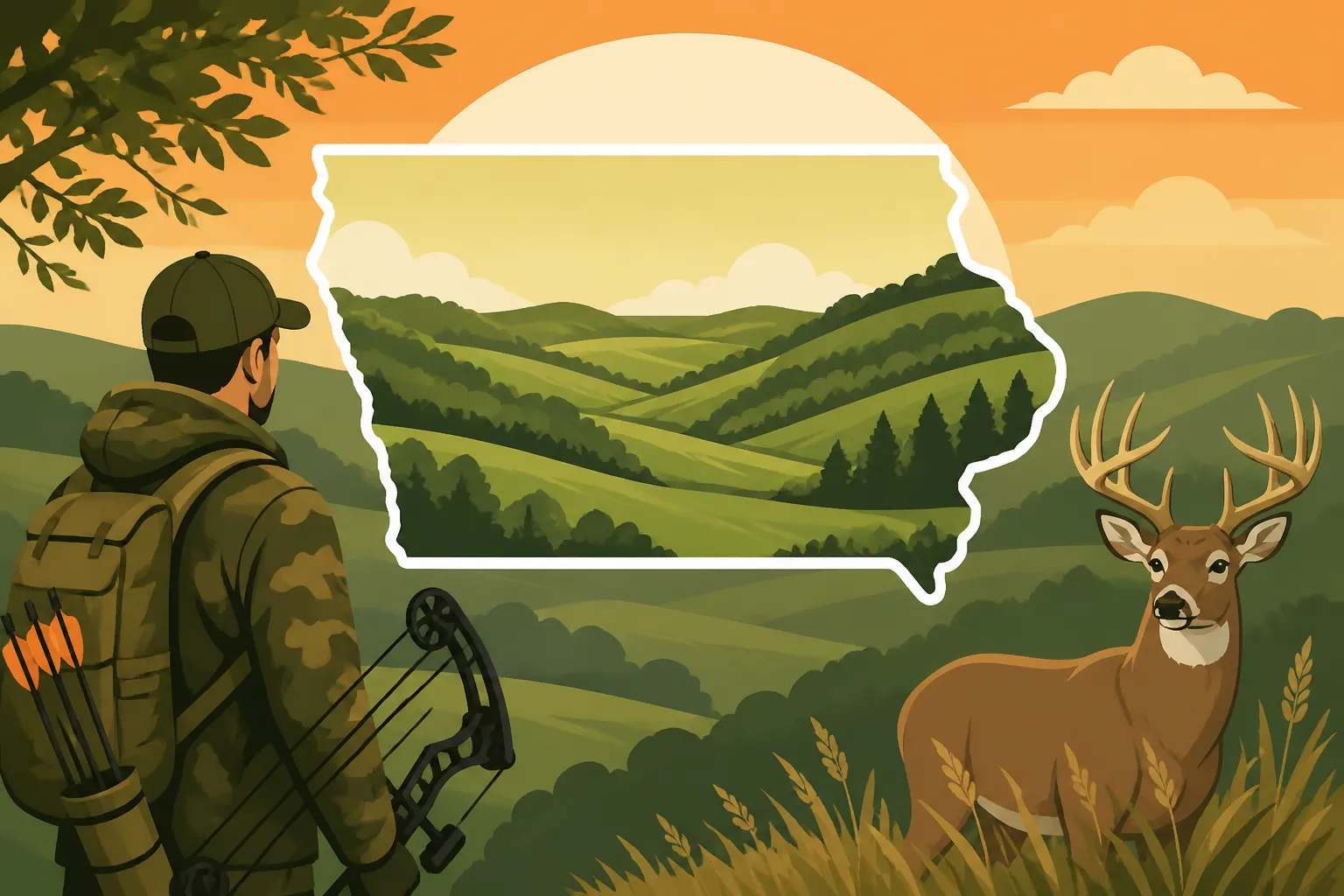
The Driftless Area is a geological marvel, an unglaciated region spanning parts of Wisconsin, Minnesota, Illinois, and, crucially, Northeast Iowa. Unlike much of the surrounding Midwest, this area was untouched by the last glacial advance, resulting in a dramatic landscape of steep bluffs, deeply cut river valleys, cold-water streams, and dense timber. This isn't your typical flat Iowa farmland; it's a world unto itself, and understanding its unique features is the first step to successfully hunting it.
Geological Formations and Their Impact on Wildlife
Imagine towering limestone bluffs, some hundreds of feet high, carved by ancient rivers, not glaciers. This is the hallmark of the Driftless. These bluffs create significant elevation changes, resulting in diverse microclimates and vegetation patterns. North-facing slopes often retain more moisture, harboring dense stands of hemlock or pine in some areas, while south-facing slopes are typically drier and sunnier, supporting oaks and hickories. The deeply incised valleys mean that creeks and rivers are often tucked away, creating natural travel corridors and providing consistent water sources for wildlife. This rugged topography also limits agricultural development in many places, preserving larger blocks of continuous timber and making it a haven for deer and turkeys that thrive on escape cover and diverse forage. Northeast Iowa Driftless Hunting truly offers a distinct experience.
For deer, these geological features dictate movement. Bucks will often bed on benches high up on bluff faces, using the elevation to spot danger below and the swirling winds to detect threats above. They’ll utilize the steep draws and finger ridges to travel unseen, moving between bedding areas and the agricultural fields or timbered food sources found on the flatter ground above or in the valley bottoms. Turkeys, too, adapt to this vertical world, roosting in tall timber along bluff lines and pitching down into valleys to feed. The dense understory and varied terrain provide excellent cover, but also make visibility challenging for hunters.
Key Habitat Types for Deer, Turkey, and Small Game
Within the Driftless, you'll find a mosaic of habitats crucial for wildlife. The dominant feature is deciduous timber, primarily oaks, maples, and hickories, which provide critical hard mast for deer and squirrels. Interspersed are cedar thickets and brushy draws that offer thermal cover in winter and security year-round. Along the valley floors, especially near the Mississippi River or its tributaries, you might encounter wetlands, river bottom timber, and even some agricultural fields bordering public land.
For white-tailed deer, the steep timbered slopes are primary bedding and security cover. They'll use the ridgetops for travel, especially during the rut, and descend into creek bottoms or agricultural edges to feed. Wild turkeys are abundant, finding ideal roosting sites on bluff-top trees and foraging in the open timber, pastures, and crop fields that often intersperse the public holdings. Small game, like squirrels and rabbits, thrive in the oak and hickory forests and the dense brush piles found in many clearings or edges. Even ruffed grouse, a rare sight in most of Iowa, can occasionally be found in the younger forest growth found in some of the more remote Driftless areas, clinging to their last strongholds.
Navigating Public Access in the Driftless
Finding public land in a new or unfamiliar area can be daunting, and the Driftless Area, with its patchwork of state forests, wildlife management areas, and federal lands, is no exception. It’s not always as straightforward as seeing a big block of green on a map. You need the right tools and a solid understanding of what kind of public access Iowa offers to truly unlock its potential.
Types of Public Land Available to Hunters
Iowa’s Driftless Area provides a fantastic array of public hunting opportunities, each with its own nuances. Understanding these categories is key to planning your hunt effectively.
- State Forests: Areas like Yellow River State Forest are jewels of the Driftless, offering thousands of acres of contiguous timber. These are managed for timber production, recreation, and wildlife. They generally provide excellent deer and turkey hunting, with plenty of steep terrain, thick cover, and natural food sources. Hunting pressure can be high near access points, but the sheer size allows for deep penetration to find solitude. For specific locations, you might look into Yellow River State Forest Hunting.
- Wildlife Management Areas (WMAs): Scattered throughout the Driftless, WMAs are acquired and managed specifically for wildlife habitat and public recreation, including hunting. These vary in size and habitat, from small timber blocks to river bottom parcels and even some grassland areas. They often have good populations of deer, turkey, and upland birds. These areas are typically well-marked and offer established parking.
- County Conservation Board Areas: Many counties in the Driftless region have their own conservation areas. While often smaller than state forests or WMAs, these can be hidden gems, providing excellent local hunting. It's crucial to check individual county rules, as regulations can vary regarding weapon types, specific hunting seasons, or even closures for other recreational uses.
- Federal Lands (e.g., Corps of Engineers, Upper Mississippi River National Wildlife and Fish Refuge): Along the Mississippi River, you'll find federal lands managed by agencies like the U.S. Army Corps of Engineers and the U.S. Fish and Wildlife Service. These areas often consist of river bottom forests, islands, and backwater sloughs, providing excellent habitat for waterfowl, deer, and turkeys. Specific regulations for these federal lands can differ from state rules, so always do your homework. Upper Mississippi Refuge Hunting Rules is a good resource to check.
| Public Land Type | Typical Size | Dominant Habitat | Common Game Species | Access & Regulations |
|---|---|---|---|---|
| State Forests | Large (1,000s+ ac) | Deciduous Timber, Bluffs | Deer, Turkey, Squirrel | Well-marked, general state rules, some restricted areas |
| Wildlife Management Areas | Medium (100s-1000s ac) | Varied (Timber, Wetland, Grass) | Deer, Turkey, Upland Birds, Waterfowl | Well-marked, state rules, specific area regulations apply |
| County Conservation Areas | Small (10s-100s ac) | Varied (Timber, Park-like) | Deer, Turkey, Small Game | Variable signage, check county-specific rules |
| Federal Lands (e.g., USFWS) | Large (100s-1000s ac) | River Bottoms, Wetlands | Waterfowl, Deer, Turkey | Federal regulations apply, can be complex to navigate |
Tools and Strategies for Identifying Huntable Ground
In today's hunting world, digital mapping tools are your best friend, especially when tackling complex terrain like the Driftless. Gone are the days of relying solely on paper maps, though a physical backup is never a bad idea.
Applications like onX Hunt are invaluable for identifying public land boundaries, property lines, and topographic features. With a few taps on your phone, you can see exactly where public land begins and ends, preventing accidental trespass. You can also analyze satellite imagery to spot clearings, timber edges, water sources, and potential bedding areas before you ever set foot on the ground. Features like slope shading and 3D views can give you a crucial understanding of the elevation changes, helping you plan your approach and identify natural funnels or pinch points. Many hunters use this to map out Access Routes That Do Not Bump Deer long before the season.
Beyond mapping apps, the Iowa DNR's Hunting Atlas is a fantastic resource. This online tool allows you to filter for different types of public land, view aerial imagery, and often provides specific regulations or notes for each area. Utilizing these resources for E-Scouting Iowa Farm Country From Home is highly effective, allowing you to narrow down potential hunting spots and gain a significant advantage before your boots even hit the dirt. Don't underestimate the power of simply zooming in on Google Earth or other satellite imagery services to get a lay of the land and identify likely access points and cover. Cross-referencing these tools will give you the most comprehensive picture of available ground.
Hunting Strategies for Driftless Public Land
Hunting the Driftless Area demands a different approach than hunting flatter, agricultural regions. The steep terrain, dense cover, and often limited access points require adaptability, physical fitness, and a keen understanding of how deer and turkeys use this unique environment.
Deer Hunting Tactics in Steep Timber and Bluff Country
When hunting deer in the Driftless, think vertical. Deer will utilize elevation to their advantage for security and thermal regulation. During early season, deer might still be relatively patterned around food sources, but as pressure mounts, they will retreat to the steepest, nastiest bluffs.
- Scouting for Sign and Terrain Features: Focus your scouting efforts on finding benches, saddles, and pinch points. Benches are flat areas on a bluff face where deer will often bed or travel. Saddles are dips in a ridge that deer use to cross from one side to another, creating natural travel corridors. Pinch points are narrow strips of cover that funnel deer movement. Look for rubs, scrapes, and heavy trails in these areas. Pay close attention to Saddles and Benches Deer Cross Daily. Learning to read an Iowa timber draw for deer sign is also vital, as these can act as natural highways.
- Playing the Wind and Thermals: Wind is always critical, but in steep terrain, thermals – rising and falling air currents – become equally, if not more, important. In the mornings, as the sun warms the earth, thermals will rise, carrying your scent uphill. In the evenings, as the air cools, thermals will fall, carrying your scent downhill. You must account for both when setting up your stand or planning your approach. Hunting high in the morning and lower in the evening, or vice-versa, depending on your setup and target area, can be crucial. Understanding Wind and Thermals in River Breaks is a must.
- Mobile Hunting and Stand Placement: Due to the challenging terrain and the need to adapt to deer movement, mobile hunting systems like tree saddles or lightweight hang-on stands with climbing sticks are incredibly effective. This allows you to quickly adjust your setup based on current sign, wind direction, and thermal patterns. Don't be afraid to put in the effort to get away from easy access points; the reward is often less pressured deer. When choosing a location, consider shot angles from an elevated stand, as deer might be above or below you more often than on flat ground.
Turkey and Small Game Hunting in the Driftless
The Driftless Area is a turkey hunter's paradise, offering some of Iowa's best spring gobbler hunting. The mix of mature timber, open hardwoods, and occasional fields provides ideal habitat.
- Spring Turkey Strategies: For turkeys, focus on locating roosting sites along bluff lines in the evening. In the morning, try to set up within hearing distance of a roosted bird, calling softly to entice him down. Once on the ground, turkeys in this rugged country often want to come from above if you're in a valley, or stay on the same elevation. Be prepared for aggressive run-and-gun tactics, especially on public land where birds might be pressured. Don't be afraid to cover ground, calling and listening. If you can, try Roosting Iowa Turkeys the Night Before for a morning advantage.
- Small Game Opportunities: For squirrels, the mature oak and hickory forests are prime. Early morning is often best, as squirrels are most active. For rabbits, focus on brushy draws, clearings, and the edges of timber blocks where thick cover meets forage. A good pair of binoculars can help you spot squirrels foraging high in the trees, and a keen eye will pick out rabbits hunkering down in thickets. These hunts are often less about specific tactics and more about covering ground quietly and being observant.
Respecting the Land and Other Users
Hunting on public land is a privilege, not a right, and it comes with responsibilities. In an area as unique and heavily used as the Driftless, it's even more important to practice good stewardship and show respect for the land and your fellow outdoor enthusiasts.
Minimizing Impact and Practicing Leave No Trace
The principles of Leave No Trace are paramount on public hunting lands, especially in areas with sensitive ecosystems like the Driftless. This means packing out everything you pack in, including spent shell casings, food wrappers, and any trash. Avoid cutting new trails or excessive vegetation clearing for shooting lanes. If you're using a treestand, be mindful of portable stand rules on Iowa public ground and try to leave no trace of your presence when you remove it. This also applies to things like flagging tape or reflective tacks; if you use them to mark trails, remove them when you leave.
Proper game retrieval and processing are also part of minimizing impact. If you harvest a deer, focus on getting it out efficiently and cleanly. This might mean quartering a deer in the field to make it easier to pack out, especially if you're deep in a rugged bluff system. Be prepared for Getting a Deer Out of an Iowa Creek Bottom if necessary.
Sharing the Resource: Etiquette and Safety
Public land is for everyone, and you'll likely encounter other hunters, hikers, birdwatchers, and other outdoor enthusiasts. Being courteous and respectful goes a long way. If you see another hunter, give them plenty of space. A simple wave and a wide berth are usually all that's needed. Avoid setting up too close to another hunter's vehicle or known stand location.
Safety is, of course, non-negotiable. Always be aware of your surroundings and your shooting lanes. If hunting during shotgun or muzzleloader seasons, remember Blaze Orange Rules During Iowa Gun Season. Before heading out, especially into remote or rugged areas, it's always wise to let someone know your plans, including your general hunting location and expected return time. This is particularly important when considering Leaving a Trip Plan for a Public Hunt, as cell service can be spotty in the deep valleys of the Driftless. By upholding these standards, we ensure that public lands remain accessible and enjoyable for everyone for generations to come.
Disclaimer
This article is for general informational purposes only and does not constitute professional advice. Laws, prices and regulations vary by location and change over time. Consult a qualified professional for guidance on your specific situation.