Iowa Straight-Wall Bullet Diameter Minimum
Navigating the ever-evolving regulations for deer hunting in Iowa can feel like trying to hit a moving target, especially when it comes to the technical specifics of your ammunition. It's frustrating to invest in a new rifle, only to find out you're running afoul of a seemingly obscure rule. This guide is here to untangle the complexities of Iowa's straight-wall cartridge laws, specifically focusing on the critical bullet diameter minimum, so you can head to the woods with confidence and compliance.
Decoding Iowa's Straight-Wall Rifle Regulations
For years, Iowa hunters were largely limited to shotguns, muzzleloaders, and archery equipment for deer. The introduction of straight-wall cartridge rifles was a game-changer for many, offering increased accuracy and range over traditional slug guns. However, with this added flexibility came a new set of rules designed to balance hunter opportunity with public safety and ethical harvesting. It's not just about picking any rifle; it's about picking the right one that fits the legal parameters.
The Basics: Why Straight-Wall?
The primary reason behind Iowa's adoption of straight-wall cartridge regulations, rather than allowing all centerfire rifles, really boils down to safety. Iowa is a state with a lot of open farmland, but also many towns, scattered homesteads, and areas of diverse land use. Traditional bottlenecked rifle cartridges, like a .30-06 or .270, are known for their extremely long effective range and potential for ricochet, which could pose a safety risk in more populated or mixed-use landscapes. Shotgun slugs, while powerful, have a much more limited effective range, and straight-wall cartridges were seen as a good middle ground. They offer improved ballistics over slugs but still generally have a shorter maximum effective range than many bottlenecked rifle rounds, making them suitable for the unique Iowa landscape. This helps maintain safety for everyone, whether you're hunting deer or just enjoying the outdoors near a hunting area.
Think about it this way: when you're hunting a small timber patch surrounded by picked cornfields and maybe a farmhouse half a mile away, the last thing anyone wants is a bullet traveling for miles. Straight-wall cartridges help mitigate that concern, providing a balance that respects both hunter and non-hunter alike. It's a pragmatic approach to expanding hunting options without compromising safety.
The Specifics: Understanding "Minimum" Diameter
When we talk about a "minimum" bullet diameter for straight-wall cartridges in Iowa, we're not just throwing out a random number. This specific measurement is crucial because it ensures that the projectile being used is substantial enough to ethically harvest a whitetail deer. A bullet that's too small in diameter might not create a sufficient wound channel or deliver enough energy to ensure a quick, humane kill, even if other factors like velocity are high. Iowa's regulations are designed to prevent the use of cartridges that might be seen as underpowered for deer, promoting responsible hunting practices.
Many hunters, especially those new to straight-wall rifles, often focus solely on the cartridge name, assuming if it's "straight-wall," it's good to go. But the devil, as they say, is in the details – specifically, the bullet's actual diameter. There can be slight variations even within cartridges of the same "caliber" designation, so understanding the precise minimum ensures your chosen ammunition meets the intent of the law. It's a common frustration to buy a box of ammo only to realize later that it's a hair off the legal spec. That's why diving into the nuances, like those covered in Iowa Straight-Wall Cartridge Rules, is so important.
The Magic Number: What is the Minimum Diameter?
Alright, let's get down to brass tacks. What exactly is that minimum bullet diameter that Iowa requires for your straight-wall rifle cartridges? This isn't a detail you want to guess at, as non-compliance can lead to serious consequences.
The Official Iowa DNR Requirement
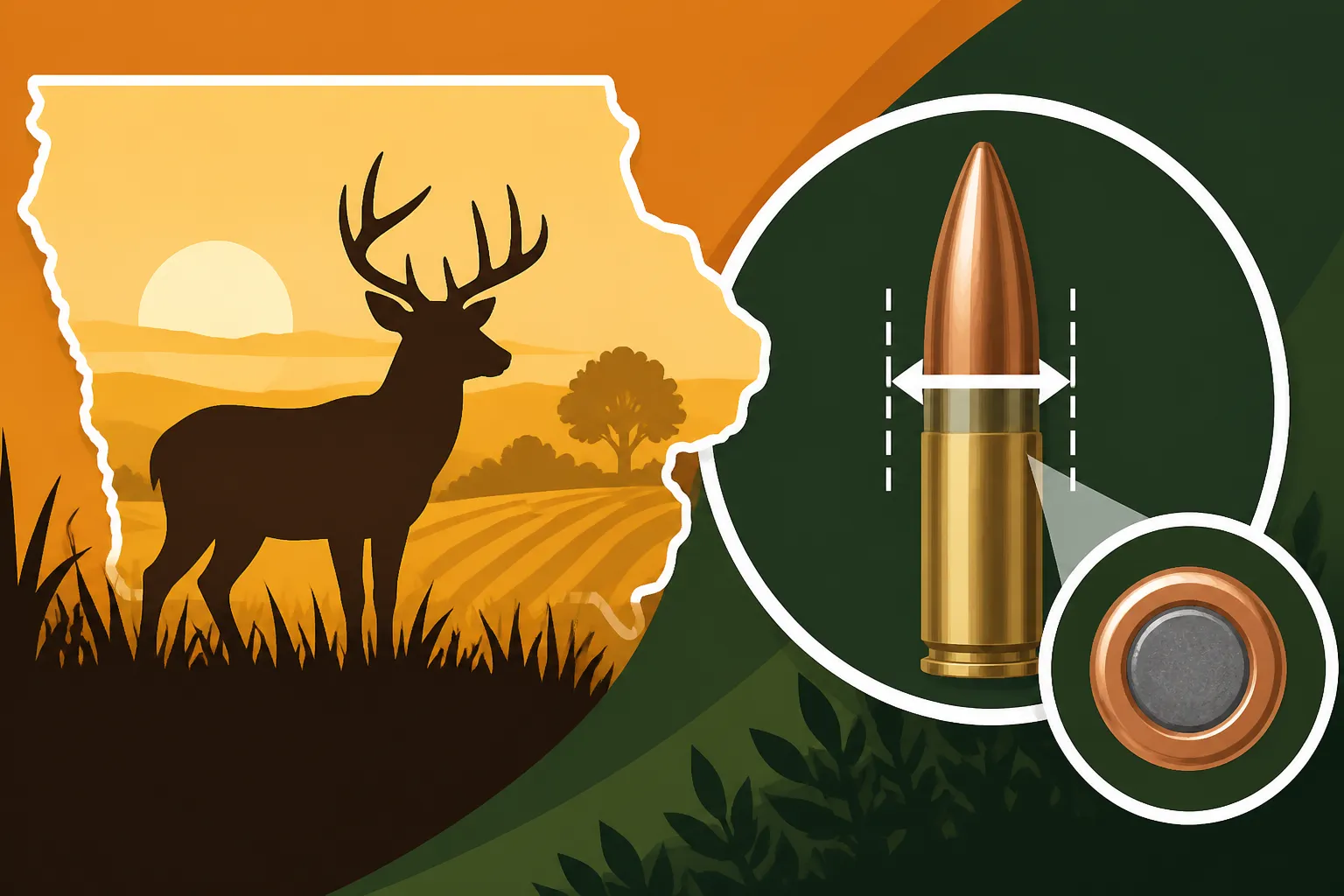
The Iowa Department of Natural Resources (DNR) clearly states that a straight-wall cartridge used for deer hunting must have a bullet diameter of at least .357 inches. This is the lower limit you need to keep in mind when selecting your rifle and ammunition. Anything smaller than this, even by a tiny fraction, is not legal for deer hunting during the straight-wall seasons.
This minimum ensures that the projectile has enough mass and frontal area to be effective on a whitetail. It's part of the comprehensive framework that also includes rules like Iowa's 500 Foot-Pound Energy Rule, all designed to promote ethical hunting. So, what popular cartridges fit this bill?
Here are some common examples that meet or exceed the .357-inch minimum:
| Cartridge Name | Common Bullet Diameter (inches) | Compliant for Iowa? | Notes |
|---|---|---|---|
| .350 Legend | .357 | Yes | Specifically designed to meet straight-wall regulations. |
| .450 Bushmaster | .452 | Yes | A powerful option, well above the minimum. |
| .45-70 Government | .458 | Yes | Classic large-bore straight-wall. |
| .44 Magnum | .429 | Yes | Popular handgun round, also used in rifles. |
| .444 Marlin | .430 | Yes | Less common but certainly compliant. |
| .38 Special / .357 Mag | .357 | Yes | While .38 Special meets diameter, ensure adequate energy. |
It's important to note that while cartridges like the .350 Legend might have a nominal diameter of .357, you should always double-check the specific manufacturer's stated bullet diameter on the ammunition box. There's little to no wiggle room on this rule. If you're ever in doubt, it's always best to err on the side of caution or consult the latest Iowa hunting regulations booklet or the DNR website directly. Sometimes, even cartridges that sound like they should be compliant, might fall short due to nuances in their actual bullet dimensions, or not meet other requirements like case length or muzzle energy.
Beyond Diameter: Other Straight-Wall Rules to Remember
While the .357-inch minimum bullet diameter is a critical piece of the puzzle, it's not the only regulation Iowa hunters need to be aware of when using straight-wall cartridges. The DNR has established a few other parameters that collectively define what is legal and what isn't, all working together to ensure safe and effective hunting. It's like having multiple checkpoints on a trail – you need to pass them all, not just one.
First off, there's the minimum case length, typically set at 1.285 inches, and a maximum case length of 1.800 inches. This ensures that the cartridge truly is "straight-wall" and not a truncated bottleneck round trying to pass itself off as one. This range helps differentiate these specialized hunting rounds from traditional rifle cartridges, which often have much longer cases.
Then, there's the critical muzzle energy requirement. Your straight-wall cartridge must generate a minimum of 500 foot-pounds of energy at the muzzle. This rule, which you can read more about in Iowa's 500 Foot-Pound Energy Rule, is vital for ensuring the cartridge has sufficient knockdown power for a clean kill. Even if a cartridge meets the diameter and case length, if it lacks the kinetic energy, it's not considered ethical for deer. For example, a .38 Special round, while having a .357-inch bullet, might not always meet the 500 ft-lbs energy requirement, especially with lighter loads, making it potentially illegal for deer. This is where it pays to be an informed consumer and read the ballistics data on your chosen ammunition.
Lastly, the regulations also specify that the bullet must be a soft point or an expanding type. This means no full metal jacket (FMJ) military-style rounds. The bullet needs to expand upon impact to create a proper wound channel and transfer energy effectively, ensuring a humane harvest. All these rules together form a comprehensive guide for legal and ethical hunting with straight-wall rifles in Iowa, and they are crucial to understand before you ever step foot in the timber or on a field edge.
Equipping for Success: Choosing a Compliant Straight-Wall Rifle
Stepping into the world of straight-wall rifles for Iowa deer season opens up some fantastic opportunities, but it also demands a careful approach to gear selection. It's not just about what feels good in your hands; it's about what's legal and effective in the field.
Popular Cartridge Choices That Meet the Minimum
Knowing the .357-inch minimum diameter is the first step, but then comes the fun part: picking a cartridge that not only complies but also performs well for the types of hunting you'll be doing in Iowa. Here are a few top contenders that consistently meet the minimum and offer distinct advantages:
- .350 Legend: This cartridge was practically made for states with straight-wall restrictions like Iowa. It offers a very manageable recoil, excellent accuracy, and more than enough power for whitetails out to typical hunting ranges in Iowa. It's popular, so ammunition is generally easy to find, as discussed in Ammunition Availability for Straight-Wall Rifles. Rifles chambered in .350 Legend are abundant, from bolt-actions to AR-style platforms, giving hunters plenty of choices. It's a fantastic entry point for anyone looking to try straight-wall hunting without a heavy punch.
- .450 Bushmaster: If you're looking for a bit more punch and don't mind the added recoil, the .450 Bushmaster is a powerhouse. It easily surpasses the minimum diameter and energy requirements, delivering substantial energy on target. While the recoil is more significant than the .350 Legend, many hunters appreciate its decisive performance, particularly in dense cover or when trying to anchor a deer quickly. It's a great choice for those who hunt heavier timber or prefer a larger bore.
- .45-70 Government: A classic, time-tested cartridge, the .45-70 Government offers immense power and a large diameter bullet. Often found in lever-action rifles, it carries a sense of tradition into the deer woods. While it's certainly legal and effective, its ballistic curve can be more pronounced at longer ranges compared to the more modern straight-walls, so understanding your Straight-Wall Rifle Range for Deer is crucial. However, for shots within 150 yards, especially in the thick river bottoms or timber draws of Iowa, it's incredibly effective.
- .44 Magnum: While often associated with handguns, many rifle manufacturers chamber rifles, particularly lever-actions, in .44 Magnum. It's a very capable deer round, meeting both diameter and energy requirements, and offers mild recoil in a rifle platform. It's particularly versatile if you carry a .44 Magnum handgun as a sidearm, allowing for ammunition commonality.
When you're at the store picking up your ammo, always scrutinize the box. The manufacturer's stated bullet diameter and muzzle energy (if listed) are your best friends. Don't assume. Many manufacturers will explicitly state if their ammunition is compliant with straight-wall regulations in specific states, which can be a huge relief. Think of it as a final verification step, ensuring you're good to go.
The Importance of Knowing Your Ammunition
It sounds obvious, right? "Know your ammo." But in the context of Iowa's straight-wall regulations, this goes beyond just knowing your bullet weight and velocity. It's about being acutely aware of the specific measurements and specifications that make your ammunition legal. The burden of compliance always rests on the hunter, and pleading ignorance won't hold up in the field if a conservation officer checks your setup.
First and foremost, always confirm the actual bullet diameter. While a box might say ".357," there could be minor variations, or perhaps you're looking at a different load that uses a slightly different bullet. Look for the actual bullet diameter, typically expressed in decimals. For example, the .350 Legend almost universally uses a .357-inch diameter bullet, meeting the Iowa minimum perfectly.
Secondly, pay close attention to the bullet type. Iowa requires expanding bullets – soft points, hollow points, or other designs intended for game. Full metal jacket (FMJ) bullets, often used for target shooting, are explicitly prohibited for deer. Make sure your hunting ammunition clearly states it's designed for hunting and features an expanding bullet.
If you're into reloading, the responsibility is even greater. You need to ensure that the components you choose – especially the bullet – meet all the diameter, weight, and type requirements. Developing handloads can be incredibly rewarding, but it requires meticulous attention to detail to ensure legal compliance. This is where tools from companies like GoHunt, which often have databases or resources for specific state regulations, can be incredibly helpful in cross-referencing information about various calibers and bullet types. Ultimately, a quick read of the current Iowa DNR regulations and a careful check of your ammunition packaging will save you a lot of grief and ensure you have an ethical and legal hunt.
Practical Considerations for Iowa Hunters
Understanding the technicalities of Iowa's straight-wall regulations, particularly the bullet diameter minimum, isn't just about avoiding a ticket. It's about being an ethical, responsible hunter who respects the wildlife and the rules put in place for everyone's safety and enjoyment.
Why This Matters for Your Hunt
The minimum bullet diameter requirement, alongside other straight-wall rules, directly impacts your effectiveness and ethics in the field. Using a compliant cartridge means you're utilizing a projectile designed to deliver enough energy and create a sufficient wound channel for a quick, humane harvest. Imagine taking a shot at a beautiful Iowa buck, only for your projectile to be inadequate, leading to a prolonged recovery effort or, worse, a lost animal. That's a scenario no hunter wants, and these regulations aim to prevent it.
Moreover, adhering to these rules protects the integrity of hunting. When hunters are seen as responsible and ethical, it fosters positive public perception and helps preserve our hunting heritage. Ignoring or skirting regulations can damage that trust and potentially lead to tighter restrictions for all. It truly affects how we are viewed and our future opportunities. You want to make sure your choice of firearm, whether it's for Iowa Shotgun Season Tactics for Party Hunting or solo ventures, aligns with these principles.
This also means that your gear choices become very intentional. You're not just buying a gun; you're investing in a system that meets legal requirements and performs reliably. This can influence everything from your rifle choice to the specific brand and load of ammunition you carry. It emphasizes the importance of sighting in your chosen straight-wall rifle, not just for accuracy, but also to confirm its performance with the legal ammo. Sighting In Before Shotgun Season is a great reminder for any gun season, including straight-wall.
Staying Up-to-Date with Regulations
Hunting regulations are not static; they are living documents that can change from year to year based on wildlife management needs, population trends, scientific research, and sometimes, even public feedback. What was legal last year might have a slight tweak this year, and it's imperative that every hunter takes responsibility for knowing the current rules.
The absolute best resource for current information is the official Iowa Department of Natural Resources (DNR) website and their annual hunting regulations booklet. You can usually find the Iowa Regulation Booklet Release Date around late spring or early summer, giving you plenty of time to review any changes before the fall seasons kick off. Don't rely solely on what you heard from a friend or what was true five years ago. Take the time to read through the specific sections pertaining to deer hunting and straight-wall cartridges.
Beyond the official channels, engaging with local hunting communities, whether through online forums or at your local sporting goods store, can also provide valuable insights and discussions about current rules. However, always use these discussions as a starting point and cross-reference with the official DNR regulations. A quick check each year is a small investment of time that ensures your hunt is both successful and legal. It’s better to be overly cautious than to face a violation in the field.
Disclaimer
This article is for general informational purposes only and does not constitute professional advice. Laws, prices and regulations vary by location and change over time. Consult a qualified professional for guidance on your specific situation.