Iowa Shotgun Season Tactics for Party Hunting
Every December, thousands of Iowa hunters gather in farmhouse kitchens before daylight, coffee in hand, arguing about which timber to push first. Party hunting is a beloved tradition, but it can also be chaotic, unsafe and surprisingly unproductive when nobody has a plan. This guide covers Iowa shotgun season tactics for party hunting, from organizing drives to tagging deer legally.
What Party Hunting Means in Iowa
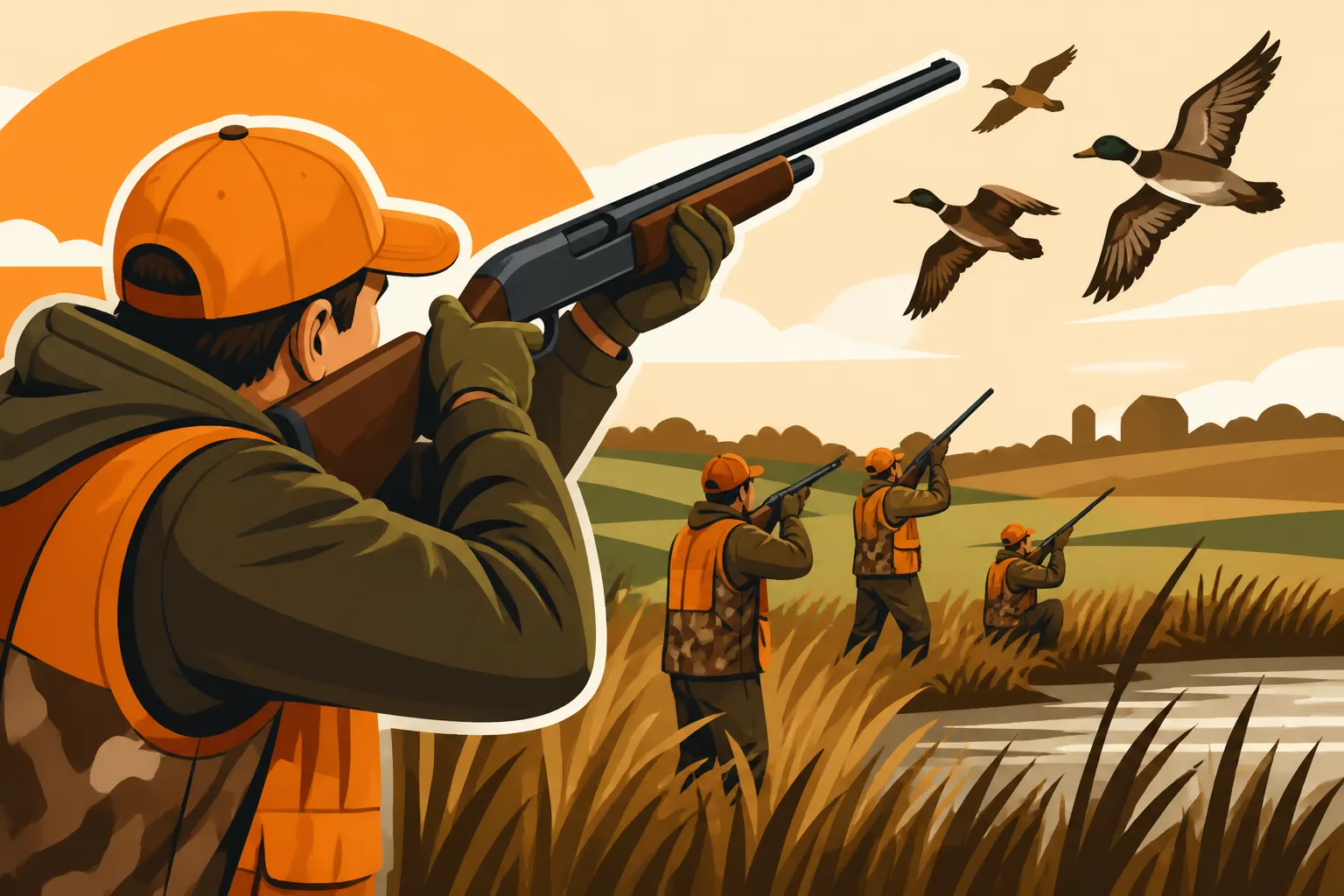
If you did not grow up in an Iowa deer camp, the phrase “party hunting” might sound like an excuse for a tailgate. In reality, it is a specific, legal way of hunting deer as a group during the shotgun seasons. Members of a hunting party work together, often pushing deer through timber to standers, and any member can shoot a deer that will be tagged with the license of another member of the same party.
That last part is what surprises people from other states, where each hunter usually has to fill their own tag. Iowa’s approach reflects how gun season has actually been hunted here for generations: by families, neighbors and friends working small patches of timber and creek bottom together.
How Party Hunting Differs From Solo Hunting
Solo hunting is mostly about patience and setup. You pick a stand, you wait, and you hope a deer walks by. Party hunting flips that equation. Instead of waiting for deer to move on their own, the group moves them. Drivers walk through cover, standers wait at likely escape routes, and the whole thing works like a coordinated play on a football field.
The trade-off is that party hunting requires much more communication and discipline. One hunter in the wrong spot, one stander who moves at the wrong time, or one driver who wanders off line can ruin a push. Worse, sloppy coordination can create dangerous shooting situations. The rewards are real, though: a well-run party can move deer out of cover that a solo hunter would never see.
The Legal Framework at a Glance
Iowa’s party hunting rules are worth reading carefully every year, but the general shape is consistent. Party hunting is allowed during the shotgun seasons and certain other gun seasons. Every member of the party must have a valid license for the season being hunted. The deer must be tagged with a license belonging to someone in the party, and that tag must be properly filled out and attached before the deer is moved. Members must be hunting together as a group, not scattered across different farms miles apart.
For the specific wording and any changes from year to year, see Iowa Party Hunting Rules. And if you are unsure how tagging works when someone else fills your license, Tagging Another Hunter’s Deer in Iowa explains the details.
Why Iowa Gun Season Is Built for Group Hunts
Iowa’s landscape practically demands group hunting. Much of the state is row crops broken up by narrow timber draws, brushy creek corridors, CRP fields and small woodlots. After harvest, deer concentrate in that cover during the day, often in patches small enough that a handful of hunters can surround them.
Add the fact that the shotgun seasons fall in December, after the rut, when deer are bedding tight and not moving much during daylight. A solo stand hunter can sit all day and see nothing. A party that knows how to push those small covers, on the other hand, can make deer move when they otherwise would not.
Understanding Iowa’s Shotgun Seasons
Before you can plan tactics, you need to understand the seasons themselves. Iowa splits its gun deer hunting into two shotgun seasons in December, and each has its own character.
First Season Versus Second Season
The first shotgun season is short, typically about five days, and opens in early December. The second shotgun season follows shortly after and runs longer, usually about nine days. Hunters choose one season or the other when they buy their license; in most cases you cannot hunt both with the same regular gun license.
First season deer have seen less pressure. They are still in their post-rut patterns, and a well-planned opening morning push can be extremely productive. Second season deer have been hunted hard, scattered and educated. They often hold tighter in thicker cover, which can make drives more effective if you know where to push. For a deeper comparison, Which Iowa Shotgun Season Is Better lays out the pros and cons.
| Feature | First Shotgun Season | Second Shotgun Season |
|---|---|---|
| Typical length | About five days | About nine days |
| Timing | Early December | Mid-December |
| Deer behavior | Less pressured, still on post-rut patterns | Heavily pressured, holding in thick cover |
| Weather | Often milder, less snow | Colder, more likely to have snow |
| Drive strategy | Push predictable bedding areas early | Push the thickest, overlooked cover |
| Crowding | Busiest weekend of the year | Somewhat fewer hunters on weekdays |
Legal Equipment During Shotgun Season
Iowa allows shotguns firing single slugs in a range of gauges during the shotgun seasons, along with muzzleloaders, certain handguns and, in more recent years, straight-walled cartridge rifles within a specific caliber range. Archery equipment can generally be used as well. The exact list changes from time to time, so check the current regulations before you buy anything new. For a full breakdown, read Iowa’s Legal Deer Hunting Equipment by Season.
For party hunting, equipment choice matters more than it might seem. Slugs and straight-walled rifle bullets travel a long way, and in a group setting, every hunter needs to know exactly what their firearm can do and where the bullet will go if it misses.
Blaze Orange Requirements
During Iowa’s gun deer seasons, hunters must wear blaze orange on an outer garment such as a vest, jacket, coat or sweatshirt, and that garment needs to be at least half solid blaze orange. A blaze orange hat alone does not meet the requirement, although wearing one in addition is a smart idea, especially for drivers who are walking through brush. For the specifics, see Blaze Orange Rules During Iowa Gun Season.
In party hunting, blaze orange is not just a legal checkbox. It is the primary way drivers and standers keep track of each other. I strongly recommend that every member of the party wear a blaze orange hat in addition to the required garment, because heads are often the only part of a hunter visible over brush or a creek bank.
What Comes After the Shotgun Seasons
For many parties, the second shotgun season is not the end of the year. Iowa typically offers a late muzzleloader season and, in many counties, additional antlerless opportunities into January. Those hunts tend to be quieter, smaller affairs, but the knowledge your party builds during the December drives carries straight into them.
Late-season deer are focused on food and shelter from cold. The same timber draws you pushed in December will often hold deer close to the best remaining food sources. If a few members of your party have tags left, a small, careful push on a cold January afternoon can be one of the most memorable hunts of the year. Just remember that party hunting rules, legal equipment and blaze orange requirements can differ by season, so read the regulations for each one before you go.
Organizing a Safe and Effective Hunting Party
The difference between a party that fills tags safely and one that ends the season with frayed nerves and missed opportunities usually comes down to organization. It starts long before opening morning.
Choosing a Drive Captain
Every good party has a captain. This is the person who knows the ground best, makes the final call on which covers get pushed and in what order, and assigns drivers and standers. The captain is not necessarily the oldest hunter or the best shot. It is the person everyone trusts to make clear, safe decisions.
The captain should hold a short meeting before every drive. Where is everyone going? Where are the safe zones of fire? What is the signal that a drive is over? Five minutes of planning prevents most of the problems I have seen in deer camps over the years.
Planning Drives on a Map
Before the season, sit down with an aerial map of the properties you will be hunting. Mark every timber, draw, waterway, fence line and CRP patch. For each cover, identify where deer bed, where they are likely to run when pushed, and where standers can be placed with safe shooting lanes. If you want help reading those covers, Reading an Iowa Timber Draw for Deer Sign is a helpful companion.
Mapping tools make this much easier than it used to be. Many hunters use digital mapping apps to mark stand locations, property lines and drive routes. GoHunt, best known for western hunt planning, also offers mapping features that some Iowa hunters use to study terrain and plan access. Whatever tool you use, print or download a copy of your drive plan so it is available even without cell service, and check the provider’s own page for current features.
Assigning Roles Within the Party
A typical party includes drivers, standers and sometimes blockers. Drivers walk through the cover to move deer. Standers wait at known escape routes. Blockers are often posted on the sides of a drive to turn deer back toward the standers or keep them from slipping out the flanks.
Experience matters. Put your most disciplined hunters on stand, because standers take most of the shots and need to make good decisions about what is and is not a safe shot. Drivers should be hunters who can walk a straight line through thick cover, keep track of the people on either side of them, and resist the urge to shoot at every flash of brown.
Handling Disagreements in Camp
Put eight or ten opinionated hunters in one farmhouse and disagreements are guaranteed. Somebody thinks the north timber should be pushed first, somebody else swears the deer moved to the neighbor’s CRP after Saturday’s shooting, and a third person just wants to sit his favorite stand all morning. Left alone, these arguments eat up the best hours of daylight.
The fix is simple but takes discipline. Hear everyone out the night before, not at the truck at dawn. Let the captain make the final call, and agree as a group that the captain’s call stands for the day. If a plan does not work, talk about it at lunch or that evening, not in the middle of a drive.
It also helps to rotate the good spots. The stander post at the bottom of the best draw should not belong to the same person every year. Rotating roles keeps everyone invested and teaches newer hunters the whole operation, not just one corner of it.
A Pre-Drive Safety Briefing
- Confirm every member of the party has a valid license for the season and is wearing the required blaze orange.
- Review the map and the exact location of every stander and blocker.
- Identify safe zones of fire for each stander, including directions where shooting is never allowed.
- Agree on how drivers will maintain spacing and line, such as by voice, whistle or radio.
- Set a clear signal for the start and end of the drive.
- Remind everyone not to leave their position until the drive is officially over.
- Make sure every hunter knows what to do if a deer is wounded or crosses onto neighboring land.
Classic Iowa Drive Tactics That Work
Over the years, Iowa hunters have developed a playbook of drives that fit the state’s landscape. Here are the ones I have seen work most consistently.
The Timber Draw Push
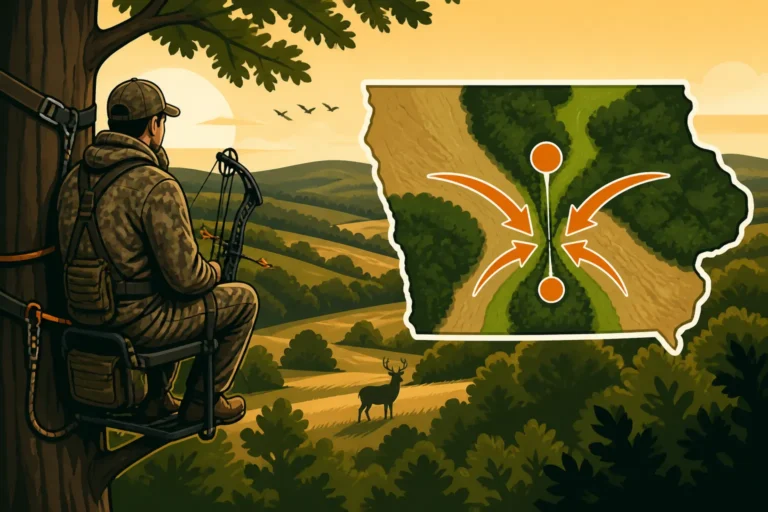
This is the bread-and-butter drive in much of Iowa. A narrow timbered draw runs between crop fields, often down toward a creek. Standers are placed at the downhill or downwind end and along any natural exits, while drivers start at the top and walk down the draw in a line.
The key is to know where deer will try to escape. In many draws, deer will slip out the sides near the top when they first hear drivers, or they will try to double back through the line. Placing a blocker or two on the upper corners can turn those deer back down toward the standers. For tactics specific to small cover, see Shotgun Season Drives in Small Timber.
Creek Bottom and River Corridor Drives
Creek bottoms are deer highways in Iowa. They offer thick cover, water and travel routes that connect bedding and feeding areas. Driving a creek bottom often means posting standers at crossings, where the creek narrows or banks are low, and having drivers walk both sides of the creek.
These drives can be tricky because deer may cross the creek several times during a push. Drivers need to stay in contact across the water, and standers need to be ready for deer coming from unexpected angles. Recovery can also be challenging, so plan in advance how you will get a deer out of a steep, muddy bottom. A sled, a drag rope and an extra set of hands go a long way.
CRP and Grass Field Pushes
Conservation Reserve Program fields and other tall grass areas hold more deer than many people realize, especially after heavy pressure in the timber. Driving grass is different from driving timber. Deer often sit tight until a driver nearly steps on them, then burst out at close range.
Drivers in grass should walk slowly with frequent pauses, because a stopped hunter often makes a bedded deer nervous enough to move. Standers should be placed along fence lines, waterways and the corners where grass meets timber. Because visibility can be high in open grass, shooting lanes must be planned carefully to avoid any chance of firing toward drivers.
Standing Corn and Picked Field Edges
In some years harvest runs late, and you will find corn still standing when shotgun season opens. Standing corn is a deer magnet, and it is also one of the hardest covers to drive safely. Visibility inside the rows is almost nothing, deer can slip across rows in any direction and hunters can lose track of each other within a few steps.
If your party decides to push standing corn, keep the drive small and the rules strict. Drivers walk specific rows and call out their position often. Standers post at the ends of the field and along fence lines where deer are likely to exit, with shooting allowed only out into the open and away from the corn. Many experienced parties simply decline to shoot into or across standing corn at all.
Picked fields next to timber are a different story. Deer pushed out of a draw will often cross an open, picked field to reach the next cover. A stander posted at the far side of that field, with a safe backstop, can get a clear look at a deer crossing at a steady lope. For more on how crops shape deer behavior, see Standing Corn and Bean Field Deer Patterns.
The Slow Push or Still Drive
Not every drive needs to be loud. In fact, some of the most effective pushes I have seen involve drivers moving so slowly that the deer barely know they are being hunted. Instead of a line of hunters crashing through the timber, one or two drivers still-hunt through the cover, taking a few steps, pausing for a long time and letting their scent and occasional noise drift ahead.
This style works especially well on pressured second season deer. Instead of bolting out at full speed, deer often get up and sneak ahead of the slow drivers, moving at a walk toward the standers. That means more standing shots, better shot placement and fewer wounded deer.
The trade-off is time. A slow push through a modest timber can take an hour or more, and the standers need the patience and warm clothing to wait that long without fidgeting.
Small Drives With Two or Three Hunters
Not every party is ten people strong. Some of the most effective drives involve just two or three hunters working a small patch of cover. One or two people post at the most likely escape route, and a single driver walks slowly through the cover, often pausing and zigzagging. These small pushes work best on covers of a few acres, where a lone driver can realistically move every bedded deer.
Shooting Safety and Shot Selection in a Group
Party hunting puts several armed hunters in close proximity, often in thick cover and moving terrain. Safety has to be the first thing on everyone’s mind.
Establishing Safe Zones of Fire
Every stander should know exactly which directions are safe to shoot and which are absolutely off-limits. A common approach is to define a wedge in front of each stander that points away from the drive and away from other standers. Shots outside that wedge are never taken, no matter how big the buck.
Drivers have even more limited shooting options. In many parties, drivers only shoot at deer that are going back through the line or away from all standers, and only when they have a clear backstop. Some parties do not allow drivers to shoot at all. Decide your rules in advance, and stick to them. For a full look at this topic, Safe Zones in a Deer Drive goes deeper.
Knowing Your Slug or Bullet Range
Slugs and straight-walled rifle bullets can travel much farther than many hunters assume. A missed shot can carry well past the target, especially over open fields. Every hunter in the party needs to know what lies beyond the deer before pulling the trigger, including farm buildings, roads, livestock and other hunters. For more on effective and safe ranges, see Slug Range Limits on a Deer Drive.
Ground conditions matter too. Frozen ground and ice can cause ricochets, and shooting downhill into a creek bottom can carry a projectile farther than expected. When in doubt, do not shoot.
Handling Wounded Deer During a Drive
Wounded deer are one of the biggest sources of confusion during party hunts. A hit deer may run through the rest of the drive, cross onto neighboring property, or bed down in thick cover. The party should have a plan for what happens after a hit.
Typically, the drive continues as planned until it is officially over, unless the wounded deer creates a safety issue. Then the shooter and one or two others follow up carefully, marking the spot of the hit and following the blood trail. If the deer crosses onto land you do not have permission to hunt, contact the landowner before going after it. For that situation, see Recovering a Deer Across a Property Line.
What to Do After a Shot
When a stander fires, everyone in the party needs to know what happened. The simplest system is a quick radio call or a prearranged signal from the shooter: one call for a hit, another for a miss, and a clear instruction on whether the drive continues. Without that, drivers start guessing, and guessing in the timber is dangerous.
The shooter should stay put, mark the spot where the deer was standing and the direction it went, and wait until the drive is over before moving. A downed deer will still be there in twenty minutes. A stander who abandons a post mid-drive to chase a deer creates a hole in the line and can walk straight into another hunter’s field of fire.
Tagging, Reporting and Legal Details
Party hunting has its own legal mechanics, and getting them wrong can turn a great day into an expensive one. Here is how it generally works.
Tagging a Deer for Another Party Member
When a member of the party shoots a deer, the party decides whose tag will be used. That tag must belong to a member of the same hunting party, and it must be filled out and attached to the deer according to Iowa’s rules before the deer is moved from where it was taken. The person whose tag is used must be part of the party and hunting with the group.
This is where many disagreements happen. Settle the question of tag order before the season, so nobody is left arguing over a deer in the field. Some families go by seniority, others by who has not filled a tag yet, and others by who shot the deer. Any system works if everyone agrees in advance.
Reporting the Harvest
Every deer taken in Iowa must be reported, and the general deadline is midnight of the day after the deer is tagged. That deadline applies whether the deer is tagged by the shooter or another member of the party. The person whose tag is on the deer is responsible for making sure the report is completed. For the details on the process, see Iowa Deer Harvest Reporting Rules.
| Step | Who Does It | When |
|---|---|---|
| Decide whose tag will be used | The whole party, ideally before the season | Before the hunt starts |
| Fill out and attach the tag | The tag owner or the party following the rules | Before the deer is moved |
| Report the harvest | The person whose tag is on the deer | By midnight of the day after tagging |
| Keep the confirmation number | The tag owner | Until processing is complete |
Licenses, Youth and Nonresidents
Every member of the party must have a valid license for the season being hunted. Youth hunters, landowners and tenants, and nonresidents may have their own license types and rules, and the party needs to make sure each person is properly licensed. If you have a nonresident hunting with you, check whether their license type allows party hunting during the season you are hunting.
Nonresidents who want to hunt Iowa gun season typically go through a draw, which can take years depending on the zone. If you have friends from out of state hoping to join your party, encourage them to study the draw early. Many nonresident hunters use research platforms like GoHunt to compare draw odds and plan applications across several states, Iowa included.
Making Party Hunting Productive Season After Season
Some parties seem to fill tags year after year, while others struggle. The difference is usually not luck. It is a combination of preparation, adaptation and respect.
Scouting Before and Between Seasons
Scouting for party hunting is a little different from scouting for a stand. You are not looking for a single trail or scrape. You are looking at entire covers: where deer bed, how they enter and leave, and where they go when pushed. Post-season scouting in late winter can be especially valuable, because snow reveals trails and beds clearly.
Keep a log of every drive the party makes. Note how many deer moved, where they went and what the wind was doing. Over several years, patterns emerge. You will learn which covers hold deer in first season, which ones are better in second, and which drives work best on certain winds.
An Example Opening Morning Plan
Let me sketch how a typical opening morning looks for a party of eight on a few hundred acres of mixed timber, CRP and picked crop ground. The names are made up, but the plan is the kind I have seen work again and again.
At first light, all eight hunters sit stands around the edges of the biggest timber, because the shooting from neighboring farms often gets deer moving early. By mid-morning, the movement slows. The captain calls everyone back to the trucks for coffee and a quick headcount of tags filled.
The first drive of the day pushes a narrow draw that runs down to the creek. Three standers post at the bottom and along the creek crossing. Two blockers take the upper corners. Three drivers walk the draw from the top with the wind at their backs, so their scent drifts toward the deer and pushes them downhill toward the standers.
After lunch, the party works the CRP field with a slow push, then finishes the day by sitting field edges until the end of legal shooting hours. Hunters who have already filled tags usually take the driving roles in the afternoon, which gives the hunters still holding tags the stander posts.
Adapting to Pressure and Weather
Deer adapt quickly to drives, especially in areas with heavy hunting pressure. If a particular cover has been driven several times, deer may start escaping out a different side or holding tighter. Change up your approach. Push from a different direction, put standers in new places or skip a cover for a day to let it settle.
Weather has a big impact too. Snow can make tracking easy but also makes drivers noisy. Wind can carry scent ahead of drivers and alert deer. Cold fronts can get deer moving on their own. Watch the forecast and adjust your plan. A sharp drop in temperature after a mild spell is often the best day of the season to push cover.
Respecting Landowners and Neighbors
Most Iowa deer hunting happens on private land, and party hunting depends on landowner trust. Before the season, check in with every landowner you hunt. Confirm which areas you are allowed to drive, where vehicles can be parked and whether livestock or buildings require special caution. After the season, thank them in a meaningful way, whether that is venison, help with chores or a card.
Be a good neighbor to other hunting parties too. If you know another party is driving a cover next to yours, coordinate with them to avoid conflicts and unsafe situations.
Building a Party Tradition
The best hunting parties are not just about filling tags. They are about the traditions: the breakfasts, the stories, the teasing about missed shots and the pride of watching a young hunter take their first deer. Make room for those moments.
Bring new hunters into the party carefully. Start them as standers in safe, well-defined spots, and pair them with experienced hunters until they understand how drives work. Over time, they will become the drivers, captains and storytellers of the next generation.
Gear and Logistics for a Long December Day
Clothing for Standers and Drivers
Standers and drivers have very different clothing needs. Standers sit still in the cold for long periods and need warm layers, insulated boots and a way to stay dry. Drivers are moving constantly through thick brush and quickly overheat, so they need lighter, durable layers that can be unzipped or removed.
A smart approach is to dress for the role you will play most of the day, and carry an extra layer in a pack or the truck. Gloves, a warm hat and a neck gaiter can make a huge difference on a cold December morning.
Communication Tools
Many parties use two-way radios to coordinate drives, although it is important to use them responsibly and follow any regulations that apply. Radios can help drivers stay in line, alert standers that a drive is starting and coordinate the recovery of wounded deer. A simple whistle or voice signals can also work in smaller parties. Whatever you use, keep communication brief and focused on safety and coordination.
Processing and Meat Handling
When a party fills several tags in a day, meat handling becomes a real job. Plan in advance how deer will be field dressed, transported and processed. Many Iowa locker plants are busy during the shotgun seasons, so check in early to secure a spot. A quick phone call the week before the season can save you a long drive with a truck full of deer and nowhere to take them.
When the party fills several tags in one push, divide the work. One or two hunters handle field dressing while others bring the trucks around or set up a drag. Deer carts and sleds save backs on long pulls across picked fields, and a set of game bags keeps meat clean if you need to quarter a deer in a steep creek bottom. Keep the tag with the deer at every stage, and make sure the person whose tag is on it knows the deer is theirs to report.
Temperatures matter, too. A mild December afternoon can be warm enough that deer should be cooled quickly, while a frigid day can freeze a carcass solid before you get it to a cooler. Hang deer in the shade, open the body cavity to air, and get them to a processor or your own cooler as soon as practical.
| Gear Item | Drivers | Standers |
|---|---|---|
| Outer layer | Light, brush-resistant, blaze orange | Warm, insulated, blaze orange |
| Footwear | Lighter boots with good traction | Insulated boots for long sits |
| Extras | Water, energy snacks | Hand warmers, seat cushion |
| Communication | Radio or whistle | Radio or agreed visual signals |
| Field tools | Knife, drag rope | Knife, rangefinder if allowed |
Planning for Next Year
At the end of the season, hold a quick debrief. Which drives worked? Which ones did not? Were there any close calls or safety concerns that need to be addressed? Did anyone feel left out or unclear about their role? Taking notes now will make next season smoother, safer and more productive.
If any members of the party are thinking about hunting other states, the off-season is also the time to research draws and units. Tools like GoHunt can help with that research, and the discipline of planning that a good Iowa party develops translates well to hunts anywhere.
Party hunting is one of the great traditions of Iowa deer season. Done well, it is safe, productive and incredibly fun. Done poorly, it can be frustrating or even dangerous. With good planning, clear communication and respect for the rules and the land, your party can enjoy many seasons of success together.
Disclaimer
This article is for general informational purposes only and does not constitute professional advice. Laws, prices and regulations vary by location and change over time. Consult a qualified professional for guidance on your specific situation.