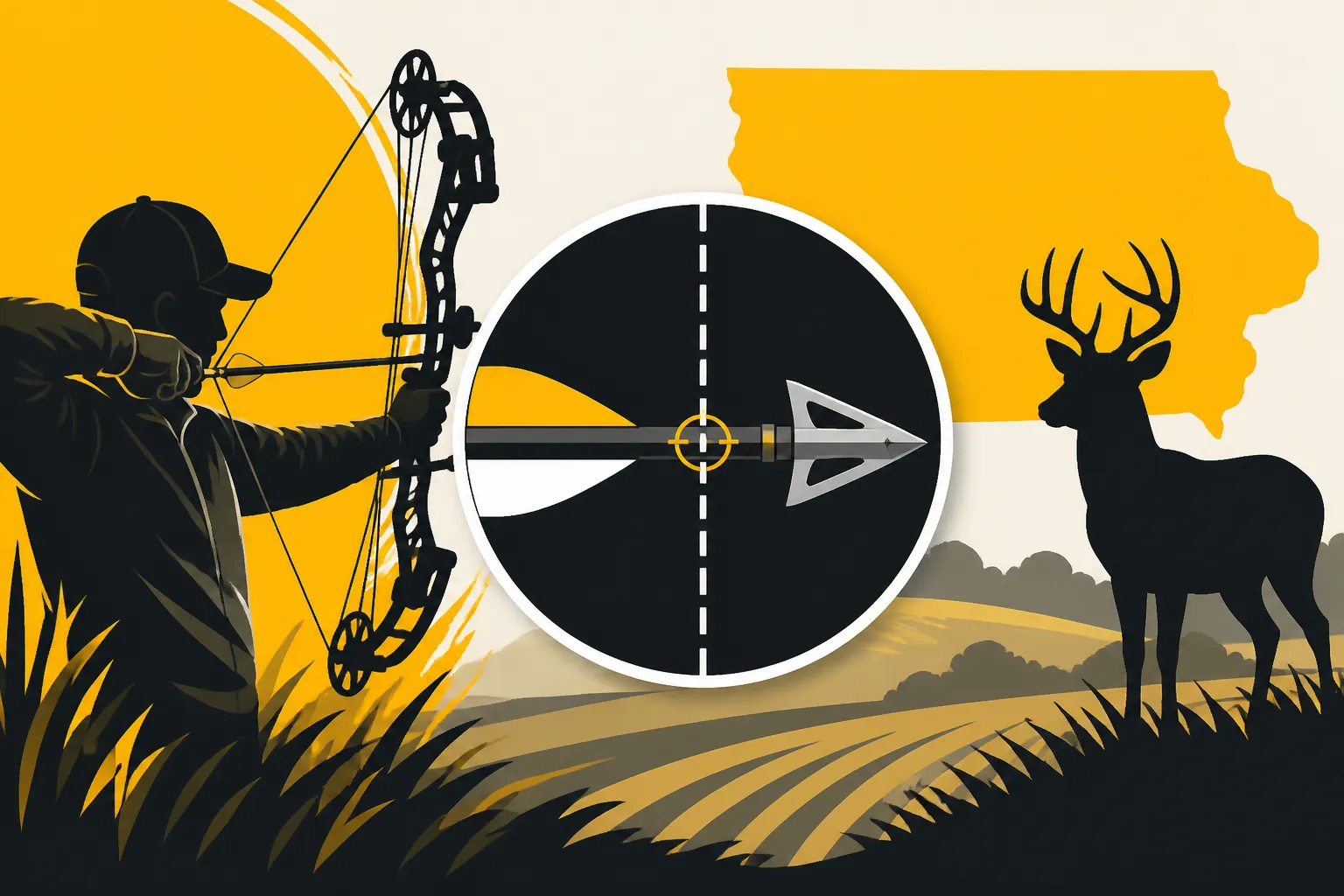
Arrow Spine and Front of Center
If you've ever watched an arrow wobble or fly erratically right after leaving your bowstring, or found yourself wondering why that perfectly aimed shot didn't quite hit where you wanted it to, chances are you've run into the mysterious world of arrow dynamics. It's a common frustration for bowhunters, especially when preparing for those crucial Iowa deer seasons. This guide will break down two critical elements of arrow performance – arrow spine and front of center (FOC) – helping you understand what they are, why they matter, and how to get your setup perfectly tuned for optimal accuracy and penetration on your next hunt.
Understanding Arrow Spine: The Backbone of Your Shot
Arrow spine is probably the most misunderstood, yet fundamental, aspect of arrow selection. Simply put, it's a measure of an arrow's stiffness. When you release an arrow from your bow, the string pushes on the back, causing the shaft to flex or bend around the bow riser. This flexing is natural and necessary, and it’s often called the "archer's paradox." The arrow then straightens out in flight. If your arrow's spine is wrong, that flexing will be either too much or too little, leading to inconsistent flight and poor accuracy.
What is Dynamic Versus Static Spine?
When you look at a new pack of arrows, you'll see a number like 300, 340, 400, or 500. This is the static spine rating. It's determined by hanging a specific weight (usually 1.94 pounds) from the center of a 28-inch arrow shaft and measuring how much it deflects. A lower number means a stiffer arrow (less deflection), while a higher number means a more flexible arrow (more deflection). So, a 300-spine arrow is stiffer than a 400-spine arrow.
However, what truly matters in flight is dynamic spine. This is how the arrow actually flexes during the shot under the immense forces of your bow. Your static spine rating is just a starting point. Your bow's draw weight, your draw length, the weight of your broadhead, the length of your arrow, and even the type of cam system on your bow all influence the dynamic spine. This is why two archers with the same 340-spine arrows might have vastly different results if their bow setups aren't the same. It's a complex dance, but getting it right is crucial for repeatable accuracy in the field.
Factors Influencing Proper Spine Selection
Choosing the right arrow spine isn't just about matching a number; it’s about creating harmony between your bow and your arrow. Here's what you need to consider:
- Bow Draw Weight: This is the force your bow exerts. Higher draw weights require stiffer arrows (lower spine numbers) to resist excessive flexing. If your bow is set at 70 pounds, you'll likely need a stiffer arrow than someone shooting 50 pounds.
- Draw Length: The longer your draw length, the more force and time the arrow spends flexing during the shot. Longer draw lengths often necessitate a stiffer arrow, even if your draw weight is the same as someone with a shorter draw.
- Arrow Length: A longer arrow shaft naturally has more leverage to flex, making it behave more flexibly than a shorter shaft of the same static spine. If you cut your arrow down, you're effectively stiffening its dynamic spine.
- Point Weight (Broadhead/Field Tip): Adding more weight to the front of your arrow acts like a lever, causing the shaft to flex more. Therefore, heavier broadheads (say, 150 grains instead of 100 grains) will require a stiffer spine to maintain proper dynamic flex. This is a common mistake hunters make when trying to increase Arrow Weight for Whitetails for better penetration; they often forget to adjust their spine.
- Cam System: Aggressive cam systems on modern bows can launch arrows with more force and a sharper power stroke, which sometimes demands a slightly stiffer arrow.
Think of it like this: trying to shoot a flimsy spaghetti noodle out of a powerful garden hose, or a rigid steel pipe out of a weak squirt gun. Neither is going to fly straight. The goal is to find the "just right" stiffness that allows your arrow to stabilize quickly and accurately. If you're struggling with accuracy, checking your spine rating against a reputable chart from your arrow manufacturer is always a great first step, and often your local pro shop can help you confirm the ideal spine for your specific setup.
Demystifying Front of Center (FOC): The Arrow's Balance Point
While arrow spine dictates how your arrow leaves the bow, Front of Center, or FOC, largely determines how it flies downrange and what happens when it hits its target. FOC refers to how much of an arrow's total weight is concentrated in its front half. It's essentially the balance point of your arrow, measured as a percentage forward of the arrow's physical center.
Why FOC Matters for Accuracy and Penetration
A properly balanced arrow, with a good FOC, flies more consistently, is less affected by wind, and penetrates better. Here's a deeper look:
- Improved Flight Stability: Imagine throwing a dart. The heavy point and light fletching in the rear make it fly nose-first and stable. An arrow behaves similarly. With more weight forward, the fletching has an easier time guiding the arrow, preventing it from porpoising or wobbling in flight. This is especially noticeable at longer distances or in windy conditions, which we certainly get here in Iowa, especially out on those open crop fields.
- Reduced Wind Drift: An arrow with higher FOC is generally more stable in crosswinds. The heavier front portion helps it "punch through" the wind rather than being pushed around as easily. This means your Shot Placement on a Whitetail at Twenty Yards or further, will be more consistent even on blustery days.
- Enhanced Penetration: This is where FOC really shines for bowhunters. A heavier FOC means the arrow carries more momentum behind the broadhead. When the broadhead hits, that forward-weighted shaft helps to drive the cutting edges deeper into the animal, increasing the chances of a pass-through. This is critical for ethical hunting and quicker recoveries, especially on larger bodied Iowa whitetails.
Calculating and Optimizing Your FOC
Calculating FOC might sound intimidating, but it's a straightforward process:
-
Find the Arrow's Total Length: Measure your arrow from the throat of the nock to the tip of your broadhead/field tip (in inches).
-
Find the Physical Balance Point: Balance the arrow on your finger or a knife edge. Mark this point.
-
Measure from the Nock to the Balance Point: Measure the distance from the throat of the nock to the mark you just made (in inches).
-
Find the Center of the Arrow: Divide the total arrow length by 2.
-
Calculate FOC:
- Subtract the center of the arrow (Step 4) from the balance point measurement (Step 3).
- Divide that result by the total arrow length (Step 1).
- Multiply by 100 to get a percentage.
Example: An arrow is 30 inches long. Its balance point is 16 inches from the nock.
(16 – 15) / 30 * 100 = (1 / 30) * 100 = 3.3% FOC.
What's a good FOC percentage?
For most hunting setups, an FOC between 10-15% is considered a great starting point for good performance. Some hunters push it higher, into the 15-20% range or even more, for extreme penetration, often with heavy inserts and broadheads. This is especially popular with traditional bowhunters or those seeking maximum pass-through potential.
How to Adjust Your FOC
You don't need to buy new arrows to change your FOC. Here are a few ways to tweak it:
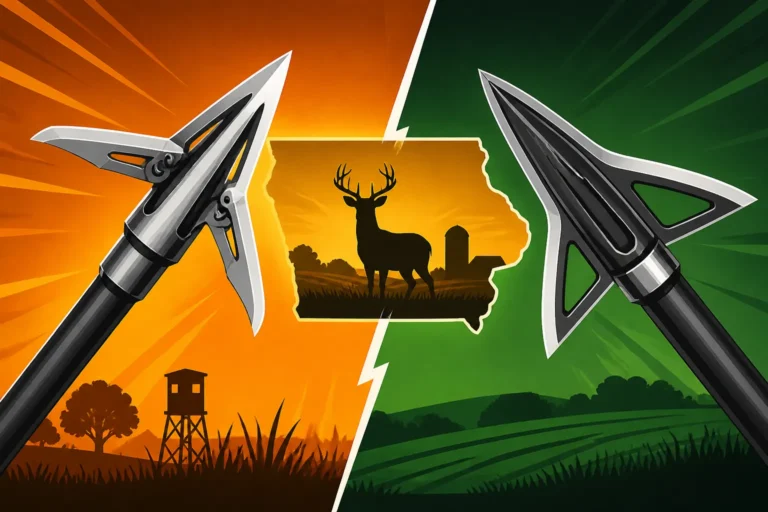
- Increase Broadhead/Point Weight: This is the easiest and most common method. Going from a 100-grain broadhead to a 125-grain or 150-grain broadhead will significantly increase your FOC. Just remember how this affects your dynamic spine – a heavier point requires a stiffer arrow!
- Add Weight Inserts: Many arrow manufacturers offer brass or aluminum inserts that are heavier than standard aluminum inserts. Swapping these out can add significant weight to the front of your arrow.
- Reduce Fletching Weight: Using lighter fletching or smaller fletching (though you risk some flight stability) can marginally increase FOC by shifting the overall center of mass forward. This is usually a minor adjustment compared to broadhead or insert weight changes.
The Synergy of Spine and FOC: Tuning for Success
Neither arrow spine nor FOC works in a vacuum. They are intricately linked, and understanding their relationship is key to achieving a perfectly tuned hunting arrow. Getting one right while the other is off will still lead to frustration and missed opportunities in the field.
Finding the Sweet Spot: Tuning Your Arrow
When you're Tuning a Bow Before Iowa's Opener, you're essentially trying to match your arrow's dynamic spine and FOC to your bow's specific setup. Here's how they interact:
- Heavier FOC and Spine: If you decide to go with a higher FOC by adding a heavy broadhead or a brass insert, remember that this effectively makes your arrow behave more flexible. This means you might need to select an arrow with a stiffer static spine (a lower number) to compensate. Many hunters wanting high FOC for deep penetration on deer will intentionally choose an arrow that is slightly over-spined for their bow to accommodate the heavier point weight.
- Lighter FOC and Spine: Conversely, if you run a very light broadhead, your arrow will behave stiffer. You might need a slightly more flexible arrow (a higher spine number) to achieve optimal flight.
- Arrow Length as a Fine-Tuning Tool: If you're slightly underspined (arrow too flexible), you can trim an inch or half-inch off the front or back of your arrow shaft (if safe to do so with your broadhead seating) to stiffen it up. This is a common fine-tuning technique at pro shops.
A good archery pro shop is your best friend here. They have tools and expertise to perform paper tuning, bare shaft tuning, and walk-back tuning, all of which help identify if your arrow is flexing correctly and exiting your bow cleanly. These methods are designed to reveal any inconsistencies caused by an improper spine or other setup issues.
Impact on Real-World Hunting Scenarios
Let's consider how this plays out during an Iowa hunt:
- Long-Range Shots: If you're taking a longer shot across a picked bean field, a properly spined arrow with good FOC will fly truer and be less influenced by a gust of wind. You’ll have more confidence in your Rangefinding in Timber and open spaces, knowing your arrow will follow your aim point.
- Heavy-Boned Animals: For larger whitetails, especially mature bucks, that added penetration from a good FOC can mean the difference between an ethical pass-through and a shallow wound. Paired with a sharp Broadhead Choices for Whitetails, you maximize your chances.
- Variable Conditions: Hunting throughout the season in Iowa means dealing with everything from warm October days to frigid December winds. An arrow setup that is well-tuned for both spine and FOC will perform consistently across these diverse conditions, reducing variables and increasing your success.
Many hunters use mapping tools like GoHunt to scout Public Land Deer Hunting in Iowa or new private properties, identifying potential shot distances and animal travel patterns. Understanding your arrow's performance characteristics, including how it handles different ranges and conditions, is just as vital as understanding the terrain. It’s all part of preparing thoroughly for an ethical and successful hunting season.
The table below offers a general guideline for arrow spine selection, though remember that actual performance is specific to your bow and component choices. Always consult an up-to-date chart from your arrow manufacturer and your local pro shop.
| Draw Weight (lbs) | Arrow Length (inches) | Recommended Spine (approx.) | Common Broadhead Weight (grains) |
|---|---|---|---|
| 40-50 | 26-28 | 400-500 | 100-125 |
| 50-60 | 27-29 | 340-400 | 100-125 |
| 60-70 | 28-30 | 300-340 | 100-150 |
| 70-80 | 29-31 | 250-300 | 125-175 |
Note: This is a general guide. Heavier broadheads or longer arrows will often require a stiffer spine (lower number).
Putting It All Together for Your Iowa Hunt
Ultimately, perfecting your arrow setup is a journey of precision and patience. It's about combining the right stiffness (spine) with the optimal balance (FOC) to achieve predictable and devastating arrow flight. Don't overlook these critical details. Spend time at the archery range, test different combinations if you can, and observe how your arrows fly. Many seasoned hunters even take notes in their Iowa Whitetail Hunting Tactics Through the Rut journal about how their setup performs under various conditions.
A truly dialed-in arrow setup gives you an immense confidence boost, which is invaluable when that trophy Iowa whitetail steps out. Whether you're chasing that first buck or trying to fill your tag during the late season, knowing your arrow will fly straight and true is paramount. Don't just settle for "good enough" – strive for perfection in your arrow's spine and FOC, and you'll be amazed at the difference it makes in your hunting success.
Disclaimer
This article is for general informational purposes only and does not constitute professional advice. Laws, prices and regulations vary by location and change over time. Consult a qualified professional for guidance on your specific situation.