Roosting Turkeys on an Iowa Evening
Trying to pinpoint where a gobbler is going to spend the night can feel like trying to find a needle in a haystack, especially when you're racing against the clock as the sun dips below the horizon. The frustration is real when you’ve heard birds all day, but can't quite get a bead on their evening roost, leaving you guessing for the morning hunt. This guide is all about equipping you with the know-how to successfully roost Iowa turkeys in the evening, giving you a serious advantage for your next spring turkey hunt.
The Crucial Advantage of Roosting Turkeys
For any turkey hunter worth their salt, knowing where a gobbler is roosted the night before a hunt is like having a cheat code. It eliminates so much guesswork and allows you to position yourself for a high-percentage shot opportunity right at first light. Without a solid roost, you're essentially stumbling around in the dark, hoping to intercept a bird you heard once or twice hours ago. That's a low-odds game, and frankly, we work too hard for our tags to play it that way.
Understanding Evening Turkey Habits
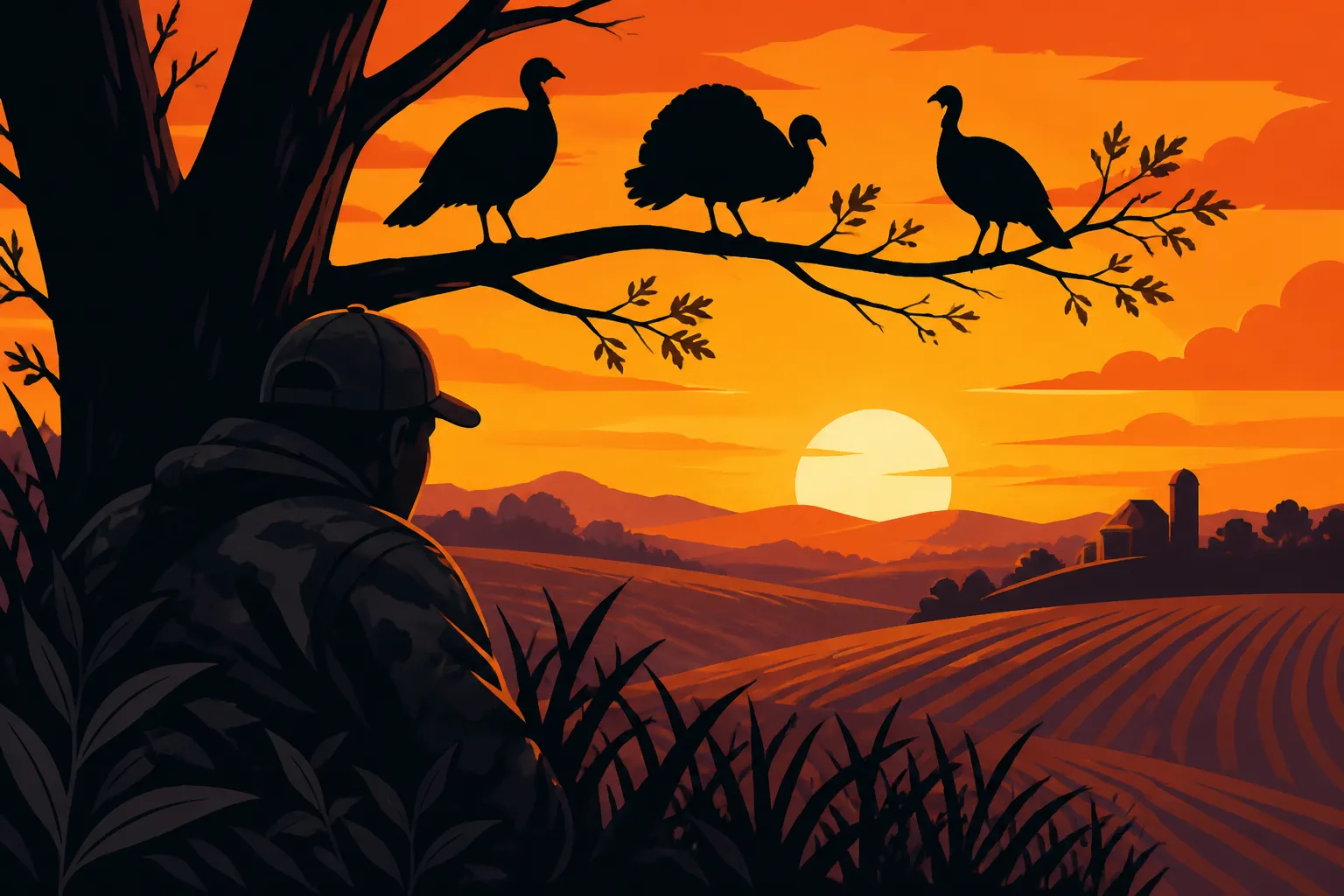
Turkeys, especially the Eastern varieties we have here in Iowa, are creatures of habit, but they're also highly influenced by their environment. As evening approaches, their primary instinct shifts from foraging and strutting to finding a safe place to spend the night, high off the ground away from ground predators like coyotes and foxes. They'll start moving towards known roosting areas, often along creek bottoms, river corridors, or significant timber blocks. It's not a mad dash; it's a deliberate progression, often with some final feeding or dusting before they fly up. You might even hear some soft clucking and yelping as they gather near their chosen trees, almost like they’re having a final roll call before bed. Understanding this winding-down phase is crucial for intercepting them without spooking them.
Why Roosting is Your Best Morning Prep
Think about it: when you know exactly which tree a gobbler is sleeping in, you can plan your entire morning approach with surgical precision. You're not just hoping to hear a distant gobble; you're pinpointing the gobble. This allows you to sneak into position before fly-down, set up your decoys perfectly, and be ready when his feet hit the ground. It dramatically increases your chances of calling him in close, especially if you're dealing with a particularly stubborn tom or one that's already henned-up. When you've done your evening homework, the morning becomes less about searching and more about execution. It’s the difference between blindly calling into the woods and anticipating the exact moment and direction a bird will appear. For more detailed strategies on exactly how to position yourself, check out our guide on Setting Up Before Fly-Down.
Common Pitfalls in Evening Scouting
While the benefits are huge, there are plenty of ways to mess up an evening roosting attempt. One of the biggest mistakes is being too aggressive or noisy. Turkeys have incredible hearing and eyesight, and nothing will ruin a morning hunt faster than bumping a bird off the roost the night before. Another common pitfall is over-calling. You don't need to try and call a bird to the roost; you just need to locate him. Many hunters also misinterpret distant gobbles, setting themselves up far from the actual roost location. It's also easy to get greedy and try to get too close, risking being seen by the birds as they fly up or even as they’re walking to the roost tree. Patience and stealth are paramount here.
Identifying Prime Roosting Habitat
Finding turkeys in the evening is often less about luck and more about understanding their preferred real estate. You need to think like a turkey and identify the features that offer safety and convenience for their nightly rest. Iowa's landscape, with its mix of timber, fields, and waterways, offers diverse roosting options, but certain features stand out.
Anatomy of an Ideal Roost Tree
When turkeys choose a roost tree, they're looking for a few key characteristics. First and foremost, they want height. Tall, mature trees that offer a good vantage point are ideal. Large, sturdy horizontal limbs are also critical, providing a comfortable and stable perch for multiple birds. Often, these trees will be dead snags or mature hardwoods like oaks, cottonwoods, or sycamores, especially those with an open understory that allows for clear flight paths up and down. These are often found along river bottoms, creek drainages, or on prominent ridges that overlook fields. These aren't just random trees; they're often the most commanding structures in the landscape. Understanding these preferences is key to knowing Where Iowa Turkeys Roost. In areas with less timber, even a single large tree in a fencerow or woodlot can serve as a prime roost if it offers the necessary height and limb structure.
How Terrain and Water Influence Roost Choices
Topography plays a huge role in turkey roosting. Birds will often pick trees on higher ground, like the crest of a ridge or a timber point overlooking a valley. This gives them an elevated position for security and good visibility of their surroundings. However, dense timber in river bottoms or along large creek drainages is also prime real estate. The water often acts as a natural barrier to ground predators, and the bottomland soil typically supports taller, more mature trees. Think about those big cottonwoods or sycamores along the Des Moines River or the Iowa River. They're magnets for roosting birds. Similarly, don't overlook areas near standing water, even small ponds, as turkeys will often visit water sources before roosting. It's all about finding that perfect combination of safety, structure, and convenience. Our state is rich with fantastic spots for Eastern Turkeys in Iowa Timber.
Weather's Role in Roosting Behavior
Just like us, turkeys are influenced by the weather, and it impacts their roosting behavior significantly. On calm, clear evenings, they might fly up earlier and be more vocal. A strong wind, however, can make them less likely to gobble, as the wind simply carries the sound away. They may also fly up lower in the trees to seek shelter from the wind. Rain and fog can also mute their activity, making it much harder to pinpoint their location. Cold fronts or sudden temperature drops might push them to seek more sheltered roosts. Always check the forecast and adjust your expectations and strategy accordingly. A cold, blustery evening might mean you need to rely more on visual scouting or getting closer than you would on a mild, still night. This insight is also relevant when considering Turkey Poult Survival and Spring Weather as it influences population numbers.
Effective Strategies for Pinpointing Roosted Birds
Now that we know why and where turkeys roost, let's talk about the how. Successfully roosting a turkey isn't about blind luck; it's a methodical process of listening, observing, and using the right tools at the right time.
The Art of Listening: When and How
Your ears are your best friend during evening roosting. As the sun begins to set, get yourself to a good vantage point where you can hear a wide area. This might be a high ridge, a timber edge overlooking a field, or even just a quiet road. The key is to be still and listen intently. Turkeys will often gobble a few times before flying up, and then frequently after they've settled into their trees. Listen for those "goodnight" gobbles, but also pay attention to other sounds like wing beats as they fly up, or the soft "tree yelps" and clucking they do once they're on the limb. Sometimes, a hen will even do a soft fly-up cackle that gives away the location of the whole flock. The timing of Gobbling Activity Through the Spring can vary, but evenings generally offer a reliable window.
Strategic Use of Locator Calls
While you don't want to call at the turkeys, locator calls can be incredibly effective for making them gobble on the roost. Owl hoots, crow calls, and even a coyote howl are all excellent choices. The idea is to trigger a shock gobble without alerting the birds to your presence as a potential hunter. Start with soft, natural hoots or caws, and if you don't get a response, gradually increase the volume. Once you get a gobble, mark the location and back off. You're not trying to engage them in a conversation; you're just getting a confirmation of their exact position. Pick a call that's natural to the area and use it sparingly. A loud truck door slamming might even do the trick in a pinch, but a well-executed owl hoot is much more reliable and less intrusive.
Here’s a quick guide to common locator calls:
| Locator Call | Best Use Case | Tips for Success |
|---|---|---|
| Owl Hoot | Most effective around dusk and dawn; very natural | Mimic real owl cadence; don't overdo it. |
| Crow Call | Good throughout the day, especially mid-afternoon | Aggressive, sharp calls can often get a response. |
| Coyote Howl | Effective anytime, often triggers multiple responses | Use a realistic howl; can sometimes spook nearby deer. |
| Pileated Woodpecker | Less common, but can work in heavy timber | Distinctive "kuk-kuk-kuk" can be a surprise trigger. |
| Goose Honk | Useful in areas with waterfowl | Strong, resonant honk can carry a long distance. |
Glassing the Landscape for Roosted Birds
Sometimes, the best locator isn't a call, but your eyes. As evening light fades, turkeys will often silhouette themselves against the sky, especially if they choose trees on a ridge line. Grab a good pair of binoculars – 10x42s are usually perfect for this – and systematically glass the likely roosting areas. Look for dark blobs on tree limbs, often appearing larger and more irregular than a typical branch. You might even see a distinct head and neck outline. This is particularly effective in more open country or when birds are not vocal. You're looking for movement, even subtle head turns. Once you spot a bird, confirm its exact tree and mentally mark its location. This visual confirmation is the absolute best way to know you've got them pinned down.
Utilizing Technology and Mapping Tools
In today's hunting world, technology is a powerful ally. Applications like GoHunt provide incredibly detailed aerial imagery and topographic maps that can help you identify prime roosting habitat even before you set foot in the woods. You can scout from home, marking potential timber blocks, creek lines, and ridge tops where turkeys are likely to roost. Once you're in the field, use the GPS features on GoHunt to mark the exact tree where you hear or see a bird gobble up. This way, you'll have a precise waypoint for your morning approach. You can also use GoHunt to assess access points, understand wind direction relative to your approach, and even identify potential public land tracts where you can freely scout. It takes the guesswork out of navigating unfamiliar territory and ensures you don't accidentally trespass while trying to pinpoint a bird. This kind of e-scouting is an invaluable first step before any Run-and-Gun Turkey Tactics on Iowa Public Land.
From Roost to Hunt: Your Morning Game Plan
Successfully roosting a turkey is only half the battle. The real test comes the next morning, when you have to transform that evening intelligence into a successful hunt. This requires stealth, patience, and a solid plan to avoid busting the birds.
The Silent Approach: Setting Up Before Fly-Down
Once you know where that gobbler is sleeping, your mission for the morning is to get into position before he wakes up. This means arriving well before legal shooting light – often 45 minutes to an hour before sunrise. Use your mapping app, like GoHunt, to plan a silent, circuitous route that keeps you out of the turkeys' direct line of sight and downwind if possible. Avoid walking through open fields or making unnecessary noise. Move slowly, carefully, and quietly. Your goal is to be set up, decoys (if using them) deployed, and gun or bow ready, all before the first peep of dawn. You want to be a silent ghost in the woods, waiting for the show to begin. For deeper dives into morning setups, definitely review our piece on Setting Up Before Fly-Down.
Minimizing Disturbance and Maintaining Stealth
This cannot be overstated: turkeys are incredibly wary. Any sudden noise, movement, or even an unfamiliar scent can put them on high alert. When approaching a roost, avoid using flashlights unless absolutely necessary, and if you do, keep the beam pointed at the ground. Walk with soft, deliberate steps, especially through leaves or crunchy vegetation. If you're hunting with a partner, communicate silently with hand signals. Don't talk, don't whistle, don't rustle your gear. You want to blend into the predawn forest as much as possible. Even after you're set up, remain motionless. Those gobblers often look around for a while from the limb before committing to fly down, and any movement can blow your carefully laid plan. Always remember basic Public Land Turkey Safety when moving in the dark.
What to Do When They Don't Fly Down Where Expected
Despite your best efforts, sometimes turkeys just don't cooperate. Maybe they flew down in a different direction, or they landed with a group of hens and are moving away from you. Don't panic, and definitely don't rush in. If they fly down with hens, your best bet might be to try and intercept them as they move, perhaps using soft hen calls to draw the flock closer. This is a common challenge, and strategies for Working a Henned-Up Tom Midday can be surprisingly effective. If they fly down silently and move off, you might have to shift into a more aggressive calling and moving strategy, perhaps using some Turkey Decoy Spreads That Work to draw them back. The beauty of knowing their roost is that even if the immediate fly-down doesn't go to plan, you still have a starting point and a general direction of travel to work with. Flexibility is key when the woods don't follow the script. Sometimes, even if the primary gobbler gets away, a late-flying jake or another tom might still be callable. If you're bringing along new hunters, especially kids, remember that Blind Hunting for Turkeys With Kids can be a more forgiving and comfortable option, allowing for some movement without spooking birds.
Disclaimer
Hunting is an inherently dangerous activity. Always prioritize safety, understand and adhere to all local and state regulations, and obtain proper licensing before participating. This guide is for informational purposes only and should not replace professional safety instruction.