Staying Warm on a December Sit
There’s nothing quite like the crisp, cold air of an Iowa December morning when you’re heading to your stand. The world is quiet, the landscape is beautiful, and the anticipation of a late-season whitetail encounter is palpable. But let's be real: that magic can vanish pretty quickly when the bone-chilling cold starts to seep into your layers, making every minute on stand feel like an eternity. Staying warm isn't just about comfort; it's about focus, endurance, and ultimately, success. This comprehensive guide will dive deep into practical strategies and gear choices to keep you warm, comfortable, and focused, ensuring you can stay out longer and increase your chances of success during late-season Iowa hunting.
Understanding the Challenge of December in Iowa
December hunting in Iowa isn't for the faint of heart. While it offers some incredible opportunities to catch a weary buck still looking for a receptive doe or hitting a late-season food source hard, the elements can be brutal. It’s not just about the numbers on the thermometer; it’s about a combination of factors that amplify the cold, turning a potentially great hunt into a miserable experience if you’re not prepared.
Why December Cold Hits Different
We've all been there, shivering uncontrollably, muscles tensing, wishing we were anywhere but in that treestand when the wind picks up and the dampness settles in. December cold in Iowa hits different because it’s often a combination of low temperatures, relentless wind, and sometimes a damp, penetrating chill that seems to cut through even your thickest layers. Unlike a dry, crisp cold, the humidity often present in Iowa winters can make the ambient temperature feel much lower, accelerating heat loss from your body.
The prolonged exposure that comes with a long sit in a stand means your body is constantly working to maintain core temperature. If your clothing isn't up to snuff, or if you've made a mistake in your layering system, that battle against the cold becomes a losing one very quickly. When you're cold, your muscles tighten, your ability to remain still is compromised, and your focus on the hunt diminishes dramatically. It's tough to make a clean shot or even spot that subtle deer movement when your teeth are chattering and your mind is solely on how to get warm.
The terrain in Iowa, with its open crop fields, timbered creek bottoms, and rolling hills, offers plenty of wind tunnels that can funnel that frigid air right to your perch. Even a seemingly mild temperature can feel sub-zero with a 15-20 mph wind whipping around you. This wind chill factor is a silent killer of comfort and can quickly turn a manageable situation into an emergency if you're not adequately protected. Understanding these unique characteristics of Iowa's December weather is the first step in formulating a winning strategy.
The Impact of Early Morning and Late Evening Temperatures
Deer, especially mature bucks, are often most active during the low light hours of dawn and dusk. This means hunters need to be in their stands well before sunrise and remain there until after sunset to maximize their opportunities. The cruel irony is that these are precisely the coldest parts of the day. As the sun dips below the horizon, temperatures plummet rapidly, and any warmth stored in the air during the day quickly dissipates. Conversely, the hours before sunrise are often the absolute coldest, with temperatures reaching their lowest point just before the sun begins to offer any relief.
These extreme temperature swings demand meticulous preparation. What feels comfortable during the walk-in or even during midday can become woefully inadequate once the sun is gone or before it arrives. Hunters often make the mistake of dressing for the walk-in, getting sweaty, and then freezing once they've settled into their stand during these critical cold periods. Or they dress for the middle of the day and find themselves underdressed when that crucial last hour of legal light arrives.
For those planning to hunt through the Iowa Late Muzzleloader Season or simply targeting those prime feeding times, being prepared for the temperature extremes is non-negotiable. Knowing that you'll face the coldest conditions when you're most exposed requires a strategic approach to clothing and accessory choices. It’s not enough to be "pretty warm"; you need to be insulated enough to withstand the very worst the day has to offer, even if it's only for an hour or two at the beginning and end of your sit.
Strategic Layering for Iowa's Late Season
The key to staying warm in extreme cold, especially when you're sitting stationary for hours, isn't just throwing on the thickest coat you own. It's about a well-thought-out layering system that allows your body to regulate temperature, wick away moisture, and create insulated air pockets. Think of it like building a house: you need a solid foundation, good insulation in the walls, and a sturdy roof to protect it all. Your hunting clothes are no different.
The Art of the Base Layer
Your base layer is the foundation of your entire warmth system, and it's perhaps the most critical component. This is the layer that sits directly against your skin, and its primary job is to manage moisture. We've all heard it: "cotton kills." And it's true, especially in cold weather. Cotton absorbs sweat and holds it against your skin, leading to rapid evaporative cooling when you stop moving. This is a surefire way to get cold, fast. Instead, you want materials that excel at wicking moisture away from your body.
When choosing a base layer, you're generally looking at two main materials: merino wool or synthetic fabrics. Merino wool is a fantastic natural fiber known for its incredible warmth-to-weight ratio, its ability to insulate even when damp, and its natural odor-fighting properties. You can wear merino for multiple days without it smelling, which is a huge plus for multi-day hunts. Synthetics, often made from polyester blends, are also excellent at wicking moisture and drying quickly. They tend to be more durable and sometimes more affordable than merino, but they can hold onto odor more readily. Both are superior choices to cotton.
The fit of your base layer is also crucial. It should be snug against your skin, but not so tight that it restricts movement or circulation. This snug fit allows it to efficiently pull moisture away from your body and helps trap a thin layer of warm air. Don't skimp on quality here; a good set of Base Layers for an All-Day Sit will make a world of difference in your overall comfort and ability to stay warm. A quality base layer means your body isn't fighting dampness, allowing your subsequent layers to do their job more effectively.
Mid-Layers for Insulation and Versatility
Once you've got your base layer locked down, your mid-layers come into play. These are your primary insulators, designed to trap warm air close to your body. Think of them as the insulation in your walls. The beauty of mid-layers is their versatility; you can add or subtract them based on the temperature, your activity level, and how your body is feeling. This adjustability is crucial for managing your comfort level throughout a long day in the stand.
Common mid-layer materials include fleece, synthetic puffy jackets (often filled with polyester or other synthetic fibers), or even lightweight down jackets. Fleece is a popular choice because it's relatively inexpensive, breathes well, and provides decent warmth. Synthetic puffies are excellent because they offer a fantastic warmth-to-weight ratio and still insulate effectively if they get a little damp, unlike down which loses much of its insulating properties when wet. For really brutal days, you might even combine a couple of thinner mid-layers to create more air pockets and customize your warmth.
The key to using mid-layers effectively is managing your exertion. When walking to your stand, especially if you're hiking in a good distance to a Late-Season Food Source Hunting in Iowa spot, you might start with fewer mid-layers on to avoid sweating profusely. Once you reach your stand, you can quickly add those layers to lock in warmth before your body starts to cool down. This dynamic layering approach prevents the dreaded cycle of sweating, cooling, and then freezing. Having a quality mid-layer in your pack is essential for adapting to changing conditions and keeping your core temperature stable.
Outer Layers: Your Shield Against the Elements
Your outer layer, often referred to as your shell, is your last line of defense against Iowa’s December weather. Its job is twofold: to block the wind and moisture, and to provide that final boost of insulation. Even if you have the warmest base and mid-layers, a biting wind or damp snow will quickly steal your body heat if your outer layer isn't up to the task. This is where durable, windproof, and often waterproof materials come into their own.
Look for outer layers that incorporate technologies like Gore-Tex, Windstopper, or similar proprietary membranes. These fabrics are designed to stop wind penetration completely, which is absolutely critical for staying warm in a treestand. They also offer varying degrees of water resistance or waterproofing, protecting you from wet snow, freezing rain, or even just the damp air that often characterizes Iowa winters. Quality Bibs and Parkas for Iowa December are designed with these harsh conditions in mind, often featuring integrated insulation to further boost warmth.
Beyond weather protection, the outer layer needs to be quiet. Nothing ruins a hunt faster than squeaky fabric when you try to draw your bow or raise your gun. Many hunting-specific outer layers are made from brushed fleece or other quiet materials, even if they have a waterproof membrane underneath. When selecting your outer layers, consider the types of movements you’ll be making. You need enough room for your base and mid-layers without feeling constricted, but not so much bulk that it interferes with shooting. Proper outer layers are indispensable for any hunter serious about staying warm during the Iowa Late Muzzleloader Season or any other late-season hunt. Many hunters often utilize mapping apps like GoHunt to scout stand locations that offer natural wind breaks before the season starts, which can reduce the need for quite as bulky of an outer layer.
| Layer Type | Material Examples | Primary Function | Key Benefits | Considerations |
|---|---|---|---|---|
| Base Layer | Merino Wool, Synthetics | Moisture Management | Wicks sweat, insulates when damp, odor resistance (merino) | Snug fit essential, cotton is detrimental |
| Mid-Layer | Fleece, Synthetic Puffy, Down | Insulation | Traps warm air, versatile for temperature changes | Can be bulky, down loses insulation when wet |
| Outer Layer | Gore-Tex, Windstopper | Wind/Water Protection, Final Insulation | Blocks wind/moisture, durable, often insulated | Must be quiet, good fit over other layers crucial |
Essential Gear Beyond Clothing for Warmth
While your layered clothing system is paramount, warmth in December isn’t solely about what you wear on your torso and legs. Heat can escape rapidly from your extremities and head, and there are several accessories and strategies that can dramatically improve your comfort and extend your time on stand. Overlooking these crucial elements is a common mistake that can lead to an early exit from the woods.
Hands, Feet, and Head: Critical Zones for Heat Loss
Your hands, feet, and head are often the first parts of your body to get cold because they have a high surface area-to-volume ratio and are susceptible to rapid heat loss. The body prioritizes keeping your core warm, which can reduce blood flow to your extremities, making them even more vulnerable. Addressing these areas specifically can make a massive difference in your overall warmth and ability to tolerate a long sit.
For your feet, a good pair of insulated boots is non-negotiable. Look for boots with at least 800-1200 grams of Thinsulate or equivalent insulation for stationary hunting in cold weather. Combine these with quality wool socks (never cotton!) that wick moisture and provide additional warmth. Some hunters even wear two pairs of thin wool socks to create another insulating air pocket. For ultimate cold protection, consider adding Boot Insulation for Long Sits or chemical toe warmers. These small, air-activated packets can provide hours of warmth, turning numb toes into comfortable ones.
Hands require a multi-pronged approach. You need dexterity for shooting, but warmth for comfort. Many hunters opt for a thin pair of liner gloves for dexterity, combined with a thick, insulated hand muff or heavy mittens. When you're not actively shooting, your hands can stay in the muff with a couple of Hand and Toe Warmers That Last to keep them toasty. When a deer approaches, you can slip your hands out, maintaining maximum warmth until the critical moment. For your head, a well-insulated hat or a full balaclava that covers your ears and neck is vital. A significant amount of body heat can escape through your head, so keeping it covered is essential for maintaining core temperature.
Portable Heating Solutions and Accessories
Beyond clothing, there's a whole world of portable heating solutions that can give you that extra edge against the cold. These aren't just luxuries; they can be game-changers for extending your sit and maintaining your focus when the mercury really drops.
Battery-heated gear has become increasingly popular and effective. Heated vests, seat pads, and even gloves or socks can provide consistent, adjustable warmth for hours. Brands like Thermacell offer heated muffs and insoles that run on rechargeable batteries, providing a continuous heat source. While they come with a higher price tag, the ability to dial in your warmth on demand can be invaluable for staying out all day, especially during a brutal December cold front deer movement. When planning your hunt, remember to charge your devices fully!
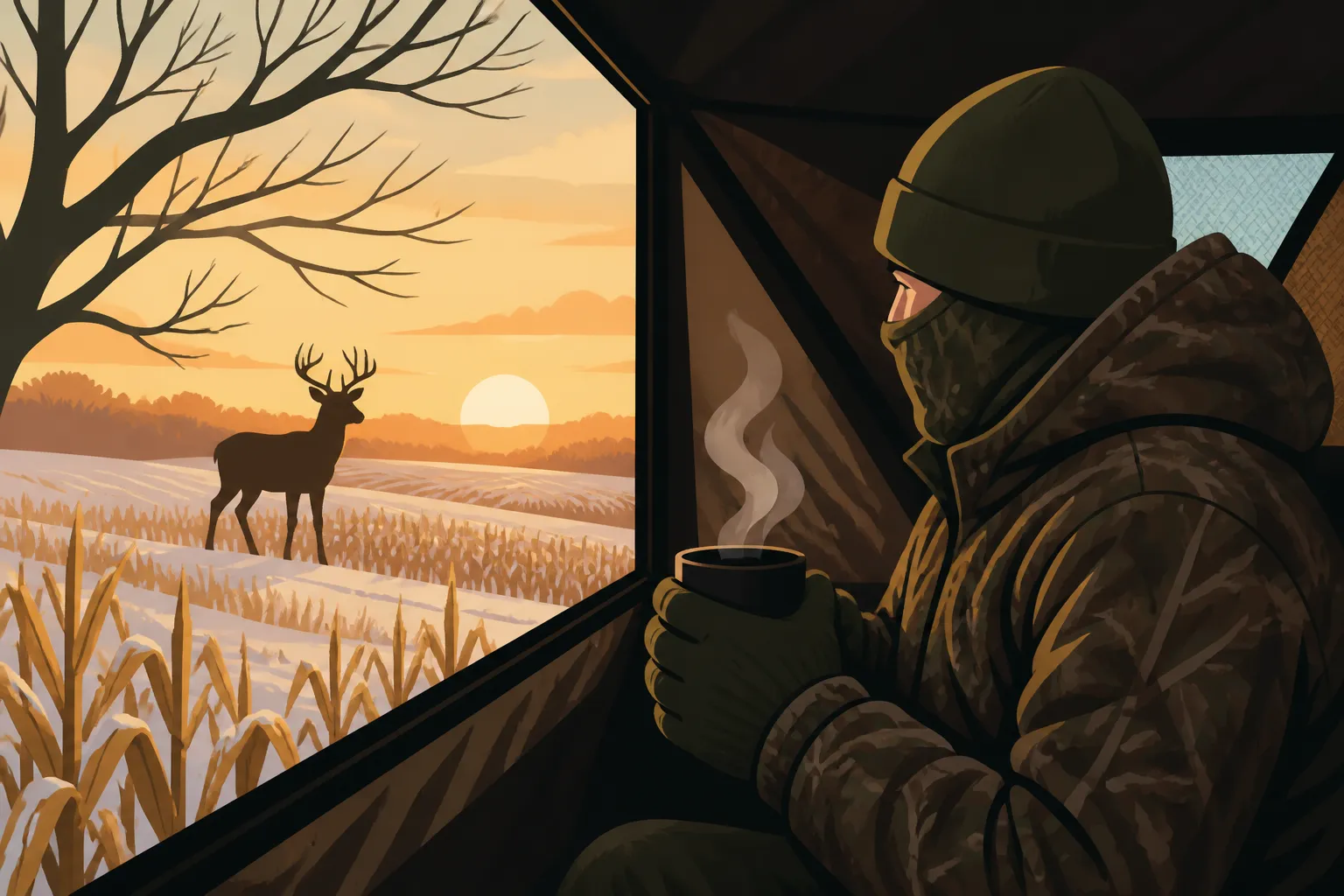
Chemical hand and toe warmers are a more affordable and widely used option. These air-activated packets provide hours of radiant heat and are small enough to stash in your pockets, gloves, or boots. Always buy more than you think you'll need; they're lightweight and a lifesaver. Another often-overlooked accessory is a good quality thermos filled with hot coffee, tea, or even soup. Sipping on a warm beverage throughout your sit not only provides a mental boost but also helps warm your core from the inside out. Pack a few high-calorie snacks too, as your body needs fuel to generate heat.
Strategic Stand Setup and Movement
Your choice of stand location and how you manage movement within that spot can significantly impact your ability to stay warm. It's not just about finding where the deer are; it's about finding a spot where you can comfortably hunt them. While scouting with tools like GoHunt can help you identify prime bedding and feeding areas, it also pays to think about how those spots interact with the wind.
Choosing a stand location that offers some natural protection from the prevailing wind can make a huge difference. A stand nestled on the leeward side of a ridge, behind a thick patch of timber, or even within a dense cedar thicket can block much of the wind's biting force. For instance, knowing how to interpret a Best Stand Locations in Rolling Timber to find natural windbreaks can reduce your exposure dramatically. Every little bit of shelter helps reduce the wind chill and allows your clothing to insulate more effectively.
Using a ground blind is another excellent strategy for maximizing warmth, especially in open country or during shotgun season. A well-brushed-in ground blind acts as a mini-shelter, blocking all wind and providing a degree of insulation that a treestand simply can't match. Learning how to effectively execute Brushing In a Ground Blind can turn a freezing sit into a comfortable one, allowing you to stay on station much longer. Inside a blind, you can even use a small propane heater (with extreme caution and ventilation, of course) for additional warmth. Regardless of your setup, minimize unnecessary movement. Every twitch and reposition can displace warm air trapped in your layers, requiring your body to work harder to reheat it. This applies to your pack as well; consider bringing a larger Packs for a Day in an Iowa Stand to carry all your essentials without having to remove items from outer pockets.
Practical Tips for Sustaining Warmth Throughout Your Sit
Beyond gear, there are practical habits and considerations that contribute significantly to your warmth and comfort on a cold December hunt. These are the small adjustments that, when combined, can make the difference between a successful, enjoyable hunt and one cut short by the cold.
The Walk-In and Preventing Sweat
This is a classic rookie mistake, and even seasoned hunters fall victim to it: getting overheated and sweaty on the walk to the stand. You layer up at the truck because it's freezing, then you start hiking, your body generates heat, and before you know it, you're sweating. When you stop moving and settle into your stand, that moisture quickly turns cold, and you're left shivering in damp clothes. It's a miserable experience that's entirely preventable.
The key is to start "comfortably cool." This means dressing for the exertion of the walk-in, not for the sit itself. Wear fewer layers, or at least unzip your outer and mid-layers, leaving your heavy parka and bibs unzipped or even carried in your pack. Once you reach your stand location, then you can quickly add those layers before your body cools down. A slow, steady pace on the walk-in is also crucial. Avoid rushing, which can make you sweat even more. Taking a few extra minutes to walk slower is far better than spending hours shivering on stand.
This strategy requires a bit of discipline, but it pays dividends. For those pre-dawn walks to a remote stand, you might feel a brief chill initially, but your body will quickly warm up once you start moving. The goal is to arrive at your stand dry and ready to layer up into maximum warmth, rather than arriving sweaty and destined for a cold sit.
Nutrition and Hydration for Cold Weather
Your body is like a furnace, and it needs fuel to generate heat. What you eat and drink before and during your hunt can directly impact your ability to stay warm. Don't underestimate the role of nutrition and hydration in cold weather survival.
Before heading out, eat a substantial, calorie-dense breakfast. Complex carbohydrates and healthy fats will provide sustained energy, helping your body keep its internal furnace burning strong. Oatmeal, eggs, and whole-wheat toast are great choices. Avoid sugary foods that give a quick burst followed by a crash. During your sit, pack high-calorie snacks that are easy to eat with gloves on and won't freeze solid. Think nuts, energy bars, jerky, and even some dark chocolate. These provide readily available fuel for your body to convert into heat.
Hydration is also critical, even in cold weather. You might not feel as thirsty as in summer, but your body still loses fluids through breathing and sweating (even minimal sweating under layers). Dehydration can impair your body's ability to regulate temperature. As mentioned earlier, a thermos of hot water, coffee, or tea is a double-whammy: it provides hydration and helps warm your core. Avoid alcohol, which might give a false sense of warmth but actually contributes to heat loss. Staying adequately fueled and hydrated is a simple yet effective way to help your body combat the cold from the inside out.
Mental Fortitude and Recognizing Hypothermia Signs
Hunting in December demands a certain level of mental toughness. The cold can be a real grind, and it's easy for your mindset to deteriorate when discomfort sets in. However, a positive mental attitude can genuinely help you endure longer and maintain your focus. Remind yourself why you're out there, anticipate deer movement (perhaps after a December Cold Front Deer Movement), and focus on the beauty of the winter woods. Many hunters find that listening to an audiobook or podcast (at a very low volume with one earbud, for safety) can help pass the time and keep their mind engaged.
However, there's a fine line between toughing it out and putting yourself at risk. It's vital to recognize the early signs of hypothermia. Initial symptoms include uncontrollable shivering, mild confusion, clumsiness, and difficulty performing simple tasks. As hypothermia progresses, shivering might stop, and confusion can worsen, leading to poor decision-making. If you start to experience these symptoms, it's time to get out of the woods and get warm. Your hunt isn't worth risking your health or safety. Tools like GoHunt can help you quickly locate the nearest exit or warming shelter if you find yourself in an emergency.
Have a plan for when to call it a day, even if it's earlier than you hoped. Sometimes, conditions simply become too extreme, or your body tells you it's had enough. There's no shame in ending a hunt to ensure your safety and comfort. Being prepared with the right Cold Weather Stand Clothing and knowing your limits ensures you can enjoy the challenge of late-season Iowa hunting for years to come. Remember that Quiet Fabrics for Treestand Hunting are important not just for concealment, but also for reducing the amount of fidgeting you might do if you're uncomfortable.
Disclaimer
Hunting is an inherently dangerous activity. Always prioritize safety, follow all local and state regulations, and exercise sound judgment in the field. The advice provided in this article is for informational purposes only and should not replace professional training or expert guidance. Conditions can change rapidly, and hunters should always be prepared for emergencies.