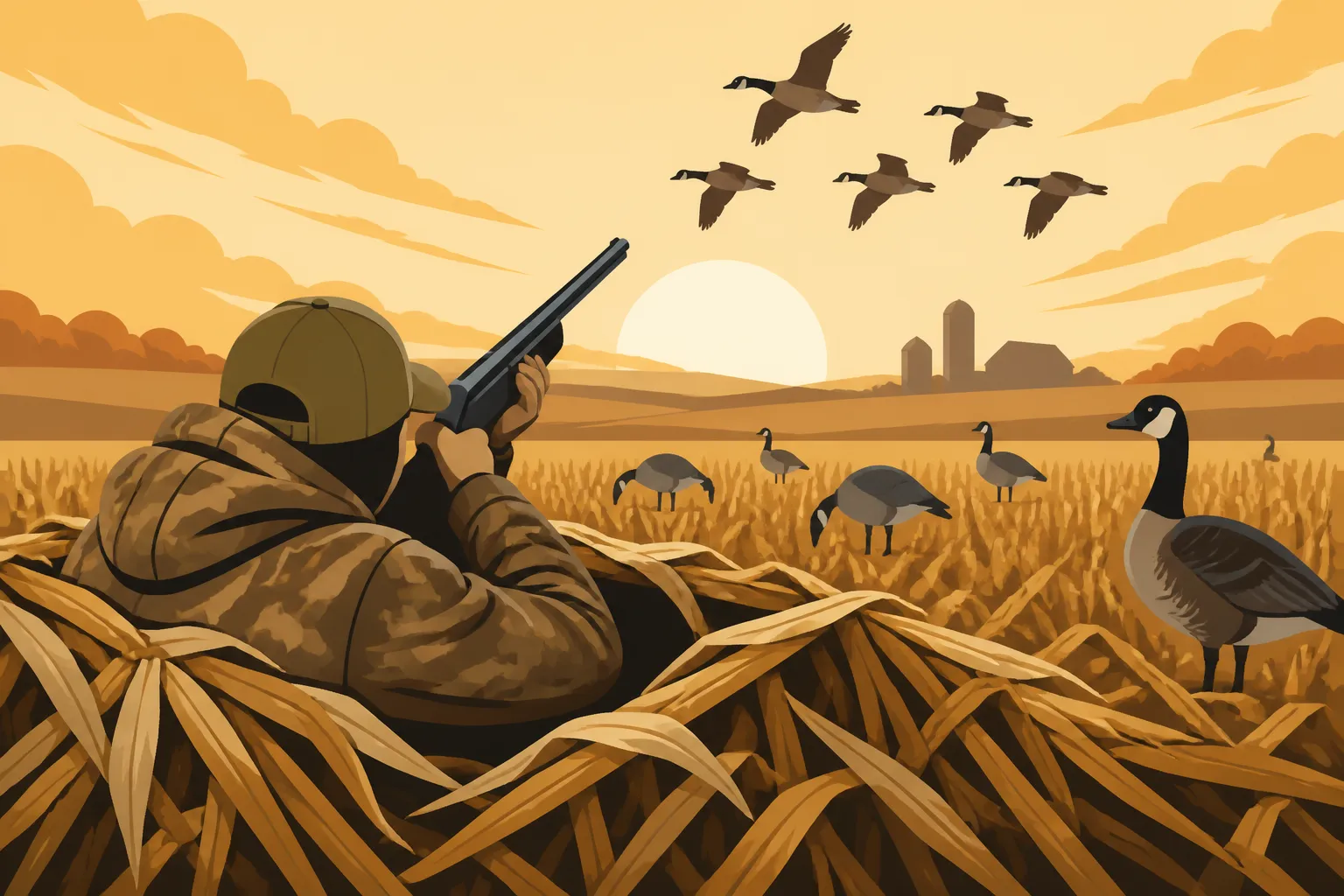
Layout Blinds in Iowa Stubble
Hunting waterfowl in Iowa's expansive stubble fields presents a unique challenge: how do you completely vanish into an otherwise flat landscape when ducks and geese possess some of the keenest eyesight in the animal kingdom? It’s a frustration many hunters know all too well, staring up at circling birds only to have them flare at the last minute because of a poorly concealed outline. This guide is dedicated to helping you master the use of layout blinds in Iowa's stubble fields, ensuring you become an invisible part of the environment, not a glaring anomaly.
Why Layout Blinds are a Game-Changer for Iowa Stubble Fields
Hunting ducks and geese in the sprawling agricultural fields of Iowa is an experience unlike any other. However, it comes with a significant hurdle: the sheer lack of natural cover. Unlike timber hunting or chasing deer in thick river bottom ground, you’re often operating in wide-open spaces, which means traditional concealment methods simply won't cut it. This is precisely where layout blinds shine, transforming what seems like an impossible task into a highly effective strategy.
The Endless Challenge of Hiding from Sharp-Eyed Waterfowl
Picture this: you've done your scouting, found a field where geese are consistently feeding, and set up your decoy spread perfectly. The sun is just starting to peek over the horizon, casting long shadows, and you hear the distant chatter of an approaching flock. Your heart races, anticipation building with every wingbeat. Then, just as they're committed, perhaps 100 yards out, they suddenly gain altitude, turn sharply, and disappear. What happened? More often than not, it's a breakdown in concealment. Waterfowl, particularly geese, have incredible eyesight. They can spot unnatural shapes, glares, or movement from astonishing distances. A human outline, even partially hidden, sticks out like a sore thumb against the uniform backdrop of a cut corn or bean field. The challenge isn't just about covering yourself; it's about blending seamlessly into the environment, erasing any tell-tale signs that scream "hunter." This constant battle against their sharp senses is what makes the right blind, and its proper setup, absolutely critical.
Beyond Pit Blinds and Natural Cover: The Layout Blind Advantage
For generations, hunters have tried various methods to hide in fields. Some have dug elaborate pit blinds, burying themselves below ground level. While incredibly effective at concealment, pit blinds are a massive undertaking, require significant permission, and are completely static – meaning if the birds shift their feeding patterns, your pit becomes useless. Others attempt to use natural field edges, hedgerows, or even hay bales, but these often provide limited concealment, especially as birds get closer, and still leave large, unnatural silhouettes.
Layout blinds offer the best of both worlds, bridging the gap between deep concealment and crucial mobility. They allow you to lay flat on the ground, significantly reducing your profile, and the framework is designed to be easily brushed in with local vegetation. This means you can adapt your setup to the exact field conditions and bird movements. If the geese decide to land 200 yards from where they were yesterday, you can pick up your layout blind, move it, and re-brush it in a fraction of the time it would take to dig a new pit. This adaptability is paramount in Iowa, where weather patterns, farming activities, and bird pressure can change daily. You aren't tied to one spot, which dramatically increases your odds of staying on the birds throughout the season.
Selecting the Perfect Layout Blind for Iowa's Diverse Stubble
Choosing the right layout blind isn't just about picking one off the shelf; it's about understanding the specific demands of hunting Iowa's diverse stubble fields. You need a blind that can withstand the elements, keep you comfortable during long waits, and, most importantly, disappear into the landscape. Getting this choice right is foundational to your success.
Essential Features for Durability, Comfort, and Low Profile
When you're lying in a cut cornfield in late November, with a biting Iowa wind whipping across the plains, you'll quickly appreciate a well-designed layout blind. First and foremost, look for durability. The blind will be dragged, folded, stepped on, and exposed to mud, snow, and rain. High-quality, weather-resistant fabric and a robust aluminum or steel frame are non-negotiable. Zippers should be heavy-duty and easy to operate with cold, gloved hands.
Comfort is another critical factor. You might be spending hours, even an entire day, inside your blind. An adjustable padded headrest is a blessing, and a comfortable, elevated backrest will save your neck and back. Some blinds even offer extra padding for your lower back and legs. Entry and exit should be smooth and quiet; nothing spooks birds faster than fumbling to get out of your blind. Finally, a low profile is key. The entire point of a layout blind is to make you as flat and invisible as possible. Measure the height of the blind when deployed and consider how easily it will blend into the typical height of local stubble, whether it's cut beans or standing cornstalks. Brands like Avery, Rig'Em Right, and GHG (Greenhead Gear) are well-known for producing blinds with these essential features in mind.
Matching Camouflage to Iowa's Corn, Bean, and Wheat Fields
Iowa's agricultural landscape isn't monolithic; it shifts from golden corn stubble to tan bean fields to lighter wheat or oat stubble, sometimes within the same mile. Your layout blind's camouflage pattern needs to reflect this diversity. A dark, marsh-patterned blind, for instance, will stick out like a sore thumb in a light-colored wheat field.
For late-season corn stubble, a pattern with browns, tans, and dark accents that mimics dry cornstalks is ideal. Think about patterns like Mossy Oak Shadow Grass Habitat or Realtree Max-7. For bean fields, which often have a lighter, more uniform tan or light brown appearance after harvest, a pattern with more subtle shades of tan and fewer distinct "grass" elements might be better. Many modern waterfowl camo patterns are designed with a universal stubble concept, incorporating elements from various field types to provide decent coverage across the board. However, don't rely solely on the factory pattern. The real magic happens when you add natural vegetation, but starting with a pattern that closely matches your primary hunting environment will give you a significant advantage. This foundational camo helps break up your silhouette even before you add the real stubble.
Popular Models and What Makes Them Stand Out
The market is flush with excellent layout blind options, each with its own loyal following. Understanding their nuances can help you make an informed decision based on your specific hunting style and local conditions.
- Avery Outdoors Finisher/Power Hunter: Avery blinds are renowned for their durability and low profile. The Finisher is a popular choice for its balance of comfort and concealment, featuring a strong frame and excellent stubble straps. The Power Hunter is even lower profile, a favorite for situations where minimal height is crucial, though it sacrifices a bit of comfort.
- Rig'Em Right X-Standers/LowRider: Rig'Em Right blinds have gained a strong reputation for ruggedness and thoughtful design. Their X-Standers offer good comfort and solid construction, while the LowRider series lives up to its name, providing an ultra-low profile for maximum concealment in sparse cover. They often feature robust buckles and well-placed stubble straps.
- Greenhead Gear (GHG) Blinds: GHG offers a range of blinds, from their Migrator series to Ambush. They are generally well-built and offer good value, often featuring comfortable padding and effective stubble integration systems.
- Rogers Sporting Goods Blinds: Rogers produces a popular line of house-brand blinds that often compete favorably on price while still delivering solid performance. Many hunters find them to be a great entry point into layout blind hunting without breaking the bank.
When comparing models, think about how you'll transport them (some fold flatter or are lighter), how quickly they can be set up and taken down, and the ease of brushing them in. A quick look at online reviews and discussions on hunting forums can also provide real-world insights into which models hold up best in tough Iowa conditions.
| Feature / Model Type | Low Profile Blind (e.g., Avery Power Hunter) | Standard Layout Blind (e.g., Rig'Em Right X-Stander) | Premium Layout Blind (e.g., Tanglefree Flight Series) |
|---|---|---|---|
| Height (Approx.) | 14-16 inches | 18-20 inches | 16-18 inches (often with adjustable features) |
| Comfort | Basic padding, snug fit | Good padding, more spacious | Excellent padding, full support, wider |
| Packed Size | Very compact | Moderately compact | Can be larger, but often designed for easy transport |
| Weight | Lighter (10-15 lbs) | Medium (18-25 lbs) | Heavier (25-35 lbs), but robust |
| Stubble Straps | Adequate | Excellent, well-placed | Extensive, strategic placement, extra features |
| Durability | Good for its class | Very good, rugged | Superior materials and construction |
| Best Use Case | Sparse cover, quick setups, highly mobile | All-around, versatile, good balance of features | Dedicated hunter, long sits, maximum comfort |
The Art of Brushing In: Vanishing into the Iowa Landscape
Having the best layout blind means nothing if you don't master the art of brushing it in. This is where you transform a piece of hunting gear into an invisible part of the field. It's a skill that takes practice and observation, but when done right, it can mean the difference between birds flaring at a distance and finishing right in your face.
Sourcing and Layering Natural Materials for Seamless Blending
The golden rule of brushing in is simple: use what's already there. If you're hunting a cut cornfield, use cornstalks. If it's bean stubble, use bean stubble. The key is to gather enough material that closely matches the field you're in, right down to the color and texture. Before you even set up your blind, take a few minutes to walk around and collect a good pile of the appropriate vegetation. This might mean breaking off cornstalks, pulling up dry weeds, or snipping off soybean stalks with pruning shears.
Once you have your materials, the process of layering begins. Start by tucking the base of the stalks or weeds into the stubble straps that are usually stitched onto the blind's fabric. Work from the bottom up and from the inside out. Don't just lay material flat; try to give it some dimension, mimicking how natural stubble stands or lays. Vary the height and angle of the material to break up the perfectly straight lines of the blind's frame. Overlap pieces to create a dense, natural look that hides not only the blind but also any shadows it might cast. You want to avoid any flat, unnatural surfaces. Think like a bird looking down from above – every angle needs to look like undisturbed field.
Common Pitfalls and How to Avoid Being "Sky-Blinded"
Many hunters rush the brushing-in process, leading to common mistakes that savvy waterfowl quickly identify. One of the most frequent errors is not using enough material. A sparse layer of stubble might look okay from ground level, but from 500 feet up, the blind's outline will be obvious. Don't be afraid to overdo it; you can always remove a little if it feels too bulky.
Another common pitfall is creating a "sky-blind" effect. This happens when the brushing material is placed too vertically, creating a solid, dark mass against the horizon or sky. When birds are circling and looking down, this dark blob is immediately suspicious. Instead, angle your brushing material slightly downwards and outwards, blending it into the field rather than creating a wall. Use lighter, sparser material near the head-end flap, as this is often the most critical area for eye contact with approaching birds. Always step back and look at your setup from different angles, including kneeling down to simulate a bird's perspective. It helps to have a hunting partner give you an honest critique. Also, pay attention to shadows. A strong sun can cast a hard shadow of your blind, revealing its presence. Angle your blind to minimize this or use extra material to soften the shadow lines. Remember, even the best blinds, like those you might explore on a platform like GoHunt, still require meticulous brushing to truly disappear.
Strategic Placement and Decoy Spreads for Maximizing Success
Beyond just hiding your blind, knowing where to put it in the field and how to integrate it with your decoy spread is paramount. Waterfowl are creatures of habit and wind, and understanding these factors will dictate whether they commit to your setup or give you a wide berth. This strategic thinking takes your hunting from simply being present to actively influencing bird behavior.
Reading Wind, Sun, and Bird Flight Paths for Optimal Position
Waterfowl, especially geese, almost always land into the wind. This is a crucial piece of information that dictates your blind placement. Your layout blinds should be positioned downwind of your decoy spread, facing into the wind. This way, when birds commit and circle to land, they will be facing away from you as they make their final approach over your decoys, presenting clean shots as they hover or cup their wings. A good rule of thumb is to place your blinds 15-25 yards from the "kill hole" – the open area in your decoy spread where you want the birds to land.
The sun's position is equally important. Whenever possible, position your blinds so the sun is at your back, shining into the eyes of approaching birds. This makes it harder for them to see your movement and any glare from your blind or face. In Iowa, with its typically open horizons, the sun can be a major advantage or a crippling disadvantage depending on your setup. Similarly, observing established bird flight paths into a field can give you a clue as to where to set up. If birds are consistently entering a field from a certain corner, setting up near that corner, while still respecting wind and sun, can put you directly in their path. Tools like GoHunt's mapping features can be incredibly helpful for e-scouting these patterns before you even step foot in the field, allowing you to mark key features or common flight corridors.
Integrating Your Blind into a Realistic Decoy Spread
Your layout blind shouldn't feel like a separate entity from your decoy spread; it needs to be an integral part of it. Think of your blinds as part of the "feeding flock." Many hunters place their blinds within the body of a U-shaped or J-hook decoy spread, often on the upwind side of the "hook." This creates a natural-looking group of birds, with your blinds acting as "loafing" or "feeding" birds on the ground.
Don't be afraid to add a few full-body feeder decoys directly around and even on your blinds. This further breaks up the outline and makes the blinds appear to be just more birds in the spread. If you're hunting a massive spread of several hundred decoys, placing multiple blinds in a scattered pattern, always mindful of the wind and sun, can mimic a large, dispersed flock. The goal is to make the entire scene – decoys and blinds – look as natural and inviting as possible. Understanding Field Hunting Geese in Cut Corn tactics will emphasize the importance of blending your blinds into a convincing spread. Remember, geese are often looking for safety in numbers, and a realistic spread with well-hidden hunters is incredibly appealing.
Prioritizing Safety and Situational Awareness in the Field
While focusing on concealment and bird behavior, never lose sight of safety. When hunting in a group, clearly communicate where everyone is positioned. A common strategy in layout blind hunting is to have all hunters set up in a line, parallel to each other, to ensure everyone is shooting in the same safe direction – typically straight upwind, directly at the incoming birds. Establish clear shooting lanes and ensure no one is shooting over another hunter's blind.
Visibility, ironically, becomes important for other hunters. While you want to be invisible to birds, if there are other hunting parties in the area, a safety flag on your blind, raised when no birds are working, can signal your presence. Many blinds have safety flags built-in or offer accessories. Additionally, ensure you're aware of your surroundings beyond just the immediate decoy spread. Farmers might be working nearby fields, or other hunters could be approaching your location. Maintaining situational awareness, even when intently watching the skies, is a non-negotiable aspect of responsible hunting. This is especially true on public land, where you might encounter more hunters. Always check the Iowa Waterfowl Zones and Splits for specific regulations and ensure you have your Iowa Duck Stamp and HIP Requirements in order.
Disclaimer
Please remember that hunting regulations can change frequently. Always consult the most current Iowa Department of Natural Resources (DNR) regulations before heading afield. This guide is for informational purposes only and does not supersede official hunting laws and safety guidelines. Be safe, ethical, and responsible in all your hunting endeavors.