Iowa CWD Sampling and Carcass Rules
Navigating the regulations around chronic wasting disease (CWD) in Iowa can feel like trying to hit a moving target sometimes. Between mandatory sampling, voluntary testing, and strict rules about moving deer carcasses, it's easy to get overwhelmed and worry about doing something wrong after all your hard work. This guide aims to demystify Iowa's CWD sampling and carcass rules, offering clear, actionable information to help you stay compliant and confident in handling your harvest.
Understanding Chronic Wasting Disease and Its Impact on Iowa's Deer Herd
Chronic Wasting Disease (CWD) is a neurological disease affecting deer, elk, and moose, and it's a concern for every hunter and wildlife manager in Iowa. It's caused by abnormal proteins called prions, and unfortunately, it's always fatal for the animal. What makes CWD particularly challenging is that these prions can persist in the environment for a long time, and the disease can take a long time to manifest visible symptoms in an infected deer. This means a deer could look perfectly healthy but still be carrying and spreading the disease.
The Iowa Department of Natural Resources (DNR) takes CWD very seriously because it poses a significant threat to the health and sustainability of our cherished whitetail deer population. When we talk about Chronic Wasting Disease in Iowa Deer, we're talking about protecting a resource that many of us dedicate countless hours to pursuing each fall. The disease can lead to localized population declines and can certainly impact the overall health and vitality of the herd. That's why understanding and adhering to the rules isn't just about avoiding a fine; it's about being a responsible steward of the land and its wildlife.
How CWD Spreads and Its Presence in Iowa
CWD spreads primarily through direct animal-to-animal contact, but also indirectly through contact with saliva, urine, feces, and contaminated soil or vegetation. This persistence in the environment is what makes containing CWD so difficult once it establishes itself in an area. Deer can shed prions before they even show symptoms, complicating efforts to track and manage its spread. It's a silent threat that requires constant vigilance.
Unfortunately, CWD is no longer a distant threat for Iowa; it's here. The first case in Iowa was detected in 2013, and since then, the disease has slowly but steadily appeared in more counties across the state. While it might not be widespread in every corner, certain areas are now designated as CWD surveillance zones due to confirmed positive cases. Understanding How CWD Spread Across Iowa Counties involves recognizing that deer move across landscapes, making containment a community effort. The DNR monitors the prevalence of CWD carefully, using hunter-submitted samples to gauge its distribution and intensity.
Why Sampling and Carcass Rules are So Important
The sampling and carcass rules aren't just arbitrary hoops to jump through; they are critical tools in the DNR's strategy to monitor and manage CWD. By collecting samples from harvested deer, wildlife biologists can determine how prevalent the disease is in different areas and track its spread. This data is absolutely essential for making informed management decisions, such as setting antlerless quotas or defining CWD surveillance zones. Without hunter cooperation, getting an accurate picture of the disease's status would be virtually impossible.
Beyond monitoring, the carcass transport rules are designed to prevent the further spread of CWD. Imagine a hunter harvesting a deer in a CWD-positive county, then transporting the entire carcass, including the brain and spinal column, to a CWD-negative county for processing. If that deer was infected, the prions could be introduced to a new area through discarded carcass parts. These regulations are a proactive measure, aimed at slowing down the disease's movement across the state and safeguarding the health of deer in currently uninfected regions. It’s about thinking beyond your immediate hunting area to the broader landscape.
Mandatory CWD Sampling Requirements and Designated Counties
One of the biggest areas of confusion for hunters revolves around when and where CWD sampling is mandatory. It's not a statewide mandate every season, but rather a targeted effort in specific areas that have a higher risk of CWD or where the disease has already been detected. The DNR carefully selects these counties and dates, and it's crucial for hunters to be aware of these requirements if they plan to hunt in those zones. Ignoring these rules isn't an option, as it hinders the DNR's ability to track the disease and could result in penalties.
The goal of mandatory sampling is to collect enough data points from specific areas to accurately assess CWD prevalence. It's a collective effort, and when you harvest a deer in one of these designated zones, your participation is vital. Even if you've hunted Iowa for years and think you know the rules, these zones can change, so a quick check each year before you head out is always a good idea. Many hunters find using resources like GoHunt's mapping features incredibly helpful for identifying these zones and ensuring they're up to date on specific county regulations.
Identifying Mandatory CWD Sampling Counties and Seasons
Each year, the Iowa DNR publishes a list of counties and specific hunting seasons where mandatory CWD sampling is in effect. These are typically counties that share a border with states where CWD is well-established, or counties where positive cases have already been found. It's not just about what county you're hunting in, but often also about when you're hunting. For instance, mandatory sampling might apply to the first shotgun season in one county, but only to late muzzleloader in another.
To find the most current information, you'll need to consult the official Iowa hunting regulations, often available online through the DNR website. They will clearly outline Iowa CWD Mandatory Sampling Counties and the specific dates or seasons that apply. A table might look something like this, though keep in mind these details can change annually:
| County | Mandatory Sampling Season(s) | Drop-Off Location Examples | Additional Notes |
|---|---|---|---|
| Allamakee | First/Second Shotgun, Late Muzzleloader | Waukon DNR Office, designated lockers | Check specific dates closely |
| Clayton | First/Second Shotgun, Archery (Specific Dates) | Guttenberg DNR Office, local businesses | Often includes early archery dates |
| Wayne | First/Second Shotgun | Corydon DNR Office, participating lockers | Southern border county |
| Decatur | First/Second Shotgun | Leon DNR Office, selected vendors | High surveillance area |
| Fayette | Late Muzzleloader | West Union DNR Office | Focus on specific seasons |
Always double-check the current year's regulations before you hunt, as these can and do shift based on new CWD detections and surveillance needs. You wouldn't want to get caught off guard after a successful hunt.
The Mandatory Sampling Process After a Harvest
So, you've successfully harvested a deer in a mandatory sampling county and season. What happens next? The process is generally straightforward but requires your attention. First, you'll need to report your harvest to the DNR, following the standard Iowa Deer Harvest Reporting Rules. After that, you're required to present your deer, or at least its head, at a designated CWD sampling station. These stations are usually set up at specific DNR offices, county conservation board offices, or partnering locker plants and meat processors.
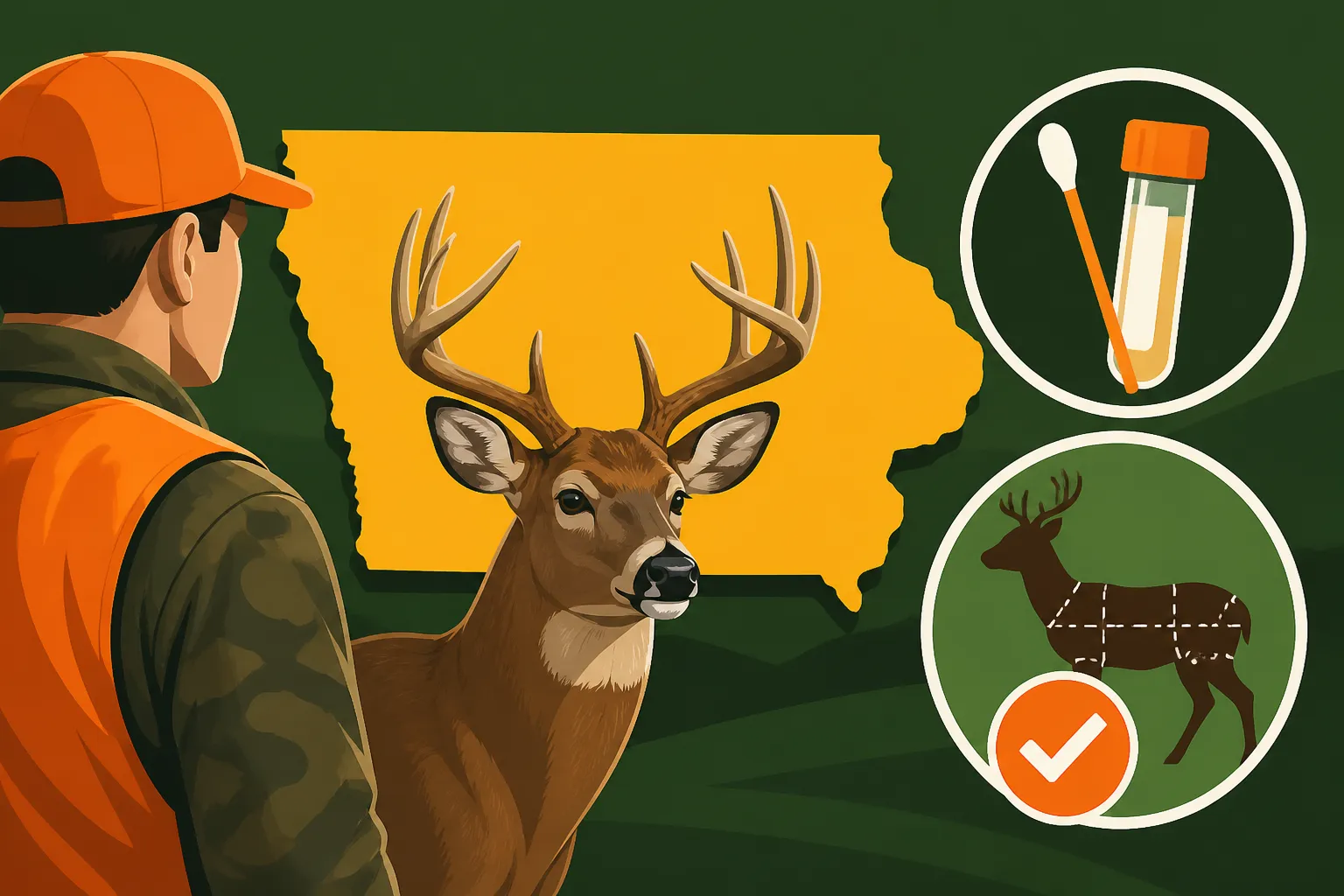
At the sampling station, trained DNR staff or authorized personnel will collect tissue samples, typically from the lymph nodes in the deer's neck. They'll also record information about your harvest, such as the location and date. This collection process is quick and non-invasive to the meat you intend to keep. The important thing is to ensure you bring the necessary parts of the deer, often just the head, within the specified timeframe. If you're quartering your deer in the field, remember to keep the head intact with as much neck tissue as possible for proper sampling. It's about making sure the scientists get the best possible sample to test for the disease.
Voluntary CWD Testing and Hunter-Submitted Samples
Even if you're hunting in a county where CWD sampling isn't mandatory, you still have a vital role to play in monitoring the disease through voluntary testing. The more samples the DNR receives from all over the state, the more comprehensive their understanding of CWD's distribution becomes. Many hunters choose to participate in voluntary testing simply for peace of mind, especially if they plan to consume the venison, or if they just want to contribute to the broader conservation effort. It's a great way to be proactive, even when not required by law.
The thought of getting your deer tested might seem like an extra hassle after a long hunt, but the process for voluntary submission is designed to be as convenient as possible. It's about giving hunters the opportunity to be part of the solution, whether they're pursuing a trophy buck or just filling the freezer. Organizations like GoHunt often share mapping data that can point you to the nearest drop-off locations, making the process even smoother for those wanting to contribute.
How to Submit a Deer for Voluntary CWD Testing
If you decide to submit your deer for voluntary CWD testing, the first step is to locate an authorized drop-off site. These are typically available at DNR offices, some county conservation board facilities, and many participating locker plants and veterinary clinics across Iowa. The DNR website will have an up-to-date list of Where to Drop an Iowa CWD Sample. It’s a good idea to check their hours of operation, especially around busy hunting seasons, to ensure someone will be available to assist you.
When you bring your deer (or just the head, with a few inches of neck attached) to a drop-off site, you'll usually be asked to fill out a short form providing details about your harvest, such as the date, county, and specific location where the deer was taken. This information is critical for the DNR to accurately map any CWD detections. Staff will then collect the necessary tissue samples, much like during mandatory sampling. You'll typically receive a tracking number or confirmation that allows you to look up your results later. The process is streamlined so you can quickly get back to butchering your deer or simply head home after a successful day in the field.
Interpreting CWD Test Results and What They Mean
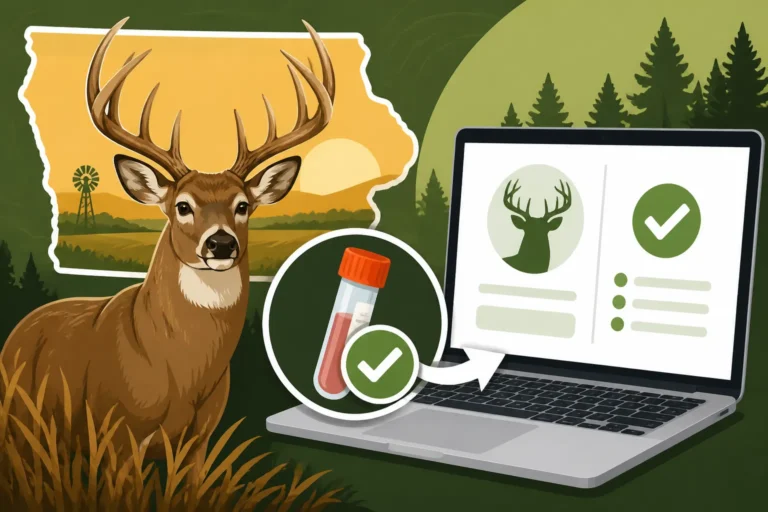
After your sample has been collected, it's sent to a specialized laboratory for analysis. This process can take several weeks, especially during peak hunting season. The Iowa DNR usually provides an online portal where you can check the status and results of your CWD test using the unique tracking number you received at the drop-off site. Knowing Getting Iowa CWD Test Results Online can ease a lot of anxiety while you wait.
If a test comes back negative, it means CWD prions were not detected in the sample. This offers peace of mind regarding the venison for your family. However, it's important to understand that no test is 100% foolproof, and a negative result doesn't guarantee the absence of CWD, especially if the deer was in the very early stages of infection. If a test comes back positive, the DNR will typically contact you directly. A positive result indicates the deer was infected with CWD. The DNR will provide guidance on safe handling and disposal, and it’s important to remember Is CWD Dangerous to Hunters? is a common concern. While there have been no documented cases of CWD transmission to humans, public health agencies recommend against consuming meat from CWD-positive animals.
Iowa's Deer Carcass Movement and Transport Restrictions
Perhaps one of the most critical aspects of CWD management, and often the most confusing for hunters, are the regulations surrounding the movement of deer carcasses. These rules are put in place for a very specific reason: to prevent the physical transport of CWD prions from an infected area to an uninfected one. If you harvest a deer in a CWD-positive zone, you can't just throw the whole animal in the truck and drive it across the state line or to a completely different part of Iowa without following specific guidelines.
These rules aren't just about moving deer across state lines; they also apply to moving carcasses within Iowa, particularly when moving from a CWD-designated county to a non-designated one. It's a preventative measure, designed to slow the potential spread of the disease to new regions. The good news is that these regulations are generally clear once you know what to look for, and they focus on removing the highest-risk parts of the animal before transport.
Rules for Transporting Carcasses Within Iowa
If you harvest a deer in one of Iowa's CWD mandatory sampling counties or a designated CWD surveillance zone, you must adhere to specific rules when transporting that carcass. Generally, whole carcasses are not allowed to be transported out of these high-risk counties unless they are going directly to a CWD sampling station or a licensed meat processor within or immediately adjacent to the CWD zone. The primary goal is to ensure that potentially infected parts—namely the brain and spinal column, where prions are most concentrated—are not transported to new, uninfected areas.
What can you transport? Typically, you can transport:
- Deboned meat
- Antlers (cleaned of all brain tissue and attached skull plate if applicable)
- Hides (without the head)
- Skulls (cleaned of all brain and nervous tissue)
- Taxidermy products
This means that if you're hunting in a CWD-positive county and want to take your deer home to process it in a different county, you'll need to field dress and bone out your deer in the field, or at a processing facility within the CWD zone. This process ensures that you're only moving low-risk parts. It might seem like extra work after a successful hunt, but it's a small price to pay to help protect the wider deer herd.
Restrictions on Bringing Deer Carcasses into Iowa
The rules aren't just about moving deer out of CWD-positive areas in Iowa; they also apply to bringing deer into the state from elsewhere. If you've been hunting deer in another state, especially one known to have CWD, Iowa has strict regulations about what parts of the deer you can bring across its borders. This is a critical measure to prevent the importation of CWD into Iowa from other regions. You can find detailed information under Bringing a Deer Into Iowa From Another State.
Similar to the in-state rules, hunters bringing deer from out-of-state into Iowa are generally restricted to:
- Deboned meat
- Antlers (cleaned of all brain tissue and skull plate if applicable)
- Hides (without the head)
- Skulls (cleaned of all brain and nervous tissue)
- Taxidermy products
The easiest way to comply is to process your deer down to deboned meat and cleaned skull/antlers before crossing the Iowa state line. This ensures you're not bringing any high-risk parts into the state. Failure to comply with these interstate regulations can result in significant fines and legal issues, and more importantly, could introduce CWD to Iowa's uninfected deer populations. Hunters using an app like GoHunt to scout other states can often find CWD information for those areas, which helps in planning ahead for processing needs before heading home.
Safe Handling, Processing, and Disposal of Deer
Even with all the rules and regulations, the actual hands-on task of field dressing, transporting, and processing a deer requires careful attention, especially when CWD is a concern. Hunters often worry about the safety of their venison, and rightfully so. Knowing how to handle your harvest safely not only protects you and your family but also ensures you're disposing of any potential CWD prions responsibly.
This is where common sense and best practices really come into play. It's not just about following the letter of the law, but adopting habits that minimize risk and promote good hygiene. From the moment you field dress a deer until the meat is in your freezer, every step is an opportunity to be vigilant.
Field Dressing and Initial Carcass Handling
When field dressing a deer, especially in a CWD-positive or surveillance zone, minimizing contact with brain and spinal cord tissue is paramount. While CWD prions are most concentrated in the central nervous system, lymphoid tissues, and specific organs like the spleen, keeping your knives clean and avoiding unnecessary cuts is always a good practice. Many hunters opt for the "gutless method" in the field, which can significantly reduce contact with internal organs and limit the amount of material left at the kill site.
Use disposable gloves and change them frequently, especially if you handle different parts of the animal. If you plan to have your deer sampled, consider how you can keep the head and neck intact for the DNR technicians. Transport your deer promptly to a CWD sampling station or processor. If you're going to a mandatory sampling station, ensure the head and neck are available for technicians to take samples. If you're not required to sample but still want to be safe, consider boning out the meat in the field, leaving the skeleton, head, and guts behind. This adheres to Iowa Carcass Transport Restrictions and minimizes risk.
Processing and Waste Disposal for Peace of Mind
Once your deer is home or at a processing facility, continue with safe processing practices. Use separate knives and cutting boards for venison than you would for other meats. Thoroughly clean and sanitize all equipment after processing. If your deer tests positive for CWD, or if you simply prefer not to take any chances with a deer harvested in a CWD zone, the Iowa DNR will typically provide guidance on how to safely dispose of the carcass remains.
Generally, for positive animals or high-risk parts, incineration is the preferred method if available. Otherwise, deep burial can be an option to prevent scavengers from spreading prions. Never dispose of high-risk carcass parts (brain, spinal cord, spleen, lymph nodes) in regular trash, landfills, or dumpsters that aren't specifically designated for CWD waste. Proper disposal is a critical step in preventing further spread of the disease in the environment. It's about containing the threat, and as hunters, we're on the front lines of this effort.
Hunter Responsibilities and Resources for CWD Information
Being a responsible hunter in Iowa means staying informed about CWD and actively participating in the state's management efforts. The regulations can change, counties can be added to surveillance zones, and new information can emerge. It's not a set-it-and-forget-it kind of situation. Your cooperation, whether through mandatory sampling or voluntary participation, directly contributes to the long-term health of Iowa's deer herd and the future of hunting in our state.
The Iowa DNR provides a wealth of resources, and savvy hunters know to check them regularly. Think of it as part of your pre-hunt planning, just like checking the weather or mapping your access routes. After all, protecting the game you pursue is just as important as successfully harvesting it.
Staying Updated on Iowa's CWD Regulations
The most reliable source for current CWD regulations is always the official Iowa Department of Natural Resources website and their annual hunting regulations booklet. These are updated annually, sometimes with emergency changes if new CWD detections warrant it. Before each hunting season, make it a habit to review the most recent regulations, paying close attention to any changes regarding CWD mandatory sampling counties, dates, and carcass transport rules.
Many third-party hunting apps and resources, like GoHunt, often integrate DNR data, making it easier to visualize CWD zones on a map alongside public land boundaries and other critical information. However, always cross-reference with the official DNR publications to ensure you have the most accurate and up-to-date information. Ignorance of the law is never an excuse, especially when the health of our wildlife is at stake.
Reporting Sick Deer and What to Do
One of the most valuable contributions hunters can make is Reporting a Sick Deer in Iowa. You are the eyes and ears in the field, spending countless hours observing deer behavior. If you encounter a deer that appears sick or is acting abnormally, it's crucial to report it to the Iowa DNR immediately.
Symptoms of CWD in deer can include:
- Extreme weight loss (emaciation)
- Stumbling or incoordination
- Listlessness
- Drooling
- Excessive thirst and urination
- Lowered head and ears
These symptoms often appear late in the disease progression, but if you see them, don't hesitate to contact your local DNR conservation officer or wildlife biologist. Do not harvest or consume a deer exhibiting these signs. Your report could lead to an important CWD detection and help the DNR better understand where the disease is present, aiding in their management strategies. It's a key part of our collective responsibility to the herd.
Disclaimer
This guide provides general information about Iowa's CWD sampling and carcass rules. Regulations are subject to change. Always consult the official Iowa Department of Natural Resources website or their most current hunting regulations booklet for the precise and up-to-date legal requirements before hunting.