Getting Iowa CWD Test Results Online
The wait after you've harvested a deer, especially a beautiful Iowa whitetail, is often filled with excitement for venison, but for many, a creeping anxiety about Chronic Wasting Disease (CWD) results can quickly dampen that post-hunt glow. Knowing your deer's CWD status is crucial, not just for peace of mind about your family's food, but for the health of Iowa's cherished deer herd. This guide will walk you through the exact steps to check your Iowa CWD test results online, so you're not left wondering.
Understanding the Importance of CWD Testing in Iowa
It's natural to be a little anxious while waiting for CWD test results. After all, you've put in the time, effort, and passion to harvest an animal that you plan to feed your family. The last thing any hunter wants to hear is that their deer might be carrying a serious disease. But beyond personal consumption, understanding CWD and participating in testing is a vital part of being a responsible conservationist here in Iowa. The more data the Iowa Department of Natural Resources (DNR) collects, the better equipped they are to monitor and manage this disease, protecting the future of our deer herd.
Why Your Sample Matters to the Herd
Every single sample collected from a harvested deer contributes to a larger picture for wildlife biologists. Imagine trying to understand the spread of a disease across an entire state with only a handful of data points – it would be impossible. Each time a hunter submits a deer head for CWD testing, they're providing a crucial piece of that puzzle. This information helps the DNR track the prevalence of CWD, identify new areas where it might be appearing, and understand how it's progressing through different parts of the state. Without hunter participation, managing CWD would be an exponentially more difficult task, and it's a testament to Iowa hunters' dedication that so many take the time to contribute. This collective effort is what allows us to keep tabs on How CWD Spread Across Iowa Counties and informs management strategies.
The Health Implications for Hunters
While the Centers for Disease Control and Prevention (CDC) states that there have been no reported cases of CWD infection in people, and there is no strong evidence that CWD can be transmitted to humans, they do recommend not eating meat from CWD-infected animals. This recommendation is a precautionary measure, reflecting the scientific community's cautious approach to zoonotic diseases. For many of us, venison is a staple, a lean and delicious source of protein that connects us directly to the land. The thought of potentially consuming contaminated meat is unsettling, to say the least. Getting your deer tested provides that critical reassurance. It allows you to confidently process, prepare, and share your harvest, knowing you've taken every reasonable step to ensure its safety. It's about respecting the animal, respecting your family's health, and making informed choices based on the best available science. This proactive step addresses the natural question, Is CWD Dangerous to Hunters?, by providing concrete answers about your specific animal.
Submitting Your Deer for CWD Testing
Before you can even think about checking results online, you've got to submit your sample! This part of the process, while sometimes a bit of a chore after a long hunt, is incredibly important. The Iowa DNR has worked hard to make it as straightforward as possible, recognizing that hunters are busy and want to get their deer processed efficiently. Remember, the quality of the sample directly impacts the reliability of the test, so taking a moment to do it right pays dividends down the line.
Locating Official CWD Sample Drop-Off Sites
Finding a CWD drop-off site often feels like a treasure hunt, especially if you're hunting in a new area or it's your first time participating. The good news is that the Iowa DNR provides excellent resources for this. Your first stop should always be the official Iowa DNR website. They typically have an interactive map or a comprehensive list of CWD sampling stations, drop-off kiosks, and participating locker plants. These locations are usually well-marked and often have clear instructions posted. Many drop-off points are self-service kiosks, available 24/7 during the relevant hunting seasons, which is incredibly convenient for those late-night recovery efforts. If you're ever in doubt, a quick call to your local DNR office or a visit to the DNR's CWD information page can usually clear things up. Knowing Where to Drop an Iowa CWD Sample ahead of time can save you a lot of hassle post-harvest.
The Sampling Process at a Kiosk or with the DNR
When you arrive at a drop-off site, you’ll typically find a process designed for ease of use. For self-service kiosks, you'll need to fill out a small information card or tag with details about your harvest: your name, contact information, the deer's sex, the county of harvest, and your harvest tag number. It's crucial to be accurate with this information, especially the harvest tag number, as this is how your sample will be tracked and linked back to your online results. You'll then usually be asked to place the deer's head, or a specific part of the head (like the brain stem and lymph nodes, as specified by the DNR), into a provided bag or container, securing the information tag to it.
If you're dropping off at a cooperating locker plant or directly with DNR staff, they will often handle the physical sampling for you, but you'll still need to provide all the harvest information. They're trained to collect the appropriate tissues, primarily the obex (a part of the brainstem) and specific lymph nodes, which are the tissues most reliably used for CWD testing. These tissues are then sent to a diagnostic lab, usually the Iowa State University Veterinary Diagnostic Laboratory, for analysis. Understanding How CWD Testing Works on a Deer can give you confidence in the process.
Here's a quick overview of the information you'll need for submission:
| Information Required for CWD Sample | Importance | Where to Find It |
|---|---|---|
| Hunter's Name | Identification | Your hunting license |
| Contact Information | Notification, questions | Your personal records |
| Iowa DNR Hunter ID / Customer ID | Primary tracking number | Your hunting license/Go Outdoors Iowa account |
| Iowa DNR Confirmation Number | Link to your harvest report | From your Iowa Deer Harvest Reporting Rules submission |
| County of Harvest | Crucial for disease mapping | Where you shot the deer |
| Date of Harvest | Tracking and epidemiology | When you shot the deer |
| Deer Sex | Data analysis | Observe the deer |
| Deer Age Class (Optional, but helpful) | Biological insights | Can be estimated by teeth |
Remember, accuracy is key here. Any incorrect or missing information could delay your results or make them impossible to retrieve.
Navigating the Iowa DNR Website for CWD Results
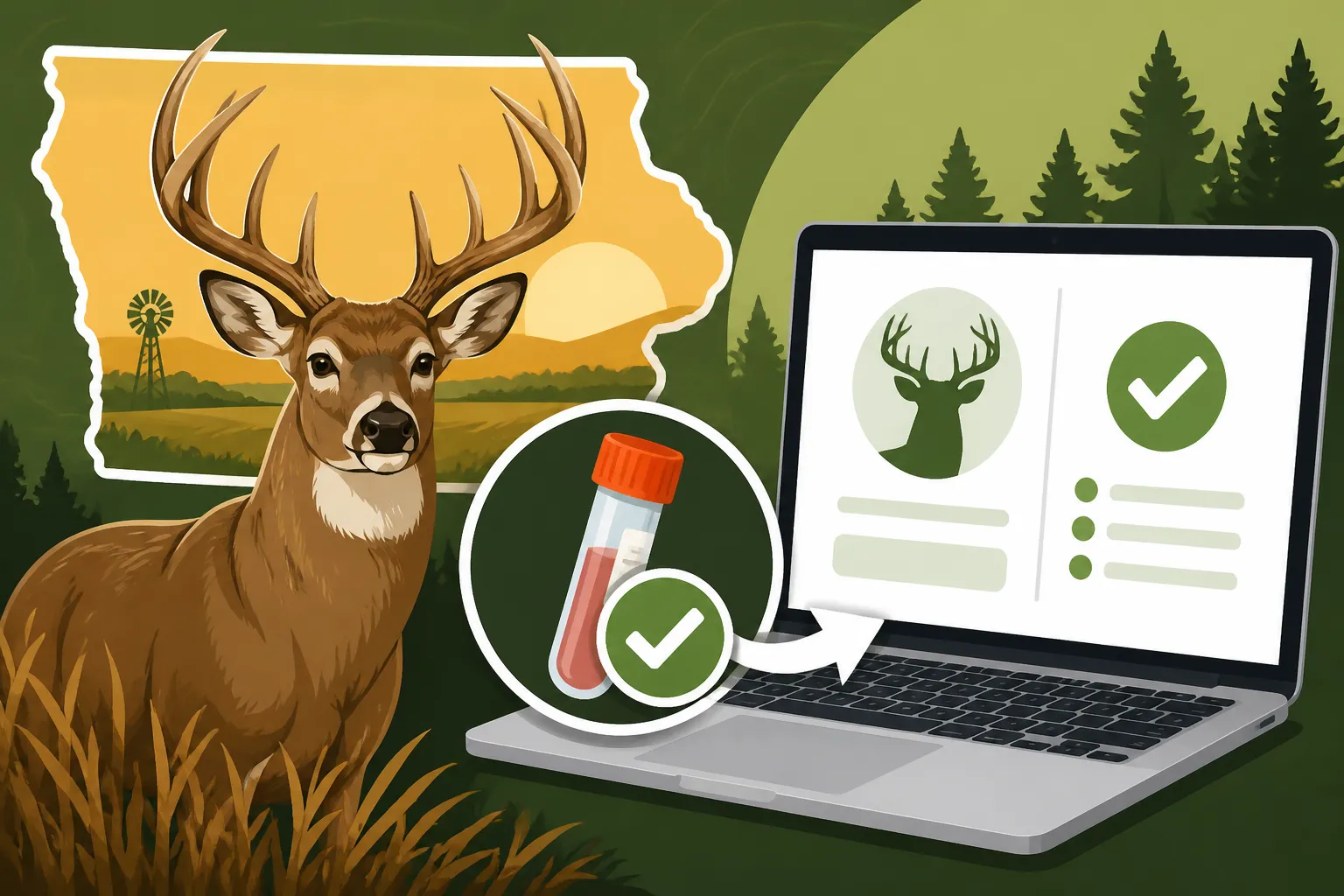
Alright, the sample's submitted, the adrenaline has worn off, and now the waiting game truly begins. You're probably itching to know the status of your deer. The Iowa DNR has a dedicated online portal for checking CWD test results, which is a fantastic resource. It means you don't have to wait for a letter in the mail or play phone tag with a busy DNR office. You can check it from the comfort of your home, or even out in the field on your phone, though internet service can be spotty in some of Iowa's best hunting spots!
Finding the Right Page for Your Test Status
Accessing your CWD test results online is pretty straightforward once you know where to look. You'll want to head directly to the official Iowa DNR website. Look for sections related to "Wildlife," "Hunting," or specifically "Chronic Wasting Disease (CWD)." Most state DNR websites will have a clearly labeled link for "CWD Test Results" or "Check CWD Status." It might be under their "Game Species" section or "Seasons & Tags" area.
Once you find the CWD results page, you'll likely be prompted to enter specific information to retrieve your results. Don't just rely on general search engine results for "Iowa CWD results" as links can change; always aim for the official DNR site to ensure you're getting accurate and up-to-date information. The DNR makes great efforts in Iowa Wildlife Disease Monitoring and providing accessible data.
Understanding the Search Criteria You'll Need
When you get to the search portal, you'll typically be asked for some identifying information about your deer and your harvest. The most common pieces of information required are:
- Hunter ID or Customer ID: This is your unique identification number with the Iowa DNR, the same one you use for purchasing licenses and reporting harvests through the Go Outdoors Iowa system.
- Confirmation Number from Harvest Report: This is a specific number generated when you reported your deer harvest online. You should have received this immediately after reporting your deer. This number is critical because it links your specific deer to the CWD sample.
- Date of Harvest: Sometimes required to narrow down the search, especially if you harvested multiple deer.
- County of Harvest: Also used for narrowing down searches and ensuring the correct regional data is pulled.
It's really important that the information you enter online exactly matches the information you provided when you submitted your sample and reported your harvest. Even a small typo in your Hunter ID or confirmation number can prevent the system from finding your results. If you harvest multiple deer in a season, each one will have its own unique confirmation number, so make sure you're using the correct one for the deer you're trying to check. Having your hunting license and harvest report handy when you're checking results will make this process much smoother.
Interpreting Your CWD Test Results
Once you've entered your information and the system pulls up your results, you'll typically see one of a few common statuses. It's important to understand what each of these means for you and your venison. Don't panic if you see something other than "negative" right away – some statuses simply mean the process is still underway.
Negative, Positive, and Insufficient Sample Meanings
- Negative: This is the result every hunter hopes for! A "negative" result means that CWD was not detected in the tissues submitted from your deer. This provides significant peace of mind, allowing you to proceed with consuming your venison with confidence. While no test is 100% foolproof, a negative result from an accredited lab is the best assurance you can get.
- Positive: If your result comes back as "positive," it means that CWD prions were detected in the tissues from your deer. This is obviously not the news any hunter wants to hear. If you receive a positive result, the Iowa DNR will typically contact you directly to discuss the implications and answer any questions you might have. As per CDC recommendations, it is advised not to consume venison from a CWD-positive animal. You should also be aware of Iowa Carcass Transport Restrictions which might come into play if you haven't fully processed the deer yet.
- Pending/In Progress: This simply means the sample has been received by the lab and is currently undergoing the testing process. This is a common status, especially during peak hunting seasons when the labs are processing a high volume of samples. It just means you need to be a little more patient.
- Insufficient Sample/Unsatisfactory: This status indicates that the lab was unable to complete the test due to an issue with the sample itself. This could be due to several reasons: perhaps the tissue sample was too small, degraded during transport, or didn't contain the specific anatomical structures needed for testing. If you receive this status, you might have the option to submit another sample if the carcass is still available, though this isn't always practical. It’s a frustrating outcome, but it's important that the lab doesn't provide an inconclusive or potentially inaccurate result.
What to Do if Your Test Comes Back Positive
Discovering your deer tested positive for CWD can be disheartening, but it's important to remember that you've done your part by contributing to surveillance efforts. If you receive a positive CWD test result from the Iowa DNR, here's what typically happens and what you should do:
- Expect Contact from the DNR: The Iowa DNR will usually reach out to you directly if your deer tests positive. They will explain the results, discuss the implications, and provide guidance on what to do next. They are there to answer your questions and help you through the process.
- Do Not Consume the Meat: As mentioned, the strong recommendation from health organizations like the CDC is to not consume meat from CWD-positive animals. This is a precautionary measure.
- Proper Carcass Disposal: The DNR will likely advise you on proper disposal methods for the carcass, or any remaining meat. In many cases, it involves specialized landfill disposal to prevent the spread of prions into the environment. It's crucial to follow these instructions to help contain the disease.
- Consider Future Hunting Practices: A positive test doesn't necessarily mean the entire area is heavily infected, but it should inform your future hunting decisions. Stay informed about Chronic Wasting Disease in Iowa Deer and any new regulations or advisories from the DNR regarding the area where you harvested the deer. You might choose to focus on areas with lower CWD prevalence or increase your participation in monitoring efforts in affected areas.
- Spread Awareness, Not Fear: Share your experience responsibly. Educate fellow hunters about the importance of testing and following DNR guidelines, without causing undue panic. Your experience can help reinforce why these measures are so important for the health of Iowa's deer population.
Common Questions and Troubleshooting
Even with the best instructions, sometimes things don't go as smoothly as planned. It's normal to have questions or hit a snag when dealing with online systems or waiting for test results. Let's tackle some of the most common issues and how you can troubleshoot them.
How Long Does it Take to Get CWD Results?
This is probably the most frequently asked question, and for good reason! The wait can feel interminable, especially when you're trying to figure out if you can stock your freezer. The processing time for CWD samples in Iowa can vary significantly depending on the time of year and the volume of samples received.
During peak hunting seasons, like the shotgun seasons or the late muzzleloader season, the labs are absolutely inundated. It's not uncommon for results to take anywhere from 2 to 4 weeks, and sometimes even longer during the busiest periods. If you submit a sample earlier in the archery season, you might see results a bit quicker, perhaps within a couple of weeks.
It's important to set realistic expectations. The labs prioritize accuracy and thoroughness, and rushing the process isn't an option when dealing with critical disease detection. Many hunters will simply quarter their deer and freeze the meat, waiting for the results before moving on to processing into steaks, roasts, or grind. This is a perfectly sensible approach that gives you time and ensures you're not wasting effort if the results come back positive. The Iowa DNR usually provides an estimated turnaround time on their CWD pages, so always check there for the most current information.
When to Contact the DNR About Delayed Results
If you've been patiently waiting, and the expected timeframe for your results has come and gone, it's completely reasonable to reach out to the Iowa DNR. Before you do, make sure you've double-checked a few things:
- Did you wait long enough? Seriously, patience is key. If the DNR estimates 3-4 weeks and you're only at 2.5, give it a bit more time.
- Did you enter the correct information online? Go back to the online portal and carefully re-enter your Hunter ID, harvest confirmation number, and any other required fields. A single digit typo can make your results disappear.
- Did you submit the sample correctly? Think back to the drop-off. Was the tag filled out completely and legibly? Was it securely attached?
If you've checked all these boxes and it's been well beyond the expected turnaround time, then it's time to contact the DNR. You can usually find contact information for their wildlife bureau or specific CWD coordinators on their website. When you call or email, be sure to have all your harvest information ready: your name, Hunter ID, harvest confirmation number, date of harvest, and county. This will help them quickly locate your sample and provide you with an update. They can check the status from their end and investigate if there's been a delay or issue with your specific sample. Don't be shy about reaching out; they understand your concerns and are there to help manage Iowa Deer Herd Management and Harvest effectively.
Disclaimer
The information provided in this guide is for general informational purposes only and is subject to change. Always consult the official Iowa Department of Natural Resources (DNR) regulations and website for the most current and accurate information regarding CWD testing, regulations, and health guidelines. Hunting regulations and disease management protocols can be updated periodically.