Where to Drop an Iowa CWD Sample
It's incredibly frustrating when you've finally harvested a deer, and instead of just celebrating, you're hit with the added stress of figuring out Chronic Wasting Disease (CWD) testing. Many hunters feel overwhelmed by the process, wondering exactly where to take their sample and what steps they need to follow. This guide aims to clear up that confusion, offering clear, actionable advice on where to drop off your Iowa CWD sample and how to ensure you're compliant with state regulations.
Understanding Iowa's CWD Program
Chronic Wasting Disease is a serious concern for Iowa's deer population, and by extension, for the future of our hunting heritage. It's a neurological disease that affects deer, elk, and moose, and it's always fatal. While there's no evidence it can be transmitted to humans, the Iowa Department of Natural Resources (DNR) takes it very seriously to protect the health of our herds. As hunters, we play a crucial role in monitoring and managing this disease.
Why CWD Testing Matters in Iowa
Imagine waking up one day to find our incredible whitetail population, which brings so much joy and economic benefit to our state, decimated by a disease. That's the real threat CWD poses. It slowly spreads through deer populations, and early detection is key to slowing its progress. When a hunter submits a sample, it allows the DNR to map where the disease is present and track its prevalence. This data is absolutely vital for making informed management decisions, such as setting specific antlerless quotas or adjusting season dates in affected areas, all with the goal of keeping our deer herd healthy for generations to come. Without hunter participation, the DNR would be largely blind to the true scope of the problem. You can learn more about specific disease monitoring efforts in the guide on Iowa Wildlife Disease Monitoring.
The Importance of Hunter Participation
Honestly, we, the hunters, are the DNR's best eyes and ears on the ground. When you're out there in the timber or scanning a field edge, you're observing the herd directly. Taking a CWD sample isn't just a requirement in some areas; it's a direct contribution to conservation. It's about being a responsible steward of the land and the animals we cherish. Each sample provides a piece of the puzzle, helping wildlife biologists understand the disease's distribution and density. It's a small effort on our part, but it yields immense benefits for the health of Iowa's deer herd, ensuring that the hunting opportunities we love today continue into the future. It’s also important to follow all Iowa CWD Sampling and Carcass Rules to prevent the spread of the disease.
Where to Find CWD Sample Drop-Off Locations
Once you've got your deer on the ground, and you realize you're in a CWD surveillance zone, the next thought is, "Okay, now what?" The good news is that Iowa has made the process of dropping off CWD samples relatively straightforward, with various accessible locations. It's crucial to know the different types of sites available and which ones might be most convenient for you.
Mandatory vs. Voluntary Sampling Zones
First things first, not every deer harvested in Iowa requires a CWD sample, though voluntary submission is always encouraged. The DNR designates specific counties as "mandatory surveillance zones" based on where CWD has been detected or where there's a heightened risk of it appearing. If you harvest a deer in one of these counties during a designated season, typically the shotgun seasons or late muzzleloader, submitting a sample from your deer's head is mandatory. These specific counties and seasons are announced annually, so always double-check the latest Iowa hunting regulations or the DNR website before you head out. For instance, counties like Wayne, Lucas, Appanoose, and others in southern Iowa are frequently part of these zones due to CWD detections. You can usually find the most up-to-date list by searching for CWD Mandatory Sampling Counties on the DNR's official site. If you're using a mapping tool like GoHunt, you might even find layers that show these zones directly, helping you plan your hunt with CWD sampling in mind.
Iowa DNR Offices and Official Drop-Off Sites
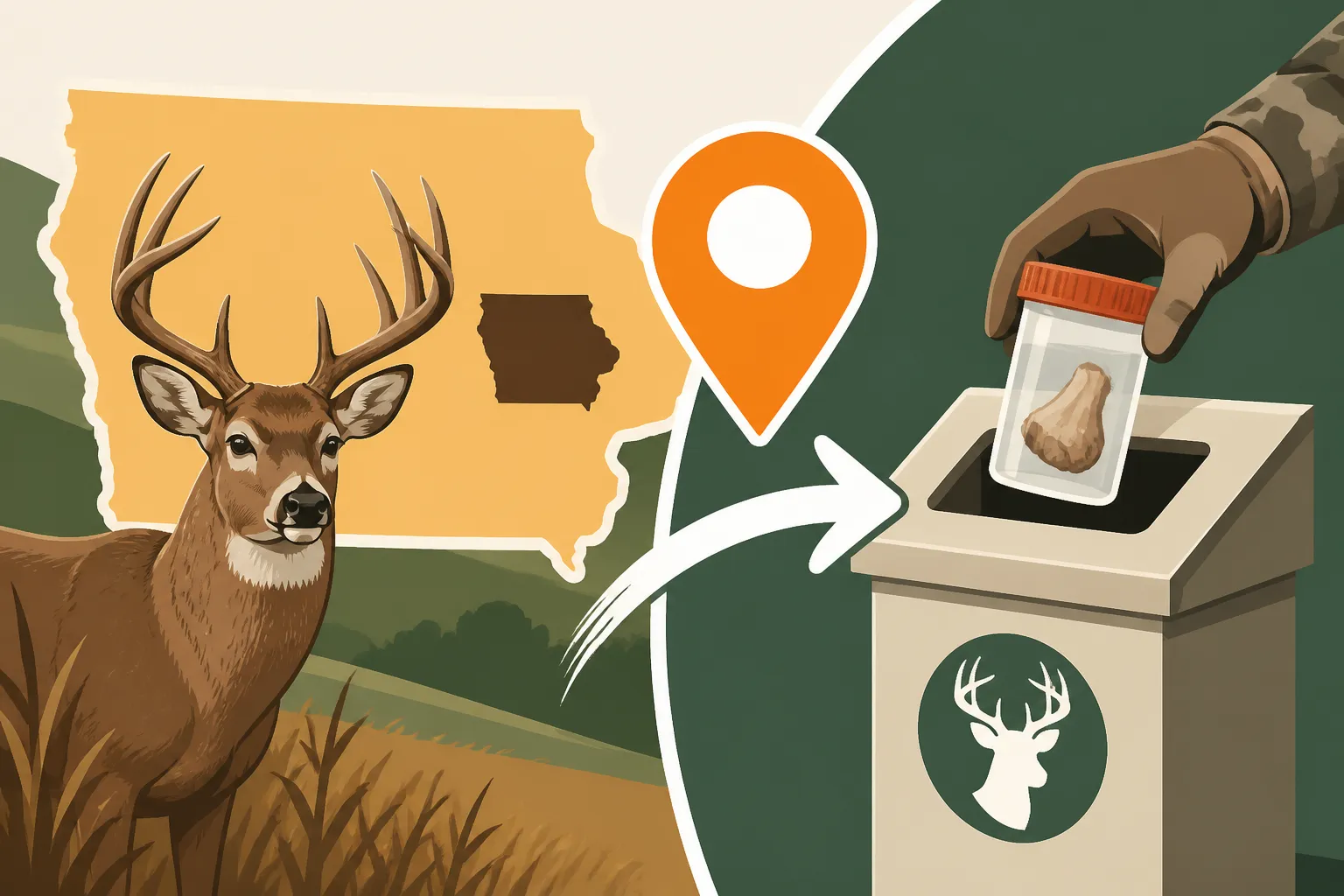
The most reliable places to drop off your CWD sample are the official Iowa DNR facilities. These include various DNR field offices, certain state parks, and even some wildlife management areas across the state. These sites are equipped to properly handle the samples, often with trained staff who can assist you or kiosks that provide clear instructions. Typically, these locations will have clearly marked drop boxes or designated areas specifically for CWD sample submission. They usually operate during regular business hours, but some might have 24/7 drop boxes, especially during peak hunting seasons. It's always a good idea to check the specific operating hours for the location you plan to visit. Before you go, a quick check on the Iowa DNR's website or using the Iowa DNR Hunter Atlas can help you pinpoint the nearest official drop-off site and confirm its availability.
Partnering Businesses and Locker Plants
Recognizing that hunters need convenient options, the Iowa DNR also partners with a network of private businesses and local locker plants throughout the state. These partners are absolutely invaluable, especially in rural areas where an official DNR office might be a long drive away. Local meat processors, taxidermists, and even some sporting goods stores participate in the program, offering additional drop-off points. These businesses are often the most practical choice, particularly if you're already taking your deer to a locker plant for processing. They understand the nuances of handling deer and can make the CWD sampling process seamless. Look for signs indicating CWD drop-off availability, or better yet, consult the DNR's list of participating vendors. Many hunters find using a familiar local locker plant much less daunting than navigating a new official site. When considering where to get your deer processed, it’s worth thinking about Locker Plants During Iowa Shotgun Season and if they offer CWD sample collection.
Here's a quick overview of common drop-off types:
| Drop-Off Location Type | Description | Convenience Factor | Best For |
|---|---|---|---|
| Iowa DNR Field Offices | Staffed offices with trained personnel, often during business hours. | High, but limited to business hours. | Hunters seeking direct assistance or located near larger towns. |
| State Parks / WMAs | Designated drop boxes, sometimes unstaffed, accessible 24/7 during peak season. | Very High, especially for after-hours or weekend harvests. | Remote hunters, those who harvest late in the day. |
| Partnering Locker Plants | Meat processors that also collect samples, often integrating CWD collection with deer processing. | Extremely High, especially if you're already taking your deer for butchering. | Most hunters, particularly those using commercial processors. |
| Partnering Businesses (e.g., Sporting Goods) | Select local businesses equipped to accept samples during their operating hours. | High, good for local convenience if a locker plant isn't an option. | Hunters needing an alternative to DNR sites or locker plants. |
| Self-Serve Kiosks | Automated drop-off stations with clear instructions, found in specific high-traffic CWD zones. | High, offers flexibility for hunters with unpredictable schedules. | Areas with mandatory testing, providing easy 24/7 access. |
The CWD Sampling Process for Hunters
Alright, you’ve made the shot, found your deer, and now you’re back at the truck. The thought of CWD sampling might feel like another chore, but it’s actually pretty straightforward once you know the steps. Proper preparation is key to making the drop-off go smoothly and ensuring your sample is viable for testing.
Preparing Your Deer for Sampling
This is where many hunters get a little nervous, wondering if they’re going to mess it up. The main requirement for CWD testing is the deer's head, specifically the brainstem and lymph nodes, which are the tissues tested for the disease.
Here’s the typical process:
- Field Dress the Deer: As you normally would, field dress your deer to cool the meat. This isn't directly related to the CWD sample, but it's essential for meat quality. You can find tips on Field Dressing in Warm October Weather if you’re concerned about the weather.
- Remove the Head: Carefully remove the head from the deer's body. The Iowa DNR usually recommends cutting the head off approximately 4-6 inches behind the jawbone. This ensures that the entire brainstem and relevant lymph nodes are included in the sample. You don't need to be a surgeon; a clean cut with a sharp knife or bone saw will suffice.
- Keep it Clean and Cool: Place the head in a plastic bag to prevent contamination and keep it as cool as possible. If it's warm outside, consider putting it on ice, but ensure the head doesn't soak in water, as this can degrade the sample.
- Attach Your Tag: This is critical! Make sure your valid Iowa deer harvest tag is securely attached to the deer's head. The DNR needs to identify your deer and connect it to your license. Missing or improperly attached tags can cause significant delays or even rejection of your sample. Sometimes, drop-off sites provide an additional CWD sample tag to fill out with your contact information, hunting license number, and the county of harvest. This ensures they can contact you with results.
Following these steps will ensure your sample is ready for submission and makes the job much easier for the folks collecting them.
What to Expect at a Drop-Off Location
When you arrive at a CWD drop-off location, the process is generally quite simple. If it's a staffed location, a DNR employee or authorized partner will collect the head, verify your tag, and potentially ask you to fill out a short form with your contact information and harvest details. They might ask for the exact harvest location (county, nearest town, or even GPS coordinates), as this data is crucial for tracking disease distribution.
At an unstaffed drop box or kiosk, you’ll typically find clear instructions. You'll place the bagged head into the designated container, and usually, there will be a waterproof sleeve containing forms. You'll fill out your information (name, phone, hunting license number, date of harvest, county of harvest) on the provided form, attach it securely to the deer head or sample bag, and then deposit it. It's really that easy. The key is to make sure all your information is legibly written and attached, so the DNR can accurately process your sample and notify you of the results. Detailed explanations of How CWD Testing Works on a Deer can give you more insight into what happens behind the scenes.
Getting Your Iowa CWD Test Results Online
The waiting game after dropping off a sample can be a bit nerve-wracking, but the DNR has made checking your results fairly convenient. Once your sample is processed, the results are typically available online through the Iowa DNR's website. You'll usually need your harvest tag number or a unique CWD sample ID number (which you might receive at the drop-off site) to look up your results.
Processing times can vary depending on the volume of samples, but generally, you can expect results within 2-4 weeks. During peak hunting seasons, it might take a bit longer. The online system is usually pretty intuitive, allowing you to check the status of your sample (e.g., "received," "processing," "results available") and view the final outcome. It's a great tool for peace of mind, and it keeps you in the loop without having to make repeated phone calls. Remember to hold onto any documentation you receive at the drop-off site, as it contains the key information needed to access your results. You can find detailed instructions for Getting Iowa CWD Test Results Online on the DNR's official portal.
Tips for a Smooth CWD Sample Drop-Off
Making your CWD sample submission as seamless as possible really comes down to a bit of foresight and understanding the resources available to you. No one wants an extra hassle after a successful hunt, so let's talk about how to minimize any potential headaches.
Planning Ahead with Online Resources
One of the biggest advantages we have as modern hunters is the wealth of information available at our fingertips. Before you even head out for your hunt, especially if you're targeting a known CWD surveillance zone, take a few minutes to scope out the resources. The Iowa DNR website is your absolute best friend here. They regularly update maps showing current mandatory CWD sampling counties, lists of drop-off locations (including specific addresses and operating hours), and detailed instructions on how to prepare your sample.
Tools like the Iowa DNR Hunter Atlas or even private mapping apps like GoHunt can be invaluable. You can use these to overlay CWD zones with potential hunting areas and identify the closest drop-off points well in advance. Having a few options mapped out—say, a DNR office, a state park drop box, and a local locker plant—can save you a significant amount of driving and stress after the shot. Knowing exactly where you're going to take that deer head can be a huge relief, especially if you're hunting in an unfamiliar area. It’s also wise to be aware of Iowa Carcass Transport Restrictions before moving your harvested deer, particularly across county or state lines.
Respecting CWD Carcass Rules
Beyond just submitting the sample, it's crucial to understand and respect the broader CWD carcass rules. These regulations are designed to prevent the human-assisted spread of CWD to new areas. When you're hunting in a mandatory CWD surveillance county, there are often restrictions on transporting certain parts of the deer carcass out of that county or even out of state. Generally, you can transport boned-out meat, capes (without the head or spinal column), and clean skulls or antlers (without brain matter or soft tissue).
The parts that are typically restricted are the brain, spinal cord, eyes, lymph nodes, and spleen – essentially, the parts most likely to harbor the CWD prion. If you plan to take your deer across state lines, it's absolutely vital to check both Iowa's regulations and the regulations of your destination state regarding Bringing a Deer Into Iowa From Another State or taking one out. Failing to comply can lead to fines and legal trouble, and more importantly, it undermines the collective effort to contain this disease. Be a responsible hunter, do your homework, and help keep CWD from spreading further across our beautiful state.
Disclaimer
The information provided in this guide is intended for general informational purposes only and does not constitute legal advice. Hunting regulations, CWD mandatory testing zones, and drop-off locations in Iowa are subject to change. Always consult the official Iowa Department of Natural Resources (DNR) website and the current Iowa Hunting Regulations booklet for the most accurate and up-to-date information before planning your hunt or submitting a CWD sample. Non-compliance with regulations can result in penalties.