Which Iowa Counties Are Zone B
Navigating Iowa's deer hunting regulations can feel like trying to track a mature buck through a dense cedar thicket – confusing, full of twists, and often leading to dead ends if you don't know the lay of the land. For years, hunters, especially non-residents, have heard whispers and read old guides about "Zone B," trying to pinpoint exactly which Iowa counties fell under this elusive designation for a shot at a coveted tag. This guide aims to clear up that confusion, explain the evolution of Iowa's deer management, and help you understand how county-specific quotas work today, so you can plan your hunt effectively.
Understanding Iowa's Deer Management Zones
Iowa's reputation for producing world-class whitetails is no accident; it's the result of diligent habitat, herd management, and a strategic approach to hunting regulations. However, what worked in the past isn't always what's in place today, and understanding the history helps make sense of the present.
The Purpose of Deer Zones in Iowa
The Iowa Department of Natural Resources (DNR) uses a system of deer management zones, or at least the concept of them, primarily to balance the deer population with available habitat and landowner tolerance for deer activity. Simply put, some areas of the state can support more deer, or need more deer harvested, than others. These zones were designed to funnel hunter pressure and antlerless harvest into specific regions to achieve these management goals.
Think about it this way: the rolling timber country of southern Iowa has a very different landscape and often a higher deer density than the intensely farmed, flatter landscapes of north-central Iowa. One-size-fits-all regulations just wouldn't work. The zones allow the DNR to issue more antlerless tags in areas where the herd might be booming or where crop damage is a significant concern for farmers, while maintaining tighter controls in areas where the population might be lower or where trophy management is more of a focus. It's a dynamic system, constantly tweaked based on harvest data, population surveys, and public input, which is why regulations can sometimes feel like a moving target.
How Zone B Differs from Other Zones Historically and Presently
Historically, especially for nonresident deer applications, Iowa indeed had distinct zones – Zone 1, Zone 2, and Zone B being some of the common ones mentioned. Zone B, in particular, was often associated with counties that had more liberal antlerless tag opportunities, essentially serving as areas where the DNR actively encouraged more doe harvest to manage the overall population. It was designed to address high deer densities and crop depredation issues in certain parts of the state.
Nonresident hunters typically applied for an "any-deer" tag in either Zone 1 or Zone 2, which generally covered the southern and northern halves of the state respectively, excluding the far northwest which was often grouped with Zone 2. A separate antlerless tag, if available, would then be purchased in a specific county, which might have been referred to as a "Zone B" county due to its higher allocation. However, this formal "Zone B" as a distinct any-deer application zone for non-residents has largely evolved. What you'll find today is a more granular, county-specific approach to antlerless tags, rather than a broad, fixed "Zone B" for general nonresident applications. The spirit of Zone B—counties with a need for increased antlerless harvest—still exists, but the administrative designation has changed.
The Evolution of "Zone B" and Current County-Specific Antlerless Tags
The traditional concept of a rigid "Zone B" that once dictated nonresident deer applications has seen some significant shifts. Understanding this evolution is key to making sense of Iowa's current deer hunting landscape.
The Shift from Defined Zones to County-Specific Quotas
In recent years, Iowa's deer management strategy has become more precise, moving away from broad, fixed zones for any-deer nonresident applications towards a system where antlerless tags are allocated on a county-by-county basis. This change allows the Iowa DNR to fine-tune harvest goals much more effectively, addressing local population issues with greater accuracy. Instead of a hunter applying for an "any-deer" tag in a general Zone B, nonresident hunters now typically apply for one of the three broader any-deer zones (Zone 1, Zone 2, Zone 3) during the draw, and then consider purchasing additional antlerless tags, if available, for specific counties.
This county-specific quota system means that the availability of antlerless tags can vary wildly from one county to the next, and even within different seasons. Some counties might have abundant tags, while others might have very few or none, depending on population estimates, harvest success, and depredation reports. This is a much more adaptive approach than a blanket zone system, allowing for quicker responses to herd fluctuations at a local level. For instance, if a particular county experiences high vehicle collisions involving deer or significant crop damage complaints, the DNR can increase antlerless tag availability there, without impacting hunting in a neighboring county that might have a healthier, more balanced herd. You can dive deeper into how these tags work by checking out our guide on Iowa Antlerless Tags and Quotas.
Identifying Counties with Higher Antlerless Tag Availability
Even though the formal "Zone B" designation for general nonresident tags has largely faded, the concept of counties with more liberal antlerless harvest opportunities is still very much alive. These are the counties that, in essence, carry on the legacy of what Zone B aimed to achieve: higher doe harvest.
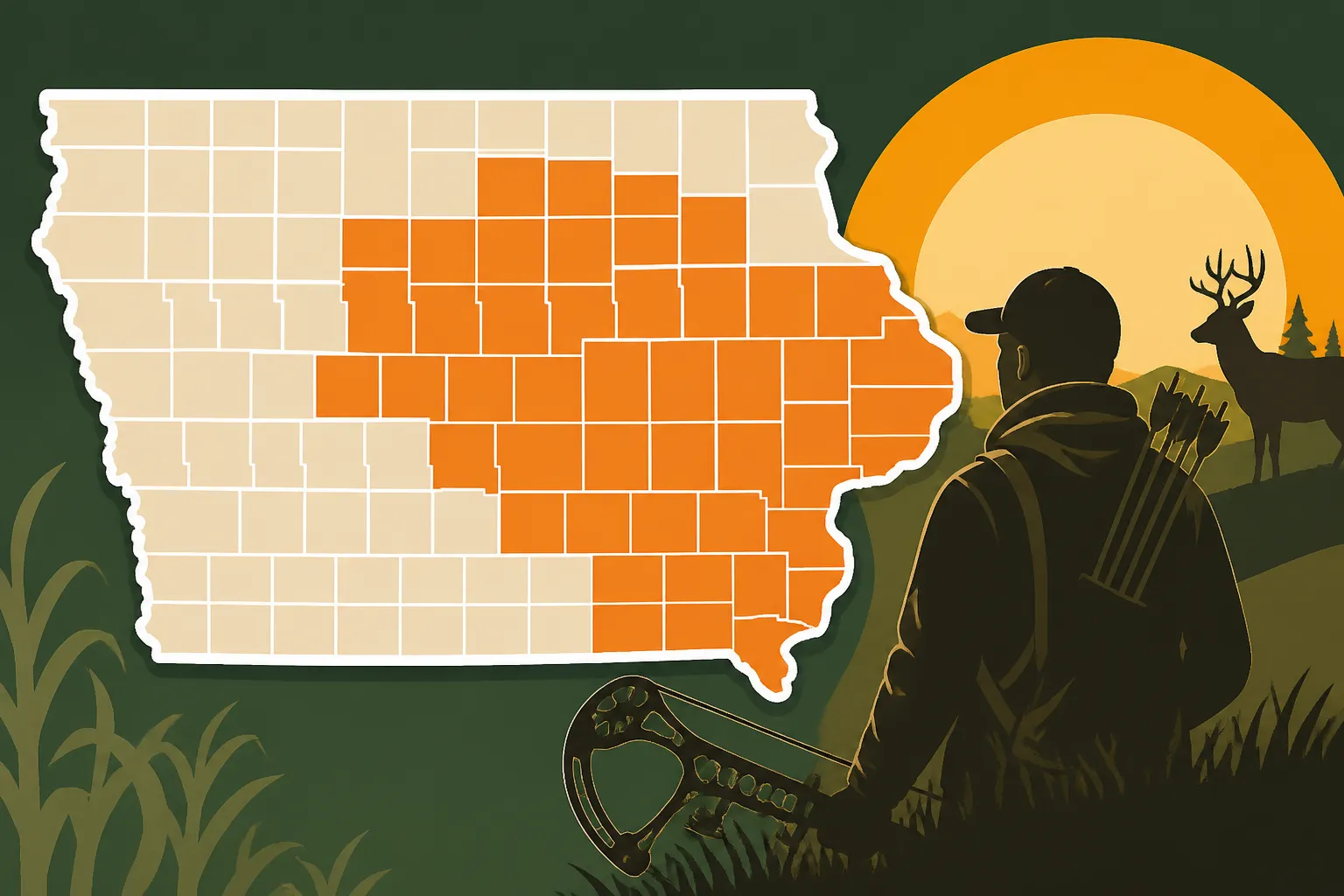
To find these counties today, you'll need to look at the Iowa DNR's annual regulations and specifically the antlerless tag quotas. While these quotas can change year to year, some counties consistently offer more antlerless tags due to their agricultural intensity, timber blocks, or historical deer populations. These often include counties in the southern and eastern parts of the state, where habitat is often fragmented with large crop fields interspersed with timber, providing excellent deer cover and food sources.
When you're looking for these opportunities, pay close attention to the number of antlerless tags allocated per county for the specific season you're interested in. For example, during the late muzzleloader season or the January antlerless season, certain counties might have a high number of leftover antlerless tags even after the initial sales periods. Resources like the Iowa DNR's website, particularly their harvest reports and county-level information, are your best friend here. While you might not find a map clearly labeled "Zone B" anymore, you'll see a clear picture of where the DNR is targeting antlerless harvest by looking at these allocations.
Here's a simplified look at how some Iowa counties generally stack up regarding antlerless tag availability. Keep in mind, this is illustrative and specific numbers vary annually!
| County Type/Region | General Antlerless Tag Availability | Typical Deer Density | Key Characteristics |
|---|---|---|---|
| Southern Iowa Timber | Often High | Medium to High | Extensive timber, agricultural interfaces, historical deer hotbeds. |
| Eastern Iowa River Bottoms | Medium to High | Medium | Mixed timber and ag, Mississippi River influence, good cover. |
| Central Iowa Farm Country | Medium | Medium | Patchy timber, heavy agriculture, deer use travel corridors and isolated cover. |
| Western Iowa Loess Hills | Medium | Medium | Unique rugged terrain, some public land, moderate deer numbers. |
| Northern/North-Central Ag | Low to Medium | Low to Medium | Predominantly row crops, limited timber, deer concentrated in drainages and CRP. |
This table helps illustrate that the "Zone B" concept lives on not as a single zone, but as a management approach targeting areas where more antlerless harvest is needed or desired. These are the places where your chances of securing an antlerless tag, especially as a nonresident, are generally better.
Navigating the Iowa Deer Application Process Today
With the traditional "Zone B" for non-resident general deer tags being a thing of the past, understanding the current application process is paramount. It’s not as straightforward as it once might have been, but with the right information, it’s entirely manageable.
Applying for Nonresident Deer Tags in Iowa
If you’re a nonresident looking to hunt Iowa deer, you’ll be applying for an "any-deer" tag within one of three main zones: Zone 1, Zone 2, or Zone 3. These zones generally divide the state into larger geographic regions, and your application will be specific to one of them. Zone 1 typically covers the southern tier of counties, Zone 2 the central and northern parts, and Zone 3 is predominantly the far northwest. It's crucial to specify your desired zone and season (e.g., archery, shotgun, muzzleloader) during the application period.
The application window is usually from early May through early June, so mark your calendars! You'll apply through the Go Outdoors Iowa system, which is the official online portal. Remember, Iowa has a preference point system for nonresidents, so if you don't draw an "any-deer" tag in your chosen zone, you'll typically be awarded a preference point for the following year. This system is designed to give persistent applicants a better chance over time. For a full rundown on the process, be sure to read our detailed guide on How to Apply for an Iowa Nonresident Deer Licence and get familiar with Iowa Preference Points and How They Work.
When it comes to antlerless tags, these are usually purchased after the nonresident draw for any-deer tags, if you're successful. Many nonresident any-deer tags come with a free antlerless tag valid in specific counties. Additionally, you might be able to purchase additional antlerless tags, particularly for the late muzzleloader or January antlerless seasons, in counties where quotas are high and tags remain available. This is where the historical "Zone B" counties, or rather, their modern equivalents with high antlerless allocations, come into play. Always check the DNR website or the current hunting regulations booklet to see which counties have available antlerless tags and for which seasons.
Utilizing Resources for Current County Information
In today's hunting world, information is power, and Iowa provides excellent resources to help you pinpoint those counties that align with your hunting goals. Forget trying to remember old "Zone B" maps; instead, arm yourself with current data.
The Iowa DNR website is your primary source of truth. They publish annual hunting regulations booklets, often online as PDFs, that detail all zones, seasons, quotas, and specific county rules. These regulations are updated yearly, so always make sure you're looking at the most current version. Pay close attention to the sections on deer zones and antlerless deer quotas for your specific season of interest. The DNR also offers harvest reports and county-level data that can give you insights into deer populations and past harvest success.
Beyond the official DNR resources, several excellent online mapping tools can be invaluable. Platforms like onX Hunt allow you to layer public land boundaries, parcel ownership, and even satellite imagery to scout potential hunting spots from your couch. While these tools won't tell you specific "Zone B" counties, they will show you land ownership and topography, which, combined with the DNR’s quota information, can help you deduce areas of high deer activity and available tags.
For those serious about their application strategy, services like GoHunt offer detailed draw odds, application strategies, and data analysis for various states, including Iowa. While they might not use the term "Zone B" in the historical sense, they break down tag availability and draw success by current zones and even specific counties, giving you an edge in understanding where your best chances lie for both any-deer and antlerless tags. They often compile complex data in an easy-to-understand format, which can save you a ton of time poring over raw DNR reports. Combining data from resources like GoHunt with detailed scouting using tools like the Iowa DNR Hunter Atlas can give you a comprehensive picture of where and how to hunt.
Remember that hunting pressure can also play a huge role, especially on public lands. Even if a county has a high antlerless quota, if it's heavily pressured, finding success can be challenging. So, consider reading up on Hunting Pressure Patterns on Iowa Public Land to help round out your strategy.
Disclaimer
Please remember that hunting regulations in Iowa, including deer zones, tag allocations, and application processes, can change annually. Always consult the most current Iowa Department of Natural Resources (DNR) hunting regulations and official website before making any hunting plans or applying for licenses. This guide is for informational purposes only and should not be considered a substitute for official DNR publications.