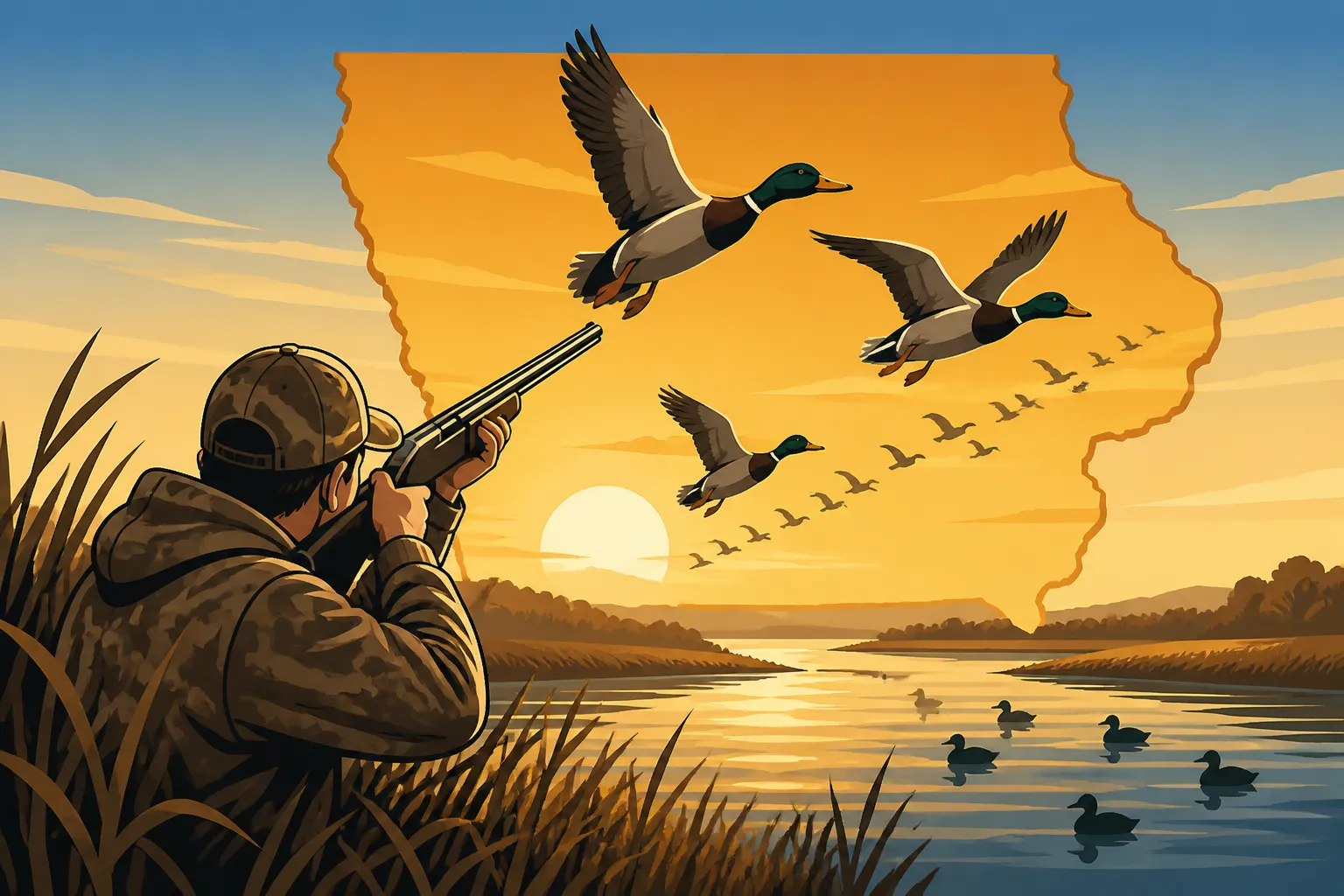
Iowa Waterfowl on the Mississippi Flyway
There's nothing quite like the sound of whistling wings overhead or the distant chatter of geese echoing across a frosted field. For many hunters, myself included, chasing waterfowl in Iowa is a deeply ingrained passion, but it's not without its challenges. From unpredictable migrations to tricky regulations and the sheer effort of finding birds, it can feel overwhelming. This comprehensive guide aims to cut through the confusion, offering a deep dive into Iowa's rich waterfowl hunting opportunities, how to understand the Mississippi Flyway's impact, and proven tactics to fill your strap.
Understanding Iowa's Place on the Mississippi Flyway
Iowa isn't just known for its corn and soybeans; it's a critical stopover point for millions of migratory waterfowl traveling along the mighty Mississippi Flyway. This isn't just a casual travel route; it's a superhighway, an avian interstate system stretching from the arctic breeding grounds all the way down to the Gulf Coast and beyond. For waterfowlers, understanding Iowa's unique position within this vast system is the first step to consistent success. Without grasping this geographical reality, you're essentially trying to hit a moving target blindfolded.
The Flyway's Influence on Migratory Patterns
The Mississippi Flyway acts like a funnel, concentrating waterfowl as they move south in the fall and north in the spring. Iowa sits right in the middle of this funnel, making it a critical staging area where birds refuel, rest, and often remain for extended periods if conditions are favorable. We’re talking about massive numbers of ducks and geese passing through, especially during the peak of migration in late October and November. The sheer volume of birds means opportunities, but it also means understanding when they're coming and why. A strong northern cold front, for instance, can push waves of ducks and geese down from Minnesota and the Dakotas almost overnight, completely changing the hunting landscape. Conversely, a mild fall can mean birds linger further north, leaving Iowa's marshes quieter than usual. Keeping an eye on weather patterns to the north, especially in places like North Dakota and Canada, is often as important as scouting your local marsh.
The birds aren't just flying straight through, either. They're responding to water availability, food sources, and hunting pressure. If a particular area gets hit hard by hunters, birds will quickly adapt and seek refuge elsewhere. This constant flux demands adaptability from hunters. You can't just hunt the same spot the same way year after year and expect the same results. The dynamic nature of migration means that what worked last week might not work today, making the pursuit both frustrating and incredibly rewarding. It forces you to think like a duck or goose, always considering their immediate needs for safety and sustenance.
Key Waterfowl Migration Corridors in Iowa
While the entire state is part of the Mississippi Flyway, certain areas in Iowa are undeniable hotspots. The most prominent, of course, is the Mississippi River itself. This colossal waterway provides a continuous corridor of diverse habitats – from vast backwater sloughs and islands to main channel sandbars and adjacent flooded timber – that birds rely on. Up and down the eastern border of Iowa, the river is a magnet for dabbling ducks like mallards, wood ducks, and green-winged teal, as well as significant numbers of Canada geese and snow geese. For a deeper dive into hunting specific river areas, check out this guide on Mississippi River Backwater Waterfowl.
Beyond the Mississippi, Iowa's interior also boasts crucial migration corridors, primarily associated with its other major river systems like the Missouri River on the western border, and inland rivers such as the Des Moines, Skunk, Cedar, and Iowa Rivers. These rivers, along with their associated floodplains, oxbows, and tributary marshes, create secondary highways for ducks and geese. Additionally, the prairie pothole region in northern Iowa, dotted with numerous natural lakes and wetlands, provides vital breeding and staging grounds for local and migratory birds. Large reservoirs like Rathbun, Red Rock, and Coralville also serve as important sanctuaries and feeding areas, especially as the season progresses and smaller wetlands freeze up. Understanding these specific corridors helps you narrow down your scouting efforts and predict where birds are most likely to show up.
Major Waterfowl Species You'll Encounter in Iowa
Iowa is a surprisingly diverse state for waterfowl, offering opportunities to pursue a wide array of duck and goose species. Knowing the specific habits and preferences of each bird can dramatically increase your success rate. It's not just about pointing and shooting; it's about understanding who you're hunting and tailoring your approach to them.
Diving Ducks Versus Dabbling Ducks
One of the fundamental distinctions in duck hunting is between dabbling ducks and diving ducks, and Iowa offers plenty of both. Dabbling ducks, often called "puddle ducks," feed primarily by tipping their heads down into shallow water, dabbling for vegetation and invertebrates. Their legs are set more forward on their bodies, allowing them to walk more easily on land. When they take flight, they spring directly upward from the water, which is a key identification feature in the field. Common dabblers in Iowa include mallards, wood ducks, green-winged teal, blue-winged teal, northern shovelers, and gadwalls. These are often the bread and butter of Iowa duck hunting, especially mallards, which are incredibly abundant and vocal.
Diving ducks, on the other hand, feed by diving completely underwater to forage for aquatic plants, mollusks, and fish. Their legs are set further back on their bodies, making them excellent swimmers and divers but a bit awkward on land. When divers take flight, they typically run across the surface of the water to gain momentum before lifting off. Common divers in Iowa include ring-necked ducks, canvasbacks, redheads, and lesser scaup (bluebills). You'll typically find divers in deeper, more open water on larger marshes, rivers, and reservoirs. Hunting these birds often requires different decoy spreads, deeper water access, and sometimes larger, more stable boats. Recognizing the subtle differences in flight patterns, habitat preference, and even calling styles between dabblers and divers is crucial for effective hunting.
Canada Geese, Snow Geese, and Greater White-Fronted Geese
Geese are a whole different ball game from ducks, often requiring specialized tactics. Iowa hosts three main species: Canada geese, snow geese, and greater white-fronted geese, affectionately known as "specklebellies." Canada geese are by far the most common, with both resident populations and migratory birds using Iowa. They're big, loud, and can offer incredible hunting, especially in agricultural fields where they feed on waste grain. Hunting resident Canada geese can often start earlier in the season, while the large migratory flocks provide fantastic opportunities later in the fall.
Snow geese, including their blue-phase counterparts, migrate through Iowa in massive numbers, often in flocks numbering in the thousands. This can be an awe-inspiring sight, but hunting them is notoriously challenging. They are incredibly wary and require huge decoy spreads, often numbering in the hundreds or even thousands of decoys, to draw them in. The conservation order for snow geese in late winter and spring offers additional opportunities due to their burgeoning populations. Finally, greater white-fronted geese are a prized trophy for many waterfowlers. They have a distinctive high-pitched call, a stockier body, and a dark barred breast (hence "specklebelly"). They often migrate ahead of the main snow goose push and can be found feeding in harvested corn or bean fields. They respond well to realistic decoys and skilled calling.
Less Common Waterfowl and Unique Opportunities
While mallards and Canadas might dominate the bag, Iowa offers chances at some less common but equally rewarding species. Wood ducks, with their stunning iridescent plumage, are a favorite early-season bird, often found in timbered sloughs and backwaters. Green-winged teal provide fast-paced shooting, darting through the air with incredible speed. Other species like northern pintails, wigeon, and even buffleheads and goldeneyes can show up in your spread, adding variety to your hunt.
Beyond ducks and geese, Iowa also sees tundra swans migrate through, though they are protected and cannot be hunted. It's worth noting that every now and then, a truly rare bird might show up, a testament to the sheer biodiversity that the Mississippi Flyway brings through the state. Always be sure of your target and remember that specific regulations, like those for canvasbacks or pintails, can change annually or have special limits. Responsible identification is paramount, not just for legal reasons, but for appreciating the diverse wildlife that calls Iowa home, even if temporarily.
Prime Waterfowl Habitats Across the State
Finding waterfowl in Iowa isn't just about showing up at the nearest body of water. It's about understanding the specific types of habitats ducks and geese prefer at different times of the season and under various conditions. Iowa offers a mosaic of wetlands, rivers, and agricultural lands that serve as vital real estate for migrating birds.
Mississippi River Backwaters and Main Channel
The Mississippi River is, without a doubt, Iowa's crown jewel for waterfowl hunting. Its immense size and complex hydrology create an incredibly diverse range of habitats. The backwaters, characterized by calmer, shallower water, islands, and submerged vegetation, are a magnet for dabbling ducks like mallards and wood ducks. Here, hunters often use layout blinds tucked into cattails or set up in boats brushed in to resemble natural cover. These areas can be challenging to access, often requiring shallow-draft boats or even airboats in some spots, but the reward can be phenomenal. The river's main channel and adjacent sandbars, particularly during lower water levels, become key staging areas for geese and larger flocks of divers. Decoying here might involve large spreads of Canada goose full-body decoys on sandbars or diver spreads anchored in deeper water. Navigation on the Mississippi can be tricky, with strong currents, hidden hazards, and shifting sandbars, so safety and local knowledge are paramount. For those looking to brave the mighty Mississippi, understanding the river's dynamic nature is essential. Specific areas like Pool 9 and Pool 13 Waterfowl Hunting offer prime opportunities.
Inland Marshes, Potholes, and Flooded Timber
Away from the Mississippi, Iowa's interior offers a wealth of diverse waterfowl habitats. We're talking about everything from large, managed state wildlife areas like those surrounding the Big Creek and Coralville Reservoirs to smaller, often overlooked prairie potholes. These inland marshes and wetlands are vital, especially for early-season ducks and local populations. They provide abundant food sources, from smartweed to aquatic invertebrates, and offer critical refuge. Public areas like the Hawkeye Wildlife Area Waterfowl or Sweet Marsh Wildlife Area Access are prime examples where dedicated efforts have created excellent waterfowl habitat. Hunting these spots often means more walk-in access, smaller boat launches, and a more intimate experience.
Flooded timber, though less common than in states further south, can also be found along river systems and in some managed wildlife areas. When water levels are just right, these areas become incredibly attractive to mallards, which love to feed on acorns. Hunting flooded timber is a unique experience, often involving setting up directly among the trees, calling vigorously, and waiting for ducks to drop through the canopy. The beauty of these interior spots is that they can sometimes offer a break from the pressure found on the larger rivers, especially if you're willing to walk a bit further or explore less-traveled areas. Always check the specific regulations for each wildlife area, as rules on access, blinds, and even shooting hours can vary.
Agricultural Fields and Feeding Patterns
Iowa's identity as an agricultural powerhouse directly translates into incredible field hunting opportunities for geese and, at times, ducks. Harvested corn and soybean fields are literal buffets for geese, providing an easily accessible, high-energy food source. As the season progresses and natural food sources become scarce or freeze up, geese, especially Canada geese and snow geese, shift almost entirely to feeding in these fields. This is where big decoy spreads, careful concealment, and strategic placement come into play. A good field hunt can involve hours of setting out hundreds of decoys, but the reward of a flock of geese committing to your spread is unmatched. Learning to Field Hunting Geese in Cut Corn is a critical skill for any serious Iowa waterfowler.
Ducks, particularly mallards, will also utilize fields, especially picked corn, during colder weather. They'll often feed in fields located relatively close to a water source where they can loaf and roost. These "field mallard" hunts can be some of the most exciting, as the ducks fly low and fast into the spread. For both ducks and geese in fields, meticulous scouting is paramount. You need to identify which fields they are actively using, when they are using them, and how they are approaching. Tools like the GoHunt app can be invaluable for e-scouting potential field locations and understanding property boundaries, even if its primary focus is often big game. Don't be afraid to put miles on your truck scouting. It's often the difference between a successful hunt and a bust.
Navigating Iowa Waterfowl Seasons and Regulations
Understanding Iowa's waterfowl seasons and regulations is absolutely critical, not just for legal compliance, but for maximizing your hunting opportunities. These rules are in place to manage the resource and ensure sustainable populations for future generations, and they change periodically based on scientific surveys and population data. Ignorance is no excuse, and a single mistake can lead to serious penalties.
Understanding Duck and Goose Season Splits
Iowa's waterfowl seasons are divided into "splits" and zones to optimize hunting opportunities while accounting for migratory patterns and local bird populations. Ducks typically have two or three splits, allowing hunters to target early-migrating birds like teal in September, then later-season mallards and divers from October through December. Goose seasons, particularly for Canada geese, also have splits, often starting with an early resident goose season in September, followed by a regular season that runs into late fall and winter. Iowa Waterfowl Zones and Splits are crucial to understand, as the dates can vary significantly between the North, South, and Mississippi River zones. The Mississippi River Zone, for instance, often has slightly different dates to align with the unique migration dynamics of the river corridor.
These splits are designed to provide opportunities throughout the migration, but they also mean you need to pay close attention to the calendar. Missing the peak of a particular split can mean missing out on certain species. For example, blue-winged teal migrate early and are often gone by the time the second duck split opens. Conversely, the deepest cold-weather mallard and diver hunting often happens in the late splits. Always consult the current Iowa DNR hunting regulations booklet or their website before heading afield. A good rule of thumb is to highlight the dates for your chosen zone and species so there's no confusion.
Daily Bag Limits and Possession Limits
Beyond season dates, daily bag limits and possession limits are non-negotiable rules. The daily bag limit specifies the maximum number of birds of a particular species or group of species you can harvest in one day. For ducks, this is often a combined limit, but with specific restrictions on certain species (e.g., only so many mallards, pintails, or redheads within that total). For geese, limits are usually species-specific. For example, you might have a daily limit of 6 ducks (with specific restrictions like only 4 mallards, 2 hen mallards, 2 wood ducks, etc.), 5 Canada geese, and 20 snow geese during the regular season.
Possession limits are typically two or three times the daily bag limit and refer to the maximum number of legally harvested birds you can have in your possession at any given time, including those stored at home. This is especially important for multi-day hunts or when transporting birds across state lines. Failing to properly identify birds and inadvertently exceeding a species-specific limit is a common mistake for new hunters. It underscores the importance of being able to identify birds in flight and on the water before you pull the trigger. Always count your birds carefully and know your limits, and ensure they are properly tagged or separated if hunting in a group under party hunting rules.
Special Regulations and Zone-Specific Rules
Iowa also has special regulations that apply to waterfowl hunting, adding another layer of complexity. For instance, hunters 16 years and older must purchase an Iowa Migratory Game Bird Fee (often called an Iowa Duck Stamp) and a Federal Duck Stamp, as well as register with the Harvest Information Program (HIP). These fees directly fund waterfowl conservation efforts, so while they're required, they're also for a great cause. You can find more details on Iowa Duck Stamp and HIP Requirements.
Beyond general state-wide rules, many specific wildlife management areas (WMAs) and public hunting lands have their own local rules regarding access, boat restrictions, motor types, shooting hours, and even the use of permanent blinds. Some areas may be designated as refuges or closed zones, where hunting is strictly prohibited to provide sanctuary for birds. Always check the signage at the entrance to any public hunting area and consult the DNR's online hunting atlas (a fantastic resource from GoHunt and others) for specific WMA regulations before you hunt. Ignoring these local rules can quickly lead to citations and even loss of hunting privileges. Stay informed, stay legal, and enjoy the hunt responsibly.
Essential Tactics for Successful Iowa Waterfowl Hunting
Successful waterfowl hunting in Iowa isn't just about showing up with a shotgun; it's a blend of scouting, strategy, and adaptability. The birds are always moving, always responding to pressure, weather, and food availability, so a static approach will often leave you empty-handed.
Decoy Spreads for Different Species and Situations
Decoys are your primary tool for luring waterfowl within range, and the right spread can make all the difference. For dabbling ducks, particularly mallards, a common spread involves a mix of drake and hen mallard decoys, often numbering a dozen to two dozen. Placing them in a J-hook or U-shape, with the open end facing into the wind, simulates a natural landing zone. Adding a few teal or wood duck decoys can make the spread look more diverse and inviting. Motion decoys, like spinning-wing "mojo" ducks, can be incredibly effective, especially on calm days, but be mindful of their potential to flare wary birds if overused or placed improperly. For specific advice, check out Decoying Ducks on a Backwater Slough.
When hunting geese, especially Canada geese in fields, you generally need more decoys. Full-body decoys are preferred for realism, though shells and silhouettes can also be effective in large numbers. Spreads often range from a couple dozen to several hundred, arranged in family groups or feeding clusters. Leave a large landing zone upwind of your blind. For snow geese, the motto is "the more, the better," with spreads often exceeding 500-1000 white "rags" or silhouettes to mimic a massive feeding flock. For diving ducks on large, open water, long lines or rafts of diver decoys are effective, simulating a large group of birds resting. Regardless of the species, always position your decoys so that incoming birds will approach from upwind, allowing them to cup their wings and slow down for a shot, ideally within your effective range.
Calling Strategies for Ducks and Geese
Calling is an art form in waterfowl hunting, and mastering it takes practice and an understanding of bird behavior. For ducks, a mallard hen call is the most versatile. You'll want to learn the basic greeting call, the steady feed chatter, and the pleading come-back call. The goal isn't necessarily to blow the loudest or most complex sequence, but to sound realistic and use calling to complement your decoy spread, mimicking contented birds or inviting passing flocks. Don't overcall; let the birds tell you what they want. If they're working the spread, light feed calls are often enough. If they're flaring, go quiet.
Goose calling is equally crucial, especially for Canada geese. Deep, resonant honks, clucks, and moans can convince wary flocks to commit. There are various styles and calls, from short-reed calls to flute calls, and finding one that suits your style is key. Snow goose calling, often done with electronic calls during the conservation order, involves loud, high-pitched barks and yelps to replicate the cacophony of a large snow goose flock. Practice is vital for both duck and goose calling. Listen to real birds, watch instructional videos, and spend time perfecting your technique. The ability to "talk" to the birds can turn a slow morning into an unforgettable hunt.
Blind and Concealment Techniques
Waterfowl have incredible eyesight, so effective concealment is paramount. For hunting ducks in marshy areas or along river edges, portable ground blinds, A-frame blinds, or simply positioning yourself within dense cattails or brush can work. The key is to break up your silhouette and blend seamlessly into the natural surroundings. Always brush in your blind with local vegetation; nothing looks more out of place than an uncamouflaged blind. Natural materials like willow branches, corn stalks, or marsh grass are perfect. For field hunting geese, layout blinds are the go-to. These low-profile blinds allow you to lie flat in a field and pop up when the birds are overhead. For more on this, check out Layout Blinds in Iowa Stubble. Ensure your blind is completely covered with stubble or cornstalks so it disappears into the field.
Boat blinds, built into or onto a boat, are effective for larger water bodies, especially on the Mississippi River. These need to be extensively brushed in to look like a natural island or clump of vegetation. Even your clothing plays a role: wear camouflage that matches your environment (marsh camo for wetlands, brown/tan for fields). Keep movement to an absolute minimum, especially when birds are approaching. Even a slight shift can send wary ducks or geese flaring out of range. Don't forget about your dog; if bringing a retriever, ensure they are also concealed or remain perfectly still until commanded.
Scouting and Weather Considerations
Scouting is perhaps the most undervalued aspect of waterfowl hunting, yet it's often the single most important factor for success. Waterfowl are creatures of habit and will often use the same feeding fields or loafing areas day after day, provided they aren't pressured. This means spending time driving backroads, watching from a distance with good optics, and noting where birds are flying, feeding, and resting. Pay attention to major flight paths, entry, and exit points from fields, and which specific water bodies they're using. Online mapping tools like those from GoHunt or onX Hunt are indispensable for e-scouting, helping you identify potential access points, property boundaries, and likely roosting/feeding areas.
Weather is the other great dictator of waterfowl movement. Cold fronts, especially those accompanied by north winds, push new birds into the area and can trigger intense feeding activity. Heavy winds can make birds fly lower and more predictably, sometimes even aiding in calling. Conversely, bluebird days with no wind can make birds wary and difficult to decoy. Pay attention to overnight temperatures; a hard freeze will lock up smaller wetlands, forcing birds to larger, deeper water bodies. Rain, fog, or snow can provide excellent concealment for hunters and often make birds more willing to fly and decoy. Always check the forecast leading up to your hunt and adjust your strategy accordingly. The best hunters aren't just reacting to the weather; they're anticipating its effects.
Gear and Equipment for Iowa Waterfowling
Having the right gear for Iowa's varied waterfowl conditions is essential for comfort, safety, and success. From the tools that bring birds down to the clothing that keeps you warm and dry, every piece plays a role.
Shotguns, Ammunition, and Choke Tubes
For waterfowl, a reliable 12-gauge shotgun is the workhorse, though 20-gauge can also be effective, especially for younger or smaller hunters. Pump-action or semi-automatic shotguns are popular choices for their reliability and quick follow-up shots. Make sure your shotgun is capable of shooting steel shot or other non-toxic alternatives, as lead shot is illegal for all waterfowl hunting in Iowa (and federally). For ammunition, stick with non-toxic shot like steel, bismuth, or tungsten-iron. Steel shot is the most common and affordable, with shot sizes ranging from BBs for geese to 2s or 3s for ducks. Always match your shot size to the target and expected range. For high-flying geese or late-season ducks, you might consider larger, faster loads.
Choke tubes are crucial for patterning your shotgun and achieving effective range. For most waterfowl hunting, a modified or improved cylinder choke is a versatile choice, offering a good balance of pattern density and spread at typical decoy ranges (20-40 yards). If birds are flaring or you're taking longer shots at geese, a full or improved modified choke might be beneficial, but always pattern your shotgun with your chosen choke and ammunition combination to understand its performance. You want a dense, even pattern to ensure clean kills and minimize cripples. Knowing your effective range and sticking to it is one of the most ethical aspects of waterfowl hunting.
Waders, Boats, and Transportation
Waders are an indispensable piece of gear for most Iowa waterfowl hunters. Neoprene waders offer excellent insulation for colder water and weather, while breathable waders are more comfortable for warmer early-season hunts. Choose a pair that fits well and is durable enough to withstand brush, mud, and ice. Beyond personal comfort, waders often provide access to prime hunting spots that are otherwise unreachable, allowing you to set decoys, retrieve birds, and position yourself in ideal cover.
For getting to and around hunting locations, boats are often necessary. A sturdy jon boat or a smaller duck boat with a reliable outboard motor is essential for navigating rivers and larger marshes. Ensure your boat is equipped with all necessary safety gear: life jackets for everyone on board, throwable flotation devices, navigation lights (if hunting at dawn or dusk), and a means of bailing water. For smaller potholes or walk-in areas, a canoe, kayak, or even a specialized duck skiff might be more appropriate. Always consider the water conditions and your personal safety when choosing your mode of transportation. Remember, getting to the spot is only half the battle; getting out safely with your gear and birds is the other.
Cold Weather Gear and Safety Equipment
Iowa weather during waterfowl season can be notoriously unpredictable, swinging from mild autumn days to brutal winter blizzards. Layering is key for staying warm and dry. Start with a moisture-wicking base layer, add an insulating mid-layer (fleece or down), and top it off with a waterproof and windproof outer shell in camouflage appropriate for your hunting environment. Don't forget a warm hat, gloves, and insulated, waterproof boots. Nothing will cut a hunt short faster than being cold and wet. Hand warmers and toe warmers can be a game-changer on frigid mornings.
Safety is paramount in waterfowl hunting. Beyond the obvious rules of firearm safety, being aware of your surroundings is critical. Tell someone where you're going and when you expect to return. Carry a fully charged cell phone (in a waterproof bag) and consider a GPS device or a mapping app like GoHunt with offline capabilities, especially if venturing into unfamiliar territory. A first-aid kit, a headlamp with extra batteries, and a sharp knife are also essential items. If hunting on ice, know the ice safety rules and always hunt with a partner. Hypothermia is a real danger, so know its symptoms and how to treat it. Responsible hunters prioritize safety above all else.
Conservation and Responsible Waterfowling in Iowa
Hunting waterfowl in Iowa isn't just a pursuit; it's a privilege, deeply intertwined with conservation efforts. Every hunter has a responsibility to contribute to the health of the resource and ensure ethical practices are upheld.
Supporting Habitat Through Duck Stamps
One of the most direct ways waterfowl hunters contribute to conservation is through the purchase of duck stamps. Both the federal Migratory Bird Hunting and Conservation Stamp (Federal Duck Stamp) and the Iowa Migratory Game Bird Fee (Iowa Duck Stamp) are required for most waterfowl hunters aged 16 and older. These stamps are not merely a license; they are powerful conservation tools. Funds generated from the sale of Federal Duck Stamps go directly to purchasing or leasing wetland habitats for the National Wildlife Refuge System, benefiting countless species of birds, not just waterfowl. Since its inception, the Federal Duck Stamp program has conserved millions of acres of wetlands across the U.S.
Similarly, the Iowa Migratory Game Bird Fee provides crucial funding for wetland restoration, enhancement, and acquisition projects right here in the state. These projects improve nesting cover, create vital staging areas, and ensure there are places for ducks and geese to thrive in Iowa. When you buy a duck stamp, you are directly investing in the future of waterfowl hunting and wildlife conservation. It's a tangible way to make a difference and helps ensure that the flyway continues to function as a vibrant highway for migratory birds for generations to come. It’s a point of pride for waterfowlers that we are among the leading conservationists.
Best Practices for Ethical Hunting and Retrieval
Ethical hunting goes beyond simply following the law; it encompasses a code of conduct that respects the animals, the environment, and fellow hunters. One of the most important aspects is shot placement and limiting your shots to ethical ranges. Taking clean, killing shots reduces crippling and ensures a quick, humane harvest. If a bird is crippled, make every reasonable effort to retrieve it immediately. A good retriever dog is an invaluable asset for minimizing lost birds, especially in thick cover or cold water. If you don't have a dog, be prepared to get wet or muddy to recover a downed bird. Leaving a crippled bird unrecovered is not only unethical but also illegal.
Respect for other hunters is also part of the ethical code. Give other hunting parties plenty of space, avoid "sky-busting" (shooting at birds outside of effective range), and keep noise to a minimum, especially when approaching or leaving a hunting area. Leaving no trace is another critical practice; pack out all your shells, trash, and anything else you brought in. Leave the hunting spot cleaner than you found it. Adhering to these best practices helps maintain the positive image of hunters and ensures access to hunting opportunities for everyone.
CWD and Disease Awareness
While Chronic Wasting Disease (CWD) is primarily a concern for deer and elk, general wildlife disease awareness is important for all hunters. Waterfowl can be susceptible to various diseases, such as Avian Influenza (AI) or botulism, which can sometimes lead to localized die-offs. If you observe unusually high numbers of sick or dead birds, report it to the Iowa Department of Natural Resources (DNR). These reports help wildlife officials monitor disease outbreaks and take appropriate action if necessary.
When handling harvested waterfowl, standard hygiene practices are always recommended. Wear gloves when field dressing birds, and thoroughly wash your hands and all equipment afterwards. Cook all game meat thoroughly to appropriate internal temperatures. While transmission of diseases from waterfowl to humans is rare, exercising caution is always a good idea. Staying informed about wildlife health issues through DNR alerts or news channels ensures that you're hunting responsibly and safely, contributing to the overall health of Iowa's wild populations.
Iowa Waterfowl Season Overview
Here's a simplified overview of typical Iowa waterfowl seasons, but always confirm dates and regulations with the current Iowa DNR hunting regulations booklet.
| Species Group | Zone | Early Season (Approx.) | Main Season (Approx.) | Bag Limit Example (Daily) |
|---|---|---|---|---|
| Ducks | North | Mid-Sept (Teal) | Oct – Dec | 6 (Species Specific) |
| Ducks | South | Mid-Sept (Teal) | Oct – Dec | 6 (Species Specific) |
| Ducks | Mississippi River | Mid-Sept (Teal) | Oct – Dec | 6 (Species Specific) |
| Canada Geese | Statewide | Early Sept (Resident) | Oct – Jan | 5 |
| Snow Geese | Statewide | Late Oct – Mid-Jan | 20 | |
| Snow Geese | Statewide | Conservation Order | Late Jan – Early April | No Limit (Electronic Calls Allowed) |
| White-Fronted Geese | Statewide | Late Oct – Mid-Jan | 2 |
Note: Season dates, bag limits, and specific regulations (like species restrictions within duck limits) are subject to change annually. This table provides a general idea; consult the official Iowa DNR regulations before hunting.
Disclaimer
Please remember that hunting regulations, season dates, and specific rules for public hunting areas can change frequently. The information provided in this guide is for general informational purposes only and should not be considered legal advice. Always consult the official Iowa Department of Natural Resources (DNR) hunting regulations, available on their website or wherever licenses are sold, before planning or engaging in any hunting activities. It is your responsibility as a hunter to know and comply with all applicable laws and regulations.