Hawkeye Wildlife Area Waterfowl
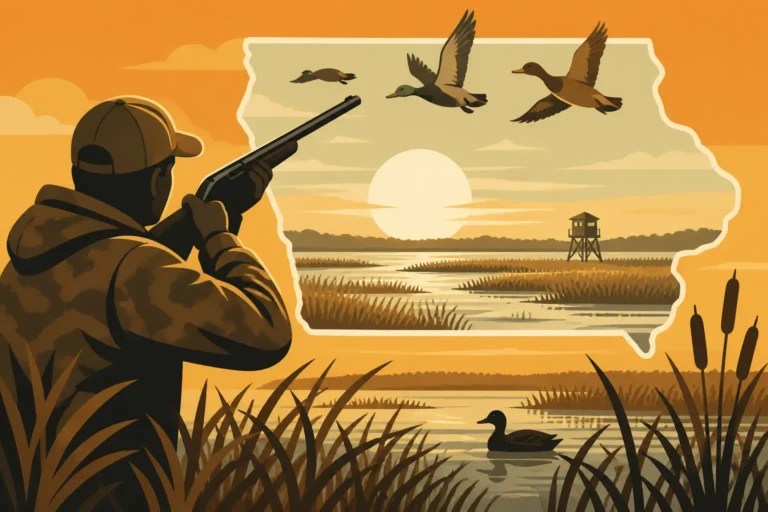
It's incredibly frustrating when you're looking forward to a fantastic waterfowl hunt, but you pull up to your chosen public land spot only to find it's either completely dry, inundated with too much water, or already packed with other hunters. Hawkeye Wildlife Area, near Coralville, Iowa, is a prime example of a fantastic waterfowl destination that can present all these challenges and more. This guide will walk you through the specifics of hunting ducks and geese at Hawkeye, offering practical advice on everything from scouting to setup, so you can navigate its unique landscape and increase your chances of a successful hunt.
Understanding Hawkeye Wildlife Area for Waterfowl
Hawkeye Wildlife Area, often simply called "Coralville," is a sprawling public land complex managed by the Iowa Department of Natural Resources (DNR) in partnership with the U.S. Army Corps of Engineers. It's built around the Coralville Lake reservoir and the Iowa River, creating a diverse mosaic of habitats that can be incredibly productive for waterfowl. However, its very nature as a flood control reservoir means water levels are dynamic and can change dramatically, making it both a blessing and a curse for hunters.
Location and Landscape Features
Hawkeye Wildlife Area is situated in Johnson County, just north of Iowa City, making it easily accessible for many hunters. The core of the area revolves around the Coralville Lake, which is fed primarily by the Iowa River. This means you're dealing with a mix of large open water, river channels, backwater sloughs, shallow marshes, and seasonally flooded timber and agricultural fields. The diverse landscape is precisely what draws so many migratory birds, but it also means no two hunting spots are quite the same, and what works one year might not work the next. You might find yourself setting up in dry corn stubble one day, and a week later, that same spot could be under a foot of water. This constant flux requires hunters to be adaptable and do their homework. Iowa River and Reservoir Hunting Access is a great resource if you're looking to understand these types of areas better.
The sheer size of Hawkeye is also a significant factor. It encompasses thousands of acres, meaning there are countless nooks and crannies for ducks and geese to utilize. While this offers abundant opportunities, it also means birds can spread out, making them harder to pattern. The terrain can range from relatively flat, open agricultural fields to dense river bottom timber, creating a variety of cover types for both birds and hunters. Understanding these micro-habitats within the larger area is key to consistently finding birds, especially as the season progresses and pressure mounts.
Primary Waterfowl Species and Migration Patterns
Hawkeye Wildlife Area sees a wide variety of waterfowl throughout the fall migration, primarily because it sits squarely within the Mississippi Flyway. Early in the season, you'll often encounter local birds and early migrants like blue-winged teal and wood ducks. These birds tend to prefer the shallower, more vegetated marshes and wooded sloughs. As the temperatures drop and more birds push south, you'll see a significant increase in mallards, gadwall, wigeon, and various diving ducks.
Later in the season, especially during the latter half of Iowa's duck seasons and through the goose seasons, large numbers of Canada geese, often from local populations mixed with migrants, will utilize the larger impoundments and harvested crop fields surrounding the lake. Pintails, shovelers, and even some canvasbacks and redheads can make appearances, especially on the more open water bodies. Iowa Duck Migration Timing and Iowa Goose Season Dates are crucial topics to research to align your hunting efforts with peak migration. The dynamic water levels at Hawkeye play a huge role here; if a particular area has excellent sheet water or flooded timber one week, it could be a magnet for birds, only to dry up the next and send them elsewhere. This constant change is the thrill and challenge of hunting Hawkeye.
Access Points and Public Entry Challenges
Accessing Hawkeye Wildlife Area can be both straightforward and incredibly complex, depending on the specific unit you're targeting. There are numerous designated parking areas and boat ramps around Coralville Lake, which provide access to different sections of the WMA. Some areas are easily accessible via maintained roads, while others require a significant hike or boat ride to reach. Given the fluid nature of water levels, what might be an easy walk to a blind in October could be a boat-only affair in November, or vice-versa.
One of the biggest challenges is simply knowing where you can go. The Iowa DNR's online hunting atlas or mapping apps like onX Hunt are invaluable for identifying public boundaries, roads, and designated access points. You'll want to carefully study these maps to understand which sections are open to hunting and how to approach them without crossing private land or disturbing other hunters. Remember, Hawkeye is a popular spot, and competition for prime locations can be fierce, especially on opening weekends or during major migrations. Having a few backup plans and being willing to explore lesser-known sections can make a huge difference.
Essential Scouting and Planning for a Hawkeye Waterfowl Hunt
You wouldn't show up to a big whitetail hunt without knowing the property, and waterfowl hunting at Hawkeye is no different. In fact, due to the constantly changing conditions, scouting here is perhaps even more critical. You need to be a detective, constantly observing, adapting, and planning.
Pre-Season Reconnaissance and E-Scouting Tools
Before the season even opens, or at least before your hunt, spending time e-scouting Hawkeye is non-negotiable. Utilise online mapping tools and aerial imagery to identify potential hunting zones. Look for areas with dense vegetation that could provide natural cover, potential food sources like harvested corn or bean fields, and most importantly, areas that historically hold water or are prone to flooding. Pay attention to contour lines on topographic maps to predict how water might collect or recede. Apps like onX Hunt are incredibly useful here, allowing you to mark waypoints, measure distances, and understand property boundaries down to the pixel. You can layer aerial views with public land boundaries, ensuring you're always within legal hunting areas.
During this phase, try to pinpoint several potential spots, not just one. Given the unpredictable nature of water levels and hunting pressure, having a Plan B, C, and even D is paramount. Look for areas that might offer a slight advantage, such as harder-to-reach pockets, natural pinch points for birds, or areas near known roosting or feeding locations. While GoHunt is more known for western big game draws, its principles of in-depth research and planning can be applied to any serious hunting endeavor, including understanding the larger environmental factors influencing waterfowl migration.
Reading Water Levels and Habitat Conditions
This is perhaps the single most important aspect of successful Hawkeye waterfowl hunting. Water levels dictate everything – where the birds can feed, where they can rest, and where you can access. The Coralville Lake is a flood control reservoir, meaning its water levels are managed and can fluctuate significantly, sometimes daily, during periods of heavy rain or drawdowns. A week before your hunt, a spot could be perfect, only to be bone dry or completely flooded upon arrival.
You'll want to check the official Corps of Engineers website for Coralville Lake for current water levels. This data is updated frequently and can give you a critical edge. Pay attention to trends: is the water rising or falling? How quickly? What does the forecast look like? Rising water might open up new areas of flooded timber or fields, while falling water can create ideal mudflats for dabbling ducks. Beyond just water levels, observe the vegetation. Are the smartweeds and millet starting to go to seed? Is the corn still standing or has it been harvested and potentially flooded? These details will tell you what food sources are available and which areas are most attractive to birds. Hunting Pressure After Opening Weekend will be exacerbated by rapidly changing water levels, forcing birds into smaller pockets, so knowing where those pockets are is crucial.
Understanding Hunting Pressure and Its Impact
Hawkeye Wildlife Area is a known quantity, especially for waterfowl hunters. This means it receives significant hunting pressure, particularly on weekends and during peak migration. While birds will still use the area, they quickly learn to avoid high-pressure spots. Your scouting efforts need to account for this. Don't just look for where the birds should be, but where they will be when disturbed. Often, this means finding overlooked pockets, slightly harder-to-reach areas, or focusing on midweek hunts if possible.
Consider how other hunters might access the area. If there's an obvious boat ramp or parking lot, the spots nearest to it will likely see the most pressure. Sometimes, walking an extra half-mile, or taking a different boat route around a point, can put you into an undisturbed area. Pay attention to wind direction, too; birds will often shy away from pressure by flying into the wind, looking for quieter zones. Observing where birds are not flying can sometimes be as informative as where they are. This knowledge is especially vital when considering tactics like Run-and-Gun Turkey Tactics on Iowa Public Land, which relies on finding undisturbed birds, a principle transferable to waterfowl.
Proven Tactics for Hunting Ducks and Geese at Hawkeye
With your scouting done, it's time to put a plan into action. Hunting Hawkeye successfully means being versatile, understanding bird behavior, and employing the right tactics for the conditions you face.
Decoy Spreads and Calling Strategies for Different Water Types
The type of water you're hunting at Hawkeye will heavily influence your decoy spread and calling approach. In tight, shallow backwaters or flooded timber, a smaller spread of six to twelve decoys, mostly mallards and wood ducks, is often plenty. Keep them close to your blind and make them look natural, almost as if they just landed. In these scenarios, subtle calling with soft quacks and feed chuckles is usually more effective than aggressive hail calls. You're trying to convince birds already looking to land that your spot is safe and inviting.
On larger, more open impoundments or sheet water in fields, you might need a much larger spread, perhaps two to three dozen or more, to grab the attention of high-flying birds. Mix in some Canada goose decoys if geese are in the area, or diver decoys if you're targeting that species in deeper water. Motion decoys, like spinning wing or jerk strings, can be incredibly effective on open water to create the illusion of life. Aggressive calling, including hail calls, can be useful to stop passing flocks, followed by contented feed calls as they work into your spread. For a detailed look, check out Decoying Ducks on a Backwater Slough.
Waterfowl Decoy Strategy at Hawkeye WMA
| Habitat Type | Recommended Decoy Count | Primary Species | Calling Style | Key Considerations |
|---|---|---|---|---|
| Shallow Marsh/Timber | 6-12 (mallard, wood duck) | Dabblers | Soft quacks, feed chuckles, contented calls | Natural spread, close to cover, subtle motion |
| Open Water/Impoundment | 24-48+ (mix of species) | Dabblers, Divers, Geese | Aggressive hail calls, confidence calls | Large visible spread, motion decoys, multiple species |
| Flooded Crop Field | 12-24 (mallard, goose) | Mallards, Geese | Standard duck calls, goose honks | Consider full-body goose decoys, layout blind use |
Concealment and Blind Setups in Varied Terrain
Effective concealment is paramount, especially on heavily hunted public land like Hawkeye. Whether you're in flooded timber, a marsh, or a field, your blind needs to blend seamlessly with the surroundings. In timber, find dense trees or downed logs to hide behind, breaking up your outline. Use natural vegetation to brush in any store-bought blinds, making them disappear. In marshes, portable blinds or simply sitting amongst cattails or tall grass, well-brushed in, can work wonders. Just remember to always position yourself so you can shoot safely and effectively.
For field hunting, especially for geese, layout blinds are king. They allow you to hide completely flat on the ground, becoming part of the stubble or cover. Again, brush them in heavily with local vegetation. Be mindful of your approach and exit routes; even the best blind is useless if you're silhouetted walking in or out. Brushing In a Ground Blind might be aimed at deer, but the principles of breaking up your outline and blending with the environment are exactly the same for waterfowl. Also, remember that Portable Stand Rules on Iowa Public Land generally apply to blinds too, so ensure your setup is compliant and temporary.
Navigating Water and Weather Conditions
Hawkeye's dynamic nature means you need to be prepared for anything. If you're hunting areas prone to flooding, a boat or kayak might be essential, even if it looks like a short walk on dry ground. Always wear a life vest when boating, especially in cold weather. Waders are a must, and chest waders are often safer than hip boots, as water levels can change unexpectedly. Be mindful of currents if hunting near the river channel; retrieving downed birds can become a dangerous chore.
Weather plays a massive role in waterfowl hunting. A strong cold front pushing through can bring in fresh birds, but it also brings challenges. High winds can make decoy placement difficult and make it harder to hear distant birds, but they also get ducks flying low. Reading Wind on a River Backwater is a critical skill. Rain or snow can provide excellent cover, making birds more willing to move, but they can also make your gear heavy and miserable. Always dress in layers, and have good waterproof outerwear. Hypothermia is a real danger, so plan for the worst-case scenario.
Navigating Regulations and Ethical Hunting at Hawkeye
Hunting public land successfully and respectfully requires not just skill but also a deep understanding of regulations and a strong commitment to ethical practices. Hawkeye is no exception.
Specific Hawkeye WMA Rules and General Iowa Waterfowl Laws
While general Iowa waterfowl regulations apply statewide, some specific rules might be in place for Hawkeye Wildlife Area or certain sections of it. These could include restrictions on motorboat use, specific shooting hours, designated refuge areas where hunting is prohibited, or limitations on permanent blind construction. It is absolutely crucial to check the latest Iowa DNR Hunting and Trapping Regulations booklet for any area-specific rules pertaining to Hawkeye WMA. Ignorance of the law is not an excuse, and violating these rules can result in fines, loss of hunting privileges, and a negative impact on the hunting community.
Beyond area-specific rules, always remember the statewide basics:
- You must have a valid Iowa hunting license, migratory bird stamp, and be HIP (Harvest Information Program) registered. Iowa Duck Stamp and HIP Requirements explains this in detail.
- Waterfowl must be hunted with a shotgun no larger than 10 gauge, incapable of holding more than three shells (plugged to a two-shell capacity in the magazine).
- Only non-toxic shot (steel, bismuth, etc.) is allowed for waterfowl hunting.
- Legal shooting hours for waterfowl typically begin 30 minutes before sunrise.
Make sure you understand the bag limits and possession limits for each species you plan to hunt. These are regularly updated, so consult the current regulations.
Respecting Other Hunters and Private Land Boundaries
Hawkeye Wildlife Area is shared space, and respecting other hunters is a cornerstone of public land ethics. This means arriving early to your chosen spot but also being mindful of other hunters who may have gotten there even earlier. Avoid setting up too close to another hunting party, as it can spoil both your hunt and theirs. A general rule of thumb is to give other parties at least a few hundred yards of space, if not more, especially on larger water bodies. If in doubt, err on the side of giving too much space.
Always use mapping tools like onX Hunt to be absolutely certain of public land boundaries. In many areas around Hawkeye, public land can abut private property, and accidentally trespassing is a serious offense that harms hunter-landowner relations. If you wound a bird and it flies onto private land, you must obtain permission from the landowner before attempting to retrieve it. This is not just a courtesy; it's a legal requirement. Being a good ambassador for hunting ensures these valuable public resources remain open and accessible for everyone.
Responsible Harvest and Carcass Management
Ethical hunting doesn't end with the shot. It extends to how you handle your harvest. Make every effort to retrieve all downed birds. A wounded bird left in the field is a terrible waste and reflects poorly on hunters. If you're struggling to find a bird, consider using a retrieving dog if you have one, or diligently searching the area where it fell.
Once retrieved, properly care for your birds. Field dress them if necessary, especially in warmer early season conditions, to ensure the meat is good. Transport them legally, making sure one wing or the head remains attached to the bird until it's at your residence or a migratory bird processing facility, allowing for species identification. Dispose of carcasses responsibly – never leave them in public view or dump them where they can create an eyesore or attract scavengers. Take them home for proper disposal or use designated dumpsters if available in the area. Our shared public lands deserve our respect and responsible stewardship.
Disclaimer
This article is for general informational purposes only and does not constitute professional advice. Laws, prices and regulations vary by location and change over time. Consult a qualified professional for guidance on your specific situation.