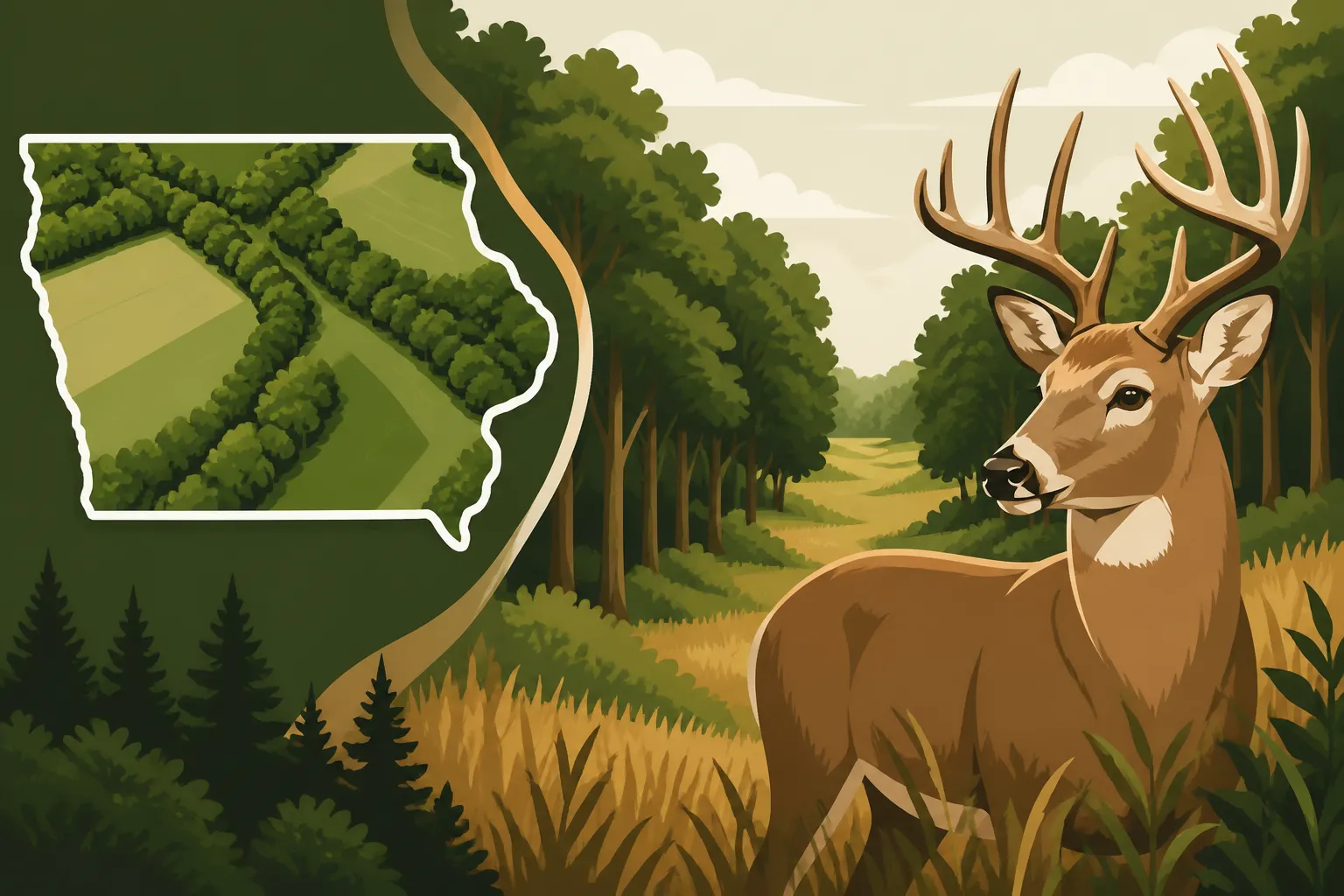
Timber and Creek Corridors as Deer Cover
It can feel like a real puzzle out there when you're trying to figure out where those elusive Iowa whitetails are truly spending their time, especially when much of our landscape is dominated by open agricultural fields. You spend hours walking edges, scanning distant timber, and still, deer seem to vanish. This guide is all about peeling back the layers on one of the most consistently productive and often overlooked deer habitats in the Hawkeye State: the timber and creek corridors that crisscross our farmland, providing essential cover and travel routes.
The Critical Role of Timber and Creek Corridors
When you think about deer habitat in Iowa, it's easy to picture vast corn and bean fields. But what truly makes Iowa a whitetail haven isn't just the abundant food; it's the hidden highways and safe havens that allow deer to thrive right alongside agricultural production. Timber and creek corridors are the unsung heroes of deer cover, providing a lifeline for whitetails in an otherwise open environment. These linear strips of habitat are far more than just patches of trees or ditches; they are complex ecosystems that cater to nearly every aspect of a deer's daily life.
Why Whitetails Crave These Linear Habitats
Deer, by nature, are creatures of the edge. They feel most secure when they have immediate cover to dive into, and timbered draws or creek bottoms offer just that—a sense of security against predators and human disturbance. These narrow strips provide the perfect blend of concealment and accessibility, allowing deer to move with relative ease while remaining largely out of sight. Whether it's a mature buck trying to avoid detection during daylight hours or a doe leading her fawns to a feeding area, these corridors offer a psychological comfort zone that open fields simply cannot.
Beyond just concealment, these areas offer crucial thermal regulation. In the scorching Iowa summers, the shade of mature timber along a creek provides a cool reprieve from the sun. Come winter, especially during those brutal cold snaps, the dense understory and evergreen patches within these corridors act as windbreaks, offering vital protection from biting winds and heavy snow. This ability to find shelter from extreme weather conditions is absolutely critical for deer survival, particularly for fawns and older animals, making these linear habitats far more valuable than their often-small acreage suggests.
Connecting the Dots: Movement and Travel Lanes
Imagine a deer needing to get from a bedding area in a small timber patch to a distant food plot or picked crop field. Walking straight across an open field during daylight hours is a recipe for disaster. This is where timber and creek corridors become indispensable. They function as natural highways, connecting disparate pockets of habitat and allowing deer to travel safely between bedding, feeding, and watering locations. These corridors funnel deer movement, creating predictable travel patterns that are goldmines for hunters who understand how to read them.
These linear features are often the path of least resistance for deer. They follow the contours of the land, providing elevated vantage points in some sections and deep, concealed troughs in others. The vegetation within them offers continuous cover, masking their movements from prying eyes. Understanding these connections is key to successful hunting in Iowa. You might find a small patch of timber that holds deer, but it’s the long, winding creek bottom connecting that patch to a large agricultural field a mile away that dictates how and when those deer will move. Learning to scout these areas is vital to becoming a better hunter, and understanding how deer move through them can dramatically improve your odds. If you're looking to understand these patterns deeper, check out articles like Reading an Iowa Timber Draw for Deer Sign or Access Routes That Avoid Bedding Areas.
Understanding Different Timber Types and Their Value
Not all timber is created equal when it comes to providing prime deer cover. In Iowa, you'll encounter a variety of forest compositions, each offering distinct advantages and disadvantages from a whitetail's perspective. Recognizing these differences and understanding how deer utilize them can profoundly influence your scouting and hunting strategies. The type of trees, the density of the undergrowth, and even the age of the timber all play a role in its value as deer habitat.
Mature Hardwoods vs. Dense Undergrowth
Mature hardwood timber, common in many parts of Iowa, often consists of towering oaks, maples, and walnuts. While these majestic trees provide excellent mast crops (acorns being a favorite food source) and shade, their understory can sometimes be sparse, especially in well-managed or grazed woodlands. This open nature, while beautiful, might offer limited hiding cover for deer during hunting season. Deer might feed heavily in these areas, particularly during the early archery season when acorns are dropping, but they often prefer to bed in thicker, more secluded spots nearby.
Conversely, areas with dense undergrowth, often found in younger timber stands, neglected areas, or those recovering from logging, offer exceptional security cover. Think of thick multiflora rose, honey locust, dense cedars, or young saplings. These impenetrable tangles make it difficult for predators (and hunters!) to see or move through, creating ideal bedding sanctuaries. While they might not offer as much direct food, their value as thermal and security cover is immense. Bucks, especially, will seek out these extremely thick areas to bed down during daylight hours, only emerging into more open hardwoods or fields to feed under the cloak of darkness.
Conifers and Evergreen Thickets
In a state predominantly covered by deciduous trees, stands of conifers like cedar or pine can be absolute gold for whitetails, especially as winter approaches. These evergreen thickets retain their needles year-round, offering exceptional thermal cover against cold winds, snow, and ice. During the harshest parts of the Iowa winter, deer will gravitate towards these areas to conserve energy, bedding down in the thickest pockets to stay warm and out of the elements.
These evergreen stands often create a distinct microclimate, several degrees warmer than the surrounding deciduous timber. They also provide excellent visual cover, creating dark, secluded sanctuaries where deer feel incredibly safe. When you're scouting, pay close attention to any stands of conifers, even small ones, particularly those located on leeward slopes or within creek bottoms. They can be critical bedding locations during the late season or any time temperatures drop significantly. Learning how to find these areas through E-Scouting Iowa Farm Country From Home can save you a lot of boot leather.
Here's a quick comparison of different timber types and their primary value to deer:
| Timber Type | Primary Value for Deer | Best Use by Deer | Hunting Strategy Considerations |
|---|---|---|---|
| Mature Hardwoods | Food (acorns), Shade | Feeding, travel (night) | Hunt food sources; target travel corridors leading to them. |
| Dense Thickets/Brush | Security Cover, Bedding | Daytime bedding | Hunt edges; identify entry/exit points; consider ground blinds. |
| Conifer Stands | Thermal Cover (winter), Bedding | Year-round bedding | Excellent for late season; hunt windward edges and travel paths. |
| Young Growth/Saplings | Security Cover, Browse | Bedding, occasional browse | Good for mobile hunting; check for rub lines and scrapes. |
Creek and River Bottoms: The Ultimate Deer Magnets
If there's one habitat feature that consistently concentrates deer in Iowa, it's the network of creeks, streams, and river bottoms. These riparian zones are absolute magnets for whitetails, providing a multi-faceted resource that fulfills nearly all of a deer's needs in one convenient package. From crucial water sources to dense cover and diverse food, these areas are often the lifeblood of a local deer herd.
Water, Food, and Sanctuary in Riparian Zones
The most obvious draw of creek and river bottoms is water. Even in dry spells, these waterways often retain some level of moisture, whether it's flowing water, stagnant pools, or simply damper soil that supports lusher vegetation. Deer need to drink regularly, and having a reliable water source tucked away in a secluded bottom offers both convenience and security. This is particularly true during the early archery season when temperatures can still be quite warm, making accessible water sources paramount. You might find deer traveling significant distances to utilize these water holes. If you're looking for more tips on early season hunts, check out Early-Season Bowhunting Over Water.
Beyond water, these bottoms are typically incredibly rich in diverse food sources. The fertile soil and protection from wind often lead to a greater variety of browse, forbs, and mast-producing trees. You might find pockets of wild grapes, persimmons, honeysuckle, or various shrubs that offer high-quality forage throughout the year. This consistent availability of food, coupled with the ever-present water and dense cover, means deer often don't have to venture far from these corridors to meet their nutritional needs. They can literally live their entire lives within a tight radius of these bottoms, especially during periods of high hunting pressure.
Navigating the Topography: Beds and Funnels
The undulating topography of creek and river bottoms creates a natural labyrinth of benches, steep banks, and subtle depressions that deer instinctively use for bedding and travel. Bucks, in particular, will often bed on points or benches within a creek bottom, especially those that offer a commanding view of their back trail and the ability to detect danger from downwind. These elevated spots allow them to rest while still being acutely aware of their surroundings, providing security from multiple angles.
Furthermore, the natural curves and constrictions of a creek channel create incredible funnels. Deer will almost always follow the path of least resistance, and often this means utilizing a narrow pinch point where the creek bends sharply, or where a steep bank forces them into a specific crossing. These natural funnels concentrate deer movement into predictable corridors, making them prime locations for stand placement. Understanding Wind and Thermals in River Breaks is especially crucial in these areas, as the unique topography can create tricky air currents that can easily give away your position. Tools like GoHunt can help you identify these topographical nuances before you even step foot in the woods, allowing you to pinpoint potential funnels and bedding areas from aerial imagery.
Scouting and Interpreting Sign in Corridors
Scouting timber and creek corridors effectively requires a keen eye and an understanding of how whitetails use these linear features. It's not just about finding deer sign; it's about interpreting that sign in the context of the corridor's unique layout and the surrounding landscape. Successful corridor scouting is about piecing together the puzzle of deer movement, discerning patterns, and predicting where a deer will be next.
Reading the Rut Sign and Scrapes
As the breeding season approaches, timber and creek corridors become absolutely littered with fresh rut sign, making them prime scouting locations. Bucks use these travel routes extensively during the pre-rut and rut phases, searching for does. You'll often find concentrated rub lines along the edges of these corridors, with bucks marking their territory and shedding velvet. These rubs aren't just random; they often indicate established travel routes, especially rubs on larger trees that might be years old. Identifying these historical rub lines can tell you where mature bucks have consistently traveled in previous seasons.
Scrapes are another critical piece of the puzzle. While scrapes can be found anywhere, those located within or immediately adjacent to timber and creek corridors are often community scrapes, visited by multiple deer. Look for fresh pawings under low-hanging branches, with an overhead licking branch that deer use to deposit scent. Fresh scrapes, especially those with an active urine stain, indicate recent deer activity and can be excellent indicators of buck presence. Corridors that connect different habitat types—like a bedding thicket to a food plot—are often prime locations for scrapes, as bucks will use them to advertise their presence to does moving between these areas. If you're wondering When the Iowa Rut Peaks, these corridors will be buzzing with activity.
E-Scouting and Boots-on-the-Ground Verification
Modern hunting has been revolutionized by e-scouting, and for timber and creek corridors, it's an indispensable tool. Before you ever set foot on the property, fire up your favorite mapping app, like GoHunt, or a mapping program that shows topographical details and aerial imagery. Look for linear strips of timber, especially those connecting larger blocks of cover or agricultural fields. Identify obvious pinch points, creek crossings, and areas where the timber widens or becomes particularly dense—these are all potential hotspots. Pay attention to how these corridors relate to known food sources, water, and bedding areas. You can often predict travel routes just by studying the lay of the land from your computer screen.
However, e-scouting is only half the battle. Nothing beats boots-on-the-ground verification. Once you've identified potential areas from your map, it's time to physically walk the corridors, preferably during the off-season or outside of prime hunting times to minimize disturbance. Confirm your e-scouting predictions: Are those pinch points actually heavily used? Are there fresh rubs and scrapes where you expected them? Look for trails, droppings, and actual bedding areas. During this physical scouting, pay attention to prevailing wind directions and how they interact with the corridor's topography. This combination of digital planning and on-the-ground confirmation is the most effective way to unlock the secrets of these crucial deer habitats. You can also refer to Scouting Iowa Public Land Before the Opener for more general scouting advice.
Effective Hunting Strategies for Corridors
Hunting timber and creek corridors requires a nuanced approach, as deer movement within these areas can be highly concentrated and often dictated by subtle shifts in wind, weather, and hunting pressure. Success hinges on precise stand placement and understanding the optimal timing for your hunts. These areas, while fantastic for deer, also often present unique challenges for hunters due to their linear nature and sometimes tricky thermals.
Stand Placement for Different Wind Directions
One of the biggest mistakes hunters make in corridors is setting up solely based on where they see sign, without fully considering the wind. Because corridors often funnel air currents, a seemingly subtle breeze can be dramatically different once it hits the confines of a creek bottom or a dense timber strip. Deer are hyper-aware of wind direction, and they will almost always travel in a way that allows them to scent-check what's ahead of them or behind them, effectively using the wind to their advantage. Therefore, your stand placement must be dictated by your ability to keep your scent out of the deer's travel path.
For stand placement, think about prevailing winds for the time of year you're hunting. If deer are typically traveling from a bedding area to a food source through the corridor, you'll want to set up downwind of their expected path. Sometimes this means setting up on the edge of the corridor, overlooking it, rather than directly within it. Consider secondary wind currents and thermals; in creek bottoms, air often drops down into the low spots in the morning and rises out in the evening. This means a stand that's perfect for a morning hunt might be completely wrong for an afternoon sit, as your scent could be carried directly to the deer. Always have multiple stand options for varying wind conditions or be prepared to hunt from the ground with a blind in certain situations. Articles like Best Stand Locations in Rolling Timber can provide more detailed advice on specific setups.
Timing Your Hunts: Rut Movement and Weather Impact
Timing is everything when hunting corridors. While deer will use these areas year-round, certain periods offer significantly higher chances of success. During the early season, you might focus on corridors that offer abundant early-season food sources or direct routes to water. However, the true magic of corridors often comes alive during the rut. As bucks begin to cruise, timber and creek bottoms become their primary travel routes for covering ground while searching for does. During the peak rut, a buck might move through a corridor at any time of day, making all-day sits in these strategic locations highly productive.
Weather also plays a massive role. A cold front moving through Iowa can dramatically increase deer activity, pushing them to feed heavily before or after the front. Rain can wash away scent, but also encourages deer movement once it stops. Snow, especially fresh snow, can make tracking easier and often signals increased deer movement as they seek out available forage. Conversely, during periods of warm, stagnant weather, deer activity might be minimal, especially during daylight hours, as they conserve energy. Pay close attention to weather forecasts and choose your hunting days and times wisely to maximize your chances of encountering deer in these vital corridors. Knowing how December Cold Front Deer Movement impacts these areas can be especially beneficial.
Preserving and Enhancing Corridor Habitat
These crucial timber and creek corridors aren't static; they require thoughtful management to maintain and enhance their value for Iowa's whitetail deer. As hunters and conservationists, understanding how to improve these habitats ensures a healthier deer herd and more sustainable hunting opportunities for years to come. It’s about more than just taking game; it’s about giving back to the land and the wildlife that rely on it.
The Impact of Timber Stand Improvement
Timber Stand Improvement (TSI) involves strategically managing a forest to achieve specific objectives, and for wildlife, this often means creating more diverse and beneficial habitat. In many Iowa timber corridors, especially older growth, the understory can become too open, reducing its value as security cover. TSI can involve selective thinning of mature trees to allow more sunlight to reach the forest floor, stimulating the growth of new, dense undergrowth that provides excellent bedding and browse for deer. This creates layers of cover, from ground level to the canopy, which is ideal for whitetails.
Another aspect of TSI can be encouraging specific mast-producing trees, like oaks, which provide critical food sources. Removing competing species or less desirable trees can allow these valuable food producers to thrive. Hinge cutting, where trees are partially cut to fall over but remain alive and connected to their stump, can create instant, dense bedding cover and browse within a corridor. This low-cost, effective technique provides immediate benefits for deer by making areas that were once open and less attractive into secure hideouts. The long-term health of these timber corridors directly impacts the health and numbers of the deer herd that relies on them.
Protecting Riparian Areas for Long-Term Health
The health of creek and river bottoms is intrinsically linked to the health of the entire ecosystem, and particularly to the deer that call them home. Protecting these riparian areas from erosion, pollution, and excessive disturbance is paramount. Implementing practices like establishing buffer strips along waterways, where vegetation is allowed to grow naturally, helps stabilize banks, filter runoff from agricultural fields, and provides additional cover and food for deer. These buffer zones are often excluded from intensive farming, creating strips of undisturbed wildlife habitat.
Furthermore, controlling invasive species like multiflora rose or honeysuckle, while they initially offer dense cover, can prevent them from choking out native plants that provide better long-term browse and mast. Engaging in conservation efforts, whether on private land or through participation in public land cleanups and habitat projects, directly contributes to the vitality of these critical corridors. Programs like the Iowa Habitat and Access Program (IHAP) demonstrate the importance of these areas, incentivizing landowners to manage their land for wildlife, often specifically targeting these critical timber and creek habitats. Understanding the importance of protecting these areas ensures that future generations of Iowa hunters will continue to find success in these incredible natural funnels and sanctuaries.
Disclaimer
Please remember that hunting regulations, seasons, and licensing requirements can change. Always consult the latest Iowa Department of Natural Resources (DNR) regulations and publications before planning any hunting trip. This content is for informational purposes only and does not constitute legal advice.