Eastern Turkeys in Iowa Timber
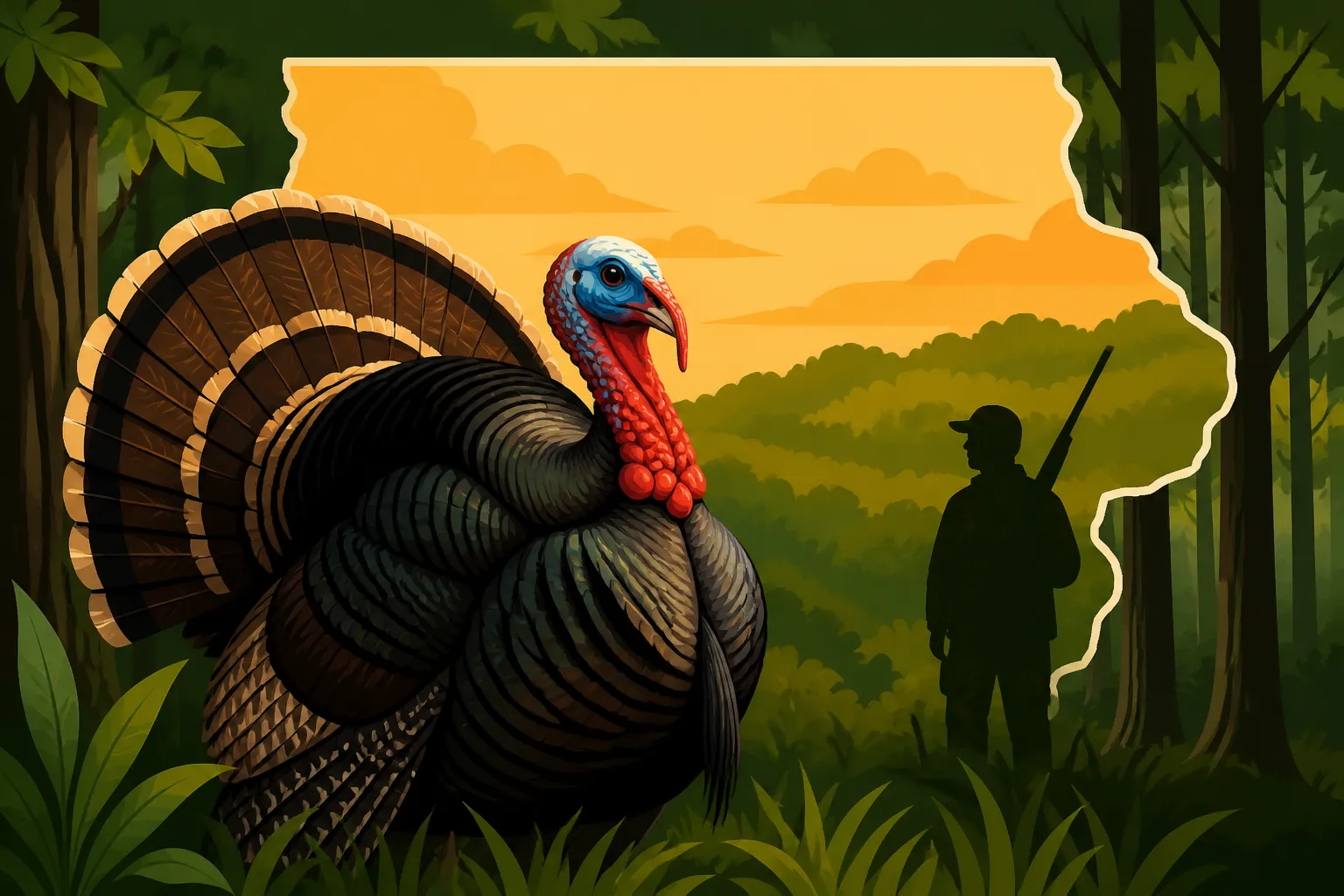
There's nothing quite like the sound of an Eastern gobbler drumming on the roost in Iowa's rolling timber, but getting him to commit can be a real challenge. You've hiked, scouted, and set up, only to have him hang up just out of range or strut off with his hens. This guide is dedicated to helping you unravel the mysteries of hunting Eastern turkeys in Iowa's diverse timber, equipping you with the knowledge and tactics to bring those elusive longbeards into range.
Understanding Iowa's Eastern Turkeys and Their Habitat
Iowa might be known for its corn and soybeans, but beneath that agricultural veneer lies a surprising amount of quality timber that's home to a thriving population of Eastern wild turkeys. These birds are incredibly adaptable, and understanding their habits and preferred environments is the first step to consistent success.
The Resilient Iowa Turkey Population
Iowa's wild turkey population is a true conservation success story. Decades ago, turkeys were practically nonexistent in the state, but thanks to aggressive restoration efforts, they now flourish in nearly every county with suitable timber. These aren't captive-bred birds; they are wild, smart, and often challenging to hunt, which is exactly what makes pursuing them so rewarding. You can see the Iowa Turkey Population Trends generally showing a healthy population, though local conditions and weather can always impact year-to-year numbers. Early spring weather, for example, plays a significant role in Turkey Poult Survival and Spring Weather, which directly influences the overall health of the flock a few years down the line.
The resilience of these birds means that even after a tough winter or a season with high hunting pressure, they tend to bounce back. Hunters across the state, from the deep timber of southern Iowa to the bluff country of the northeast, regularly encounter good numbers of birds. It's truly a testament to effective wildlife management and the turkeys' ability to thrive in varied landscapes, making Iowa one of the premier turkey hunting destinations in the Midwest.
Prime Timber Habitat for Eastern Turkeys
When we talk about "Iowa timber," we're often looking at a mosaic of hardwoods – think oak, hickory, maple, and walnut – interspersed with brushy creek bottoms and transition zones leading into agricultural fields. These areas provide everything a turkey needs: mast crops for food, tall trees for roosting, dense undergrowth for nesting, and open areas for strutting and bugging. Turkeys love variety, utilizing mature timber for security and roosting, brushy edges for nesting and escape cover, and nearby fields for feeding.
The best timber for turkeys isn't necessarily the densest. They need space to move, forage, and see predators. Look for areas where mature timber transitions into younger growth, or where a dense woodline meets a creek bottom. These "edge" habitats are often magnets for turkeys. River bottoms and creek drainages, in particular, are vital travel corridors and offer excellent roosting opportunities. These prime spots are Where Iowa Turkeys Are Most Common, as they offer a perfect blend of food, water, and cover.
Seasonal Movements and Patterns
Understanding how turkeys use the timber throughout the spring season is critical. In the early spring, gobblers are often still grouped up, but as the breeding season approaches, they begin to disperse and establish strutting grounds. Pre-season scouting is invaluable for pinpointing these areas. You'll want to be on the lookout for fresh tracks, droppings, and shed feathers, especially near known food sources or water.
As the season progresses and hens start nesting, gobblers will become more solitary, constantly searching for receptive hens. This is often when they become most vocal and responsive to calls. Late in the morning, after hens have gone to nest, gobblers often become more willing to travel and investigate calls. Knowing how to Gobbling Activity Through the Spring changes can help you adjust your strategy, from aggressive calling early on to more patient, subtle tactics as the season wears on and hens are less receptive.
Essential Scouting and Pre-Season Prep
Success in turkey hunting often hinges on the work you put in before the season even starts. You can't just show up on opening day and expect birds to materialize. Thorough scouting, both from your computer and on foot, will give you a significant advantage, especially when navigating Iowa's diverse public and private timberlands.
E-Scouting and Interpreting Topographical Maps
The digital age has revolutionized scouting, and tools like onX Hunt or even Google Earth are indispensable for E-Scouting Iowa Farm Country From Home. Start by identifying large blocks of timber, especially those adjacent to agricultural fields, pastures, or water sources. Look for subtle topographical features like ridge lines, saddles, creek bottoms, and bench cuts – these are natural travel corridors and strutting zones for turkeys. Use contour lines to understand elevation changes; turkeys often prefer to roost on high ground near water and will use ridges to travel.
When using a mapping app, don't forget to pay attention to property boundaries. This is especially crucial on public lands or if you have permission to hunt a specific private tract. Knowing exactly where you can and cannot go prevents trespassing issues and helps you plan your access routes. Many hunters find GoHunt's mapping features incredibly useful for identifying potential turkey habitat and understanding land ownership, allowing them to mark waypoints for potential roost trees or strutting zones long before they ever step foot in the woods.
Boots-on-the-Ground Reconnaissance
While e-scouting gets you in the ballpark, nothing beats physical scouting. Once you've identified promising areas on your maps, it's time to put boots on the ground. Look for concrete evidence of turkey activity: large, distinct tracks in soft soil, scattered droppings (which indicate frequent use), and shed feathers. Feathers are especially valuable as they can indicate roosting trees. The larger the concentration of feathers, the more frequently birds are using that specific tree or cluster of trees.
Listen, too. Not just for gobbling, but for the subtle sounds of turkeys scratching in the leaves for food, or clucking and purring. Pay attention to the types of trees in the area. Mature oaks and hickories provide acorns and other mast, while denser cedar thickets offer thermal cover in colder weather. Identifying water sources, even small seeps or puddles, can also be key, as turkeys need to drink daily, especially during dry spells.
Understanding Roosting Behavior
Pinpointing where turkeys roost is one of the most powerful pieces of information a hunter can have. Turkeys prefer to Roosting Iowa Turkeys the Night Before in tall, sturdy trees with strong horizontal limbs that offer security from ground predators. Often, these trees are on a ridge top, overlooking a valley or creek bottom, giving them an elevated vantage point to scan for danger before flying down at first light. Sycamore trees along river and creek bottoms are particularly favored in many parts of Iowa.
Your goal during evening scouting is to get within earshot of a potential roost area around sundown. Listen for a few "gobbles to roost" as they fly up, or the softer "tree yelps" they make once settled. Mark these trees on your map. Knowing where a gobbler is sleeping allows you to Setting Up Before Fly-Down in the dark, positioning yourself within striking distance before his feet hit the ground. A good rule of thumb is to set up 100-150 yards from the roost, quietly, giving yourself enough space for him to fly down and strut without immediately spotting you.
Calling Strategies for Iowa Timber Gobblers
Calling is the art and science of turkey hunting, and in Iowa's timber, it's about more than just making noise. It's about convincing a wary gobbler that a receptive hen is within reach, without giving away your position or intentions.
Mastering Different Call Types
There's a dizzying array of turkey calls out there, but most hunters rely on a few key types: slate (or pot) calls, box calls, and mouth (or diaphragm) calls. Each has its strengths and weaknesses, and proficiency with at least two different types will make you a much more versatile hunter. Slate calls are fantastic for realistic soft yelps, clucks, and purrs, perfect for coaxing a hung-up bird. Box calls are loud and raspy, great for cutting through wind or locating distant gobblers, or getting a quick shock gobble. Mouth calls are excellent for hands-free calling, allowing you to keep your shotgun mounted and ready as a bird approaches.
The key is not just how you call, but when and why. Are you trying to locate a bird? Are you trying to entice one closer? Are you trying to mimic a full flock? Knowing the context for each call and how to execute it effectively will dramatically improve your chances. It's also worth noting that while fancy calls are fun, sometimes the simplest, most realistic sounds are all you need to Calling a Gobbler Off the Roost or entice one across a timber draw.
Aggressive vs. Subtle Calling Tactics
Turkey hunting in Iowa timber often requires a balance between aggressive and subtle calling. Early in the season, especially when gobblers are still eager to find hens, aggressive calling – loud yelps, cuts, and even a "fly down cackle" – can be incredibly effective. This can shock a gobbler into responding and make him think he's missing out on an early-bird hen. Use this to locate birds or to bring a hot gobbler straight to you.
However, many gobblers in timber are wise to aggressive calling. If a bird is continually hanging up, or if you're Working a Henned-Up Tom Midday, a more subtle approach is often warranted. Light clucks, soft purrs, and quiet tree yelps can reassure a wary gobbler that the hen is nearby and not overly eager, making him more likely to investigate. Sometimes, simply letting out a soft series of yelps and then going silent for 10-15 minutes can drive a gobbler crazy, forcing him to come looking for the "hen" that just disappeared.
Decoy Placement and Effectiveness in Timber
Decoys can be a game-changer or a detriment, depending on the situation and how you use them. In timber, realism and visibility are crucial. A single hen decoy, or a hen and jake combo, can provide a visual target that reassures a cautious gobbler. Decoys give the bird something to focus on other than your blind or camouflaged position, often drawing his attention away from your exact location.
When placing decoys in timber, consider visibility and shot angles. You don't want them completely hidden, but you also don't want them so far out that a gobbler has to expose himself for too long before reaching them. Position your decoys so that an approaching gobbler will come into a clear shooting lane at your preferred range. Also, always consider safety; never use decoys if other hunters are likely to mistake them for real birds. For Turkey Decoy Spreads That Work effectively in timber, a good strategy is to place a hen decoy within 20-25 yards of your position, with her head facing away from you, simulating a hen walking off, which can often pull a gobbler into easy gun range.
Setting Up for Success in Timbered Environments
Getting into position is half the battle when hunting turkeys in Iowa's timber. Whether you're setting up on a morning roost, calling a bird across a ridge, or trying to intercept a midday strut, your chosen location can make or break the hunt.
Strategic Setup Locations
Timber offers a myriad of setup opportunities, each with its own advantages. Ridge lines are excellent, providing good visibility and often serving as natural travel corridors for gobblers moving between feeding and roosting areas. Setting up on the crest of a ridge, or just below it, can allow you to call birds from either side. Creek bottoms and drainages, particularly those with mature trees for roosting and open areas for strutting, are also prime spots. Turkeys will often travel these low-lying areas, especially if they offer easy access to water.
Pinch points, where timber funnels into a narrow corridor, are absolutely deadly. These could be small gaps between fields and timber, narrow strips of woods along a fence line, or the neck of a ridge that drops into a creek. Identifying these natural funnels with tools like GoHunt, and Best Stand Locations in Rolling Timber for deer, can also be highly effective for turkeys. Always choose a setup that gives you good concealment but also clear shooting lanes in the most likely direction of a turkey's approach.
Concealment and Shot Angles
In the timber, visibility can change quickly, so good concealment is paramount. Use the natural topography and vegetation to your advantage. A large oak tree, a brush pile, or a thick cedar clump can break up your silhouette. Make sure you have a solid backdrop to prevent your outline from being visible. Remember, turkeys have incredible eyesight, so even a slight movement or a patch of exposed skin can send them running. Full camouflage, including a face mask and gloves, is non-negotiable.
When setting up, always anticipate where the bird is most likely to appear and approach. Position yourself so that your gun barrel can swing freely and you have clear shooting lanes at your target ranges (typically 25-40 yards for shotguns). Often, birds will circle, trying to get a visual on the "hen." Having a clear field of fire in multiple directions, or at least understanding your limitations, is crucial. If hunting with a partner, communicate clearly about who takes the shot and in which direction to ensure Shot Placement on a Whitetail at Twenty Yards accuracy, which also applies to turkey vital zones.
Understanding the Iowa Wind and Thermals
The wind in Iowa can be a significant factor when hunting timber turkeys. Strong winds can make it incredibly difficult for turkeys (and you!) to hear calls, forcing you to call louder or choose a more sheltered location. Conversely, a light breeze can help carry your calls deeper into the timber. Always try to set up with the wind at your back or quartering, so your calls carry in the direction you want birds to approach from.
Thermals, which are rising or falling air currents, are also important, especially in rolling terrain or deep creek bottoms. In the morning, as the sun warms the earth, thermals rise. In the evening, as the air cools, thermals fall. Turkeys often fly down into rising thermals in the morning, which can help carry their scent or hear calls more effectively. Understanding Wind and Thermals in River Breaks or hilly timber can give you an edge, allowing you to position yourself where your calls are most effectively distributed, and your scent is carried away from approaching birds.
Adapting to Challenging Situations
Turkey hunting is rarely straightforward. Gobblers are notorious for being fickle, and you'll inevitably encounter situations that test your patience and tactical skill. Knowing how to adapt to these challenges in Iowa's timber is what separates the consistently successful hunters from those who just get lucky.
Dealing with Henned-Up Gobblers
One of the most common and frustrating scenarios is the "henned-up" gobbler. You've located a hot bird, he's gobbling his head off, but he's got one or more real hens with him. He's happy to gobble at your calls, but he's not budging because he already has what he wants. The key here is patience and subtle strategy. Rather than trying to out-call the real hens (which is usually a losing battle), try to sound like a lonesome, uninterested hen that's slowly moving away.
Sometimes, ignoring him for a while, or making very soft, infrequent clucks and purrs, can make him curious enough to drag his hens over to investigate. Another effective tactic for Working a Henned-Up Tom Midday is to try to get between the gobbler and his hens, or to position yourself on a route you anticipate the flock will take as they move to feed or water. If all else fails, sometimes you simply need to pack up, reposition, and try to catch him later in the day when his hens have left to nest.
Run-and-Gun Tactics in Big Timber
While sitting patiently is often the best approach, large expanses of Iowa timber sometimes demand a more aggressive Run-and-Gun Turkey Tactics on Iowa Public Land. This strategy is all about covering ground, listening, and making quick setups. If you're not getting responses in one area, move to another. This is particularly effective midday when birds might be less vocal but still receptive to a sudden, enticing call.
When employing run-and-gun, move quietly and strategically. Use terrain features like ridge lines or creek bottoms to conceal your movement. Stop frequently to call – a few loud yelps or cuts from a box call can carry a long way. Listen intently for a response. If you hear a gobbler, quickly assess the terrain, find a suitable setup with good cover, and get ready for him to come in. The key is to be efficient and minimize wasted movement. This approach works especially well when scouting new territory or trying to locate a bird that has moved since the morning roost.
Public Land Considerations and Pressure
Hunting public land in Iowa can be incredibly rewarding, but it often comes with the added challenge of hunting pressure. More hunters mean more disturbance, and turkeys can quickly become wary of aggressive calling or human presence. The key to success on public timber is often finding those overlooked pockets, or being willing to hike further than others. Tools like GoHunt can help you identify public land with walk-in access or areas that are farther from parking lots, potentially reducing pressure.
Consider hunting during the week rather than on weekends, or waiting until later in the morning after many hunters have left. Early mornings are crucial, not just for catching birds off the roost, but for getting ahead of other hunters. Always practice Public Land Turkey Safety by wearing blaze orange when walking in or out (though not while actively hunting turkeys, as camouflage is required), and assume every sound you hear could be another hunter. Finding remote public land spots with minimal pressure is often the secret to consistent success.
Comparing Common Turkey Calling Scenarios
| Scenario | Ideal Call Type(s) | Calling Aggressiveness | Notes |
|---|---|---|---|
| Locating a Gobbler | Box call, Locator call (owl/crow) | High | Loud, sharp calls to shock a bird into gobbling; listen for distant responses. |
| Off the Roost Setup | Soft slate, Mouth call | Moderate to High | Yelp and cluck; sound like a hen flying down. Be ready for him to come in fast. |
| Hung-Up Gobbler | Soft slate, Mouth call | Low to Moderate | Soft yelps, clucks, purrs; try subtle "walking away" calls. Patience is key. |
| Henned-Up Gobbler | Soft slate, Mouth call | Low (often silent) | Very soft, infrequent calls. Try to sound disinterested or move slowly away. Patience is paramount. |
| Midday Search (Run-and-Gun) | Box call, Pot call | Moderate to High | Loud yelps and cuts to cover ground. Move, call, listen, repeat. |
| Bird in Close | Mouth call, Purrs (soft) | Very Low (clucks/purrs) | Barely audible clucks and purrs to reassure. No sudden movements; keep gun up. |
Disclaimer
Hunting involves inherent risks, and it is crucial to prioritize safety, obey all local, state, and federal laws and regulations. Always refer to the most current Iowa Department of Natural Resources hunting regulations for specific rules, season dates, and licensing requirements. This guide is for informational purposes only and does not supersede official regulations.