Calling a Gobbler Off the Roost
There’s nothing quite like the sound of a spring gobbler hammering on the roost in the predawn quiet, but sometimes, those birds seem to know exactly how to frustrate us. They gobble their heads off, sound like they're coming right to you, and then… they just sit there, or worse, fly down in the opposite direction. It’s enough to make you pull your hair out! This guide is all about tackling that common challenge, giving you the real-world strategies to coax that roosted tom off his limb and into your setup.
Understanding Roosted Gobbler Behavior
Before you can pull a gobbler off the roost, you’ve got to understand why he's up there and what his typical morning routine looks like. It’s not just about waiting for daylight; there's a whole lot more happening in a turkey's world up in that tree.
Why They Stay Put
You might be wondering why a gobbler, after sounding so excited on the limb, just won't fly down to your calls. It’s frustrating, right? The truth is, they have a few good reasons for playing hard to get. First, that tree offers a sense of security from ground predators like coyotes, foxes, and even those sneaky bobcats that are making a comeback in Iowa. From up high, they can survey their surroundings and feel safe. Secondly, many gobblers, especially dominant ones, are waiting for hens to show up. They know the ladies will often come to them after fly-down, so why rush? They'll often strut and gobble right on the limb, putting on a show, letting all the hens know where they are. Imagine a big tom, tail fanned out, catching the first rays of sun – he’s feeling pretty good about himself up there, and your lonesome hen yelps might not be enough to override that confidence if he expects a whole harem.
The "Fly-Down" Moment
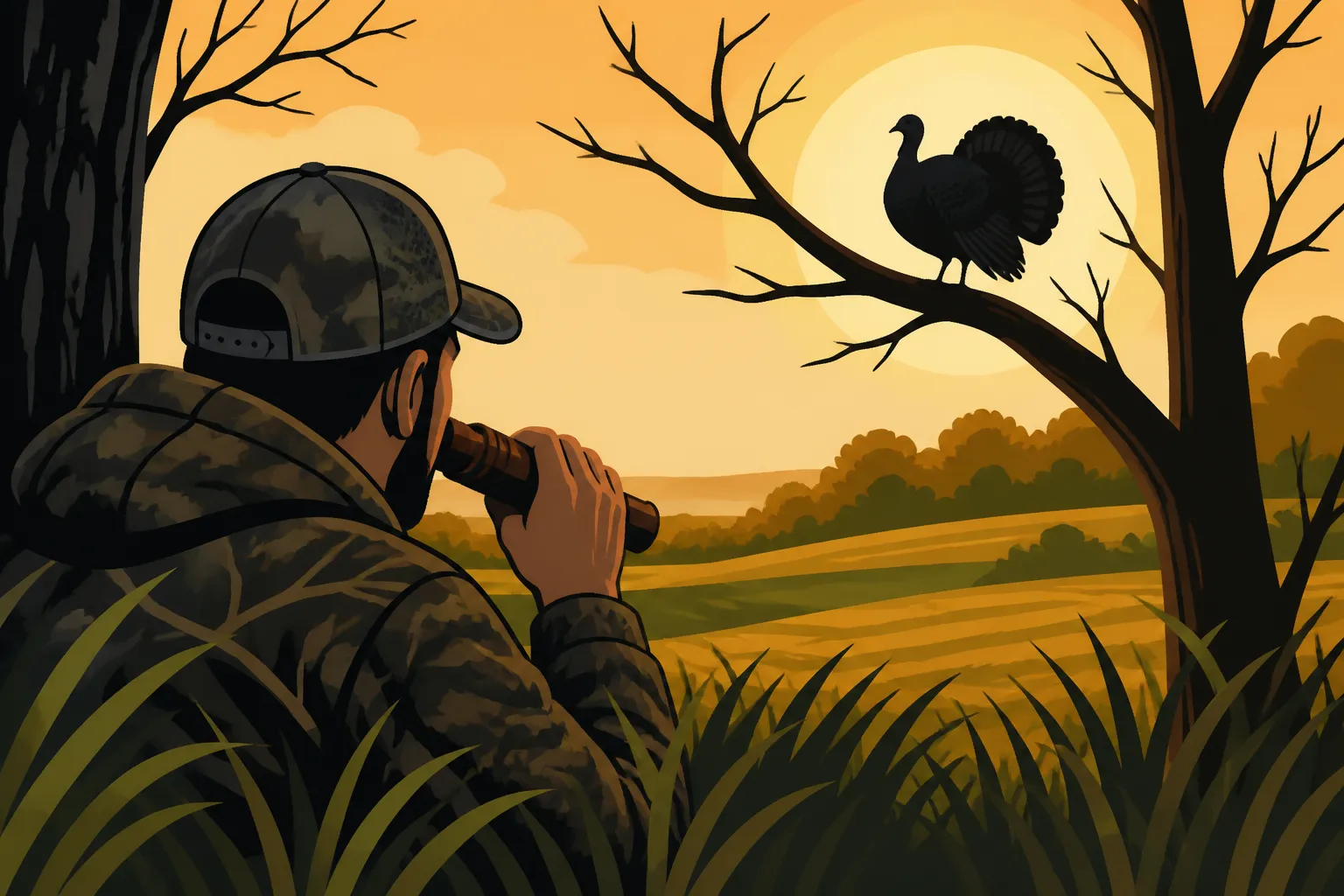
The true "fly-down" isn’t just a random jump from the branch; it's often a sequence of events. Typically, you'll start hearing soft, sleepy tree yelps and clucks from hens, and sometimes the gobbler himself, as the sky begins to lighten. These are very subtle, almost conversational sounds. As legal shooting light approaches and the birds feel more secure, the activity picks up. You might hear a distinct "fly-down cackle" – a series of quick, excited yelps and clucks as a bird launches itself from the tree. Then, a few seconds later, you’ll hear the thud of them hitting the ground, followed by more soft clucking and purring. The exact timing can vary wildly based on weather conditions, light intensity, and especially whether there are hens with the gobbler. A perfect, clear, calm morning often sees birds flying down on time, while a foggy, windy, or rainy morning might delay things considerably. Knowing when and where they typically hit the ground is key, which is why Roosting Turkeys on an Iowa Evening is such a valuable tactic.
The Influence of Hens
If there’s one thing that can throw a wrench into your roost hunt, it’s a gobbler that’s "henned up." This means he's roosted with, or in very close proximity to, a group of hens. Turkeys are social creatures, and come spring, a gobbler’s primary goal is breeding. If he wakes up surrounded by potential mates, he has little incentive to leave them for your calls. Those hens essentially become his bodyguards and his alarm clock. They’ll often fly down first, or right alongside him, and then lead him off to their preferred feeding or strutting areas. In Iowa’s agricultural landscape, this might mean they fly down into a picked cornfield, a lush green alfalfa field, or simply into a thick patch of timber on the far side of the creek. You can be making the most perfect, seductive hen calls, but if he's already got the real thing beside him, your chances diminish significantly. This is when patience and adaptability become paramount, as you might transition into Calling a Henned-Up Iowa Gobbler strategy later in the morning.
Strategic Calling to Entice Them Down
Once you've got a gobbler located on the roost, your calling strategy needs to be precise and measured. You're not just trying to make noise; you're trying to simulate a real-life scenario that makes him want to come to you.
Subtle Wake-Up Calls
When you first hear that gobbler sound off from the limb, resist the urge to hammer him with loud, aggressive calling. Think about what a real hen would be doing at first light – she’d be making soft, sleepy sounds. Start with very subtle tree yelps, soft clucks, and purrs, perhaps just a few notes every few minutes. These are meant to sound like a hen waking up, maybe stretching her wings, and getting ready to greet the day. You're trying to pique his interest, not spook him. Too much volume or aggression at this stage can make him suspicious, or he might assume you're another gobbler and try to challenge you from a distance. The goal is to make him believe a lonesome hen is nearby, patiently waiting for fly-down. You might even mimic the occasional soft hoot of an owl or the caw of a crow to sound like the natural woods waking up, before adding your subtle hen sounds.
The Fly-Down Cackle
The fly-down cackle is one of the most exciting and often misunderstood calls in a turkey hunter's arsenal. When executed correctly and at the right moment, it can be incredibly effective. This call simulates a hen flying off the roost and hitting the ground. The key is timing. Don't throw a fly-down cackle out immediately after his first gobble. Wait until you hear natural fly-down activity from other birds, or until you sense he’s getting antsy on the limb, perhaps gobbling more frequently and with more urgency.
Once you hear those first wings beat, or you're confident he's about to jump, hit him with a sharp, excited cackle, followed by some enthusiastic clucks and purrs right as you hear him leave the tree or hit the ground. The idea is to make him believe a hot hen just landed and is ready for action. If you use it too early, he might get suspicious; too late, and he's already committed to another path. This call, if timed perfectly, can make him alter his descent path and commit to your direction. Remember, authenticity is key, so practice that cackle to make it sound natural and excited, not frantic.
Aggressive Calling vs. Silence
The decision to call aggressively or stay silent after a gobbler flies down is a delicate balance. If the gobbler flies down and seems to be moving your way, maintaining soft, intermittent calling can be effective. You want to lead him on, making him feel like he’s closing the distance on a receptive hen. However, if he flies down with hens or starts moving away from your position, more aggressive calling might be warranted, but with caution. A series of loud, demanding yelps or cutting can sometimes get his attention and pull him away from his real hens, especially if he’s a dominant bird.
On the flip side, sometimes silence is your best friend. If a gobbler flies down, hears your calls, and then goes quiet or starts walking away, shutting up completely can work wonders. Curiosity is a powerful motivator for turkeys. If he expects to hear you and suddenly doesn't, he might just decide to come investigate where that hen went. This is where scouting with tools like GoHunt can really pay off. By understanding the typical travel corridors and strutting zones in the area you’re hunting, you can anticipate where he’ll likely head and adjust your calling strategy, or even reposition, more effectively. Remember, turkeys have excellent hearing, so your calls travel further than you might think. Adjusting your volume based on the bird's perceived distance and the density of the Iowa timber you're hunting is crucial. When he starts to hang up, sometimes the best call is no call at all.
Setup and Movement for Roost Hunting
Your physical setup and how you position yourself are just as critical as your calling. You can call perfectly, but if you’re in the wrong spot, or make a wrong move, that gobbler will bust you every time.
Optimal Setup Location
Choosing the right setup spot is paramount when hunting roosted gobblers. You need to be close enough to hear them clearly and influence their fly-down path, but not so close that you risk spooking them as you move in during the predawn darkness. A good rule of thumb in Iowa's rolling timber or creek bottoms is to set up within 75-100 yards of where you believe the gobbler is roosted. This distance allows your soft calling to be heard, but also gives you a buffer for concealment.
Consider the terrain: Where is he likely to fly down? Is there an open field, a fencerow, or a sparse timber edge? Position yourself where you have good concealment – a thick tree trunk, a brush pile, or a natural depression – and a clear shooting lane in the direction you expect him to approach. Always consider the sun’s position; you don’t want it in your eyes or glaring off your face. Also, think about his potential fly-down path. Turkeys generally prefer to fly down into open areas or clearings, rather than blindly into dense brush. Setting up just off such an opening, or on a timber edge bordering a field, often puts you in a prime position. Setting Up Before Fly-Down involves a lot of predawn scouting to pick that perfect spot.
Decoy Placement
Decoys can be a game-changer when calling a gobbler off the roost, but only if they’re deployed correctly. Your goal is to give the gobbler something visual to focus on that reinforces your calling. For a roosted bird, a single hen decoy or a jake/hen combination placed 15-20 yards in front of your setup can be highly effective. Place them where the gobbler will see them easily as he flies down or approaches. Face the hen decoy generally towards your calling position, simulating a bird that has just landed and is looking for company.
If you’re using a jake decoy, position it so it looks like it’s interacting with the hen. Be mindful of the wind direction if it’s a breezy morning, as you want your decoys to look natural, not like they're spinning uncontrollably. In thicker Iowa timber, visibility can be an issue, so ensure your decoys are in a slight opening or on a path where the gobbler is likely to come into view. Avoid placing them too far away, as this could draw the gobbler past your shooting lanes, and never place them directly in front of you where they could block your shot or put you in a dangerous position.
Here's a quick guide on decoy choices for roost hunting:
| Decoy Type | Best Use Case | Pros | Cons |
|---|---|---|---|
| Single Hen | Most versatile; simulating a lone, receptive hen. | Highly effective; less intimidating to younger gobblers. | May not challenge dominant gobblers as much. |
| Hen & Jake Combo | Simulates competition; often draws dominant gobblers. | Can enrage dominant toms who want to run off the jake. | Can sometimes deter timid gobblers; requires more setup. |
| Breeding Pair | Very aggressive; for dominant, henned-up gobblers. | Extremely realistic and challenging visual. | Can be risky; may spook birds if they approach too cautiously. |
| Strutter (Full Fan) | High visibility; challenges dominant birds directly. | Excellent for drawing in confident, mature toms from a distance. | Can be seen as a threat, making birds hang up or circle widely. |
For more detailed strategies on setup, check out Turkey Decoy Spreads That Work.
Post-Fly-Down Strategy
What happens after the gobbler flies down is often the make-or-break moment. If he flies down right where you want him, great! Keep your calling soft and encouraging, letting him close the distance. But what if he flies down 100 yards away, with a group of hens, and starts moving in the opposite direction? Don't panic. This is where adaptability comes in.
If he's henned up, your best bet might be to let him walk out of sight with his harem, then try a "run-and-gun" approach. This involves quickly and quietly repositioning to get ahead of him or to intercept him at his next likely strutting area. By using mapping apps, or GoHunt's detailed terrain and property line features, you can often identify a quicker route to cut him off. Move with purpose, but stealthily, using terrain and cover to mask your movement. Get into a new setup and try a different calling sequence – maybe a soft, subtle lost hen, or an excited series of yelps and cuts to see if you can pull him away from his ladies. Sometimes, simply knowing the general direction of travel and setting up ahead of the flock, with a patient setup, can yield results when direct calling fails. This type of mobile hunting is often covered in detail in guides like Run-and-Gun Turkey Tactics on Iowa Public Land.
Common Mistakes and How to Avoid Them
Even seasoned turkey hunters make mistakes, especially when that adrenaline kicks in. Understanding these common pitfalls can save you a lot of heartache and increase your success rate.
Calling Too Much or Too Loud
One of the biggest blunders hunters make is overcalling, especially on the roost. It’s easy to get excited when a gobbler is hammering, and you want to call back every time he gobbles. But imagine you’re a real hen. You wouldn’t be incessantly yelping every five seconds. Too much calling, especially loud, aggressive calling before fly-down, can make a gobbler suspicious. He might pinpoint your exact location too easily, or worse, think you’re another hunter.
The "less is more" principle truly applies here. Use soft, subtle calls initially. A few quiet tree yelps and clucks are often enough to let him know you're there. Once he flies down, continue to gauge his reaction. If he’s coming, light calling is usually sufficient. If he hangs up, sometimes a sharp cut or series of yelps can grab his attention, but don’t sustain it. Turkeys are wild animals, and they react to natural sounds. Constant, artificial calling can be a dead giveaway.
Impatient Movement
Patience is a virtue in all hunting, but especially with turkeys. After a gobbler flies down, it's incredibly tempting to want to adjust your position, especially if he didn't land exactly where you hoped. However, turkeys have incredible eyesight, and even the slightest movement can spook them. If a gobbler flies down and seems to be headed your way, even if it’s a slow approach, stay absolutely still. Don't fidget, don't adjust your gun, and certainly don't stand up. Wait until he's fully committed and within comfortable shooting range.
If he flies down and moves away with hens, resist the urge to immediately jump up and try to cut him off. Wait until he’s completely out of sight and hearing, and then make your move, if you decide to reposition. Moving too soon almost guarantees you’ll be spotted. Sometimes, the best strategy is simply to stay put for a while, even if you think the game is over. He might circle back, or another gobbler might appear. Understanding how Gobbling Activity Through the Spring changes can help manage expectations and patience levels. For planning alternative approaches, GoHunt's satellite imagery can help identify potential hidden lanes or quick repositioning routes that keep you concealed.
Ignoring the Roosting Process
Many hunters focus solely on the morning hunt, forgetting that the evening before holds vital clues. Ignoring the roosting process is a huge mistake. Locating a gobbler on the roost the night before gives you an immense advantage. You know exactly where he’s starting his day, which allows you to plan your predawn approach, setup, and calling strategy with precision.
Without knowing the roost location, you’re essentially starting your hunt blind, hoping to hear a gobble and then rush to get into position – often making too much noise or picking a suboptimal setup. Roosting Turkeys on an Iowa Evening involves going out just before dusk, listening for gobblers sounding off as they fly up to their roost trees. Once you hear them, mark the location (discreetly, from a distance) on your map. This information is gold. It helps you understand the lay of the land, potential fly-down zones, and any obstacles between you and the bird. It reduces guesswork and allows for a quieter, more confident approach in the dark, setting you up for success the following morning.
Advanced Tactics for Stubborn Gobblers
Some gobblers are just plain stubborn. They've heard it all, seen it all, and aren't easily fooled. For these wily birds, you need to pull out a few extra tricks.
The "Silent Treatment"
You've done everything right: you roosted the bird, set up perfectly, and made realistic calls. He's gobbled his head off on the limb, flies down, but then hangs up just out of range, gobbling occasionally but refusing to commit. This is a classic scenario, and sometimes, the best call is no call at all.
The "silent treatment" involves suddenly shutting down all calling. If a gobbler expects to hear that hen he’s been communicating with, and she suddenly goes quiet, his curiosity can sometimes get the better of him. He might think, "Where did she go? Did she leave?" This can be enough to make him take those few extra steps into range, looking for the hen he thought was there. This tactic works particularly well on birds that are either slightly pressured or are already on their way, but just need that last little push of curiosity. It’s also a good tactic for Working a Henned-Up Tom Midday after the hens have left him.
Changing Locations Slightly
If a gobbler flies down, hears your calls, and then veers off with other hens or just moves in a direction you didn't anticipate, don't feel like you're chained to your setup. Sometimes, a subtle repositioning can make all the difference. This doesn't mean making a loud, crashing dash through the woods. It means assessing his new direction and finding a way to quickly and quietly move to cut him off, or to get to a new setup where your calls will sound fresh and more enticing.
For example, if he flies down and heads toward a creek bottom 100 yards away, and you can see a small rise or fencerow that you can use for cover, try to sneak over there. Get set up again and then throw out a different calling sequence – maybe a more aggressive series of yelps, or even soft clucks, to simulate a different hen or a hen that's now closer. The key is to use the terrain and available cover to your advantage to make these moves as undetected as possible. Think of yourself as a chess player, anticipating his next move and subtly adjusting your pieces. Using mapping resources like GoHunt can help you identify these potential repositioning routes quickly and efficiently, even in the dark or low light.
Utilizing Terrain and Cover
Iowa's varied landscape, from rolling timber to dense creek bottoms and expansive crop fields, offers incredible opportunities to use terrain and cover to your advantage. When calling a gobbler off the roost, analyze the landscape around you. Are there subtle ridges or draws that can help carry your calls further, or conversely, block your sound from traveling too far and giving away your exact position too early?
For instance, if a gobbler is roosted across a deep draw, setting up on the lip of the draw can sometimes help project your calls more effectively. Or, if he tends to fly down into a particular field, setting up on the field edge, tucked into a fencerow or thick brush, gives you crucial concealment. The thicker cover of a cedar thicket or multiflora rose patch in southern Iowa can provide excellent natural blinds. Don't just set up in the first tree you see. Think about where the gobbler is, where he's likely to go, and how the topography can help you remain unseen while still broadcasting your calls effectively. These detailed observations about the land are often made when considering your Public Land Turkey Safety plan, ensuring both success and security.
Disclaimer
Hunting is an inherently dangerous activity. Always prioritize safety, understand and follow all Iowa hunting regulations, and ensure you have the proper licenses and permits. This guide is for informational purposes only and does not guarantee success. Always be aware of your surroundings and other hunters in the field.