Hungarian Partridge Range in Iowa
For many Iowa upland bird hunters, the dream often centers on pheasants and quail, but there's a smaller, more elusive prize that can bring just as much excitement: the Hungarian partridge, often affectionately called a "Hun." Finding these lightning-fast birds in Iowa can feel like searching for a needle in a haystack if you don't know where to look. This guide will walk you through the specific habitat and geographical range of Hungarian partridge in Iowa, helping you understand where to focus your scouting and hunting efforts for a chance to intercept a cackle of Huns.
The Elusive Hungarian Partridge: A Northern Iowa Resident
Unlike pheasants, which are found across much of Iowa's agricultural landscape, Hungarian partridge have a much more restricted range within the state. They aren't going to be popping up in every ditch or CRP field you hunt. Their presence is tied directly to specific habitat requirements and, historically, to the northern reaches of Iowa, bordering states like Minnesota and South Dakota. If you've been busting your tail in central or southern Iowa looking for Huns, you're likely to be disappointed. The frustration of endless walking without seeing a single bird is real, and it comes down to understanding their preferred home turf.
Why Northern Iowa is Hun Territory
Hungarian partridge thrive in landscapes that are a mosaic of grain fields, particularly small grains like oats and wheat, combined with ample grass cover for nesting and escape, and a relative lack of tall, dense woody cover. Northern Iowa, with its historical farming practices and specific ecological characteristics, provides more of this ideal combination than other parts of the state. It's a subtle difference, but one that makes all the difference to a covey of Huns trying to survive a tough Iowa winter.
Consider the historical context: these birds were introduced from Europe and adapted to similar agricultural landscapes there. When they were brought to North America, they found suitable homes in the northern plains, and Iowa’s northern counties often mirror some of those conditions, albeit in a more limited fashion. It's not just about cold winters; it's about the entire ecosystem of food, cover, and predator dynamics.
Ideal Habitat Breakdown for Huns
To truly understand where to find Hungarian partridge, you need to think like a Hun. They need safe places to nest, readily available food throughout the year, and protection from predators and harsh weather. This isn't quite the same as prime pheasant habitat, though there can be overlap.
Preferred Cover and Terrain
Hungarian partridge favor open, gently rolling terrain. You’ll rarely find them in heavily timbered areas or dense river bottoms. Instead, look for expansive grasslands, pastures, and hayfields adjacent to agricultural lands, especially those with smaller grain rotations. Unlike pheasants that might hold tight in thick cattails or plum thickets, Huns prefer more open spaces with shorter, thicker grass that allows them to run and scatter rather than just burst upward. Think about areas where fields meet grassland margins, field corners that might have some weed growth, or even along less-maintained fence rows that offer a bit of cover. They often utilize CRP (Conservation Reserve Program) fields, but they tend to favor the shorter, bunch-grass type cover rather than dense, tall switchgrass. CRP Grass and Where Bucks Bed can provide an idea of the type of grassland areas to look for, even though it's deer-focused.
They are less tolerant of heavy timber than pheasants or quail. While a pheasant might duck into a brushy creek bottom, Huns want the open country where they can see danger coming and then quickly run or fly to a new hiding spot. This is why when they flush, it's often an explosive, coordinated burst of the entire covey, covering significant distance rapidly.
Food Sources and Winter Survival
Food availability, especially in winter, is absolutely critical for Hungarian partridge. They primarily feed on waste grains, weed seeds, and insects. This ties directly into their preference for agricultural landscapes. Stubble fields from corn or soybeans, particularly those that haven't been tilled under immediately after harvest, are prime feeding grounds. However, they're especially fond of small grain fields like oats, wheat, or barley, which are less common across much of Iowa but still persist in some northern regions.
During the harsh Iowa winters, Huns rely on those waste grains and weed seeds to maintain energy. They also need reliable thermal cover – usually dense, low-growing grassy areas or brushy fence lines that can trap heat and provide shelter from biting winds and blowing snow. A covey will often huddle together for warmth, burrowing into snowdrifts or thick grass for protection. Understanding these needs is key to pinpointing their potential strongholds when scouting, especially when Reading Aerial Imagery for Bedding Cover or trying to predict December Cold Front Deer Movement, as both can relate to how game uses available cover.
Pinpointing Hungarian Partridge Hotspots in Iowa
So, now that we know why they're in northern Iowa, let's get a bit more specific about where to look. You won't find significant, huntable populations of Huns in every northern county, but there are definitely counties and general zones that historically hold more birds.
The Concentrated Range: North Central and Northwest Iowa
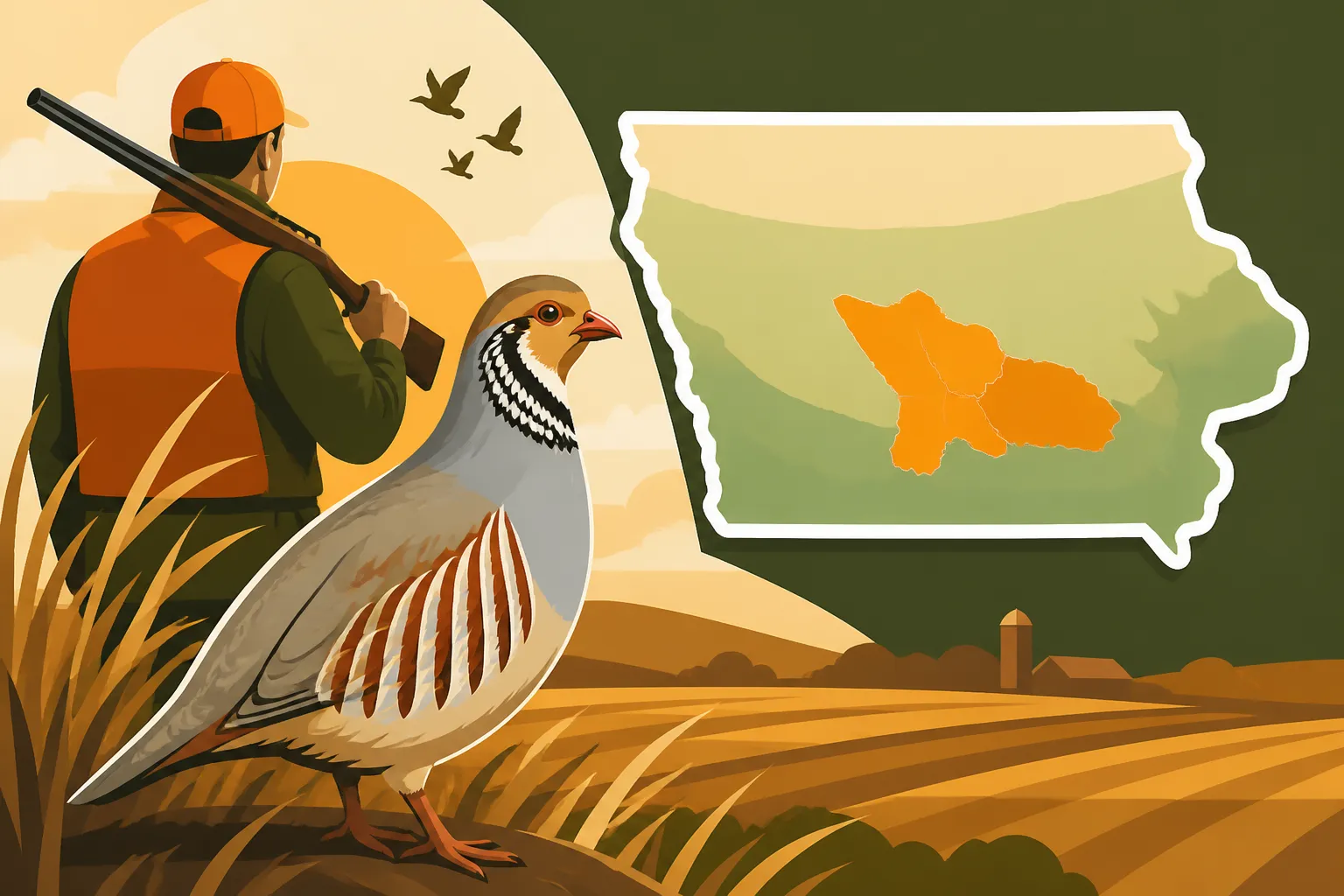
The primary range for Hungarian partridge in Iowa is generally concentrated in the north-central and northwest regions of the state. Think of a rough band of counties stretching from, say, Lyon and Sioux counties in the far northwest, eastward through counties like Dickinson, Emmet, Kossuth, Winnebago, Worth, and into Mitchell and Howard counties in the northeast corner. This isn't to say you won't find isolated pockets elsewhere, but these areas offer the best consistent chances.
| Region of Iowa | Likelihood of Hungarian Partridge | Primary Habitat Types | Notes |
|---|---|---|---|
| Northwest Iowa | Highest | Grasslands, grain fields, pasture | Good historical populations, agricultural diversity. |
| North Central Iowa | High | Grain fields, CRP, hayfields | Strong potential, especially near small grains. |
| Northeast Iowa | Moderate to Low | Less consistent, more timbered east | Pockets, but overall less widespread than NW/NC. |
| Central Iowa | Very Low to None | Predominantly corn/soy, less ideal | Extremely rare, not a target area. |
| Southern Iowa | None | More timber, different agriculture | No established populations. |
| Western Iowa | Low to Moderate (northern parts) | Loess Hills (south), agriculture (north) | Northern parts of western Iowa might hold some. |
It's crucial to remember that upland bird populations, including Huns, can fluctuate significantly year to year based on weather, nesting success, and winter severity. The Iowa Pheasant Roadside Survey Results can offer a general gauge of upland bird health, though it focuses on pheasants. Still, healthy pheasant numbers can sometimes correlate with healthier populations of other grassland birds like partridge.
Scouting and Researching Specific Locations
Finding Huns is less about stumbling upon them and more about intentional scouting. This means both "e-scouting" from home and putting boots on the ground.
Leveraging Online Mapping and Resources
When you're starting your search, online mapping tools are your best friend. Services like GoHunt allow you to zoom into satellite imagery and identify the mosaic of habitat types Huns prefer. Look for those larger blocks of grassland, whether it’s CRP, hayfields, or pastures, that are directly adjacent to crop fields. Pay attention to areas with fence lines, shelterbelts, or other linear cover that could provide travel corridors or winter protection. You can often spot unharvested crop edges or small grain fields. E-Scouting Iowa Farm Country From Home is an excellent resource for learning how to identify these features from your computer.
Beyond general mapping, utilize the Iowa DNR's hunting atlas. This tool can highlight public hunting lands in the counties identified as prime Hun territory. While most public land in Iowa might be managed more generally, some wildlife management areas (WMAs) in the northern parts of the state might have suitable habitat. Check county conservation board areas as well, as their management practices can vary. Remember, Public Hunting Land in Iowa often sees more pressure, but sometimes those hard-to-find birds are overlooked.
Boots on the Ground and Local Knowledge
There's no substitute for actually driving through the areas you've identified and talking to locals. A quick drive through potential Hun country can confirm what you see on a map. Are the fields mostly corn and beans, or do you see more oats or hay? Are there good, thick grassy areas along ditches and field edges? Sometimes, just spotting a covey crossing a gravel road or bursting from a field edge can confirm their presence.
If you can, try to talk to farmers or landowners. They are often the best source of information, knowing if they've seen "those little partridge" on their property. This can lead to opportunities for Finding Private Land Access in Iowa, which is often key for less common species.
Hunting Strategies for Iowa Huns
Once you've identified potential Hun country and secured access, the real challenge begins: hunting these crafty birds. Hungarian partridge are known for being incredibly tough to hit, flushing wild, and running before they flush. It takes patience, good dog work (if you have it), and a solid understanding of their behavior.
Working the Cover and Using Dogs
If you're fortunate enough to hunt with a good bird dog, this is where they truly shine. A pointing dog can lock up on a covey that might otherwise run far ahead, giving you a chance to get into position. Flushing dogs are also effective, but be prepared for explosive flushes and fast shooting opportunities. For tips on working birds in various cover, check out Working Pheasant Cover Without a Dog which offers general upland strategies that can be adapted.
When you're walking the cover, think systematically. Huns will often be found near the edges of fields, in grassy waterways, or along fencerows. They love to run, so rather than just walking in a straight line, try to work edges and corners, using natural barriers to funnel them or limit their escape routes. If you flush a covey, mark where they land as best you can. Unlike pheasants that might run again after a short flight, Huns often fly a considerable distance, regroup, and then hold tighter in the new cover. This second flush can sometimes be the best opportunity.
A crucial tactic is to stay spread out, if hunting with a group, and maintain a slow, steady pace. Huns are experts at using subtle rises in terrain or a slight dip in cover to disappear. Don't rush; let your eyes and your dog (if applicable) do the work. Remember, patience is a virtue, especially for Working Cover Edges Without a Dog.
Timing Your Hunt and Weather Considerations
Like all upland birds, Hungarian partridge activity can be influenced by weather. Overcast, calm days are often better than bright, windy ones, as the wind can make them even more skittish and harder to hear. Post-rain days, when they might be drying out in the sun, can also be productive.
Later in the season, when temperatures drop and snow falls, Huns will concentrate more on reliable food sources and denser thermal cover. This can make them more predictable but also harder to flush. They might be holding tight in brushy field borders or deep grass. This is similar to Late-Season Food Source Hunting in Iowa for deer, where understanding how animals use cover and food changes with the seasons is key.
When hunting in Iowa, always ensure you have the correct licenses. A standard Iowa Nonresident Small Game Licence Cost covers upland birds, but always double-check current regulations.
Conclusion: A Rewarding Challenge
Hunting Hungarian partridge in Iowa is not for the faint of heart. It requires specific knowledge, targeted scouting, and often a fair bit of walking, sometimes with little to show for it. But when a covey bursts from the grass, their distinctive cackle echoing across the open fields, it's an experience that’s truly unique and incredibly rewarding. By understanding their limited range, preferred habitat, and using good scouting practices—perhaps even with the help of tools like GoHunt to analyze land features—you can significantly increase your chances of connecting with these magnificent little birds in the northern reaches of the Hawkeye State.
Disclaimer
This article is for general informational purposes only and does not constitute professional advice. Laws, prices and regulations vary by location and change over time. Consult a qualified professional for guidance on your specific situation.