CRP Grass and Where Bucks Bed
It can be incredibly frustrating to scout what looks like perfect deer cover—thick, tall grass that seems impenetrable—only to consistently come up empty-handed during hunting season. Many hunters scratch their heads, wondering why bucks aren't using those dense Conservation Reserve Program (CRP) fields. This comprehensive guide will peel back the layers of CRP, showing you exactly why and where Iowa bucks choose to bed in these often-misunderstood habitats, and how you can use that knowledge to your advantage.
Understanding CRP Grasslands in Iowa
Conservation Reserve Program (CRP) lands are a huge part of the Iowa landscape, and they offer incredible benefits not just for soil and water quality, but for wildlife, too. Essentially, CRP is a federal program that pays farmers to take environmentally sensitive land out of agricultural production and plant it with species that improve environmental health and provide habitat. For deer hunters, especially those of us chasing those elusive Iowa giants, these fields represent a goldmine of potential bedding and cover.
The Purpose and Types of CRP
The primary goal of CRP is long-term environmental benefits. Farmers sign contracts to establish permanent vegetative cover, which helps prevent soil erosion, improve water quality by reducing runoff, and increase wildlife populations. What might look like just a "grassy field" from the road is often a complex ecosystem designed for specific outcomes. These fields are typically planted with native warm-season grasses like switchgrass, big bluestem, and indiangrass, often mixed with various forbs (broadleaf plants) and legumes.
The specific types of plantings can vary wildly across Iowa. Some CRP might be pure, towering switchgrass that can literally be taller than a person, offering incredible thermal and visual screening. Other contracts might include a mix of shorter native grasses and wildflowers, providing more diverse forage for other wildlife, but still excellent security cover for deer. Knowing what kind of CRP you're looking at, whether through a quick glance or by diving into tools like the GoHunt app which often details land use, can be a game-changer for your hunting strategy. This variability means that not all CRP is created equal in a buck's eyes, and understanding the differences is key.
How CRP Benefits Iowa Deer Herds
For Iowa's whitetail deer, especially bucks, CRP fields are nothing short of a sanctuary. In a landscape dominated by corn and soybean fields, CRP provides a critical refuge of dense, undisturbed cover. This cover offers excellent concealment from predators (including hunters!), protection from harsh winter winds and summer heat, and a place where deer feel secure enough to bed down for hours. The taller, thicker stands of grass create almost tunnel-like environments, allowing deer to move through them largely undetected.
Beyond just cover, CRP can offer some limited browse, especially if it includes forbs and legumes. While not a primary food source like a cornfield or a lush food plot, these supplemental food options add to its appeal. More importantly, it provides fawning cover in the spring, protecting newborn fawns from predators. The sheer density of these fields means that once a deer slips into them, it can be incredibly difficult to locate or push out, making them prime bedding locations, particularly during high-pressure times like the shotgun seasons. Understanding these benefits is the first step in unlocking the secrets of CRP Acres and Iowa Deer Numbers.
Why Bucks Prefer CRP for Bedding
It’s one thing to know CRP is good for deer; it’s another to understand why a mature buck specifically chooses to bed there. Bucks, especially older, wiser ones, are all about security, thermal regulation, and having an escape route. CRP offers these in spades, particularly when it's located strategically within the broader landscape. They aren't just flopping down anywhere; there's a method to their madness, and once you recognize it, you'll start seeing those elusive patterns.
Security and Concealment Within the Grass
Mature bucks are masters of survival, and their number one priority is self-preservation. CRP provides unparalleled security and concealment. Imagine being a big buck with a massive rack; you don't want to be easily spotted. Tall, dense switchgrass, big bluestem, and indiangrass create a visual barrier that's nearly impossible to see through from human height. Once a buck beds down, often in a small depression or slightly elevated spot within the grass, he can disappear completely.
This dense cover also muffles sound, making it harder for predators to pinpoint a deer. They can hear you coming long before you ever get close. Bucks often choose bedding spots that allow them to hear approaching threats while remaining completely hidden. This creates a psychological advantage for the deer—they feel safe, which means they'll spend more time resting and less time being alert. It's a prime reason why a buck might choose to stay bedded in a CRP field all day, only emerging under the cover of darkness.
Thermal Regulation and Wind Protection
Beyond security, CRP offers excellent thermal regulation, making it comfortable for deer in various weather conditions. In the brutal cold of an Iowa winter, those tall grasses trap a layer of air, providing insulation and shielding deer from biting winds. A bedded buck can conserve a lot of energy when he’s protected from the elements. This is critical for survival when calories are scarce.
Conversely, in the scorching heat of early bow season or a warm October, the dense canopy of CRP grasses provides shade and can be several degrees cooler than open areas. The air movement might be restricted, but the shade keeps them from overheating. Bucks will often seek out the densest, tallest patches of CRP during the heat of the day, allowing them to rest comfortably and out of sight. Pay close attention to these areas when planning your October Bow Season Heat Strategy.
Strategic Bedding Locations in CRP
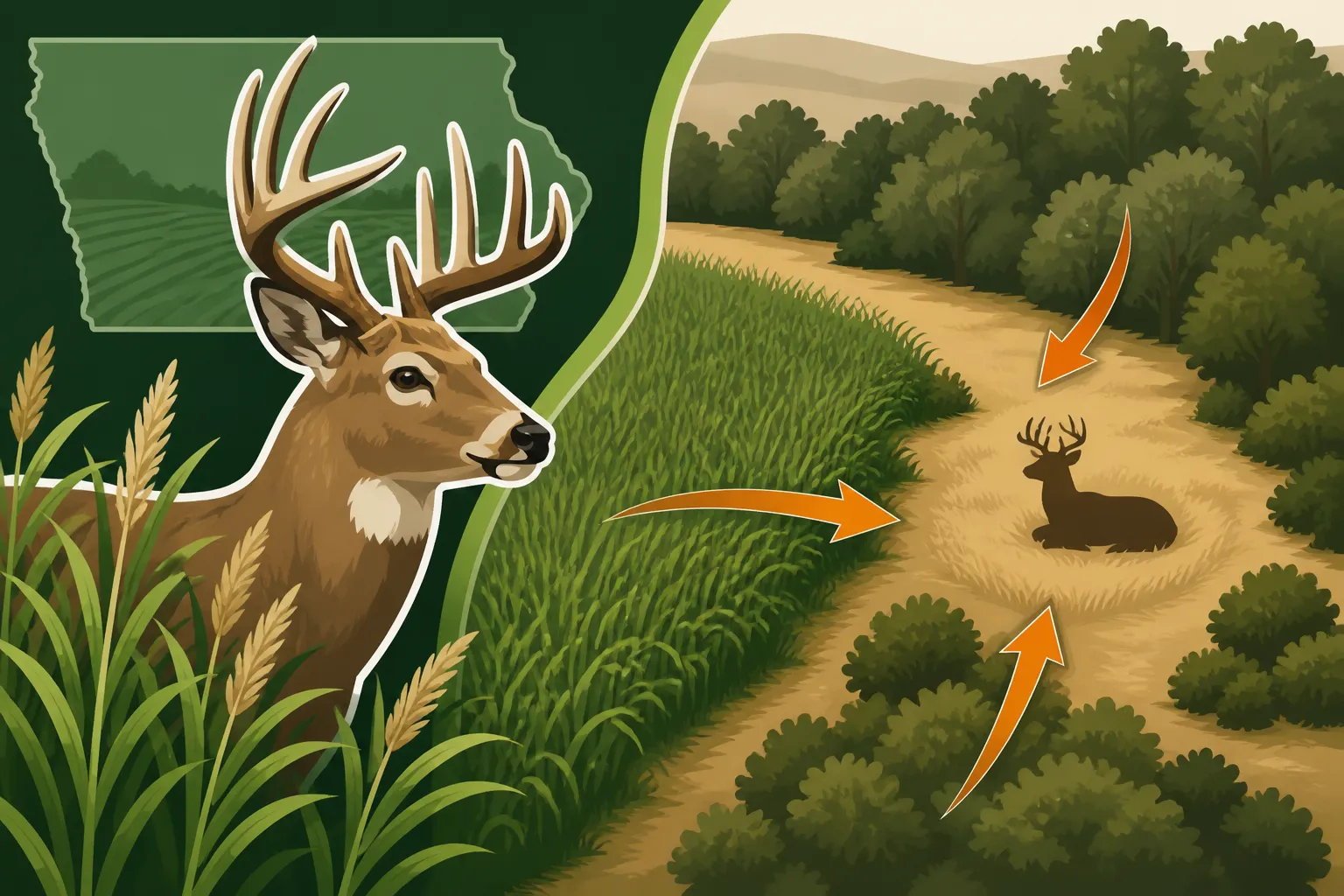
It's rare for a buck to bed smack dab in the middle of a massive CRP field. Instead, they look for strategic spots that offer an extra layer of advantage. These often include edges where the CRP transitions to timber, a ditch, a fenceline, or a creek. A buck might bed just inside the CRP, close enough to the timber to quickly duck into thicker woods if threatened, but still concealed by the grass.
Look for slight elevation changes, even a foot or two, within a CRP field. A buck will often bed on the leeward side of a rise, facing downwind, allowing him to use his nose for anything coming from behind and his eyes for anything approaching from the front. Small pockets of brush, a lone cedar tree, or even a rock pile within the CRP can serve as anchor points for a buck's bed. These subtle features, often only visible through careful Reading Aerial Imagery for Bedding Cover, are crucial. Using tools like GoHunt to analyze topo maps and satellite imagery can highlight these subtle advantages, allowing you to narrow down potential bedding areas without ever stepping foot on the property.
How to Find Bucks Bedded in CRP
Alright, so we know CRP is great, and we know why bucks love it. Now for the million-dollar question: how do you actually find them? CRP can be a nightmare to walk through, and blindly stumbling around is a sure way to blow deer out and ruin your hunt. The key is smart scouting, understanding buck behavior, and using tools to your advantage.
E-Scouting and Aerial Analysis
Before you even step foot in an Iowa CRP field, your most powerful tool is often E-Scouting Iowa Farm Country From Home. High-resolution aerial imagery available through various mapping apps can reveal a lot about CRP. Look for variations in grass density (sometimes indicated by subtle color differences or textures), small timber pockets, creek bottoms running through the grass, or transitions to other cover types like timber or fence rows. Bucks love to bed where different cover types meet, creating an edge.
Pay close attention to finger-like projections of timber extending into CRP, or vice-versa. Bucks will often bed just inside the thickest part of the CRP, along these edges, especially if it offers a clear view of an approaching open field. Identify potential entry and exit routes that bucks might use when moving between bedding and feeding areas. A slightly darker patch in an otherwise uniform CRP field could indicate a wetter area, a thicker stand of a particular grass, or even a small depression where a buck might prefer to bed. Mark these spots on your GoHunt app or other mapping software for further investigation.
Interpreting Sign and Subtle Clues
Once you're actually in or around CRP, look for specific signs. Tracks entering and exiting the thick grass are obvious, but pay attention to their size and direction. Fresh, large tracks disappearing into a dense CRP field are a dead giveaway. You might also find heavily used trails, almost like tunnels, cut through the thickest grass. These are often used repeatedly by deer moving between bedding and feeding.
However, CRP can be tough for traditional sign reading. You might not find rubs or scrapes deep within the grass itself. Instead, look for these on the timber edges bordering the CRP or on the sparse trees within. A buck will often make a rub on the first available tree as he exits his bedding cover. Another subtle clue is deer scat. If you find concentrations of fresh droppings just inside the CRP, it indicates consistent use. Also, keep an eye out for disturbed grass in the densest areas, which could be old bed sites. These clues are essential for understanding Reading an Iowa Timber Draw for Deer Sign.
Using Wind and Thermals to Your Advantage
When bucks bed in CRP, they almost always do so to maximize their sensory advantages. They want to smell what’s behind them and see what’s in front. This means understanding Wind and Thermals in River Breaks and open country is critical. A buck will typically bed with the wind at his back, or quartering to his back, so he can scent check his back trail. He'll then watch downwind or crosswind for approaching danger.
This knowledge informs your approach. When scouting, always approach potential bedding areas from a crosswind or slightly downwind direction, making sure your scent isn't blowing into where a deer would naturally bed. If you’re checking a promising CRP finger that juts out into a field, try to circle downwind and look for sign where the wind would typically carry your scent away from a bedded buck. Understanding these patterns prevents you from "burning out" prime bedding areas.
| CRP Grass Type | Typical Height (Feet) | Density | Primary Benefit for Deer | Scouting Difficulty |
|---|---|---|---|---|
| Switchgrass | 5-8+ | Very High | Visual/Thermal Cover | High |
| Big Bluestem | 4-7 | High | Visual/Thermal Cover | Medium-High |
| Indiangrass | 4-6 | High | Visual/Thermal Cover | Medium-High |
| Mixed Native | 2-5 | Medium | Diverse Forage, Cover | Medium |
| Legume Mix | 1-3 | Low-Medium | Supplemental Food, Cover | Low-Medium |
Hunting Strategies for CRP Bedding Areas
Finding where bucks bed in CRP is only half the battle. The other half is figuring out how to effectively hunt those areas without blowing every deer out of the county. CRP can be an intimidating place to hunt, but with the right tactics and a disciplined approach, it can yield incredible results.
Entry and Exit Routes Without Bumping Deer
The number one rule when hunting CRP bedding areas is to plan your entry and exit routes meticulously to avoid bumping deer. This is especially true on Hunting Iowa Walk-In Ground Without Burning It Out. Deer in CRP are often alert, even when bedded, and a loud, clumsy approach will send them fleeing, potentially educated for future encounters. Always use routes that keep you out of sight and out of the primary wind cone of where you expect deer to be.
Consider using natural terrain features like ditches, creek beds, or field edges that offer cover. If possible, enter under the cover of darkness, well before legal shooting light, and exit well after dark. Use the wind to your advantage, ensuring it carries your scent away from the bedding area. Sometimes, this means taking a much longer, circuitous route to get to your stand or blind. For a crucial morning hunt, getting into position before the thermals shift and lift your scent can make all the difference. Remember, silent and stealthy access is paramount, especially on public land.
Stand and Blind Placement Around CRP Edges
Hunting directly in dense CRP can be incredibly challenging, and often counterproductive. The visual obstructions make shooting difficult, and moving quietly is nearly impossible. Instead, focus on stand or blind placement on the edges of CRP fields, especially where they transition to food sources, travel corridors, or timber. This could be a small timber point adjacent to the CRP, an inside corner of a picked cornfield, or a narrow creek corridor.
A stand hung on a timber edge overlooking a CRP field can be deadly, particularly during the late season when deer are hitting a Late-Season Food Source Hunting in Iowa. Bucks will often stage just inside the CRP edge before heading out to feed. Similarly, a well-brushed-in Ground Blinds in Iowa Farm Country can be effective on a known travel route coming out of CRP into a field. Consider the time of day: morning hunts might focus on routes into bedding, while evening hunts target routes out to feeding areas. Always account for the prevailing wind direction when choosing your setup, as deer will often travel with the wind or slightly quartering to it as they leave cover.
Hunting Pressure and Timing Your Hunts
CRP bedding areas, especially on public land, can become high-pressure zones. Bucks quickly learn to avoid areas with consistent human intrusion. This means understanding Hunting Pressure Patterns on Iowa Public Land is vital. If an area has been hunted hard, those savvy bucks might shift their bedding locations or become entirely nocturnal. Avoid overhunting a prime CRP bedding area; sometimes, one carefully executed hunt is better than multiple mediocre ones.
Timing your hunts can also be crucial. High-pressure situations like the opening weekend of shotgun season will often drive deer straight into the thickest CRP. This can be a great time to hunt the edges of these sanctuaries, as deer might move slightly more during daylight hours due to the widespread pressure. During the rut, bucks might cruise the CRP edges looking for does, offering brief but exciting opportunities. Utilize trail cameras with discreet placement, adhering to Trial Camera Placement on Iowa Public Land, to monitor deer movement patterns without disturbing the area. This can help you pinpoint the precise timing for a strike.
Disclaimer
Hunting is an inherently dangerous activity. Always prioritize safety, understand and obey all local, state, and federal hunting regulations. This guide is for informational purposes only and does not endorse illegal or unsafe practices. Consult the Iowa DNR for the most current rules and regulations.