Iowa Wildlife Management Area Acres
Finding huntable ground in Iowa, especially if you're not lucky enough to own land or have a rock-solid private land permission, can feel like an uphill battle. It's a common frustration, and many hunters wonder where they can even start. Thankfully, Iowa's Wildlife Management Areas (WMAs) offer a significant amount of public access, providing crucial habitat for game and ample opportunities for hunters. This guide will dive deep into understanding these valuable tracts, exploring their acreage, distribution, and how you can best utilize them for your next hunting adventure.
Understanding Iowa's Wildlife Management Areas (WMAs)
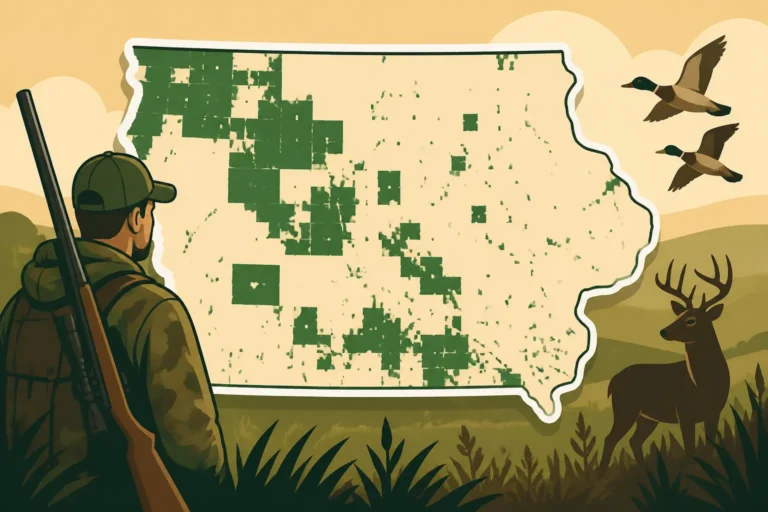
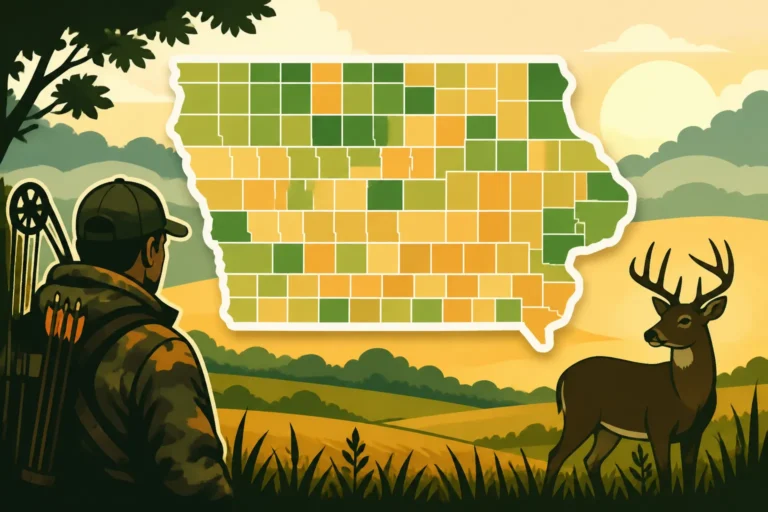
When you look at a map of Iowa, you might see a lot of green squares and polygons labeled as "WMA." But what does that really mean for a hunter, and why are these areas so vital to our state's rich hunting tradition? They're more than just land; they're dynamic ecosystems managed specifically for wildlife and, by extension, for us.
What Exactly is a WMA?
At its core, a Wildlife Management Area in Iowa is a piece of land, or sometimes water, acquired and managed by the Iowa Department of Natural Resources (DNR) with the primary goal of providing habitat for various wildlife species and offering public access for outdoor recreation, especially hunting and trapping. These aren't your typical state parks, where the focus might be more on picnicking and playgrounds. WMAs are specifically designed with the needs of pheasants, deer, turkeys, waterfowl, and countless other species in mind.
Think of them as the unsung heroes of Iowa's public land system. Unlike a state forest, which might be managed more broadly for timber production and recreation, or a County Conservation Board area that could have a mix of uses, WMAs are laser-focused on wildlife. This means active management practices like establishing food plots, conducting prescribed burns to rejuvenate grasslands, creating wetland impoundments, and carefully managing timber stands. These efforts directly benefit the game species we pursue, making WMAs often some of the most productive public hunting grounds available.
The types of habitat you'll encounter on WMAs are incredibly diverse, reflecting Iowa's varied landscape. In northern Iowa, you'll find expansive wetland complexes managed for waterfowl and pheasants. Venture south, and you might discover large tracts of timber interspersed with grasslands, ideal for deer and turkeys. Central Iowa WMAs often feature a mix of crop fields, timber, and riparian corridors, offering a blend of opportunities. This diversity is a strength, ensuring that no matter what you're hunting, there's likely a WMA suited to your quarry.
The Sheer Scale: How Many Acres Do We Talk About?
It's easy to dismiss public land in Iowa as scarce, especially when you compare us to western states with vast national forests. However, when you start to add up the acreage of our WMAs, it's quite impressive. The Iowa DNR manages hundreds of individual WMAs across the state, ranging from small, isolated parcels of a few dozen acres to sprawling complexes spanning thousands. Together, these areas represent a substantial portion of the public hunting land available to Iowans and nonresidents alike.
While pinpointing an exact, constantly updated total acreage can be tricky due to ongoing land acquisitions, sales, and boundary adjustments, it's safe to say that the Iowa DNR manages well over 300,000 acres of public land specifically designated as Wildlife Management Areas. This number fluctuates as new parcels are added or existing ones are expanded, but it consistently hovers in that impressive range. To put it in perspective, that's a lot of ground for deer to roam, pheasants to hide, and ducks to call home.
What's important to understand is that this isn't just a static figure; it's a dynamic and growing resource. Conservation efforts, fueled by hunting license fees, habitat stamp purchases, and federal aid programs, are continually working to expand and improve these areas. So, while Iowa might be primarily an agricultural state, the commitment to providing and managing these critical wildlife habitats remains strong, ensuring future generations of hunters have places to pursue their passions.
Where to Find Iowa's WMAs: Regional Distribution
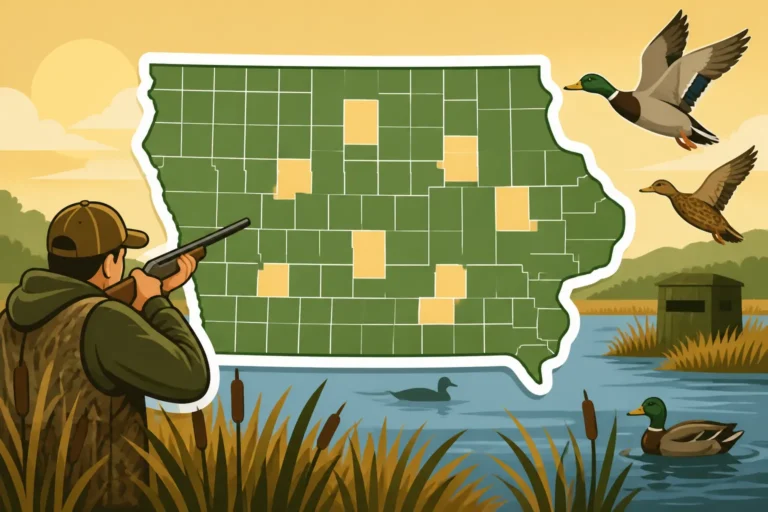
One of the beautiful things about Iowa's Wildlife Management Area system is its widespread distribution. You don't have to drive to one corner of the state to find public hunting; WMAs are accessible in nearly every county, offering diverse hunting experiences depending on the region.
North, Central, and South: A Geographic Overview
The distribution of WMAs across Iowa tends to reflect the state's natural landscape and historical land use. Northern Iowa, characterized by its prairie pothole region, boasts numerous WMAs focused on wetland complexes. These are prime destinations for waterfowl hunting, with many areas actively managed to create ideal conditions for migrating ducks and geese. You'll also find excellent pheasant and deer hunting in the grasslands and timber fringes surrounding these wetland areas. The flat, fertile landscape lends itself to larger, more contiguous blocks of public land in some cases, though many are still spread out.
Moving into central Iowa, the WMAs often feature a blend of habitats. Here, you'll find river corridors with mature timber, agricultural fields that rotate between corn and soybeans, and pockets of restored prairie. These areas are excellent for deer and turkey hunting, and many also offer good opportunities for pheasants, rabbits, and squirrels. The public land in central Iowa can be more fragmented, with smaller parcels interspersed among private agricultural fields, making understanding property lines and access routes critical. Reading Aerial Imagery for Bedding Cover becomes an essential skill here.
Southern Iowa is perhaps best known for its timbered hills and creek bottoms, and the WMAs in this region certainly reflect that. You'll find larger tracts of hardwood timber, often adjacent to private agricultural land, providing exceptional habitat for whitetail deer and wild turkeys. These areas can be more rugged, with steep draws and thick cover, which often means less pressure for those willing to walk a bit further. Southern Iowa Timber Country is a fantastic resource for deer hunters seeking challenging but rewarding hunts.
Specific Examples of Major WMA Complexes
While it's impossible to list every single WMA, highlighting a few prominent examples can give you a better idea of the variety and quality of public land available.
In northern Iowa, the Sweet Marsh Wildlife Management Area in Bremer County is a fantastic example of a large, diverse wetland complex. It covers thousands of acres, offering exceptional waterfowl hunting, but also has significant timber and upland habitat for deer, turkeys, and pheasants. It's a testament to how successful wetland restoration can be. Further west, sites like Rice Lake WMA and Elk Creek Marsh WMA also provide significant waterfowl and upland bird opportunities, often drawing hunters from across the state.
Central Iowa offers areas like the Big Creek Wildlife Area near Saylorville Lake, which provides a mix of timber, fields, and lake access. This area, while close to population centers, can hold good numbers of deer and turkeys, especially if you're willing to venture away from the main access points. The Coralville Lake Wildlife Management Area near Iowa City is another massive complex around the reservoir, offering varied terrain for deer, turkey, and waterfowl, with extensive timber and river bottom habitat. These larger areas around major reservoirs provide a unique blend of hunting and other outdoor recreation.
Down in southern Iowa, the Rathbun Wildlife Area, encompassing lands around Rathbun Lake, is a prime example of extensive timber and grassland habitat. This WMA provides thousands of acres of whitetail and turkey heaven, with rolling hills, dense forest, and scattered food plots. It's an ideal spot for those looking for a truly immersive timber hunting experience. Iowa Whitetail Hunting Tactics Through the Rut can be particularly effective in these larger wooded WMAs. Other southern Iowa gems include portions of the Stephens State Forest units, which are managed similarly to WMAs in many aspects, offering vast tracts of timber for deer and turkey.
Navigating and Utilizing WMA Acreage for Hunting
Knowing that hundreds of thousands of acres exist is one thing; actually finding and effectively hunting them is another. The key lies in utilizing the right tools and understanding how to interpret what you see on a map versus what you find on the ground.
The Iowa Hunting Atlas: Your Best Friend
Without a doubt, the single most important tool for any hunter looking to explore Iowa's WMAs is the Iowa DNR's online Hunting Atlas. This isn't just a basic map; it's a comprehensive, interactive resource designed specifically for hunters. It displays all public hunting lands, including WMAs, State Forests, IHAP (Iowa Habitat and Access Program) tracts, and federal lands. You can zoom in, toggle different layers, and get an incredible amount of detail right from your computer or phone.
The Hunting Atlas clearly delineates WMA boundaries, often showing internal features like parking areas, trails, food plots, and different habitat types. It’s absolutely essential for planning your hunt, identifying access points, and avoiding accidental trespass. Before you even set foot on public ground, you should be thoroughly familiar with the WMA you intend to hunt by reviewing it on the atlas. It’s also often updated with the latest regulations or temporary closures for specific areas, so always check before heading out.
While the DNR's atlas is fantastic, many serious hunters also rely on powerful third-party mapping applications like onX Hunt or GoHunt. These apps offer incredibly detailed satellite imagery, property line overlays that show public/private boundaries with vivid clarity, and the ability to mark waypoints, measure distances, and track your movements in the field. They can be invaluable for navigating dense WMA timber or ensuring you stay within the correct boundaries when hunting along a WMA edge. Imagine walking through thick cover and being able to instantly see if you're still on public ground or if a specific timber finger is actually part of the WMA or a private inholding—these apps make that possible. They are incredibly useful for identifying potential bottlenecks or pinch points, especially when you're Scouting Iowa Timber and River Bottoms.
Interpreting Acreage on Maps: Size vs. Huntable Land
It's tempting to look at a WMA listed as 5,000 acres and assume that's 5,000 acres of prime hunting ground. While that large number is exciting, the reality is a bit more nuanced. The total acreage of a WMA doesn't always translate directly into actively huntable or productive land. There are several factors that can reduce the effective hunting footprint within a given WMA.
For instance, many larger WMAs, particularly those with significant wetland components, might contain designated refuge areas. These areas are specifically set aside as sanctuaries for wildlife, particularly waterfowl, and are closed to hunting. They serve an important biological purpose, allowing birds to rest and feed undisturbed, but it means a portion of the total acreage isn't available to hunters. Similarly, some WMAs might have significant portions of steep, rugged, or swampy terrain that is practically impassable or holds very little game, especially for certain species. While these areas still count towards the total acreage, they might not be where you spend your hunting time.
Another consideration is the management type. Some WMAs might have areas designated for specific habitat projects that temporarily limit access or hunting opportunities. Actively farmed fields within a WMA might be off-limits during certain periods. Therefore, it's crucial to look beyond the raw acreage number. Use your mapping tools and aerial imagery to evaluate the terrain, identify potential refuge areas, locate productive habitat types like dense bedding cover or accessible water sources, and pinpoint suitable access routes. Access Routes That Do Not Bump Deer are key to making the most of these areas. By doing this, you'll be able to focus your efforts on the most promising sections of the WMA, maximizing your chances of success.
| Public Land Type | Primary Purpose | Typical Size Range | Common Hunting Opportunities |
|---|---|---|---|
| Wildlife Management Area | Wildlife habitat & public recreation | Dozens to several thousand acres | Deer, Turkey, Waterfowl, Upland Birds, Small Game |
| State Forest | Timber production & multi-use recreation | Hundreds to thousands of acres | Deer, Turkey, Squirrel, Rabbit |
| IHAP (Walk-In Access) | Private land access for hunting | Dozens to hundreds of acres | Deer, Upland Birds, Small Game (depends on habitat) |
| County Conservation Board | Local recreation & conservation | Small to hundreds of acres | Deer, Turkey, Small Game (rules vary greatly) |
Management and Conservation: More Than Just Hunting
Iowa's WMAs are far more than just places to hunt; they are critical components of the state's conservation efforts. The dedication to managing these lands ensures not only that hunting opportunities persist but also that Iowa's diverse wildlife populations thrive.
The Role of WMAs in Wildlife Conservation
The very existence of WMAs underscores Iowa's commitment to wildlife. These lands are managed holistically, considering the needs of an entire ecosystem rather than just individual game species. This means implementing scientific management practices designed to enhance biodiversity and ecological health. For instance, prescribed burns are a common tool used in many WMAs to control invasive species, stimulate new growth in native grasses and forbs, and improve foraging and nesting cover for pheasants, quail, and deer. This isn't just about pretty scenery; it creates vital, high-quality habitat that directly translates to healthier and more numerous game animals.
Similarly, timber stand improvement projects are undertaken in wooded WMAs to promote the growth of desirable tree species, create diverse forest age structures, and enhance browse for deer. Wetland restoration projects, a cornerstone of many northern Iowa WMAs, are designed to bring back crucial breeding and migratory habitat for waterfowl, benefiting ducks, geese, and a myriad of other wetland-dependent species. These are intensive, long-term endeavors that require significant expertise and resources, but they are absolutely essential. When you hunt a WMA, you're experiencing the direct result of these dedicated conservation efforts, and you're participating in a system that supports them.
These management efforts contribute to the overall resilience of Iowa's wildlife populations. Healthier habitats mean animals are better equipped to withstand environmental challenges, recover from disease outbreaks, and maintain robust numbers. Without these dedicated areas and the active management they receive, many species would face significantly greater challenges, and the hunting opportunities we enjoy today would be far diminished.
Funding and Future of WMAs
It's important for hunters to understand that the management and acquisition of WMAs don't happen by magic. They are primarily funded through a "user-pay, public-benefit" system. A significant portion of the revenue comes directly from hunters and anglers through the sale of hunting and fishing licenses, habitat stamps, and federal excise taxes on hunting and fishing equipment (Pittman-Robertson Act). This means that every license, every box of shells, and every new bow purchased contributes directly to the conservation of these lands and the wildlife that calls them home.
The Iowa DNR continually seeks opportunities to acquire new land to expand the WMA system, linking existing parcels, protecting critical habitats, and increasing public access. These acquisitions are often strategic, focusing on areas that provide important ecological corridors or complement existing public land holdings. The ongoing goal is to ensure that Iowa's wildlife populations have the space and resources they need to thrive and that hunters have ample opportunities to pursue game.
Looking ahead, the future of WMAs hinges on continued support from hunters and conservationists. As land values rise and development pressures increase, securing and maintaining these vital public lands becomes an even greater challenge. Your participation in hunting, your purchase of licenses and stamps, and your voice in advocating for conservation are all crucial to ensuring that Iowa's WMAs remain a vibrant and growing resource for generations to come.
Rules, Regulations, and Hunter Etiquette on WMAs
Hunting on a WMA comes with a great privilege: access to public land and wildlife. However, with that privilege comes a responsibility to understand and abide by the rules and to be a respectful steward of the land and a courteous fellow outdoors person.
General Regulations to Be Aware Of
While many general hunting regulations apply statewide, WMAs often have specific rules that can differ from private land or even other types of public land. It's absolutely crucial to consult the Iowa DNR's hunting regulations booklet annually and, even more importantly, to check for any specific regulations pertaining to the individual WMA you intend to hunt. These can often be found on the DNR's website or posted at kiosks at WMA entrances.
Common regulations that might apply to WMAs include restrictions on vehicle access, often limiting traffic to designated roads or parking areas, meaning you might have to walk a good distance to get away from the crowds. Camping rules can vary, with some WMAs allowing primitive camping in designated spots and others prohibiting it entirely. Understanding Overnight Stand Storage on Public Ground and portable stand rules on Iowa public ground is vital, as leaving stands unattended for extended periods or using screw-in steps is often prohibited to prevent damage to trees and ensure fairness to all users. Baiting for deer is strictly prohibited on all public lands in Iowa, including WMAs.
Trail cameras are a popular scouting tool, but their use on WMAs also comes with specific rules. You'll want to review Trail Camera Rules on Iowa Public Land to ensure you're compliant, as many WMAs restrict how cameras can be attached or how long they can remain deployed. Always assume that whatever rules are in place are for the protection of the resource and to ensure an equitable experience for everyone. A little research beforehand can save you a lot of trouble and potential fines.
Managing Pressure and Respecting Other Users
It's a fact of life that public hunting land, especially in a state like Iowa, can experience significant hunting pressure. WMAs are no exception, particularly during opening weekends of popular seasons like shotgun deer or pheasant opener. Expect to see other hunters, and embrace the challenge of finding overlooked pockets or walking a bit further than others might. Often, the areas that receive the most pressure are those closest to parking lots and easy access points. Those who are willing to put in the effort to get off the beaten path are frequently rewarded.
To mitigate the impact of pressure, consider hunting during weekdays if your schedule allows, or targeting less popular seasons. Dawn and dusk are often busy, so exploring mid-day movements or looking for specific bedding areas that others might ignore can be productive. Remember that deer and other game animals will adapt to pressure, often seeking refuge in the thickest cover or retreating to remote corners of the WMA that are harder to reach. Hunting Pressure Patterns on Iowa Public Land explores this topic further.
Beyond managing pressure, it's paramount to practice good hunter etiquette. This means respecting other hunters' space, not encroaching on a setup you know someone else is using, and being mindful of noise and movement. WMAs are not exclusively for hunters; hikers, birdwatchers, and other outdoor enthusiasts also use these areas. Be courteous, share the resource, and set a positive example for all. We're all out there to enjoy Iowa's natural beauty, and a little respect goes a long way in fostering a positive environment for everyone.
Disclaimer
This article is for general informational purposes only and does not constitute professional advice. Laws, prices and regulations vary by location and change over time. Consult a qualified professional for guidance on your specific situation.