Southern Iowa Timber Country
Oh, Southern Iowa. Just the mention of it conjures images of rolling hills, deep timber draws, and the whisper of a mature buck making his way through the underbrush. For many hunters, the frustration of finding consistent success in densely timbered areas, especially those vast tracts of southern Iowa, can be a real challenge. It's not like hunting a field edge where deer patterns can be more predictable. This guide is all about helping you unlock the secrets of this remarkable landscape, understanding its unique challenges, and equipping you with the knowledge to navigate and hunt the rich timber country of Southern Iowa effectively.
Understanding Southern Iowa Timber Country: A Unique Landscape for Hunters
Southern Iowa isn't just "more trees." It's a distinct ecosystem that offers a completely different hunting experience compared to the open farmlands or scattered woodlots you might find further north. The terrain here is often more rugged, broken up by deep ravines, winding creek bottoms, and expansive forests that stretch for miles. This landscape provides incredible cover, diverse food sources, and complex travel patterns for game, making it both a challenging and incredibly rewarding place to pursue whitetails, turkeys, and other species.
Geological Formations and Their Impact on Wildlife
The very foundation of Southern Iowa's timber country shapes how deer and other wildlife live and move. We're talking about ancient geological processes that carved out the rolling hills and deep draws, creating a natural fortress for game. These areas often feature steep slopes, eroded creek banks, and dramatic elevation changes that can be a hunter's best friend or worst nightmare, depending on how well you understand them. Deer naturally gravitate to these areas for security, using the topographical features to their advantage. They'll bed on ridge tops with good wind thermals, travel along benches, and use the bottoms of ravines as highways to avoid detection. Understanding these nuances is paramount to predicting deer movement.
Think about a steep, timbered ridge dropping down into a creek bottom. That slope creates natural funnels and pinch points that deer will use without fail. The eroded banks of a larger creek might offer thick cover where a mature buck feels safe, while the higher ground provides vantage points. This diverse topography also means varied soil types, which in turn affect the vegetation and food sources available. Areas with richer, deeper soils often support more mast-producing trees like oaks, creating prime feeding areas that shift throughout the season. These geological features are not just pretty scenery; they are the blueprint for deer activity.
Dominant Tree Species and Understory
The composition of the forest itself is another critical element in Southern Iowa. You're not typically dealing with monoculture pine plantations here. Instead, you'll find a rich mosaic of hardwood species. Oak trees, particularly red and white oaks, are absolute kings in these parts, providing crucial mast crops that deer depend on, especially as the season progresses. Hickory, walnut, and various maple species also contribute to the canopy, creating a diverse ecosystem. The density of the timber can vary from relatively open, mature stands where you can see for a good distance, to incredibly thick, almost impenetrable areas of brush, young saplings, and briar patches.
The understory is where much of the magic happens for deer cover. Areas with dense multiflora rose, thick cedar stands, or young saplings provide bedding sanctuary that deer simply adore. These spots offer thermal cover in winter and visual security year-round. Knowing how to identify these thickets, often found on south-facing slopes for warmth or tucked into creek bends, is key to pinpointing where deer feel safe. Sometimes, these thick areas are so dense you can barely walk through them, which means they are exactly where that big buck wants to spend his daylight hours. Cedar and Locust Thickets as Bedding Cover explores this topic further.
Water Sources and Creek Systems
Water is life, and in Southern Iowa's timber country, creek systems are the lifeblood. These aren't just minor trickles; many are significant waterways, some with wide, sandy bottoms and others with steep, rocky banks. These creeks act as natural travel corridors, funnels, and, of course, essential water sources for all wildlife. Deer will often follow creek bottoms to move undetected between bedding and feeding areas, especially when they want to stay out of sight of open fields. The presence of smaller feeder creeks and drainages leading into larger systems can create subtle funnels that are pure gold for stand placement.
Beyond simply providing water, these creek systems often create unique habitat features. Sandbars might offer mineral deposits, while the erosion along banks can expose nutrient-rich soils. Areas where multiple drainages converge often create natural hubs of activity. Furthermore, during dry periods, these permanent water sources become absolute magnets for deer. Even during the rut, bucks will often check these areas not just for does, but for a quick drink. When you're Scouting Iowa Timber and River Bottoms, always pay close attention to the intricate network of creeks and how deer are using them.
Key Counties for Timber Hunting in Southern Iowa
When we talk about "Southern Iowa timber," we're not just pointing to a vague region. There are specific counties that truly embody this type of hunting and are renowned for their incredible opportunities, particularly for whitetail deer. Each county might have its own subtle characteristics, but they all share the common thread of vast, rolling timber providing ideal habitat.
Appanoose and Monroe Counties: Known for Trophy Potential
If you've spent any time researching Iowa deer hunting, you've undoubtedly heard the names Appanoose and Monroe counties. These two are consistently at the top of lists for producing giant whitetails, and a huge part of their success lies in their timbered landscape. Both counties feature a substantial amount of private timber, interspersed with agricultural fields. This combination provides deer with abundant food sources (corn, soybeans) and extensive, secure bedding cover that allows bucks to reach maturity. The timber isn't just small woodlots; it's often vast, unbroken tracts.
Hunting here often involves navigating these large timber blocks, looking for the transition areas where timber meets agriculture, or focusing on the natural funnels within the woods themselves. The deer densities are high, and the quality of bucks is exceptional, which means hunting pressure can also be significant, especially on private parcels during gun seasons. Many hunters dream of drawing a tag in these areas, and for good reason – the genetic potential and habitat are simply outstanding. Why Iowa Grows Trophy Whitetails is a deep dive into the factors that make these counties so special.
Wayne and Lucas Counties: Public Land Opportunities
While Appanoose and Monroe boast incredible private land, Wayne and Lucas counties often shine for hunters seeking public access to similar timbered habitats. These counties are home to some of Iowa's larger state forests, like Stephens State Forest, which provides thousands of acres of accessible timber. This means hunters who don't have private land connections can still experience the dense woods and rugged terrain that define Southern Iowa hunting. While the public land in these counties might see more hunting pressure, strategic scouting and willingness to walk can still yield incredible results.
These areas are perfect for those who want to immerse themselves in deep timber. You'll find extensive oak ridges, deep draws, and plenty of thick undergrowth, creating ideal conditions for both deer and turkeys. Success on public land here often comes down to understanding how deer react to pressure and finding those overlooked pockets. Using tools like onX Hunt to identify property boundaries and topographical features can be invaluable when planning a hunt in these more open-access areas. It's not uncommon to find yourself miles from a road, deep in the woods, even on public ground in these counties.
Van Buren and Davis Counties: Hidden Gems
East of the more widely recognized counties, Van Buren and Davis counties offer equally impressive timbered landscapes, sometimes with slightly less overall hunting pressure than their western neighbors. These counties still feature significant timber blocks, particularly along the Des Moines River and its tributaries, which carve out extensive river bottom areas and rolling hills. The habitat here is rich, offering excellent cover and food for deer, turkeys, and even some quail.
These counties can feel a bit more remote in spots, providing a sense of wilderness that's increasingly rare. The Des Moines River acts as a major travel corridor and offers unique habitat features. Hunters willing to explore these areas might find fantastic opportunities on both private and public ground, including some Iowa Habitat and Access Program (IHAP) tracts. Don't overlook these eastern timber strongholds if you're planning a trip; they hold plenty of potential for a memorable hunt. Southern Iowa Timber Counties for Deer provides additional insights into these fantastic locations.
Public Land Opportunities in Southern Iowa Timber
For many of us, getting access to prime hunting ground is the biggest hurdle. Thankfully, Southern Iowa offers some fantastic public land options that allow hunters to experience its famed timber country without needing a private land connection. However, hunting public timber requires a different strategy than private land, often emphasizing deep penetration, strategic timing, and a willingness to adapt to pressure.
State Forests: Stephens, Shimek, and Loess Hills
Iowa's state forests are true treasures for public land hunters, and several of the most significant ones are located right in the heart of Southern Iowa's timber country. Stephens State Forest, for instance, is a massive tract spread across several units in Lucas, Clarke, and Wayne counties, offering thousands of acres of mature timber, deep ravines, and extensive cover. Similarly, Shimek State Forest in Van Buren and Lee counties provides expansive timbered hills and bottoms, particularly strong for both deer and turkey. While the Loess Hills State Forest is geographically in Western Iowa, its timbered character aligns with many strategies used in the south.
These state forests are managed for multiple uses, including timber production and recreation, but hunting is a primary activity. You'll find a mix of mature hardwood stands, younger growth providing thick bedding, and often some scattered food plots or clearings. The sheer size of these areas allows hunters to get away from roads and other hunters if they're willing to walk. Successful hunting in these areas often involves Scouting Iowa Public Land Before the Opener to find those less-pressured pockets and understand the lay of the land, especially thermals and wind currents within the diverse terrain.
Wildlife Management Areas and County Lands
Beyond the large state forests, Southern Iowa also features numerous smaller Wildlife Management Areas (WMAs) and County Conservation Board (CCB) lands that offer valuable timber hunting. WMAs, managed by the Iowa DNR, are often focused explicitly on wildlife habitat and public recreation. While some might be more wetland or grassland-focused, many incorporate significant timber blocks, especially along river systems or in areas of rolling topography. These can be fantastic places to find deer and turkeys, particularly during less busy times.
County Conservation Board lands can be a mixed bag, with some being open to hunting and others restricted. It's absolutely crucial to check the specific regulations for each county and individual area, as rules can vary widely. Many CCB areas, however, offer excellent smaller timbered tracts that can be overlooked by hunters focusing only on the largest state properties. These smaller areas might be perfect for a quick evening hunt or a focused morning sit if you've done your homework. Always consult the Iowa Hunting Atlas or similar resources like onX Hunt to identify these opportunities and confirm regulations.
Navigating Walk-In Public Access (IHAP)
Iowa's Habitat and Access Program (IHAP) is a game-changer for public land hunters, and many of these walk-in areas are found in Southern Iowa, including those with significant timber. IHAP properties are privately owned lands that landowners enroll into the program, allowing public hunting access. These tracts are marked with distinctive yellow signs and are often interspersed with traditional public lands or private properties. The beauty of IHAP is that it opens up more ground, often in prime locations that might otherwise be inaccessible.
Hunting IHAP ground, especially timbered tracts, requires respect for the landowner's property and adherence to all rules. These areas can be fantastic for finding less-pressured deer, especially if you get in deep or target them during the week. You'll need to pay close attention to the specific access points and boundaries, which are clearly marked on signs and on digital mapping apps. Knowing When Iowa IHAP Tracts Open in Fall and understanding the nuances of hunting these unique areas is critical for success. Remember, these are privileges, not rights, so leave no trace and be a good ambassador for hunting.
Deer Behavior and Movement in Southern Iowa Timber
Hunting Southern Iowa's timber is all about understanding deer. Unlike open country where a buck might stick to field edges or clear travel paths, deer in dense timber are masters of concealment. Their movements are dictated by a complex interplay of cover, food, water, and pressure. Learning to "read" the timber and anticipate these movements is what separates consistent success from frustration.
Bedding and Feeding Patterns in Wooded Terrain
In the vast timber of Southern Iowa, deer will often bed in the thickest, most secure cover they can find. This frequently includes dense cedar thickets, multiflora rose patches, or areas of young, regenerating forest growth on ridge tops or tucked into steep draws. They prefer areas that offer good thermal cover (especially important in late season) and excellent visibility or scent control from multiple directions. A north-facing slope might provide cool bedding in early season, while a south-facing slope offers warmth and sunlight in December. Bucks often bed in spots that allow them to scent check downwind and visually scan their backtrail, giving them an advantage over approaching predators (or hunters).
Feeding patterns in timber are equally complex. While agricultural fields are major draws, deer in deep timber also rely heavily on natural food sources. Acorns from oak trees are a primary autumn and early winter food. Identifying active oak ridges, especially those dropping into draws, can be a goldmine. Browsing on saplings, forbs, and even specific types of brush is also crucial. As the season progresses and natural food sources diminish, deer will often extend their movements from deep timber to adjacent fields of corn or soybeans, making these transition zones prime hunting spots. Understanding when and where deer shift their feeding habits is paramount. Late-Season Food Source Hunting in Iowa delves into this further.
Rutting Activity and Travel Corridors
The rut is a magical time in Southern Iowa, and the timber becomes a buzzing highway of deer activity. Bucks are constantly cruising for does, and they'll use established travel corridors within the timber to move efficiently and, again, secretly. These corridors aren't always obvious trails; sometimes they're subtle benches along a hillside, the bottom of a shallow draw, or a narrow strip of timber connecting two larger blocks. During the peak rut, bucks become less cautious and more prone to daylight movement as they actively seek receptive does. When the Iowa Rut Peaks typically falls in early November, making it a prime time to be in the timber.
Understanding how bucks use terrain features during the rut is critical. Saddles between two ridge tops, pinch points where a creek bend forces movement into a narrow strip, or inside corners where a field edge cuts into the timber are all classic rut stand locations. Bucks will scent check these areas regularly. Does, on the other hand, will often try to evade bucks by ducking into the thickest cover, pulling the bucks right in after them. This means hunting those dense bedding areas, even during the middle of the day, can be incredibly productive during the rut. Rattling and Grunting During the Iowa Rut can be particularly effective when bucks are on the move.
Impact of Hunting Pressure on Deer Movement
Hunting pressure is an unavoidable reality on public lands and even many private parcels, and it dramatically influences deer behavior in Southern Iowa's timber. Deer quickly learn to avoid areas with heavy human activity, especially during daylight hours. This often pushes them deeper into the thickest, most impenetrable cover during the day and reserves their movements to open areas for the cover of darkness. Public land bucks, in particular, become ghosts once the season opens if hunters aren't careful.
To counter pressure, hunters need to be willing to get off the beaten path. This often means walking further, finding areas that are difficult to access, or hunting during weekdays when fewer people are in the woods. Deer that are pressured will use the terrain to their advantage, often moving along the sides of steep ridges where they can quickly drop out of sight, or sticking to the very bottoms of creek systems. They become nocturnal more quickly. Developing access routes that do not spook deer and understanding Hunting Pressure Patterns on Iowa Public Land are vital for success, ensuring you're not inadvertently pushing deer out of your hunting area before you even sit down.
Turkey Hunting in Southern Iowa's Forests
While Southern Iowa is famous for its whitetails, its timbered landscapes are also home to thriving populations of Eastern wild turkeys. The rolling hills and dense woods provide ideal roosting, nesting, and foraging habitat, making it a fantastic destination for spring and fall turkey hunters. Chasing gobblers through these timbered creek bottoms and ridge tops offers a completely different, yet equally exciting, challenge.
Roosting and Calling Tactics
The key to consistent turkey hunting success in Southern Iowa's timber often starts the evening before the hunt: roosting. Locating where turkeys fly up to roost in large, mature trees along ridge lines or in creek bottoms gives you a significant advantage, allowing you to set up quietly before fly-down. You're trying to put yourself in a position where you can intercept them as they hit the ground, or call them in from the roost. Roosting Iowa Turkeys the Night Before is a skill worth developing.
Once turkeys are on the ground, calling tactics become paramount. In the thick timber, your calling needs to be realistic and varied. Start with soft tree yelps and clucks as they come off the roost, then transition to more aggressive yelps, cutts, and purrs as the day progresses. The terrain can make pinpointing a gobbler difficult, as sound bounces and carries differently through the woods. Don't be afraid to move if a gobbler hangs up, trying to get into a better position to draw him in. Setting up strategically in funnels or natural clearings within the timber can make all the difference, as it forces the gobbler to come to you through an opening.
Understanding Spring and Fall Turkey Behavior
Spring turkey hunting in Southern Iowa's timber is all about the gobbler's desire to breed. They are actively seeking hens, making them more susceptible to calling. Early in the spring, gobblers might be grouped up, but as the season progresses, they become more solitary or with a few satellite birds. The challenge often lies in Calling a Henned-Up Iowa Gobbler, as a lone gobbler might be easier to pull away from his hens. Understanding the stages of the spring breeding cycle helps you adapt your calling and tactics.
Fall turkey hunting is a different beast entirely. Gone is the aggressive gobbling; instead, hunters focus on locating flocks, busting them up, and then calling the birds back together. This often involves more walking and covering ground to find the larger family groups. Once a flock is scattered, soft assembly yelps and lost calls are the ticket. Fall turkeys are typically found foraging for acorns and other food sources in the timber, so concentrating your efforts in oak stands can be productive. The timber provides ample cover for stalking and setting up for these more strategic fall hunts.
Locating Turkey Flocks in Expansive Timber
Finding turkeys in vast timber can feel like searching for a needle in a haystack. E-scouting plays a crucial role here. Use mapping apps like onX Hunt to identify potential roosting areas along creek lines or on high ridges, as well as open clearings within the timber where turkeys might strut or feed. Look for areas with a mix of mature timber for roosting and younger growth or openings for foraging. In the spring, listen for gobbling at dawn, and don't be afraid to use locator calls like owl hoots or crow calls to get a shock gobble from a tom.
During your scouting, look for fresh turkey sign: tracks in dusty trails, scratch marks in leaf litter where they've been foraging for acorns, and droppings. Turkeys will often use logging roads, deer trails, or old two-track roads within the timber as travel routes. In the fall, focus your efforts on active oak stands. A good strategy on public land, especially in a large state forest like Stephens, is to employ Run-and-Gun Turkey Tactics on Iowa Public Land. This involves covering a lot of ground, stopping frequently to call, and moving quickly to any response. The timber offers plenty of cover to facilitate these movements without spooking game.
Small Game and Predator Hunting in Timbered Cover
Southern Iowa's timber isn't just for big game. It also provides excellent opportunities for small game hunters and those looking to pursue predators and furbearers. These pursuits offer a chance to extend your time in the woods and experience the timbered landscape in a different light.
Squirrel and Rabbit Hotspots
For many, hunting squirrels and rabbits in the timber is how they first learned to hunt, and Southern Iowa offers prime habitat. Squirrels, particularly fox and gray squirrels, thrive in the mature oak and hickory stands found throughout the region. During the early fall, they'll be busy caching nuts, making them predictable targets. Listen for their chatter and the tell-tale rustle of leaves as they forage. Squirrel Hunting Iowa Oak Timber during cooler mornings can be a relaxing and rewarding way to spend time in the woods.
Rabbits, primarily cottontails, are found along the edges of timber blocks, especially where it transitions into brushy fields, old clearcuts, or areas with multiflora rose and other dense undergrowth. Brush piles, fallen trees, and overgrown fence rows within or bordering the timber are classic rabbit hideouts. Rabbit Hunting Brush Piles with a good dog, or even just slowly working these areas, can provide fast-paced action. These small game species are abundant and provide a fantastic way to introduce new hunters to the joys of the chase in a less intimidating environment.
Coyote and Bobcat Opportunities
Predator hunting in Southern Iowa's timber is a growing passion for many. Coyotes are ubiquitous and offer a challenging hunt. The timber provides them with excellent cover for stalking and denning, but also presents challenges for callers who need to be aware of how sound carries and how coyotes might approach through thick brush. Setting up on a timbered ridge overlooking a draw, or along a field edge bordering a large timber block, can be effective. Using electronic calls or mouth calls to mimic distress sounds or coyote vocalizations can draw them in. Coyote Calling in Iowa Farm Country often means calling aggressively and being ready for a quick shot.
While less common, bobcats have made a strong comeback in Southern Iowa and can be found in the timbered river bottoms and rugged areas. They prefer dense cover and often overlap with prime deer and turkey habitat. Accidental sightings by deer hunters are common, but targeting them specifically requires a keen eye for sign and often involves specialized calling techniques similar to coyote hunting, but with a focus on smaller prey sounds. Always check the regulations for bobcat hunting, as quotas and seasons apply.
Furbearers and Trapping Considerations
Beyond coyotes and bobcats, Southern Iowa's timbered waterways and adjacent fields support a variety of other furbearers, including raccoons, opossums, skunks, and occasionally fox and even river otters. For those interested in trapping, these timbered creek bottoms and farm edges provide excellent locations. Raccoons are particularly abundant and can be found along almost any timbered waterway.
Trapping furbearers in these areas requires knowledge of specific trap sets and careful consideration of the animal's behavior. For instance, raccoons are often caught in cage traps or foothold traps set near water or along travel routes within the timber. It's an activity that connects hunters and trappers deeply with the land and its cycles, providing a unique way to manage wildlife populations and utilize a natural resource. Always ensure you are familiar with current Iowa trapping regulations and licensing requirements.
Essential Scouting and Hunting Tactics for Timber
Successfully hunting Southern Iowa's timber demands a strategic approach to scouting and a disciplined execution of tactics. You can't just wander in and expect to find a mature buck. It's about understanding the land, reading the signs, and placing yourself in the best possible position.
E-Scouting Before Your Boots Hit the Ground
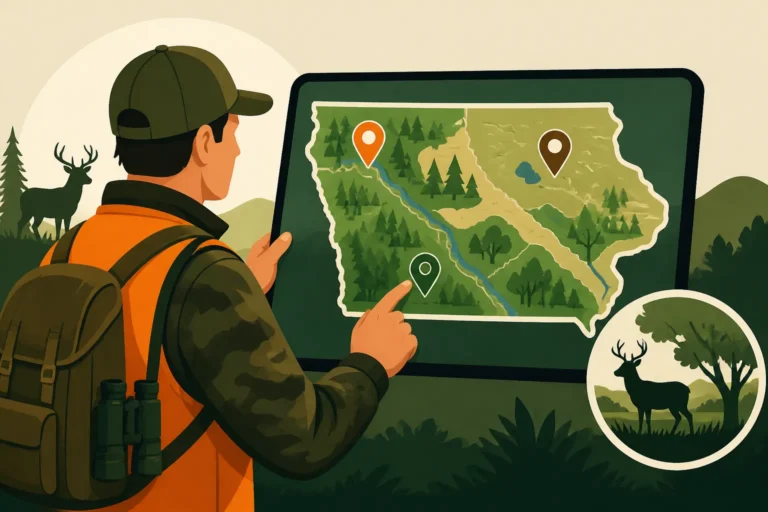
Before you ever set foot in the woods, the most valuable tool in your arsenal is often a good mapping application like onX Hunt or a similar platform. E-scouting allows you to virtually explore vast tracts of Southern Iowa timber from the comfort of your home. Look for key topographical features: ridge lines, saddles, creek systems, draws, and inside corners where timber meets fields. Identify potential bedding areas (often the densest cover) and likely travel corridors (subtle benches, creek bottoms, pinch points). This initial scouting helps you narrow down massive areas into manageable sections, saving you invaluable time and effort in the field.
Pay close attention to changes in elevation, which indicate how thermals might behave, and identify potential access routes that minimize disturbance to bedding areas. Look for bottlenecks or funnels that might concentrate deer movement. Overlaying different map layers (topographical, satellite, public/private land boundaries) can reveal nuances you might otherwise miss. Many public land hunters start by identifying areas with difficult access – those furthest from roads or requiring a long walk – as these often hold less-pressured deer. For more on this, check out E-Scouting Iowa Farm Country From Home.
On-the-Ground Scouting for Sign and Travel Routes
Once you've done your e-scouting homework, it's time to hit the timber. On-the-ground scouting is where you confirm your theories and find the fresh, real-time sign. Look for rubs and scrapes, especially those along edges of bedding areas or within travel corridors, which indicate active buck movement. Pay attention to deer trails; a well-worn trail is obvious, but a subtle path used by a wary buck might only be visible as a slight depression in the leaves. Follow these trails to see where they lead – do they connect bedding to food, or funnel into a pinch point?
Locate active feeding areas by checking for fresh droppings and chewed vegetation, especially around oak trees during acorn drop. Water sources will often have tracks around them, indicating frequent use. Don't just look for deer sign; look for patterns of deer sign. Are rubs concentrated in a certain area? Do tracks consistently lead through a specific bottleneck? This helps you understand how deer are using the timber. When you're Reading an Iowa Timber Draw for Deer Sign, remember that fresh sign is key; old sign tells you where deer were, fresh sign tells you where they are.
Stand Placement and Access Routes
Choosing the right stand location in Southern Iowa's timber is a critical decision, influenced by prevailing winds, deer movement patterns, and access. For treestand hunters, identify mature trees that offer good concealment and a clear shooting lane into a likely travel corridor or feeding area. Consider both morning and evening setups, as deer movement changes throughout the day. In the morning, you might set up closer to bedding areas to catch deer returning from feeding, while in the evening, you'd be closer to food sources. Best Stand Locations in Rolling Timber outlines key considerations for these areas.
Ground blinds can also be highly effective, especially in areas with thick cover or for hunting specific features like a scrape line or a brushy funnel. Ensure your blind is brushed in well to blend with the surroundings. Crucially, always plan your access and exit routes to and from your stand or blind. The goal is to get in and out undetected, without spooking deer in your hunting area. This often means using topography to your advantage, walking against the wind, or coming in from an unexpected direction. Remember that wind and thermals will play a significant role in how deer detect you, especially in hilly timber.
| Scouting Type | Primary Focus | Best Time of Year | Key Tools |
|---|---|---|---|
| E-Scouting | Topography, property lines, potential funnels | Year-round, especially off-season | Mapping apps (onX Hunt), aerial imagery |
| Sign Scouting | Rubs, scrapes, tracks, droppings, trails | Pre-season, during season, post-season | Boots on the ground, binoculars, compass/GPS |
| Rut Scouting | Cruising routes, doe bedding, buck sign | Late October – Mid-November | Trail cameras, observation |
| Food Scouting | Acorn crops, browse, agricultural fields | Late summer, early fall, late season | Observation, game cameras |
Gear and Preparedness for Southern Iowa Timber Hunts
Hunting Southern Iowa's timber can be physically demanding and requires specific gear to enhance your comfort, safety, and success. The dense cover, varied terrain, and often unpredictable weather mean you need to be prepared for anything.
Clothing and Footwear for Dense Woods
Your clothing system is paramount when hunting in Southern Iowa's timber. You need layers that can handle everything from warm early-season archery hunts to bitter December muzzleloader sits. The key is moisture-wicking base layers, insulating mid-layers, and a durable, quiet outer layer that can withstand snags from briars and brush. Blaze orange is a must during gun seasons, so make sure your outer layers meet the requirements. Cold Weather Stand Clothing is essential for those late-season hunts where you'll be sitting for hours in frigid temperatures.
Footwear is arguably even more critical. You'll be doing a lot of walking, often on uneven, muddy, or snowy terrain, through briars and across creeks. A good pair of waterproof, insulated boots with excellent ankle support is non-negotiable. Rubber boots are often preferred by many hunters for scent control and navigating wet areas, but ensure they are comfortable enough for long treks. Make sure your boots are broken in well before the season, or you'll regret it deep in a timbered draw. Boots for Wet Iowa Timber should be a priority.
Optics and Navigational Tools
While long-range glassing isn't as common in dense timber as it is in open country, quality optics are still essential. A good pair of binoculars (8x or 10x magnification) will help you pick apart distant cover, identify deer movement, and locate game after the shot. A rangefinder is also crucial for bowhunters and slug gun hunters to accurately judge distances through the trees. Binoculars for Iowa Timber Hunting often means prioritizing light gathering and a wide field of view.
Navigational tools are absolutely non-negotiable, especially in vast timber. A GPS unit or a reliable hunting app on your smartphone (like onX Hunt, which I mentioned earlier) with downloaded offline maps is a must. These tools allow you to pinpoint your location, mark stand sites, track deer, and navigate back to your vehicle, even without cell service. Getting turned around in thick timber, especially after dark, is a real possibility and can quickly turn a hunt dangerous. Always carry a compass as a backup, and know how to use it.
Treestands, Saddles, and Ground Blinds
The choice of hunting platform depends on your preferred style and the specific timber you're hunting. Treestands, whether hang-ons, climbers, or ladder stands, are popular for getting above a deer's line of sight and expanding your view. For public land and mobile hunting, lightweight hang-on stands paired with climbing sticks or a mobile saddle setup are excellent choices. Mobile Saddle Hunting in Iowa has gained popularity for its versatility and stealth. Always prioritize safety with a full-body harness and a lifeline.
Ground blinds are fantastic for areas with less climbable trees, for hunting with youth, or in thick cover where visibility from above is limited. They offer excellent concealment and warmth. When using a ground blind in the timber, always brush it in thoroughly with natural vegetation to break up its outline. No matter your choice, ensure your stand or blind is quiet, comfortable for long sits, and securely placed before opening day. Always practice climbing and descending with your gear to ensure proficiency and safety.
Disclaimer
This article is for general informational purposes only and does not constitute professional advice. Laws, prices and regulations vary by location and change over time. Consult a qualified professional for guidance on your specific situation.