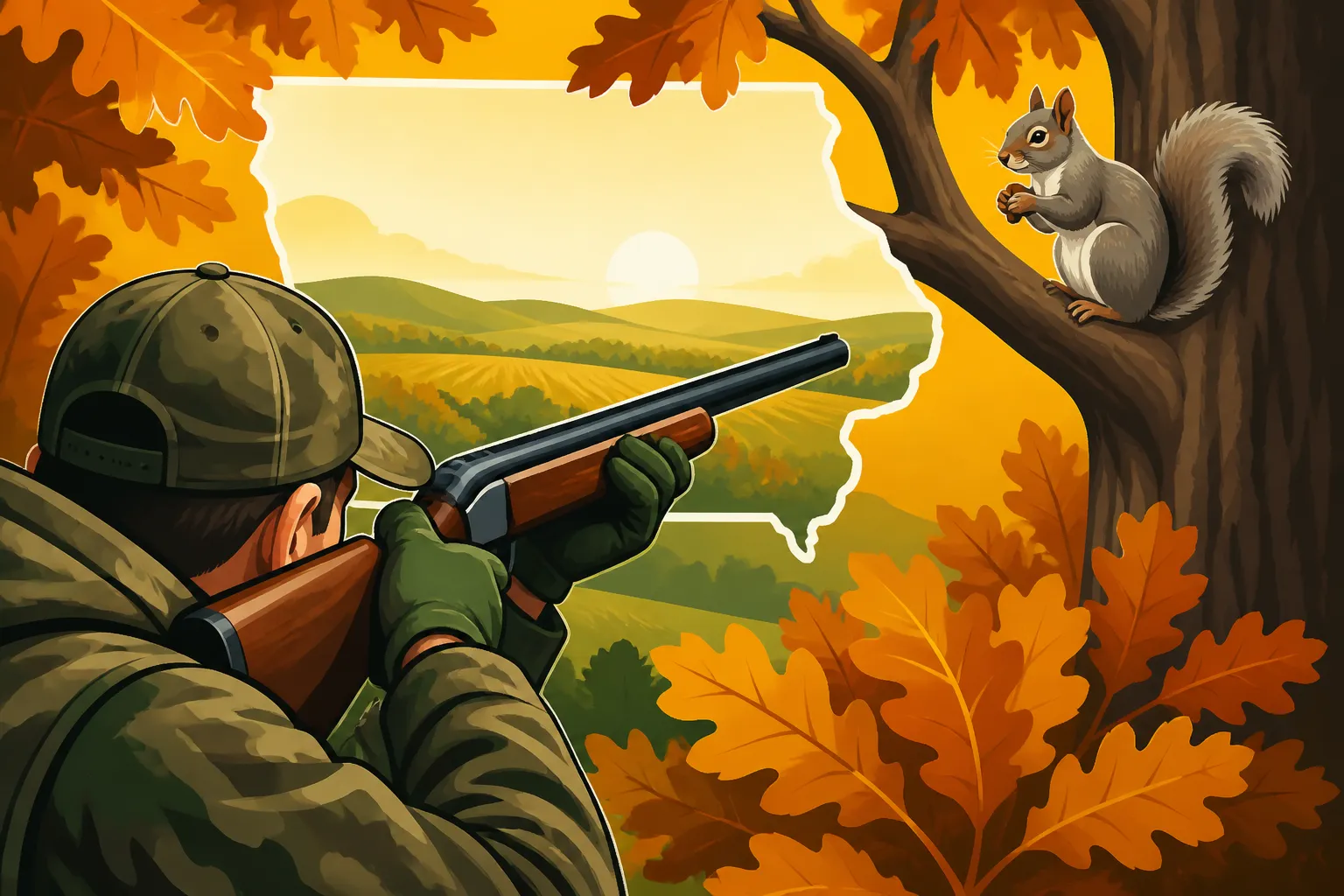
Squirrel Hunting Iowa Oak Timber
There’s nothing quite like the crisp autumn air, the rustle of fallen leaves underfoot, and the thrill of spotting a bushy tail flicking through the canopy. But let's be honest, trying to find those elusive squirrels in Iowa's vast oak timber can feel like searching for a needle in a haystack if you don't know where to start. This guide is all about cutting through that frustration, offering practical tips and proven strategies to help you connect with more squirrels in Iowa's beautiful oak woods.
Why Squirrel Hunting in Iowa's Oak Timber is a Classic Pursuit
For many of us, squirrel hunting is where it all began. It's not just about the harvest; it's about connecting with nature, sharpening your woodcraft, and enjoying the simple pleasure of a quiet morning in the woods. In Iowa, with its abundant oak timber, it’s a time-honored tradition that offers fantastic opportunities for both seasoned hunters and newcomers alike.
The Enduring Appeal of a Quiet Hunt
In a world that often feels rushed and noisy, squirrel hunting offers a wonderful antidote. It forces you to slow down, to observe, and to truly be present in the moment. Unlike the high-octane rush of a deer hunt or the quick-flushing action of upland birds, squirrel hunting is a deliberate, methodical endeavor. You're learning to become part of the woods, not just an observer. This quiet intensity is what draws so many people back to it year after year. It's a fantastic way to introduce new hunters, especially youth, to the basics of tracking, stealth, marksmanship, and game processing without the overwhelming pressure that larger game can sometimes bring. It teaches patience, a virtue that pays dividends in all aspects of hunting.
Understanding Iowa's Squirrel Species
When you're out in Iowa's oak timber, you'll primarily be targeting two species: the fox squirrel and the gray squirrel. While they share similar habitats, knowing their subtle differences can help you refine your hunting approach.
- Fox Squirrels: These are the larger, more common squirrels you'll encounter in Iowa. They're typically reddish-brown with a lighter belly, and they often prefer more open timber stands, woodlots, and timber edges adjacent to crop fields. They're generally less shy than their gray counterparts and tend to spend more time on the ground, foraging for fallen acorns and other nuts. Their larger size makes them a bit easier to spot, and their ground-foraging habits can make them more predictable when still-hunting.
- Gray Squirrels: True to their name, these squirrels are generally smaller and more gray in color, often with a white belly. They are more likely to inhabit dense, mature timber, especially areas with a good understory and plenty of canopy cover. Gray squirrels are notoriously agile and tend to spend more of their time in the trees, making them a challenge to spot. They're also often more skittish, bolting at the first sign of danger. If you're hunting deep in a timber draw, you're more likely to encounter gray squirrels.
Both species are active during the day, with peak activity in the early morning and late afternoon, much like many other game animals. Understanding these habits is key to successful squirrel hunting.
The Importance of Oak Timber for Squirrels
The name of the game for squirrel hunting in Iowa is oak timber. This isn't just a preference; it's a matter of survival for these bushy-tailed critters. Oaks, particularly various species found across Iowa like Northern Red Oak, White Oak, Pin Oak, and Bur Oak, are critical mast producers. Their acorns provide a high-energy food source that sustains squirrels through the fall and winter months.
You'll find squirrels congregating in and around oak stands, especially when acorns are dropping. White oaks produce a sweeter, less tannic acorn that squirrels often prefer early in the season, while red oak acorns, though bitter, are still a vital food source and tend to last longer on the ground or on the tree. A good way to identify prime hunting spots is to look for areas with mature oak trees that show signs of heavy mast production – you'll often see freshly disturbed leaves where squirrels have been digging, or even piles of acorn caps at the base of trees. These areas are squirrel supermarkets, and if you find them, you're in business. Don't forget to check out our guide on Scouting Iowa Timber and River Bottoms for more details on identifying key habitat features.
Essential Gear for a Successful Iowa Squirrel Hunt
You don't need a truckload of high-tech gear to hunt squirrels, but having the right tools for the job can make a world of difference. Think light, quiet, and effective. The beauty of squirrel hunting is its accessibility; you likely already own most of what you'll need.
Firearm Choices for Timber Hunting
The choice of firearm often comes down to personal preference and the specific hunting situation, but precision and safety are paramount.
- Rimfire Rifles: The classic choice for squirrel hunting is undoubtedly a .22 Long Rifle. It's accurate, quiet, and offers plenty of knockdown power for squirrels without excessive meat damage. A .17 HMR is another excellent option, offering a flatter trajectory and even greater accuracy, though its higher velocity can sometimes cause more meat damage if you're not careful with shot placement. When using a rimfire, headshots are generally preferred to preserve as much meat as possible. Remember, shot placement is crucial. Practice shooting from various positions – standing, kneeling, sitting – as you won't always have a bench rest in the woods.
- Shotguns: A small-gauge shotgun, like a .410 or 20 gauge, can be very effective, especially when squirrels are running through the branches or when you're hunting in dense cover. The spread of a shotgun pattern increases your chances of hitting a fast-moving target. Use smaller shot sizes like 6 or 7.5 to avoid destroying too much meat. While shotguns offer a wider margin for error on moving targets, they are less precise than a rifle, and again, shot placement is still key to a good clean harvest.
- Air Rifles: High-powered air rifles, particularly those in .177 or .22 caliber, are gaining popularity for squirrel hunting. They are incredibly quiet, often more so than a suppressed .22LR, making them ideal for areas where noise is a concern or for consecutive shots on a group of squirrels. They require precise shooting but can be very effective and ethical. Just be sure your air rifle meets the legal requirements for hunting in Iowa.
No matter your choice, always ensure your firearm is sighted in and that you're comfortable and proficient with it. Safety should always be your top priority in the woods.
Optics and Vision Enhancement
Your eyes are your most important tool in squirrel hunting, but a little optical assistance can significantly improve your success rate, especially when hunting in dense oak canopies.
- Binoculars: Even on a small game hunt, a good pair of binoculars is invaluable. I rarely head into the timber without my 8×42 binos. They allow you to scan the treetops for movement, differentiate a squirrel from a knot on a tree, and identify potential targets without having to raise your rifle or shotgun. This minimizes unnecessary movement and gives you a tactical advantage. For timber hunting, where distances are generally shorter and light can be dim, a Binocular Size for Timber Hunting around 8x magnification is often preferred over 10x, offering a wider field of view and brighter image.
- Rifle Scopes: For rimfire rifles, a variable power scope, perhaps 3-9x magnification, is usually perfect. At lower power, you get a wide field of view for quick target acquisition, and you can crank it up for those precise headshots at slightly longer distances. Keep it zeroed and check it regularly.
- Red Dot Sights: While not as common for squirrel rifles, a red dot sight can be excellent on a shotgun or even a rimfire for fast, close-range shooting. They offer quick target acquisition and can be surprisingly accurate for precise shots, especially in thick cover.
Clothing and Comfort Considerations
Being comfortable and stealthy are key. Iowa's weather can be unpredictable, especially in the fall, so layering is always a good idea.
- Quiet Fabrics: Avoid noisy fabrics that rustle with every movement. Think fleece, wool, or soft cotton blends. Your goal is to move as silently as possible through the woods. The less noise you make, the closer you can get to the squirrels before they spook. This principle also applies to Quiet Fabrics for Treestand Hunting, proving its value beyond just deer season.
- Layering: Mornings can be chilly, but by midday, it can warm up significantly. Layers allow you to adjust to changing temperatures without having to pack a whole new outfit. Start with a moisture-wicking base layer, add an insulating mid-layer, and finish with a quiet, wind-resistant outer layer.
- Footwear: Comfortable, durable, and waterproof boots are a must. You'll be doing a lot of walking, often over uneven terrain and through damp leaves. Look for boots that provide good ankle support and quiet traction. For hunting in wet Iowa timber, check out our insights on Boots for Wet Iowa Timber to pick the best pair.
- Small Pack: A small backpack is handy for carrying water, snacks, extra ammo, a game bag for harvested squirrels, and perhaps a small first-aid kit. Keep it light and functional.
Mastering Tactics for Iowa Squirrels in Oak Woods
Successfully hunting squirrels in Iowa’s oak timber is less about brute force and more about finesse. It combines patience, keen observation, and the ability to move through the woods like a ghost.
Still Hunting and Stalking Techniques
Still hunting is arguably the most effective method for squirrel hunting in Iowa's oak timber. It involves moving slowly and deliberately through the woods, pausing frequently to scan for movement and listen for sounds.
- Slow, Slower, Stop: This is the mantra. Take a few steps, then stop for several minutes. Use your binoculars to thoroughly scan the tree trunks, branches, and the ground around you. Squirrels are masters of camouflage, and they can sit perfectly still, blending seamlessly into the bark. It's often that slight twitch of a tail or the flick of an ear that gives them away.
- Listen Intently: Beyond seeing, listening is paramount. Squirrels are noisy creatures, especially when foraging. Listen for the distinct chatter, the gnawing sound of them opening a nut, the rustle of leaves as they scamper on the ground, or the unique "thump" of an acorn hitting the forest floor. These sounds are often your first clue to their presence.
- Use Cover: Always try to move from one piece of cover to the next. Large trees, thick brush, or even dips in the terrain can help break up your silhouette and hide your movement. Think about how a deer would move, and emulate that stealth.
- Walk into the Wind: Just like with larger game, walking into the wind (or with a crosswind) will help keep your scent from reaching the squirrels, which have an excellent sense of smell. It also helps carry sounds you make away from them.
Stalking is similar but more focused. Once you spot a squirrel, the challenge is to close the distance without spooking it. Use natural cover, move only when the squirrel is distracted (e.g., when it's looking away or actively feeding), and be ready to freeze at a moment's notice.
Setting Up for Ambush Success
While still hunting is excellent, sometimes finding a productive spot and letting the squirrels come to you can be incredibly effective, especially in a heavily used oak stand.
- Find a Food Source: This is the golden rule. Locate an area with abundant oak trees that are actively dropping acorns. Look for freshly cut acorn shells, disturbed leaves, or even squirrel tracks in soft dirt. This is their cafeteria.
- Identify a Good Vantage Point: Once you've found a promising food source, position yourself where you have a clear view of multiple trees and the ground, preferably with your back against a large tree for concealment. A comfortable, portable stool can make a long sit much more enjoyable.
- Patience is Key: Set up before prime activity hours (early morning or late afternoon) and be prepared to sit still for an extended period. The woods might seem quiet at first, but given time, squirrels will emerge to feed. This is where your ability to remain motionless and quiet will pay off.
- Calling and Barking: While not as common as for turkeys or coyotes, some hunters use squirrel calls. A distress call can sometimes draw curious squirrels closer, or you can mimic their barks to elicit a response and pinpoint their location. Experiment to see what works in your area.
Reading Squirrel Sign and Behavior
Learning to read the subtle clues squirrels leave behind is a fundamental skill that will improve your success. This is similar to Reading an Iowa Timber Draw for Deer Sign, just on a smaller scale.
- Chew Piles: The most obvious sign is a pile of chewed nuts or acorn caps. If the edges are fresh and light-colored, squirrels have been there recently. If they're dark and weathered, they're old. Pay attention to what kind of nuts they're chewing – this tells you their current preferred food source.
- Nest Boxes/Dens: Look for nests, called "dreys," high in the trees. These are typically large, messy balls of leaves and twigs. Tree cavities can also serve as dens. While you won't hunt them in their nests, these indicate a resident population.
- Visual Cues: Watch for flicking tails, quick bursts of movement up a tree, or squirrels running along horizontal limbs. Sometimes, you'll hear them before you see them, but a trained eye can pick out their outlines against the bark.
- Sounds of Nature: Pay attention to other animals. Crows or jays might be making a ruckus, which could indicate a predator or a group of squirrels. Even the subtle sounds of other small critters can alert you to the general vitality of the woods.
Where to Find Prime Oak Timber for Squirrels in Iowa
Iowa offers a surprising amount of quality oak timber, both on public and private lands. Knowing where to focus your efforts is crucial for consistent success.
Public Land Hotspots
Iowa has numerous public land options that provide excellent squirrel hunting opportunities, often in areas with significant oak stands.
- Iowa State Forests: Areas like Stephens State Forest in south-central Iowa or Yellow River State Forest in the northeast are fantastic choices. These forests contain thousands of acres of mature timber, much of it oak, providing ample habitat for squirrels. They also tend to have less pressure for small game compared to opening weekend for deer. Check out our detailed guide on Iowa State Forests Open to Hunting for more information on specific locations and regulations.
- Wildlife Management Areas (WMAs): Many of Iowa's WMAs, managed by the Iowa DNR, include significant timber components. While some are primarily marshland, many others, particularly in the southern and eastern parts of the state, boast extensive upland timber. Use the Iowa DNR's hunting atlas or a mapping app like GoHunt to scout these areas. Look for WMA units with "timber" or "woodland" in their descriptions or visible on aerial maps. Our guide to Iowa Wildlife Management Areas can give you a broader overview.
- County Conservation Board Areas: Don't overlook smaller county parks or conservation areas. Many of these have excellent oak groves and often see less hunting pressure than larger state-managed lands. Always double-check county-specific regulations, as they can vary.
When hunting public land, remember to practice ethical hunting and good outdoor etiquette. This includes being mindful of other users and leaving no trace. A good article to review is Hunting Iowa Walk-In Ground Without Burning It Out.
Gaining Private Land Access
While public lands are great, securing permission to hunt private land can often lead to less pressured and more productive squirrel hunting, especially if you can find farms with older oak groves.
- Networking: The best way to get private land access is often through personal connections. Talk to friends, family, or co-workers who might know landowners. Word-of-mouth recommendations go a long way in rural Iowa.
- Direct Approach (Respectfully): If you don't have connections, consider approaching landowners directly. Dress neatly, be polite, and make your request in person. Choose a time when they're not busy (avoid meal times or planting/harvesting season). Clearly explain what you want to hunt (squirrels) and ask permission for a specific time or day. Offer to share some of your harvest. Leave them your contact information. Remember, a "no" is always an option, and you should always respect their decision. Our post on Finding Private Land Access in Iowa has more tips.
- Show Appreciation: If you gain permission, always follow through on your promises, close gates, respect property lines, and leave the property better than you found it. A small thank you gift (like a gift card or a box of chocolates) after the season can go a long way in building a lasting relationship.
Seasonal Considerations for Location
Squirrel behavior and, consequently, your hunting tactics will shift throughout the fall and winter seasons.
- Early Season (September-October): This is often when acorns are abundant and still falling. Squirrels will be very active on the ground, gathering and burying nuts. Focus your efforts directly under productive oak trees. The foliage is still thick, so spotting them in the canopy can be challenging, making ground-focused still hunting very effective.
- Mid-Season (November-Early December): As the leaves drop, visibility in the timber improves dramatically. Squirrels will still be focused on food, but they might also be more visible in the trees. This is an excellent time for long-range rimfire shooting. Cold fronts can increase activity as they stock up on food.
- Late Season (Late December-January): During the colder months, squirrels often rely heavily on cached food and may spend more time denned up, especially during harsh weather. Look for them during warmer parts of the day, particularly around south-facing slopes or areas with standing timber near food plots or crop fields. They'll venture out to feed on accessible nuts or browse.
| Season | Key Behavior | Primary Location Focus | Visibility | Preferred Method |
|---|---|---|---|---|
| Early (Sept-Oct) | Foraging on fresh acorns, burying | Under active mast-producing oak trees, ground | Low (leafy trees) | Ground still-hunting, stalking |
| Mid (Nov-Dec) | Continued foraging, some denning | Oak timber, visible in trees | High (leaf drop) | Still-hunting, precision shooting |
| Late (Dec-Jan) | Relying on caches, denning in cold | Sunny slopes, den trees, standing timber | High | Patience, targeting active times |
Regardless of the season, always remember to check the current Iowa DNR regulations for squirrel hunting dates, bag limits, and any specific rules that might apply to your chosen hunting area. The Go Outdoors Iowa website is a great resource for up-to-date information.
Disclaimer
Hunting is an inherently dangerous activity. Always prioritize safety, understand and follow all Iowa hunting regulations, and consider taking a hunter education course. The information provided here is for educational purposes and should not replace official state regulations or professional instruction.