How CWD Spread Across Iowa Counties
Chronic Wasting Disease and its resilient prions spread across Iowa counties, threatening white-tailed deer and local hunting traditions.
Know what you’re after.
Big game, small game, upland birds, and waterfowl — identification, behavior, rut and migration timing, and how each species moves through the season.
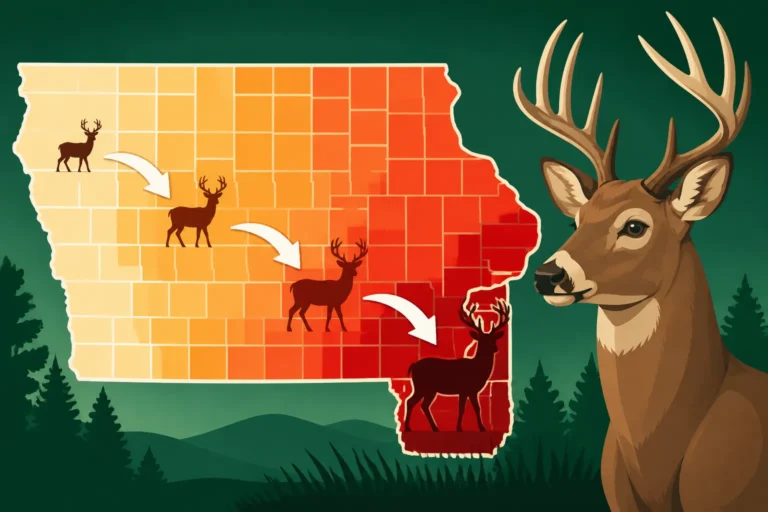
Chronic Wasting Disease and its resilient prions spread across Iowa counties, threatening white-tailed deer and local hunting traditions.
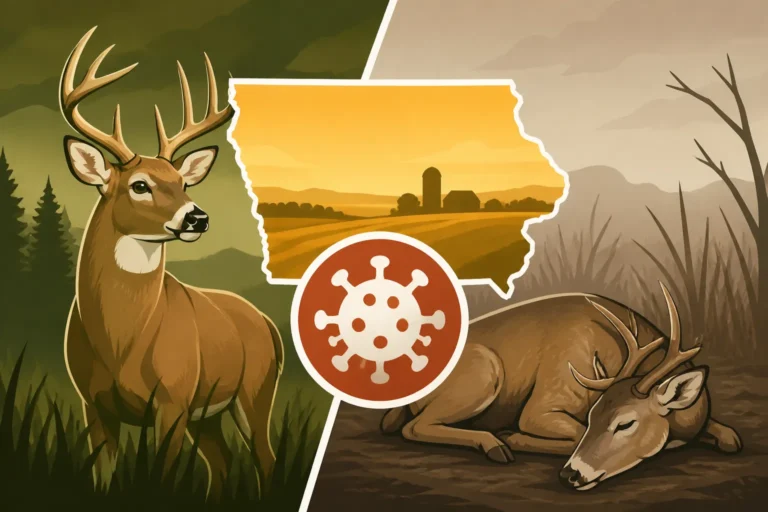
Epizootic Hemorrhagic Disease causes white-tailed deer die-offs in Iowa, spreading through biting midges from August until frost.
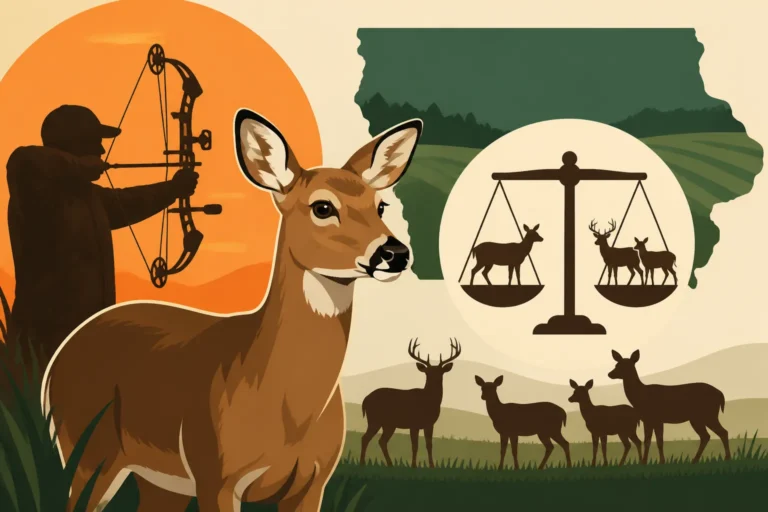
Doe harvest rules explain how the Iowa Department of Natural Resources maintains healthy deer herds and balances local ecosystems.
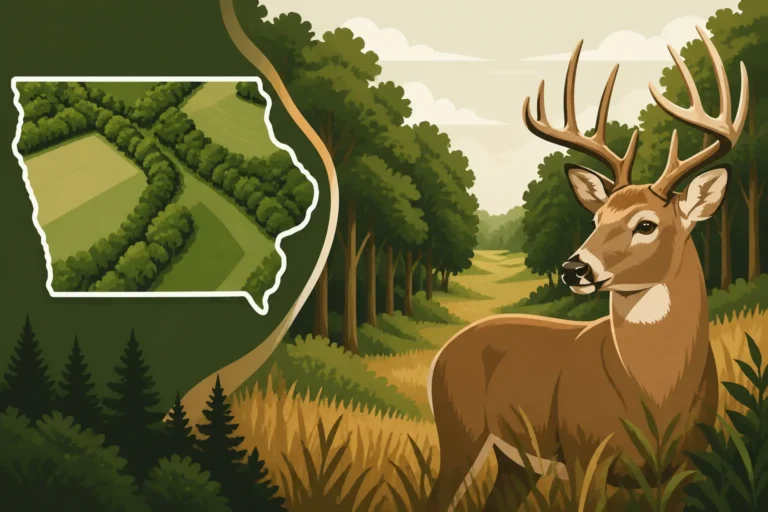
Iowa timber and creek corridors provide whitetail deer with safe travel routes, thermal shelter, and crucial daily concealment.
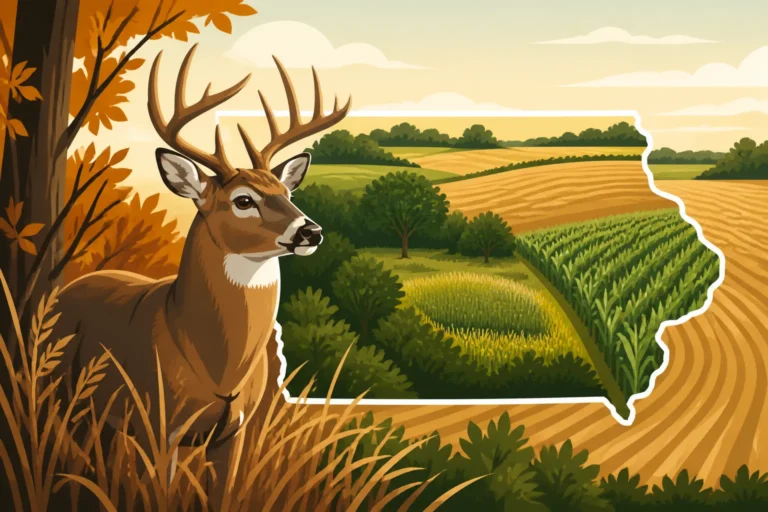
Iowa whitetail deer habitat in agricultural regions explains how five acre timber patches and row crops support mature bucks.
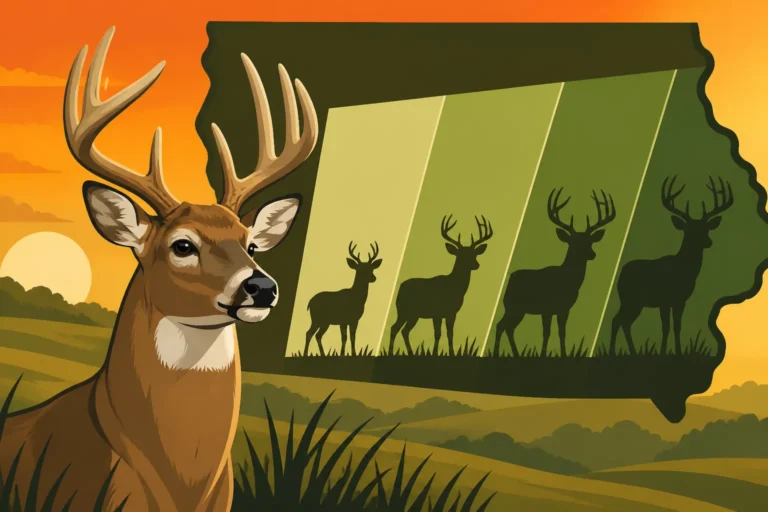
Iowa buck age structure explains why more trophy whitetails survive past young years to reach maturity and full antler potential.
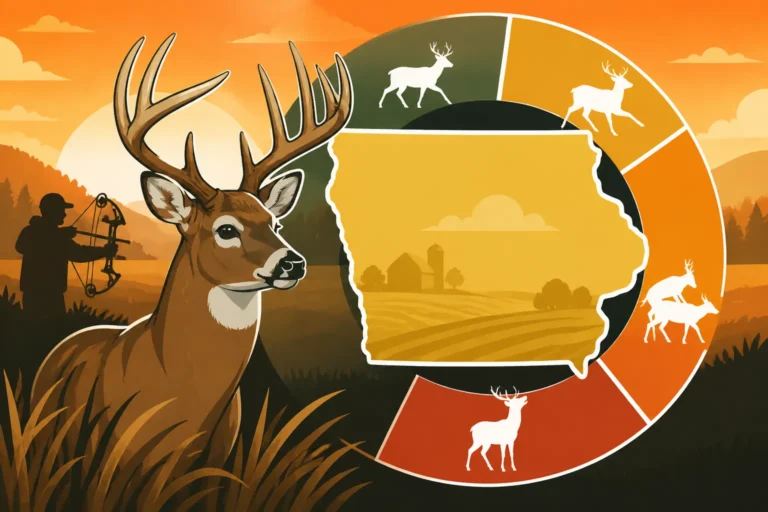
Decreasing daylight triggers hormonal shifts and testosterone production in Iowa bucks and does, setting the annual whitetail rut.
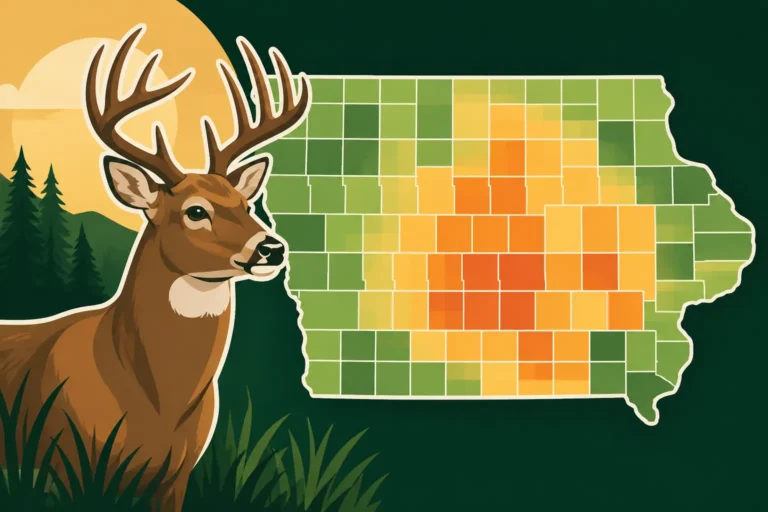
Iowa deer herd numbers by county, population estimates, management strategies, and antlerless tag allocation details for hunters.
Iowa whitetail body and antler size grow massive from fertile soils, corn and soybean diets, superior genetics, and land management.
Fertile Iowa soil and endless corn and soybean crops provide calcium, phosphorus, and high protein for growing giant whitetail deer antlers.