Hunting From a Blind Without Movement
Deer eyesight, wide panoramic vision, hearing, and sensitive smell explain how animals detect hunting movement from blinds.
Close the distance.
Archery, muzzleloader, and firearm techniques — calling, stand placement, still-hunting, spot-and-stalk, and the weapon rules that change at the state line.
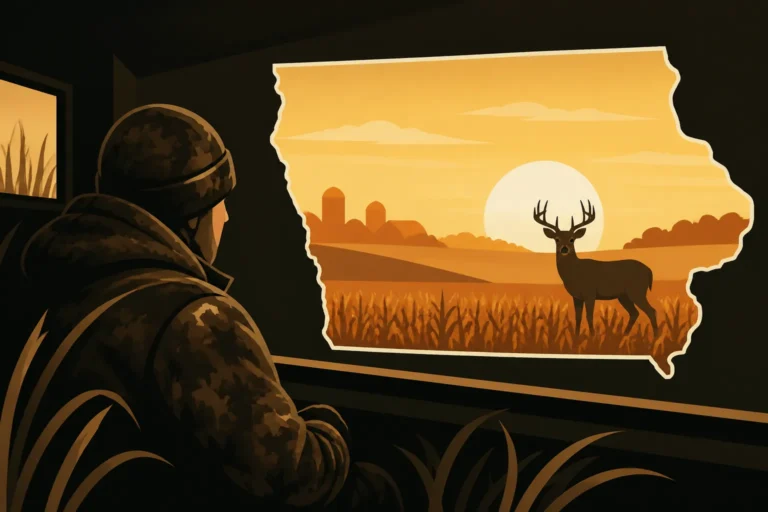
Deer eyesight, wide panoramic vision, hearing, and sensitive smell explain how animals detect hunting movement from blinds.
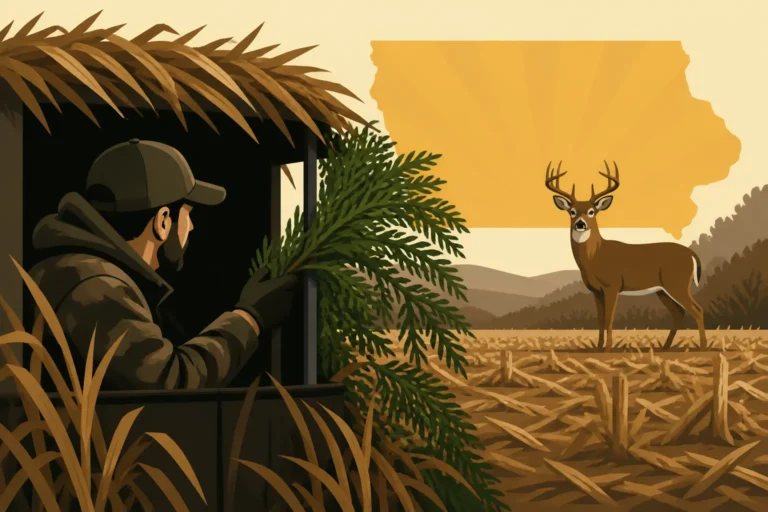
Proper brushing techniques for Iowa ground blinds hide artificial structures, helping hunters blend into natural landscapes for successful deer ambushes.
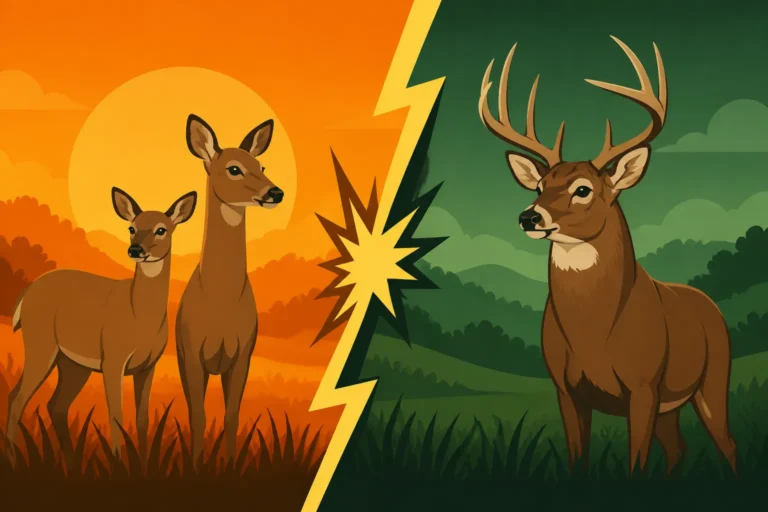
Iowa hunters choosing between doe and buck decoys learn when to invite a cruising male or challenge a dominant rival.
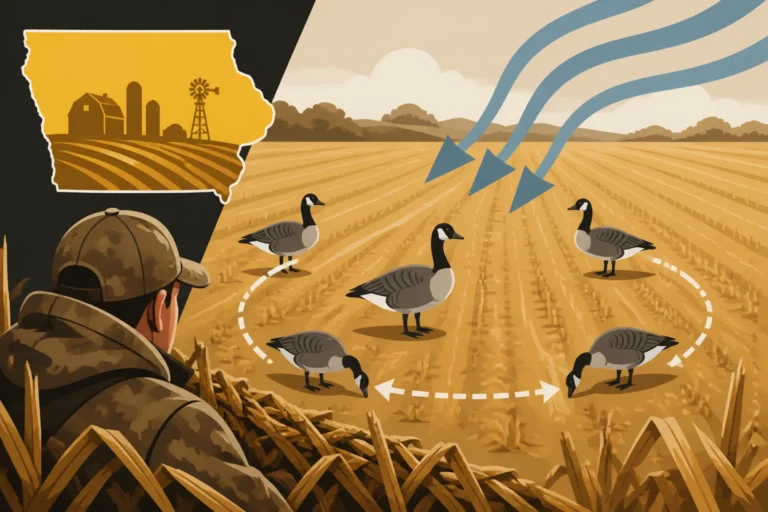
Decoy placement relative to wind direction helps hunters position deer spreads and intercept predictable animal movement paths successfully.
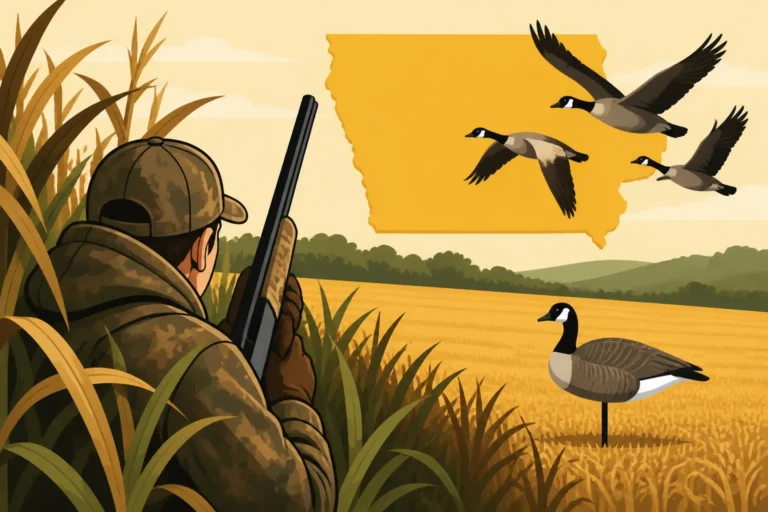
Using a decoy on Iowa field edges brings mature whitetails closer by exploiting their breeding, dominance, and curiosity instincts.
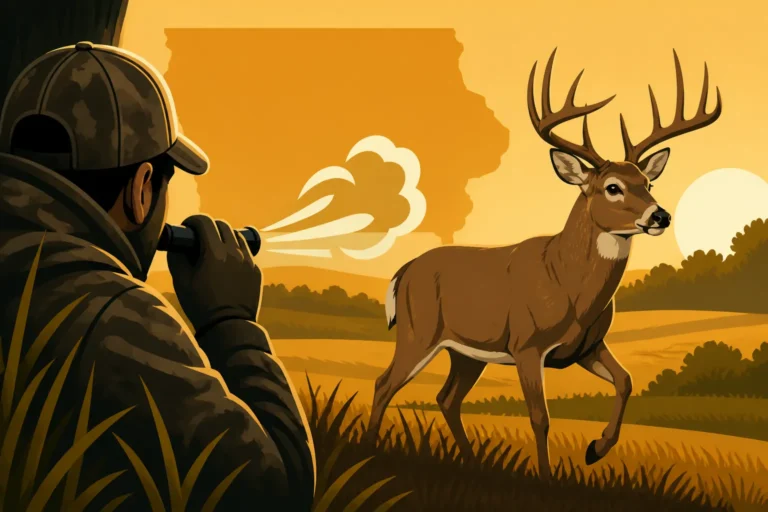
The whitetail snort-wheeze stops a cruising buck during the Iowa rut by challenging his dominance and territorial instincts.
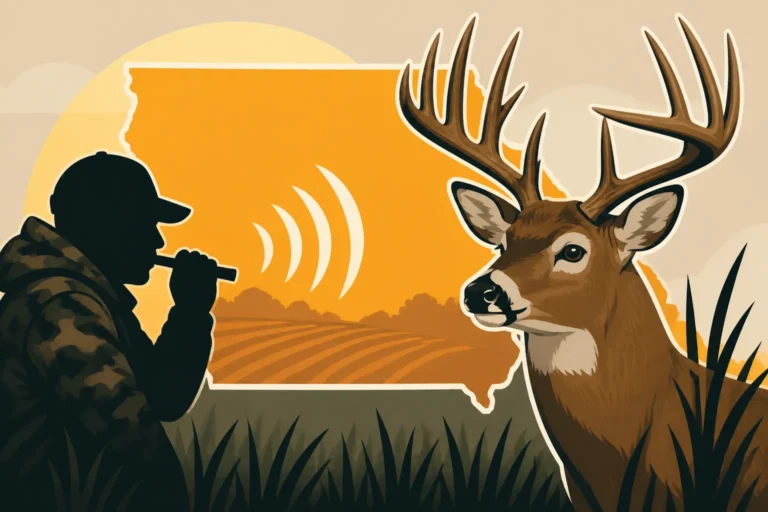
Iowa pre-rut deer hunting strategies explain how buck grunt calls attract whitetails in late October through early November.
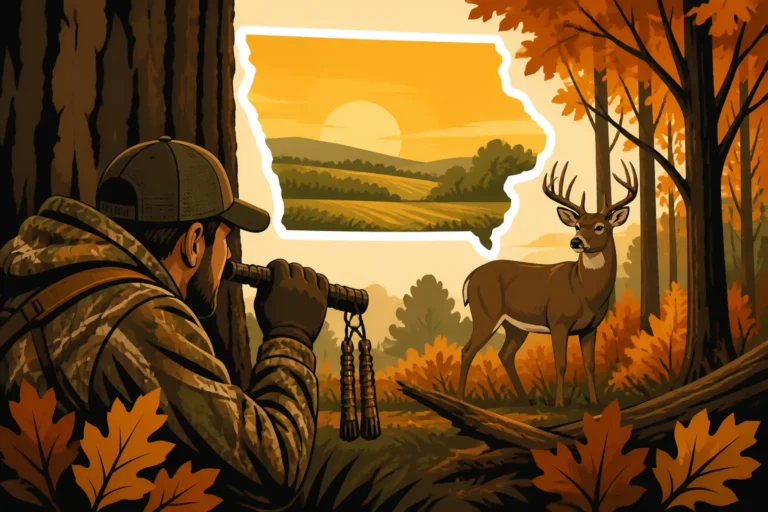
Rattling volume adjustments and subtle sparring tactics help hunters attract mature Iowa whitetail deer in thick timber.
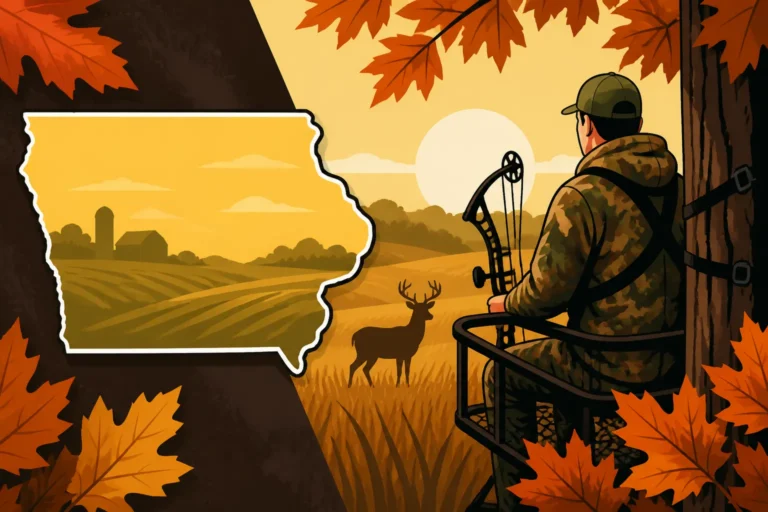
Early November in Iowa brings the whitetail rut at or near its peak, so bucks are on the move and the choice of stand location matters more than in October.
The Iowa whitetail deer rut cycle covers the pre-rut, peak breeding phase from November fifth to the fifteenth, and post-rut.