Grunt Calls That Work in the Pre-Rut
It's incredibly frustrating when you're out in the stand, the leaves are starting to fall, and you know the bucks are getting antsy, but your grunt calls just aren't getting a response. Many hunters struggle to know exactly when and how to best use their calls to pique a whitetail's interest during that crucial pre-rut phase. This guide is going to dive deep into understanding whitetail vocalizations and equip you with the knowledge to make your grunt calls effective in the Iowa pre-rut, turning those passing glimpses into real shot opportunities.
Deciphering the Iowa Pre-Rut: Why Grunts Are Gold
The pre-rut in Iowa is arguably one of the most exciting times to be in the deer woods. It's that magical window, typically kicking off in late October and extending into the first week of November, right before the peak of breeding activity. Bucks are on their feet, full of testosterone, and starting to look for does, but they haven't locked down on them yet. They're cruising, scent-checking scrapes, rubbing trees, and generally just feeling out the landscape, trying to establish dominance and locate the first receptive does. This heightened activity makes them incredibly susceptible to well-timed vocalizations.
Buck Behavior Before the Chase
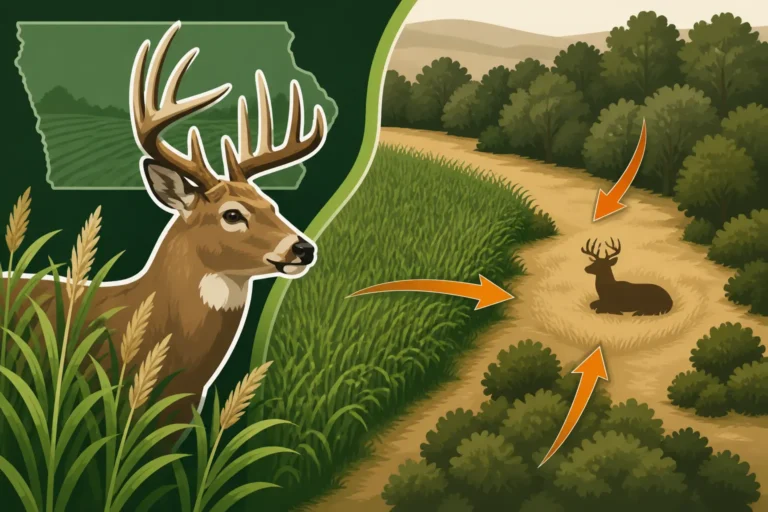
During the early stages of the pre-rut, you'll notice a significant shift in buck behavior. They're no longer content to simply feed and bed. Instead, they're actively traveling, often moving through timber and creek corridors that connect bedding areas to feeding grounds, and expanding their home ranges. You might spot a younger buck making a half-hearted scrape or a more mature deer absolutely tearing up a sapling with his antlers. This is a time of increased aggression and curiosity. They're responding to subtle cues in their environment, and that includes sounds. A well-placed grunt can tap into their innate desire to find a rival or locate a doe, drawing them right into your shooting lane. Understanding Hunting the Iowa Pre-Rut in Late October is key to recognizing these subtle shifts.
The Science Behind the Grunt Call
Deer vocalizations are a complex language, and a grunt is essentially a deer's way of saying, "Hey, I'm here," or "Come here." In the pre-rut, bucks use grunts to communicate with other deer, both does and bucks. A short, guttural grunt often signals dominance or presence to other bucks, essentially challenging them or announcing their territory. Tending grunts are slightly different, typically used by a buck to communicate with a doe he's pursuing. The key is that these sounds are natural and can trigger a natural, instinctual response. Unlike the full-blown chaos of the peak rut, where bucks might be completely focused on a hot doe, the pre-rut offers a window where curiosity and territoriality are stronger drivers for a call response.
Mastering the Grunt Call: Tools and Techniques
When it comes to grunt calls, there's a wide array of options out there, from simple tube calls to more intricate reed designs. The most important thing isn't necessarily the brand or the price tag, but understanding how to use it to produce realistic sounds that mimic what a deer actually hears in the woods.
Choosing Your Grunt Call Wisely
For the pre-rut, you'll primarily be focused on calls that can produce a deep, guttural buck grunt, a tending grunt, and possibly a fawn bleat or doe bleat for added realism, though the focus remains on the buck sounds.
- Tube Calls: These are generally easy to use and allow for a good range of volume and tone simply by adjusting your breath and covering the end. They can produce realistic deep grunts and are often very durable. Brands like Primos and Flextone make excellent tube-style calls that are widely available.
- Reed Calls: These require a bit more practice but can offer finer control over nuance and pitch. They work by blowing air over a reed, similar to a duck call. The key is to find one that feels comfortable and allows you to consistently make the sounds you want. Some models have an adjustable O-ring or band that lets you change the pitch, which can be useful for mimicking different-sized bucks.
No matter which call you choose, practice is paramount. Don't just pull it out in the woods; get comfortable with it at home, varying the volume and cadence until it sounds natural.
The Language of Grunts: What to Say and How
The beauty of grunt calling in the pre-rut is that you don't need a complex repertoire. Focus on these core sounds:
- Short Grunts: These are your bread and butter. A quick, sharp, guttural "Uhh! Uhh!" sound. These mimic a buck cruising, announcing his presence, or even a challenge. Use them when you see a buck at a distance that needs a little encouragement to come closer, or blind calling in thick cover.
- Tending Grunts: A series of slightly longer, softer grunts, often sounding like "Urrr… Urrr… Urrr…" These are typically made by a buck trailing a hot doe. They can be incredibly effective if you think there might be a doe in the area, or to portray the illusion of competition.
- Snort-Wheeze: This aggressive vocalization is a sign of extreme irritation or challenge from a buck. It's often reserved for when a buck is already showing signs of agitation or is closer. Learning to execute a convincing Snort-Wheeze on a Cruising Buck can sometimes be the final straw that brings an aggressive buck in.
Here's a quick reference for common grunt calls:
| Call Type | Description | Best Use Scenario | Target Deer Behavior |
|---|---|---|---|
| Short Grunt | Single, sharp, guttural "Uhh!" | Blind calling, stopping a cruising buck, getting attention | Curiosity, establishing presence |
| Series of Grunts | 2-4 short grunts in succession | Similar to single grunts, slightly more aggressive, implies multiple deer | Curiosity, investigation |
| Tending Grunt | Softer, drawn-out "Urrr… Urrr…" series | Mimicking a buck pursuing a doe, close range | Attracts interested bucks |
| Deep Roaring Grunt | Loud, extended, very guttural grunt | Challenge to a dominant buck, long distance calls | Aggression, territoriality |
| Snort-Wheeze | Aggressive snort followed by a wheezing sound | When a buck is already agitated or close, as a challenge | Confrontation, aggression |
Remember, less is often more. You're trying to sound like a deer, not a human blowing a call.
Strategic Grunt Calling in the Iowa Landscape
Knowing when to grunt is just as important as knowing how. The Iowa landscape, with its mix of timber, CRP, and crop fields, presents unique challenges and opportunities for calling deer.
Timing Your Calls for Maximum Impact
The pre-rut is all about timing. Bucks are looking, but not desperate yet.
- Blind Calling: If you're hunting thick timber or a river bottom where visibility is limited, don't be afraid to do some blind calling. A series of two or three short grunts every 15-20 minutes, especially during the first two hours of daylight and the last two hours before dark, can draw a curious buck in. Use mapping tools like GoHunt to identify key travel corridors and pinch points where a cruising buck might respond to your call. Remember, deer are often using Reading an Iowa Timber Draw for Deer Sign to navigate, so calling near these features can be highly effective.
- Calling to Visual Deer: This is where the magic happens. If you see a buck at a distance that's moving away or simply cruising, a single, sharp grunt can often stop him in his tracks. If he turns and looks, give him another short grunt or two. If he starts coming your way, be ready, and don't call again unless he falters or changes direction. The goal is to pique his interest, not to make him suspicious.
- Mid-Day Lulls: Don't neglect the middle of the day during the pre-rut. Bucks are often on their feet sporadically, scent-checking rubs and scrapes. A well-timed grunt around noon in a known travel corridor or near a bedding area can surprise a buck into responding.
Setting the Scene: Stand Placement and Wind
Your stand placement is crucial for successful calling. You want to be in a position where a buck can approach you without busting your scent or spotting you.
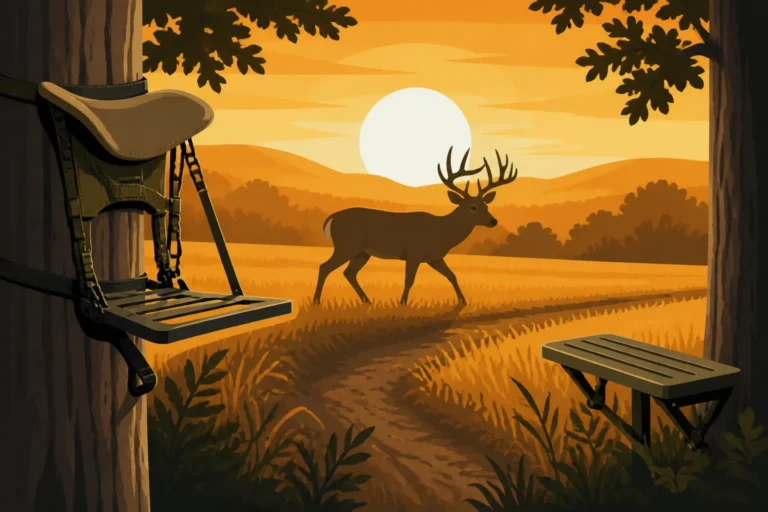
- Wind Direction is King: Always, always, always play the wind. A buck responding to a call will almost always try to circle downwind to scent-check the source of the sound. Position your stand so that any approaching deer has to expose itself to your shooting lane before getting directly downwind of you. This means having good cover behind you and your shooting lanes clear in the direction you expect the deer to come from. For instance, if you're set up on the edge of a timber patch, and the wind is blowing from the west, you want to be facing east, anticipating a buck to circle south or north to get a whiff.
- Cover and Ambush Points: Look for natural funnels, pinch points, or Best Stand Locations in Rolling Timber where deer are naturally funneled. These are ideal places to set up. Consider setting up near a bend in a creek, a saddle in a ridge, or a timber point between two crop fields. These are spots where bucks are naturally traveling and will feel more secure responding to a call. A great resource like GoHunt can help you analyze topographical maps and aerial imagery to pinpoint these ideal locations even before you step foot in the woods.
Integrating Other Calls
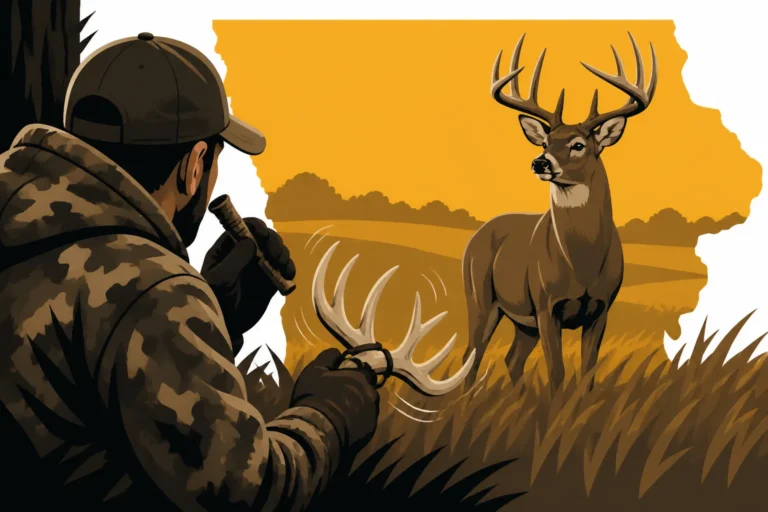
While the focus is on grunts, don't be afraid to sparingly integrate other calls. A little light rattling, especially during the peak of the pre-rut, can simulate bucks sparring and add to the realism. Just remember, Rattling Volume in Thick Timber needs to be appropriate for the cover you're hunting. A few light clacks can be very effective without overdoing it. A doe bleat or fawn bleat can sometimes get a doe curious, and if a buck is nearby, he might follow her in. The key is to paint a realistic picture with sound, not to create a symphony.
Common Grunt Calling Blunders and How to Fix Them
Even experienced hunters make mistakes with grunt calls. It's easy to get excited and overdo it, or to simply misinterpret a buck's reaction. Learning to troubleshoot these issues will make you a more effective caller.
The Dangers of Overcalling
This is probably the most common mistake. Many hunters blast their call every few minutes, or hold a grunt for too long. Imagine if someone kept shouting at you from the woods – you'd probably get suspicious or just ignore them. Deer are no different.
- Less is More: Start with short, infrequent sequences. A few grunts every 15-20 minutes when blind calling is plenty. When calling to a visible deer, one or two grunts might be all it takes. Once a buck commits and starts coming, shut up! Let his curiosity and natural instincts do the rest. If he stops or veers off, then consider another subtle grunt.
- Vary Your Cadence: Don't get into a robotic rhythm. Sometimes it's a single grunt, sometimes two, sometimes a short series. Listen to actual deer vocalizations online (YouTube is great for this) to get a feel for how they naturally sound and vary.
Ignoring the Deer's Body Language
A buck's body language will tell you everything you need to know about whether your calls are working and how to proceed.
- Positive Signs: Ears swiveling towards you, head up, stiff-legged walk, neck hair bristling, stopping and looking in your direction. These are all signs he's interested or challenging.
- Negative Signs: Head down, tail tucked, walking away faster, flagging his tail, acting nervous. If you see these, back off the calling immediately. He's either spooked, or he's just not interested. Sometimes, no response is a response in itself. If a buck hears you but doesn't react, he might be dominant and not want to respond to a challenger, or he might be completely focused on a hot doe elsewhere.
- Circling Downwind: As mentioned, bucks will almost always try to get downwind. Be prepared for this. If you see a buck circling, don't try to stop him unless he's about to hit your scent cone. Let him come into your shooting lane first. This is where your pre-scouting and knowledge of Access Routes That Do Not Bump Deer becomes invaluable, ensuring you're not walking past prime setup spots that could blow a potential call-in.
Scent Control: The Silent Killer
All the perfect grunts in the world won't matter if a buck winds you. Iowa deer have incredible noses, and even the slightest whiff of human scent will send them scattering.
- Diligent Scent Management: Wear clean hunting clothes washed in scent-free detergent, shower with scent-free soap, and use scent-eliminating sprays. Store your hunting clothes in a sealed container. While no product completely eliminates scent, minimizing it is crucial. Combine this with smart wind strategies. Learn more about Scent Control Products and What They Do to maximize your efforts.
- Approach and Exit: Be mindful of your approach and exit routes to and from your stand, especially in relation to where you expect deer to be. Try to walk into your stand with the wind in your face and exit the same way, avoiding bedding areas.
By understanding the nuances of the pre-rut, selecting the right calls, practicing your technique, and being mindful of your environment and the deer's reactions, you can significantly increase your success rate with grunt calls in Iowa. That moment when a mature buck turns and commits to your call is truly one of the most rewarding experiences in hunting.
Disclaimer
Hunting is an inherently dangerous activity. Always prioritize safety, follow all local and state regulations, and ensure you have proper training and licensing before heading into the field. The information provided in this guide is for educational purposes only and should not replace professional instruction or official hunting regulations. Stay safe and hunt ethically.