Iowa Fall Turkey Zone Map
It's completely understandable why you'd be looking for an "Iowa Fall Turkey Zone Map." For many of us who hunt in Iowa, particularly for deer or even spring turkeys, we're used to navigating specific zones with different application processes and tag allocations. It can be frustrating to hunt a state as renowned as Iowa and feel like you're missing a crucial piece of geographical information for a specific season. This guide will walk you through the current reality of fall turkey hunting in Iowa, explaining why a formal zone map might not be what you expect, how to understand turkey distribution across the state, and what you need to know to plan a successful fall hunt.
The Evolution of Iowa's Fall Turkey Hunting Regulations
When you dive into hunting regulations, it’s easy to get tangled up in historical rules or expect consistency across different species and seasons. The landscape of fall turkey hunting in Iowa has seen its share of changes, and understanding this evolution is key to making sense of why there isn't a widely recognized "fall turkey zone map" in the same way you might find one for deer.
Moving Beyond Formal Zones
Historically, some states, and even Iowa in specific instances, have utilized zone systems for various hunting seasons to manage populations more effectively or distribute hunting pressure. For spring turkey hunting in Iowa, for example, there are indeed distinct zones that dictate where certain tags are valid, helping the DNR manage harvest based on regional bird numbers and hunter access. This often leads hunters to assume a similar, precise zoning system exists for the fall season.
However, the Iowa DNR has generally moved towards a more simplified, statewide approach for fall turkey hunting. This change reflects the different dynamics of fall turkey populations and hunting pressure compared to the spring. In the fall, hunters are often pursuing flocks rather than individual toms displaying for hens, and the overall harvest objectives might differ. While specific public hunting areas might have local regulations that prohibit turkey hunting, the general rule of thumb across Iowa is that if you have the proper license and access, you can hunt fall turkeys statewide. This means the traditional county-by-county zone map, like what you’d reference for deer, simply doesn't apply to the overarching fall turkey regulations.
Understanding the Statewide Approach
So, what does "statewide" truly mean for an Iowa fall turkey hunter? It means exactly what it sounds like: as long as you possess a valid Iowa hunting license and the necessary fall turkey tag, you can pursue wild turkeys in any county open to hunting across the state where you have legal access. There are no geographical boundaries or zone restrictions limiting where your tag is valid, beyond the property lines you’re hunting on.
This approach offers a great deal of flexibility. You're not tied to a specific zone if your scouting leads you to birds in an adjacent county, or if weather patterns push turkeys to different regions. It simplifies the application process too, as you don't need to pick a specific zone to apply for. This can be a huge relief, especially if you’re a nonresident trying to navigate the complexities of applying for other Iowa tags. You can apply for your Iowa Fall Turkey Licence and then focus purely on finding birds, rather than worrying about whether you’re in the correct administrative zone. Of course, understanding where the birds typically are is still crucial, even without formal zones. You might find it helpful to review topics like Iowa Turkey Population Trends to get a general sense of where populations are stronger.
Navigating Turkey Distribution and Habitat Across Iowa
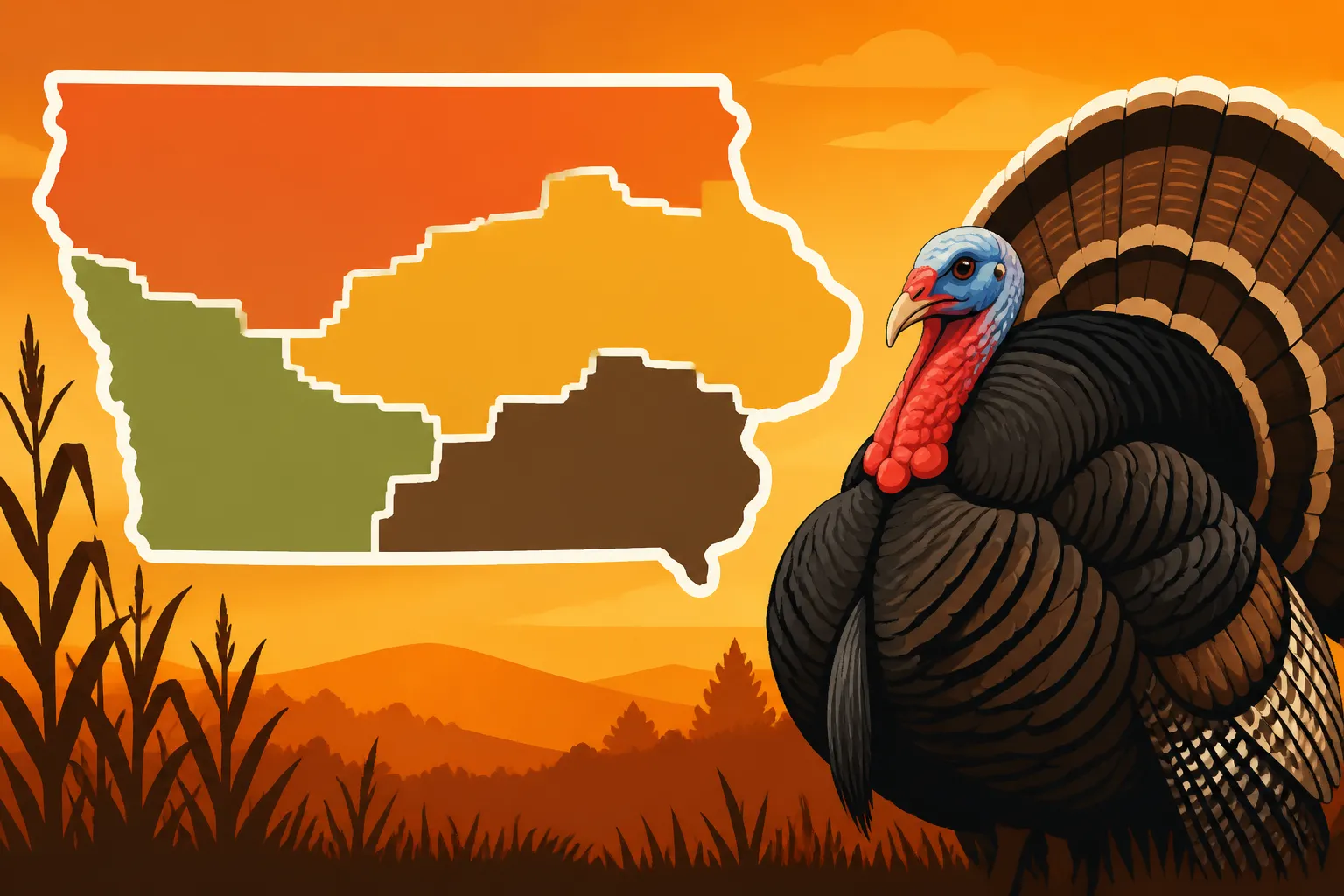
Even without formal "zones," turkeys aren't evenly distributed across Iowa. Their presence is dictated by habitat, and certain regions of the state naturally hold more birds due to the landscape and cover available. Thinking of these areas as "informal zones" can help you focus your scouting and hunting efforts.
Northeast Iowa's Timbered Hills
When you picture Northeast Iowa, you might immediately think of the stunning Driftless Area—a region untouched by glaciers, characterized by steep bluffs, deep valleys, and extensive timber. This area, with its hardwood forests, oak ridges, and hidden creek bottoms, is prime habitat for Eastern Turkeys. Counties like Allamakee, Clayton, Dubuque, and Fayette often boast healthy turkey populations.
Hunting here means embracing the terrain. You'll likely be dealing with significant elevation changes, which can make for challenging but rewarding hunts. Turkeys in these timbered hills often roost on high points and work their way down into valleys for feeding, then back up to roost. Understanding Roosting Iowa Turkeys the Night Before can be especially beneficial here. Access can be a mix of public land, including parts of Yellow River State Forest, and private parcels. The sheer amount of unbroken timber means birds have ample cover and food sources like acorns. Patience and good physical conditioning are vital for covering ground and navigating these dense, undulating landscapes. Using mapping platforms like GoHunt can be invaluable for pinpointing these timber blocks and understanding property boundaries in such varied terrain.
Southern Iowa's Rolling Timber and Creek Bottoms
Southern Iowa is arguably the epicenter of trophy whitetail deer hunting, but it's also a powerhouse for wild turkeys. This region is characterized by rolling hills, interspersed timber blocks, extensive creek drainages, and smaller agricultural fields. Think counties like Appanoose, Lucas, Van Buren, and Wayne. The patchwork of cover provides excellent roosting, nesting, and feeding opportunities for turkeys.
The timber in Southern Iowa, often a mix of oak and hickory, provides consistent mast crops, a crucial food source for turkeys, especially in the fall. The dense creek bottoms offer critical thermal cover and travel corridors. Hunting here often involves traversing timbered draws that funnel into larger blocks of woods. Fall turkey tactics might involve breaking up a flock and calling birds back in, or patterning their movements between roosting areas and feeding fields. With less severe elevation changes than the northeast, but still plenty of undulating terrain, mobile tactics like Run-and-Gun Turkey Tactics on Iowa Public Land can be highly effective. Public land access exists, but often in smaller, scattered parcels, making securing private land permission a significant advantage in some areas. When scouting, leveraging tools from GoHunt can help identify those crucial timbered creek systems that hold birds.
Central and Western Iowa's Farm and River Country
As you move into central and western Iowa, the landscape transitions more dramatically into row crop agriculture. While turkeys might not be as universally distributed as in the timber-rich regions, they are certainly present and thriving wherever suitable habitat persists. Here, turkeys often concentrate along river systems, such as the Des Moines River, Skunk River, and Missouri River, as well as in smaller timber patches, brushy draws, and conservation areas. Counties like Boone, Webster, or those along the Missouri River offer unique fall turkey hunting experiences.
In these more open agricultural areas, turkeys become incredibly adept at using even small pockets of cover. River bottoms often contain mature timber for roosting and foraging, while adjacent crop fields (especially picked corn or beans) offer abundant waste grain. Hunting strategies often revolve around locating these isolated timber blocks or river corridors. Turkeys in these areas can be very visible, spending much of their day feeding in fields. However, they can also be incredibly wary due to the lack of cover, making successful approaches challenging. Knowing how to read the landscape for subtle changes in elevation or cover is crucial. Areas with a strong presence of Eastern Turkeys in Iowa Timber, even fragmented timber, can hold surprising numbers of birds. Look for areas close to water sources, as these can be magnets for wildlife.
Planning Your Iowa Fall Turkey Hunt
With the understanding that Iowa’s fall turkey season is largely statewide, the focus shifts from navigating administrative zones to strategic planning based on turkey behavior, habitat, and regulations.
Licenses, Seasons, and Bag Limits
To hunt fall turkeys in Iowa, you'll need to make sure you have the correct paperwork in order. This starts with a valid Iowa hunting license, often referred to as a "habitat fee" or base license, which is a prerequisite for purchasing any game-specific tags. For non-residents, this also includes a general hunting license. Once you have that, you can purchase an Iowa Fall Turkey Licence. The season dates for fall turkey hunting are typically quite generous, spanning a good portion of October, November, and even into December, offering plenty of opportunities to get out into the field. However, it's absolutely vital to consult the current Iowa DNR hunting regulations booklet, as dates can shift slightly year to year. The Iowa Regulation Booklet Release Date is usually in late spring/early summer, so keep an eye out for the most up-to-date information.
The bag limit for the fall turkey season is generally one bird of either sex. This is a key difference from the spring, where the focus is usually on gobblers. In the fall, hunters are simply looking to harvest a turkey, whether it's a hen or a jake, or an adult tom. It’s important to report your harvest promptly if successful, following the DNR’s guidelines. Understanding Iowa Fall Turkey Licence Rules is crucial for ensuring you're compliant with all current regulations before heading out.
Finding Public and Private Access
Even without formal zones, knowing where to hunt is paramount. Iowa offers a variety of public hunting lands, including Wildlife Management Areas (WMAs), State Forests, and lands managed by County Conservation Boards. These areas can be excellent starting points for a fall turkey hunt, especially in the more timbered regions of Northeast and Southern Iowa. The Iowa DNR's online hunting atlas is an indispensable tool for locating these public parcels, showing boundaries, access points, and often even habitat types. Utilizing mapping apps like those offered by GoHunt can further enhance your scouting by allowing you to view satellite imagery, topo maps, and property ownership layers right on your phone or computer, which is a massive advantage when trying to find good turkey habitat.
Securing private land access is often the golden ticket in Iowa, especially in areas with limited public land. Building relationships with landowners, particularly farmers, can open up vast opportunities. A polite, respectful approach, ideally well in advance of the season, can go a long way. Many landowners are happy to grant access to responsible hunters, especially if turkeys are impacting their crops or they simply enjoy seeing someone utilize their land respectfully. When researching potential spots, remember that Iowa Public Land Turkey Hunting Spots can experience higher pressure, so mixing in some private land scouting can broaden your options significantly.
Fall Turkey Hunting Strategies
Fall turkey hunting is a different beast than spring hunting. Instead of focusing on individual gobblers responding to locator calls and strutting, fall tactics often center around breaking up flocks and calling in scattered birds, or ambushing them along their travel routes. Turkeys in the fall are typically in larger family groups or bachelor groups of toms, and their priorities are food and security.
- Locating Flocks: Early morning scouting is key. Listen for turkeys yelping on the roost or flying down. Once a flock is located, observe their patterns—where they feed, where they water, and where they travel between roosting and feeding areas.
- Breaking Up Flocks: A classic fall tactic involves locating a flock, then aggressively pushing into them to scatter the birds in all directions. Once they've dispersed, find a quiet setup and wait. After 20-30 minutes, start making lost calls (assembly yelps or kee-kees) to lure birds back in. This requires patience, as it can take time for birds to feel safe enough to regroup.
- Ambushing Travel Routes: If you can pattern a flock, setting up along a predictable travel corridor (e.g., a timber edge, a creek bottom crossing, or a field transition) can be effective. This often means long periods of waiting, so comfort and concealment are crucial.
- Calling: Fall calling usually involves different vocalizations than spring. Lost calls, assembly yelps, and the distinctive "kee-kee" run of a young bird are highly effective. You're trying to sound like a lonely, scattered bird trying to regroup. Knowing Calling a Henned-Up Iowa Gobbler can be particularly useful, as fall flocks often consist of hens and their poults.
- Decoys: While less common than in spring, a simple jake or hen decoy can still be effective, especially if you're trying to draw attention away from your exact position or add realism to your setup.
Regardless of your chosen strategy, scent control, camouflage, and understanding turkey vocalizations are paramount. Always be aware of your surroundings, especially if hunting public land, and wear hunter orange when appropriate during certain gun seasons to ensure safety.
Fall Turkey Hunting Across Iowa's Regions – A Quick Look
| Region (Informal Zone) | Key Characteristics | Typical Habitat | Fall Hunting Tips |
|---|---|---|---|
| Northeast Iowa | Steep bluffs, valleys, dense hardwoods | Oak/hickory forests, creek bottoms | Focus on elevation changes, listen for roost calls, be patient on scattered birds |
| Southern Iowa | Rolling hills, large timber blocks, creek drainages | Mixed hardwoods, creek corridors, small ag fields | Pattern flock movements, use break-up calls, look for mast crops |
| Central/Western Iowa | Predominantly row crop, fragmented timber | River bottoms, isolated timber blocks, brushy draws | Concentrate on river systems, field edges, use mapping apps for small coverts |
Always remember to cross-reference any information with the official Iowa DNR regulations for the current year. This will ensure you're hunting legally and ethically, allowing you to fully enjoy the unique challenge and reward of an Iowa fall turkey hunt.
Disclaimer
The information provided in this guide is for general informational purposes only and is not intended as legal advice or a substitute for official Iowa Department of Natural Resources (DNR) regulations. Hunting laws and regulations can change frequently. Always consult the most current Iowa DNR hunting regulations publication before engaging in any hunting activities to ensure compliance. It is the hunter's responsibility to understand and adhere to all applicable laws and regulations.