Iowa Tenant Deer Tag Rules
Navigating the specific regulations for hunting in Iowa can feel like trying to track a trophy buck through a dense cedar thicket – it's exciting but riddled with potential missteps. One area that frequently causes confusion, especially for those who spend their lives working the land but don't necessarily own it, involves Iowa tenant deer tags. This guide is here to untangle those rules, clarify who qualifies, and walk you through what you need to know to secure your deer tags as an Iowa tenant.
Understanding Iowa's Tenant Definition for Deer Tags
When the Iowa Department of Natural Resources (DNR) talks about a "tenant" in the context of special deer tags, they're not just referring to someone who rents a house on a parcel of land. It's much more specific, designed to recognize those who are actively involved in the agricultural or land management operations of a property. Essentially, the state wants to provide a benefit to those who contribute significantly to the land's productivity and management, fostering a deeper connection to the local ecosystem and the responsibilities that come with it.
To qualify as a "tenant" for hunting purposes in Iowa, you must reside on the specific land you intend to hunt and be actively engaged in agricultural pursuits on that land. This distinction is crucial. Simply renting a home in the country, even if it's on a large farm, does not automatically grant you tenant hunting privileges. The expectation is that you are contributing labor, capital, or management decisions directly related to the farming or timber operations. This active involvement is what separates a casual renter from a bona fide tenant in the eyes of the DNR.
Consider a hypothetical scenario: John lives in a farmhouse on 160 acres that he rents from his cousin. If John merely pays rent for the house and has no involvement in the corn and soybean fields or the timber management, he wouldn't qualify as a tenant for deer tags. However, if John leases the fields, plants, cultivates, and harvests the crops, or if he's responsible for managing the timber stand, maintaining fences, or raising livestock on that property, then he's much more likely to meet the "actively engaged" criteria. The DNR looks for tangible proof of your operational role on the land.
Furthermore, while not always explicitly stated as a hard-and-fast rule, having a formal, written lease agreement for the agricultural land or a documented management agreement can significantly strengthen your claim as a qualifying tenant. This documentation serves as clear evidence of your role and responsibilities. It's not enough to just verbally agree; having something on paper that outlines your duties and the duration of your tenancy can make the application process much smoother and less ambiguous. Just like understanding the ins and outs of Iowa Landowner Deer Tag Eligibility, knowing your specific tenant status is key.
Eligibility Requirements for Tenant Deer Tags
So, let's drill down into the nitty-gritty of what it takes to actually be eligible for these coveted tenant deer tags. The core criteria revolve around three main pillars: your residence, your active engagement in agricultural or land management activities, and the specific acreage associated with your tenancy. It’s not a one-size-fits-all situation, and the DNR scrutinizes these details to ensure fairness and prevent misuse of the system.
The "actively engaged" component is perhaps the most critical and often misunderstood. This isn't about being a weekend warrior helping out occasionally. It means you are genuinely making management decisions, investing your own labor, or contributing capital to the agricultural or land management enterprise on the property. For instance, if you're the one deciding what crops to plant, negotiating seed and fertilizer costs, operating the machinery, or directly managing livestock, you're clearly actively engaged. If your role is simply to provide maintenance to the rental home or mow the lawn, that typically won't qualify you. The intent is to support those whose livelihoods and daily efforts are intrinsically tied to the land’s productivity.
What about situations where the land is held by a family trust, an LLC, or a corporation? This can add another layer of complexity. If you are an employee of such an entity and your primary residence is on the land, and you are actively performing agricultural duties for that entity, you may still qualify. However, it’s imperative to have clear documentation of your employment, responsibilities, and residency. The DNR will want to see that your connection to the land is direct and substantial, not just a tangential association. For unique situations like this, checking with the DNR directly before applying is always a smart move.
Another important, though often unwritten, aspect is the duration of tenancy. While Iowa regulations don't specify a minimum number of years one must be a tenant, the spirit of the law implies an ongoing, established relationship with the land. Short-term rentals or temporary arrangements are less likely to be viewed as qualifying tenancy. They're looking for individuals with a vested, long-term interest. It's also vital to ensure you meet all general hunting requirements, including hunter education if applicable, as outlined in Iowa Hunter Education and Licensing Basics.
| Criteria | Qualifying Tenant | General Renter |
|---|---|---|
| Residency | Must reside on the land for which the tag is sought. | May reside on a property, but not necessarily involved in its agricultural use. |
| Engagement | Actively involved in agricultural production, timber management, or livestock. | Primarily pays for housing; no direct role in land management. |
| Documentation | Typically holds a written lease for farm/management land. | Has a residential lease agreement for a dwelling. |
| Hunting Benefit | May qualify for special resident tenant deer tags. | Applies for general resident tags through the standard draw. |
| Purpose | Supports those contributing to the land's productivity and local economy. | Provides housing for an individual. |
Applying for Iowa Tenant Deer Tags
Once you're confident you meet the definition and eligibility requirements for an Iowa tenant deer tag, the next step is the application process. This isn't always as straightforward as a general resident application, primarily because you need to provide extra documentation to prove your tenant status. It's critical to pay close attention to the details to ensure your application isn't denied due to missing information.
The application process typically mirrors the general resident application window, usually running from May through June. However, tenant applications require a specific affidavit or form that explicitly outlines your tenant status. This form often needs to be signed by both you and the landowner, attesting to your residency and active engagement in the land's agricultural operations. You'll submit this through the Iowa DNR's licensing system, which is part of the "Go Outdoors Iowa" platform. While GoHunt is an excellent resource for scouting and understanding game movements, your official application will go through the state's portal. Remember, staying on top of Iowa Deer Application Dates in May and June is paramount for all applicants, including tenants.
Beyond the affidavit, you might be asked for additional documentation. This could include copies of your agricultural lease agreement, property tax statements showing the land’s agricultural classification, or even utility bills demonstrating your continuous residency on the property. The more thoroughly you can document your claims, the smoother your application will be. The DNR wants to verify that you genuinely meet the criteria, so having a robust paper trail is always advisable. Don't wait until the last minute to gather these documents; proactive preparation is key.
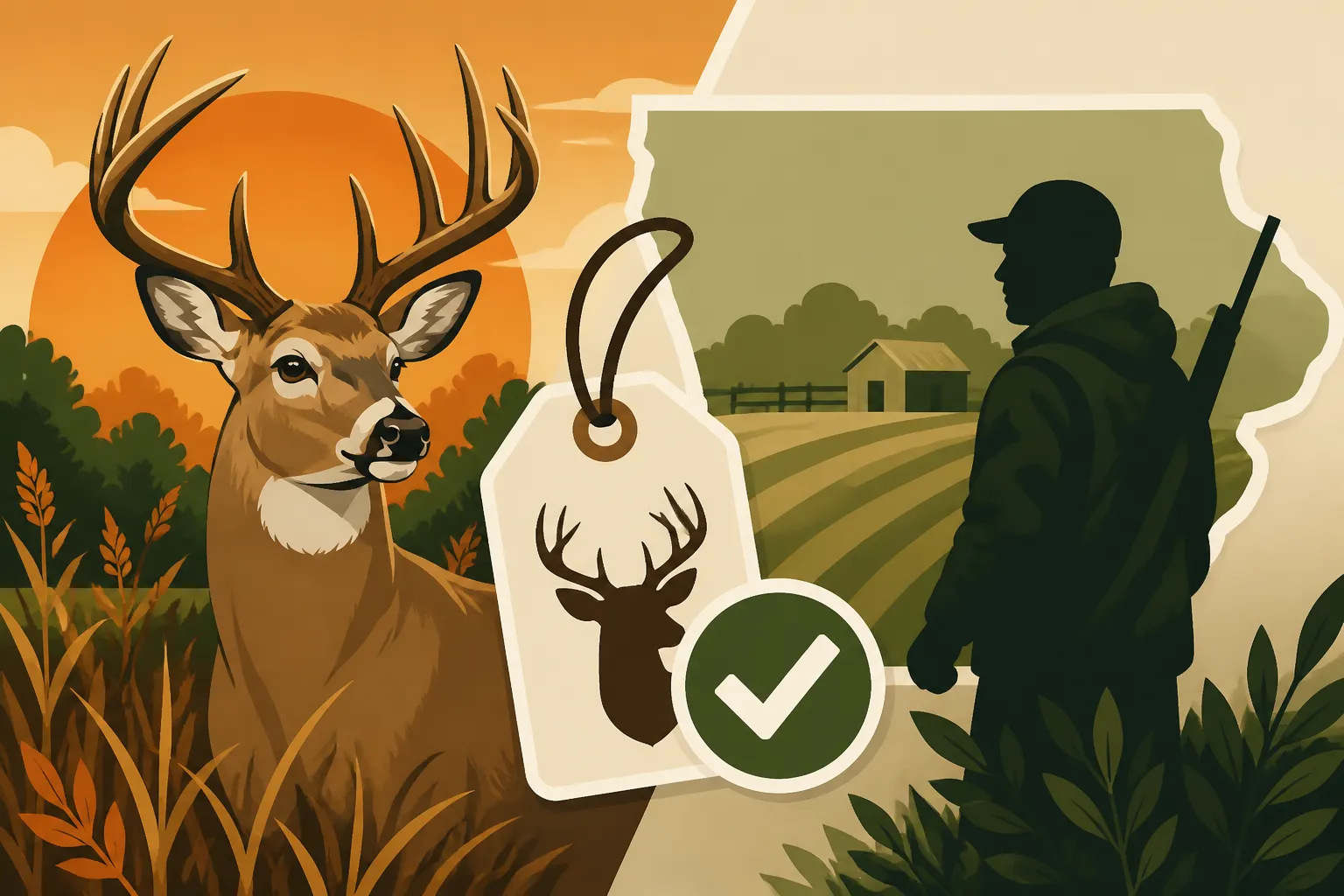
As for the types of tags available to tenants, this is where the benefit really shines. Eligible tenants can often apply for an any-sex deer tag specific to the county where their tenanted land is located, without participating in the more competitive public draw system that general residents face for these types of tags. They can also usually apply for additional antlerless tags, subject to the county's quotas, providing excellent opportunities for herd management on their tenanted property. These tags are tied to the specific land you are a tenant on, meaning you can only hunt deer on that property with your tenant tag. This is different from a general resident tag which can be used statewide where legal. Keep an eye on the Iowa Antlerless Tags and Quotas for your specific county to maximize your harvest opportunities.
Benefits and Limitations of Tenant Deer Tags
Securing an Iowa tenant deer tag offers some distinct advantages, particularly in a state renowned for its incredible whitetail hunting. However, it's also important to understand the limitations that come with these special tags to ensure you're hunting legally and ethically. It’s a privilege, not a blanket permit, and adhering to the specific rules is paramount.
The primary and most significant benefit for qualifying tenants is the near-guaranteed access to an any-sex deer tag. In Iowa, where general resident hunters often have to enter a draw for any-sex tags, or are restricted to specific zones or seasons, having a tenant tag can be a game-changer. It means you don’t have to worry about accumulating preference points or facing the uncertainty of the draw. This provides consistency and assurance, allowing you to plan your deer season knowing you have a tag in hand. This also means you're investing your time and effort on land you already manage, which makes for a more fulfilling hunting experience. Furthermore, depending on the county's quotas, tenants often have a clear path to obtaining additional antlerless tags, which is excellent for localized herd management and filling the freezer.
However, these benefits come with crucial limitations. The most important restriction is that a tenant deer tag is generally valid only on the specific parcel of land where you qualify as a tenant. You cannot use this tag to hunt on other private lands or public hunting areas across the state. This makes sense, as the tag is granted based on your direct, active involvement with that particular property. While you might still apply for and obtain other general resident tags, which can be used elsewhere, your tenant tag is hyper-specific. Always double-check the regulations for your specific tag when it's issued. Understanding the various Iowa Deer Licence and Tag Costs helps in budgeting for your season, whether you're getting a tenant tag or a general resident one.
Another benefit is the flexibility it can provide in terms of season choice, often allowing tenants to pick a preferred season (archery, shotgun, muzzleloader) for their any-sex tag, though this can vary by county and overall quota. This allows tenants to align their hunting methods with their work schedule and the best timing for deer activity on their land. For example, if you prefer to hunt with a shotgun, knowing you have a guaranteed tag for the Iowa First and Second Shotgun Seasons on your tenanted land offers significant peace of mind.
A potential pitfall, as mentioned earlier, is the strict adherence to the tenant definition. Misrepresenting your status could lead to serious legal consequences, including fines and loss of hunting privileges. It's crucial to be honest and accurate in your application and to maintain all necessary documentation. Resources like GoHunt can be incredibly valuable for staying informed about regulation updates and for understanding deer behavior patterns on your specific property, but always defer to the official Iowa DNR rules for eligibility and application. After a successful hunt, remember that all harvested deer, including those taken with a tenant tag, must be reported according to Iowa Deer Harvest Reporting Rules.
Common Questions and Scenarios
The world of Iowa tenant deer tags can throw up some unique questions, especially when real-life situations don't perfectly align with the black-and-white rules. Let's delve into some common scenarios and clarify how the DNR typically views them, helping you navigate potential grey areas.
One frequent question revolves around the "residing on the land" requirement. Does it mean you must physically live in a house on the farm property, or can your primary residence be elsewhere if you're managing the farm daily? Generally, the Iowa DNR interprets "residing on the land" quite literally. Your primary domicile needs to be on the property you are claiming tenant status for. If your actual home and mail address are 20 miles away, even if you spend every day working on the farm, you likely won't qualify under this specific rule. This is designed to ensure that the benefit goes to those who are truly embedded in the daily life and operations of that particular land parcel, not just those commuting to work it. This is a key difference from other types of hunting licenses, like those listed under Iowa Resident Deer Licence Prices.
Another scenario often involves family dynamics: Can a child of a tenant also get a special tag? Typically, the tenant status applies directly to the individual who meets all the requirements (residency, active engagement). A child living on the property might qualify as a resident, but they generally won't inherit "tenant" status for special tags unless they, too, independently meet all the active engagement criteria. If a minor child is hunting, they would operate under their own resident tags and the rules for Iowa Party Hunting Rules if hunting with an adult, or potentially youth-specific tags if applicable. The tenant tag is personal to the qualifying individual.
What happens if the land changes hands, or the lease agreement is altered or terminated during the hunting season? This can be a tricky situation. If your tenancy status changes, especially if you cease to reside on the land or are no longer actively engaged in agricultural pursuits, your tenant tag might become invalid. It’s crucial to notify the DNR immediately of any significant changes to your tenancy agreement or status. They can advise on the proper course of action, which might involve invalidating the tenant tag and potentially applying for a general resident tag if available. Always review the Iowa Regulation Booklet Release Date each year to ensure you have the most up-to-date information on such dynamic situations.
Finally, while this guide focuses on tenant tags, it’s worth briefly touching on how this differs from nonresident landowner tags. Nonresident landowners in Iowa also have specific tag opportunities, but their criteria are different, centering on ownership rather than tenancy and often requiring higher acreage thresholds. Their tags are subject to different quotas and application processes. The tenant tag is distinctly for residents who live on and actively work agricultural land within Iowa, offering a tailored opportunity for those vital contributors to Iowa's rural landscape.
Disclaimer
This guide is intended for informational purposes only and does not constitute legal advice. Hunting regulations in Iowa can change. Always consult the official Iowa Department of Natural Resources (DNR) regulations and guidelines for the most current and accurate information before planning your hunt or applying for tags. It is your responsibility to understand and comply with all applicable hunting laws and regulations.