Iowa Landowner Permission Basics
It's no secret that a huge chunk of Iowa's best hunting ground lies on private property. For many hunters, especially those new to the state or looking to expand their opportunities beyond public land, figuring out how to respectfully and legally gain access to these coveted acres can feel like trying to solve a complex puzzle. This guide is all about demystifying the process of securing landowner permission in Iowa, helping you understand the legalities, master the art of the ask, and build relationships that open up incredible hunting experiences.
The Foundation: Understanding Iowa's Trespass Law
Before you even think about knocking on a farmer's door or sending a text, you absolutely need to grasp the legal framework surrounding private land access in Iowa. Ignorance of the law is never an excuse, and a simple misunderstanding could land you in hot water, or at the very least, permanently close doors to future hunting opportunities. It’s about respect, plain and simple, for the landowner, their property, and the wildlife they manage.
What Constitutes Trespassing in Iowa
In Iowa, trespassing isn't just about physically stepping foot onto someone's land without permission. It's a bit more nuanced than that, and it's vital for hunters to understand the full scope. Generally, if you're on private property, whether it's timber, a picked cornfield, or even just a field edge, and you haven't received express permission from the landowner or tenant, you are trespassing. This includes things like driving a vehicle onto their land, or even just walking across a fence line.
What many hunters sometimes overlook is that "trespassing" can also involve actions that impact the property even if you don't physically set foot on it. For example, shooting from public land onto private land where you don't have permission can still be considered a violation of the spirit, if not the letter, of trespass laws, particularly if it concerns retrieving game. Furthermore, disturbing livestock or causing any damage while on or near private property without permission can elevate a simple trespass into a more serious offense. It’s not just about boots on the ground; it’s about your entire interaction with the property and its inhabitants.
Understanding "Posted" and "No Hunting" Signs
Iowa law has clear guidelines regarding "posted" land. A landowner isn't required to fence or post their entire property to indicate it's private. However, to explicitly prohibit hunting or trespassing, they generally need to mark their boundaries. This usually takes the form of signs, painted posts, or other visible markers. A property is typically considered "posted" if signs are placed at intervals of not more than 40 rods (about 660 feet) along the exterior boundary. These signs clearly state "No Hunting," "No Trespassing," or something similar.
Now, here's a crucial point: even if land isn't explicitly "posted" with signs every 40 rods, it doesn't automatically mean you have permission to hunt. You always need to have permission from the landowner or tenant to hunt on private land. The "posted" requirement primarily clarifies the landowner's intent to prosecute for trespass. Without that clear indication, enforcement can be more challenging for law enforcement, but your need for permission remains absolute. Think of "posted" signs as a loud, clear "NO," but the absence of such signs doesn't mean "YES." It simply means you still need to ask. For a deeper dive into the specifics, check out Iowa Trespass Law and Posted Land.
The Importance of Written Permission
While verbal permission from a landowner might feel sufficient, having it in writing is always the safest and most recommended practice in Iowa. Verbal agreements can be easily forgotten, misunderstood, or even denied, especially if there's a change in ownership, tenancy, or even just a bad memory involved. Imagine being confronted by a sheriff's deputy on opening day, and the landowner, for whatever reason, can't recall giving you permission. A written permission slip, signed by the landowner and you, eliminates any doubt.
This written document should clearly state who has permission, for what activity (e.g., deer hunting), for what dates or season, and on which specific parcels of land. It should also include contact information for both parties. This isn't just for your protection; it also protects the landowner by clarifying the terms of your access. Some landowners even appreciate a template you can provide, which shows you’re serious and professional. When it comes to something as important as hunting access, it’s far better to be overly prepared than to face an unexpected legal challenge. If you're looking for exact requirements for such a document, our article on Iowa Landowner Written Permission Requirements might be helpful.
How to Ethically Ask for Permission
Getting permission to hunt private land in Iowa is less about luck and more about etiquette, persistence, and building genuine relationships. It's an art form, really, and it starts with how you present yourself and your intentions. Remember, you're asking for a privilege, not asserting a right.
Approaching Landowners with Respect
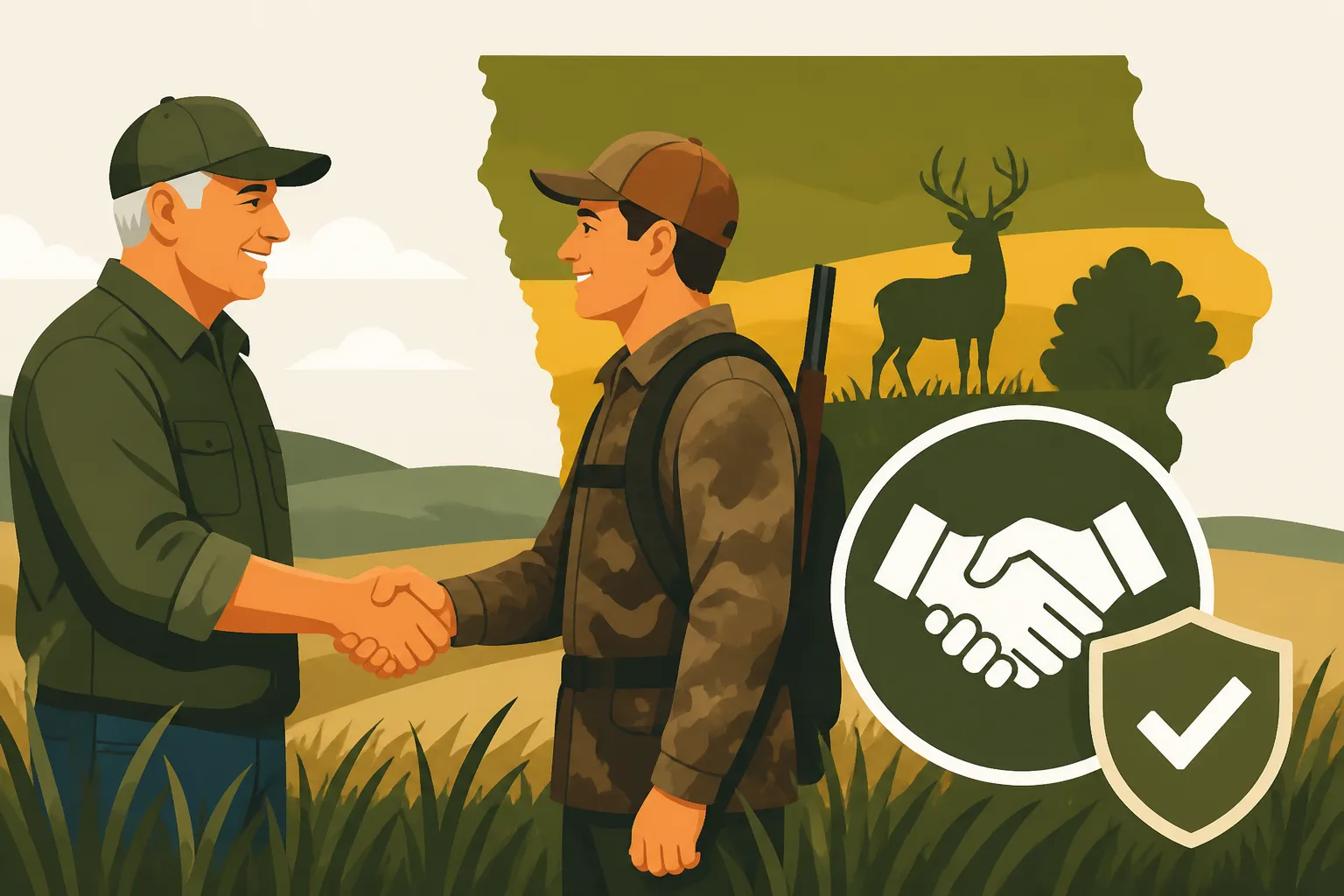
First impressions are everything, and approaching a landowner with genuine respect is paramount. Don't show up in your hunting clothes with your gun in hand; that screams "I'm ready to hunt right now." Instead, dress neatly, perhaps in casual everyday clothes. Choose a time when they're likely to be home and not in the middle of a busy chore like harvesting corn or feeding livestock. A Sunday afternoon or an evening during the week often works best. Always start by introducing yourself, explaining why you're there, and being upfront about your intentions.
Your demeanor should be humble and polite. Remember, this land is their livelihood, their home, and often their heritage. They likely have concerns about liability, property damage, and who is on their land. Address these concerns proactively. Offer to share any harvest with them, or help with small chores like fixing a fence or picking up trash. Even if they say no, thank them for their time and consideration. Leave a positive impression; that "no" today could become a "yes" next year, or they might refer you to a neighbor. Building trust takes time, and every interaction contributes to your reputation.
Crafting Your Pitch: What to Say and How to Act
When you finally get to speak with a landowner, your "pitch" isn't about sales, it's about reassurance and demonstrating responsibility. Start by asking if they allow hunting on their property. If they hesitate, explain your hunting style. Are you a solo archer who hunts quietly and causes minimal disturbance? Or are you part of a larger group planning a deer drive during shotgun season? Be honest. Many landowners are wary of large groups or those who might be reckless.
Highlight your commitment to safety, property care, and ethical hunting. Mention that you're a responsible hunter, that you're insured (if you have personal liability insurance, which is a good idea), and that you will treat their land as if it were your own. Offer to provide references if you have them. Inquire about specific concerns they might have, such as areas to avoid (like near homes or livestock), gates that need to be closed, or specific access routes. Showing that you've thought about their perspective demonstrates maturity and respect. A simple offer to drop off a few venison steaks after a successful hunt can go a long way in solidifying your gratitude.
Building Long-Term Relationships with Landowners
Securing permission is just the first step; maintaining it is where true stewardship comes in. The best way to ensure continued access year after year is to build a solid, trusting relationship with the landowner. This means following through on all your promises, and then some. Always close gates, park where you said you would, and pick up any trash—even if it's not yours.
Consider checking in with them periodically, not just when you want to hunt. A quick phone call to see how harvest went, or a stop by with a small gift during the holidays, can reinforce your appreciation. If you have a successful hunt, share the story and perhaps some of the meat. If you notice a broken fence or something amiss on their property while you're out, inform them. Being a good steward of their land extends beyond just your hunting activities. This approach transforms a transactional request into a valued partnership, often leading to access that lasts for decades.
Utilizing Technology for Landowner Research
In today's digital age, knocking on doors isn't the only way to find potential hunting spots. Technology has revolutionized how we scout and research private land, making the initial stages of finding landowners much more efficient.
Digital Mapping Tools for Property Identification
Gone are the days of relying solely on plat books from the county office. Now, powerful digital mapping tools allow you to explore properties from your couch. These applications overlay property lines, landowner names, and often even contact information onto satellite imagery. You can identify promising habitat, assess access points, and quickly see who owns the parcels adjacent to public land or those with prime agricultural fields. This saves you countless hours of driving around aimlessly, trying to figure out who owns what.
These tools are particularly useful for understanding the mosaic of land ownership in Iowa's farm country. You can pinpoint those small timber pockets or CRP fields that are often overlooked but can hold incredible numbers of deer or pheasants. They also help you avoid accidental trespass by clearly showing boundaries. Using a tool like this to pre-scout helps you become more informed and targeted in your approach to asking for permission.
Researching Landowner Information
Once you've identified a promising parcel on a digital map, the next step is often finding out how to contact the landowner. Many mapping applications will provide the landowner's name and sometimes a mailing address, which is invaluable. If you can't find a direct phone number, a well-written letter of introduction explaining who you are, your intentions, and your responsible hunting ethic can be a great way to open a dialogue.
Beyond the mapping apps, county assessor websites are fantastic, free resources. Most Iowa counties have online GIS (Geographic Information System) portals where you can look up property records, including owner names and mailing addresses. This allows you to cross-reference information and ensure you're contacting the correct person. This kind of diligent research shows a landowner that you're serious and committed to doing things the right way. Remember, always double-check names and addresses to ensure your efforts are directed to the actual owner or tenant.
Practical Application with onX Hunt and GoHunt
Brands like onX Hunt and GoHunt have become indispensable tools for modern hunters, particularly when navigating private land. These platforms integrate robust mapping features with property ownership data, making the research process incredibly streamlined. With onX Hunt, for example, you can literally tap on a parcel on your phone screen and instantly see the landowner's name and address, along with detailed aerial imagery that helps you visualize the terrain. This is an absolute game-changer for someone trying to secure Finding Private Land Access in Iowa.
Imagine you're driving through a new area in Iowa and spot a beautiful block of timber that just screams "big buck bedding area." Instead of wondering who owns it, you can pull up your onX Hunt app, identify the landowner, and get their contact info right there. Similarly, GoHunt offers similar robust mapping capabilities, allowing users to delve into property details and identify potential access points or areas of interest. These apps help you create a highly targeted list of landowners to approach, increasing your odds of success. They also allow you to save waypoints, mark boundaries, and even track your movements, making it easier to respect boundaries once you gain permission.
Common Misconceptions and Legal Nuances
Even with the basics down, there are a few tricky areas in Iowa hunting law that often cause confusion, especially when it comes to private land. Clearing these up can save you a lot of headache and ensure you stay on the right side of the law.
Road Ditches and Right-of-Ways: Where Can You Hunt?
This is a classic question that comes up regularly in Iowa hunting circles. Can you hunt the road ditch? The answer is often "it depends," and it's essential to understand the nuances. In Iowa, generally, the road right-of-way extends a certain distance from the center of the road. While the public might have an easement for travel, the underlying land often remains private property. This means that hunting on a road right-of-way without landowner permission can be considered trespassing.
Furthermore, even if you are on a public road right-of-way that is legally huntable (perhaps due to a specific county ordinance or public land adjacent to it), you still need to be extremely cautious about discharge of firearms. Many regulations prohibit shooting across a public road or within a certain distance of an occupied building. The safest bet, if you're unsure, is to assume the ditch is private and requires permission, especially if you're not physically on designated public land. Always consult Iowa Road Right-of-Way Hunting Rules for the most current and specific guidance. When in doubt, don't risk it.
Retrieving Game from Private Land
Picture this: you make a perfect shot on a buck, but it runs across the fence line onto property where you don't have permission. This is a common and agonizing scenario for Iowa hunters. Legally, in Iowa, you generally cannot trespass onto private property to retrieve game, even if you clearly saw it fall, without first obtaining permission from the landowner or tenant. This is a tough pill to swallow, but it respects property rights.
Your absolute best course of action is to stop at the property line and immediately contact the landowner to explain the situation and request permission to retrieve your animal. Being polite and respectful in this moment is critical. If you have their number from a mapping app, call it. If not, try to find someone who knows them, or even contact local law enforcement to help mediate the request. Do not cross that fence without explicit permission. Doing so constitutes trespassing, and you could lose your deer, face fines, or worse. Preparing for this possibility by knowing who owns adjacent parcels can save you a lot of stress. For more specific information, refer to Retrieving Game From Private Land in Iowa.
Understanding Hunting Leases vs. Permission
Many hunters wonder about the difference between a handshake agreement for permission and a formal hunting lease. A simple permission grant, whether verbal or written, is typically for a specific individual or small group, often for a specific season or type of game, with no monetary exchange. It’s a favor, a privilege granted by the landowner. The landowner can revoke this permission at any time, for any reason.
A hunting lease, on the other hand, is a legally binding contract where hunters pay the landowner for exclusive hunting rights for a defined period (usually a year), under specific terms and conditions. Leases offer more security for the hunter, outlining responsibilities, access points, and often even game management practices. For the landowner, it provides income and a clear understanding of who is on their property. Leases are much more formal and often involve significant financial commitments. While a permission slip is great, a lease offers a higher level of assurance and often grants more control over the hunting experience. For details on the financial side, you might want to read Iowa Hunting Lease Costs.
What to Do Once You Have Permission
Congratulations! You’ve done the hard work, made a good impression, and secured permission. Now, the real work begins: maintaining that trust and ensuring you’re invited back year after year. This phase is just as, if not more, important than the initial ask.
Respecting Boundaries and Property
This cannot be stressed enough: know your boundaries. Even if you have permission for a large parcel, understand its limits and stick strictly to them. Use your mapping apps, mark property lines, and ensure you don't accidentally wander onto adjacent private land where you don't have permission. Nothing will sour a relationship faster than a neighboring landowner calling your contact, reporting you were on their property.
Beyond physical boundaries, respect the landowner’s property as if it were your own. This means things like:
- Gates: Always close gates that you open, even if you think livestock aren't present.
- Fences: Climb over fences carefully, or use designated crossings. Never damage a fence.
- Crops: Stay out of standing crops unless explicitly told you can enter them (e.g., for Standing Corn and Bean Field Deer Patterns).
- Roads/Trails: Stick to established access roads or trails and avoid driving vehicles off-road unless cleared by the landowner. If it's muddy, walk.
- Trash: Pack out everything you pack in, and then some. Leave the property cleaner than you found it.
Remember, every action reflects on you and on all hunters. Being a good ambassador for hunting is crucial.
Communicating Effectively During Your Hunt
Once you have permission, communication shouldn't stop. Keep the landowner informed, especially about your plans. A quick text or call before you head out, letting them know when you’ll be on the property, can be a huge relief for them. This allows them to know who is on their land and when. If you plan to bring a friend, always get prior approval. Never assume that your permission extends to others.
If you have a successful harvest, let them know. If you're going to be tracking a deer that might wander close to their home, give them a heads-up. If you notice any issues on their property, like trespassers you don't recognize or suspicious activity, report it to them. This consistent communication builds a relationship of trust and respect, reinforcing that you are a responsible and conscientious individual. This proactive approach ensures there are no surprises or misunderstandings.
Showing Gratitude and Maintaining Access
The hunt is over, hopefully successful, but your relationship with the landowner isn't. This is where gratitude comes in. A sincere thank-you, whether in person, with a phone call, or a handwritten card, goes a long way. Beyond words, consider offering a tangible token of appreciation. This could be:
- Venison: Sharing some of your harvest is a time-honored tradition.
- Help: Offer to help with chores around the farm, even for a few hours, like fixing fences, clearing brush, or helping with odd jobs.
- Gift Card: A gift card to a local restaurant or farm supply store can be a thoughtful gesture.
The key is consistency. Don’t just show appreciation at the end of the season. A quick check-in during the off-season, just to say hello and see how things are going, keeps that connection alive. Remember, this privilege is earned, not given indefinitely. By consistently demonstrating respect, responsibility, and gratitude, you dramatically increase your chances of having long-term access to quality hunting ground. It's about nurturing a relationship, not just executing a one-time transaction.
Alternative Private Land Access Options
While directly asking for permission is often the most personal and rewarding route, it's not the only way to gain access to private land in Iowa. Understanding these alternative avenues can broaden your hunting horizons.
Paying for Access: The World of Hunting Leases
For many hunters, especially those who struggle to find consistent free access or who want more control over their hunting experience, leasing private land is a viable option. Hunting leases involve a financial agreement where you, or a group of hunters, pay a landowner for exclusive hunting rights to a specific parcel for a set period, usually a year. This provides a more secure arrangement than a handshake deal, as the terms are legally outlined in a contract.
Leases can vary widely in cost, depending on the size of the property, its location, the quality of the hunting, and the demand in the area. They often grant access for multiple species and seasons, allowing for extensive scouting and habitat work. While the upfront cost can be significant, a well-managed lease can provide consistent, high-quality hunting opportunities that might otherwise be unavailable. It's important to have a clear, written lease agreement that outlines all terms, responsibilities, and liabilities. For more information on what these might entail, read Iowa Hunting Lease Costs.
Iowa's Habitat and Access Program (IHAP)
Iowa offers an incredible program called the Habitat and Access Program (IHAP), which is designed to increase public hunting opportunities on private land. Through IHAP, landowners receive financial incentives and technical assistance to implement wildlife habitat improvements on their property. In return, they open a portion of their land to public hunting access for a specific period, typically during hunting seasons.
These IHAP parcels are clearly marked with distinctive yellow signs, indicating that public hunting is allowed within certain parameters. This is a fantastic resource for hunters who don't have private land connections or struggle to find willing landowners. You can find IHAP tracts using the Iowa DNR's hunting atlas or other mapping tools. It’s crucial to remember that IHAP lands are still private property, and hunters must adhere to all specific rules and regulations posted at the access points. These rules might include walk-in only access, specific hunting dates, or restrictions on vehicle use. Always check the signage and the Iowa DNR's website for the most current information. The article Iowa's Habitat and Access Program Explained gives a comprehensive overview.
Connecting Through Local Hunting Organizations
Sometimes, the best way to find private land access is through networking. Local chapters of conservation organizations like Pheasants Forever, Quail Forever, the National Wild Turkey Federation, or even local sportsmen's clubs, often have strong relationships with landowners in their communities. These organizations frequently work with farmers on habitat projects, and members might have insights into properties where landowners are open to granting permission.
Attending meetings or events hosted by these groups can be a great way to meet like-minded hunters and potentially connect with landowners. You might find opportunities for mentored hunts, or even discover a landowner looking for responsible hunters to help manage populations on their property. These connections can also provide valuable local knowledge about specific areas, game patterns, and the general sentiment toward hunting in a given community. Remember, joining these organizations not only helps you find opportunities but also contributes to the vital conservation efforts that ensure healthy wildlife populations for future generations of Iowa hunters.
Disclaimer
This article is for general informational purposes only and does not constitute professional advice. Laws, prices and regulations vary by location and change over time. Consult a qualified professional for guidance on your specific situation.