Iowa Public Land Hunting Pressure
It's no secret that finding a quiet corner on public land during Iowa's hunting seasons can feel like searching for a needle in a haystack. We pour over maps, spend hours scouting, and make meticulous plans, only to arrive opening morning and find another truck already parked in "our" spot. This guide is all about tackling that very real frustration, diving deep into understanding public land hunting pressure in Iowa, and equipping you with the strategies and insights to still find success and solitude, even when the crowds are out.
Understanding the Nature of Public Land Pressure in Iowa
The phrase "hunting pressure" gets tossed around a lot, but what does it really mean, especially here in Iowa? It's more than just seeing another hunter; it's the cumulative effect of human presence, scent, noise, and vehicle traffic that changes how deer and other game animals behave. In a state like Iowa, where private land dominates and public access points can be limited, understanding this dynamic is crucial for any hunter.
Defining "Hunting Pressure" in Iowa
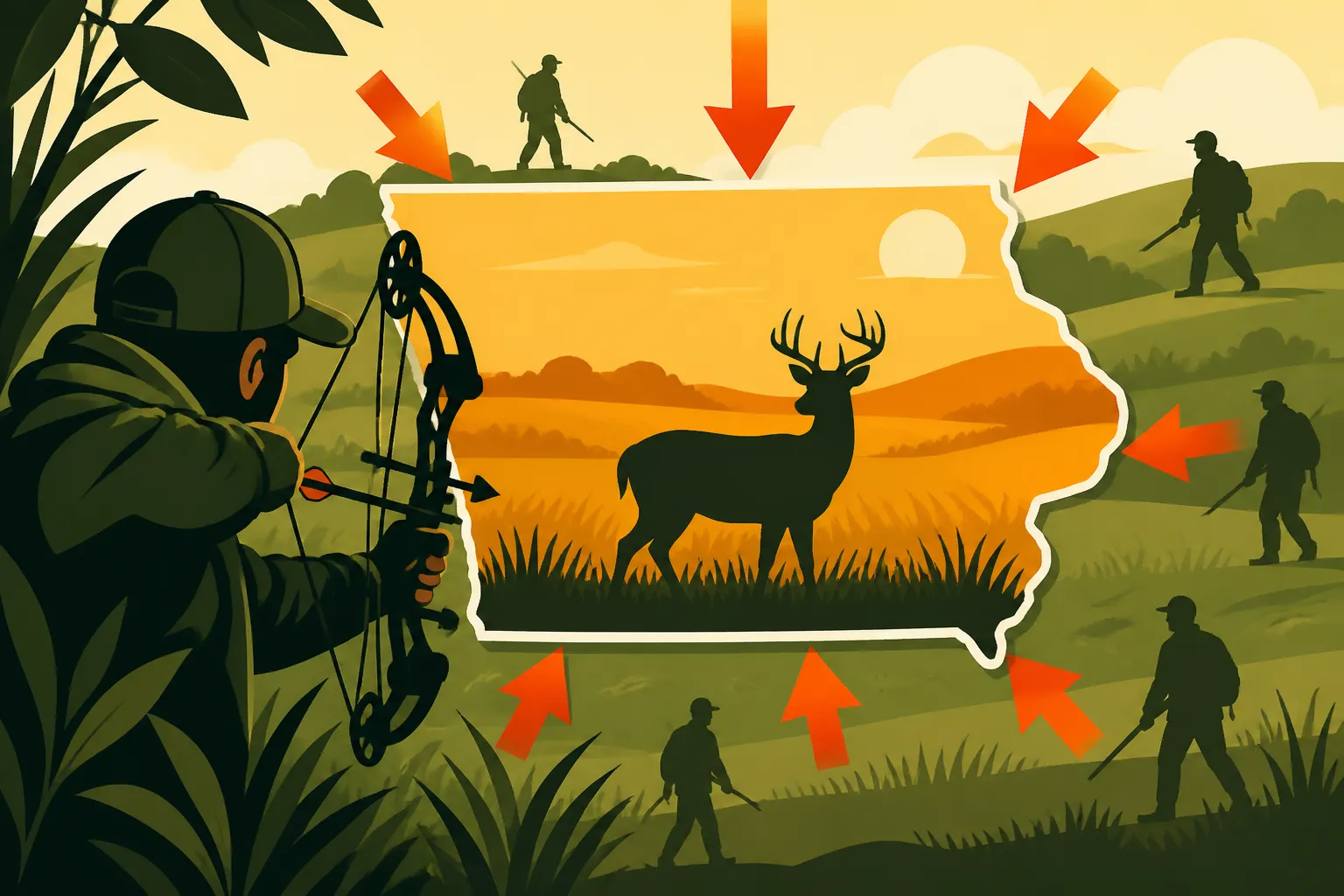
Imagine a perfect crisp fall morning, deer moving freely, and you're settled into your stand. Now, picture multiple trucks parked at the access point, hunters walking in before legal shooting light from different directions, and the occasional dog barking in the distance. That's hunting pressure in action. It's the disturbance created by human activity, whether directly targeting game or simply passing through a habitat. This pressure isn't just about deer; it impacts turkeys, pheasants, and even small game. When a deer, or any other animal, feels constantly pushed, bumped, or otherwise made aware of human presence, their natural movement patterns shift. They become more nocturnal, utilize denser cover, and often avoid traditional travel corridors during daylight hours. It’s a survival mechanism, and as hunters, our challenge is to adapt to it.
Why Iowa Public Lands See Pressure
Iowa's reputation for giant whitetails is well-deserved, and that, combined with a relatively limited amount of Public Hunting Land in Iowa, creates a perfect storm for pressure. Everyone wants a shot at a Hawkeye State bruiser, and for many, public land is their only option. Unlike some western states with vast tracts of wilderness, Iowa's public land often consists of smaller, fragmented parcels. These areas are frequently nestled within a patchwork of agriculture, river bottoms, and timber, making them highly attractive to deer seeking food and cover.
When you have desirable habitat, good deer numbers, and a high demand for access, pressure is inevitable. Hunters from urban centers might drive an hour or two to hit a popular Wildlife Management Area, while local folks might hit up a walk-in Iowa's Habitat and Access Program Explained tract. The result is that even what appears on a map as a decent-sized block of timber or CRP grass can quickly become saturated with hunters, especially during prime times like opening day or the peak of the rut. This density of hunters means deer are constantly being reminded of our presence, which fundamentally alters their routines.
The Impact of Pressure on Deer Behavior
Deer are masters of adaptation, and hunting pressure forces them to evolve their strategies for survival. Initially, they might just move a bit more cautiously, perhaps pausing longer before crossing an open field. But as pressure mounts, their changes become more dramatic. They'll shift to nocturnal movement patterns, venturing into fields only after dark. They'll abandon easy-to-access bedding areas near roads or common trails for thicker, nastier cover that hunters are less likely to penetrate.
Think about a block of timber with a well-worn two-track trail running through it. On a low-pressure piece, deer might use that trail regularly. But on a heavily pressured public area, they'll likely parallel that trail deep in the woods, or stick to the densest thickets, only crossing the trail briefly if absolutely necessary and under the cover of darkness. Bucks, especially older, wiser ones, become extremely adept at navigating around pressure, often holding tight in overlooked pockets until conditions are absolutely perfect for movement. Understanding this behavioral shift is the first step in counteracting the effects of pressure. You can't hunt pressured deer the same way you'd hunt deer on private land that rarely sees a human boot print.
Identifying High-Pressure Areas and Times
To effectively mitigate hunting pressure, you first need to recognize where and when it’s most prevalent. This isn't always obvious from a map, but over time, and with some careful observation, patterns emerge that can guide your strategy.
Opening Day and Weekend Crowds
This one almost goes without saying, but it bears repeating: opening day of any deer season—bow, shotgun, or muzzleloader—is almost guaranteed to be the most heavily pressured day on public land. The enthusiasm is high, vacation days are spent, and everyone is eager to be out. This holds true for weekend hunting as well. If you hunt an area on a Saturday, expect to see more vehicle traffic, more hunters in the woods, and more general disturbance than you would on a Tuesday.
Many hunters have limited time off, so weekends become their primary opportunity. This concentration of activity means that deer get a heavy dose of human contact in a short period. Imagine being a deer on a public parcel during opening weekend of shotgun season: you're likely to be bumped, pushed, and made uneasy multiple times a day. This immediate, intense pressure can scatter deer, push them into neighboring private land, or drive them into the densest cover imaginable. If you have the flexibility, avoiding opening weekends can dramatically increase your chances of finding less disturbed animals. The difference between a Saturday hunt and a Wednesday hunt can be like night and day.
Proximity to Urban Centers and Easy Access
Public hunting areas that are a short drive from larger towns and cities tend to experience higher pressure. It’s simply a matter of convenience; more people in a concentrated area means more hunters looking for close-to-home opportunities. A wildlife area just outside Des Moines, Cedar Rapids, or Iowa City will almost certainly see more consistent hunter traffic than a remote tract down in southern Iowa, even if both areas hold excellent deer numbers.
Furthermore, access plays a huge role. Parking lots right off a major highway, well-maintained gravel roads leading directly into a timber block, or wide, mowed trails make it easy for hunters to get in and out quickly. This "easy access" often translates to "high pressure." Hunters, especially those with less experience or physical mobility, gravitate towards these convenient spots. The consequence is that the first few hundred yards from any easily accessible parking area often gets hammered, sometimes daily. Deer learn this very quickly, and they adapt by avoiding these easy-access zones during daylight. When Scouting Iowa Public Land Before the Opener, pay close attention to access points and how they might influence deer movement and hunter density.
Over-Hunted Food Sources and Bedding Areas
Just like hunters, deer are creatures of habit. They need food, water, and cover. On public land, certain features that provide these necessities become natural magnets for both deer and hunters. A prime food plot planted by the DNR, a standing corn or bean field edge, or a popular watering hole can initially be fantastic spots. However, if every hunter targets these obvious hotspots, they quickly become over-hunted. Deer will eventually shy away from these pressured areas during the day, opting for less desirable but safer alternatives.
The same goes for bedding areas. A thick cedar thicket or a dense block of multiflora rose on a south-facing slope might look like a perfect spot for a buck to bed. And it is! Which means every other hunter with a map and a bit of scouting savvy probably thinks so too. The constant intrusion into these prime bedding locations eventually makes them less attractive to the deer that need sanctuary. Instead of bedding in the obvious spot, they'll push into marginal cover, often relocating to private land or finding tiny, overlooked pockets that human hunters usually ignore. Your goal should be to think beyond the obvious.
Strategies for Mitigating Pressure and Finding Solitude
Once you understand why and where pressure builds, you can start building strategies to avoid or, better yet, capitalize on it. It’s about being smarter, more adaptable, and often, more willing to work harder than the average hunter.
Hunting Mid-Week and Off-Peak Hours
This is perhaps the simplest and most effective strategy for encountering less pressure: hunt when others aren't. If you have the flexibility, dedicating your hunting days to weekdays, particularly Tuesday through Thursday, can significantly reduce the number of encounters with other hunters. On these days, many people are back at work, leaving public lands quieter and deer feeling a bit more at ease. Deer that might have been pushed nocturnal over the weekend may start moving earlier in the morning or later in the afternoon during the week.
Beyond weekdays, consider hunting during off-peak hours. Most hunters are in their stands right at dawn and typically leave by mid-morning, returning for the last couple of hours before dusk. This creates a large window in the middle of the day where many public areas see a drop-off in activity. While the midday can be slow for deer movement, during the rut, bucks are often cruising. And on heavily pressured ground, that midday lull in human activity can sometimes be the safest window for a deer to move. Similarly, being the first one in before legal light, and the last one out after dark, can give you an edge as deer adjust to the shifting patterns of hunter presence.
Diving Deeper Than the "Parking Lot Hunters"
One of the most common pieces of advice for public land hunting is to "go farther." And it's often true. Many hunters are limited by time, physical conditioning, or simply a lack of desire to venture more than a few hundred yards from their vehicle. These are the "parking lot hunters," and while there’s nothing wrong with their approach, it leaves a huge opportunity for those willing to put in the miles. Deer on pressured public land are keenly aware of how far humans typically penetrate. They learn that beyond a certain distance from the road or main trail, they can find a sense of security.
This means you need to be willing to hike. Pack light, carry what you need, and don't be afraid of a long walk. Sometimes, even just an extra half-mile can get you into areas that see significantly less pressure. These deeper zones might not always hold the biggest bucks, but they often hold more relaxed deer, which can be just as important. Focus on access points that require more effort—perhaps crossing a creek, navigating some rough terrain, or simply walking a circuitous route to get away from the easy paths. Remember, a deer cart can be a lifesaver for getting deep into an area and for getting a deer out once you've been successful.
Finding Overlooked Corners and Isolated Pockets
Beyond simply going deeper, the goal is to find those "honey holes" that other hunters overlook. These aren't always the biggest blocks of timber or the most obvious pinch points. Instead, they might be odd-shaped slivers of cover, small marshy areas, or dense thickets that seem too small or too inconvenient to hunt. Think about areas that are hard to access, perhaps requiring waders to cross a slough, or a long, roundabout walk through dense brush.
Deer will use these overlooked areas as sanctuaries. A small cedar patch surrounded by open fields, a brushy fence line that parallels a creek, or even a small island of timber in the middle of a wetland can hold deer that have been bumped from larger, more obvious cover. These spots might not look impressive on an aerial map, but their lack of obvious appeal to humans is exactly what makes them attractive to pressured deer. Developing the ability to spot these hidden gems takes careful E-Scouting Iowa Farm Country From Home and extensive on-the-ground scouting, but the payoff can be immense. Look for places that don't make sense to a hunter, but offer perfect security for a deer.
Utilizing Tools and Technology to Navigate Pressure
In today's hunting world, we have incredible tools at our fingertips that can help us dissect public land and understand pressure dynamics like never before. Leveraging these technologies can give you a significant advantage.
Digital Mapping for Pressure Assessment
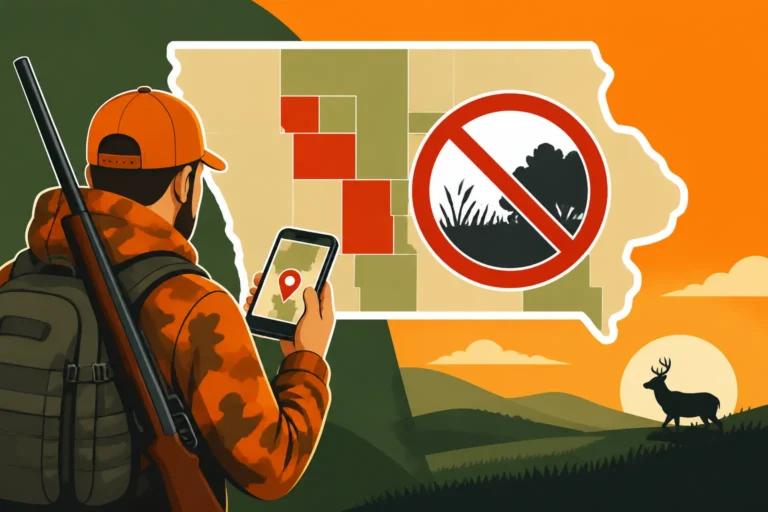
Modern digital mapping applications, like onX Hunt or GoHunt, are invaluable for public land hunting, especially when dealing with pressure. These apps allow you to see property boundaries, public land designations, and even identify potential access points and terrain features from your phone or tablet. But their utility goes beyond just knowing where you can hunt. You can use them to "read" the pressure.
Start by marking known parking areas and common access trails. Then, look for areas that are a significant distance from any of these points, especially those protected by natural barriers like thick creek bottoms, steep ravines, or large bodies of water. You can also mark areas where you've seen other hunters, or found old stand locations, to build a mental map of hunter traffic. The ability to drop waypoints, measure distances, and visualize topography helps you pinpoint those less-traveled routes and potential sanctuaries. For instance, using the aerial imagery to spot hidden clearings or incredibly dense cover that would deter most casual hunters is a powerful strategy.
E-Scouting for Remote Access Points
E-scouting is your secret weapon for finding low-pressure areas. Before you ever step foot on the ground, use your mapping apps to identify non-traditional access points. This could be a small sliver of public road frontage far from a main parking lot, an abandoned farm lane that skirts the edge of a public parcel, or even wading across a shallow part of a stream to reach an unpressured bank. The goal is to find an entry point that is inconvenient for most, thus reducing the likelihood of encountering other hunters right away.
Look for subtle changes in elevation, small creek beds, or dense habitat corridors that lead away from main roads and trails. These features can serve as natural "funnels" for deer and natural "deterrents" for hunters. Remember to check regulations regarding parking and access on any new approach you discover. Sometimes, a legal, but slightly less obvious, parking spot a quarter-mile down the road from the main lot can be all it takes to put you on an entirely different, less pressured side of the property.
Post-Hunt Analysis and Adjustment
Hunting public land is a continuous learning process. Every time you go out, whether successful or not, you gather valuable data. After each hunt, take the time to analyze what you observed. Did you see other hunters? Where were they located? How did the deer react to your presence or the presence of others? Use your mapping app to mark these observations: other hunter locations, deer sightings, and any signs of pressure you encountered.
This post-hunt analysis helps you build a more complete picture of hunter behavior and deer movement in specific areas. If you consistently find pressure in a certain block of timber, you might need to adjust your strategy for that area or focus your efforts elsewhere. Maybe you noticed that deer are consistently moving through a specific thicket only after 10 AM on weekdays. This information allows you to fine-tune your approach for future hunts, making you a more efficient and effective public land hunter. This adaptive thinking is key to Hunting Pressure After Opening Weekend and beyond.
Specific Public Land Types and Their Pressure Dynamics
Iowa offers a variety of public land types, and each comes with its own set of characteristics regarding hunting pressure. Knowing these differences can help you make more informed decisions about where and when to hunt.
Wildlife Management Areas (WMAs)
Iowa's Wildlife Management Areas are cornerstone public hunting lands, managed primarily by the Iowa Department of Natural Resources (DNR) for wildlife habitat and public recreation. These areas are incredibly valuable, often featuring diverse habitats from timber and wetlands to grasslands. However, because they are well-known and often actively managed for game species, they tend to experience significant hunting pressure. Especially the larger, well-established WMAs near population centers.
You can almost guarantee that popular WMAs will be bustling on opening day and every weekend. Access is usually clearly marked, and trails are often maintained, making them appealing to a wide range of hunters. How Many Hunters an Iowa WMA Sees Opening Weekend can be quite high. This means that deer, turkeys, and pheasants on WMAs are typically "educated" animals. They've been hunted before, they know the drill, and they've learned to avoid humans. Strategies like going deep, finding overlooked pockets, and hunting mid-week are paramount to success on WMAs. Don't expect easy pickings; these areas demand effort and smart tactics.
Iowa's Habitat and Access Program (IHAP) Lands
Iowa's Habitat and Access Program (IHAP) lands offer a unique public hunting opportunity, as they are privately owned lands enrolled in a program that opens them to public hunting. These lands are marked with distinctive yellow signs and can vary greatly in size and habitat. What makes IHAP lands interesting is their often fragmented and dispersed nature, which can sometimes lead to lower pressure in certain areas compared to large WMAs.
However, it's a mixed bag. Some IHAP tracts, particularly those with prime habitat or easy road access, can see just as much pressure as any WMA. Others, especially smaller, less obvious parcels, might be truly overlooked gems. The key with IHAP lands is to do your homework. Utilize onX Hunt or GoHunt to identify these tracts, analyze their habitat, and look for their unique characteristics. Is it a long, skinny strip of timber? A block of CRP grass in the middle of nowhere? The more obscure and challenging the access, the lower the likely pressure. These areas can be fantastic for hunters willing to take a chance on a less traditional spot and those who practice Hunting Iowa Walk-In Ground Without Burning It Out.
State Forests and Larger Timber Tracts
Iowa's State Forests, like Yellow River, Stephens, and Shimek, offer some of the largest contiguous blocks of timber available for public hunting. These vast expanses of woods provide a different dynamic for hunting pressure. While the sheer size means deer have more room to roam and escape, it also means hunters have more ground to cover and can sometimes get "lost" in the timber.
These larger tracts can still see significant pressure, especially near main roads and popular access points. However, the further you penetrate into the interior, the more the pressure tends to dissipate. Deer will often retreat into the deepest, thickest sections, sometimes traveling miles from initial disturbance. This makes them ideal for hunters who enjoy Mobile Saddle Hunting in Iowa or simply aren't afraid of a serious hike. The topography in these state forests, with their rolling hills and deep draws, can also help to funnel deer away from human activity and create natural barriers against pressure. Patience and endurance are key when hunting these expansive timberlands.
Adapting to Pressure Through Scout and Hunt Tactics
Understanding pressure is one thing; effectively adapting to it with your hunting tactics is another. It requires a willingness to change your approach, to think like a pressured deer, and to be more subtle and strategic in your movements.
Silent Entry and Exit Strategies
On pressured public land, how you enter and exit your hunting area can be just as important as your stand location. Every sound, every flash of light, every scent you leave behind can alert deer to your presence, especially if they are already on high alert due to previous encounters with hunters. Your goal should be to be as undetectable as possible.
This means walking slowly and deliberately, avoiding rustling leaves or snapping twigs where possible. Use natural terrain features, like creek beds or the bottoms of draws, to mask your movement and scent. Plan your entry and exit routes carefully, ideally choosing paths that don't cross obvious deer trails or prime bedding areas, and that use the wind and thermals to your advantage. If the wind is wrong for your ideal entry, consider an alternate route or even a different stand location. Many seasoned public land hunters will park well away from their intended entry point and walk an extra distance down a ditch or through a field, just to avoid alerting deer that are already on edge. Remember that even the sound of a vehicle door slamming shut can carry a long way in quiet timber. Pay attention to Access Routes That Do Not Bump Deer.
Employing Mobile Hunting Tactics
Static hunting, where you set one stand for the entire season, is often less effective on pressured public land. Deer on these properties are constantly moving and adjusting to pressure, making a fixed location less reliable. This is where mobile hunting tactics shine. Being able to quickly move and adapt to new information is a huge advantage. This could mean using a lightweight hang-on stand and climbing sticks, a saddle hunting setup, or even a ground blind that can be easily deployed and retrieved.
The beauty of mobile hunting is the flexibility it offers. If you scout an area and find fresh sign, you can set up quickly. If you get bumped or see another hunter move into your area, you can pack up and relocate to a new, less pressured spot without leaving behind a permanent setup. This constant adaptability allows you to react to the real-time conditions of hunter pressure and deer movement. For example, if you observe that deer are consistently using a dense thicket as a midday sanctuary after being pushed from a field edge, you can quickly move and set up a mobile stand to intercept them as they seek refuge.
Reading Sign for Pressure-Driven Deer Movement
Deer sign on pressured public land tells a different story than on unpressured ground. You'll still find rubs, scrapes, and tracks, but their location and intensity will often be a direct reflection of hunter activity. For example, large, obvious scrapes near a parking lot might be visited only at night, while smaller, more subtle rubs deep in thick cover could indicate a buck's daytime core area.
Look for less obvious signs of movement: trails leading into the nastiest, thorniest thickets, tracks paralleling main trails instead of using them directly, or fresh droppings in areas that seem too small or too open to hold deer. These are often indicators of deer trying to avoid detection. Pay close attention to transition areas between different types of cover, especially those that offer quick escape routes. A narrow creek corridor, a thick brushy ditch, or the back side of a timber point between two fields can become crucial travel routes for deer trying to navigate around human presence. Learning to interpret these subtle cues will help you anticipate where pressured deer will move, not just where they should move.
Navigating the Public Land Challenge: A Comparative View
To help illustrate the varying dynamics of hunting pressure across different types of public lands in Iowa, here's a quick comparative overview:
| Public Land Type | Typical Pressure Level | Common Challenges | Key Hunter Strategies |
|---|---|---|---|
| Wildlife Management Areas (WMAs) | High (especially popular ones) | Crowds, educated deer, limited solitude | Go deep, hunt mid-week, target overlooked pockets |
| IHAP Lands | Variable (tract dependent) | Fragmented, private land borders, quick burnout | Extensive e-scouting, target less obvious tracts, mobile |
| State Forests | Moderate to High (access points) | Large areas, navigating dense timber, long walks | Deep penetration, mobile hunting, focus on interiors |
| County Conservation Areas | Variable (area dependent) | Smaller parcels, often near towns, strict local rules | Hyper-local scouting, check rules, find obscure access |
| Corps of Engineers Land | Moderate to High (river/lake access) | Water access, often riparian, fluctuating water levels | Boat access, target overlooked river bends, early/late season |
This table illustrates that there's no single "fix-all" strategy for public land in Iowa. Each type of area, and even specific parcels within those types, will present its own unique challenges and opportunities. The most successful public land hunters are those who become adept at reading the specific conditions of a given area and adapting their approach accordingly. Whether it's the sheer number of vehicles at a WMA or the subtle signs of pressure on a small IHAP tract, recognizing these nuances will ultimately lead to more fulfilling and successful hunts.
Ultimately, hunting Iowa's public land is a challenge, but it's a deeply rewarding one. It forces you to become a better hunter, to hone your skills, and to truly understand the animals you pursue. Don't let the thought of pressure deter you; instead, use these strategies to turn the challenge into an opportunity.
Disclaimer
This article is for general informational purposes only and does not constitute professional advice. Laws, prices and regulations vary by location and change over time. Consult a qualified professional for guidance on your specific situation.