Standing Corn and Bean Field Deer Patterns
Hunting Iowa's whitetails often feels like a game of hide-and-seek, especially when those vast corn and bean fields stretch as far as the eye can see. Deer have an uncanny ability to vanish into these agricultural landscapes, leaving many hunters scratching their heads about where they've gone and how to even begin patterning them. This guide aims to pull back the curtain on deer behavior in and around standing corn and picked bean fields, offering insights and strategies to help you unlock the secrets of Iowa's farm country whitetails.
Understanding Iowa's Agricultural Dominance and Deer
Iowa is known globally for its rich black soil and the endless acres of corn and soybeans that blanket the landscape. For whitetail deer, this isn't just a backdrop; it's their entire world, shaping their daily routines, travel patterns, and even their physical development. Understanding the sheer scale and dual-purpose nature of these fields is the first step in unraveling deer patterns.
The Dual Purpose: Food and Cover
When you look at a standing cornfield in mid-October, what do you see? A farmer likely sees a valuable commodity ready for harvest. A deer, however, sees a skyscraper of sustenance and an impenetrable fortress of security. Cornfields provide a high-energy food source as the kernels mature, offering a caloric punch unmatched by natural browse. But perhaps even more crucial in Iowa's relatively open landscape, they offer unparalleled cover. A mature cornfield is dense enough to hide an entire herd of deer, providing both visual and scent concealment from predators, including us hunters. This dual function makes corn an irresistible magnet for whitetails for a significant portion of the year.
Bean fields, while not offering the same towering cover as corn, are equally vital for deer. During the early archery season, the lush green leaves and developing pods are a preferred food source, packed with protein that bucks need for antler growth and does require for fawning and lactation. As the beans yellow and dry, the deer still frequent them, often nipping off pods or digging for fallen beans after the leaves have dropped. Even after harvest, the leftover beans and pods can be a significant draw, especially when other food sources become scarce. The sheer abundance of these crops means deer don't have to travel far to find everything they need, leading to localized patterns within and around these agricultural hubs.
Impact of Monoculture on Deer Habits
Iowa's extensive monoculture, primarily corn and soybeans, profoundly influences deer habits, dictating everything from their bedding locations to their rutting behaviors. In areas where timber blocks or natural cover are fragmented, these vast fields become the primary sanctuary. Deer learn to navigate the rows with incredible stealth, using the cover to avoid detection. They often bed deep within standing corn, only emerging at the very edges or crossing into smaller woodlots under the cloak of darkness. This reliance on cultivated fields means that a deer's home range might be smaller than in timber-dominant regions, as all their needs—food, water, and cover—can often be met within a tight radius of crop fields.
This also means that deer are incredibly adaptable to the human activity associated with farming. They become accustomed to tractors, combines, and the general sounds of rural life, often moving just out of sight rather than fleeing the area entirely. This adaptation presents a challenge to hunters; what seems like an open, easily scouted field might actually be a bustling highway of deer activity hidden from plain view. Recognizing this deep integration of deer into the agricultural cycle is key to predicting their movements.
Deer Behavior in Standing Corn
Standing corn is arguably the most challenging and rewarding environment to hunt in Iowa's farm country. It's a maze, a pantry, and a bedroom all rolled into one. Unlocking its secrets requires a keen understanding of how deer utilize its dense structure.
Bedding and Security Cover in Corn
When corn reaches maturity, typically from late August through harvest, it transforms into an almost impenetrable fortress for deer. They will often bed deep inside these fields, sometimes hundreds of yards from the edge. The tall, dense stalks offer excellent visual cover, making it nearly impossible for predators—both human and animal—to spot them. Furthermore, the sheer volume of vegetation helps to dissipate scent, making it difficult for even the best nose to pinpoint their exact location. Deer, especially mature bucks, seek out these safe havens to spend their daylight hours undisturbed.
You'll often find them bedding in thicker sections, perhaps where the corn is lodged, or along natural contours within the field. If there's a slight rise in elevation, a ditch, or a small pocket of timber or brush within the field's interior, deer will gravitate to these spots. They might bed on the lee side of a rise to take advantage of prevailing winds, or simply find a dense patch where they can lie down and feel completely secure. This deep cover strategy makes still-hunting through corn a tricky endeavor, as a deer could be bedded just feet away, undetected, until it bolts.
Travel Corridors and Edges
While deer bed deep within the corn, they don't stay completely static. They establish intricate travel corridors, often resembling tunnels, through the dense stalks. These "corn trails" lead from bedding areas to food sources within the same field, to water, or to the field edges where they might transition to timber or other cover. Identifying these main travel routes is crucial. Look for worn paths near the edges where deer enter and exit, often at corners or where the corn meets another type of cover like a fenceline or a creek bottom.
The edges of cornfields are high-traffic areas, especially during the last hour or two of daylight. Deer will stage along these edges, often just inside the corn, waiting for adequate light to move into adjacent bean fields, food plots, or even small patches of timber. These transition zones are prime ambush points. Bucks, in particular, will cruise the corn edges during the rut, scent-checking for does that might be moving out to feed. Understanding how these trails and edges connect to the broader landscape—like a nearby creek corridor or a patch of cedars—is essential for predicting their movements. Good Access Routes That Do Not Bump Deer are vital when hunting these sensitive edge areas.
Food Source Dynamics of Corn
Beyond cover, standing corn is a crucial food source, especially from late summer through the early winter. As the kernels mature and dry down, they become a high-carbohydrate energy bomb that deer eagerly consume. During late archery and early shotgun seasons, a standing cornfield can act as a massive, natural food plot. Deer will browse on the lower leaves and stalks, but their main target is the energy-rich kernels. This nutritional benefit helps deer pack on critical fat reserves for the winter months.
The appeal of corn as a food source only intensifies as other natural food sources diminish in availability or quality. While deer might browse on acorns or browse in timber, the consistent, high-calorie offering of a cornfield often takes precedence. This makes standing corn a powerful draw, concentrating deer activity in and around these areas. Hunters should pay close attention to which fields are being left standing late into the season, as these become incredibly valuable hunting grounds.
Transitioning to Harvested Bean Fields
Once the combines roll through, the landscape transforms dramatically. What was once a lush green sea or a towering wall of corn becomes a stubble field. Deer adapt quickly, and so must hunters.
The "Green-Up" Phase and Early Season Beans
In the early archery season, before the leaves begin to turn and the fields are still green, bean fields are a primary draw for deer, particularly does and fawns, but also bucks in their bachelor groups. The lush green foliage is incredibly palatable and packed with protein, essential for antler growth and overall health. Deer will often feed actively in bean fields throughout the late afternoon and into the evening, providing excellent early-season opportunities. They'll typically emerge from nearby timber or secluded CRP (Conservation Reserve Program) fields, cautiously approaching the field edge before moving out to feed.
It’s not just the beans themselves; during this "green-up" phase, the weeds and grasses growing within and around the bean fields can also offer additional forage. Deer are creatures of habit, and if a bean field has been a consistent food source for generations, they will continue to frequent it, often on predictable patterns. Finding the specific entry points and travel corridors that deer use to access these fields from their bedding areas is key during this time. A well-placed stand overlooking a corner or a natural pinch point along a timber edge can be deadly.
Post-Harvest Bean Field Appeal
The moment combines start to roll, everything changes. The lush green disappears, and what's left is a field of stubble. For a brief window, deer might still come into freshly cut bean fields to pick up any dropped beans, which can be a frantic feeding frenzy. However, once the majority of the dropped beans are consumed or washed away by rain, the appeal of a bean field drastically diminishes. Without the standing crop for cover, and with the primary food source removed, these fields generally become less attractive during daylight hours.
Deer will still cross harvested bean fields, especially under the cover of darkness, as they move between different woodlots or to access other food sources. But relying on a picked bean field as a primary daytime hunting spot becomes much more difficult. This is when deer start to gravitate more heavily towards remaining standing corn, food plots, or timbered areas with natural browse and mast crops like acorns. Hunters need to shift their focus from the open fields themselves to the edges, pinch points, and cover features around the picked fields.
Locating Residual Food in Stubble
Even after a bean field is picked, there can be residual food sources that still attract deer, especially if other options are scarce. This often depends on the efficiency of the combine and subsequent weather. If there are heavy rains after harvest, many beans might be washed into low spots or ditches, creating small, concentrated food caches. Deer have an incredible sense of smell and will often seek out these pockets of leftover calories. These can be prime spots for Late-Season Food Source Hunting in Iowa.
Another often-overlooked residual food source in harvested bean fields is the volunteer growth or leftover weeds. If the field isn't immediately tilled, various weeds can sprout, offering a surprising amount of forage. Deer will often pick through these areas, especially during mild weather in late fall. Walking through a picked field and visually inspecting for dropped beans, signs of digging, or patches of green growth can reveal these overlooked feeding opportunities. It requires more effort and attention to detail than simply spotting deer in a standing crop, but it can pay off when other hunters have written off the field.
Hunting Strategies for Corn and Bean Fields
Successfully hunting deer in Iowa's agricultural fields isn't about luck; it's about smart strategy, understanding wind, and minimizing your presence.
Setting Up on Field Edges and Pinch Points
The edges of corn and bean fields are classic ambush points. Deer use these transition zones constantly, moving from the security of cover into feeding areas, or staging just inside the cover before dark. Key areas to identify are inside corners where two field edges meet, or where a finger of timber extends into a field, creating a natural funnel. Deer will almost always utilize the path of least resistance and greatest security, so these pinch points become critical.
When setting up a stand, consider your approach and exit routes. You want to be able to get to and from your stand without bumping deer, especially those that might be staging just inside the cover. Access routes are incredibly important; deer are highly sensitive to human intrusion along these vital corridors. Pay close attention to the prevailing wind direction, as deer will often travel with the wind in their face or crosswind to detect potential threats. A well-placed stand might be 10-20 yards inside the timber, overlooking the field edge, providing a clear shot into the field while keeping you concealed. Sometimes a temporary ground blind brushed into a fenceline or ditch crossing can be effective as well. For deeper insights into navigating these features, consider checking out our guide on Hunting Inside Corners of Crop Fields.
Hunting Internal Pockets and Draws within Fields
While field edges are popular, don't overlook the interior of large crop fields, especially standing corn. If a field is massive, deer will often bed and even feed hundreds of yards from the perimeter. Look for internal pockets of timber, small draws, drainages, or even just areas where the corn is particularly dense or "lodged" (blown over). These micro-habitats within the larger field can be deer magnets. During the rut, a buck might cruise through an internal draw in a cornfield, checking for does without ever showing itself on the edge.
Hunting these interior spots requires stealth and a thorough scouting approach. You might need to slip in during the middle of the day when deer are typically bedded, or identify an approach route that takes advantage of topographical features or existing deer trails to minimize disturbance. This is where a mapping tool like GoHunt can be invaluable, allowing you to identify subtle elevation changes or hidden cover within vast fields that might hold deer. Setting a stand deep within a field takes courage, but it can put you on deer that other hunters never even know exist. For specific linear features that deer love to cross, understanding Ditch Crossings in Row Crop Country.
Wind, Thermals, and Approach Routes in Open Country
In Iowa's relatively flat and open agricultural landscape, understanding wind and thermals is paramount. Your scent will travel much further across open fields than it will in dense timber, making careful planning of your entry and exit routes critical. Deer often use the wind to their advantage, circling downwind of a suspected threat or traveling with the wind in their face to detect danger ahead. Therefore, always approach your stand with the wind in your face or crosswind, ensuring your scent is blowing away from where you expect deer to be.
Thermals, while less pronounced than in mountainous terrain, still play a role, especially in the early morning and late evening. As the sun rises, thermals tend to rise, carrying scent upwards. In the evening, as the air cools, thermals drop, carrying scent downwards. This can impact how deer perceive your presence, particularly if you are set up on a slight rise overlooking a field. Always err on the side of caution, choosing stand locations that allow the wind to consistently carry your scent away from primary deer travel routes and bedding areas. It's often a game of calculated risks, but neglecting wind and thermals is a surefire way to educate the local deer herd. For more on how wind impacts deer, read up on Wind and Thermals in River Breaks.
Seasonal Shifts and Deer Movement
Deer patterns in corn and bean fields are not static; they change significantly throughout Iowa's hunting seasons, influenced by crop cycles, weather, and the rut. Adapting your strategy to these shifts is crucial.
Early Archery: Lush Fields and Seclusion
During the early archery season in September and early October, corn is still standing tall, often greening up or just starting to dry down. Bean fields are typically lush and green. This period is characterized by abundant food and incredible security cover for deer. Bucks are often still in their bachelor groups, feeding heavily, and does are focused on raising their fawns. Deer movements tend to be highly nocturnal in open areas, with peak activity occurring at dusk and dawn as they move to and from bedding cover.
Your best bet during early archery is to focus on predictable food sources, especially bean fields, and the direct travel corridors connecting them to dense cover. Deer will move slower and more predictably in these early weeks. Setting up on a field edge where deer consistently enter, or along a known travel route between a cornfield and a woodlot, can be very effective. Scouting for fresh tracks, droppings, and well-worn trails will confirm these patterns. Remember, early season deer are less pressured and more routine, but they still demand respect for their senses.
Pre-Rut and Rut Activity Near Fields
As October progresses into November, the pre-rut and the peak of the rut arrive, completely changing deer behavior around agricultural fields. Standing corn remains a critical sanctuary, but bucks become far more mobile and less predictable. They will cruise field edges, especially those adjacent to timber or dense brush, actively searching for does. This is when you might catch a mature buck cruising a cornfield edge in broad daylight, a sight rare earlier in the season. Picked bean fields, while offering less cover, still see increased activity as does might cross them to access other food sources, drawing bucks along their paths.
During this period, targeting travel corridors and pinch points between fields and timber becomes even more critical. Bucks will often follow ditches, fencelines, and small draws that offer some degree of cover as they move through open country. Calling tactics, such as rattling and grunting, can be particularly effective during the peak rut, especially if you're set up where bucks are likely to be cruising. This is a high-reward time to be in the stand, even if the patterns aren't as predictable as the early season. For tactics specific to this time, our guide on Hunting the Iowa Pre-Rut in Late October.
Late Season: Focus on Remaining Food
By the late season, typically December and January, most cornfields have been harvested, leaving only stubble. The bean fields have been picked, and natural browse is diminished. Deer movement becomes heavily influenced by cold weather and the need for high-calorie food sources. Any standing corn that remains becomes an absolute magnet, concentrating deer like nowhere else. If you can find a standing cornfield, especially one bordered by thick cover, you've found a late-season goldmine.
Beyond standing corn, late-season deer will key in on other high-energy foods like alfalfa fields, brassicas in food plots, or even residual acorns if they're still available under snow. Picked cornfields, if left unturned, can still offer scattered kernels that deer will paw through the snow to find. Focus your efforts on these remaining food sources and the densest thermal cover nearby, such as thick cedars, multiflora rose, or south-facing slopes with good sun exposure. Hunting during cold fronts, especially those accompanied by snow, can also be incredibly productive as deer are forced to move to feed. This period demands patience and a keen understanding of caloric needs.
Scouting and E-Scouting Farm Country
Finding deer in Iowa's expansive farm country often feels like searching for a needle in a haystack. But with the right tools and techniques, you can narrow down your focus and increase your odds dramatically.
Interpreting Aerial Maps for Deer Sign
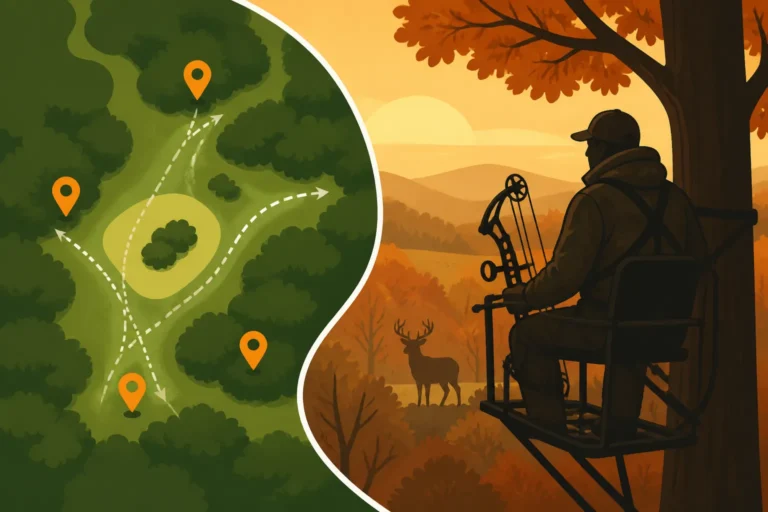
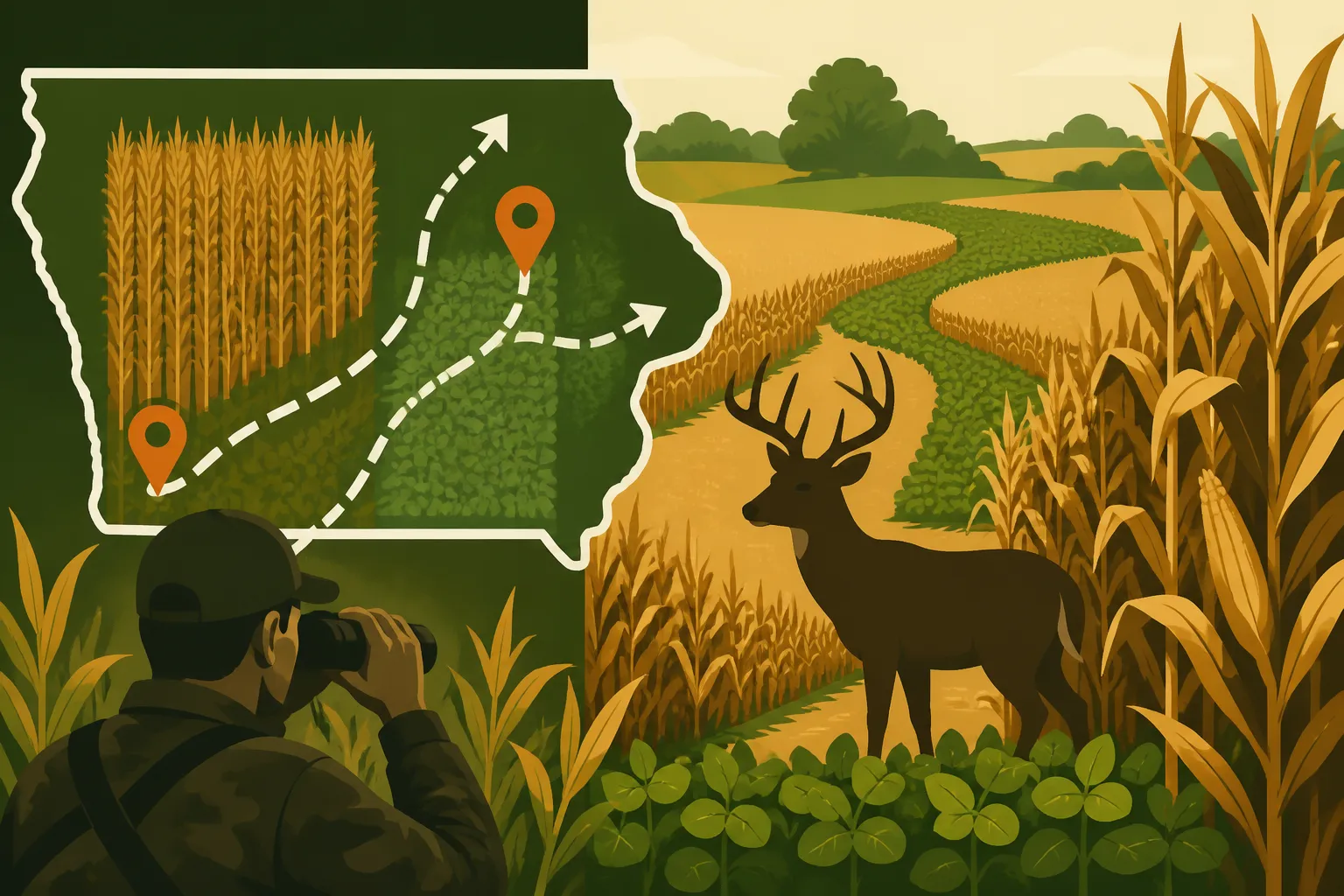
Before you ever set foot in a field, advanced mapping applications are your best friend. Tools like GoHunt or other popular hunting apps allow you to meticulously e-scout an area from the comfort of your home. You can identify potential bedding areas (thick timber, CRP fields, brushy draws), travel corridors (fencelines, ditches, creek bottoms, timber edges), and obvious food sources (corn and bean fields, food plots). Look for changes in elevation, even subtle ones, which can create natural funnels or offer thermal advantages. Pay attention to how different types of cover connect to the agricultural fields. A narrow timber strip connecting two larger woodlots, with crop fields on either side, is a classic pinch point.
Using different map layers can reveal even more. The "hybrid" or "satellite" view is essential for understanding the current crop rotation, identifying standing versus harvested fields, and spotting isolated pockets of cover within fields. Public land layers are critical for knowing where you can legally hunt. Mark potential stand locations, entry and exit routes, and areas of interest before you ever step foot on the property. This digital reconnaissance saves countless hours of aimless wandering and significantly refines your on-the-ground scouting efforts. For more on this, check out our guide on E-Scouting Iowa Farm Country From Home.
Boots-on-the-Ground Reconnaissance
E-scouting gets you in the ballpark, but nothing replaces boots-on-the-ground scouting. Once you've identified promising areas on a map, it's time to confirm your suspicions and find fresh deer sign. Walk the field edges, looking for worn trails where deer enter and exit the crops. Look for rub lines and scrapes, especially during the pre-rut and rut, which indicate buck activity. In standing corn, look for "tunnels" or pathways deer have created, and listen for the distinct rustle of deer moving through the stalks.
During the late season, when fields are harvested, walk through them looking for residual food sources, tracks in the mud or snow, and any signs of deer digging for fallen grains. Pay attention to water sources—ponds, creeks, or even drainage ditches—especially during dry periods, as deer will need to visit these regularly. When scouting, always be mindful of your scent and disturbance, treating every scouting trip as if you were hunting. The goal is to gather information without alerting the deer to your presence. The less pressure you put on an area, the more likely deer are to maintain their natural patterns.
Using Technology like GoHunt for Data Insights
Modern hunting truly benefits from technological advancements, and platforms like GoHunt provide valuable data insights that can refine your field-specific strategies. Beyond basic mapping, these tools often integrate public land boundaries, parcel data for understanding private land ownership (useful for seeking permission), and sometimes even harvest data or historical weather patterns. For example, knowing the typical harvest timing for corn and beans in a given Iowa county can help you predict when deer patterns might shift.
By overlaying different data sets, you can make more informed decisions about where to place your trail cameras or where to focus your efforts. You can identify historical hotspots or areas of lower hunting pressure. Furthermore, many of these apps allow you to track your own observations, marking bedding areas, rub lines, and food sources, building a comprehensive database specific to your hunting grounds. This detailed approach, combining digital mapping with on-the-ground verification, is the most effective way to unlock the patterns of Iowa's crop-field whitetails. For help with camera use, refer to Trail Camera Placement on Iowa Public Land.
| Field Type | Primary Appeal (Early Season) | Primary Appeal (Late Season) | Key Challenges | Hunter Strategy |
|---|---|---|---|---|
| Standing Corn | Unmatched cover, high-calorie food | Concentrated food source (if standing) | Dense, visibility, scent | Hunt edges, internal draws, pinch points; focus on wind. |
| Bean Fields | Protein-rich forage, high palatability | Residual dropped beans (briefly) | Lack of cover post-harvest, limited long-term food | Hunt early season edges, transition points; shift to other food sources post-harvest. |
Disclaimer
Hunting is an inherently dangerous activity. Always follow all local, state, and federal hunting regulations. Ensure proper hunter education, firearm safety, and wear appropriate safety gear, including a safety harness when hunting from an elevated stand. Always know your target and what lies beyond it. The information provided in this guide is for informational purposes only and does not substitute professional advice or certified safety training.