Iowa Point Ties and the Random Draw
There’s nothing quite like the anticipation of the Iowa nonresident deer draw, a moment many of us look forward to with a mixture of excitement and dread. You’ve diligently accumulated your preference points, maybe for years, dreaming of that coveted tag, only to have the outcome decided by something as seemingly arbitrary as a "point tie and random draw." It can feel like a cruel twist of fate after all your effort. This guide aims to demystify the Iowa draw system, specifically focusing on how point ties are handled and what it truly means for your odds, helping you navigate this often-frustrating process with a clearer understanding.
Understanding Iowa's Preference Point System
Before diving into the intricacies of point ties, it’s essential to grasp the foundation: how Iowa's preference point system actually works. It's designed to give a leg up to those who have applied unsuccessfully in previous years, but it's not a guarantee, and that's where the nuance really comes into play. Many hunters, myself included, have spent years building up points, hoping that each year brings them closer to that elusive "golden ticket."
What is a Preference Point?
In Iowa, a preference point is essentially a non-drawing application. If you apply for a nonresident deer license and are unsuccessful in the draw, you automatically receive one preference point for the next year. Alternatively, if you know you won't be able to hunt but still want to improve your chances in the future, you can choose to apply for a preference point only during the application period. This means you skip the draw for that year but still add a point to your record. Think of it as earning seniority; the more points you have, the higher your seniority. The system is straightforward on the surface, but its interaction with limited tag quotas and the sheer number of applicants quickly complicates matters. For a more detailed breakdown, you can check out our comprehensive article on Iowa Preference Points and How They Work.
How Points Are Acquired and Used
You earn a preference point in one of two ways: either by applying for a nonresident antlered or any-deer license and not being drawn, or by specifically purchasing a preference point during the application period. These points accumulate, and when you finally draw a tag (or decline a drawn tag), your preference points are reset to zero. This is a critical detail because it means every time you're successful, you start building your points from scratch again. The goal is to get into a point pool where the number of applicants with that many points is less than the number of available tags for your chosen zone and season. For those just starting or looking to ensure they stay in the game, knowing how to explicitly Buying an Iowa Preference Point is key. It ensures you don't miss a year of building toward your goal, even if you can't commit to a hunt.
The Mechanics of the Nonresident Deer Draw
The Iowa nonresident deer draw is a highly competitive process, driven by limited tag quotas and a massive demand from hunters across the country. Understanding its mechanical flow helps illuminate why point ties become such a significant factor. It’s not simply about having the most points; it’s about having enough points relative to everyone else applying in your chosen category.
The Highest Point Pool First
Iowa’s system operates on a "highest point pool first" principle. This means that all applicants with the highest number of accumulated preference points for a specific zone and season are considered first. If there are enough tags to cover everyone in that top point pool, they all draw a license. Then, the system moves to the next highest point pool and repeats the process. This continues until all available tags for that zone and season are allocated, or until a point pool is reached where there are more applicants than remaining tags. This is where the dreaded point tie comes into play, creating a truly random element in an otherwise seniority-based system. It's a system designed to be fair, but fairness doesn't always feel good when you're the one left out. A deeper dive into the overall process can be found in our guide, Iowa Nonresident Deer Draw Explained.
Zone and Season Specific Quotas
It’s crucial to remember that nonresident deer tags are allocated not just generally for the state, but specifically for particular zones and seasons. Iowa is divided into different zones, and within those zones, you can apply for archery, early muzzleloader, first shotgun, second shotgun, or late muzzleloader seasons. Each of these combinations has a distinct quota of available tags. What this means for you is that the number of points required to draw can vary wildly depending on the popularity and success rates of a particular zone or season. For instance, a highly sought-after zone during a prime shotgun season might require many more points than a less popular zone during an archery segment. This granular allocation system means that even if you have a lot of points, applying for the most competitive options can still put you in a challenging tie-breaker situation. It's wise to consider the specific application dates, which are covered in Iowa Nonresident Deer Application Deadline, to ensure your application is submitted on time for these competitive draws.
Navigating Point Ties in the Iowa Draw
This is the heart of the matter for many frustrated nonresident hunters. You’ve done everything right: you’ve applied year after year, accumulated a respectable number of preference points, and you feel like it's "your year." Then, the draw results come out, and you find yourself in a point tie that you ultimately lose. It’s disheartening, to say the least, to have years of effort come down to a random number generator.
The Random Tie-Breaking Lottery
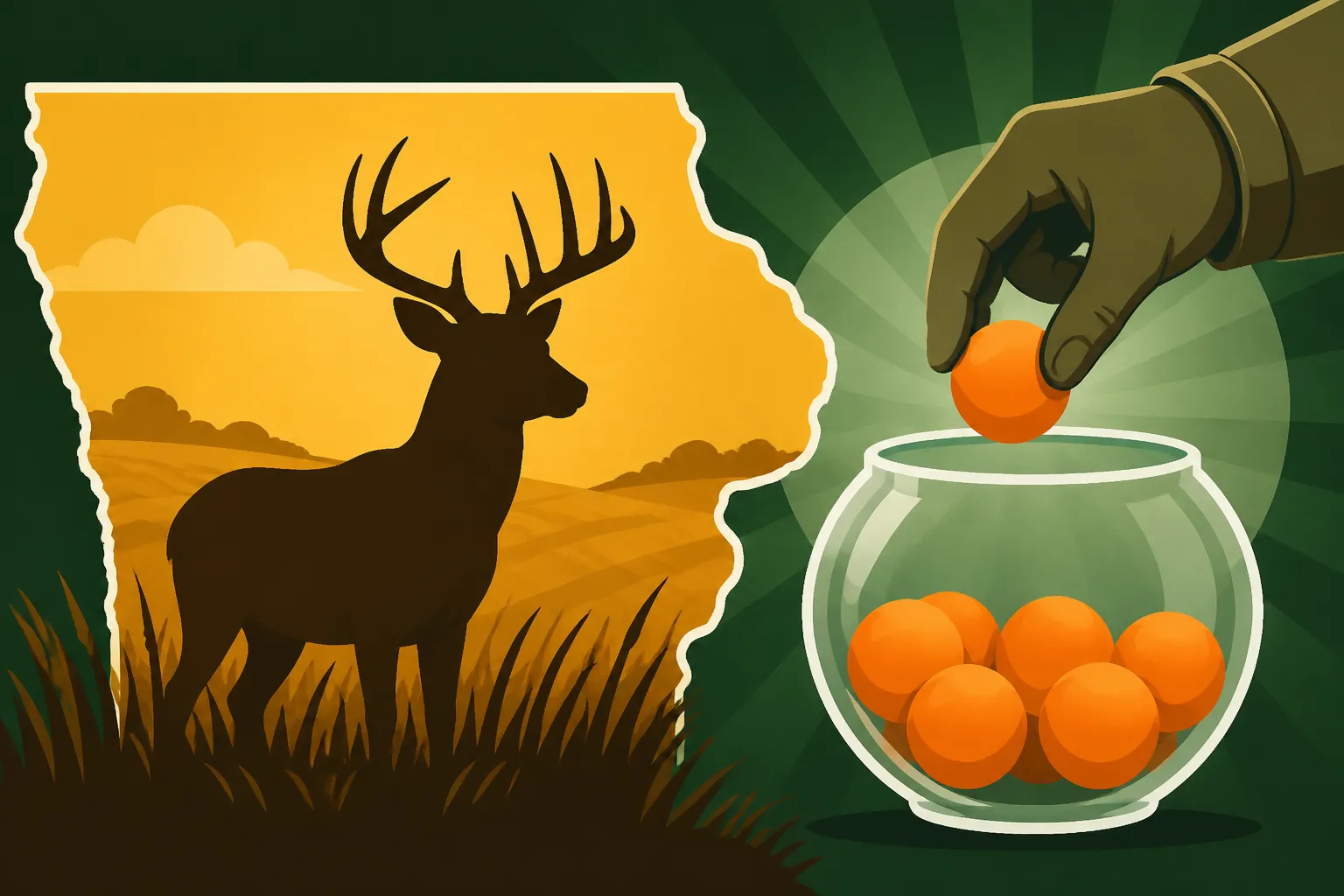
When the number of applicants in a particular point pool exceeds the number of remaining tags for a specific zone and season, Iowa employs a completely random lottery system to break the tie. Each applicant in that tied point pool is assigned a random number, and the system draws numbers until all the remaining tags are awarded. This means that if you and ten other hunters all have, say, five preference points, and there are only three tags left for your chosen unit, only three of you will draw. The other eight, despite having the same seniority, will be unsuccessful and gain another point.
Let’s imagine you’re in the 6-point pool for Zone 5, Second Shotgun season. There are 25 total applicants with 6 points. However, only 15 tags remain for that specific quota. The system assigns a random number to each of the 25 applicants. The first 15 random numbers drawn get the tags, and the other 10 do not. It’s a pure chance game at that point, and it’s why even with a high number of points, success isn't guaranteed. This randomness is a huge source of anxiety and frustration, because it feels like your accumulated effort can be wiped away by sheer luck. Tools like those offered by GoHunt, which analyze historical draw data, often highlight the number of applicants that typically end up in these dreaded tie-breaker scenarios.
Impact of Tie-Breakers on Draw Odds
The random tie-breaker significantly impacts your actual draw odds, especially in highly sought-after zones or seasons where the point creep is minimal and large numbers of hunters reach the drawing point threshold at the same time. If you’re in a pool where many hunters have the same point total, your individual chance of drawing that year could be much lower than you might anticipate, even if you're in the "drawing" point bracket.
Consider a scenario where the minimum points to draw in a specific zone have been 5 for several years. Suddenly, a large cohort of hunters hit 5 points concurrently, creating a bottleneck. If the quota for that zone is small, many 5-point applicants will be pushed into the tie-breaker, and a significant percentage of them will be unsuccessful, rolling over to 6 points for the next year. This is why some years it feels like the point requirement jumps by two or three points seemingly overnight. This phenomenon makes it difficult to predict exactly How Many Points to Draw Iowa in any given year, as a tie-breaker can drastically shift the landscape. Analyzing historical data, perhaps through resources like GoHunt's Insider platform, can help predict the likelihood of hitting one of these tough tie-breaker pools.
Strategies for Improving Your Odds
While the random tie-breaker introduces an element of chance, there are still strategic approaches you can take to improve your chances of success in the Iowa nonresident deer draw. It's about playing the percentages and understanding where your best opportunities lie.
Group Applications and Their Risks
One common strategy is applying as a group. Iowa allows up to five hunters to apply together in a group application. The key rule here is that the entire group's application is processed based on the lowest preference point total among all members. So, if you have 8 points, but your hunting buddy only has 6, your group will be entered into the 6-point pool. If the group draws, everyone gets a tag, and all preference points for everyone in the group are reset to zero.
This can be a double-edged sword. On one hand, if your goal is simply to hunt Iowa with friends or family, and you’re comfortable pooling your points, it can be an effective way to get multiple tags. On the other hand, if you've accumulated a high number of points, applying with someone who has fewer points effectively "uses" your higher points in a lower pool, resetting them all if successful. This means you might draw a tag earlier than you would have individually but at the cost of your higher point total. It's a calculated risk that requires clear communication and agreement among group members. The cost of a tag, including the base license and habitat fee, is another consideration for group applications, which is broken down in Iowa Nonresident Deer Licence Cost.
Researching Draw Odds by Zone and Season
Perhaps the most impactful strategy for managing tie-breaker risk is thorough research into historical draw odds. The Iowa DNR publishes draw statistics each year, showing how many points it took to draw in each zone and season, and how many applicants were in each point pool. By studying these numbers, you can identify trends: which zones consistently require fewer points, which seasons are less popular, and where large point pools are building up.
Some hunters might find that shifting from a prime shotgun season to an archery or late muzzleloader tag significantly increases their odds of drawing a tag sooner, or at least decreases the chance of landing in a brutal tie-breaker. Utilizing platforms like GoHunt that consolidate and analyze this data can be invaluable. They provide insights into Iowa Deer Draw Odds by Zone and help you make informed decisions about where to apply. Sometimes, choosing a zone that isn't historically known for the absolute biggest bucks but still offers excellent hunting, can get you into the Iowa timber much faster.
Common Misconceptions and Clarifications
The Iowa draw process, like many state lottery systems, is ripe for misunderstandings and old wives' tales. Clearing up these misconceptions is crucial to making informed decisions and managing expectations.
Point Reset Rules Clarified
One of the most frequently misunderstood aspects is when and how preference points are reset. Many hunters believe that if they apply for an antlerless tag, or if they decline a drawn tag, their points remain intact. This is generally not the case for nonresident deer applications in Iowa. Your preference points are reset to zero when you successfully draw an "any-deer" or "antlered" tag. If you choose to apply for and only draw an antlerless tag (which often doesn't require points and is available later in the year), your points for the "any-deer" or "antlered" draw are not affected.
However, if you draw an "any-deer" or "antlered" tag and decide to decline it, your points will still be reset to zero. This is an important distinction because it means you really need to be committed to hunting if you apply for a primary tag. There's no "saving" your points by declining if you change your mind. Our article, What Resets Your Iowa Preference Points, goes into much greater detail about these critical rules, so you don't accidentally forfeit your hard-earned points.
The Value of an Antlerless Tag Application
There's sometimes a misconception that applying for an antlerless tag in the initial draw somehow helps or hinders your chances for an "any-deer" tag. In Iowa's nonresident system, these are generally separate processes in terms of point accumulation and the primary draw. Your application for an "any-deer" or "antlered" tag is processed first, using your preference points. If you are unsuccessful in that draw, you retain your points and receive one more.
After the primary draw, if antlerless tags are still available, they are typically sold over the counter or through a secondary draw that doesn't utilize preference points. Nonresidents often have very limited access to antlerless tags, especially early in the process. While antlerless harvest is vital for herd management, applying for one as a nonresident in the initial draw usually has no bearing on your preference point status or "any-deer" draw odds. It's often a separate transaction or opportunity that arises only after the primary drawing is complete. Knowing How Many Nonresident Any-Deer Tags Iowa Issues can provide context for the overall difficulty of the draw.
After the Draw: What's Next?
The draw results are out, and you've either received that exciting email or the familiar notification of being unsuccessful. What you do next depends entirely on your draw outcome. It’s important to have a plan for both scenarios to maximize your hunting opportunities or prepare for future years.
If You Draw a Tag
Congratulations! Drawing an Iowa nonresident deer tag is a significant achievement and a testament to your patience. Now the real planning begins. You’ll need to confirm your license purchase if you haven't already. Start scouting your chosen zone, whether it’s public land or private access you’ve secured. Begin preparing your gear, focusing on your weapon of choice, whether it's a bow, muzzleloader, or shotgun. This is the time to dial in your setup and practice those shots. Remember to also brush up on all the regulations specific to your season and zone. With a tag in hand, the next step is to prepare for the hunt itself, including understanding Iowa Whitetail Hunting Tactics Through the Rut or perhaps Bowhunting Iowa Deer From October to January.
| Draw Outcome | Preference Points Impact | Next Steps |
|---|---|---|
| Successful Draw | Reset to 0 | Confirm license, plan hunt, scout, gear prep |
| Unsuccessful Draw | Gain 1 point | Purchase point, consider leftover tags, re-evaluate strategy |
If You Don't Draw: Next Steps
If you're among the many who don't draw, it's certainly a bummer, but it's not the end of the world. First, you'll automatically receive one preference point for the next year, pushing you closer to that goal. Make sure your application fee is refunded if applicable, as detailed in Iowa Application Refunds if Not Drawn. Your next steps largely depend on your desire to hunt Iowa this year versus building points for next year.
Many unsuccessful applicants opt to buy a preference point only for the upcoming year, ensuring their point total continues to grow. Others might look into Buying Iowa Leftover Tags, which are typically antlerless tags or tags for less popular zones/seasons that didn't fill in the initial draw. These are usually sold on a first-come, first-served basis and don't affect your preference points. Alternatively, you might pivot your hunting plans to other states with over-the-counter options or easier draw odds. The key is to learn from this year's results, especially if you were in a tie-breaker, and adjust your application strategy for next year, potentially by choosing a different zone or season that has historically lower point requirements. Again, a platform like GoHunt can be instrumental in analyzing these outcomes and planning your future applications.
Disclaimer
Please note that hunting regulations, license costs, and draw procedures can change. While this information is compiled from current knowledge and resources, it is always your responsibility to consult the official Iowa Department of Natural Resources (DNR) regulations and website for the most up-to-date and accurate information before planning your hunt or applying for licenses.