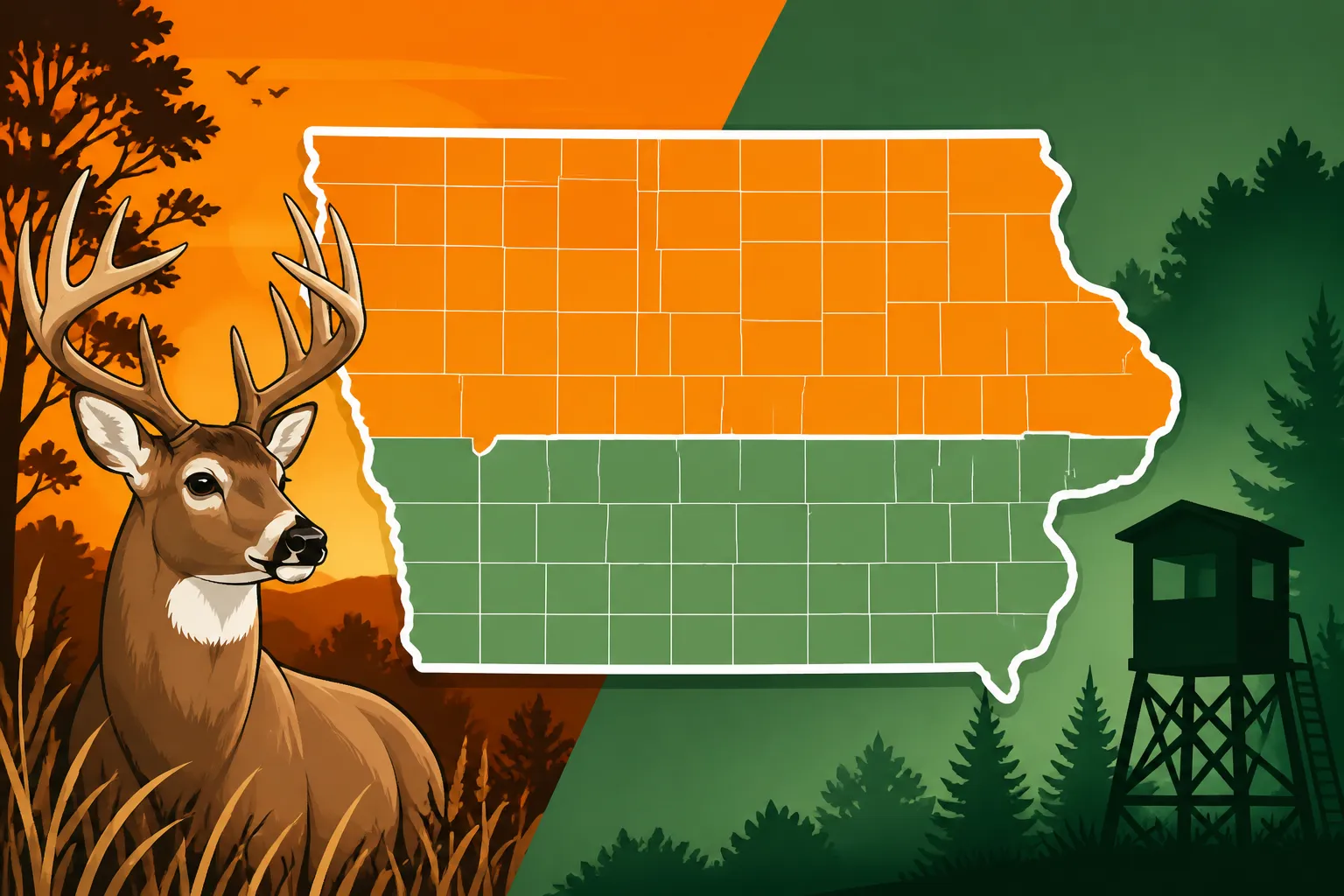
Iowa Zone A and Zone B Deer Counties
For many hunters dreaming of an Iowa whitetail, the terms "Zone A" and "Zone B" often pop up, causing a fair bit of confusion. It’s a common frustration, trying to decipher what these designations truly mean for your chances at a trophy buck or a freezer full of venison. This guide is here to untangle the complexities of Iowa's nonresident deer hunting zones, explaining the historical context and the modern reality of how the state manages its highly sought-after deer herd.
Deconstructing Iowa's Nonresident Deer Zones: Beyond 'A' and 'B'
For years, hunters have talked about "Zone A" and "Zone B" when discussing Iowa's nonresident deer hunting opportunities. It’s easy to understand why; simplifying the state into these two categories made it easier to grasp the general idea of where you could chase an antlered buck versus where you might be limited to antlerless deer. However, the official Iowa Department of Natural Resources (DNR) system for nonresident tags operates a bit differently today, evolving to manage the deer population more effectively across the state.
The Evolution of Iowa's Deer Management Zones
Iowa's deer management strategy has always been dynamic, shifting to meet the challenges of population control, habitat changes, and hunter demand. Historically, the distinction between "Zone A" and "Zone B" reflected a more overt divide in tag availability for nonresidents. "Zone A" often encompassed the prime whitetail country, offering a coveted "any-deer" tag that allowed hunters to pursue bucks or does. "Zone B," on the other hand, was generally perceived as areas where only antlerless tags were available to nonresidents, primarily as a tool to control doe populations in specific regions. This simplification, while helpful for general understanding, doesn't quite capture the nuances of the current system.
The state's goal remains consistent: to provide world-class deer hunting while maintaining a healthy, balanced herd. This requires a flexible approach to tag allocation, especially for nonresidents who often seek the "buck of a lifetime." As deer populations fluctuate and hunting pressure changes, the DNR adjusts its framework, which means what was once a clear "A" and "B" distinction has become more integrated into a broader, more granular system. It's less about two distinct geographical zones and more about a combination of drawing an any-deer license that comes with an antlerless tag with specific county usage.
Understanding the Current 10-Zone System for Any-Deer Licenses
Today, Iowa utilizes a system of 10 distinct nonresident deer hunting zones for the highly anticipated any-deer license draw. When nonresidents apply, they choose one of these 10 zones, hoping to draw an "any-deer" tag for that specific region. This license allows the harvest of either an antlered or antlerless deer, but only within the boundaries of the chosen zone.
Crucially, an "any-deer" license drawn by a nonresident also includes an antlerless deer tag. This additional tag typically has specific county restrictions, often directing harvest to areas where doe populations need more reduction. This is where the spirit of the old "Zone B" concept lives on – not as a separate application zone, but as an integral part of the overall tag package, guiding antlerless harvest to meet management objectives across various counties. So, while you apply for an any-deer tag in one of the 10 zones, you're also inherently participating in the antlerless management strategy through the included second tag. This intricate system is part of why Iowa grows so many trophy whitetails, by carefully managing overall herd numbers.
The "Any-Deer" Opportunity: Where the Big Bucks Live (Iowa's Zones 1-10)
If you're like most nonresident hunters eyeing Iowa, you're dreaming of an "any-deer" tag – the golden ticket that allows you to pursue that elusive Boone and Crockett buck. These tags are indeed the most sought-after, and they are allocated through the draw system across Iowa's 10 designated nonresident zones. Understanding these zones is paramount to strategizing your application.
Geographic Breakdown of the 10 Statewide Zones
Iowa's 10 nonresident hunting zones are primarily concentrated in the southern and eastern parts of the state, regions renowned for their excellent deer habitat and robust whitetail populations. These zones were drawn with careful consideration of deer density, habitat availability, and historical harvest data.
Let's briefly outline these zones to give you a clearer picture:
- Zone 1: Allamakee County. Nestled in the picturesque "Driftless Area" of Northeast Iowa, this zone is characterized by steep timbered bluffs, deep river valleys, and productive crop fields. It’s an area known for mature bucks traversing rugged terrain.
- Zone 2: Clayton County. Also part of the Driftless, Clayton County offers similar challenging yet rewarding hunting grounds, with ample timber and ag-field interfaces.
- Zone 3: Dubuque County. Extending the Driftless experience, Dubuque offers a mix of timber, broken topography, and proximity to the Mississippi River, providing diverse deer habitat.
- Zone 4: Jackson County. Another eastern Iowa zone, Jackson County brings together river bottoms, timber ridges, and agricultural fields for solid deer hunting.
- Zone 5: Jones, Cedar, Clinton, Scott, Muscatine, Louisa Counties. This cluster of counties along the eastern corridor offers varied terrain, from river bottoms to rolling farmlands, all supporting healthy deer numbers.
- Zone 6: Des Moines, Lee, Van Buren Counties. Stretching into Southeast Iowa, these counties combine agricultural strongholds with significant timber blocks, a recipe for big deer.
- Zone 7: Jefferson, Henry, Washington, Keokuk, Wapello Counties. Deep in prime southern Iowa timber and farm country, this zone is often eyed by those seeking top-end bucks.
- Zone 8: Monroe, Appanoose, Davis, Wayne, Lucas Counties. This is quintessential southern Iowa deer habitat – vast timber blocks, CRP fields, and interspersed agriculture, supporting some of the state's highest deer densities. Many record book whitetails have come from this region.
- Zone 9: Ringgold, Decatur, Clarke, Union, Adair, Madison, Warren, Marion, Mahaska Counties. Another robust southern Iowa zone, offering extensive cover and food sources.
- Zone 10: Taylor, Page, Fremont, Mills, Montgomery, Adams, Cass, Pottawattamie, Shelby, Harrison, Monona, Crawford, Carroll, Guthrie, Audubon Counties. This large western Iowa zone extends from the Missouri River breaks eastward, providing varied habitat including the unique Loess Hills.
When applying, you select your top two zone preferences. Your ability to draw in any of these zones often depends on the number of Iowa Preference Points and How They Work you've accumulated and the overall demand for that specific zone.
What an "Any-Deer" Tag Means for Your Hunt
An "any-deer" tag is exactly what it sounds like: it allows you to harvest one deer of either sex, antlered or antlerless, within your drawn zone. For many nonresident hunters, this is the primary goal – the opportunity to hold out for a mature buck without the limitation of only taking a doe. This flexibility is what makes Iowa so attractive, particularly during the peak of the rut.
However, the "any-deer" tag is often paired with an additional antlerless tag. While the "any-deer" portion is restricted to your chosen zone, the included antlerless tag typically has broader county eligibility. This means that if you've already filled your "any-deer" tag with a buck, you can then pursue a doe in a wider range of counties, often those adjacent to your drawn zone, or even statewide except where specifically excluded. This system allows hunters to maximize their hunting experience and contribute to the state's deer management goals by harvesting additional does where needed. It's a key part of the larger strategy to balance Iowa Deer Herd Management and Harvest across the landscape.
The "Antlerless-Only" Reality: Strategic Doe Harvest (Where the 'B' Spirit Resides)
While the excitement often revolves around drawing an "any-deer" tag, the role of antlerless-only harvest cannot be overstated in Iowa's deer management strategy. This is where the historical "Zone B" concept finds its modern-day expression, ensuring healthy deer populations and agricultural damage control.
Antlerless Tag Requirements and Designated Counties
As mentioned, nonresident hunters who successfully draw an "any-deer" license will also receive a second, antlerless-only tag. This second tag is critical for management and provides additional hunting opportunity. Unlike the "any-deer" tag, which is strictly tied to your drawn zone, the antlerless tag typically has more flexible county restrictions. The Iowa DNR publishes a list of counties where these antlerless tags are valid, and this list can change slightly year to year based on population objectives. These counties are generally those that require a higher doe harvest to keep the population in check, reduce crop damage, or address other management concerns.
For example, a hunter who draws an "any-deer" tag in Zone 8 (Monroe, Appanoose, etc.) might find their included antlerless tag is valid in those same counties, plus several surrounding counties in southern Iowa. This flexibility means that even if you fill your "any-deer" tag early in your chosen zone, you can often shift focus to an adjacent area to fill your antlerless tag, extending your hunt and contributing to the overall harvest goals. It’s always crucial to consult the most current Iowa hunting regulations to verify the specific counties where your antlerless tag is valid for the season you're hunting. You can find up-to-date information on the Iowa Antlerless Tags and Quotas and available counties.
Why Antlerless Harvest is Crucial and Where it's Focused
Antlerless harvest is the backbone of effective deer population management. Without sufficient doe harvest, deer populations can quickly outgrow their habitat, leading to increased crop damage, higher rates of vehicle collisions, and a decline in overall herd health. By issuing antlerless tags, the Iowa DNR ensures that hunters play a vital role in balancing the deer population with the carrying capacity of the land.
The focus for antlerless harvest is often in counties with high deer densities, productive agricultural lands, and areas experiencing significant deer-related issues. These areas might not always be the ones traditionally thought of as "trophy buck" country, but they are incredibly important for the overall health of Iowa's whitetail herd. For nonresident hunters, understanding this focus allows for a more strategic approach: prioritize your "any-deer" draw in a zone known for big bucks, then use your antlerless tag to hunt in a county where doe harvest is encouraged. This dual approach provides a comprehensive hunting experience and supports the state's conservation efforts. It's about more than just a trophy; it's about being a responsible steward of the resource.
Navigating the Nonresident Application Process
Applying for an Iowa nonresident deer tag can feel like navigating a maze, especially with the zone system and preference points. But with a clear understanding of the process and the right tools, you can maximize your chances of drawing the tag you want.
Strategic Zone Selection for the Draw
Choosing which zone to apply for is one of the most critical decisions a nonresident hunter will make. It's not just about where you want to hunt, but where you have the best odds of drawing a tag. The Iowa Deer Draw Odds by Zone can vary significantly year to year, influenced by factors like historical demand, harvest success, and the number of applicants.
Here are some factors to consider when making your zone selection:
- Preference Points: If you're building preference points, research which zones require fewer points to draw. Some zones, particularly in southern Iowa's trophy belt, can take many years to draw. Others, especially those in the less frequently discussed northern or central parts of the designated nonresident zones, might be accessible with fewer points.
- Habitat: Consider the type of habitat you prefer to hunt. Do you enjoy rugged, timbered bluffs like those in Zone 1 (Allamakee) or more open farm country with creek bottoms like some areas in Zone 10 (western Iowa)? Your preferred hunting style should influence your choice.
- Public vs. Private Land Access: Some zones have more public land opportunities than others. If you plan to hunt public land, research the specific wildlife management areas or state forests within your target zones. Even within a zone, public access can vary widely. For example, some areas might require you to be skilled at Reading Aerial Imagery for Bedding Cover to find productive public spots.
- Travel and Logistics: Consider the practicalities of travel. How far is the zone from your home? What are the lodging options like? These logistical factors, while secondary to drawing a tag, are important for a successful hunt.
Remember, you'll typically select a first and second choice for your zone. The DNR attempts to fulfill your first choice first, but if unsuccessful, will move to your second choice. This layered approach is a key part of the How the Iowa Any-Deer Quota Is Filled process.
Leveraging Resources for Informed Decisions
In today's digital age, there are fantastic resources available to help you make an informed decision when applying for an Iowa nonresident deer tag. Gone are the days of just guessing!
- Iowa DNR Website: The official Iowa DNR website is your primary source for regulations, zone maps, application dates, and harvest reports. They provide detailed information on Iowa Nonresident Deer Application Dates in May and June and other crucial timelines.
- Online Application Portals: You'll apply for your tag through the Go Outdoors Iowa platform. Familiarizing yourself with this platform beforehand, perhaps even with a practice run, can make the application process smoother. This online system is critical for securing your chance at a tag.
- Hunting Forums and Communities: Online hunting forums and social media groups dedicated to Iowa hunting can be invaluable. Here, experienced hunters often share insights into zone characteristics, draw odds, and general advice. Just remember to take everything with a grain of salt and cross-reference information with official sources.
- Mapping Software: Tools like onX Hunt or HuntStand provide detailed property lines, public land boundaries, and topographic maps. These can be crucial for scouting potential hunting areas within your chosen zone, even before you draw a tag. Understanding the layout of the land can help you choose the best zone for your hunting style.
- GoHunt: For hunters serious about maximizing their draw odds, platforms like GoHunt offer comprehensive research tools specifically designed for Western and Midwestern draws, including Iowa. Their insights into draw odds, preference point trends, and success rates by zone can be incredibly helpful for strategic planning. Leveraging such tools can give you a significant edge in understanding the complex nuances of the Iowa draw, helping you decide where to apply.
By combining your personal preferences with solid research, you can make a well-informed decision that improves your chances of drawing an Iowa deer tag.
Impact of Zone Designations on Deer Management and Hunters
The careful delineation of Iowa's hunting zones, whether the 10 nonresident zones or the specific antlerless harvest areas, plays a critical role in both the health of the deer herd and the experience of individual hunters. These designations are not arbitrary; they are the result of scientific management aimed at balancing ecological and recreational objectives.
Balancing Hunter Opportunity and Population Management
Iowa's zone system is a delicate balancing act. On one hand, the state wants to offer exceptional hunting opportunities, particularly for nonresident hunters who contribute significantly to conservation funding through license sales. This means ensuring there are enough "any-deer" tags in the zones where trophy bucks are most likely to be found. On the other hand, the DNR must rigorously manage the deer population to prevent overpopulation, which can lead to widespread habitat degradation, increased disease transmission, and conflicts with landowners due to crop damage.
The 10 nonresident zones for "any-deer" tags are designed to distribute hunting pressure and opportunity, ensuring no single area is disproportionately impacted. The inclusion of the antlerless tag, with its broader county validity, then acts as a flexible tool to target areas needing higher doe harvest. This strategy allows for precision in management: where populations are robust, more antlerless tags can be made available; where they are stable or lower, the focus remains on quality "any-deer" opportunities. This adaptive approach is key to maintaining a healthy deer population estimate across the state.
The table below offers a general comparison of the two main types of nonresident deer hunting opportunities in Iowa, reflecting the "A" and "B" concepts:
| Feature | "Any-Deer" Opportunity (Zones 1-10) | "Antlerless-Only" Opportunity (Included Tag) |
|---|---|---|
| License Type | Primary "Any-Deer" License (Buck or Doe) | Second, Antlerless-Only Tag |
| Availability | Via Nonresident Draw in one of 10 Specific Zones (1-10) | Automatically included with a drawn "Any-Deer" License |
| Primary Goal | Trophy buck hunting; general deer harvest | Population control; targeted doe harvest |
| Geographic Scope | Restricted to the specific zone drawn | Valid in a broader range of designated counties (check regulations) |
| Hunter Motivation | Seeking an antlered deer, potentially a trophy | Meat harvest, herd management contribution |
| Draw Difficulty | Varies significantly by zone and preference points | Not a separate draw; part of the "Any-Deer" package |
| Typical Harvest | Mature bucks, occasionally a doe if no buck is seen | Does (often larger, older does for herd reduction) |
Hunter Success Rates and Future Trends
The zone designations directly influence hunter success rates. In zones with abundant deer and good habitat, success rates for both "any-deer" and antlerless tags tend to be higher. Conversely, in zones with lower deer densities or more challenging terrain, success rates might be lower, though the quality of the deer taken can still be exceptional.
The Iowa DNR continually monitors harvest data, population surveys, and hunter feedback to assess the effectiveness of its zone system. This data drives future decisions on tag quotas, zone boundaries, and antlerless harvest directives. For instance, if a particular zone consistently shows under-harvest of does, the DNR might expand the counties eligible for antlerless tags in that region the following season.
As a hunter, staying informed about these trends is crucial. Platforms like GoHunt regularly analyze these statistics, providing valuable insights into which zones might be trending up or down in terms of success or draw difficulty. Understanding the nuances of How Many Nonresident Any-Deer Tags Iowa Issues and how many people apply each year can further help you predict future trends and adjust your long-term hunting strategy for Iowa. The goal is always to create a sustainable hunting future, where robust deer populations continue to provide memorable experiences for generations to come.
Recent Changes and What They Mean for Hunters
Iowa's deer hunting regulations, including zone structures, are not set in stone. The Iowa DNR regularly reviews and adjusts these rules to adapt to changes in deer populations, habitat, and hunter pressure. Keeping up with these changes is essential for any nonresident hunter planning a trip.
Key Regulatory Updates Affecting Zone Choices
Over the past few years, there have been some key updates that have shaped the current nonresident deer hunting landscape. For example, while the 10 nonresident "any-deer" zones have remained relatively consistent, the specifics of which counties are eligible for the included antlerless tag can shift. These subtle but impactful changes are often driven by localized population data. If a specific cluster of counties shows a sustained high deer density, the DNR might expand the antlerless tag validity to encourage more harvest in that area. Conversely, if certain counties are meeting their harvest goals, they might be removed from the antlerless-eligible list, or fewer antlerless tags might be allocated to resident hunters.
Another crucial area of change can involve the overall quota for nonresident tags. While Iowa is known for its incredible deer, the number of nonresident tags for any-deer opportunities is finite and carefully controlled. Changes in the statewide deer population or the number of applicants for Iowa Nonresident Deer Draw Explained can lead to adjustments in these quotas, which in turn directly impacts draw odds and the competitive nature of the draw for each zone. These adjustments are typically announced well in advance of the application period, often by early spring, giving hunters time to plan.
Adapting Your Hunting Strategy to New Zone Rules
Staying flexible and informed is the best way to adapt to any changes in Iowa's zone rules. Here are a few ways to ensure you're always ahead of the curve:
- Read the Regulations Annually: This cannot be stressed enough. Every year, before applying, download and thoroughly read the official Iowa Hunting & Trapping Regulations. Even if you've hunted Iowa for years, don't assume anything. Small but significant changes are often noted.
- Monitor DNR Announcements: Keep an eye on the Iowa DNR's website and social media channels for official announcements regarding deer season proposals and final rules. They often provide reasoning behind proposed changes, giving you insight into their management philosophy.
- Re-evaluate Your Zone Choices: If changes occur, re-evaluate your preferred zones. A zone that was difficult to draw one year might become slightly easier the next if demand shifts or quotas are adjusted. Conversely, a previously overlooked zone might suddenly offer a better opportunity if conditions change. Using tools like GoHunt to track Iowa Deer Draw Odds by Zone can help you make these crucial strategic adjustments.
- Plan for Antlerless Harvest: Recognize that the antlerless portion of your tag is a significant hunting opportunity and a vital part of conservation. Understand where your antlerless tag is valid and integrate it into your hunt plan, even if your primary goal is a buck. Knowing the regulations for counties where Iowa January Antlerless Hunts are offered, for example, could extend your season if you're targeting does.
By embracing a proactive approach, nonresident hunters can navigate the evolving landscape of Iowa's deer zones and continue to enjoy the exceptional hunting experiences the state offers.
Disclaimer
Please note that hunting regulations, zone designations, and application processes are subject to change annually by the Iowa Department of Natural Resources. Always consult the most current official Iowa Hunting and Trapping Regulations prior to any hunting activity or license application. This article provides general information and should not be considered a substitute for official DNR guidelines.