Muzzle Energy Minimums in Iowa
It can be incredibly frustrating to sift through hunting regulations, especially when they delve into technical specifications like muzzle energy minimums. You want to be confident that your chosen firearm and ammunition are not only effective for a clean, ethical harvest but also legally compliant with Iowa's rules. This guide will meticulously break down what muzzle energy means in the context of Iowa deer hunting, why these regulations exist, and how you can ensure your gear meets the state's requirements, saving you the headache and potential legal pitfalls of showing up to the field unprepared.
Why Muzzle Energy Matters for a Clean Harvest
When you're out in the field, whether you're chasing that elusive buck in the timber or waiting on a field edge, the last thing you want to worry about is whether your shot will be effective. Muzzle energy isn't just a technical detail on a ballistics chart; it's a direct measure of the bullet's power to humanely take down game. Iowa's hunting regulations, like many other states, incorporate these minimums to ensure that hunters are using equipment capable of delivering enough force for a quick, ethical kill, minimizing suffering and ensuring responsible hunting practices.
Kinetic Energy and Bullet Performance
At its core, muzzle energy is a measure of kinetic energy. Think of it as the raw power packed into a bullet as it leaves the barrel of your firearm. This energy is what allows a projectile to penetrate vital organs and deliver the shock necessary to incapacitate a deer quickly. A bullet with insufficient energy might wound an animal without delivering a fatal blow, leading to a prolonged recovery process and potentially lost game. It’s a somber thought, but one that underscores the importance of understanding this regulation. We all strive for that one-shot, humane harvest, and proper muzzle energy is a significant piece of that puzzle.
For instance, imagine you've lined up a perfect shot on a mature whitetail buck in a thick river bottom. If your ammunition lacks the necessary kinetic energy, even a well-placed shot might not penetrate deep enough to reach the vitals, or it might not transfer enough energy to cause immediate incapacitation. The deer could run a considerable distance, making recovery incredibly difficult, especially in dense cover like multiflora rose or thick CRP fields. This is why seasoned hunters, often using tools like those found on GoHunt, pay close attention to ballistic data, recognizing that kinetic energy directly translates to a more ethical outcome in the field.
Ethical Hunting Practices and Fair Chase
The concept of muzzle energy minimums is deeply intertwined with ethical hunting. Our responsibility as hunters extends beyond merely following the law; it encompasses a moral obligation to respect the game we pursue. Using an underpowered firearm or ammunition can result in wounded animals, which not only causes unnecessary suffering but also undermines the principles of fair chase. These regulations serve as a baseline, guiding hunters toward equipment that has been proven capable of dispatching deer efficiently.
Consider a scenario where a hunter, perhaps new to the sport, picks up a caliber without fully understanding its capabilities or Iowa's regulations. They might believe that if the bullet is large enough, it's suitable for deer. However, without adequate velocity to drive that bullet with sufficient energy, it might perform poorly, even at relatively close ranges. This isn't about blaming the hunter, but about emphasizing the shared responsibility to be informed. Iowa's regulations on muzzle energy are a testament to the state's commitment to wildlife welfare and promoting responsible hunting practices among its residents and nonresidents alike. When you head out, knowing your equipment meets these standards allows you to focus on the hunt itself, rather than second-guessing your gear.
Decoding Iowa's Muzzle Energy Requirements
Navigating the specifics of hunting regulations can feel like deciphering a secret code. Iowa's rules regarding muzzle energy are designed to be clear once you know where to look and what they apply to. These requirements are primarily for deer hunting and vary slightly depending on the specific firearm type you choose to use during your hunt.
The Numbers Defined for Iowa Deer Hunting
Iowa establishes a specific minimum muzzle energy for certain firearms used during deer seasons. While specific numbers are always subject to change and should be verified with the current Iowa DNR regulations before each season, the intent behind these rules remains constant: to ensure adequate power for ethical deer harvest. Generally, the state mandates a significant kinetic energy output at the muzzle, often measured in foot-pounds, to ensure that the projectile has enough force to penetrate and bring down a whitetail effectively.
This means that simply having a legal caliber isn't always enough; the specific load you choose within that caliber also needs to meet the energy threshold. For instance, some lighter bullet weights or lower velocity loads in an otherwise legal cartridge might not generate the required energy. This is a crucial detail often overlooked, but one that can make all the difference. Hunters often use specialized apps or consult manufacturer's ballistic charts to confirm their specific ammunition meets the Iowa's 500 Foot-Pound Energy Rule that is referenced in our guidelines, helping them stay compliant and ethical.
Weapon-Specific Nuances and Regulations
The muzzle energy requirements in Iowa can vary slightly across different weapon types permitted for deer hunting. This is because different firearms—shotguns, straight-wall cartridge rifles, and muzzleloaders—operate under different ballistic principles and have varying effective ranges and bullet designs.
- Straight-Wall Cartridge Rifles: These have become incredibly popular in Iowa, offering rifle-like accuracy and power in areas where traditional bottlenecked rifle cartridges are restricted. For straight-wall cartridges, the regulations specify not only a minimum bullet diameter but also a minimum muzzle energy. This ensures that even though the cartridge operates within certain length and diameter constraints, it still delivers sufficient force. Checking the specific energy output of your chosen load is just as important as confirming the bullet diameter.
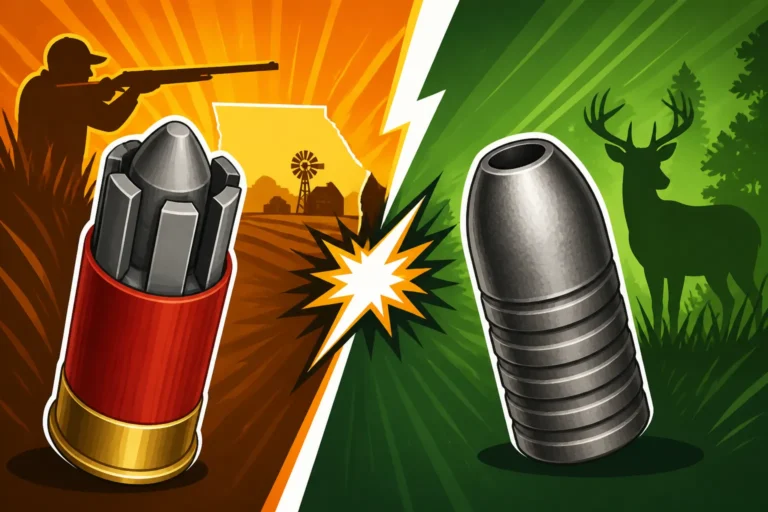
- Shotguns: Slug guns are a staple for many Iowa deer hunters, especially during the general shotgun seasons. While shotgun slugs are inherently large and heavy, the regulations ensure they also carry enough kinetic energy to be effective. The energy from a 12-gauge or 20-gauge slug is generally ample, but understanding your specific slug choice's ballistic performance is still wise, especially for longer shots.
- Muzzleloaders: Iowa offers distinct early and late muzzleloader seasons, and these firearms also fall under muzzle energy considerations, alongside projectile type rules. Given the slower velocities often associated with traditional muzzleloaders compared to modern firearms, ensuring adequate energy requires careful selection of powder charge and bullet weight. Black powder hunters typically understand that their massive projectiles make up for some of the velocity, but the total kinetic energy is still the deciding factor.
Understanding these nuances is key. It's not a one-size-fits-all rule, and knowing which rules apply to your specific hunting season and chosen implement is part of being a responsible hunter. Don't just assume your favorite slug will pass muster; take the time to look it up!
Understanding Muzzle Energy: Calculation and Factors
Muzzle energy isn't some mystical force; it's a quantifiable measure derived from basic physics. While you don't need a degree in ballistics to hunt in Iowa, understanding how it's calculated and what influences it can help you make more informed decisions about your ammunition choices. It empowers you to go beyond just "meeting the minimum" and truly understand your gear's capabilities.
The Formula in Layman's Terms
The formula for kinetic energy is fairly straightforward: Energy = (Mass * Velocity^2) / a constant. In simpler terms, a bullet's muzzle energy is directly related to its weight (mass) and, more significantly, its speed (velocity) as it leaves the barrel. Notice that velocity is squared, meaning even small increases in speed have a much greater impact on energy than equivalent increases in bullet weight. This is why modern firearms and ammunition focus so much on achieving high velocities.
When you see a ballistic chart, you'll typically find a column for "muzzle energy" listed in foot-pounds (ft-lbs). This number represents the kinetic energy of the bullet at the moment it exits the barrel. As the bullet travels downrange, it loses velocity due to air resistance and gravity, which means its kinetic energy also decreases. This is why Iowa's regulations specify muzzle energy—it's the maximum potential energy the bullet has to do its work. GoHunt and similar platforms often have extensive databases where you can look up specific bullet weights and velocities for various cartridges, making it easier to see how different loads perform.
Bullet Weight, Velocity, and Barrel Length
Several factors play into a bullet's actual muzzle energy in the field. It's not just about what the box says; it's about how your specific firearm handles that ammunition.
- Bullet Weight: Heavier bullets generally carry more momentum, and thus more energy, given the same velocity. However, heavier bullets require more powder to achieve similar velocities to lighter bullets. There's a balance to strike between bullet weight and velocity to optimize energy. For instance, a heavier slug for your shotgun might have less velocity but a significant impact force compared to a lighter, faster slug.
- Velocity: This is the most critical factor. The faster a bullet travels, the exponentially more energy it carries. Propellant type, powder charge, and bullet construction all contribute to achieving optimal velocities. Manufacturers engineer ammunition to maximize safe velocity for a given bullet weight and cartridge design.
- Barrel Length: This is often overlooked but crucial. Ammunition is typically tested in standardized barrel lengths, often 24 inches for rifles. If your hunting rifle has a shorter barrel, say 16 or 18 inches, the bullet might not reach its advertised muzzle velocity, and therefore its muzzle energy will be slightly lower. Conversely, a longer barrel might yield slightly higher velocities. This is particularly relevant for hunters using compact firearms or Shotgun Season Drives in Small Timber where maneuverability dictates shorter barrels. Always consider your actual barrel length when evaluating ballistic data.
Understanding these factors allows you to look at a box of ammunition not just as a caliber, but as a specific combination of weight, velocity, and design tailored for performance. It's about ensuring that the real-world performance out of your specific hunting rig meets the legal and ethical requirements for a successful Iowa deer hunt.
Popular Iowa Deer Cartridges and Their Energy Output
Iowa's regulations for deer hunting firearms have evolved, particularly with the introduction of straight-wall cartridge rifles as an alternative to shotguns. This has opened up a whole new world of options for hunters, but it also means being more informed about how these different platforms deliver their energy. Let's look at some common choices and how they generally stack up regarding muzzle energy.
Straight-Wall Cartridge Performance
The rise of straight-wall cartridge rifles has been a game-changer for deer hunters in Iowa. These cartridges, designed to function in certain firearms, bridge the gap between traditional slug guns and bottlenecked rifle cartridges, offering enhanced accuracy and flatter trajectories. Many popular choices easily meet and often exceed Iowa's minimum muzzle energy requirements.
- Examples: Cartridges like the .350 Legend, .450 Bushmaster, and .45-70 Government are prime examples of straight-wall options that Iowa hunters now rely on. These cartridges are designed to deliver significant energy at the muzzle, ensuring deep penetration and impressive knockdown power for whitetails. The .350 Legend, for instance, offers a flatter trajectory than many slugs, making it a favorite for hunting across longer field edges or open timber. The .450 Bushmaster provides even more energy, often preferred by those who want maximum impact.
- Considerations: While generally powerful enough, choosing the right bullet weight and type is still paramount. A lighter, varmint-style bullet in a straight-wall cartridge, while perhaps technically meeting a minimum energy requirement, might not be designed for the terminal performance needed on a deer. Always opt for bullets specifically designed for medium to large game, as they are constructed to retain weight, expand properly, and transfer energy effectively. This helps ensure a clean harvest, especially when hunting during December Cold Front Deer Movement where deer might be tougher.
Slug Gun Dynamics
Before straight-wall rifles gained popularity, slug guns were the primary option for Iowa's general firearms seasons, and they remain incredibly effective. Modern slug technology has advanced significantly, moving beyond rudimentary foster slugs to highly accurate sabot slugs designed for rifled barrels.
- 12-Gauge and 20-Gauge Slugs: Both 12-gauge and 20-gauge slugs deliver substantial muzzle energy. A 12-gauge slug generally packs more punch, but a modern 20-gauge sabot slug fired from a rifled barrel can be incredibly accurate and more than sufficient for Iowa whitetails, often with less recoil. The debate over Are 20 Gauge Slugs Enough for Deer? is largely settled with modern ammunition, which consistently performs well.
- Rifled vs. Smoothbore: For maximum accuracy and energy transfer at longer ranges, a rifled barrel paired with sabot slugs is hard to beat. The rifling spins the projectile, stabilizing it and allowing for precise shot placement. Smoothbore barrels are typically best with foster-style slugs, which rely on their weight-forward design for stability. While smoothbore setups still deliver plenty of muzzle energy at closer ranges, their effective ethical range is generally much shorter than a rifled barrel setup.
- Terminal Performance: Slugs, by their very nature, create a large wound channel, transferring a massive amount of kinetic energy upon impact. This makes them incredibly effective at dropping deer quickly. Just like with straight-wall rifles, selecting a slug designed for deer hunting (e.g., expanding designs) will optimize their terminal performance and ensure that the substantial muzzle energy translates into a humane harvest.
Here's a general comparison of popular choices related to Iowa's energy considerations:
| Firearm Type | Common Calibers/Gauges | Typical Muzzle Energy Performance | Key Considerations |
|---|---|---|---|
| Straight-Wall Rifle | .350 Legend, .450 Bushmaster, .45-70 Gov. | Generally well above minimums | Bullet construction critical for terminal performance |
| Shotgun (Rifled Barrel) | 12 Gauge, 20 Gauge Slugs | Ample, especially with sabot slugs | Range limitations, proper slug selection for barrel |
| Muzzleloader (Modern Inline) | .50 Caliber, .45 Caliber | Ample with proper powder/projectile | Projectile type rules, consistent ignition |
| Muzzleloader (Traditional) | .50 Caliber, .54 Caliber | Ample at shorter ranges | Slower velocity, heavier projectile |
| Handgun | .44 Mag, .357 Mag, 10mm Auto | Can meet minimums; check specifics | Barrel length, shot placement critical, shorter range |
It's important to remember that this table offers general guidelines. Always consult current Iowa DNR regulations and specific ammunition manufacturer data to confirm exact compliance for your chosen setup.
Verifying Your Setup Meets Iowa's Rules
So, you've chosen your firearm and picked out some ammunition. How do you actually confirm that your specific combination meets Iowa's muzzle energy requirements? It's not as difficult as it sounds, but it does require a bit of homework and, ideally, some practical testing. The goal is to hunt with confidence, knowing you're both legal and ethical.
Consulting Manufacturer Data
The first and most reliable place to start your verification process is with the ammunition manufacturer's published ballistic data. Most reputable ammunition companies provide detailed specifications for their loads, including muzzle velocity and muzzle energy. You can usually find this information on their websites, in product catalogs, or sometimes even printed on the ammunition box itself.
When looking at this data, pay close attention to the barrel length used for testing. As mentioned earlier, if your rifle's barrel is significantly shorter or longer than the test barrel, your actual muzzle energy might vary slightly. However, for most common hunting setups, the factory data will give you an excellent indication of whether a particular load will meet Iowa's minimums. If a load is borderline on paper, it's always safer to choose a different, more powerful option to ensure compliance and effectiveness. Resources like GoHunt often compile and cross-reference this data, providing a convenient way to compare various loads before you even step into a sporting goods store.
Testing Your Load and Practical Considerations
While factory data is a great starting point, the ultimate test is how your specific firearm performs with that ammunition. This is where range time becomes invaluable. Shooting your chosen hunting load at the range allows you to confirm accuracy and gain a real-world understanding of its characteristics.
- Chronograph Use: For the most precise measurement of muzzle energy, a chronograph is your best friend. This device measures the actual velocity of your bullet as it leaves your barrel. Once you have an accurate muzzle velocity, you can plug that number, along with your bullet's weight, into a kinetic energy calculator (easily found online) to get a precise muzzle energy figure for your specific setup. This removes any guesswork related to barrel length differences or batch variations in ammunition. Many experienced hunters consider a chronograph an essential tool for serious load development and verification.
- Practice for Accuracy: Meeting the muzzle energy minimum is only part of the equation. The most powerful bullet is useless if you can't place it accurately. Spend ample time at the range Sighting In Before Shotgun Season or your chosen season. Practice shooting from various positions you might encounter in the field—off-hand, kneeling, from a rest—to ensure you can consistently make an ethical shot. Even with abundant muzzle energy, a poorly placed shot will not result in a humane harvest. Focus on groups, and understand your personal effective range.
By combining manufacturer data with your own practical testing, you can approach your Iowa deer hunt with the utmost confidence, knowing your equipment is legal, ethical, and capable of performing when it counts.
Beyond the Minimum: Shot Placement and Ethical Hunting
Meeting Iowa's muzzle energy minimums is a critical step, but it's just that—a minimum. True ethical hunting goes far beyond simply clearing a numerical hurdle. It encompasses a holistic approach to the hunt, prioritizing quick, humane kills through skill, knowledge, and a deep respect for the animal. Think of the energy requirement as the price of admission; the performance that truly matters happens after the shot breaks.
The Importance of Marksmanship
Even the most powerful, legally compliant firearm is only as good as the hunter behind it. Perfect Shot Placement on a Whitetail at Twenty Yards or any other distance is paramount. A bullet with ample energy, if poorly placed, will still result in a wounded animal, suffering, and a potentially unrecovered deer. Conversely, a precisely placed shot with a firearm that just meets the minimum energy can be far more effective than a haphazard shot with a magnum.
Marksmanship isn't just about hitting the target; it's about understanding anatomy, shot angles, and what constitutes a vital hit. For deer, the heart and lungs are typically the primary targets, offering a large, forgiving zone that leads to rapid incapacitation. Hunters must practice not only to group shots but also to envision the internal anatomy of the deer, ensuring their aim aligns with these vital areas regardless of the deer's body position. This kind of deliberate practice is what truly honors the animal and the privilege of hunting. Remember, the goal is not just to hit the deer, but to hit it correctly.
Knowing Your Limitations
Every hunter has an effective range—the maximum distance at which they can consistently place a bullet into a deer's vital zone under field conditions. This range is influenced by your firearm, your ammunition, and most importantly, your personal skill level and comfort. Iowa's muzzle energy requirements don't account for your skill or the specific conditions of a hunt, like wind, brush, or an animal quartering away.
- Practice under field conditions: Don't just practice from a bench rest. Practice shooting quickly, practicing your breathing, and engaging targets at varying distances. Simulate real-world scenarios as much as possible.
- Be honest with yourself: If you can only confidently make a vital shot out to 100 yards, don't attempt a 150-yard shot, regardless of what your rifle or ammunition is capable of doing on paper. Push your limits in practice, not in the field. This self-awareness is a hallmark of an ethical hunter.
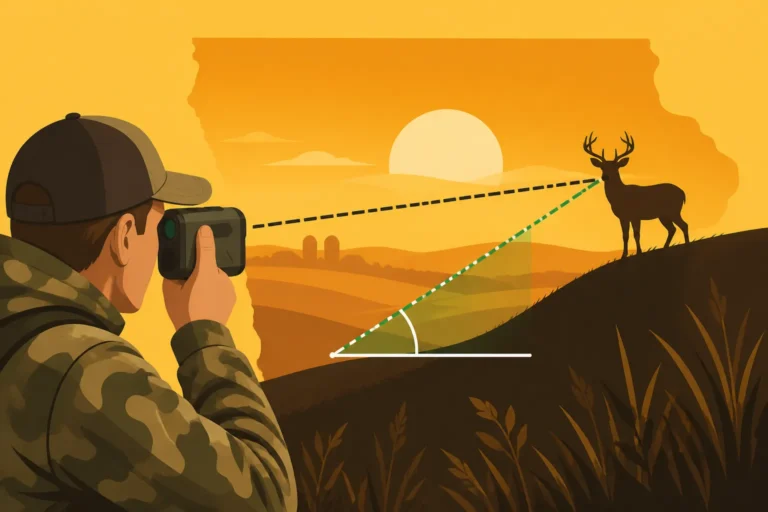
- Understand bullet drop and energy retention: Remember that a bullet loses both velocity and energy as it travels. While your chosen load might have excellent muzzle energy, its energy at 150 yards might be significantly lower. Use ballistic calculators (many found on GoHunt-like applications) to understand how much energy your bullet retains at different distances. This helps you define your ethical range for a clean kill, not just your accurate range.
By embracing superior marksmanship and honestly assessing your own limitations, you elevate your hunting practice far beyond the minimum regulatory requirements. This commitment ensures that your time in the Iowa woods is not only successful but also deeply respectful of the game and the tradition of hunting.
Disclaimer
This article is for general informational purposes only and does not constitute professional advice. Laws, prices and regulations vary by location and change over time. Consult a qualified professional for guidance on your specific situation.