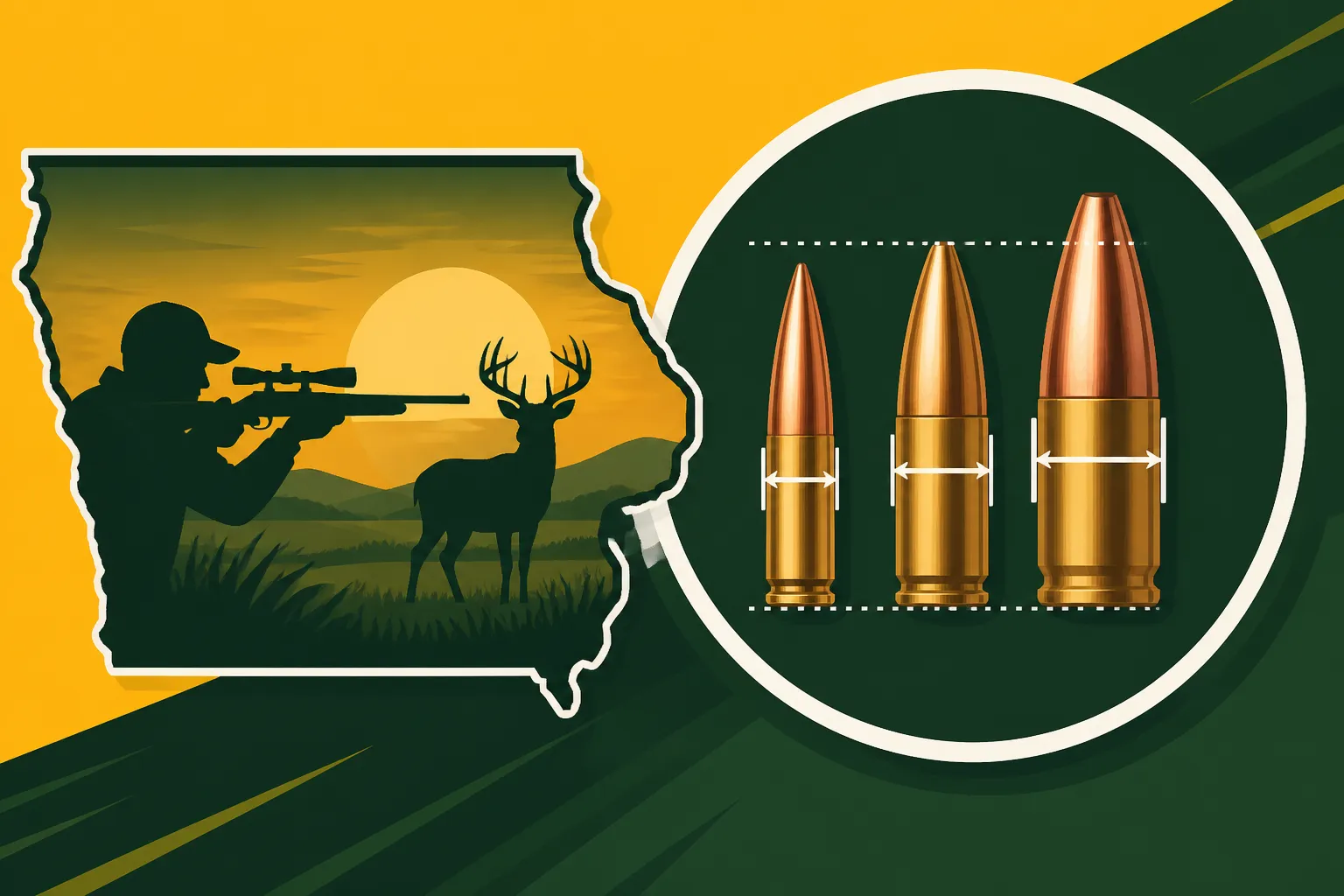
Bullet Diameter Limits for Iowa Rifles
Navigating Iowa's hunting regulations can sometimes feel like trying to hit a moving target, especially with the nuances of what's legal for deer hunting. One area that often trips up even seasoned hunters is understanding the specific bullet diameter limits for straight-wall cartridge rifles. It's not just about having a straight-wall; it's about making sure your ammunition's dimensions fit within the legal boundaries. This guide is here to untangle those rules, clarify the "why" behind them, and help you confidently choose the right setup for your next Iowa deer hunt.
Understanding Iowa's Straight-Wall Cartridge Regulations
For years, many Iowa hunters were limited to shotguns, muzzleloaders, and archery equipment for deer in large parts of the state, especially during the firearm seasons. The dense population and prevalence of agricultural lands meant that traditional high-powered bottleneck rifle cartridges were largely restricted due to concerns over projectile range and public safety. This led to a lot of frustration for hunters who wanted a bit more versatility and range than a slug gun could offer. The introduction of straight-wall cartridge regulations was a huge step forward, offering a modern rifle option while still addressing safety concerns. It was a game-changer for many, finally opening up new possibilities for those classic November and December hunts.
The Why Behind the Rule Change
The shift to allow straight-wall cartridges wasn't just a random decision; it was a carefully considered move to balance hunter opportunity with public safety. Traditional bottleneck rifle cartridges, like a .30-06 or a .270, can send a bullet for miles, posing a significant risk in Iowa's relatively flat, often heavily populated agricultural landscape where property lines are numerous and towns aren't far off. Shotguns, on the other hand, have a much shorter effective range, typically under 150 yards, which aligns better with the safety needs of the state.
The straight-wall cartridge was seen as a fantastic middle ground. These cartridges offer better accuracy and a longer effective range than most slug guns—often out to 200 yards or more with the right rifle and optic—but their ballistic profiles mean the bullet loses energy and drops much faster than a bottleneck rifle bullet, significantly reducing its maximum danger range. This means hunters get a more modern, enjoyable hunting experience without compromising the safety of landowners and other outdoor enthusiasts. It truly filled a niche that many of us had been longing for.
What Exactly is a Straight-Wall Cartridge?
At its core, a straight-wall cartridge is exactly what it sounds like: a cartridge whose case walls are essentially straight or have only a very slight taper from the base to the mouth. This is in stark contrast to bottleneck cartridges, which have a distinct "shoulder" where the case tapers down to a smaller diameter at the neck to hold a smaller bullet than the main body of the case. Think of it like comparing a soda can (straight-wall) to a wine bottle (bottleneck).
The design of a straight-wall cartridge inherently limits the amount of powder it can hold, which in turn limits the velocity and, consequently, the maximum range of the projectile. This characteristic is precisely why Iowa's regulations allow them where bottleneck cartridges are still prohibited. When you're standing in a picked cornfield, looking into a timber line or trying to scope out a creek bottom, having that extra range and accuracy from a straight-wall over a shotgun can make all the difference, especially when you consider potential shot distances in wider agricultural tracts. Understanding this fundamental difference is key to staying legal and safe in the field.
Iowa's Specific Bullet Diameter Limits
Beyond just being a straight-wall design, Iowa regulations also specify a very clear window for the actual bullet diameter you can use. This isn't just a suggestion; it's a hard and fast rule that every hunter must adhere to. Falling outside these parameters, even if you're using an otherwise legal straight-wall cartridge, can lead to serious consequences. It's your responsibility to know the exact specifications of the ammunition you're carrying.
The Minimum Diameter Requirement
Iowa mandates a minimum bullet diameter of .357 inches for straight-wall cartridges used in deer hunting. This isn't an arbitrary number; it's rooted in the principle of ethical hunting and ensuring a humane harvest. A bullet of sufficient diameter ensures that it carries enough mass and frontal area to create an adequate wound channel and deliver enough energy to quickly and humanely dispatch a deer.
Using a bullet smaller than .357 inches, even if it's from a straight-wall case, might be deemed insufficient for the task, leading to wounded animals and prolonged suffering. It speaks to the DNR's commitment to responsible hunting practices. Most of the popular and effective straight-wall cartridges that hunters choose for Iowa deer hunting comfortably meet or exceed this minimum, such as the widely popular .350 Legend or a .450 Bushmaster. So, if you're looking at a new cartridge, always double-check that critical diameter measurement. It’s one of the first things you’ll see advertised on the box or listed in manufacturer specs. Iowa's Legal Deer Hunting Equipment by Season covers a lot more on overall legal gear.
The Maximum Diameter Limit and Its Purpose
On the other end of the spectrum, Iowa also sets a maximum bullet diameter limit of .500 inches for straight-wall cartridges. This upper limit is less about ethical harvest and more about maintaining a consistent regulatory framework that avoids unintended consequences and potential safety issues. While larger diameter cartridges like .50 Beowulf technically fit the straight-wall definition, including them could potentially open the door to cartridges that veer into areas of more specialized or less common use, and possibly those with different ballistic characteristics that the original straight-wall rule aimed to mitigate.
The .500 inch maximum ensures that the spirit of the straight-wall rule—offering a safer alternative to bottleneck rifles with limited maximum range—is maintained. It keeps the focus on cartridges that are broadly recognized as effective and safe for deer hunting in the Iowa landscape without introducing calibers that might operate outside the established safety envelope. When you consider the vast array of available straight-wall options between .357 and .500, there's absolutely no shortage of excellent choices for bringing down an Iowa whitetail. You’ll be able to find something that suits your style and comfort level, all while staying perfectly legal.
Popular Straight-Wall Cartridges That Fit the Bill
When the straight-wall cartridge regulations first came into effect, hunters across Iowa breathed a collective sigh of relief. It meant more options, often better accuracy, and sometimes a bit more reach than the traditional shotgun slug. The market has since exploded with excellent choices, and it can be a bit overwhelming trying to decide which one is right for you. But rest assured, there are plenty of tried-and-true calibers that perfectly align with Iowa's rules.
Common and Proven Choices for Iowa Deer
Several cartridges have quickly risen to prominence as go-to options for Iowa deer hunters, and for good reason. They offer a fantastic blend of performance, availability, and compliance with the state's regulations.
- .350 Legend: This cartridge was practically designed for states with straight-wall restrictions. It offers mild recoil, excellent accuracy, and more than enough power for Iowa whitetails. Its bullet diameter is right at the minimum .357 inches, making it a perfect fit. It’s incredibly popular because it feels and shoots like a true rifle round, yet it meets all the strict criteria. Many hunters find it ideal for longer shots across those big CRP fields or when a deer steps out at the far end of a picked bean field.
- .450 Bushmaster: If you're looking for more knockdown power and a larger bullet, the .450 Bushmaster is a heavy hitter. With a bullet diameter of .452 inches, it delivers significant energy on target, making it a very confident choice for deer. The recoil is more substantial than the .350 Legend, but many hunters appreciate its decisive performance. It’s particularly effective in dense timber where shots might be closer, or if you prefer a heavier projectile for your deer.
- .45-70 Government: A classic cartridge that predates modern bottleneck rifles, the .45-70 is a true straight-wall that has stood the test of time. With a bullet diameter typically around .458 inches, it's known for its tremendous power and heavy bullet weight. While it's a bit of a thumper on both ends, it's undeniably effective for deer and often preferred by those who appreciate traditional calibers. It’s a great choice for hunters who want to use a lever-action rifle, bringing a bit of classic Americana to their Iowa deer season.
- .44 Magnum and .357 Magnum (in a rifle): While often associated with handguns, these pistol cartridges really shine when fired from a carbine or lever-action rifle. Their bullet diameters (around .429 for .44 Mag and .357 for .357 Mag) fit perfectly within the rules. They offer light recoil, quick follow-up shots in lever guns, and are plenty effective at typical timber ranges, especially for younger hunters or those sensitive to recoil.
When you're researching these options, a great resource like GoHunt can help you sort through specifications, reviews, and even identify common ammunition types that match Iowa's rules. It's always smart to cross-reference and make sure you're getting the right thing.
Emerging Options and What to Watch For
The market for straight-wall cartridges is constantly evolving, with manufacturers introducing new calibers designed to meet the growing demand in states like Iowa. While many new cartridges might appear, it's crucial to exercise caution and thoroughly verify their legality before heading to the field.
One example that sometimes sparks questions is the .360 Buckhammer. With a bullet diameter of .358 inches, it comfortably fits the legal diameter minimum. It's designed specifically for lever-action rifles and offers performance comparable to some of the other popular straight-wall rounds. However, the key isn't just the diameter; it's ensuring the entire cartridge is truly a straight-wall design without any bottlenecking. Always check the official Iowa hunting regulations directly or consult with the Iowa Department of Natural Resources (DNR) if you have any doubts about a newer, less common cartridge. Don't rely solely on internet forums or anecdotal evidence. Your local sporting goods store staff, especially those who hunt in Iowa, can also be a valuable resource for confirming compliance. Remember, ignorance of the law is no excuse, and staying informed is part of being a responsible hunter.
Navigating the Regulations: What Hunters Need to Know
Understanding the letter of the law is one thing, but practically applying it in your hunting preparation is another. Iowa's regulations for bullet diameter and straight-wall cartridges are quite specific, and it's up to each hunter to ensure they are fully compliant before they step foot in the field. Don't leave it to chance or assume your buddy's setup is legal for you.
Checking Your Ammunition Before the Hunt
This cannot be stressed enough: verify your ammunition. Before you even think about sighting in your new straight-wall rifle, take the time to double-check the specifications of the ammunition you intend to use. Most ammunition boxes clearly list the bullet diameter (e.g., .357, .452, .458). If it's not immediately obvious, a quick search for the cartridge name will yield dozens of reliable sources providing these details.
Don't assume that because a cartridge is popular, it automatically meets Iowa's specific criteria. For instance, while a .30-30 Winchester is a lever-action favorite and might look like a straight-wall to an untrained eye, it actually has a slight bottleneck and is not legal under Iowa's straight-wall rule for deer. This is where meticulous checking pays off. Many hunting resources, including platforms like GoHunt, offer databases and articles that can help you confirm cartridge legality for specific states. It’s a small step that can save you a huge headache or, worse, a citation in the field.
Seasons Where Straight-Wall Cartridges Are Permitted
Knowing your bullet diameter is only half the battle; you also need to know when you can legally use your straight-wall rifle. In Iowa, straight-wall cartridge rifles are permitted during several key firearm deer seasons. This isn't an all-season pass, so pay close attention to the specific dates and weapon restrictions for each segment.
Here's a breakdown of the primary seasons where you can typically use a straight-wall rifle:
- First Shotgun Season: This is one of the most popular deer seasons and a prime opportunity for straight-wall rifle users.
- Second Shotgun Season: Similar to the first, this season also allows for straight-wall cartridges, giving hunters another crack at deer. Iowa First and Second Shotgun Seasons provides more detailed information on these popular hunting periods.
- Late Muzzleloader Season: Interestingly, straight-wall cartridge rifles are also allowed during the late muzzleloader season, providing a modern alternative to traditional muzzleloaders during a typically cold and challenging hunt. This is a great advantage if you prefer the ergonomics and reloading speed of a cartridge rifle over a muzzleloader. Check out Late Muzzleloader Deer Hunting in Iowa for more tips on this season.
- January Antlerless Season: This season, focused on antlerless deer, also permits straight-wall rifles, offering a chance to fill the freezer and contribute to herd management after the primary gun seasons have concluded.
It's absolutely essential to consult the most current Iowa Hunting Regulations synopsis each year, as season dates and specific rules can occasionally be subject to minor adjustments. The DNR publishes an updated booklet annually, which is your definitive source for all legal hunting parameters.
| Cartridge | Typical Bullet Diameter (inches) | Iowa Legal? | Notes |
|---|---|---|---|
| .350 Legend | .357 | Yes | Light recoil, excellent for deer. |
| .44 Magnum | .429 | Yes | Great in carbines, moderate recoil. |
| .450 Bushmaster | .452 | Yes | High knockdown power, more recoil. |
| .45-70 Government | .458 | Yes | Traditional power, solid choice. |
| .357 Magnum | .357 | Yes | Light recoil, good for shorter ranges in carbines. |
| .360 Buckhammer | .358 | Yes | New option for lever guns, verify straight-wall case. |
| .30-30 Winchester | .308 | No | Bottleneck design, not straight-wall legal in Iowa. |
| .223 Remington | .224 | No | Too small in diameter and bottleneck. |
| .50 Beowulf | .500 | No | Exceeds maximum diameter limit. |
Why Bullet Diameter Matters for Ethical Hunting
Beyond just legality, the physical characteristics of a bullet, particularly its diameter, play a critical role in the effectiveness and ethics of hunting. As responsible hunters, our goal is always a quick, humane harvest, and the right ammunition is fundamental to achieving that. It's not just about a bullet flying fast; it's about what it does when it gets there.
Impact on Energy Transfer and Knockdown Power
Bullet diameter directly influences how much energy is transferred to the animal upon impact. A larger diameter bullet, assuming comparable velocity and construction, generally creates a wider wound channel and often transfers more kinetic energy into the animal's tissue. This energy transfer is crucial for rapidly incapacitating the deer by disrupting vital organs and causing hydrostatic shock. A wider, heavier bullet has more mass, which translates to more inertia and a greater ability to penetrate through bone and muscle to reach the vitals.
While velocity is important, a smaller diameter bullet traveling at extreme speeds might pencil through an animal, causing less tissue damage and energy transfer than a slower, larger diameter bullet. The .357-inch minimum diameter in Iowa's regulations ensures that hunters are using projectiles with sufficient frontal area and mass to reliably achieve this necessary energy transfer. This minimizes the chance of a wounded animal running off, ensuring a quick and ethical harvest. Think of it like comparing a sharp needle to a blunt punch – both can penetrate, but one delivers a much more decisive impact.
Shot Placement and Bullet Performance
Even with the perfect legal straight-wall cartridge and bullet diameter, nothing replaces precise shot placement. The most powerful, legally compliant bullet in the world won't result in a quick, humane kill if it doesn't hit a vital area. Hunters should always strive for shots that target the heart and lungs, or a central nervous system hit if presented with a clear opportunity.
However, the chosen bullet's diameter and construction also influence how forgiving that shot placement can be. A well-constructed, adequately sized bullet has a better chance of performing as intended—expanding, penetrating, and creating a significant wound channel—even if the shot is slightly off the absolute ideal. A smaller or less powerful bullet, even if perfectly placed, might not achieve the same level of rapid incapacitation, especially if it encounters bone. This is why practicing with your chosen straight-wall rifle and ammunition is paramount. Knowing how your specific bullet performs from your rifle at various distances will build confidence and contribute to ethical hunting. Don't just sight in; practice shooting from different positions you might encounter in the woods or fields. Understanding Shot Placement on a Whitetail at Twenty Yards and similar topics can greatly improve your success rate.
Disclaimer
This article is for general informational purposes only and does not constitute professional advice. Laws, prices and regulations vary by location and change over time. Consult a qualified professional for guidance on your specific situation.