Rifled Barrels Versus Smoothbore Slugs
When you're gearing up for Iowa's shotgun deer seasons, one of the biggest debates that often pops up around the campfire or in online forums is whether to use a smoothbore shotgun with traditional slugs or invest in a dedicated rifled slug barrel. It's a real head-scratcher for many hunters, especially with Iowa's diverse hunting landscape that can range from dense timber to wide-open crop fields. This guide is going to walk you through the ins and outs of both options, helping you understand their performance, limitations, and how they stack up for chasing whitetails in the Hawkeye State.
Understanding the Basics of Slug Guns
Before we dive into the nitty-gritty of performance, it's crucial to understand what makes each type of slug gun tick. We're talking about two fundamentally different approaches to launching a large projectile from a shotgun, each with its own design philosophy and intended use. The choice you make here can significantly impact your effective range and accuracy in the field.
The Traditional Smoothbore Shotgun
For generations, the smoothbore shotgun has been the workhorse of deer hunters in states like Iowa where centerfire rifles are restricted. This is your standard shotgun, typically used for bird hunting or clays, but adapted for deer with the right ammunition. The barrel, as the name suggests, is perfectly smooth on the inside, without any grooves. This design is fantastic for spreading shot, but when it comes to a single projectile, it presents some unique challenges.
When you're thinking about a smoothbore, picture the shotgun you might use for pheasants or ducks. It's often a pump-action or semi-automatic, incredibly reliable, and can handle a variety of ammunition. Many hunters already own one, making it an accessible option for those new to slug hunting or who only hunt deer with a shotgun occasionally. The beauty of a smoothbore is its versatility; with a quick choke change, it can go from a deer slayer to a bird gun in minutes. However, this versatility comes with inherent limitations when you're trying to achieve rifle-like accuracy with a single projectile.
The Dedicated Rifled Slug Gun
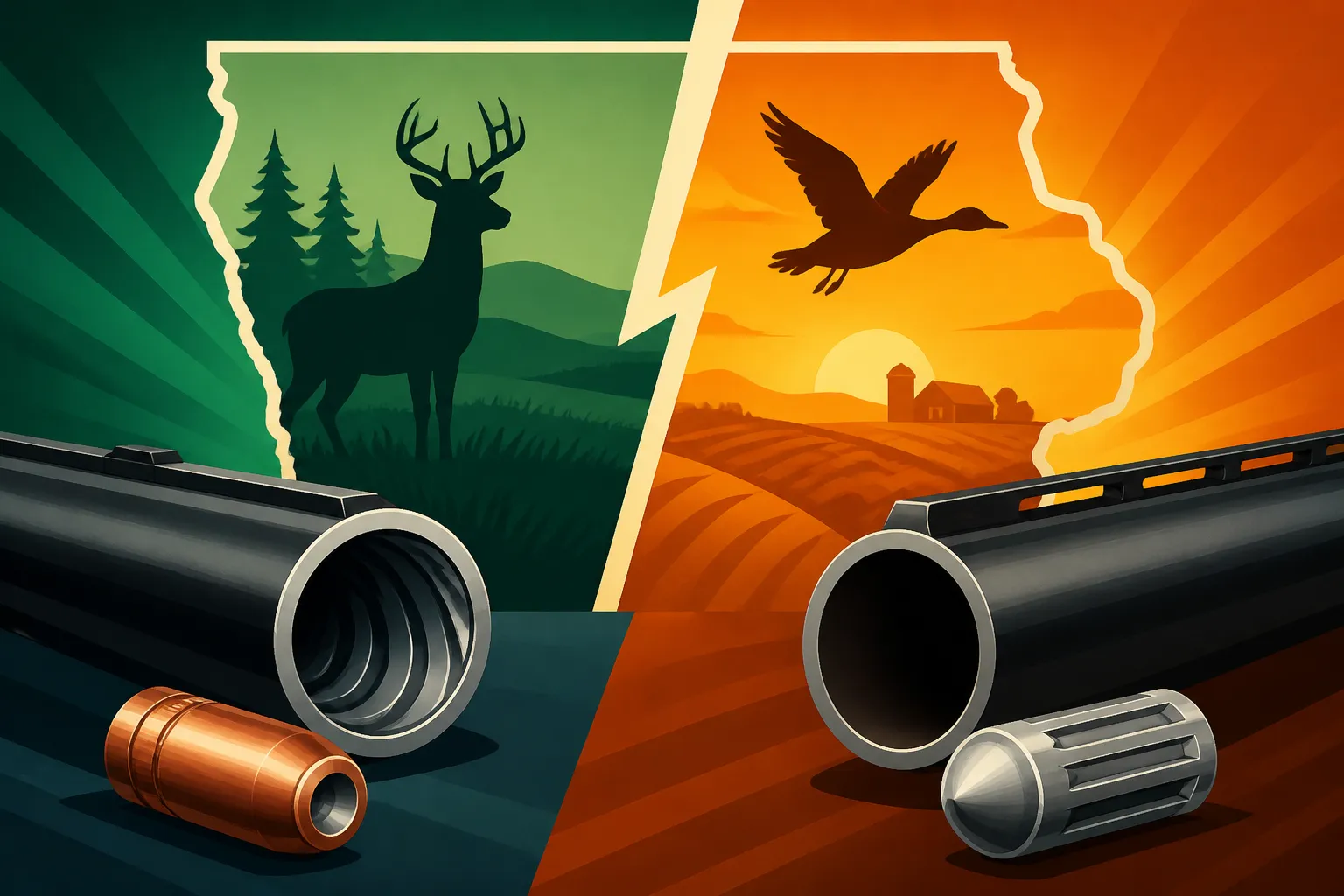
On the other end of the spectrum, we have the dedicated rifled slug gun. This isn't your grandfather's pheasant gun. These shotguns, or often just the barrels, are specifically designed to shoot slugs with much greater precision. The inside of a rifled barrel features helical grooves, much like a rifle, that impart a spin on the projectile as it travels down the barrel. This spin stabilizes the slug in flight, similar to how a football spirals when thrown correctly.
A true dedicated rifled slug gun usually has a heavier barrel, sometimes free-floated, and often comes with integrated scope mounts or is drilled and tapped for them. They are built for accuracy above all else. While some hunters purchase entirely new firearms for this purpose, many opt to buy a rifled slug barrel for their existing shotgun receiver, effectively transforming it into a much more precise deer-hunting tool. This specialization means sacrificing some of the smoothbore's versatility, but it gains a significant advantage in the accuracy department, particularly at longer ranges.
Diving Deep into Smoothbore Slug Performance
Using a smoothbore for deer hunting is a time-honored tradition in Iowa, and for good reason. They are effective within their design parameters, especially in dense cover where shots are typically close. But it's important to understand how they work and what their real limitations are when compared to a rifled setup.
Foster Slugs and Their Design
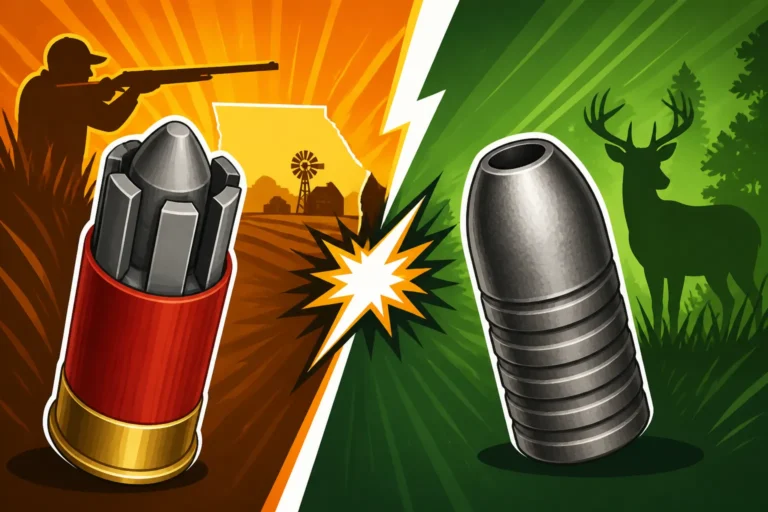
The most common type of slug fired from a smoothbore shotgun is the Foster slug, also known as a "rifled slug" – which can be confusing because the slug itself has shallow rifling, but it's not for a rifled barrel. These shallow grooves on the slug are actually designed to allow it to compress slightly when passing through a choke, and also to help reduce friction. The stability of a Foster slug doesn't come from spinning; it comes from its unique weight distribution and aerodynamics.
Foster slugs are typically made of soft lead, with a hollow cavity in the rear, making them front-heavy. This design acts like a shuttlecock or a dart, forcing the heavier nose to stay forward during flight. Imagine a dart; it doesn't spin to stay straight, but its weight distribution keeps it stable. That's essentially how a Foster slug works. They are incredibly effective at close range, delivering a significant punch, which is why they've been a staple for so long in shotgun-only zones.
Accuracy Limitations of Smoothbores
Now, here's where the rubber meets the road with smoothbores: accuracy. Because the Foster slug isn't spin-stabilized, its flight path is inherently less precise than a spinning projectile. Wind, variations in manufacturing, and even slight imperfections in the slug can cause it to wobble or yaw in flight. This isn't a huge issue at 25 yards, but stretch that shot out to 75 or 100 yards, and those minor wobbles become major misses.
You might be able to get a smoothbore to group slugs within a 4-6 inch spread at 50 yards with open sights or a basic red dot. Some setups might do better, others worse. The key is understanding that consistency beyond that range becomes a real gamble. This means hunters relying on smoothbores need to be disciplined about their shot distances and have a clear understanding of their gun's limitations. It’s not about the gun being "bad," it's about respecting what it was designed to do, and more importantly, what it wasn't designed to do.
Best Use Cases for Smoothbore Setups
Given their characteristics, smoothbore shotguns excel in specific hunting scenarios. If you're hunting dense timber, thick brush, or river bottom country where shot distances are almost always under 70-80 yards, a smoothbore is often more than adequate. Think about sneaking through an Iowa creek bottom, where a deer might burst out at 30 yards. A smoothbore slug will put that deer down effectively and humanely.
They are also an excellent choice for hunters who prioritize versatility and already own a shotgun they love. If you primarily hunt upland birds or waterfowl, but also enjoy deer season, simply swapping to slugs can make your existing firearm pull double duty. This saves money on additional firearms and allows you to become intimately familiar with one platform. Just remember that dialing in your sights and knowing your personal effective range with your smoothbore and chosen slug is absolutely paramount. Sighting In Before Shotgun Season is crucial for any setup, but especially for a smoothbores where tolerances for error are tighter at range.
The Precision of Rifled Barrels and Sabot Slugs
When hunters talk about pushing the limits of shotgun deer hunting, they're almost always referring to setups with rifled barrels and sabot slugs. This combination is designed from the ground up to mimic the performance of a rifle, offering significantly improved accuracy and extended range.
Sabot Slugs Explained
The game-changer for rifled barrels is the sabot slug. Unlike the Foster slug, which is designed to fly straight due to its shape, a sabot slug is specifically designed to be spin-stabilized. A "sabot" (pronounced sah-boh) is a plastic sleeve that encases a smaller, rifle-like projectile, often made of lead or copper. This sleeve protects the projectile and engages with the rifling in the barrel, imparting a spin. Once the slug exits the muzzle, the sabot falls away, leaving the spin-stabilized projectile to continue its flight with greatly enhanced accuracy.
These projectiles are often aerodynamically superior to Foster slugs, with pointed or ballistic tips, further enhancing their long-range capabilities. They can be found in a variety of weights and designs, from expanding lead to solid copper, each offering different terminal ballistics. The beauty of the sabot is its ability to transform a shotgun into a much more capable long-range firearm for deer.
Why Rifling Improves Accuracy
The fundamental reason rifling improves accuracy is spin stabilization. Imagine throwing a football end-over-end versus throwing a perfect spiral. The spiral travels straighter and is far more predictable. The same principle applies here. As the sabot slug travels down the rifled barrel, it's forced to rotate rapidly. This rotational inertia resists any tendencies to tumble or yaw, keeping the projectile's nose pointed forward throughout its flight.
This stabilization dramatically tightens groups downrange. Where a smoothbore might give you 4-6 inches at 50 yards, a good rifled barrel with quality sabot slugs can achieve 2-3 inch groups, or even tighter, at 100 yards. This isn't just a marginal improvement; it's a game-changer, pushing the effective range of a shotgun setup well beyond what was traditionally thought possible. For hunters looking to capitalize on wider fields or longer shooting lanes, this accuracy is invaluable.
Effective Range and Ballistics
With a rifled barrel and sabot slugs, your effective range for deer hunting in Iowa expands considerably. While a smoothbore might be limited to 75-80 yards for ethical shots, a well-tuned rifled slug gun can reliably take deer out to 125-150 yards, and even further for skilled shooters who practice regularly. Some manufacturers claim even greater ranges, but practicing at those distances is key to ensuring ethical kills.
The ballistics of sabot slugs are also much flatter than Foster slugs. Because they are more aerodynamic and fly with greater stability, they lose less velocity and drop less over distance. This flatter trajectory makes range estimation less critical within typical hunting ranges and allows for more confident shot placement. When planning your hunt, knowing your Slug Gun Range Limits in Iowa and the specific ballistics of your chosen sabot slug is paramount. Websites like GoHunt often have resources or community forums where hunters share their real-world ballistic data, which can be super helpful when you're trying to dial in your setup.
Key Differences and Performance Metrics
When you're trying to decide between a rifled barrel and a smoothbore, it really comes down to a few key performance metrics. It's not just about what shoots further, but also how they feel, what they cost, and how versatile they are. Let's break down the most important distinctions.
Comparing Accuracy and Effective Range
This is undoubtedly the biggest differentiator. As we've discussed, a rifled barrel shooting sabot slugs offers superior accuracy and a significantly extended effective range.
| Feature | Smoothbore Barrel + Foster Slugs | Rifled Barrel + Sabot Slugs |
|---|---|---|
| Projectile Type | Foster slugs (front-heavy, fin-stabilized) | Sabot slugs (rifle-like projectile in plastic sabot, spin-stabilized) |
| Barrel Interior | Smooth | Helical grooves (rifling) |
| Accuracy (Avg.) | 4-6 inch groups at 50 yards | 2-3 inch groups at 100 yards (or better) |
| Effective Range | Generally 75-80 yards, maximum 100 yards | Reliably 125-150 yards, potentially further |
| Best For | Dense cover, short-range shots, versatile shotgun use | Open fields, longer shooting lanes, precision |
| Optics | Open sights, red dot, low-magnification scope | Medium-magnification scope (e.g., 2-7x, 3-9x) |
| Cost of Ammo | Generally less expensive | Generally more expensive |
For a hunter looking to take advantage of wider shooting lanes across picked cornfields or power lines in Iowa, the extended range and precision of a rifled barrel are undeniable. However, for those navigating tight river bottom timber, the differences might not translate into a practical advantage if shots are consistently under 50 yards. Your hunting environment should heavily influence your decision here.
Recoil and Shooting Experience
Let's be honest, shooting slugs from a shotgun can be a thumping experience. Both smoothbore and rifled slug guns deliver significant recoil, but there can be perceived differences depending on the setup. Generally, 12-gauge slugs pack a punch, regardless of the barrel type.
However, many dedicated rifled slug guns are built heavier, sometimes with thicker barrels and specialized stocks designed to absorb recoil. This can make the shooting experience slightly more manageable compared to a lightweight smoothbore shotgun. Additionally, the type of sabot slug can sometimes feel different than a heavy Foster slug. Some modern sabot slugs are designed to minimize recoil while maximizing velocity. Regardless of your choice, if recoil is a concern, practicing with your setup and considering aftermarket recoil pads or even lighter slug loads (like 20-gauge options) can make a big difference. For those planning intense practice sessions before the season, understanding Recoil From a Twelve Gauge Slug is important for comfort and consistency.
Cost and Versatility Considerations
Here's a practical aspect that often sways hunters: cost. A smoothbore shotgun is generally more affordable, especially if you already own one. Foster slugs are also typically less expensive per box than sabot slugs. If you're on a budget or only hunt deer occasionally, using your existing smoothbore can be a very economical choice. The versatility of a smoothbore also means it can serve multiple purposes: deer, waterfowl, upland birds, and even home defense.
A dedicated rifled slug barrel, or an entirely new rifled slug gun, represents a more significant investment. The barrels themselves can cost a fair bit, and sabot slugs are almost always pricier than Foster slugs. If you only hunt deer with a shotgun, and precision at range is your top priority, then the investment is likely worth it. However, if you need a multi-purpose firearm, the rifled slug setup pigeonholes your shotgun for slug hunting. Consider your overall hunting interests and how much you're willing to spend.
Choosing the Right Setup for Your Iowa Hunt
The decision between a rifled barrel and a smoothbore isn't about one being inherently "better" than the other. It's about which setup is better for you, your hunting style, your local terrain, and your budget. Making an informed choice will lead to more confidence and success in the field.
Factors to Consider: Terrain and Shot Distance
Iowa's hunting landscape is incredibly varied. You might be still-hunting deep timber where visibility is limited to 40 yards, or sitting on the edge of a vast corn or soybean field, hoping to intercept a buck crossing at 100-150 yards. Your primary hunting terrain should be a major factor in your decision.
- Dense Timber/Brush: If your hunting spots are characterized by heavy woods, creek bottoms, and thick cover where shots are almost guaranteed to be close (under 75 yards), a smoothbore with Foster slugs is often perfectly adequate. The deer aren't going to stand still at 100 yards for you anyway in that kind of cover, and the close-range stopping power is excellent. Knowing how to Read an Iowa Timber Draw for Deer Sign will help you identify these close-quarter opportunities.
- Open Fields/Ag Edges: If you primarily hunt field edges, power lines, or areas with longer sightlines where 100-150 yard shots are a real possibility, then the increased accuracy and range of a rifled barrel with sabot slugs will give you a significant advantage. This allows you to take ethical shots at deer that would be beyond the effective range of a smoothbore. For hunters focused on longer shots, understanding Rangefinding in Timber and open fields becomes crucial.
Iowa Regulations and Their Impact
Iowa's hunting regulations are crucial, and they dictate which weapons are legal for deer in which seasons. For general deer seasons, shotguns, muzzleloaders, and straight-wall cartridge rifles are typically allowed. However, the specific rules regarding slug guns affect everyone. The good news is that both smoothbore and rifled barrel shotguns are perfectly legal for Iowa's shotgun seasons.
What the regulations really impact is your choice of ammunition and how you approach shot opportunities. Because Iowa is a "shotgun/straight-wall cartridge" state, hunters are inherently operating under different ballistic limitations than those in high-power rifle states. This makes the debate between rifled and smoothbore even more relevant, as hunters try to squeeze every bit of performance out of their legal firearms. It's always a good idea to check the most current Iowa DNR regulations before each season, which GoHunt often links to or references in their articles, just to make sure you're up-to-date on any potential changes to Iowa's Legal Deer Hunting Equipment by Season.
Personal Preference and Budget
Ultimately, your personal preference and budget will play a significant role. Some hunters simply prefer the feel and traditional appeal of a smoothbore. Others are driven by the desire for maximum accuracy and technology.
- Budget: If you're looking to minimize expenditure, especially if deer hunting isn't your primary pursuit, sticking with a smoothbore and quality Foster slugs is the most cost-effective path.
- Confidence: The most important factor is confidence in your equipment. If you feel more confident taking a 50-yard shot with a smoothbore you've practiced with extensively, that's better than taking a Hail Mary 100-yard shot with a rifled slug gun you're not comfortable with. Conversely, if you feel limited by your smoothbore and find yourself passing up ethical shots because of range concerns, then investing in a rifled setup might be a game-changer for your hunting success.
Consider visiting a range and, if possible, trying out both types of setups. Talk to other Iowa hunters. You might find that a high-quality 20-gauge rifled slug gun offers a pleasant shooting experience with excellent accuracy, or that your trusted 12-gauge smoothbore is already doing everything you need it to do. It's all about finding that sweet spot where confidence, capability, and your budget align for your Iowa deer hunts.
Disclaimer
This article is for general informational purposes only and does not constitute professional advice. Laws, prices and regulations vary by location and change over time. Consult a qualified professional for guidance on your specific situation.