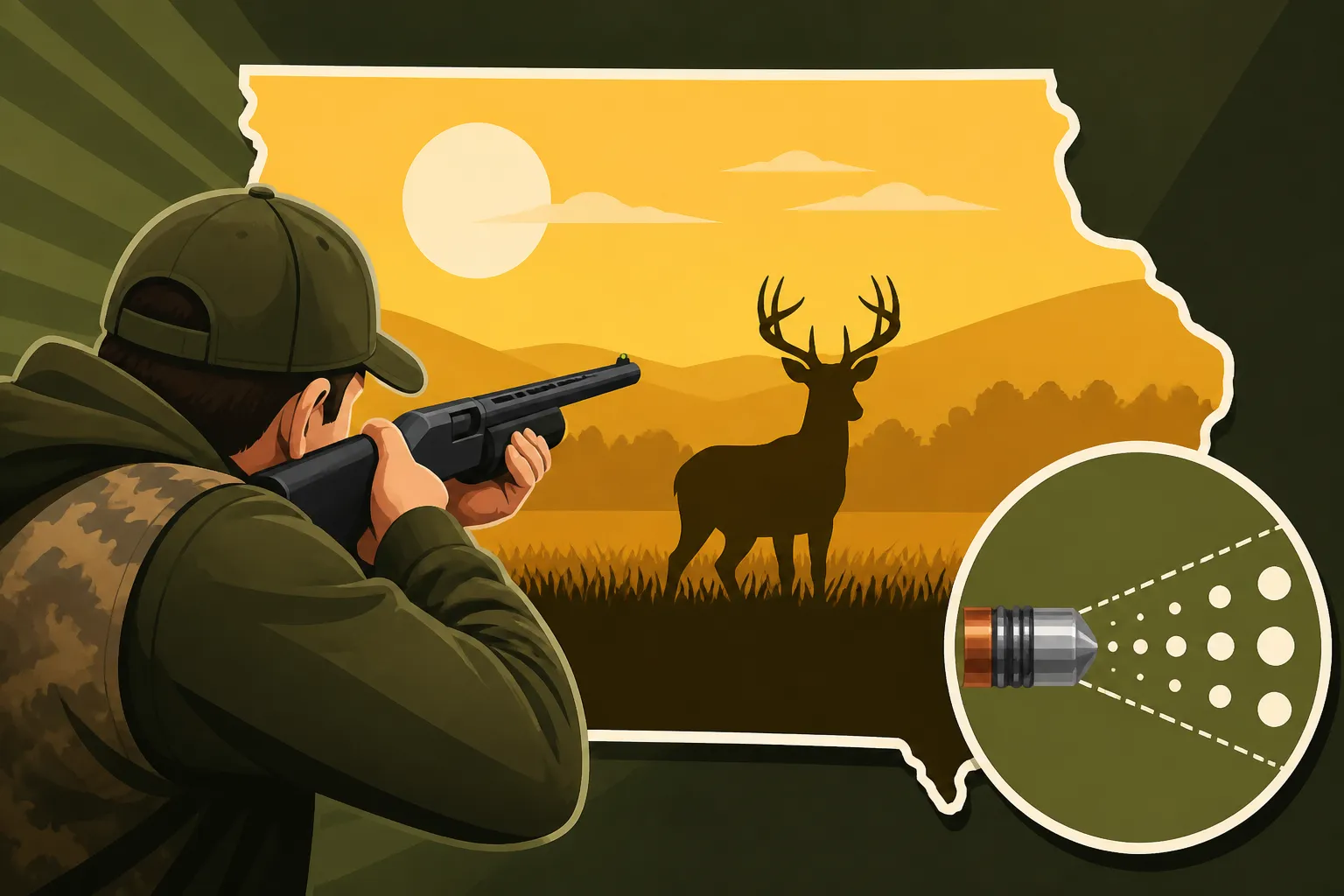
Slug Gun Range Limits in Iowa
It's a common dilemma for Iowa deer hunters, isn't it? You’ve got your slug gun ready, the season is approaching, and you're wondering just how far you can ethically and effectively take a shot. The legal framework surrounding firearms in Iowa's deer seasons, especially with traditional slug guns, often leaves folks scratching their heads about what "effective range" truly means out in the field. This guide aims to clear up the confusion, helping you understand the real-world range limits of your slug gun so you can make confident, ethical shots every time.
Understanding Iowa's Regulations on Shotguns and Slugs
Iowa’s hunting heritage is deeply rooted in shotgun seasons for deer, and while straight-wall cartridge rifles have gained popularity, many of us still rely on our trusty slug guns. These regulations exist for a reason, primarily safety in our often densely populated, agriculturally rich landscape. It’s not just about what the gun can do, but what it’s allowed to do, and more importantly, what it should do for a clean harvest.
Why Range Limits Matter for Slug Guns in Iowa
The vast majority of Iowa's deer habitat is a mosaic of timber blocks, creek bottoms, and sprawling crop fields. You're not often hunting wide-open plains where a high-powered rifle shot at 300 yards is a common occurrence. Instead, you're navigating dense multiflora rose thickets, trying to slip through timber that looks impenetrable on a map, or watching deer filter out of a standing cornfield. In these environments, an ethical shot often means a closer shot, ensuring the slug hits its mark and the deer doesn't run far into private property you don't have permission to access.
Safety is paramount, too. With a shotgun slug, while still incredibly powerful, the projectile generally loses energy and drops faster than a rifle round. This characteristic makes them a safer choice in areas where there might be homes or livestock beyond your immediate target, reducing the risk of a dangerously long-range projectile. Understanding your slug gun's effective range means you can confidently decide when a shot is appropriate and when it's better to wait for a closer, safer opportunity. It's about respecting the game, your fellow hunters, and the landowners around you. It’s why you hear so many seasoned hunters talk about patience in the timber.
The Legal Framework for Shotguns
Iowa's regulations typically define shotguns as a firearm designed to be fired from the shoulder and designed to use unrifled barrels for the purpose of shooting shot. However, for deer hunting, specific rules come into play. You're allowed to use 10, 12, 16, or 20 gauge shotguns, and they must fire a single projectile, meaning slugs. This is a critical distinction from birdshot or buckshot, which are explicitly prohibited for deer. The intent is to use a heavy, single projectile designed to humanely dispatch a deer.
Historically, Iowa, like many Midwestern states, limited deer hunting to shotguns and muzzleloaders to enhance safety in areas with high human populations and mixed land use. While modern advancements have brought Iowa's Straight-Wall Cartridge Rules into play, giving hunters more options, the shotgun remains a popular and effective choice. It's important to always consult the current Iowa hunting regulations before heading afield, as rules can sometimes be tweaked. However, the core principle of a single projectile slug from a permitted gauge remains consistent. The design of these firearms and ammunition intrinsically limits their maximum effective range compared to centerfire rifles, which is precisely why they've been mandated for so long in certain seasons.
Factors Influencing a Slug Gun's Effective Range
When you pick up a shotgun slug, whether it's for the Iowa First and Second Shotgun Seasons or a late-season antlerless hunt, you're holding a powerful projectile. But how far can it truly reach accurately and ethically? That depends on a few key factors, and understanding them is crucial for making responsible decisions in the field.
Ammunition Type: Sabot vs. Foster Slugs
This is perhaps the single biggest factor in determining your slug gun's effective range. There are two primary types of shotgun slugs you'll encounter, and they behave very differently:
- Foster (Rifled) Slugs: These are your classic, older-style slugs. They have "rifling" on the outside, but don't let that fool you – it's there to allow the slug to compress when passing through a choke, not to impart spin. Foster slugs are designed for smoothbore barrels. They rely on a front-heavy design for stability in flight, similar to how a shuttlecock flies.
- Range: Generally, foster slugs are most accurate out to about 75-100 yards. Beyond that, their accuracy falls off significantly. They are excellent for thick timber hunting or close-range shots, which is why many party-hunting groups running drives still rely on them. They are heavy-hitting up close, but drop quickly.
- Sabot Slugs: These are the modern marvels of slug technology, designed for rifled barrels. A sabot (pronounced "SAY-bow" or "SA-bow") is a plastic cup or sleeve that encases a smaller, aerodynamic projectile, often resembling a large pistol or rifle bullet. The sabot engages the rifling in the barrel, imparting a spin to the projectile, much like a rifle bullet. Once the slug exits the barrel, the sabot separates, allowing the aerodynamic projectile to continue on a much flatter trajectory with greater accuracy.
- Range: Sabot slugs in a dedicated rifled slug barrel can extend your effective range significantly, often out to 150-200 yards, with some combinations pushing even further under ideal conditions. Their flatter trajectory and improved accuracy make them a game-changer for hunting over longer field edges or in more open timber.
It's absolutely critical to match your slug type to your barrel. Shooting sabot slugs through a smoothbore barrel will yield terrible accuracy and wasted money. Conversely, shooting foster slugs through a rifled barrel will still work, but you won't get the ballistic performance you'd achieve with sabots, and some argue it can lead to excessive lead fouling in the rifling.
Here's a quick comparison:
| Feature | Foster Slugs (Traditional) | Sabot Slugs (Modern) |
|---|---|---|
| Designed For | Smoothbore barrels | Rifled barrels |
| Accuracy | Good out to 75-100 yards | Good out to 150-200+ yards |
| Trajectory | More pronounced arc, drops faster | Flatter trajectory, retains energy better |
| Projectile | Lead "dart" with external "rifling" | Smaller, aerodynamic bullet encased in plastic sabot |
| Barrel Type | Smoothbore (often with improved cylinder or modified choke) | Fully rifled barrel |
| Cost (approx.) | Generally less expensive | Generally more expensive |
| Best Use | Thick cover, short-range | Open fields, longer shots, general purpose (with rifled b.) |
Firearm Configuration and Optics
Beyond the slug itself, the shotgun you're shooting and the accessories you put on it play a huge role.
- Rifled Barrels: A dedicated rifled slug barrel is paramount for achieving those longer ranges with sabot slugs. These barrels, often found on pumps like the Remington 870 or Mossberg 500, or purpose-built slug guns, have actual spiral grooves that spin the projectile, stabilizing it. Without this rifling, even the best sabot slug is just a big, expensive lead blob tumbling through the air.
- Optics: A good scope makes a world of difference. For foster slugs in a smoothbore, a low-power variable scope (1-4x or 2-7x) or even a quality red dot sight can be perfect for quick target acquisition in dense cover. A red dot excels at Red Dot Sights on a Slug Gun for fast, close shots. However, for sabot slugs and rifled barrels, a higher magnification scope (3-9x or even higher) is often preferred. This allows for more precise aiming at extended ranges where a deer's vitals appear much smaller. You need crisp optics to pick out that kill zone at 150 yards. It's not just about seeing the deer, it's about seeing exactly where you want to hit it.
- Mounting and Zeroing: A rock-solid scope mount is non-negotiable. The recoil of a slug gun can be substantial, and a cheap mount will cause your scope to shift, ruining your zero. And speaking of zero, proper Zeroing a Slug Gun at Fifty Yards (or 100 yards for sabots) is absolutely critical. What good is a 150-yard potential if your gun isn't sighted in? Even a slight error at 50 yards can mean a clean miss or, worse, a wounded animal at 100.
Practical Shooting Distances for Iowa Deer Hunters
So, with all that technical talk, what does it mean for you, the hunter, actually out in an Iowa timber stand or on a field edge? When you're facing that moment of truth, how far is too far?
Ethical Considerations and Hunter Skill
This is where the rubber meets the road. Just because your gun can shoot 150 yards doesn't mean you can, consistently and under pressure. Ethical hunting demands that we only take shots we are confident will result in a quick, humane harvest. This isn't a video game; it's a living animal, and we owe it our best.
- Your Personal Proficiency: Be honest with yourself. Can you consistently group shots within a 6-inch circle (the approximate size of a deer's vital zone) at 100, 125, or 150 yards from field positions (standing, kneeling, resting on a tree) that mimic real hunting scenarios? Or have you only practiced from a bench rest? Factors like adrenaline, cold hands, shaky knees, and tricky wind can drastically reduce your "bench rest" accuracy in the field.
- Deer Behavior: A deer is rarely standing perfectly broadside in an open field, patiently waiting for you. They move, they twitch, they might be partially obscured by brush. Can you confidently place a shot on a slightly quartering deer at your maximum comfortable range?
- Conditions: Wind, rain, snow, and low light can all reduce your effective range. What might be an easy shot on a calm, sunny day at 100 yards could become a questionable one in a stiff crosswind or the fading light of dusk.
Many experienced Iowa hunters, even with modern sabot setups, impose a self-limit of 125-150 yards for deer, knowing that while the gun might reach further, the variables in the field make closer shots much more reliable for a quick kill. It's about respecting the animal and your own abilities.
Real-World Scenarios and Max Effective Ranges
Let's break down some common Iowa hunting scenarios and what kind of ranges you might realistically expect:
- Scenario 1: Thick Timber Drive with a Smoothbore (Foster Slugs)
- Description: You're on a deer drive, pushing timber. Deer are likely moving fast, and shots are quick and close, often through brush. You're using a smoothbore shotgun with foster slugs.
- Realistic Max Effective Range: 50-75 yards. This is your bread and butter. At these ranges, foster slugs are devastating, and the quick-handling nature of a smoothbore is an advantage. Anything beyond that becomes a high-risk shot for accuracy and ethical placement. This is where Party Hunting Rules and Safe Drives really come into play.
- Scenario 2: Stand Hunting an Iowa Timber Draw with a Rifled Barrel (Sabot Slugs)
- Description: You're sitting in a stand overlooking a Reading an Iowa Timber Draw for Deer Sign and a small food plot or clearing. Deer might appear at 20-100 yards, sometimes a bit further if the timber thins. You're using a rifled barrel with sabot slugs and a low-power scope.
- Realistic Max Effective Range: 100-125 yards. With good practice, a quality sabot setup can be deadly here. The rifled barrel gives you the confidence for those slightly longer shots across openings, but the dense timber still keeps most opportunities within reason.
- Scenario 3: Field Edge Hunting Overlooking a Cut Cornfield (Sabot Slugs)
- Description: You're positioned on a timber edge, watching a vast Standing Corn and Bean Field Deer Patterns. Deer might exit the cover anywhere from 50 to 200 yards away. You're using a rifled barrel with sabot slugs and a higher-power scope.
- Realistic Max Effective Range: 150-175 yards. This is where sabot slugs truly shine. With ample practice and confidence in your setup, these ranges are achievable and ethical. Beyond 175 yards, even with top-tier equipment, trajectory drop becomes significant, and wind drift can be a major factor, making an ethical shot much harder. Always use a rangefinder to confirm distances in these open scenarios. Using a tool like GoHunt to scout and mark distances before you even set foot in the field can be incredibly valuable for these types of situations.
Remember, these are realistic maximums for a skilled hunter with a well-maintained, properly sighted-in firearm. Your personal maximum might be less, and that's perfectly okay. The goal is a clean kill, not bragging rights on distance.
Maximizing Your Slug Gun's Performance (Within Legal and Ethical Bounds)
Getting the most out of your slug gun isn't about pushing past its limits, but rather operating within its sweet spot consistently. This boils down to smart choices, dedicated practice, and understanding your equipment.
Practice, Practice, Practice
I can't stress this enough. Hitting a paper target from a bench rest at the range is one thing; making a clean shot on a live animal in the deer woods is entirely another.
- Range Time is Crucial: Take your slug gun to the range and shoot it. A lot. Test different slug brands and types (sabot vs. foster, different grain weights) to see what your specific gun likes best. Not all guns shoot all ammo well. This is an investment in ethical hunting.
- Practice from Field Positions: Don't just shoot from a bench. Practice shooting from kneeling, standing, leaning against a tree, or even from your treestand if possible (safely, of course). Simulate the positions you'll actually be in when hunting. How does your accuracy change when you're breathing hard after a walk, or when you have to quickly bring the gun to your shoulder?
- Understand Bullet Drop: Slugs drop significantly over distance. Knowing your specific slug's trajectory is vital. If your gun is zeroed at 100 yards, how much does it drop at 125, 150, or even 175 yards? Use a ballistic calculator or simply shoot at these distances to find out. This knowledge, combined with a good rangefinder, allows you to hold over accurately if needed. This is a critical step before Sighting In Before Shotgun Season for real.
Selecting the Right Ammunition for Your Setup
As we discussed, the right slug for your barrel type is paramount.
- Smoothbore Owners: Stick with foster-style slugs. Experiment with different brands and weights (e.g., 1 oz vs. 7/8 oz) to find what groups best in your shotgun. Some smoothbores perform better with a particular choke, often improved cylinder or modified, which can slightly improve accuracy by guiding the slug more consistently out of the barrel.
- Rifled Barrel Owners: Sabot slugs are your friend. Here, the options are even more varied: different bullet weights, designs (e.g., polymer tip, hollow point), and manufacturers. Buy a few different boxes and shoot them. It's not uncommon for a rifled barrel to prefer one brand or bullet weight over all others. The one that consistently groups tightest at your desired maximum range is the one to use. Keep detailed notes on how each performs.
Choosing Optics and Accessories
The right gear won't make a bad shot good, but it can certainly help you make a good shot great.
- Scopes vs. Red Dots: For close-range, fast-action scenarios common in thick Iowa timber, a red dot sight or a 1-4x power scope can be perfect. They offer quick target acquisition and a wide field of view. However, for hunting over expansive food plots or longer field edges, where shots might stretch beyond 100 yards, a higher magnification scope (3-9x or 2-7x) on your rifled slug gun is almost a necessity for precision.
- Rangefinders: A good rangefinder is non-negotiable for pushing your slug gun's effective range. It eliminates guesswork and tells you the exact distance to the target. Knowing that precise distance is crucial for accounting for bullet drop. You can use your GoHunt app to mark ranges on a map, but a physical rangefinder in hand for the actual shot is key.
- Quality Mounts: Don't skimp on scope rings and bases. A cheap mount will fail under the recoil of a slug gun, causing your scope to lose zero or even break. Invest in quality steel or aluminum mounts that are designed to handle heavy recoil. Properly torque them down according to the manufacturer's specifications.
By focusing on these areas – consistent practice, proper ammunition selection, and smart optics choices – you can truly maximize your slug gun's performance within its inherent range limits. This way, you're not just hoping for a good shot; you're preparing for one, ensuring an ethical and successful hunt every time you step into the Iowa deer woods.
Disclaimer
This article is for general informational purposes only and does not constitute professional advice. Laws, prices and regulations vary by location and change over time. Consult a qualified professional for guidance on your specific situation.