Trail Camera Battery Life in Cold
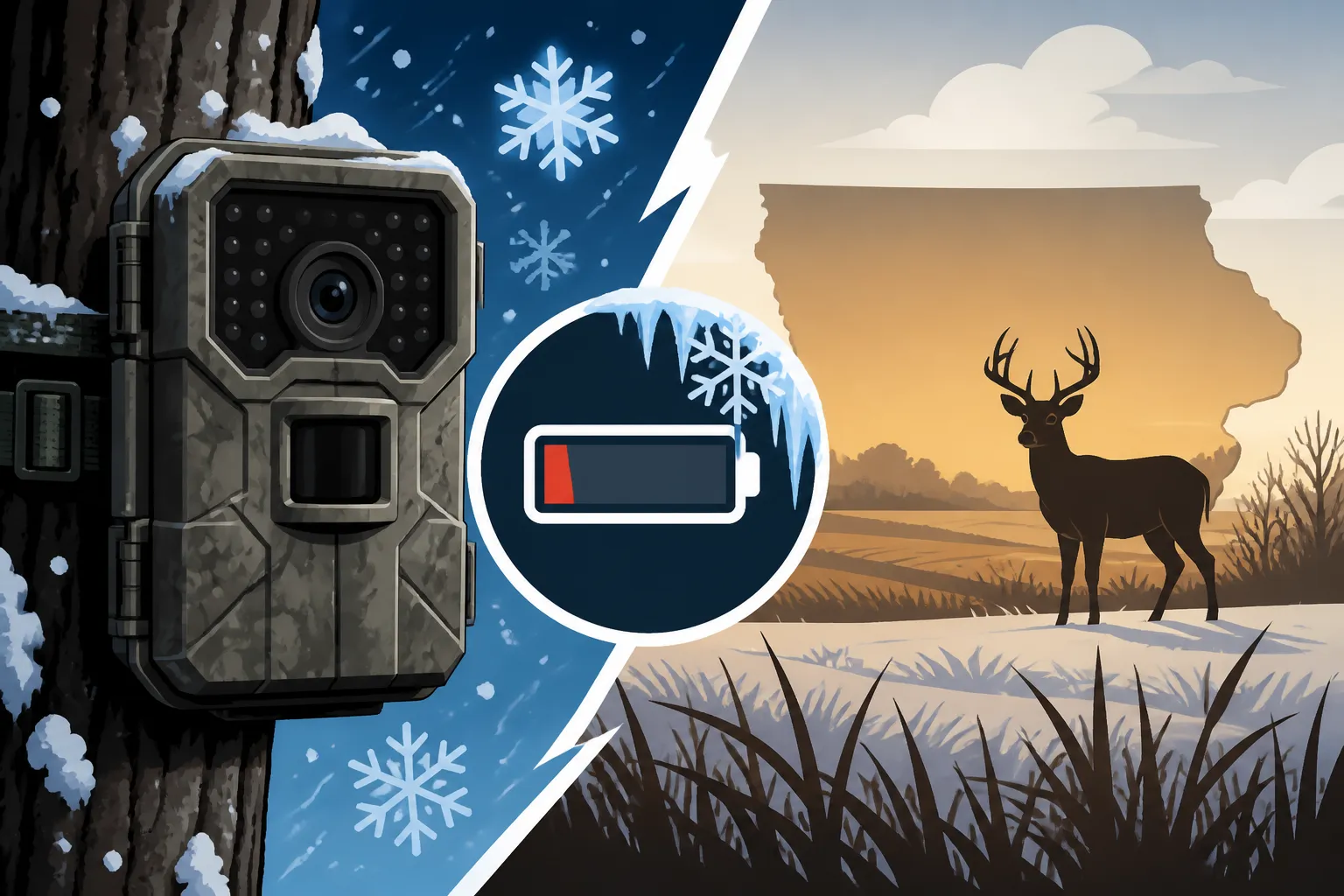
There are few things more frustrating for an Iowa deer hunter than heading out to check your trail cameras in the biting cold, only to find the batteries completely dead after just a week or two. That blank screen isn't just a missed opportunity to scout; it's a testament to the brutal efficiency of winter on sensitive electronics. This guide is here to walk you through why your trail camera batteries are giving up the ghost too soon in the frigid Iowa air and, more importantly, how you can extend their life to keep scouting effectively all season long.
The Cold Reality: Why Batteries Struggle in Iowa's Winter
Iowa winters are no joke, with temperatures often plunging well below freezing for extended periods. While we bundle up in layers of Cold Weather Stand Clothing, our trail cameras are out there facing the elements head-on, and it's their power source that often takes the biggest hit. Understanding why cold is such a battery killer is the first step toward combating it.
How Cold Temperatures Affect Battery Performance
At its core, a battery works through a chemical reaction that generates an electrical current. When temperatures drop, these chemical reactions slow down significantly. Think of it like trying to run through waist-deep snow—everything becomes harder and takes more effort. Inside a battery, the electrolytes become less conductive, increasing the internal resistance. This means the battery has to work much harder to deliver the same amount of power, and in doing so, it quickly drains its available energy.
What you'll observe in your trail camera is a rapid drop in voltage, even if the battery isn't technically "empty." This voltage drop can fool the camera's internal sensors, making it think the battery is dead or too low to operate, even if it still has a decent charge left in warmer conditions. This is especially noticeable during Late Muzzleloader Deer Hunting in Iowa or even into the Iowa January Antlerless Hunts, when sub-zero temps are common. You might find a camera that worked fine in 30-degree weather suddenly quits entirely at 10 degrees, despite having "fresh" batteries. It's not necessarily that the battery is completely out of juice; it's just too cold to deliver it efficiently.
The Impact on Different Battery Types
Not all batteries are created equal, especially when it comes to battling the cold. The type of battery you choose can make a world of difference in your camera's winter performance.
- Alkaline Batteries: These are your standard, everyday AA batteries, often the cheapest option. They are notorious for poor cold-weather performance. Their chemical reactions are heavily inhibited by low temperatures, leading to significant voltage drop and reduced capacity. You might get a week or two out of them in freezing conditions, if you're lucky, before they report as dead. They might even leak corrosive chemicals if pushed too hard in the cold, damaging your camera.
- Rechargeable NiMH Batteries: Nickel-Metal Hydride batteries are a greener option, as they can be reused hundreds of times. However, they also suffer substantially in the cold. Their self-discharge rate increases, meaning they lose charge even when not in use, and their overall capacity is greatly diminished. While great for warmer months, relying on NiMH for sustained cold-weather surveillance in Iowa often leads to disappointment and missed opportunities.
- Lithium Batteries: This is where things get interesting for winter trail cam users. Lithium batteries (specifically AA lithium primaries, not lithium-ion rechargeables common in phones) are designed with a different chemistry that is far less susceptible to temperature fluctuations. They maintain a much more stable voltage output even in extreme cold and boast a significantly higher energy density. This means they not only last longer but also perform better throughout their lifespan in sub-freezing temperatures. They're often more expensive upfront, but the investment pays dividends in reliability and reduced trips to swap batteries.
| Battery Type | Cold Weather Performance | Typical Cost | Pros in Cold | Cons in Cold |
|---|---|---|---|---|
| Alkaline (AA) | Poor | Low | Widely available | Significant capacity loss, voltage drop, leakage |
| NiMH (AA) | Fair-Poor | Medium (reus.) | Rechargeable, good for mild cold | Reduced capacity, increased self-discharge |
| Lithium (AA) | Excellent | High | Stable voltage, high capacity, reliable | Higher initial cost, not rechargeable |
| External (12V) | Good (with protection) | High | High capacity, can be insulated | Bulkier, requires separate weatherproofing |
| Solar Panel | Varies (with sun) | High | Sustainable power (with sun) | Dependent on sunlight, complex setup, theft risk |
Choosing the Right Power Source for Iowa's Chill
When winter really sets in across Iowa, the decision about what powers your trail camera becomes paramount. Skimping on this choice will inevitably lead to frustration and missed intel on deer movement.
The Undisputed King: Lithium Batteries
For any serious Iowa hunter looking to keep their trail cameras running reliably through the coldest months, lithium primary AA batteries are the undeniable champion. Their internal chemistry allows them to operate efficiently at temperatures far below freezing, often down to -40 degrees Fahrenheit, maintaining a consistent voltage that keeps your camera functioning properly. While they carry a higher upfront cost compared to alkalines, the extended life and unwavering performance in brutal conditions make them a wise investment. You'll spend less time trudging through snow to swap batteries and more time analyzing valuable intel, like potential new Deer Density by Iowa County or unexpected buck movement.
Many seasoned hunters swear by specific brands known for their lithium battery quality. These batteries can often provide two to three times the life of alkaline batteries in moderate conditions, and the difference becomes even more dramatic as the mercury plummets. Consider how many trips you save by not having to replace batteries every other week, especially when your stand might be a long walk from the truck on public ground. That saved time and disturbance is invaluable when you're trying to pattern wary whitetails.
Alternative Power Options and When They Make Sense
While lithium AAs are fantastic, they aren't the only solution. For certain setups, or if you're running cellular cameras with their notoriously high power draw, alternative power sources might be worth exploring.
- Solar Panels: A solar panel combined with a rechargeable external battery pack can provide a continuous power supply, especially beneficial for cameras deployed in open areas where they get ample sunlight. However, they come with caveats. Winter sunlight in Iowa is weaker and the days are shorter, meaning the panel needs to be optimally angled to capture enough light. Accumulating snow or frost on the panel can also drastically reduce its effectiveness. Placing a solar panel effectively often requires careful consideration, much like planning for Trail Camera Placement on Iowa Public Land, to ensure it's not obstructed but also not overly visible to others. Furthermore, the external battery pack still needs to be capable of handling cold temperatures, and properly weatherproofing all connections is critical. Tools like GoHunt can help you assess sun exposure for potential solar panel locations directly from aerial maps before you even step foot in the timber.
- External Battery Packs: These typically consist of a larger 6V or 12V battery housed in a separate, often weatherproof, case that connects to your camera via a power port. They offer significantly higher capacity than AA batteries. The major advantage here is that you can often insulate this external pack more effectively than the camera itself. By placing it inside a small, insulated box or burying it slightly, you can help protect the battery from the worst of the cold, thereby extending its functional life. This is a great option for cellular cameras, where the constant data transmission is a massive battery drain, and you don't want to be constantly visiting your camera to swap AAs. Just remember that the battery inside the pack still needs to be cold-tolerant to a reasonable degree.
Maximizing Trail Camera Battery Life in Frigid Conditions
Choosing the right batteries is a huge step, but it's only part of the equation. How you configure and deploy your camera can also significantly impact how long those batteries last, even the robust lithium ones, when facing Iowa's winter chill.
Camera Settings That Drain Batteries Faster
Trail cameras are feature-rich, but every setting you activate pulls power. Being mindful of these can squeeze extra life out of your batteries.
- Video vs. Photo Mode: Video mode is a battery hog, plain and simple. Recording even short video clips requires more power for processing, encoding, and storing larger files compared to taking a still photo. If you're running cameras in cold weather, especially on lithium AAs, switching primarily to still photo mode (with a rapid burst if needed) will drastically extend battery life. Consider using video only in specific, high-traffic areas where detailed footage is absolutely critical, such as a known pinch point or a primary food source.
- Trigger Speed and Recovery Time: A camera's trigger speed refers to how quickly it can detect motion and capture an image. A faster trigger speed often means the camera's motion sensor is more "active" and ready, consuming more power. Similarly, a short recovery time (the delay between consecutive captures) means the camera is constantly resetting and preparing for the next shot, rather than entering a low-power state. For winter use, extending your recovery time slightly—say, to 30 seconds or even a minute—can save significant battery life, especially in areas with frequent, but perhaps less critical, deer movement.
- Flash Settings: Most modern trail cameras offer different flash options: invisible infrared (no-glow), low-glow infrared, or white flash. White flash (which takes full-color night photos) consumes the most power, as it's essentially firing a bright strobe. No-glow IR is generally the most energy-efficient for night photography, as it uses less power than low-glow or white flash. If battery life is your top priority in the cold, stick with no-glow infrared settings for night images.
- Sensitivity Settings: High sensitivity means your camera will trigger on smaller movements or at greater distances, which can lead to more "false" triggers—pictures of blowing leaves, swaying branches, or even falling snow. Every false trigger consumes battery power. In cold, windy Iowa conditions, consider lowering the camera's sensitivity setting to reduce unwanted activations, thus conserving battery life.
- Cellular Transmission Frequency: For cellular trail cameras, the biggest battery drain isn't capturing photos; it's transmitting them. Each time the camera connects to the cellular network, it expends a substantial amount of power. If you're set to upload every photo instantly, your batteries will plummet in the cold. Adjusting your camera to transmit photos less frequently—perhaps once or twice a day, or only sending a batch overnight—can significantly extend battery life. This is a trade-off between real-time intel and battery longevity, and it's a critical decision, especially given the costs associated with cell plans and the strict rules governing Cellular Cameras and Fair Chase Rules in some contexts.
Strategic Placement and Protection
Where and how you mount your camera can indirectly affect battery performance by protecting it from the harshest elements.
- Sheltering from Wind and Direct Cold: A camera exposed to constant cold wind will lose heat much faster than one in a more sheltered location. Consider positioning your camera on the leeward side of a large tree, inside a thick cedar thicket, or even within a ground blind's footprint. This acts as a natural windbreak and can help keep the camera (and its batteries) marginally warmer, extending their life.
- Using Insulated Boxes or Sleeves: While not a perfect solution, some hunters create or purchase insulated housings for their trail cameras. These can be as simple as a small cooler or a purpose-built insulated bag that encases the camera. The goal is to create a microclimate around the camera that slows down heat loss. You can even add a small, inexpensive hand warmer packet inside the insulated box for a few hours if you know a major cold front is coming, just for extra protection.
- Keeping Batteries Warm Before Installation: When you're heading out to swap batteries, especially in deep winter, keep your fresh batteries warm in an inside pocket until the moment you install them. Inserting pre-chilled batteries into a cold camera will immediately reduce their effective capacity. A few minutes of warmth can make a small but noticeable difference. This practice is akin to how we ourselves prepare for long stints in the stand, focusing on proper layering and warmth to stay effective, much like ensuring our gear is ready for the hunt. Cold Weather Stand Clothing isn't just for us; it's a mindset that extends to protecting our equipment.
Troubleshooting and Best Practices for Winter Trail Cams
Even with the best batteries and settings, winter can still throw curveballs. Knowing how to identify problems and implementing year-round best practices will ensure your trail cameras are ready for whatever Iowa's weather brings.
Signs of Failing Batteries and What to Do
The most obvious sign of failing batteries is a completely dead camera. However, there are often more subtle clues that indicate your batteries are struggling in the cold before they completely give up.
- Fewer Pictures or Blank Images: If your camera is set to take a photo every time it senses movement, but you're only getting a handful of images over several days in a high-traffic area, it could be a sign that the batteries are too cold to trigger consistently. Similarly, you might get images where the flash didn't fully fire, or the picture is dark, indicating insufficient power.
- Camera Not Triggering or Slow Response: A sluggish trigger speed, where the deer is already half out of the frame by the time the photo is taken, can also point to voltage issues caused by cold. The camera's internal circuits just aren't getting the juice they need to react quickly.
- Intermittent Operation: Sometimes a camera might work for a few hours in the warmer part of the day, then shut down overnight, only to mysteriously come back to life when the sun hits it. This is a classic sign of batteries performing below par in cold.
When you notice these signs, it's time for a battery change. Always replace all the batteries at once. Mixing old and new, or different brands, can lead to uneven discharge and premature failure of the new batteries. It's also a good idea to carry spare, warm lithium batteries with you when checking cameras during cold spells. That way, you're not making an extra trip, and you can get your camera back online immediately. Remember, every trip to the camera can potentially disturb deer, so minimizing visits is a key part of hunting strategy, similar to planning Access Routes That Do Not Bump Deer.
A Year-Round Battery Management Plan
Effective trail camera battery management isn't just for winter; it's a year-round commitment that pays off when the temperatures drop.
- Rotating Batteries and Marking Dates: Keep a log or mark your batteries with the installation date. This helps you track performance and anticipate when a change might be needed. If you're using rechargeable batteries, rotate them regularly and ensure they are fully charged before deployment.
- Storing Batteries Properly: Always store unused batteries in a cool, dry place, away from extreme temperatures. Lithium batteries have a long shelf life, but proper storage ensures they retain their full charge until you need them. Never store batteries in direct sunlight or in a freezing garage.
- Routine Camera Checks, Even in Winter: While we aim to minimize disturbance, periodic checks are still necessary. Use these opportunities to not only swap batteries but also to clear snow, ice, or debris from the camera lens and PIR sensor. This ensures the camera can properly detect motion and isn't wasting battery life trying to see through a layer of frost. When you're doing your Scouting Iowa Public Land Before the Opener or throughout the season, a quick glance at camera functionality can save headaches later.
- Pre-Season Testing: Before the serious cold hits, test your cameras with your chosen winter batteries in conditions similar to what you expect. This allows you to catch any malfunctions or unexpected battery drain issues before they become critical during a hunt like Late Muzzleloader Deer Hunting in Iowa.
- Integrate with Scouting Data: The whole point of running trail cameras is to gather intel. When reviewing your camera data, especially after a battery swap, pay attention to patterns. Are deer moving differently during specific cold snaps? Are they utilizing new bedding or food sources as the weather gets severe? Tools like GoHunt can help you visualize these patterns over time, merging your camera's daily captures with broader weather trends and moon phases to give you a clearer picture of deer behavior. This deep dive into data helps refine your understanding of Iowa Whitetail Hunting Tactics Through the Rut and other seasons.
By understanding the challenges cold weather poses to your trail camera batteries and implementing these proactive strategies, you can ensure your cameras remain reliable scouting tools throughout the frigid Iowa hunting seasons. Don't let dead batteries be the reason you miss out on crucial deer movement information.
Disclaimer
This article is for general informational purposes only and does not constitute professional advice. Laws, prices and regulations vary by location and change over time. Consult a qualified professional for guidance on your specific situation.