How Harvest Timing Changes Deer Movement
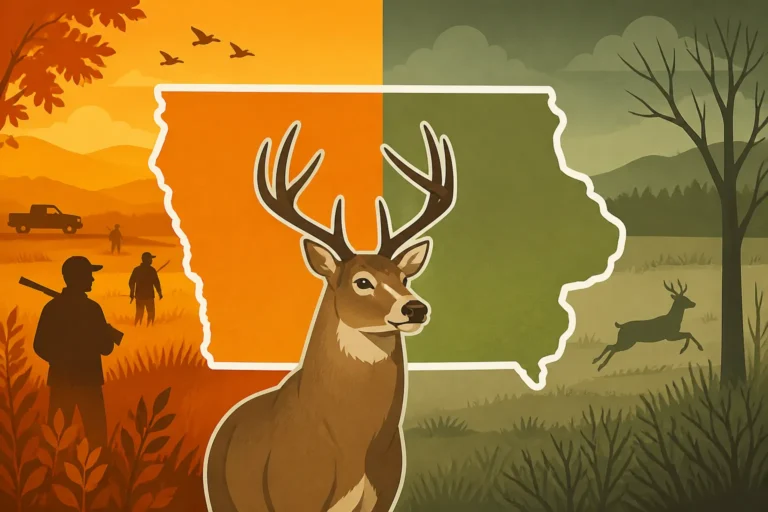
It's incredibly frustrating when you've done all your scouting, picked out the perfect stand, and then the season opens, and the deer seemingly disappear overnight. It's not just bad luck; the simple act of hunting itself, from the first arrow to the last muzzleloader shot, profoundly alters how deer move and behave. This guide will walk you through how harvest timing and increasing pressure throughout Iowa's deer seasons fundamentally change deer movement patterns, helping you adjust your strategy to stay on the deer.
The Subtle Shifts of Early Season Harvests
When the archery season kicks off in Iowa, there's a certain buzz in the air. We've been waiting for months, and the deer are still in their summer patterns, somewhat predictable. But even this initial, relatively low-impact pressure begins to chip away at their routine, causing subtle yet significant shifts in how they navigate their world.
Archery Pressure and Initial Response
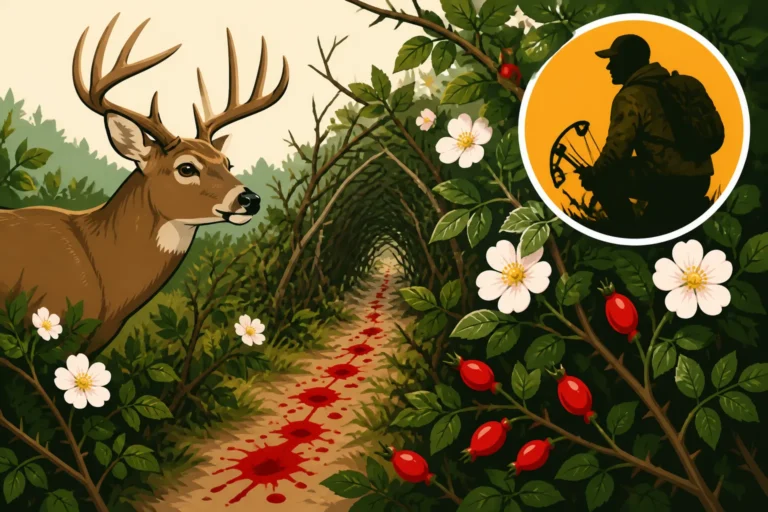
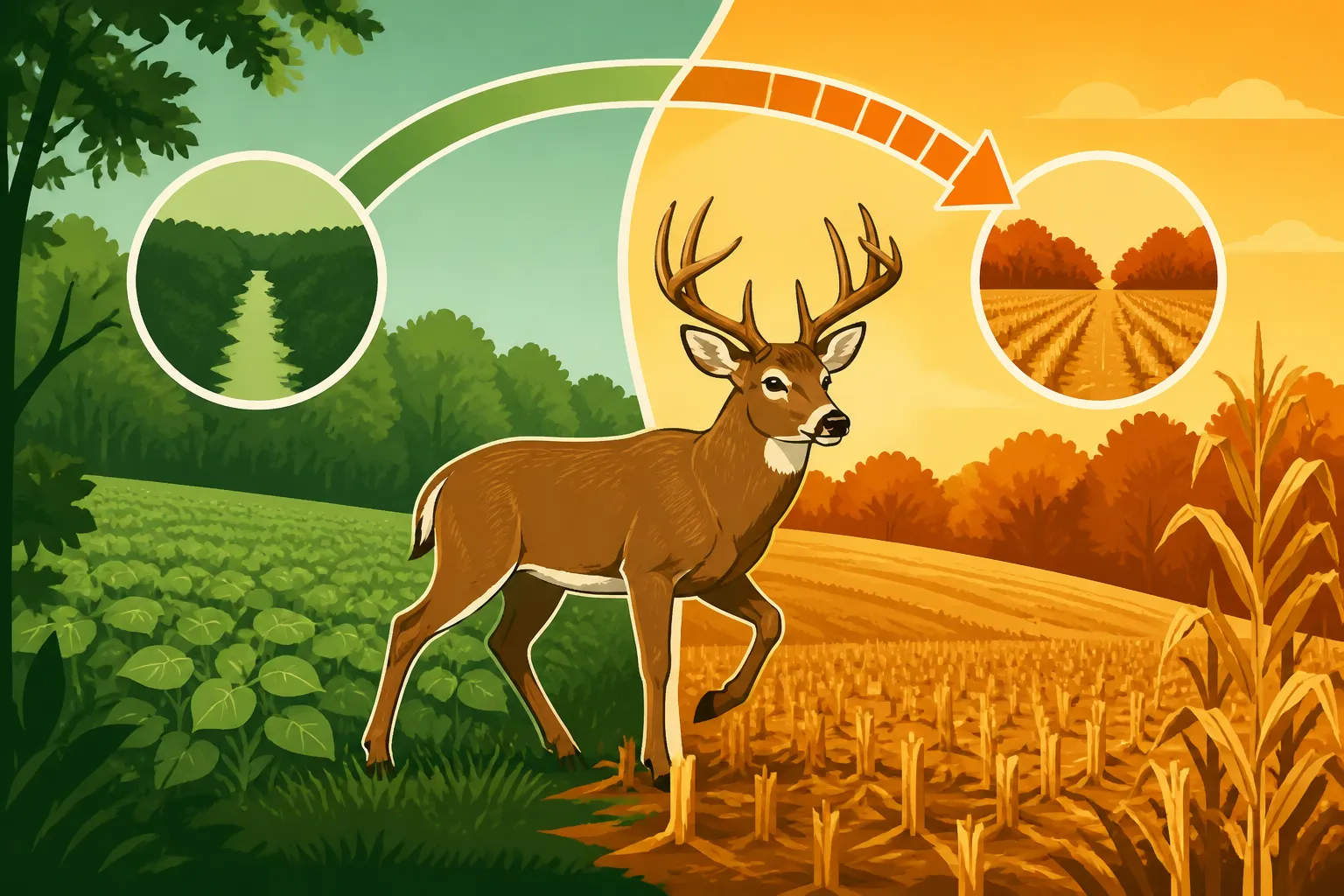
The first few weeks of archery season are a delicate dance. Deer, especially mature bucks, are quick to notice the increased human presence, even if it's just scent trails and occasional sightings. Many hunters focus on food sources during this time, and while deer will still hit them, their timing often changes. You might notice bucks shifting to more nocturnal patterns, hitting those prime soybean or alfalfa fields under the cover of darkness. They might also start avoiding the most obvious travel corridors, opting instead for less-used, thicker routes to get from bedding to feeding.
Think about a small timber patch you’ve scouted with a clear trail leading to a field. Before the season, your trail cameras might show consistent daylight movement. Once bows are in hand, that daylight movement often shrinks, with bucks hugging the dense cover longer into the morning and emerging later in the evening. This is where really understanding topography and thickets comes into play. You might also want to rethink your Trail Camera Placement on Iowa Public Land to focus on these more secluded routes, rather than just the obvious highways.
Early Muzzleloader Season Impact
The early muzzleloader season, usually in mid-October, adds another layer of pressure. While still less intense than the later shotgun seasons, the sound of muzzleloaders echoing through the timber and the presence of more hunters in the woods can push deer even further into their security zones. Deer that might have tolerated some archery pressure might become completely reclusive. This season often coincides with still-warm weather, which can make deer even less inclined to move during daylight hours. They’ll hold tight in dense cover, only venturing out when they feel absolutely safe.
If you're hunting an area that gets hit hard during early muzzleloader, you might find deer abandoning open agricultural fields entirely during the day, choosing to browse on mast crops like acorns deep within the timber. It's not uncommon for hunters to notice a significant drop in deer sightings after the first weekend of this season. Focusing on secure bedding areas and catching deer sneaking out of them in the last minutes of daylight can be a productive Early Muzzleloader Tactics in Warm October Weather.
Mid-Season Mayhem: The Rut and Gun Pressure
This is truly the inflection point for deer movement in Iowa. The combination of the whitetail rut peaking and the sudden, explosive pressure of the shotgun seasons creates a volatile and unpredictable environment. Deer that have managed to avoid hunters so far are now subjected to a gauntlet of human activity.
First Shotgun Season's Sudden Impact
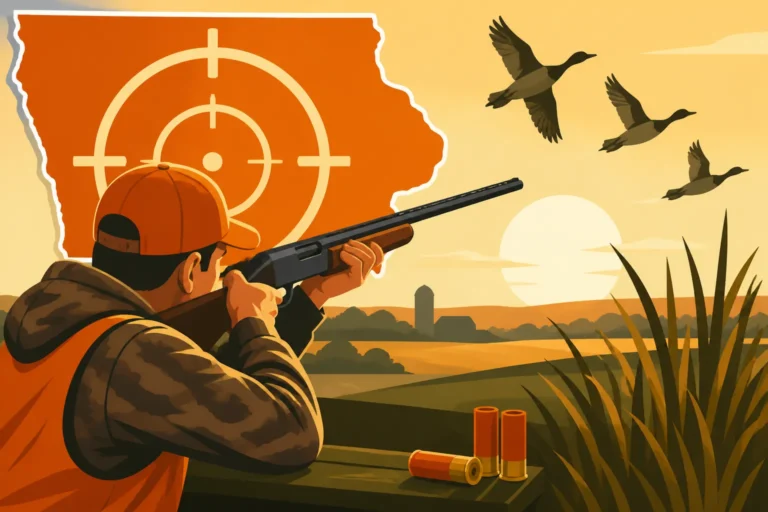
The opening weekend of Iowa's First Shotgun Season is an absolute game-changer. The sheer volume of hunters, the widespread use of firearms, and the common practice of deer drives fundamentally disrupt everything. Deer that were predictable even a day before can scatter in every direction. They’ll be pushed out of familiar bedding areas, sometimes running for miles to find sanctuary in unpressured pockets of timber or dense CRP (Conservation Reserve Program) fields.
It's common for deer to vacate entire properties or even sections of public land within hours of opening day. They will find the smallest, nastiest patch of cover they can, often overlooked by hunters, and hunker down. If you're hunting near private land that sees heavy driving, deer might be pushed right onto your property or vice-versa. Understanding Party Hunting Rules and Safe Drives is crucial, not just for safety, but to anticipate how deer might be moved around. This intense, short-term pressure changes movement patterns for weeks, if not the remainder of the season.
The Rut's Conflicting Influence
Complicating this high-pressure environment is the powerful biological drive of the rut. Often, the First Shotgun Season aligns with the peak or just past peak of the whitetail rut in Iowa. While pressure pushes deer towards reclusiveness, the urge to breed compels bucks to move. This creates a fascinating, almost contradictory scenario. Bucks, driven by the need to find does, might still make daylight appearances, even in areas with significant hunting pressure. They'll often follow doe movement, making female deer the key to finding active bucks during this tumultuous period.
Does, too, are under pressure and might be seeking refuge, but their estrous cycles can still pull bucks out of hiding. This is when patience and understanding deer communication can pay off. While deer are warier, a well-timed grunt or rattling sequence might still draw a curious buck. If you're interested in maximizing your chances during this chaotic yet exciting time, diving into Iowa Whitetail Hunting Tactics Through the Rut can provide deeper insights.
Late Archery and Pressure Adaptation
After the dust settles from the initial shotgun season, deer that have survived become incredibly wary. For late archery hunters, this means the game has changed entirely. The deer have now experienced a full spectrum of pressure, from subtle bowhunters to aggressive gun drives. They've learned, adapted, and are now far more sensitive to any disturbance.
At this point, deer movement is primarily dictated by security. They'll use the densest cover, move only during low light, and exploit terrain features that offer maximum concealment. Hunting becomes about finding those unpressured pockets within heavily hunted areas – perhaps a small, inaccessible thicket, a neglected corner of a river bottom, or even just an isolated CRP field. Understanding how Hunting Pressure Patterns on Iowa Public Land affect deer will be crucial for success, as those deer are now operating on pure survival instinct. Using mapping apps like GoHunt can really help here, allowing you to identify these potential sanctuary areas that might otherwise be overlooked.
| Season Segment | Typical Pressure Level | Primary Deer Behavior Change | Key Adaptations for Hunters |
|---|---|---|---|
| Early Archery | Low-Moderate | Shift to nocturnal feeding, use of thicker travel routes. | Hunt bedding to feeding; focus on subtle funnels near cover. |
| Early Muzzleloader | Moderate | Increased reclusiveness, holding tight in dense bedding. | Target deep timber food sources; patience near bedding. |
| First Shotgun Season | Very High (Sudden) | Dispersal, seeking immediate sanctuary, highly agitated. | Hunt overlooked thickets, property lines, adjust to movement. |
| Late Archery (Post-Gun) | High (Wary Deer) | Extreme wariness, nocturnal movement, security-focused. | Identify unpressured pockets; focus on dense cover, low light. |
| Second Shotgun Season | High (Sustained) | Minimal daylight movement, focus on dense thermal cover. | Find untouched sanctuaries; hunt persistent food sources. |
| Late Muzzleloader | Moderate-High | Similar to Second Shotgun; highly wary, extreme security. | Focus on small, neglected cover areas; cold-weather food. |
| January Antlerless | Moderate-Low (Local) | Relies heavily on secure food and thermal cover. | Target key food sources near dense bedding; hunt cold fronts. |
Late Season Scramble: Cold, Food, and Surviving Pressure
As the calendar pages turn to late November, December, and into January, the landscape changes dramatically, and with it, the deer's priorities. Food and thermal cover become paramount, but the constant hum of hunting pressure from earlier seasons still dictates how they move.
Second Shotgun Season and Extreme Waryness
By the time the Second Shotgun Season rolls around, deer have been through the wringer. Those still alive have adapted to survive, making them arguably the wariest animals in the woods. Daylight movement is often minimal, especially in heavily hunted areas. Deer will primarily move during low-light conditions, right at dawn and dusk, and often only under the cover of thick timber or brush. Finding these deer often means focusing on small, isolated cover patches that might have been ignored earlier in the season. These can be tiny cedar thickets, brushy fence rows, or even just a few acres of dense multiflora rose that offer seemingly impenetrable cover.
The focus shifts heavily to food sources that remain available and desirable, especially as temperatures drop. Standing corn or picked bean fields that still have waste grain can be magnets, but only if they're close to secure bedding. Identifying these "last resort" food sources and the safest approach routes is critical. Utilizing a comprehensive mapping platform like GoHunt can give you an edge by highlighting potential bedding and feeding areas, allowing you to plan low-impact entries and exits.
Late Muzzleloader and January Antlerless
These late seasons, often in December and January, present a unique challenge. The deer are not just wary; they're also facing the brutal realities of an Iowa winter. Their survival hinges on access to calories and protection from the elements. This means their movement is now primarily driven by two things: food and thermal cover. However, the ghost of past hunting pressure still looms large.
Deer that have survived multiple gun seasons are hyper-sensitive to human presence. They will not tolerate much intrusion. Success in Late Muzzleloader Deer Hunting in Iowa or during the Iowa January Antlerless Hunts often comes down to finding areas where pressure has been minimal, or by targeting specific, consistent food sources adjacent to the densest thermal cover. Think south-facing slopes, thick cedar groves, or deep river bottom timber that blocks the wind. These deer might only move from their beds to a food source and back, often hugging the thickest cover the entire way. Your approach needs to be incredibly stealthy, and your stand locations should capitalize on those small, secure travel lanes.
The Long-Term Impact on Deer Movement
It's not just about what happens during a single season; intense hunting pressure can have long-lasting effects on deer movement and behavior in a specific area. Deer, especially mature does and bucks, learn. They remember where they encountered hunters, where their family groups were disturbed, and where they found sanctuary. If an area consistently sees heavy pressure, deer may permanently alter their home ranges, shifting to adjacent properties or sections of public land that offer more security.
This long-term adaptation means that what worked a few years ago might not be effective today if hunting pressure has increased. As hunters, it forces us to be constantly learning and adapting. It reinforces the importance of quiet Access Routes That Avoid Bedding Areas and minimizing our impact. Understanding this ongoing dynamic is key to sustained success, year after year, as deer constantly evolve their survival strategies in response to our presence.
Disclaimer
Hunting is an inherently dangerous activity. Always prioritize safety, adhere to all Iowa Department of Natural Resources regulations, and be aware of your surroundings and local conditions. The information provided here is for educational and entertainment purposes only and should not replace professional advice or official regulations.