Southern Iowa Timber Counties for Deer
Many hunters, especially those new to the Hawkeye State or visiting from out of state, tend to picture Iowa as nothing but vast, flat agricultural fields. While those crop fields certainly play a crucial role in growing some truly incredible whitetails, they often overlook the rich, rolling timberlands of Southern Iowa. These areas offer a completely different, often more secluded, hunting experience and are absolute goldmines for mature deer. This guide will walk you through why Southern Iowa's timber is so special for deer hunting, which counties to set your sights on, and how to successfully navigate and hunt these incredible landscapes.
The Underrated Power of Southern Iowa's Timber for Whitetails
It's a common misconception that Iowa is just row crops from border to border. While farming is central to the state's identity, the southern third of Iowa transitions into a much more rugged, timber-dominated landscape. We're talking about deep creek bottoms, steep river bluffs, and expansive hardwood forests that create incredible habitat for whitetails. These aren't just small woodlots; some of these timber blocks stretch for miles, offering deer the security and resources they need to thrive and grow old.
How Southern Iowa's Timber Provides Premium Deer Habitat
The timber in Southern Iowa isn't just pretty to look at; it’s a critical component of what makes the deer hunting so phenomenal. Unlike some areas where deer might bed in small patches of cover and spend most of their time in fields, here the timber itself is the primary bedding, travel, and even feeding ground. You’ll find diverse tree species offering varied mast crops, thick undergrowth for bedding, and natural funnels created by the terrain. This natural diversity is exactly what a trophy whitetail looks for.
Think about it: in a sea of open fields, where does a big, mature buck feel safest? In the thickest, nastiest timber he can find. The sheer size of some of these timber blocks allows deer to maintain larger home ranges entirely within the woods, minimizing their exposure to human activity. This continuous cover provides a sanctuary effect, letting bucks grow older and thus bigger. Plus, the abundant acorns and other mast serve as a crucial food source, especially in early archery season and during the late fall when crops are gone. This is where you'll find deer living out their entire lives without ever stepping foot into a cornfield.
The Advantage Over Open Farmland Hunting
While hunting picked bean fields or standing corn can be incredibly effective, especially during specific times of the season, relying solely on crop field edges can be a game of chance influenced by harvest schedules and immediate food preferences. In contrast, the deep timber offers consistent cover and predictable travel routes regardless of what the farmers are doing. Deer live in the timber, and they often use it to travel between feeding areas or even just to move around within their bedding zones. This gives you a more stable hunting environment.
Moreover, hunting timber can often mean less competition. Many hunters gravitate towards the easier access and more obvious food sources of crop fields. Heading into the depths of a sprawling timber tract, especially on public land, means you're often encountering less pressure. It requires more effort, different scouting techniques, and a willingness to get off the beaten path, but the rewards can be substantial. You're not just looking for a deer passing through; you're hunting where they live, breathe, and feel secure. This often translates to encounters with older, wiser bucks that have learned to avoid the easily accessible spots.
Key Timber Counties to Focus Your Southern Iowa Deer Hunt
If you're looking to dive into Southern Iowa's timber hunting, certain counties stand out due to their geography, public land opportunities, and historical deer quality. While most counties in the southern tier will have some timber, these tend to be particularly rich in the kind of habitat you're looking for.
Prime Examples of Timber-Rich Counties
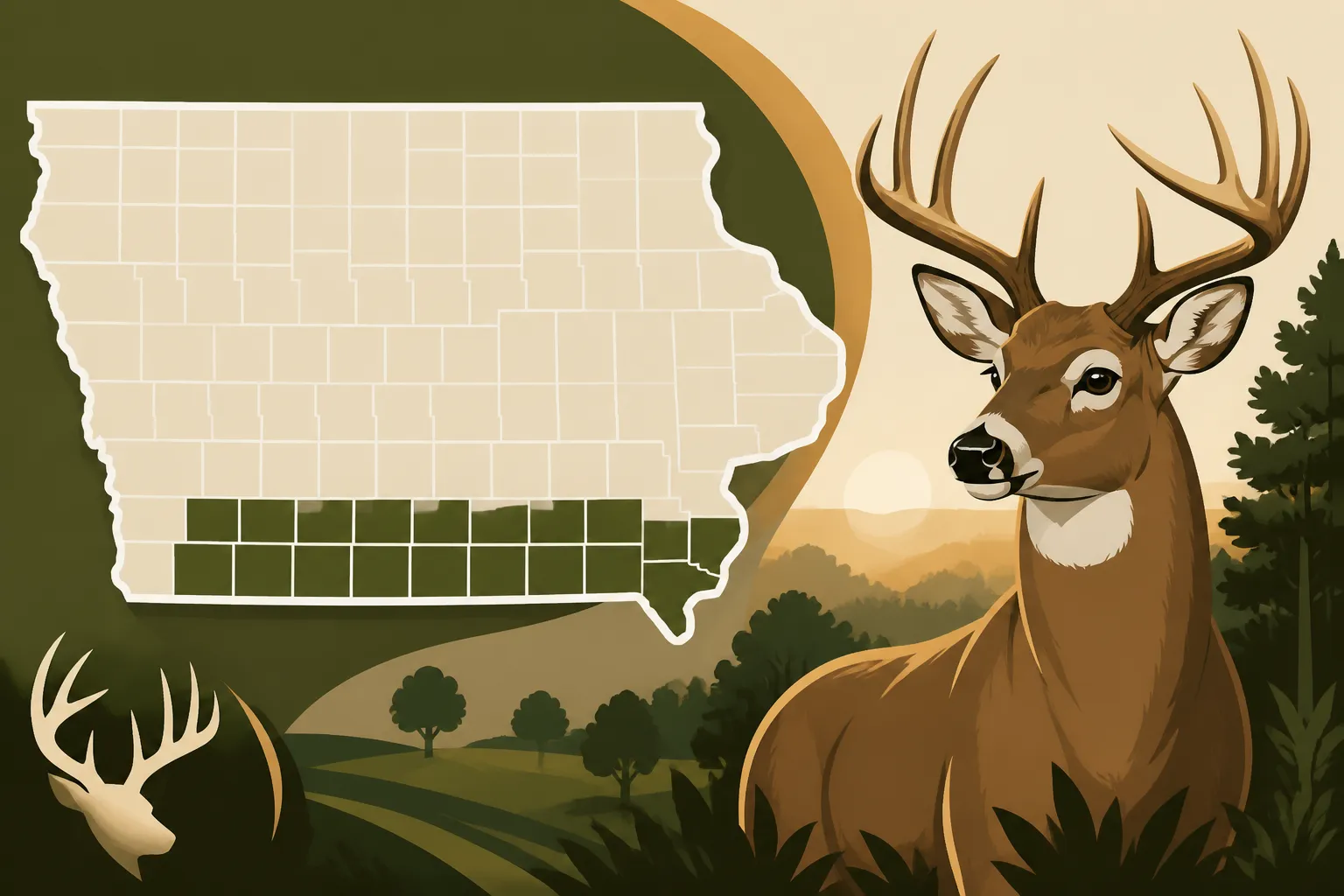
When scouting on a map or planning a trip, keep an eye on counties like Appanoose, Lucas, Monroe, Van Buren, and Wayne. These areas are characterized by significant percentages of forest cover, often broken up by steep river and creek drainages. They are home to larger state forests and wildlife management areas that encompass vast tracts of hardwoods. These areas aren't necessarily "better" than other Iowa counties for deer in terms of overall numbers, but they offer the kind of terrain and cover that appeals specifically to hunters who prefer timber-focused strategies.
Consider Appanoose County, famous for producing world-class whitetails, including the legendary Tony Lovstuen buck. It's not just the nutrition from crops, but the expansive timber that provides sanctuary. Lucas and Wayne counties are home to parts of the Stephens State Forest, offering thousands of acres of contiguous timber. Van Buren County, nestled along the Des Moines River, boasts incredibly rugged river bottom timber and bluffs. These counties often feature a mix of oak-hickory forests, dense cedar thickets, and meandering creek systems, creating a diverse habitat that deer absolutely love.
Public Land Opportunities in Southern Iowa's Woods
The beauty of these timber-rich counties is that many of them contain significant public hunting land, including state forests and wildlife management areas. These large tracts of public ground allow you to really get deep into the woods, far from roads and human disturbance. While any public land in Iowa can see pressure, learning to navigate these bigger timber blocks can lead you to areas few other hunters bother to reach.
Here's a quick look at some key Southern Iowa timber counties and what makes them stand out:
| County Name | Primary Timber Feature | Public Land Highlights | General Deer Potential |
|---|---|---|---|
| Appanoose | Large tracts of private timber, creek bottoms | Rathbun Wildlife Area, some smaller WMAs | Excellent, known for trophies |
| Lucas | Stephens State Forest (largest unit), smaller WMAs | Stephens State Forest, Red Haw State Park (limited hunting) | Very Good, solid timber bucks |
| Monroe | Mix of private timber and county areas | Some county lands, smaller state WMAs | Good, often overlooked |
| Van Buren | Des Moines River timber, rugged bluffs | Shimek State Forest, Des Moines River Wildlife Area | Excellent, challenging terrain |
| Wayne | Stephens State Forest (southern units) | Stephens State Forest, several county conservation areas | Very Good, remote feeling |
When you're planning your hunt, use mapping tools like onX Hunt to identify these larger blocks of timber and any associated public access. Look for areas with diverse terrain—steep ridges dropping into creek beds, mature oaks on the flats, and dense cedar or brushy thickets on south-facing slopes. These are all signs of prime deer habitat within the timber. You can also research Iowa State Forests Open to Hunting to get a better understanding of what to expect in specific areas like Stephens or Shimek State Forests.
Scouting and Accessing Deep Timber in Southern Iowa
Hunting success in Southern Iowa's timber often hinges on thorough scouting and smart access. These aren't places where you can just walk in on opening morning and expect to find deer consistently. You need to understand the terrain, the deer movements, and how to get in and out undetected.
E-Scouting and Boots-on-the-Ground Recon
Before you ever set foot in the woods, spend significant time e-scouting. Aerial imagery on platforms like onX Hunt is invaluable for identifying timber blocks, determining access points, and pinpointing potential funnels or bedding areas. Look for dark timber, especially on north-facing slopes which hold cooler air, or thick cedar stands that offer thermal cover in winter. Identify creek drainages, saddle points along ridges, and areas where different timber types meet. These are all potential hot spots for deer movement. Remember to also check the E-Scouting Iowa Farm Country From Home article for more tips.
Once you have a few promising spots marked on your map, it's time for boots-on-the-ground scouting. This is where you confirm your e-scouting theories. Walk the creek bottoms, climb the ridges, and look for actual deer sign: rubs, scrapes, well-worn trails, and bedding areas. Pay close attention to subtle terrain features like small benches on hillsides or slight rises within a flat timber block that deer might use for bedding. The goal is to piece together a puzzle of how deer move through that specific timber. Don't forget to look for historical sign from past seasons as well; deer often use the same travel corridors year after year.
Navigating Challenging Terrain and Access Points
Southern Iowa timber can be rugged. Expect steep climbs, deep ravines, and muddy creek crossings. This isn't flat-land hunting. You'll need good physical conditioning and appropriate gear. When choosing an access route, prioritize stealth. Deer in these timber blocks are often very sensitive to pressure. Avoid walking directly through known bedding areas, especially at dawn or dusk. Instead, plan routes that utilize natural terrain features for concealment, such as walking along the bottom of a creek bed or staying on the backside of a ridge. The less visible and audible you are, the better.
Many of these timbered areas, especially on public land, have limited designated parking. This often means you'll be walking further to get to your desired hunting spot. Embrace it! The further you walk, the less competition you'll likely encounter. Use the onX Hunt app to mark your vehicle, your chosen entry/exit routes, and your stand locations. This ensures you can navigate safely in the dark and find your way back. Remember, the goal is Access Routes That Do Not Bump Deer, so planning your ingress and egress is just as important as choosing your stand location.
Effective Hunting Strategies for Southern Iowa's Timbered Terrain
Hunting Southern Iowa's timber requires different tactics than hunting agricultural fields. You'll need to adapt your approach to the dense cover, varied terrain, and often more reclusive deer.
Still-Hunting and Ground Hunting in Timber
One of the most effective strategies in dense timber, especially during the rut or in late season, is still-hunting. This involves moving incredibly slowly through the woods, taking a few steps, pausing for several minutes to scan, and then repeating. The goal isn't to cover ground quickly, but to move silently and spot deer before they spot you. This method works well in areas where deer are bedding or casually feeding within the timber. You're trying to integrate yourself into their environment.
When still-hunting, use the terrain to your advantage. Walk into the wind, or at least a quartering wind, and utilize ridges, creek banks, or even large trees for cover. Pay attention to every detail: a flick of an ear, a horizontal line in a vertical forest, or the slight shift of shadows. Ground hunting also lends itself well to thick cover. Using natural cover, a small ground blind you set up, or even just sitting against a large tree can be incredibly effective if you pay close attention to wind and thermals. This is particularly useful in areas where hanging a stand might be difficult due to tree size or regulations on public land.
Setting Up Treestands and Saddles for Timber Bucks
While still-hunting is great, elevated stands are still king for many timber hunters. When choosing a stand location in Southern Iowa's timber, focus on transition areas, funnels, and subtle terrain features that concentrate deer movement. A classic example is a saddle between two ridge tops, or a pinch point where a creek bend forces deer into a narrow strip of dry ground. These are natural travel corridors. Also, look for timber points that extend into fields, serving as a safe pathway for deer to access food. The article on Best Stand Locations in Rolling Timber provides excellent detail on this.
Mobile hunting with a saddle can be incredibly effective in these timbered areas. It allows you to quickly adapt to fresh sign, changing wind conditions, or shifting deer patterns. You can pack light, move deep, and set up almost anywhere there's a suitable tree. This flexibility is crucial in large timber blocks where deer movements can be subtle and spread out. Carrying a few sticks and a platform, you can reach heights that give you a great vantage point while remaining concealed. Remember to always use a safety harness, no matter how quick or easy the climb seems. For those looking to go mobile, check out Mobile Saddle Hunting in Iowa for more in-depth advice.
Playing the Wind and Thermals in Rolling Timber
In rolling timber, understanding wind and thermals is paramount. Unlike flat country where the wind might be consistent, in ravines and hills, thermals will rise in the morning and fall in the evening, often overriding the prevailing wind direction. A ridge top might have a different wind direction than a creek bottom just 100 yards away. Always approach your stand from downwind, and plan your entry and exit routes to minimize alerting deer.
Spend time observing how the wind moves through the area you plan to hunt. Throwing milkweed seeds or a puff bottle can help you visualize swirling winds. This is particularly important when hunting creek bottoms or steep draws where air currents can be unpredictable. A common mistake is assuming the wind at your truck is the same as the wind in your stand. Always confirm it once you're on location. Being able to read the wind and thermals will be the difference between a successful timber hunt and bumping deer before you even get a shot. The article on Wind and Thermals in River Breaks offers crucial insights into this dynamic.
Managing Expectations and Enjoying the Experience
Hunting Southern Iowa's timber is not always about instant gratification. It can be challenging, both physically and mentally. The deer can be elusive, and the cover makes it harder to spot them. However, the reward of harvesting a mature whitetail from these wilder, more rugged landscapes is incredibly fulfilling. It's a testament to your scouting, patience, and hunting skill.
Patience, Persistence, and Adapting to Conditions
Success in the timber often comes down to patience and persistence. You might spend days in a stand without seeing many deer, only to have a giant step out when you least expect it. Don't get discouraged if the action isn't constant. These deer are often older and wiser, having learned to avoid danger. Be prepared to sit for extended periods, especially during prime times like the rut. This means packing enough layers to stay warm, bringing snacks, and having the mental fortitude to stay put.
Moreover, be ready to adapt. If your primary spot isn't producing, don't be afraid to move. Use your scouting knowledge and mapping tools to identify alternative locations based on fresh sign or changing conditions. A sudden cold front might push deer into thick thermal cover, or heavy winds might make them seek sheltered creek bottoms. Being able to read these environmental cues and adjust your strategy is key to consistent success. Also, consider the specific behaviors of deer during different phases of the rut, detailed in Iowa Whitetail Hunting Tactics Through the Rut, as these will influence where deer might be moving within the timber.
Respecting the Land and Other Hunters
Whether you're on public or private land, always practice ethical hunting and respect the environment. This means packing out everything you pack in, leaving no trace of your presence. If you're hunting public land, be aware of other hunters and give them space. Communicate if necessary, but generally, try to maintain a respectful distance. Use the mapping features on platforms like onX Hunt to see public land boundaries clearly and avoid accidental trespass.
When you do harvest a deer in these timbered areas, be prepared for a potentially difficult extraction. Steep hillsides and thick brush make dragging a challenge. Consider methods like quartering your deer in the field to lighten the load, or using a quality deer cart if the terrain allows. The article on Getting a Deer Out of an Iowa Creek Bottom can offer some very practical advice here. The experience of hunting Southern Iowa's timber is about more than just the harvest; it's about immersing yourself in a unique and challenging environment, testing your skills, and appreciating the incredible natural resources that Iowa has to offer beyond its famous crop fields.
Disclaimer
This article is for general informational purposes only and does not constitute professional advice. Laws, prices and regulations vary by location and change over time. Consult a qualified professional for guidance on your specific situation.