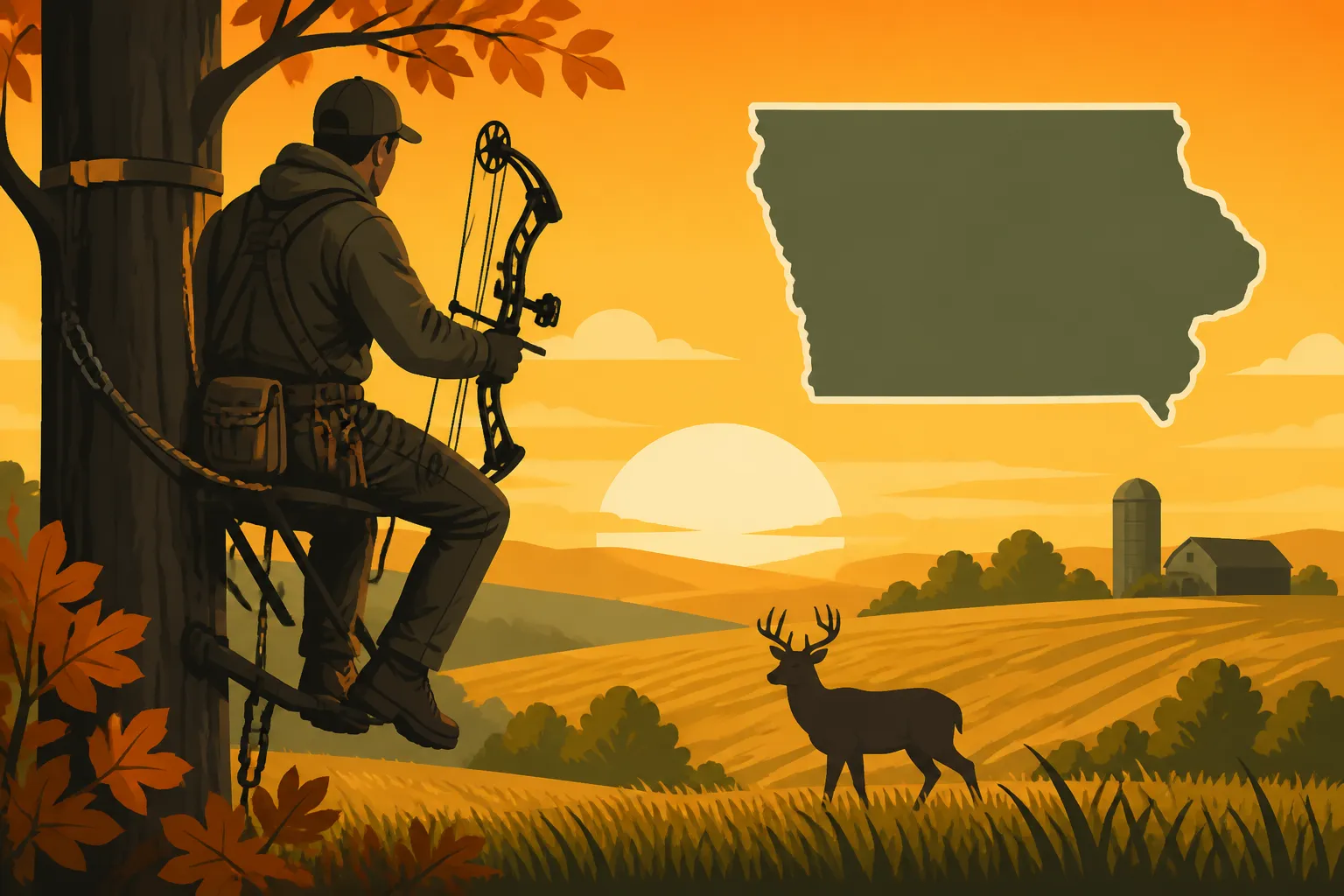
Mobile Saddle Hunting in Iowa
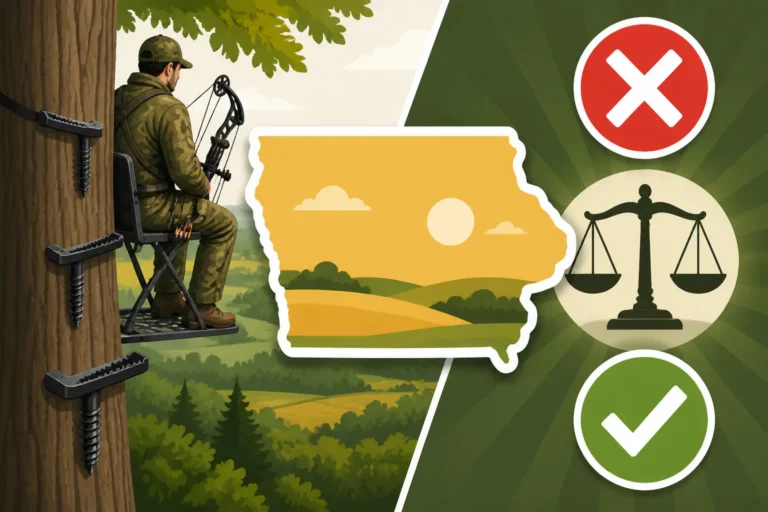
Have you ever felt completely stuck, watching a prime hunting opportunity slip away because your perfectly placed treestand was just a little too far, or the wind decided to do something completely unexpected? It's a classic Iowa hunting frustration, especially on public land where deer patterns shift daily. This guide is all about embracing flexibility and freedom in the timber, delving deep into the world of mobile saddle hunting to help you adapt on the fly and put yourself exactly where the deer are.
Why Go Mobile: The Iowa Advantage for Saddle Hunters
Iowa is a special place for deer hunting, known for its monster whitetails, but it's also a state where hunting pressure, particularly on public land, can make traditional, fixed stand setups incredibly challenging. You spend hours scouting, hang a stand, and then the deer disappear, or the wind shifts, rendering your spot useless. That's where mobile saddle hunting truly shines, offering an unparalleled level of adaptability that can drastically increase your odds.
The Limitations of Fixed Stands in Dynamic Iowa Landscapes
Think about the typical Iowa hunting scenario: you've got sprawling agricultural fields broken up by timbered draws, creek bottoms, and small woodlots. Deer movement is heavily influenced by crop rotation, harvest schedules, and, of course, pressure. A deer might be using a particular timber edge one week, only to completely abandon it the next when the corn gets picked or a fellow hunter pushes them out. If you've invested hours in setting up a fixed ladder stand or a hang-on, moving it isn't a quick or easy task. You're often committed to that spot, even if the deer aren't.
This commitment to a fixed stand can lead to a lot of frustrating sits, staring at empty woods. It also makes it harder to truly hunt the deer, rather than just waiting for them to walk by a predetermined spot. In Iowa, where deer are constantly reacting to their environment and human presence, having the ability to pick up and move with minimal disturbance is a game-changer. This agility is what sets saddle hunting apart from more traditional methods, allowing you to react to fresh sign, changing wind, or unexpected pressure with remarkable speed and stealth.
Stealth and Adaptability: Key to Public Land Success
Public land in Iowa, while offering incredible opportunities, often comes with a significant challenge: other hunters. Deer on public ground are notoriously sensitive to pressure, quickly learning to avoid well-worn trails, obvious stand locations, and consistent human activity. Being able to go deep, set up quietly, and then pack out leaving virtually no trace is invaluable. Mobile saddle hunting embodies this "leave no trace" philosophy. You're not leaving a stand scenting up the woods for weeks, nor are you making repeated trips to the same tree, compacting the forest floor.
The inherent design of a hunting saddle allows for extremely quiet and efficient setups. You're climbing with minimal metal-on-metal noise, and your movements in the tree are often less conspicuous than from a traditional stand. This stealth is crucial when you're slipping into a bedding area fringe or a subtle travel corridor that might only be active for a few hours. The adaptability allows you to scout remotely using tools like aerial imagery on apps, identify a new pattern or fresh sign, and then be on that spot, ready to hunt, within a matter of hours, not days. It's about being able to hunt a specific deer, not just a specific piece of dirt. This flexibility is also fantastic when you're trying to figure out how to hunt the Iowa pre-rut in late October or reacting to a sudden cold front.
Essential Gear for Your Iowa Mobile Saddle System
Diving into mobile saddle hunting means embracing a different set of gear than you might be used to. It's all about efficiency, weight savings, and safety. Each component of your saddle system works together to make you a silent, agile predator in the Iowa timber.
The Saddle Itself: Comfort and Functionality
The saddle is, quite obviously, the core of your mobile hunting system. Unlike a treestand, which provides a rigid platform, a saddle cradles you, allowing you to lean comfortably into the tree. This design distributes your weight around your waist and legs, reducing fatigue and allowing for all-day comfort if properly adjusted. When choosing a saddle for Iowa hunting, consider a few key factors.
First, comfort is paramount. You’ll be spending hours in this thing, potentially on a cold December day. Look for saddles with ample padding in the waist and leg straps. Some popular brands like Tethrd, Trophyline, and HSS offer various models designed with different levels of cushioning and support. Try them on if you can, and even hang in one at a local pro shop to get a feel for it. Second, weight and bulk are crucial for mobile hunting. You want something that packs down small and doesn't add unnecessary pounds to your pack when you're walking miles into a promising creek bottom or deep into public land. Finally, functionality includes things like attachment points for accessories, ease of adjustment, and durability of materials. Iowa hunting means dealing with briars, mud, and tough timber, so your saddle needs to stand up to abuse. The best saddles allow you to rotate around the tree, giving you 360-degree shooting opportunities, which is a huge advantage when a buck pops out unexpectedly from any direction.
Climbing Methods: Sticks, Aiders, and Ropes
Getting up the tree is the next piece of the puzzle, and there are several mobile-friendly climbing methods available to saddle hunters. The goal is always speed, silence, and minimal setup.
- Climbing Sticks: These are perhaps the most common choice. They consist of individual sections, often 2-4 feet long, that attach to the tree and stack on top of each other. Most hunters use 3-5 sticks to get to a comfortable hunting height of 15-20 feet. Brands like Lone Wolf Custom Gear, XOP, and Hawk offer lightweight aluminum sticks. Many saddle hunters enhance their sticks with "aiders" – short lengths of rope or webbing that attach to the steps, giving you an extra foot or two of climb per stick, thus reducing the number of sticks you need to carry. This is a great way to reduce bulk and weight.
- One-Stick Method: For the truly ultralight and minimalist hunter, the one-stick method involves using a single climbing stick or a short aider/foot loop system, combined with a rope or climbing line, to ascend the tree. This method often requires more practice and specialized knots but significantly reduces carry weight. You climb the stick, attach your rope higher, ascend the rope, move the stick up, and repeat. It’s definitely not for everyone, but it’s incredibly efficient once mastered.
- Tree Ascenders/Ropes: Some hunters utilize various rope climbing techniques borrowed from rock climbing or arborist work. This involves specialized mechanical ascenders and descenders that attach to a rope pre-set in the tree. While very versatile, these methods often have a steeper learning curve and can be more cumbersome for quick, silent setups than sticks.
Regardless of your chosen method, remember that practice is key. Get comfortable with your system in your backyard long before you hit the timber. Safety is paramount, and familiarity with your gear prevents fumbling in the dark on opening morning. Learning about Climbing Sticks Versus a Climber can help you choose the right ascent method.
Accessories That Make a Difference
Beyond the saddle and climbing method, a few key accessories will complete your mobile hunting system and enhance your experience.
- Lineman's Belt: This is a non-negotiable safety device. It wraps around the tree and clips into your saddle, keeping you connected to the tree from the moment your feet leave the ground until you're safely back down. It frees up both hands for climbing, attaching sticks, and setting up your platform. Never climb without one.
- Tether and Ropeman/Prusik: Your tether is what connects your saddle to the tree for hunting. It's usually a short rope or strap with a climbing-style carabiner. A "Ropeman" ascender or a Prusik knot allows you to quickly adjust the length of your tether, pulling yourself tight to the tree for stability or giving yourself more slack to maneuver.
- Platform or Ring of Steps: While some hunters can comfortably stand directly on climbing stick steps, most prefer a dedicated platform or a "ring of steps" (multiple short steps spaced around the tree) to stand on. This offers more stable footing, reduces fatigue, and provides a better shooting base. Companies like Out on a Limb Manufacturing (OOAL) and Treehopper make popular platforms. They are generally lightweight and fold flat for easy packing. A good platform makes those long Iowa deer hunting sits much more enjoyable, especially when you need to shift for a shot.
- Haul Line: A simple rope is essential for pulling up your bow, backpack, and other gear once you're in position.
- Safety Harness/Fall Arrest System: While the saddle itself is a form of fall restraint, always ensure your system meets industry safety standards. A well-designed saddle functions as your primary fall arrest system when properly used with a tether.
- Gear Straps and Backpack: A well-organized pack with external straps is crucial for carrying your sticks, platform, and other gear silently through the woods. Look for packs with compression straps that cinch everything down tight to prevent noise.
It might seem like a lot, but once you get your system dialed in, it becomes second nature. And for anyone contemplating Saddle Hunting on Iowa Public Land, having the right gear is half the battle.
Mastering the Art of Setting Up in Iowa Timber
Mobile saddle hunting isn't just about the gear; it's a mindset and a skill set that evolves with practice. Perfecting your setup in Iowa's diverse timber, from the sprawling river bottoms to the smaller farm country woodlots, will dramatically improve your hunting success.
Scouting for the Perfect Saddle Tree
Successful saddle hunting starts long before you ever leave the truck. E-scouting is your best friend. Utilize online mapping tools like GoHunt's mapping platform or other aerial imagery to identify potential pinch points, travel corridors, and bedding areas. Look for changes in timber type, terrain features like creek crossings, and subtle elevation changes that funnel deer. Once you have a few spots picked out, it's time for boots-on-the-ground scouting.
When you're actually in the timber, you're not just looking for deer sign; you're looking for the right tree. The ideal saddle tree is usually straight, with minimal limbs up to your hunting height, and enough surrounding cover to break up your silhouette. Deciduous trees like oaks, maples, or hickories are common in Iowa and typically work well. You want a tree that allows for a clear shooting lane in the most likely direction of deer travel, but also offers concealment. Don't be afraid to clear a few small shooting lanes with a hand saw or pruners, especially if you plan to return to that spot. Pay close attention to wind direction relative to your chosen tree. Even with the best gear, if your scent is blowing directly into a bedding area, your hunt is likely over. For deep insights, check out guides like Scouting Iowa Timber and River Bottoms and Reading Aerial Imagery for Bedding Cover.
The Ascent: Safe and Silent Climbing Techniques
Your approach to the tree and your climb need to be as silent and efficient as possible. Deer have an uncanny ability to hear the slightest unnatural sound.
- Approach: Always approach your chosen tree from a direction that keeps you out of the deer's line of sight and with the wind in your favor. If possible, use natural terrain features or thick cover to mask your approach.
- Attach Lineman's Belt: The moment you reach the tree, your lineman's belt should be secured around the trunk and clipped into your saddle. This is your first line of defense and keeps you safely connected.
- Attach Sticks/Platform: Start attaching your climbing sticks, working your way up the tree. Ensure each stick is securely fastened and won't wobble or make noise. If using aiders, practice getting your foot into them smoothly. Many hunters carry their sticks on their pack and attach them one by one, minimizing noise. Place your platform or ring of steps at your desired height. Aim for about 15-20 feet for optimal visibility and shot angles, while still remaining concealed.
- Transfer to Tether: Once your platform is set and you're at hunting height, attach your main tether to the tree above your head and clip it into your saddle. Then, unclip your lineman's belt and put it away. Adjust your tether so you're comfortably leaning into the tree, with enough slack to maneuver for a shot, but tight enough to feel secure.
- Haul Up Gear: Use your haul line to slowly and silently pull up your bow, backpack, and any other gear. Never climb with your bow strapped to your pack or in your hand; it's a safety hazard and will likely make noise.
The entire process, from setting the first stick to having your bow in hand, should ideally take less than 10-15 minutes with practice. The quicker and quieter you are, the less disturbance you create, and the better your chances of encountering undisturbed deer.
Shot Angles and Lane Management from a Saddle
One of the biggest advantages of saddle hunting is the flexibility it offers for shot angles. Unlike a treestand where you often have to twist and contort, a saddle allows you to rotate around the tree, using the trunk for cover, and easily swing your bow or firearm for an optimal shot.
- 360-Degree Mobility: With a saddle, you can easily shift your body position around the tree, allowing you to shoot to your left, right, or even directly behind you with minimal movement. This is invaluable when a wary buck circles downwind or approaches from an unexpected direction. Practice shooting from various positions – leaning left, leaning right, facing away from the tree, and even sitting into the saddle – to understand your comfortable range of motion.
- Using the Tree for Cover: The tree trunk itself becomes your ultimate concealment. By keeping the tree between you and an approaching deer, you can often draw your bow or raise your firearm unnoticed. As the deer passes, you simply rotate slightly around the tree for your shot.
- Managing Shooting Lanes: Even with 360-degree capability, you still need clear shooting lanes. When scouting and setting up, identify the most likely paths deer will take and ensure you have unobstructed views to their vitals at various distances. It’s better to have a few well-defined lanes than a tangled mess where a branch could deflect an arrow or bullet. A small folding saw or pruners can be invaluable for clearing those critical lanes. Remember, Iowa has strict rules about damaging trees on public land, so only remove small branches that truly impede your shot and adhere to portable stand rules on Iowa public ground.
Tactical Advantages of Mobile Saddle Hunting in Specific Iowa Scenarios
Mobile saddle hunting truly shines when faced with the dynamic and often unpredictable nature of hunting in Iowa. Its inherent flexibility allows you to adapt to changing conditions and target specific deer behaviors more effectively than traditional methods.
Navigating Public Land Pressure and Changing Deer Patterns
Iowa's public lands can be a mixed bag. They offer incredible opportunities, but they also see significant hunting pressure, especially during opening weekends and the heart of the rut. Deer quickly learn where safe zones are and where pressure is high, often shifting their patterns accordingly. This is where mobile saddle hunting gives you a distinct edge.
Imagine opening weekend of shotgun season. Hunters are pouring into common access points, and deer are being pushed from their usual haunts. With a saddle, you can quickly move to the edge of that pressure, finding a funnel where deer might be fleeing. You're not stuck with a stand you hung weeks ago; you're reacting to real-time events. You can Access Routes That Do Not Bump Deer and set up quickly. Furthermore, as the season progresses, deer patterns evolve based on food sources, breeding activity, and continued pressure. Being able to pack up, move a mile or two, and set up in a completely new area in an hour or less means you can stay on top of these shifts. You can go deeper, quieter, and into areas that fixed-stand hunters might find too cumbersome to access. This capability can be the difference between seeing a few deer and tagging a mature Iowa buck.
Hunting the Iowa Rut: Adapting to Cruising Bucks
The Iowa rut is legendary, a time when big bucks throw caution to the wind in search of does. But even during the rut, deer movement isn't static. Bucks might be cruising field edges one day, then locking down in a thicket with a hot doe the next. Trying to predict their exact location with a fixed stand can feel like a losing battle.
Mobile saddle hunting during the rut is incredibly effective because it allows you to hunt fresh sign. You can slip into a new area, find a fresh scrape line, a hot rub, or even spot a buck cruising from a distance, and within minutes, you can be silently ascending a nearby tree. This is especially useful when considering Iowa Whitetail Hunting Tactics Through the Rut. If you hear rattling or grunting in the distance, you can quickly assess the situation and potentially move to intercept. If a hot doe pulls a buck into an unexpected bedding area, you can adapt and set up on the fringes. You're not waiting for the rut to come to your stand; you're taking your stand to the rut. This agility also makes tactics like Rattling and Grunting During the Iowa Rut more effective, as you can position yourself precisely where you anticipate a response.
Late-Season Food Source Hunting Flexibility
Late season in Iowa means cold temperatures, often snow, and deer heavily focused on calorie-rich food sources. Standing corn, picked bean fields, winter wheat, and brassicas become magnets for deer. However, these food sources can be widely dispersed, and the precise bedding-to-feeding corridors can change with weather and pressure.
A mobile saddle setup allows you to quickly shift your focus to the most active late-season food source. If one cornfield gets picked clean or the deer abandon a bean field due to pressure, you can scout a new area, find a fresh food source, and set up that afternoon. This is particularly valuable when Late-Season Food Source Hunting in Iowa, as deer often become extremely predictable in their travel to and from food. You can identify the freshest tracks and trails leading into a preferred food source and set up 100-150 yards back in the timber along that specific travel route. This flexibility ensures you're always hunting where the deer are, not where you hope they might be.
| Climbing Method | Pros | Cons | Best for… |
|---|---|---|---|
| Climbing Sticks | Fast, relatively quiet, easy learning curve | Can be bulky/heavy (depending on material/number) | Most saddle hunters, good height control |
| One-Stick Method | Ultralight, extremely compact | Steep learning curve, requires specialized rope skills | Minimalists, very deep woods, challenging terrain |
| Tree Ascenders | Good for very tall trees, smooth ascent | Complex, slower setup, higher skill requirement | Arborist-style climbing, specific situations |
| Ladder Sticks | Very stable, easy climbing | Bulky, heavy, not truly "mobile" in traditional sense | Semi-permanent setups, youth hunters, ease of access |
Overcoming Common Challenges and Staying Safe
While mobile saddle hunting offers incredible advantages, it also presents its own set of challenges. Being prepared and prioritizing safety are crucial for a successful and enjoyable experience in the Iowa woods.
Managing Gear Weight and Packing Efficiency
The allure of mobile hunting is often its lightweight nature, but it's easy to get bogged down with too much gear. Every ounce counts, especially when you're hiking deep into a wildlife management area or navigating thick CRP fields.
- Streamline Your Setup: Regularly evaluate every piece of gear. Do you really need that extra climbing stick, or can you get by with aiders and fewer sticks? Can you swap out a heavier pack for a lighter one? Look for multi-use items. For instance, your lineman's belt can often double as a strap for securing your climbing sticks to your pack. This lean approach is key when considering how to get a deer out of an Iowa creek bottom, as every pound counts on the way in and the way out.
- Invest in Lightweight Gear: If budget allows, gradually upgrade to lighter versions of your saddle, sticks, and platform. Carbon fiber or high-strength aluminum options can shave significant weight. For example, some manufacturers offer ultralight climbing sticks that weigh less than two pounds each.
- Strategic Packing: How you pack your gear matters as much as what you pack. Secure your climbing sticks and platform tightly to your pack to prevent rattling and shifting. Use compression straps. Organize your smaller items in pouches so they are accessible without rummaging through your entire pack. This efficiency ensures you can move stealthily and set up quickly without fumbling in the dark. A well-packed system makes a huge difference when you're Hunting Iowa Walk-In Ground Without Burning It Out.
Cold Weather Strategies for Long Saddle Sits
Iowa winters can be brutal, with temperatures plummeting and biting winds. Sitting for hours in a saddle requires a different approach to staying warm than in an enclosed ground blind or a box blind. You're more exposed, so layering and strategic insulation are critical.
- Layering is King: Forget big, bulky coats. Instead, focus on a system of layers: a moisture-wicking base layer, insulating mid-layers (fleece, down, or synthetic puffies), and a windproof/waterproof outer shell. The beauty of layers is you can add or shed them as activity levels or temperatures change. When walking in, keep minimal layers on to avoid sweating; then, add your outer insulating layers once you're in the tree.
- Insulation from the Tree: Your back is pressed against the tree, which can be a significant source of heat loss. Wear an extra thick insulating layer on your back, or consider a small, lightweight sit-pad that you can place between your back and the tree. Some saddle hunters even use inflatable sit pads for this purpose.
- ** extremities:** Your hands and feet will get cold first. Insulated, waterproof boots (consider models like LaCrosse or Muck Boots) that are roomy enough for thick socks are essential. Chemical hand and foot warmers are a saddle hunter's best friend. Use a hand muff for easy access to warm hands, especially for bowhunting. Check out advice on Cold Weather Stand Clothing for more in-depth strategies.
- Warm Drinks and Snacks: A thermos of hot coffee, tea, or broth can do wonders for core temperature. High-calorie snacks like nuts, trail mix, or chocolate provide fuel to keep your internal furnace burning.
Prioritizing Safety in Every Aspect of the Hunt
Safety isn't just a suggestion; it's a non-negotiable requirement for saddle hunting. You are operating at heights, often in challenging conditions, and even a small mistake can lead to serious injury.
- Always Be Tethered: From the moment your feet leave the ground until they return, you must be connected to the tree via your lineman's belt or your main tether. Never unclip both at the same time. This constant connection prevents falls.
- Inspect Your Gear: Before every hunt, thoroughly inspect all your ropes, straps, carabiners, and climbing sticks for wear, fraying, cracks, or damage. Pay close attention to stitching on your saddle and tethers. If something looks compromised, replace it immediately.
- Practice, Practice, Practice: Get comfortable with your setup at ground level or in a controlled environment before you take it into the woods. Practice ascending and descending, adjusting your tether, and drawing your bow from various positions. This builds muscle memory and confidence, reducing the chance of fumbling or making a mistake when it counts.
- Know Your Limits: Don't climb higher than you're comfortable with. Don't attempt risky climbs in icy conditions or on unstable trees. If a tree feels unsafe, find another one. It's never worth risking an injury for a deer.
- Carry a Communication Device: Always have a fully charged cell phone or a satellite communication device like a Garmin inReach. Make sure someone knows where you're hunting and when you expect to return. This is especially important when you're out Hunting Pressure Patterns on Iowa Public Land in remote areas.
- First Aid Kit: A basic first aid kit is essential for any hunter, but especially for those who spend time aloft.
By focusing on these areas, you can enjoy the incredible freedom and effectiveness of mobile saddle hunting while ensuring you return home safely after every adventure in the Iowa woods.
Disclaimer
Please remember that hunting regulations and safety guidelines can change. Always consult the official Iowa Department of Natural Resources (DNR) regulations booklet for the most current information before heading afield. Safety should always be your number one priority when hunting.