Sandbar Hunting on Iowa Rivers
Many Iowa hunters often overlook the vast potential of hunting river sandbars, thinking access is too difficult or that these ephemeral spots hold little game. But with a bit of planning and understanding of public access rules, these dynamic river features can offer incredible opportunities for waterfowl, small game, and even deer, especially when other public lands are pressured. This guide will walk you through everything you need to know to confidently pursue game on Iowa's beautiful river systems.
Understanding River Access and Public Rights in Iowa
One of the biggest hurdles and sources of confusion for hunters eyeing river sandbars is knowing what's actually legal. It’s not like hunting on a designated state WMA where the boundaries are clearly marked and the rules are generally well-understood. Rivers, especially those that wind through private farmland, bring a whole different set of regulations and interpretations.
Iowa's law on navigable waters is a critical piece of the puzzle. Essentially, if a river is deemed "navigable" – meaning it's capable of being used for commercial or recreational transport – then the public generally has the right to use the riverbed and banks up to the ordinary high-water mark. This means you can often legally access sandbars that form within these navigable riverbeds. However, determining what constitutes the "ordinary high-water mark" can be tricky from a practical standpoint; it's not a painted line. It's usually indicated by a change in vegetation, soil type, or the presence of debris left by the river's normal flow. Above this line, you're usually on private property, and permission is absolutely required. This distinction is paramount, as you don't want to inadvertently trespass while trying to enjoy a public resource. Always err on the side of caution.
The good news is that many of Iowa's larger rivers, like the Mississippi, Missouri, and even significant stretches of the Des Moines, Iowa, Cedar, and Skunk Rivers, are considered navigable. These rivers often feature numerous sandbars, islands, and sloughs that fall within the public domain. However, smaller creeks and streams, even if they hold water, are generally considered non-navigable and are almost always entirely private, meaning you'd need landowner permission to hunt their banks or any sandbars within them. It’s always a good idea to research the specific river stretch you intend to hunt and understand its classification. You can often find this information through DNR resources or by consulting detailed mapping applications.
Accessing these river features often means using a boat, kayak, or canoe, which also introduces its own set of considerations. You can typically launch from public boat ramps, state parks, or county access points. Once on the water, you're generally free to traverse the river itself. But remember, while you can float through private land on a navigable river, you cannot step onto the private bank without permission. Sandbars are different because they are within the navigable waterway itself, allowing you to walk on them up to that ordinary high-water mark. Be mindful of areas managed by the U.S. Army Corps of Engineers or other federal agencies, as these may have specific regulations regarding hunting or camping. For more specific information on these unique public hunting opportunities, check out resources like Navigable Rivers and Iowa Hunter Access.
What Game Species Can You Find on River Sandbars?
Hunting sandbars isn't just for one type of game; these dynamic environments attract a variety of wildlife, often acting as critical travel corridors, feeding grounds, or temporary resting spots. Understanding which species utilize these areas and when can significantly increase your success.
Waterfowl Magnet
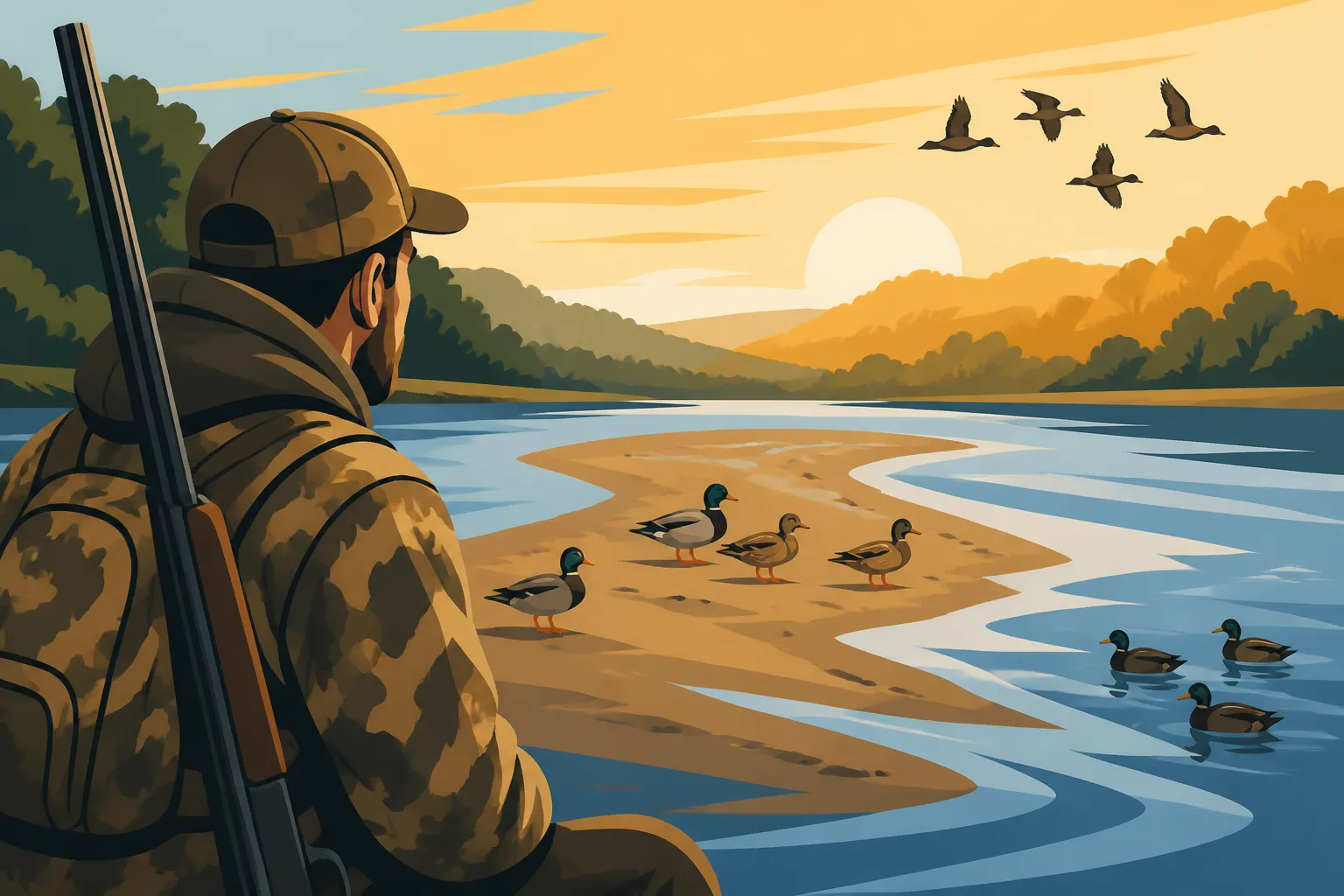
Undoubtedly, the most common quarry on Iowa's river sandbars is waterfowl. During the migration, ducks and geese use these exposed gravel and sand stretches as resting areas, preening spots, and places to loaf between feeding flights. Species like mallards, pintails, gadwalls, and various diver ducks will frequent these areas. Geese, particularly Canada geese, love the wide-open views sandbars provide, giving them a sense of security from predators. Hunters often set up blinds made from natural vegetation or portable hides along the water's edge, placing decoys in the shallow water or on the sand itself.
Timing is everything with waterfowl. Early season might see teal and wood ducks, while the peak of the Iowa Duck Migration Timing in October and November brings in the big pushes of mallards and divers. Being flexible and observing flight patterns is crucial. You'll often find that the inside bends of rivers, where currents slow and sand deposits build up, create ideal conditions for ducks. Targeting these specific formations, especially where timbered banks meet the open river, can be extremely productive. Mallards on Iowa River Backwaters are a prime example of waterfowl that rely on these river systems.
Deer Movement and Bedding
While less obvious than waterfowl, whitetail deer are frequent users of river sandbars, particularly on smaller rivers or sections of larger rivers with heavy timber cover nearby. Deer will often use these open stretches to travel along the river, especially if the timbered banks are too thick or steep. In periods of high water, higher sandbars can become temporary bedding islands, offering a sense of security from predators. Bucks will often cruise these edges during the rut, scent-checking for does that might be moving through.
Hunting deer on sandbars requires a different approach than waterfowl. It's more about intercepting movement. You might set up a portable ground blind on the edge of a sandbar where it meets a timbered bank, or scout for fresh tracks indicating a consistent travel path. Be aware of the wind direction; deer are incredibly wary, and the open nature of a sandbar can make scent control even more critical. During the late season, when food sources are scarce, deer might even browse on certain types of riverbank vegetation, making an isolated sandbar near a bedding area a hotspot.
Small Game Opportunities
Don't overlook small game, especially if your sandbar is adjacent to timbered banks or areas with brushy cover. Rabbits and squirrels, while not typically thought of as "river animals," will often forage along the edges where sand meets vegetation. Squirrels might be traveling across sandbars to access different stands of timber, and rabbits could be hiding in brush piles deposited by high water.
Hunting small game on sandbars can be a great way to introduce new hunters to river hunting or just enjoy a mixed-bag outing. A quiet approach along the vegetated edges of a sandbar, especially in the early morning or late afternoon, can yield opportunities. For more on timber-adjacent small game hunting, consider Squirrel Hunting Iowa Oak Timber. This often involves a slow still-hunt, watching for movement along the transition zones where the river ecosystem meets the upland habitat.
Essential Gear and Safety for Sandbar Hunting
Heading out to a river sandbar requires specific gear, and perhaps more importantly, a solid understanding of safety. Rivers are powerful and unpredictable, and underestimating them can lead to serious trouble. Being well-prepared is not just about comfort; it's about survival.
Watercraft and Personal Flotation
First and foremost, you'll need a reliable way to get to your sandbar. For most Iowa rivers, this means a boat, canoe, or kayak. Choose a craft that can handle the current and potential obstacles like submerged logs or shallow water. A small jon boat with a shallow-draft outboard is excellent for covering distance and carrying gear, while a sturdy canoe or kayak is perfect for stealthy approaches to smaller sandbars. Always, and I mean always, wear a properly fitted personal flotation device (PFD). Even if you're a strong swimmer, cold water or an unexpected fall can quickly incapacitate you. Having extra PFDs for all passengers is also a smart move.
When transporting your firearms or bows, ensure they are properly secured and cased to prevent damage or accidental discharge, especially when navigating choppy water or strong currents. Keeping electronics like your phone or GPS in a waterproof bag is also critical. Your ability to call for help or navigate back to your launch point depends on it.
Clothing and Blind Materials
For clothing, think layers, especially if you're hunting waterfowl in cooler weather. Warm, waterproof outer layers are non-negotiable. Waders are a must for setting decoys, retrieving birds, or simply navigating shallow spots around the sandbar. You'll be standing in or near water, and staying dry is key to staying warm and comfortable. Camouflage is crucial for waterfowl hunting; blending into the natural environment of a sandbar means greens, browns, and tans that mimic dry grass, sand, and river debris.
For a blind, you might get away with simply hiding behind natural driftwood or tall grasses on a large sandbar. However, a portable ground blind or even some camo netting supported by poles can give you the concealment you need. Make sure whatever you bring can be quickly deployed and secured, especially if the wind picks up. For more ideas on hunting waterfowl in Iowa's river systems, check out Waterfowl Hunting Iowa River Backwaters. The same principles apply to sandbars.
Navigation and Emergency Gear
Always carry a reliable GPS device or use a mapping app like onX Hunt or GoHunt on your phone with downloaded maps. Rivers can look very different from the water than they do on a map, and fog or darkness can quickly disorient you. Mark your launch point and intended sandbar. A compass and paper map are excellent backups.
Beyond that, a small emergency kit is vital:
- First-aid kit: For minor cuts, blisters, or more serious injuries.
- Signaling device: A whistle, signal mirror, or even a brightly colored flag.
- Knife: Essential for a variety of tasks, from cutting rope to field dressing.
- Headlamp/flashlight: Even if you plan to be back before dark, delays happen. Ensure it has fresh batteries and a spare set.
- Fire starter: Waterproof matches or a lighter, just in case.
- Extra food and water: Dehydration and hunger can impair judgment.
Remember that river conditions can change rapidly. A rain upstream can cause water levels to rise quickly, potentially submerging your sandbar or making navigation difficult. Always check weather forecasts and river gauges before you go, and if conditions seem marginal, it's always best to postpone your trip.
| Game Species | Primary Season | Typical Gear | Best Conditions | Safety Considerations |
|---|---|---|---|---|
| Waterfowl | Fall/Early Winter | Decoys, calls, waders, shotgun | Cold fronts, overcast, windy | Hypothermia, strong currents, boat safety |
| Whitetail | Archery/Gun Seasons | Camo, quiet boots, rifle/bow | Rut (travel), high water (bedding) | Wind direction, open exposure, understanding private land |
| Small Game | Fall/Winter | Small gauge shotgun, warm clothes | Mild, calm weather, timber proximity | Identifying game in dense cover, accidental trespass |
Scouting and Setting Up for Success on the River
Finding a good sandbar to hunt isn't usually something you can just wing on opening morning. It takes thoughtful scouting, both from your couch and boots-on-the-ground, to identify those prime locations. The river ecosystem is constantly changing, so what was a great spot last year might be underwater or completely washed away this season.
E-Scouting from Home
Your scouting journey should absolutely begin long before you ever launch a boat. High-quality satellite imagery is your best friend here. Tools like onX Hunt are invaluable for this. You can zoom in and identify sandbars, islands, timbered banks, and potential access points. Look for sandbars that are large enough to offer good concealment, ideally with some natural vegetation or driftwood to break up your silhouette. Pay attention to how the river bends and flows; inside bends often create calmer water and larger sand deposits.
Use the mapping layers to identify public land adjacent to the river. Even if the sandbar itself is public (being within a navigable river), knowing where public ground meets the riverbank can often indicate better access points and less private land interference. Look for areas where fields or timber meet the river, as these are natural travel corridors for deer and provide good loafing spots for waterfowl. Note any nearby sloughs or backwaters, as these can concentrate birds. For a deeper dive into using these tools, check out E-Scouting Iowa Farm Country From Home. Many of the same principles apply to river systems, just with a different focus.
On-the-Water and Bankside Scouting
Once you've narrowed down some potential spots from your e-scouting, it's time to hit the water, ideally outside of hunting season. Take your boat or kayak and cruise the river, observing current conditions, water depth around the sandbars, and the available cover. What looks like a great sandbar on a map might be too shallow to effectively set decoys, or it might be completely exposed without any natural hiding spots. This is also where you'll get a feel for the river's flow and any potential hazards like wing dams or snags.
When scouting for deer, look for fresh tracks, rub lines along the timbered edge of the sandbar, or droppings. For waterfowl, observe where birds are resting, feeding, or flying. Don't be afraid to pull up on a sandbar and walk it, noting the type of sand, gravel, or vegetation present. This also helps you understand the 'ordinary high-water mark' more effectively. A tool like GoHunt can help you consolidate your scouting notes and waypoints across different platforms, making it easier to track your findings. Remember, Reading Aerial Imagery for Bedding Cover might show you bedding areas near the river that influence how deer use those sandbars.
Setting Up Your Hunt
When it comes to the actual hunt, your setup strategy should be dictated by your target species and the sandbar's features. For waterfowl, positioning your blind to take advantage of the prevailing wind is crucial, as ducks and geese will almost always land into the wind. Your decoy spread should look natural, perhaps with some decoys on the sand and others in the shallow water. Pay attention to Decoy Placement and Wind Direction. For deer, consider the time of day and typical deer movement patterns. If deer are using the sandbar as a travel route, position yourself to intercept them without being silhouetted.
Always consider your entry and exit strategy. Can you approach your chosen sandbar stealthily without spooking game? Can you retrieve a downed bird or deer safely and efficiently? Parking your vehicle and walking into your launch point or setting up on a sandbar should always be done with minimal disturbance. For ideas on smart access, consider Access Routes That Do Not Bump Deer. The objective is to be unseen and unheard until the moment of truth.
Disclaimer
This article is for general informational purposes only and does not constitute professional advice. Laws, prices and regulations vary by location and change over time. Consult a qualified professional for guidance on your specific situation.