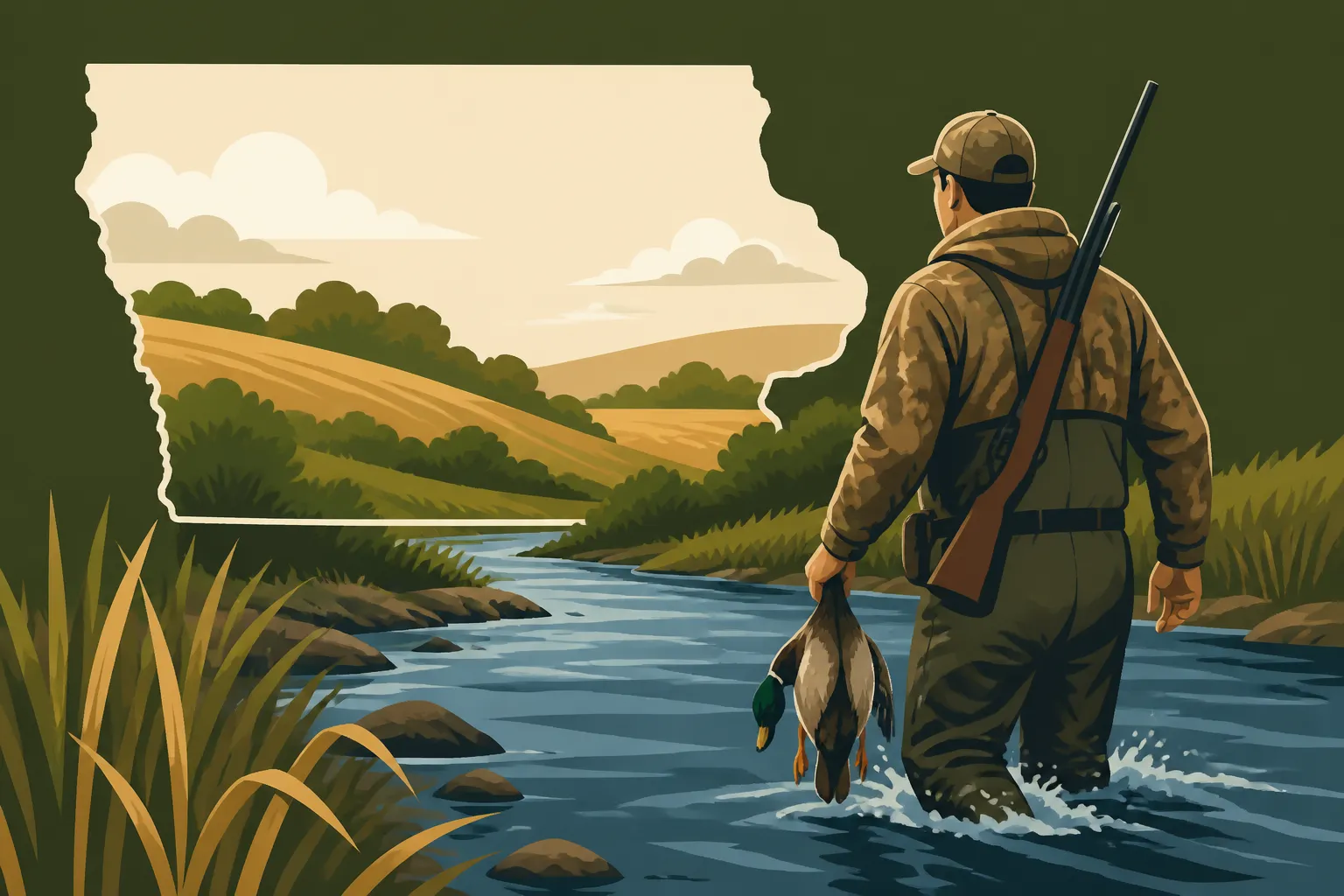
Wading Access on Iowa Streams
One of the biggest frustrations for Iowa hunters, especially those chasing waterfowl or looking for those hidden pockets of timber on public land, is figuring out just where you can legally put your boots in the water. It can feel like every inch of ground is either private or has confusing rules, leaving you scratching your head about whether that perfect little creek corridor or isolated sandbar is actually fair game. This guide is here to untangle the complexities of wading access on Iowa streams, helping you understand your rights and how to leverage water to unlock more hunting opportunities.
Understanding Navigable Waters in Iowa
When we talk about wading into a stream or river, the first thing that often comes up is the idea of "navigable" waters. This term can be a bit of a legal swamp, and it's easy to get lost in the details, especially when you're just trying to figure out if you can hunt that slough off the main river channel. Iowa law has specific interpretations that are crucial for hunters and anglers to understand, as they directly dictate where you can and cannot legally tread.
Defining "Navigable" for Iowa Law
In Iowa, the concept of "navigability" isn't always about whether a massive barge can cruise down a waterway. For the purpose of public access, it generally relates to whether a water body was historically used, or is currently capable of being used, for commercial navigation. This typically applies to our larger rivers, like the Mississippi and the Missouri, and some of their major tributaries. The key here is that if a stream is considered "navigable" by legal definition, then the bed and banks below the ordinary high water mark are often considered public property, or at least open to public use for navigation, fishing, and hunting from the water itself. This means you, as a hunter or angler, have the right to be there, as long as you stay within the confines of the waterway and don't trespass onto adjacent private land. It's a fundamental difference from streams that are deemed non-navigable, where the streambed is often owned by the adjacent landowner.
Think about the difference between the Des Moines River near Farmington and a small, unnamed creek winding through a farmer's pasture in rural Marion County. The Des Moines, being a larger, historically used waterway, would generally be considered navigable, granting you more freedom to wade, fish, or float. That small pasture creek, however, is almost certainly considered non-navigable, meaning the streambed is private property, and you'd need explicit permission to be there, even if you’re just in the water itself. Understanding this distinction is the cornerstone of legal wading access.
Common Misconceptions About Public Water
There are a lot of old wives' tales and misunderstandings floating around about what constitutes "public water" in Iowa, and these can get hunters into trouble if they're not careful. One common misconception is that if a stream has fish, it must be public. This simply isn't true. Many private ponds, lakes, and non-navigable streams are teeming with fish, but that doesn't magically make them public property. The fish themselves are indeed public resources, managed by the state, but the water and the streambed they inhabit might very well be private. You still need permission to access them.
Another often-heard idea is that if you can float a canoe down a stream, it's public. While commercial navigability is a factor, just being able to float a small craft isn't the sole determinant of legal navigability. A seasonal deluge might allow you to float a kayak down a tiny ditch, but that doesn't instantly convert it into a public waterway. The legal standard is much higher and considers historical use and current capability for more substantial, continuous navigation. Always check official sources like the Iowa DNR's maps or legal interpretations, or consult with local authorities if you're truly unsure about a specific waterway. Don't rely on hearsay or what "everyone else does," because those small mistakes can lead to big headaches.
Legal Rights and Responsibilities for Wading Hunters
Once you grasp the concept of navigable waters, the next step is understanding the specific rights and, crucially, the responsibilities that come with wading into an Iowa stream or river for hunting or fishing. It’s not just about what you can do, but what you must do to respect property rights and stay within the bounds of the law. This balance is key to being a responsible and successful hunter.
Staying Within the Water Column
For designated navigable waterways in Iowa, your right to be there generally extends to the water itself and the streambed below the ordinary high water mark. This means you can walk, wade, and hunt from within the stream or river. However, this right typically does not extend to the bank above that high water mark, nor does it grant you permission to venture onto the adjacent private land. This is a critical distinction that many hunters overlook.
Imagine you're Hunting a Narrow Creek Corridor on a navigable stream. You might be able to wade directly up the middle, setting up on a sandbar or a small island within the flow. But if you see a nice patch of timber on the bank that looks like perfect deer cover, and that timber is clearly above the ordinary high water line and on private property, you cannot step onto it without landowner permission. Your access is strictly limited to the stream itself. This can be tricky, especially with fluctuating water levels. The "ordinary high water mark" isn't just the highest flood stage; it's generally defined by the point where the presence and action of the water are so common and usual as to mark on the soil a character distinct from that of the upland, in respect to vegetation as well as the soil itself. It takes a keen eye and respect for boundaries to ensure you're not trespassing, even inadvertently.
Accessing the Stream vs. Accessing Adjacent Land
Getting into the navigable stream itself is often the first hurdle. While you have the right to be in a navigable stream, you don't necessarily have the right to cross private land to reach it. This is where hunters often run into issues. Many navigable rivers and streams in Iowa are bordered by private property right up to the water's edge. This means if there's no public access point—like a boat ramp, a bridge crossing with public parking, or a dedicated public land tract adjacent to the river—you might not be able to legally get into the water in the first place.
This is where tools like onX Hunt or GoHunt become absolutely invaluable. You can use their mapping layers to identify public access points, such as state wildlife management areas, county parks, or public easements, that butt up directly against a navigable waterway. Without these specific access points, even if the stream itself is public, you could still be charged with trespassing by merely crossing private land to reach it. It's like having a right to fly an airplane, but not having a runway to take off from without entering private airspace first. Always scout your access points thoroughly, looking for public easements or designated hunting areas that provide a legal path to the water. Checking the Iowa DNR Hunter Atlas can also be a huge help here, as it clearly delineates public boundaries.
Respecting Private Property
Above all else, respecting private property is paramount. Even when you are legally wading in a navigable stream, your presence should not infringe upon the rights of adjacent landowners. This means:
- No littering: Pack out everything you pack in. No trash, no spent shells, nothing.
- No disturbance: Avoid unnecessary noise or activity that would disturb landowners or their livestock.
- No cutting or damage: Do not cut vegetation on banks, build blinds, or otherwise alter private property, even if it's right at the water's edge. Your right is to pass through or hunt from the water, not to utilize the adjacent land.
- Retrieving game: This can be a tricky one. If you shoot a pheasant that falls on private land while you're wading a public stream, you still need permission to retrieve it. The same goes for a deer that crosses onto private property. Always have a plan for game retrieval, and if you haven't secured prior permission, be prepared to lose the animal or, ideally, call the landowner immediately to ask. Knowing Recovering a Deer Across a Property Line rules is crucial.
Being a good steward and neighbor is not just about avoiding legal trouble; it’s about maintaining a positive image for all hunters. A respectful hunter is far more likely to gain future permissions or avoid conflicts.
Practical Considerations for Wading Access
Wading into Iowa streams, whether you’re after waterfowl or using the water as a stealthy access route to a public land whitetail spot, involves more than just knowing the law. You need to be prepared for the realities of the environment. Ignoring practical considerations can turn a promising hunt into a dangerous or miserable experience.
Safety First: Water Conditions and Gear
Iowa streams and rivers can be deceptive. A calm-looking stretch of water can hide strong currents, sudden drop-offs, or slick, uneven bottoms. Safety has to be your absolute top priority.
- Currents: Especially on larger rivers or after heavy rains, currents can be surprisingly powerful. Always test the current with a sturdy wading staff before committing. If it feels too strong, find an alternative route or rethink your plan. It’s never worth risking being swept downstream, particularly in cold weather or areas with snags and downed trees.
- Depth: What looks shallow from the bank can quickly turn into waist-deep or deeper water. Again, use a wading staff to probe ahead. If you’re not an experienced wader, avoid areas with rapidly changing depths or constricted channels that can create fast-moving water.
- Bottom Composition: You'll encounter everything from firm sand and gravel to slick, algae-covered rocks and sticky mud. Felt-soled wading boots or boots with good gripping rubber are a must. Carry screw-in studs or chains for extra traction if you anticipate lots of slick rock.
- Water Temperature: Even in early fall, Iowa water can be dangerously cold, leading to hypothermia if you take an unexpected plunge or spend too long wading. Dress in layers, preferably non-cotton materials that retain insulating properties when wet. For serious cold-weather wading, consider neoprene waders or even a dry suit if you'll be spending extended time in the water or if the air temperature is low. Knowing what kind of Cold Weather Stand Clothing you need might extend to what you wear while wading.
- Flow Changes: Pay attention to recent rainfall and forecasted weather. Streams can rise incredibly quickly in Iowa, turning a leisurely wade into a life-threatening situation. Always check river gauges and weather reports before heading out.
| Wading Safety Checklist | Essential Gear | Why It Matters |
|---|---|---|
| Wading Staff | Yes | Stability, probing depth, testing current. |
| Wading Boots | Grippy soles (felt/rubber) | Traction on slick surfaces. |
| Waders (Neoprene/Breathable) | Appropriate for temperature | Staying dry and warm. |
| PFD (Life Vest) | Highly Recommended | Crucial for deep water, strong currents, or inexperienced waders. |
| Waterproof Bag | Yes | Protect electronics, wallet, keys. |
| Headlamp/Flashlight | Yes | For pre-dawn/post-dusk travel. |
| First-Aid Kit | Basic kit | Minor injuries, emergencies. |
| Whistle | Yes | Signaling for help. |
| Offline Map/GPS | onX Hunt, GoHunt, or dedicated GPS | Navigation, identifying public land. |
| Communication Device | Fully charged phone | Emergency calls (keep in waterproof bag). |
| Change of Clothes | In vehicle | For after a wet adventure or accidental dunk. |
Minimizing Impact: Leave No Trace
Responsible hunting means leaving the environment as good, or better, than you found it. This is especially true when wading in streams, where impacts can be visible and affect aquatic ecosystems.
- Stick to Established Paths (When Available): If there are designated entry or exit points, use them. This helps prevent erosion of stream banks.
- Avoid Disturbing Sediment: Try to wade carefully and avoid stirring up excessive sediment, which can harm aquatic life downstream. Walk slowly and deliberately.
- Pack It In, Pack It Out: This is non-negotiable. Any trash, spent shotgun shells, food wrappers, or gear must be carried out with you. Leave no trace of your presence.
- Respect Vegetation: Do not trample delicate bank vegetation or unnecessarily break branches. Your presence should be as stealthy and unobtrusive as possible.
- Clean Your Gear: Before moving from one waterway to another, especially if you travel across counties, clean your wading boots and gear to prevent the spread of invasive species like zebra mussels or Eurasian watermilfoil. This is a critical step in protecting Iowa's natural resources.
Seasonal Variations and Water Levels
The personality of an Iowa stream can change dramatically with the seasons and recent weather. What was a gentle ripple in August can become a raging torrent in April or a frozen pathway in January.
- Spring Runoff: Heavy snowmelt and spring rains can lead to extremely high, fast-moving water. Wading during these times is often unsafe and can even be illegal if certain flood warnings are in place. The turbid water also makes for poor hunting conditions.
- Summer Low Flow: In late summer and early fall, many streams reach their lowest levels, making wading easier and revealing more sandbars and gravel beds. This is often the prime time for scouting new areas or accessing remote spots for Early-Season Bowhunting Over Water. However, very low water can also concentrate fish, making them more vulnerable, and can stress other aquatic life, so be mindful of your impact.
- Fall and Winter: As temperatures drop, so does the risk of hypothermia. While water levels might be lower and more stable, the cold makes an accidental slip far more dangerous. Ice formation also becomes a concern. While some shallow streams might freeze solid enough for foot traffic, relying on ice for access is extremely risky and rarely advisable. If you're going out for Late Muzzleloader Deer Hunting in Iowa, consider how cold water could affect your hunt.
- Rainfall Impact: Even a few inches of rain can drastically alter water levels and currents within hours. Always check local forecasts and current river gauge readings before embarking on a wading trip.
Finding and Utilizing Wading Opportunities
So, you've got the legalities down, and you're geared up safely. Now, how do you actually find those hidden gems and make the most of wading access for your Iowa hunting adventures? It's all about smart scouting and leveraging modern tools.
Mapping Tools for Stream Access
Modern technology has revolutionized how we scout and access hunting land, and wading opportunities are no exception. Gone are the days of relying solely on paper plat maps and hopeful drives down gravel roads.
- onX Hunt: This application is truly a game-changer. With its detailed property line overlays, you can instantly see public and private boundaries. Zoom in on a stream or river, and you can identify exactly where a public land boundary meets the water, giving you a legal access point. You can also trace stream paths and identify potential choke points, bends, or islands that might hold game. The hybrid satellite imagery allows you to spot shallow areas, gravel bars, or even submerged cover that could be productive. I can't tell you how many times I've used onX Hunt to discover a little finger of public ground that touches a creek, allowing me to slip in quietly and hunt an area otherwise landlocked by private property.
- GoHunt: While often geared towards Western big game, GoHunt's mapping capabilities are also excellent for understanding topography and identifying access points, especially when cross-referencing with other data layers.
- Iowa DNR Hunter Atlas: This free online resource from the Iowa Department of Natural Resources is invaluable. It clearly marks public hunting lands, including Wildlife Management Areas (WMAs) and Iowa's Habitat and Access Program Explained (IHAP) tracts. Many of these public areas are specifically designed to offer access to rivers, creeks, and sloughs. By overlaying these maps with satellite imagery, you can pinpoint public entry points and scout potential wading routes to reach prime waterfowl habitat or even access deer bedding areas from a less-pressured direction.
- Google Earth/Satellite Imagery: Before you even leave the house, spend time "e-scouting" your target areas. Look for wide, shallow stretches, obvious gravel bars, or areas where the water course might be pinched, forcing game movement. These tools help you visualize the terrain and potential obstacles without burning gas.
Targeting Specific Game Species
Wading access opens up entirely new strategies, especially for certain game species.
- Waterfowl Hunting: This is arguably where wading access shines brightest. Many productive sloughs, backwaters, and river channels are difficult or impossible to reach without getting in the water. Wading allows you to set up decoys in just the right spot, retrieve downed birds, and access islands or hidden pockets of cover that are otherwise inaccessible. Think about Waterfowl Hunting Iowa River Backwaters – often, the best spots are those you have to wade to reach. A stealthy wade-in can put you right in the middle of feeding ducks or geese without alerting them, especially for jump-shooting opportunities on smaller streams or ponds.
- Small Game (Rabbit, Squirrel): While not as common, wading can be an effective way to access brushy creek bottoms or isolated timber stands that are cut off by water. Rabbits and squirrels often utilize these riparian corridors, and if you can quietly wade in, you might find untouched pockets of game.
- Deer Hunting: This is where wading becomes more of a stealth and access strategy rather than a primary hunting method from the water itself. Access Routes That Do Not Bump Deer are critical, especially on heavily pressured public land. A deer might learn to avoid land-based access points, but a hunter wading a cold creek in the dark before legal shooting hours is often an unexpected intrusion. Wading silently up a creek or river can allow you to get deep into public timber or approach a bedding area from a unique, downwind angle without leaving a scent trail on the ground that a deer would detect. This is particularly effective for Hunting a Narrow Creek Corridor or using water as a buffer to mask your approach.
Scouting from Afar
Wading isn't just for hunting; it's a fantastic scouting tool. Before opening day, don your waders and walk stretches of streams you plan to hunt.
- Find Hidden Roosts and Funnels: From the water, you'll gain a completely different perspective. You might spot turkey roost trees on isolated islands that are otherwise invisible from land, or discover a subtle deer trail crossing a shallow section of creek that you'd never notice from the bank. Roosting Iowa Turkeys the Night Before can be done exceptionally well by wading quietly along a stream.
- Identify Bedding Areas: Deer often bed in thick cover along river and creek bottoms. Wading allows you to approach these areas quietly and observe from a distance without leaving ground scent or disturbing the area. Look for dense cedar thickets, brush piles, or small timber islands that offer security and are surrounded by water, making them natural sanctuaries. Cedar and Locust Thickets as Bedding Cover are often found in these wet environments.
- Locate Food Sources: While wading, you might discover untouched pockets of acorns along the bank, or late-season browse that deer are hitting. These details are invaluable for patterning game.
- Map Out Safe Routes: Most importantly, scouting by wading lets you identify the safest and quietest routes, marking potential deep spots, slippery sections, or areas with dense log jams that could impede your progress when it matters most. Using your onX Hunt app to drop pins for these points while you're in the water is a smart move.
Remember, the goal isn't just to get wet; it's to use the water strategically to outsmart game and other hunters, while always prioritizing safety and ethical conduct.
Disclaimer
This article is for general informational purposes only and does not constitute professional advice. Laws, prices and regulations vary by location and change over time. Consult a qualified professional for guidance on your specific situation.