Optics for Iowa Timber and Field Edges
For those of us who spend our autumns chasing whitetails across Iowa, one of the biggest challenges isn't just finding the deer, but seeing them clearly when it counts. Our landscape is a patchwork of dense timber stands and wide-open crop fields, often within a stone's throw of each other. This varied terrain means that the optics you choose – from your binoculars to your rifle scope – can be the make-or-break factor in spotting a subtle antler tip in the shadows or making a confident shot across a bean field. This guide dives deep into selecting and using the right optics to maximize your success in Iowa's diverse hunting environments.
Choosing the Right Binoculars for Iowa's Diverse Landscape
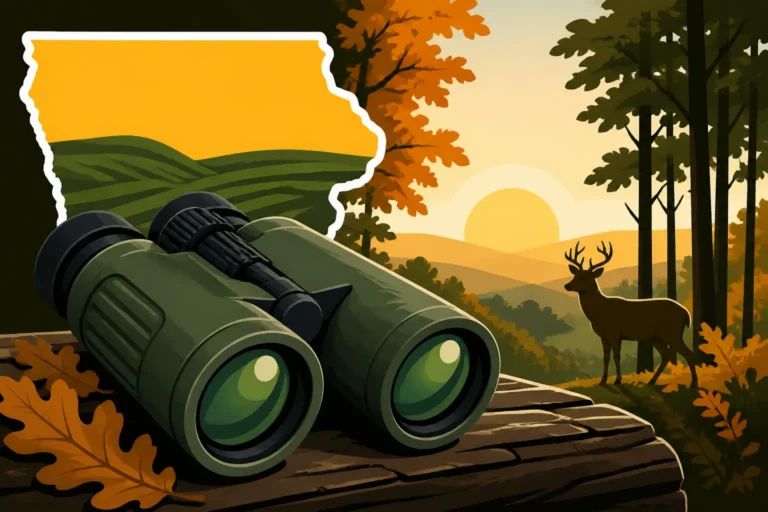
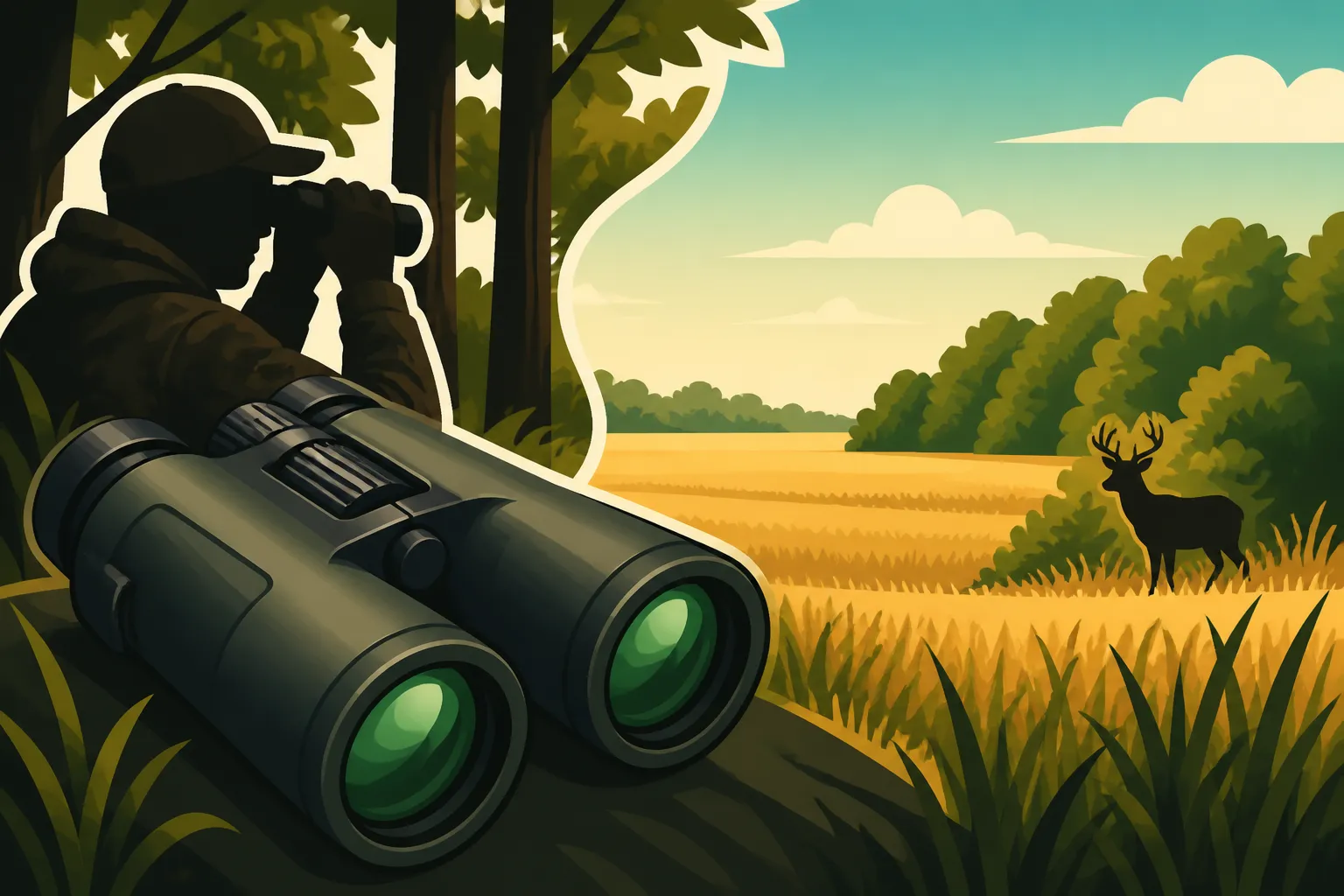
Binoculars are arguably the most crucial piece of glass a deer hunter carries, yet they often get overlooked or bought on a whim. In Iowa, where you might be glassing across a quarter-mile field one moment and trying to pick apart thick timber the next, having the right binoculars isn't just helpful, it's essential for effective scouting and hunting.
Magnification and Objective Lens Considerations
When you’re looking at binoculars, you’ll typically see two numbers, like "8×42" or "10×42." The first number, "8x" or "10x," refers to the magnification power. An 8x binocular makes objects appear eight times closer than they are, while a 10x makes them appear ten times closer. The second number, "42," is the diameter of the objective lens in millimeters. This lens gathers light, and a larger objective lens generally means a brighter image, especially in low light.
For much of Iowa's timber hunting, an 8x magnification can be incredibly advantageous. It offers a wider field of view, which is incredibly helpful when trying to find movement in dense woods where deer might only be visible for a split second between trees. This wider view also makes it easier to track a moving deer. The image is generally more stable at 8x, reducing the hand shake that can blur your view, especially after a long trek to your stand or during an adrenaline-fueled moment. This stability is particularly noticeable when you're perched in a treestand, trying to hold still. Binocular Size for Timber Hunting is often a debate, and for thick cover, many Iowa hunters lean towards the more forgiving 8x.
However, if your primary hunting spots are vast ag fields, picked corn, or CRP grasslands, a 10x binocular really shines. That extra magnification can help you resolve antler detail on a buck far across a field or spot a pheasant flushing at the extreme edge of your vision. The trade-off is a narrower field of view and a slightly less stable image, but for open country, the increased reach often outweighs these minor drawbacks. Many hunters opt for a 10×42 as a versatile all-around choice.
Low-Light Performance and Ruggedness
Iowa hunting seasons, particularly for deer, often demand peak performance from your optics during the twilight hours of dawn and dusk. These are prime movement times for whitetails. Binoculars with excellent low-light performance are critical here. This isn't just about the objective lens size, but also the quality of the glass and the coatings applied to the lenses. Better glass and multi-coatings reduce glare and transmit more light, giving you a clearer, brighter image when light is scarce. You want to be able to see clearly well before legal shooting light and well after. Low Light Performance in December is a real concern when the days are short and often overcast, making high-quality glass a worthy investment.
Beyond optical quality, ruggedness is key for any hunting gear in Iowa. Our weather can be unpredictable, ranging from warm, humid early archery days to freezing, sleeting late muzzleloader hunts. Your binoculars will get bumped, potentially dropped, and exposed to rain, snow, and mud. Look for models that are fully waterproof and fog-proof, often achieved by O-ring seals and nitrogen or argon purging. Rubber armor helps protect against impacts and provides a better grip, even when your hands are cold or wet. A good pair of binos should be able to withstand the rigors of being packed through multiflora rose thickets or riding in a truck across miles of gravel roads.
Rangefinders: Precision for Every Shot
Whether you're drawing a bow or settling a rifle scope's crosshairs, knowing the exact distance to your target is paramount for an ethical shot. A rangefinder eliminates guesswork, especially in Iowa's varied terrain where hills, dips, and timber can play tricks on your depth perception.
Angle Compensation and Modes
Modern rangefinders offer a crucial feature for hunters: angle compensation. When you're shooting from an elevated position, like a treestand, or up/down a steep hill in the bluff country of northeast Iowa, the horizontal distance to the deer is what matters for bullet or arrow trajectory, not the straight-line distance. An angle-compensating rangefinder (often labeled as "ARC" for Angle Range Compensation or similar) provides this "shoot-to" distance, significantly improving accuracy. This is absolutely critical for bowhunters, where a few yards off on an angled shot can mean a missed opportunity or worse.
Many rangefinders also come with different modes. A "bow" mode will typically prioritize closer distances and provide angle compensation, while a "rifle" mode might have a wider ranging capability and sometimes ballistic calculations for various cartridges. Some even have a "scan" mode, which is incredibly useful for continually ranging multiple targets or following a moving animal, giving you real-time distance updates as a deer walks through the timber.
Speed, Accuracy, and Target Acquisition
When a whitetail steps into an opening, you often have mere seconds to range it and take a shot. The speed of your rangefinder is therefore crucial. You want one that provides an instant, accurate reading. Look for models with fast processing speeds. Accuracy is generally measured in yards, with most hunting-grade rangefinders being accurate to within +/- 1 yard. This level of precision is more than adequate for hunting distances.
Target acquisition refers to how easily the rangefinder picks up the deer, especially if it's partially obscured by brush or standing in front of distant trees. Features like "first target priority" or "distant target priority" can be helpful. First target priority helps you range the deer, not the tree behind it, which is useful in dense timber. Distant target priority ignores foreground objects like tall grass or small branches, ensuring you get a reading on the animal itself. A good rangefinder in Iowa should be able to quickly and accurately range a deer at practical hunting distances, both in open fields and through light cover. Rangefinding in Timber presents unique challenges compared to an open field, and a quality unit handles both with ease.
Rifle Scopes for Iowa Whitetails
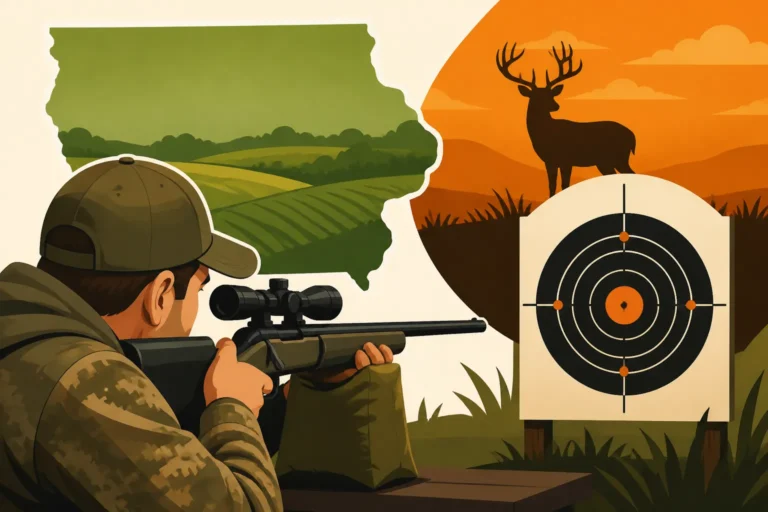
With Iowa's shotgun and straight-wall cartridge rifle seasons, a well-chosen rifle scope is essential for accurate shot placement. The variety of hunting scenarios, from short-range timber encounters to longer shots across agricultural fields, means your scope needs to be versatile and reliable.
Magnification Ranges for Timber and Fields
Iowa's hunting landscape is rarely uniform. You might be still-hunting a dense river bottom early in the season, where shots are typically under 75 yards, then hunting the edge of a vast cornfield later on, where a 150-yard shot is entirely possible. This requires a scope that can adapt.
A common and highly versatile choice for Iowa is a scope with a 3-9×40 or 3-10×40 magnification range. The lower power settings (3x or 4x) are perfect for timber. They provide a wide field of view, making it easier to acquire a target quickly in thick cover, and more light transmission for those dim conditions under the canopy. At 3x, a deer at 50 yards feels close, but you still have plenty of peripheral vision to track its movement or assess its surroundings.
When you step out onto a field edge, you can crank that magnification up to 9x or 10x. This allows for precise aiming at longer distances, helping you pick a small aiming point like the crease behind a deer's shoulder. For hunters who strictly hunt fields or very open areas, a 4-12x or even a 4.5-14x might be considered, but remember the trade-off in field of view at the lower end. For most Iowa deer hunting, a 3-9x or similar variable power is the sweet spot, offering excellent versatility for both tight woods and open country. Scope Magnification for Slug Guns often involves similar considerations, balancing close-range field of view with the need for precision at moderate distances.
Reticle Types and Illumination
The reticle (the crosshairs or aiming point inside your scope) is what you use to aim, and different styles suit different needs. The classic duplex reticle is simple, clean, and effective, especially for hunters who prefer to hold dead-on. However, for those longer shots that might require holdover, a BDC (Bullet Drop Compensator) reticle can be invaluable. These reticles have multiple aiming points calibrated for specific distances, making it easier to compensate for bullet drop without manually adjusting your turrets in the heat of the moment. Some BDC reticles are designed for specific calibers or bullet weights, so match it to your chosen ammunition.
Illuminated reticles are another feature gaining popularity, particularly for low-light hunting. These reticles have a small, battery-powered light that illuminates the center aiming point, making it stand out against a dark background or a deer's dark hide. This can be incredibly useful at dawn, dusk, or on heavily overcast days when a standard black reticle can get lost in the shadows. The key is finding one with adjustable brightness settings, so it's not too bright and doesn't wash out your vision. In the dense timber where shadows often linger, an illuminated reticle can give you the confidence to make a shot you might otherwise pass on.
Mounting and Eye Relief
A top-tier scope is only as good as its mounting system. High-quality rings and bases are non-negotiable. They need to be robust enough to withstand the recoil of your firearm and hold the scope securely, maintaining zero through bumps and jostles. Many hunters opt for reputable brands known for their durability. Proper mounting also involves setting the correct eye relief – the distance your eye needs to be from the eyepiece to see a full, clear image. Too close, and recoil can cause "scope bite"; too far, and you'll struggle to find a full sight picture quickly. This is especially important for slug guns and straight-wall rifles, which can have significant recoil. Spend the time to set your eye relief correctly for a comfortable, consistent cheek weld and rapid target acquisition. After all, the best optics in the world are useless if you can't get behind them effectively.
Muzzleloader and Crossbow Optics for Iowa
Iowa's hunting seasons include specific periods for muzzleloaders and crossbows, each with their own unique optical needs. While some principles overlap with rifle scopes, there are distinct considerations to ensure you're effectively equipped for these traditional and specialized weapons.
Muzzleloader Optics: Reliability in All Conditions
Muzzleloader season in Iowa often coincides with some of the year's harshest weather, particularly the late muzzleloader hunt in December. This means your optics must be exceptionally reliable under cold, wet, and often snowy conditions. A simple, robust scope is often preferred.
Similar to shotgun scopes, muzzleloader scopes don't necessarily need extreme magnification. Shots are typically within 150-200 yards, sometimes much closer in dense timber. A fixed 4x power scope or a variable 1-4x, 2-7x, or 3-9x power scope is usually ideal. The emphasis here is on durability, light gathering, and clear, fog-free performance. Muzzleloaders produce a significant amount of smoke, and while it dissipates quickly, you want optics that won't be easily fouled or obstructed. Good eye relief is also important to handle recoil comfortably.
Many muzzleloader-specific scopes feature specialized reticles designed for the trajectory of a sabot or round ball. These often include multiple aiming points to account for bullet drop at various distances. Given the single-shot nature of muzzleloaders, making that first shot count is critical, and a ranging reticle can be a huge asset. Focus on waterproof, fog-proof construction and easily adjustable turrets for zeroing. Keeping a Muzzleloader Dry in December means your optics need to be just as weather-sealed as the firearm itself.
Crossbow Optics: Speed and Trajectory Specifics
Crossbow hunting has become increasingly popular in Iowa, offering another option during the archery season. Crossbows have a flatter trajectory than traditional bows, but still a much more pronounced arc than a rifle, especially at longer distances. Their optics need to reflect this.
Most crossbow scopes come with multiple aiming points or a reticle designed specifically for crossbow trajectory, often marked for 20, 30, 40, 50 yards, and sometimes further. These reticles are crucial because a slight misjudgment of distance can result in a significant impact difference at crossbow speeds. Some advanced crossbow scopes even allow you to dial in your crossbow's specific bolt speed, automatically adjusting the reticle for optimal accuracy.
Magnification for crossbow scopes is typically lower, often in the 1-5x or 2-8x range. The most important factor is a clear, bright sight picture and a robust, fog-proof design. Crossbows are often carried through thick brush, and their scopes need to withstand the bumps and scrapes of such travel. Look for excellent eye relief and a wide field of view, particularly for close-range shots in timber. The ability to quickly and clearly acquire your target is paramount.
Handgun Optics for Deer Hunting
Iowa also allows handguns for deer hunting during specific seasons, often aligning with shotgun and straight-wall cartridge rifle seasons. Optics for handguns present another set of considerations, primarily due to how handguns are held and shot, and their inherent recoil.
For handgun hunting, red dot sights are a very popular choice. They offer rapid target acquisition and parallax-free aiming, meaning the point of impact doesn't shift if your eye isn't perfectly centered behind the sight. This is a huge advantage for handguns, which can be harder to hold steady and aim precisely than a long gun. A simple, durable red dot with adjustable brightness is often preferred.
For hunters seeking more magnification, handgun scopes are available. These scopes typically have much longer eye relief than rifle scopes, allowing them to be mounted forward on the handgun while still providing a full sight picture. Magnification ranges are usually low, such as 2x or 4x fixed power, or 2-6x variable. Durability to withstand magnum handgun recoil is a must. Clear glass, simple reticles, and reliable adjustments are key, as handgun shots on deer are usually taken at closer ranges, emphasizing quick target acquisition and precise shot placement within those limits. Handguns Legal for Iowa Deer outlines the specific requirements, but regardless of legality, pairing the right optic with your handgun will significantly improve your chances of success.
Enhancing Your Optics Experience: Accessories and Maintenance
Having quality optics is only half the battle; how you carry, protect, and maintain them can significantly impact their performance and longevity in the field. From comfortable harnesses to meticulous cleaning routines, these details make a real difference for an Iowa hunter.
Binocular Harnesses and Covers
Carrying binoculars around your neck with a traditional strap might seem fine for a short walk, but after a few hours of still-hunting or sitting in a stand, you’ll quickly feel the strain. More importantly, your binoculars will swing and clatter, potentially bumping stands, rattling against buttons, or making unwanted noise at the worst possible moment. A good binocular harness is a game-changer.
A harness distributes the weight of your binoculars across your shoulders and back, rather than concentrating it on your neck. This makes them feel lighter and much more comfortable for all-day wear. Furthermore, a harness keeps your binoculars secure against your chest, preventing them from swinging wildly while you climb into a treestand or navigate dense brush. Many harnesses include a small pouch or cover that protects the lenses from dust, dirt, rain, and snow – all common occurrences during Iowa's hunting seasons. Some even have small pockets for a wind checker or a lens cloth. This simple piece of gear can dramatically improve your comfort and the protection of your valuable glass.
Lens Cleaning and Protection
Dirty lenses are the enemy of clear vision. Smudges, dust, fingerprints, and water spots can severely degrade image quality, especially in low light. Always carry a dedicated lens cleaning kit in your pack. This typically includes a soft brush to remove loose debris, a micro-fiber cloth, and sometimes a lens cleaning solution. Avoid using your shirt sleeve, a paper towel, or harsh chemicals, as these can scratch delicate lens coatings.
When cleaning, first gently brush off any loose dust or grit. Then, with a clean micro-fiber cloth, gently wipe the lenses. If there are stubborn smudges, a small amount of lens cleaning solution applied to the cloth (not directly to the lens) can help. Protect your lenses whenever possible. Use lens caps when your binoculars or scope aren't in active use. A scope cover, especially a neoprene sleeve, offers excellent protection against impacts, scratches, and moisture while you're trekking to your stand or storing your firearm. Taking these small steps will ensure your optics are always performing their best.
Tripods, Shooting Sticks, and Stability
While binoculars are typically hand-held, there are situations where increased stability can offer a significant advantage, particularly when glassing large areas for extended periods. A lightweight tripod for your binoculars can provide rock-solid stability, allowing you to really pick apart distant cover and spot subtle details you might miss with even the steadiest hands. This is especially useful for e-scouting from a vantage point, or if you're hunting an area where you expect deer to be moving at long distances.
For shooting, especially with straight-wall rifles or muzzleloaders across open fields, shooting sticks are almost a necessity. Trying to hold a heavy firearm steady for a shot over 100 yards, particularly when adrenaline is pumping, is incredibly difficult. Shooting sticks, whether monopod, bipod, or tripod, provide a stable rest that dramatically improves accuracy. They can be quickly deployed and adjusted for height, making them versatile for ground hunting or even from a seated position in a ground blind. Many Iowa hunters swear by them for confident shots in situations where a natural rest isn't available. Shooting Sticks for Ground Blind Hunting can truly make a difference in your accuracy from a seated position.
Specialized Optics for Specific Scenarios
Beyond the core binoculars, rangefinders, and rifle scopes, there are other optical tools that can offer distinct advantages for Iowa hunters, especially in certain situations or during specific seasons.
Thermal and Night Optics (and Iowa Regulations)
The appeal of thermal and night vision optics is undeniable, particularly for spotting game in complete darkness or through thick cover. Thermal optics detect heat signatures, allowing you to see animals even when they are perfectly camouflaged or hidden by brush, fog, or darkness. Night vision intensifies ambient light, revealing what's happening after sundown.
However, it's absolutely crucial to understand Iowa's regulations regarding these devices. While they might be incredibly effective for scouting or wildlife observation, their use for hunting deer or other game animals is strictly regulated, often prohibited during legal hunting hours or for certain species. Typically, thermal and night vision can be used for hunting certain furbearers like coyotes at night, but always verify current rules before considering these for deer or turkey. Night Vision Rules for Iowa Coyotes highlights where these tools are permissible. Before investing in such specialized and often expensive equipment, be sure it aligns with your hunting goals and, more importantly, with Iowa's specific hunting laws.
Trail Cameras: Remote Scouting Eyes
While not "optics" in the traditional sense of looking through them, trail cameras are invaluable remote optical tools for scouting in Iowa. They extend your eyes into the timber and fields when you can't be there, providing crucial intelligence on deer movement patterns, preferred travel routes, and the presence of specific bucks.
Placing trail cameras strategically along known deer trails, at pinch points, near food sources, or along bedding area edges can provide a wealth of information. You can track when deer are moving, at what times, and even get an estimate of the age structure of the deer in a given area. Cellular trail cameras take this a step further, sending images directly to your phone, reducing your need to disturb an area by checking cards. This can be a huge advantage on public land where minimizing your presence is critical to avoid burning out a spot.
When using trail cameras on public land, however, be mindful of specific rules. Some public areas have regulations on how long cameras can be left out, where they can be placed, or even if they're allowed at all. Always check the rules for the specific WMA or public tract you intend to hunt. On private land, the rules are typically set by the landowner. Trail Camera Placement on Iowa Public Land is an art form in itself, balancing effectiveness with minimizing disturbance and adhering to regulations.
Budgeting for Quality Optics in Iowa
Let's be real, hunting can be an expensive endeavor, and optics are often one of the biggest investments. However, you don't always need to break the bank to get functional, reliable glass for Iowa hunting. It’s about understanding where to prioritize your spending and what features genuinely matter.
Where to Spend and Where to Save
When budgeting for optics, it’s generally wise to invest more in the items you’ll use most and rely on for critical moments. Your rifle scope and binoculars are usually at the top of this list. A clearer, brighter image from quality binoculars will aid in early detection, while a reliable, accurate rifle scope is paramount for ethical shot placement. Poor glass can cause eye strain, missed details, and ultimately, missed opportunities or worse.
You can often save a bit on items like rangefinders, especially if you're not planning ultra-long-range shots. Many mid-tier rangefinders offer excellent performance for typical Iowa hunting distances (out to 200-300 yards) without the premium price tag of models with advanced ballistic calculators you might not use. Similarly, for a simple pair of backup binoculars or a secondary spotting scope (if you even need one), you can often find decent value without going high-end. The key is to avoid the cheapest options across the board; truly bargain-basement optics can be a frustrating liability in the field, often failing when you need them most.
Entry-Level Versus High-End Performance
The optics market offers an incredible range of products, from entry-level options starting around a couple hundred dollars to high-end alpha glass costing thousands. For a new hunter or someone on a tight budget, the entry-level options from reputable brands can still provide perfectly adequate performance. You might sacrifice some low-light performance, clarity at the very edges of the lens, or the absolute toughest build materials, but they will still allow you to hunt effectively. Brands often have excellent offerings in their mid-range lines that hit a sweet spot of performance and value.
High-end optics deliver superior light transmission, edge-to-edge clarity, premium coatings, and extreme durability. These are often the choices of serious hunters who spend countless hours in the field, hunt in diverse and challenging conditions, and demand the absolute best. The difference is most noticeable in challenging light conditions and at longer ranges. For most Iowa hunting, where shots are typically inside 200 yards and light isn't always an issue, a mid-range binocular or scope will often suffice. That said, if your budget allows, the enhanced performance and confidence provided by high-end glass can absolutely be worth the investment. Think about your personal hunting style and frequency before making a final decision. You can often find great reviews on sites like GoHunt to help you decide what fits your needs and budget best.
| Optic Type | Common Iowa Use Case | Key Features to Look For | Potential Areas to Save |
|---|---|---|---|
| Binoculars | Glassing timber, field edges, long-range scouting | 8x-10x magnification, 42mm obj., low-light perf., rugged, waterproof | Entry-level brand models (8x over 10x) |
| Rangefinder | Bowhunting, shotgun/straight-wall rifle distance calls | Angle compensation, fast readings, target priority | Basic models without ballistic features |
| Rifle Scope | Shotgun & straight-wall seasons, timber & field shots | 3-9×40 or 3-10×40, BDC or simple reticle, illuminated option | Fixed power, no illumination |
| Muzzleloader Scope | Muzzleloader seasons, all-weather reliability | Low magnification (1-4x, 2-7x), durable, fog-proof, ranging reticle | Simple duplex reticle |
| Crossbow Scope | Archery season crossbow hunting | Multi-reticle for trajectory, durable, good eye relief | No variable speed adjustment |
| Handgun Optic | Handgun deer seasons | Red dot, long eye relief (for scopes), durable | Fixed power, fewer brightness settings |
Final Thoughts on Optics for Iowa Hunting
Navigating the world of hunting optics for Iowa's varied landscape can feel a bit overwhelming, but ultimately, it comes down to understanding your primary hunting scenarios and prioritizing features that will genuinely help you in the field. Whether you're peering into the deep shadows of a Linn County timber stand or scanning the vast expanse of a Poweshiek County cornfield, having clear, reliable glass can be the critical difference between going home empty-handed and making a memory that lasts a lifetime.
Remember, every piece of gear you carry is an investment in your hunting experience. Taking the time to research, practice with, and properly maintain your optics will pay dividends in confidence and success. Don't be afraid to try different options or ask fellow Iowa hunters for their recommendations. After all, the better you can see, the better you can hunt. Happy hunting!
Disclaimer
This article is for general informational purposes only and does not constitute professional advice. Laws, prices and regulations vary by location and change over time. Consult a qualified professional for guidance on your specific situation.