Night Vision Rules for Iowa Coyotes
The thrill of chasing coyotes under the cloak of darkness is undeniable, offering a unique challenge and a different kind of connection to the wild. However, many Iowa hunters feel a real sense of confusion and frustration when trying to figure out what gear is actually legal for these nocturnal pursuits, especially when it comes to cutting-edge night vision and thermal optics. It feels like the rules are always shifting or are just plain hard to nail down, leaving you worried about crossing a line. This guide is here to untangle the specifics of night vision and thermal optics for coyote hunting in Iowa, giving you a clear understanding of what you can and can't use so you can hunt confidently and legally.
Understanding Iowa's General Hunting Regulations for Night Hunting
Before we dive into the specifics of gear, it's crucial to lay a solid foundation regarding Iowa's general regulations for hunting after dark. This isn't just about what you put on your rifle; it's about understanding the entire framework that governs your hunt once the sun dips below the horizon. The Iowa Department of Natural Resources (DNR) sets these rules to ensure fair chase, public safety, and sound wildlife management, and they are something every hunter needs to be familiar with. It's often frustrating when you just want to get out there, but taking the time to understand these nuances can save you a lot of headache down the road.
Legal Shooting Hours vs. Night Hunting
This is often where the biggest misunderstanding comes into play for new or less experienced night hunters. For most game species in Iowa, hunting is restricted to specific "legal shooting hours," generally defined as half an hour before sunrise to half an hour after sunset. This applies to deer, turkeys, pheasants, and a host of other animals you might pursue during the day. However, coyotes are often treated differently, reflecting their status as a furbearer and a species that can sometimes pose management challenges for livestock producers. The key takeaway here is that not all animals are subject to the same time constraints.
For coyotes, Iowa regulations typically allow hunting during both daylight and nighttime hours, often year-round. This special provision recognizes the predatory nature of coyotes and the need for hunters to have flexibility in managing their populations. But just because you can hunt them at night doesn't mean anything goes. The methods and equipment you use are still very much regulated. Many hunters find themselves scrolling through the regulation booklet, trying to parse through complex legal jargon, wishing there was a simpler way to just know if their new thermal scope is good to go. It’s a common frustration, but sticking to the official sources like the Iowa Regulation Booklet Release Date is always your best bet.
Species-Specific Regulations
Iowa's hunting laws are highly species-specific, and coyotes fall under the "furbearer" category. This distinction is vital because furbearers often have different season dates, bag limits (or lack thereof, as is often the case for coyotes), and permitted hunting methods compared to, say, big game like deer. For coyotes, the primary goal of the regulations is often to provide opportunity for population control and recreational hunting, without the same conservation concerns that might apply to other species. This flexibility is what allows for the consideration of night hunting and specialized equipment.
It’s not just about the hours; it's about the tools. While you might be restricted to specific firearm types or ammunition during deer season, coyote hunting often offers more leeway. However, even within this flexibility, there are still lines drawn, particularly when it comes to artificial lights and advanced optics. The state's general rules, like those outlined in Iowa Coyote Hunting Licence Rules, are your starting point, but always remember to dig a little deeper for the fine print on night-specific tools. Knowing these general principles is the first step in navigating the often-confusing landscape of night hunting laws.
Night Vision and Thermal Optics for Coyotes: What's Allowed?
Now, let's get into the nitty-gritty that most night hunters are really wondering about: can I use my fancy new night vision or thermal scope to hunt coyotes in Iowa? This is where the specific language of the regulations becomes paramount, and it’s often an area of significant evolution as technology advances. Iowa has worked to clarify these rules, but staying current is always a hunter's responsibility. It can feel like you need a law degree to interpret some of these statutes, but let's break it down in plain language.
Night Vision Devices
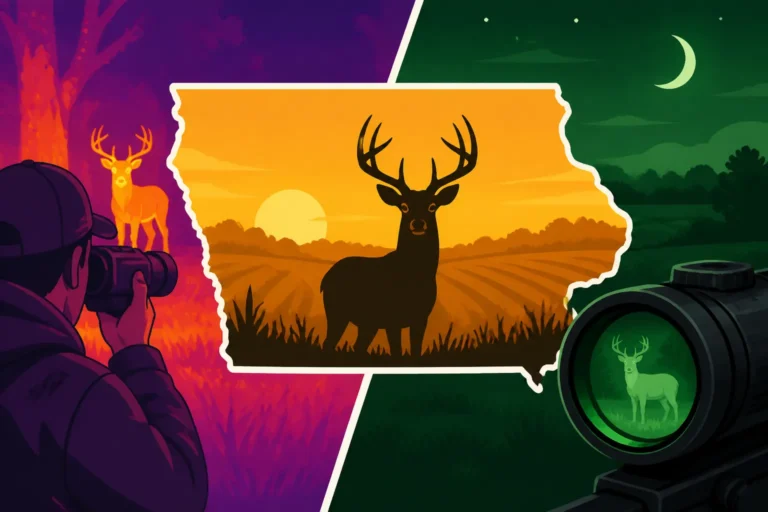
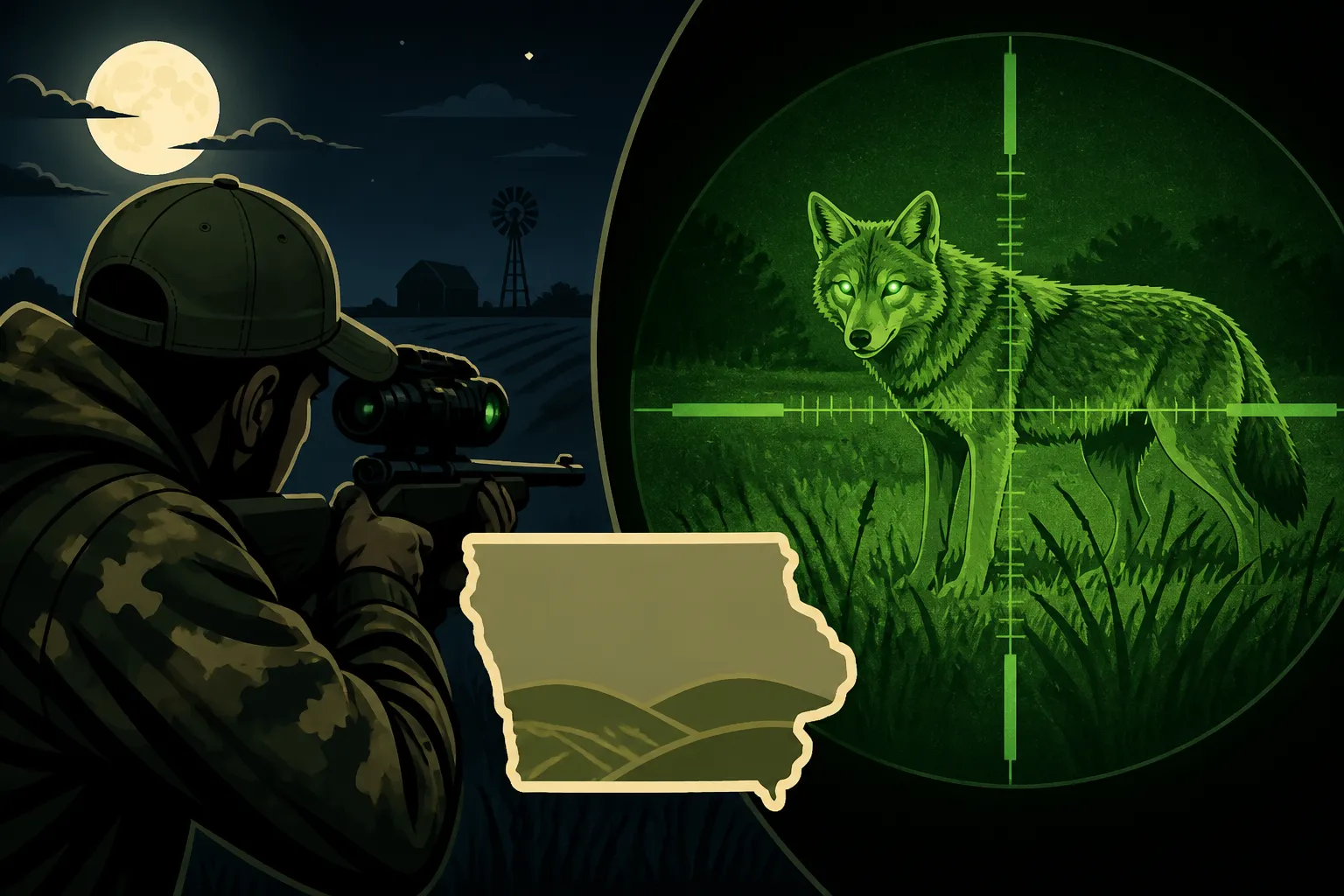
Night vision devices, which intensify existing ambient light, are generally permitted for hunting coyotes in Iowa. These devices work by taking the tiny bit of light available—from the moon, stars, or even distant city glow—and amplifying it so you can see in near darkness. Think of it like super-powered binoculars or a scope that turns night into a hazy, green-tinged day. This means if you have a traditional night vision monocular or a scope, you can legally use it to spot and target coyotes.
The reason these are generally allowed for coyotes, when they might be restricted for other species, goes back to the state's approach to furbearer management. Coyotes are often active at night, and allowing hunters to use tools that level the playing field helps with population control efforts. Just remember, while the device itself is likely legal, you still need to adhere to all other hunting regulations, such as being on land where you have permission to hunt and understanding safe shooting zones. You can map out these permission areas, and even plot out your hunting spots and access points, using tools like the GoHunt app, which many serious hunters rely on for detailed land ownership and topographic data.
Thermal Imaging Optics
Thermal imaging optics are a different beast entirely. Instead of amplifying light, thermal devices detect minute differences in heat signatures. This means they can "see" the heat radiating from an animal's body, even in total darkness, through light fog, or dense brush that might obscure traditional vision or even night vision. This technology has revolutionized night hunting, allowing for detection over long distances and in conditions where other optics are useless.
For hunting coyotes in Iowa, thermal imaging optics are generally permitted. This means you can use a thermal monocular for scanning and a thermal scope mounted on your firearm for target acquisition. This has been a huge boon for predator hunters, as coyotes often blend seamlessly into the night, but their heat signature is unmistakable. However, always double-check the latest Thermal and Night Optics Rules in Iowa directly from the DNR, as regulations can sometimes be subject to change or interpretation, especially concerning emerging technologies. It's frustrating to invest in high-tech gear only to find out it's not allowed, so always do your homework before hitting the field.
Artificial Lights and Spotlights
Here’s where it gets a little more complex and where hunters need to be extremely cautious. While night vision and thermal optics that use passive light or heat detection are generally allowed, the use of artificial lights, such as spotlights or vehicle headlights, for the purpose of illuminating or shooting at coyotes is generally prohibited in Iowa, with some very specific exceptions. The key phrase here is "for the purpose of illuminating or shooting." This means you typically cannot shine a bright light on a coyote to take a shot, as this is often considered a "take" method that is illegal for most species and specific furbearers.
However, there can be exceptions for landowners protecting property or livestock, and these exceptions are usually very narrow and require careful understanding of specific clauses in the law. For the average recreational hunter, assume that shining a light on a coyote to shoot it is a no-go. This is a critical distinction from passive night vision or thermal, which don't project light. Understanding this difference is essential to avoid serious legal trouble and potential Iowa Wildlife Violation Penalties. Always review the current regulations to be absolutely sure, as interpretation of "artificial light" can sometimes be debated, but generally, if it emits light to help you see the animal, it's probably restricted for hunting.
Practical Considerations for Night Coyote Hunting in Iowa
Beyond the legality of your gear, successfully and ethically hunting coyotes at night in Iowa requires a different approach than your typical daytime hunt. The darkness changes everything – how you move, how you call, and how you ensure safety for yourself and others. It's not just about flipping a switch and suddenly being a night hunter; it demands careful planning and a deep respect for the conditions.
Safety First
Hunting in the dark inherently carries more risks. Visibility is severely limited, increasing the chance of accidents. Always prioritize safety above all else. This means being absolutely certain of your target and what lies beyond it before taking any shot. Backstops are harder to verify, and identifying non-target animals or even people can be incredibly challenging without proper tools and discipline.
- Positive Target Identification: With night vision or thermal, it can be easy to spot something warm or an outline. But is it a coyote? Or a farmer's dog? Or even a deer that might be illegally targeted? Always use binoculars or a spotting scope (with night vision or thermal capabilities) for initial identification before bringing your weapon to bear. Take your time.
- Know Your Shooting Lanes: Before darkness falls, familiarize yourself with the terrain, potential shooting lanes, and safe zones of fire. Know where fences, roads, and buildings are, and imagine how your bullet might travel. If you're hunting with a group, ensure everyone knows each other's positions and has clear zones of fire. Communication is paramount, perhaps even more so than during a daylight deer drive where you might rely on Party Hunting Rules and Safe Drives.
- Carry Backup Lights: Even if you can't use a spotlight to shoot, always carry a powerful flashlight for navigating to and from your stand, for blood trailing, or in case of an emergency. A quality headlamp is invaluable.
Ethical Hunting Practices
Ethics are the cornerstone of all hunting, and night hunting is no exception. In fact, due to the unique challenges of darkness, ethical considerations often become even more pronounced. A clean, quick kill is always the goal, and poor visibility can compromise this if you're not careful.
- Shot Placement: The challenges of target identification in low light can sometimes lead to less-than-ideal shot placement. Take extra care to ensure you have a clear, ethical shot at the vital zone. If you're unsure, don't take the shot. Wait for a better opportunity, or pass on the animal entirely. This applies even more acutely in the dark than during the day when you might be meticulously calculating a Shot Placement on a Whitetail at Twenty Yards.
- Recovery Efforts: Coyotes can be tough animals, and even with a solid hit, they can run a considerable distance. Blood trailing at night, even with lights and specialized optics, can be incredibly difficult. Consider the terrain and vegetation you're hunting in. If you take a shot late at night, be prepared to wait until morning for a thorough recovery effort, especially if you're hunting dense CRP Grass and Where Bucks Bed. This ensures you minimize the chance of losing a wounded animal.
- Respect for Wildlife: While coyotes are often managed as predators, they are still wild animals deserving of respect. Avoid any tactics that seem unsporting or could lead to undue suffering. The goal is a humane harvest.
Scouting and Setup for Night Hunting
Just like daytime hunting, proper scouting and setup are critical for night hunting success. However, your focus shifts to factors that are more relevant to the nocturnal environment. This includes understanding typical coyote travel routes under the cover of darkness and using your scouting tools effectively.
- Daytime Reconnaissance: All your night hunting success starts during the day. Identify prominent travel corridors, pinch points, and open areas where coyotes might cross, especially those connecting bedding and feeding areas. Look for fresh sign, like tracks and scat. Knowing the terrain inside and out during daylight will give you a significant advantage when navigating in the dark.
- Access Routes: Plan your access routes carefully. You want to get into your position without alerting any coyotes in the area. This means quiet approaches, often through areas that offer natural cover. Consider how wind and thermals will affect your approach and your scent. Tools like GoHunt can help you pinpoint these routes and mark out quiet entry and exit points on the landscape, making sure you aren't walking through a known bedding area.
- Wind and Stand Placement: Wind direction is always important, but arguably even more so at night. Coyotes rely heavily on their sense of smell. Always set up downwind of where you expect coyotes to approach. Thermal changes can also influence air currents, especially in varied terrain. Understanding Wind and Thermals in River Breaks can be particularly useful in predicting how your scent will carry across the landscape in various conditions.
Gear Recommendations for Night Coyote Hunting
Equipping yourself for night coyote hunting means balancing legal compliance with effective tools that enhance your success and safety. While the discussion above covers the legality of night vision and thermal, let's look at how these integrate with other gear and strategies to make you a more effective night predator hunter.
Optics Integration
Your night vision or thermal optic is the star of the show for seeing in the dark, but it's not the only piece of glass you'll use. Think about how these technologies work together with your firearm and other tools.
- Dedicated Optics: For serious night hunting, a dedicated thermal or night vision scope mounted on your rifle is ideal. These are purpose-built for the task, offering clear sight pictures and robust construction. Ensure your rifle is zeroed properly with your night optic during the day, as POI (point of impact) can sometimes shift slightly between daytime and nighttime setups or different optics.
- Scanning Devices: A handheld thermal monocular or night vision device for scanning is an absolute game-changer. You don't want to be constantly sweeping your rifle across the landscape. Use the handheld device to locate animals, then bring your weapon up only when you've positively identified your target and determined a shot is feasible. Brands like GoHunt also offer accessories that pair well with optics for mapping and data logging, giving you a full picture of your hunt.
- Rangefinders: Even with advanced optics, knowing your exact range is critical, especially at night when distances can be deceptive. A rangefinder, ideally one with low-light capabilities or the ability to range through your night/thermal optic, is a must-have. Don't leave home without it; rangefinding can be just as crucial at night as it is for Rangefinding in Timber during daylight hours.
Calling and Decoying Strategies for Darkness
Night hunting coyotes often involves calling them in close. The darkness changes how coyotes react and how you need to execute your calling and decoying strategy.
- Electronic Callers: These are invaluable for night hunting. They allow you to project sounds a good distance from your position, drawing the coyote's attention away from you. With a remote control, you can easily adjust volume and switch sounds without moving. Place the caller 50-100 yards out in front of you, downwind, to divert attention. Consider sounds like rabbit in distress, fawn in distress, or coyote howls and pup distress. Coyote Calling in Iowa Farm Country provides some excellent foundational knowledge that applies to both day and night strategies.
- Decoys: While visual decoys are less effective in total darkness, motion decoys, especially those with subtle movements, can still grab attention. A small, fluttering flag or a "critter" decoy that wiggles can be just enough movement to seal the deal once a coyote is in close, giving it something to focus on besides your position.
- Scent Control: Coyotes have an incredible sense of smell. Even at night, practicing strict Scent Control Products and What They Do is crucial. Wear clean clothes, spray down with scent eliminator, and be mindful of wind direction. All the high-tech optics in the world won't matter if a coyote smells you long before it sees your decoy or hears your call.
Night hunting for coyotes in Iowa can be an incredibly rewarding experience, but it demands diligence, preparation, and a thorough understanding of the regulations. By adhering to Iowa's specific rules regarding night vision, thermal optics, and artificial lights, and by prioritizing safety and ethical practices, you can enjoy these unique pursuits responsibly. Always stay informed about the latest DNR guidelines and ensure your gear and methods comply with state law.
| Feature | Night Vision | Thermal Imaging |
|---|---|---|
| Detection Method | Amplifies ambient light | Detects heat signatures |
| Visibility in Dark | Requires some ambient light (moon/stars) | Works in total darkness |
| Visibility in Cover | Impaired by dense brush, fog | Can "see through" light fog, some brush |
| Target ID | Good for detail if enough ambient light | Excellent for spotting animals (heat) |
| Legal for Coyotes | Generally permitted | Generally permitted |
| Pros | Often clearer image in good ambient light, can be less expensive | Detects animals easily in any light or light cover, often from greater distances |
| Cons | Limited in pitch black, affected by fog/rain | Less detail/definition, higher cost |
| Typical Use | Spotting and ID in varied low-light | Locating animals, tracking in difficult conditions |
Disclaimer
This article is for general informational purposes only and does not constitute professional advice. Laws, prices and regulations vary by location and change over time. Consult a qualified professional for guidance on your specific situation.