Iowa’s 500 Foot-Pound Energy Rule
It’s no secret that Iowa deer hunting is some of the best in the country, but with that incredible opportunity comes a set of regulations that can sometimes feel like trying to solve a Rubik's Cube blindfolded. One of the questions that pops up frequently, especially now that straight-wall cartridge rifles have become so popular, revolves around a specific performance metric: the 500 foot-pound energy rule. For many hunters, it sounds a bit technical and might leave you wondering if your trusty rifle is even legal to take afield. This guide is here to untangle the complexities, explain exactly what the 500 ft-lbs rule means for you, and help you ensure your gear is perfectly compliant for your next Iowa whitetail adventure.
Understanding the 500 Foot-Pound Energy Rule in Iowa
Iowa's deer hunting regulations are designed to strike a balance between providing incredible hunting experiences and ensuring the health and ethical harvest of our robust deer population. When it comes to firearms, especially the newer straight-wall cartridge options, the state's rules include specific performance minimums, and the 500 foot-pound energy rule is a prime example of this. It’s not just an arbitrary figure; it’s a standard rooted in ethical hunting principles.
What is "Foot-Pound Energy" and Why Does it Matter?
Let's break down the term "foot-pound energy" (often seen abbreviated as ft-lbs or FPE). In simple terms, it's a measurement of kinetic energy—the energy of motion. When a bullet is propelled from a firearm, it possesses this energy, which is a direct result of its mass (how heavy the bullet is) and its velocity (how fast it's traveling). Imagine trying to push a heavy box versus a light box, or pushing a box slowly versus pushing it quickly; the amount of "work" you do is different. In physics, one foot-pound is defined as the amount of energy required to lift a one-pound object one foot against gravity.
Now, why does this matter to us as hunters? When a bullet strikes a deer, that kinetic energy is transferred to the animal's tissues. This energy is crucial for two main effects: penetration and hydrostatic shock. Sufficient energy ensures the bullet can penetrate deeply enough to reach vital organs like the heart and lungs, or even the central nervous system. Without adequate energy, a bullet might simply "plink" off bone, expand prematurely, or fail to reach deep enough, resulting in a superficial wound. A bullet with enough energy delivers a more rapid and humane kill, minimizing the animal's suffering and increasing the likelihood of a quick recovery. This is paramount for any ethical hunter.
The Intent Behind the Rule: Ethical Harvest
The Iowa Department of Natural Resources (DNR) didn't just pull the 500 foot-pound minimum out of thin air. This regulation, like many others regarding legal hunting equipment, is implemented with a clear and crucial objective: promoting ethical and humane harvesting of game animals. As responsible hunters, we all share the desire to make the cleanest, quickest kill possible. No one wants to wound an animal only to have it suffer or escape, leading to a lost animal and a heavy heart.
By setting a minimum energy standard, the DNR helps ensure that the firearms and ammunition selected for deer hunting possess adequate power to consistently achieve that ethical outcome. It acts as a safety net, guiding hunters away from cartridges that, while perhaps fun to shoot or suitable for smaller game, simply lack the ballistic performance necessary for a robust Iowa whitetail. These regulations reflect a commitment to conservation and responsible game management, ensuring that hunting remains a respected and sustainable activity in our state. It provides clarity, too, so hunters aren't left guessing about whether their chosen round packs enough punch for a clean harvest.
How This Rule Applies to Straight-Wall Cartridges
The 500 foot-pound energy rule gained particular prominence with the expanded use of straight-wall cartridge rifles for deer hunting in Iowa. For a long time, Iowa firearm deer seasons were predominantly the domain of shotguns and muzzleloaders, due to concerns about projectile range in our largely agricultural landscape. The introduction of straight-wall cartridges offered a new rifle-like option, but with specific limitations to maintain safety and ethical standards.
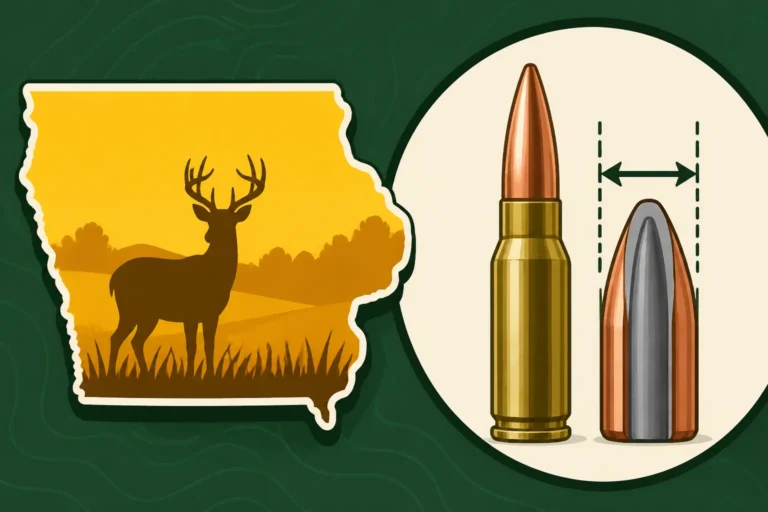
This rule specifically mandates that any straight-wall cartridge used for deer must generate a minimum of 500 foot-pounds of muzzle energy. This means that while the physical design of the cartridge (its straight walls, rather than a bottleneck) is a key part of its legality, its kinetic energy output is equally important. It prevents hunters from using straight-wall rounds that might otherwise be legal in form but are underpowered for deer. So, if you're eyeing a new rifle chambered in a straight-wall cartridge, it's not enough to just verify it's a straight-wall; you absolutely must confirm its ammunition meets this energy threshold. This adds a critical layer to understanding Iowa's Straight-Wall Cartridge Rules and ensures that while we get more firearm choices, we maintain our ethical responsibilities.
How to Determine if Your Ammo Meets the Standard
Understanding that 500 foot-pounds is the minimum is one thing; actually verifying that your chosen ammunition meets that requirement is another. It can feel a bit daunting, but thankfully, there are clear ways to get this information. This isn't a "guesstimate" situation; it's about checking verifiable data for the exact ammunition you plan to use.
Checking Manufacturer Specifications
The most reliable and straightforward method to determine your ammunition's muzzle energy is by consulting the manufacturer's published specifications. Reputable ammunition companies invest heavily in ballistic testing and openly share this data with their customers. You'll typically find this information in a couple of key places:
First, look at the ammunition box itself. Many boxes, especially those for hunting loads, will have a small table or text on the side or back that lists ballistic data, including muzzle velocity (fps) and muzzle energy (ft-lbs). This is the absolute best place to start because it pertains directly to the batch of ammunition you've purchased. Always make sure you're looking for the muzzle energy, not energy at 50 or 100 yards, as the legal requirement is about the energy at the point it leaves your barrel.
Second, if it's not on the box, visit the ammunition manufacturer's official website. Navigate to the specific product page for the exact brand, caliber, and bullet weight you're using. You'll almost always find detailed ballistic charts there. These charts usually show muzzle velocity, muzzle energy, and often energy figures at various distances. Remember, even within the same caliber, bullet weight and specific load can drastically alter these numbers. A 200-grain .350 Legend load will likely have different energy than a 150-grain load, for example. Always verify the exact load you intend to hunt with.
Factors Affecting Muzzle Energy
While manufacturer specifications are generally accurate, it's helpful to understand that the actual muzzle energy you get in the field can be influenced by a few variables. These are typically minor enough not to cause a compliant factory load to fall below the 500 ft-lbs threshold, but they're good to be aware of for a deeper understanding.
The primary factor is barrel length. Ammunition is usually tested in firearms with standard-length barrels, often longer than what you might find on a compact carbine. A shorter barrel means less time for the gunpowder to burn completely and propel the bullet to its maximum velocity. Therefore, a shorter barrel (e.g., a 16-inch barrel versus a 20-inch test barrel) can result in slightly lower muzzle velocity and, consequently, slightly lower muzzle energy. For most popular straight-wall hunting cartridges, this difference isn't enough to make a compliant round illegal, but it's worth noting if your rifle has a particularly short barrel or if your chosen cartridge is truly borderline.
Another consideration is environmental conditions, though this has a less significant impact on muzzle energy than barrel length. Temperature, humidity, and altitude can slightly affect powder burn rates and air resistance, but these variations are usually negligible compared to the 500 ft-lbs minimum. For the most part, if your factory hunting ammunition states it delivers well over 500 ft-lbs at the muzzle, you can be confident it meets the Muzzle Energy Minimums in Iowa.
Tools and Resources for Calculation
For the vast majority of hunters, simply checking the ammunition box or the manufacturer's website is all that's needed. However, if you're a handloader, enjoy crunching numbers, or want to verify the math yourself, there are tools available to calculate muzzle energy.
The fundamental formula for kinetic energy is:
Kinetic Energy (ft-lbs) = (Bullet Weight in Grains * Velocity in fps * Velocity in fps) / 450240
To use this formula, you need two pieces of data:
- Bullet Weight: This is usually listed in grains (gr) on your ammo box or in your reloading manual.
- Muzzle Velocity: Also listed on your ammo box or in the manual, typically in feet per second (fps).
You can find numerous free online ballistic calculators where you simply input these two values, and the calculator will instantly provide the muzzle energy. These tools are incredibly handy for confirming your handloads or for simply gaining a deeper understanding of your chosen ammunition's performance. When researching, some online hunting communities or mapping platforms, like those associated with GoHunt, might also offer resources or user-contributed data that can help you cross-reference information, though always double-check with official manufacturer specs. This level of detail ensures you're fully prepared and compliant when you head out for Public Land Deer Hunting in Iowa or on private ground.
Common Cartridges and Their Compliance
The straight-wall cartridge movement has revitalized deer hunting for many Iowans, offering a compelling alternative to traditional shotguns. However, the 500 foot-pound energy rule means that not every straight-wall option is a legal one for deer in our state. It's smart to know which popular cartridges typically comply and which ones demand a closer look at the specific load data.
Popular Straight-Wall Cartridges That Generally Comply
Thankfully, many of the straight-wall cartridges that have gained widespread popularity for deer hunting in states like Iowa easily clear the 500 ft-lbs minimum. These rounds were often designed with significant stopping power in mind, making them excellent choices for deer-sized game and giving hunters confidence.
Some of the most common and reliably compliant straight-wall cartridges you'll encounter include:
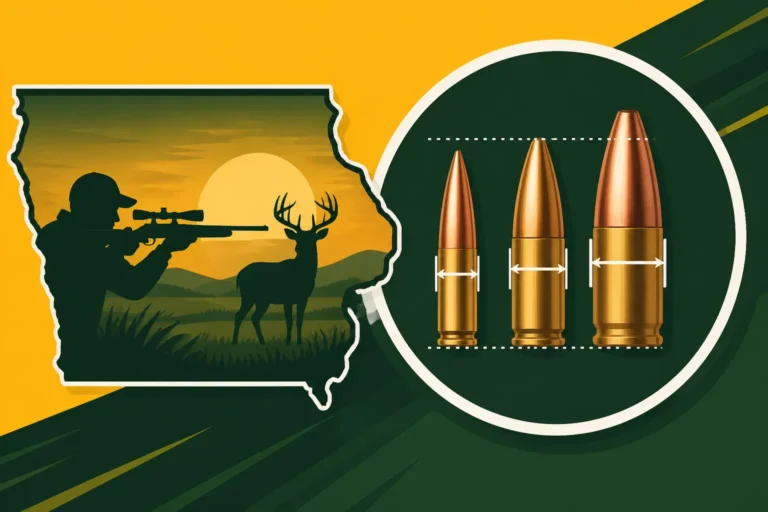
- .450 Bushmaster: This cartridge is a true powerhouse and has quickly become a favorite among many Iowa deer hunters. With most standard factory hunting loads, the .450 Bushmaster routinely generates muzzle energy well over 2,000 ft-lbs, often reaching 2,500 ft-lbs or more. This makes it not only legal but also incredibly effective for deer. If you've been asking Is .450 Bushmaster Legal in Iowa?, for hunting purposes, the answer is a resounding yes, provided you're using standard hunting ammunition.
- .350 Legend: Developed specifically to meet the criteria of straight-wall limited states, the .350 Legend offers a modern, lower-recoiling option that still delivers ample energy. Typical factory loads for the .350 Legend consistently produce muzzle energy in the 1,400 to 1,700 ft-lbs range, comfortably exceeding the 500 ft-lbs minimum. For those curious about Is .350 Legend Legal in Iowa?, it's another excellent, compliant choice.
- .45-70 Government: A classic cartridge with a long and storied history, the .45-70 Gov't is more than capable of handling Iowa deer. While often associated with traditional lever-action rifles, modern factory hunting loads in appropriate firearms easily surpass the 500 ft-lbs requirement, often pushing into the 2,000 to 3,000 ft-lbs category. So, if you're wondering Is .45-70 Legal for Iowa Deer?, you can be confident that it is a powerful and compliant option.
- .44 Magnum (from a rifle) and .357 Magnum (from a rifle): While these are famously handgun calibers, when fired from a rifle-length barrel, their velocities—and thus their muzzle energies—increase dramatically. Many factory rifle-specific loads for both the .44 Magnum and .357 Magnum will easily clear the 500 ft-lbs hurdle, especially the .44 Magnum, which often reaches over 1,000 ft-lbs from a rifle. These can be great options for Popular Straight-Wall Cartridges in Iowa for hunters who enjoy pistol-caliber carbines.
These examples generally offer a significant margin above the 500 ft-lbs minimum with their standard hunting loads, giving hunters peace of mind regarding legality and effectiveness.
Cartridges That Might Be Borderline or Don't Comply
While many straight-wall options are clear winners, it's critical to understand that not all will automatically pass Iowa's 500 ft-lbs test. Some cartridges, particularly with lighter bullet weights, reduced power loads, or when fired from very short barrels, can hover near or even drop below the minimum threshold. This is where vigilance in checking specifications becomes paramount.
Cartridges that warrant careful inspection of their specific load data include:
- .357 Magnum (some loads, especially from shorter barrels): While many rifle-specific .357 Magnum loads from major manufacturers will exceed 500 ft-lbs, lighter, slower, or older handgun-oriented loads might be borderline when fired from a rifle. If you're using a pistol-caliber carbine with a short barrel, the muzzle energy could be reduced enough to create a concern. This is a prime example of why checking the exact manufacturer data for your specific box of ammunition is non-negotiable.
- .44 Special: This cartridge is generally not going to meet the 500 ft-lbs minimum for deer hunting from a rifle. It's designed for significantly lower pressures and velocities than the .44 Magnum and is almost exclusively a handgun cartridge for specific applications. It simply doesn't pack the necessary punch for ethical deer harvest under Iowa's rules.
- Reduced-recoil, "cowboy action," or target loads: Some manufacturers produce specialty ammunition designed for very low recoil, specific competition shooting (like cowboy action), or basic plinking. These loads are intentionally underpowered compared to typical hunting rounds and will almost certainly fail to meet the 500 ft-lbs minimum. Always ensure you are selecting ammunition explicitly labeled and designed for hunting deer.
It’s easy to make assumptions based on caliber name alone. However, the specifics matter. Don't fall into the trap of thinking "it's a magnum, so it's good." Always verify.
The Importance of Specific Load Data
This point cannot be overemphasized: when we talk about Iowa's 500 foot-pound energy rule, it is absolutely and unequivocally about the specific load, not just the general caliber. You could have a rifle chambered in .44 Magnum, which is typically compliant, but if you load it with a target-practice round featuring a very light bullet and a mild powder charge, it could theoretically dip below the legal minimum. Conversely, a hotter, heavier load in a caliber that's otherwise borderline might just make the cut.
Always make it a priority to look for the precise bullet weight (e.g., 200-grain .350 Legend versus 150-grain .350 Legend) and, most importantly, the manufacturer's listed muzzle energy. Do not rely on generalized caliber information found in forums or casual conversations; go directly to the source—the ammunition box or the manufacturer's official website—for the exact ammunition you plan to use for your hunt. This diligent approach is not just about staying legal; it's about ensuring you're using an effective round capable of a clean, humane harvest. Using resources like those available on GoHunt can help you cross-reference information, but always defer to the official manufacturer's data for your specific box of ammo.
Implications for Hunters and Ethical Considerations
Beyond the straightforward legal aspect, Iowa's 500 foot-pound energy rule carries significant weight for how we approach hunting from an ethical standpoint. It's a guiding principle that helps us make responsible choices about our gear and overall hunting strategy, ultimately leading to more successful and conscientious outings. This rule isn't just about avoiding a citation; it's about upholding the integrity of our sport.
Ensuring Ethical Kills and Minimizing Wounding
At the very heart of the 500 ft-lbs rule is a profound commitment to ethical hunting. As hunters, we carry a tremendous responsibility to the animals we pursue. Our primary goal must always be to achieve a quick, clean, and humane kill. A bullet possessing sufficient kinetic energy is absolutely fundamental to fulfilling this responsibility. When your projectile strikes a deer, it needs to perform two critical functions: penetrate adequately and transfer enough energy into the animal's tissues to rapidly disrupt vital systems.
If your chosen ammunition falls short of the minimum energy requirement, you significantly increase the risk of several undesirable outcomes:
- Insufficient Penetration: The bullet may not penetrate deeply enough to reach the heart, lungs, or other vital organs, leading to superficial wounds that are unlikely to be lethal.
- Poor Energy Transfer: Even if the bullet penetrates, inadequate energy transfer might not create enough hydrostatic shock to quickly incapacitate the animal. This can result in the deer running a long distance, suffering unnecessarily, and potentially being lost.
- Wounded and Lost Animals: Every ethical hunter's nightmare is wounding an animal and failing to recover it. This rule acts as a crucial safeguard against using underpowered ammunition that could lead to this tragic scenario.
Selecting a cartridge and load that comfortably exceeds the 500 ft-lbs minimum, coupled with diligent practice and precise Shot Placement on a Whitetail at Twenty Yards, is the most effective way to show respect for the animal and ensure a swift, clean harvest. It provides the confidence that your equipment is appropriate for the task at hand, drastically reducing the likelihood of a difficult Blood Trailing in Tall CRP situation.
Checking Regulations Annually
The landscape of hunting regulations, while often quite stable, is not static. Laws pertaining to ammunition, allowed calibers, and energy requirements are subject to periodic review and adjustment by the Iowa Department of Natural Resources (DNR). It's an all-too-common frustration for hunters to inadvertently find themselves out of compliance due to a regulation change they missed. This is why it is absolutely and unequivocally essential to check the current Iowa hunting regulations annually, before each season.
Make it a non-negotiable part of your pre-season routine. Before you head into the field, grab the latest official Iowa hunting regulations pamphlet (available at license vendors or online) or visit the official DNR website. Do not rely on outdated information from previous years, anecdotal advice from friends, or even online forums. What was perfectly legal last season might have a subtle but significant tweak this season. This consistent diligence will prevent unpleasant surprises, ensure your full compliance, and allow you to hunt with confidence. While helpful apps like GoHunt can provide excellent overviews, the official DNR channels should always be your ultimate authority for current rules. You can also explore Iowa Deer Season Dates by Weapon to understand how different regulations apply to various seasons.
Beyond the Minimum: Choosing the Right Ammo for Your Hunt
While 500 foot-pounds represents the legal minimum, it's often a smart move to consider what lies beyond that minimum for your specific hunting context. Just because a cartridge barely squeaks by the legal threshold doesn't automatically mean it's the optimal choice for every situation, especially when pursuing a large-bodied Iowa whitetail buck. A responsible hunter thinks about effectiveness, not just legality.
When making your ammunition choice, think about these additional factors:
- Expected Shooting Range: Straight-wall cartridges, while effective, are generally not known for extreme long-range performance. Muzzle energy diminishes rapidly with distance, meaning a round that produces 600 ft-lbs at the muzzle might drop below the 500 ft-lbs threshold at 100 or 150 yards. Understand your personal and your chosen load's effective range. You might want to research Straight-Wall Rifle Range for Deer to get a better understanding of practical limits.
- Bullet Construction: Beyond just raw energy, the actual bullet itself plays a massive role in terminal performance. Opt for bullets specifically designed for deer hunting, featuring controlled expansion and good weight retention. A bullet that fragments too quickly or fails to expand at all can severely compromise the effectiveness of even an energetic shot.
- Recoil Tolerance and Accuracy: While having enough power is crucial, you also need to be able to shoot your rifle accurately and consistently. If a cartridge delivers significantly more recoil than you can comfortably manage, it could lead to flinching, poor shooting mechanics, and ultimately, inaccurate shot placement. An accurate shot with slightly less energy is always preferable to a poorly placed shot with massive energy. Take the time to practice your Sighting In Before Shotgun Season or straight-wall season to ensure you're confident with your setup.
Ultimately, the 500 foot-pound energy rule serves as a non-negotiable legal baseline. Meeting it is mandatory, but responsibly exceeding it, coupled with rigorous practice and a thorough understanding of your chosen ammunition's capabilities, will empower you to be a more effective, ethical, and successful hunter in the renowned deer country of Iowa. This holistic approach ensures you not only stay within the law but also uphold the highest standards of our hunting heritage.
Disclaimer
This article is for general informational purposes only and does not constitute professional advice. Laws, prices and regulations vary by location and change over time. Consult a qualified professional for guidance on your specific situation.