Rangefinders for Under Fifty Yards
There's nothing quite like the rush of a whitetail buck slipping silently through the timber, closing the distance quicker than you ever thought possible. Suddenly, that deer that was at 60 yards is now inside of 30, and your heart is pounding so hard you can practically feel the vibrations. In these adrenaline-fueled moments, misjudging even a few yards can mean the difference between a clean shot and a heartbreaking miss, especially with a bow or muzzleloader. This guide will delve deep into why having a rangefinder specifically tuned for accuracy under fifty yards is not just a luxury, but a vital tool for any serious Iowa hunter, and how to pick the right one.
Why Close-Range Accuracy is Absolutely Critical for Iowa Hunters
We often hear about rangefinders that boast insane long-range capabilities, measuring out to a thousand yards or more. While impressive, for the vast majority of deer hunting scenarios in Iowa, especially in our dense timber, creek bottoms, or the sudden encounters in crop fields, those extreme ranges are rarely the primary concern. What is a concern, a truly critical one, is pinpoint accuracy at close quarters.
The Pitfalls of Estimating Short Distances
It might sound counterintuitive, but accurately estimating distances in the 10 to 40-yard range can sometimes be harder than judging a deer at 100 or 200 yards. When an animal is closer, our perception can play tricks on us. A small deer can appear farther, a large one closer. Add in varying terrain—a deer standing on a slight incline or decline, or partially obscured by brush—and those visual estimates become even more unreliable. How many times have you set up a treestand, mentally marked out 20 and 30 yards, only to have a deer appear in a spot that looks "about 25" but is actually 32? That 7-yard difference, while seemingly small, can be enough to significantly alter your arrow's trajectory or your slug's impact point, especially if you're holding for a different pin or aiming point. The consequence? A wound, a miss, and a lost opportunity.
Bowhunting: Where Every Yard Counts
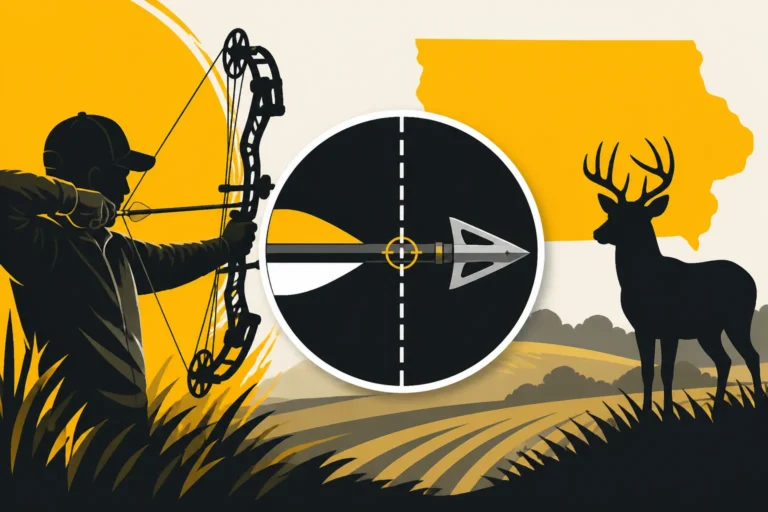
For bowhunters, the need for precise close-range rangefinding is non-negotiable. Unlike firearms, where a flatter trajectory offers a bit more forgiveness, an arrow's arc is much more pronounced. A miscalculation of just a few yards can result in hitting high or low, missing the vitals entirely. Imagine a deer slipping into your shooting lane at what you guess is 28 yards. You settle your 20-yard pin a little low, or try to float it between your 20 and 30. If it's actually 32 yards, your arrow might sail right over its back. Conversely, if it's 24 yards, you could hit low, potentially wounding the animal or hitting a leg.
Many experienced bowhunters in Iowa know the importance of practicing at various distances. It's not just about shooting accurately; it's about being able to react quickly and confidently when that moment of truth arrives. A quick, accurate range with a reliable unit can eliminate doubt and allow you to focus on form and execution. This is particularly true in intense situations during the rut, when bucks are cruising and opportunities can be fleeting. Knowing your Shot Placement on a Whitetail at Twenty Yards is paramount, and that starts with knowing the exact yardage.
Thick Cover and Quick Shots
Iowa hunting frequently involves navigating dense timber, thick multiflora rose patches, and brushy creek bottoms. In these environments, shots are often close, and windows are small. You might only get a split second to range a deer before it moves into deeper cover. A rangefinder that's slow to acquire a target or struggles with "first target priority" in brush can be a huge liability. You need a unit that can quickly and accurately pick out the deer through or around the immediate foliage, rather than giving you a reading on a branch three yards in front of your stand.
Think about hunting a pinch point or a saddle in rolling timber. Deer often move through these areas with purpose, offering only brief opportunities. A rangefinder that can instantly give you the precise distance to that cruising buck or the doe leading a string of deer is invaluable. This is where the ability to quickly range an exact spot, not just a general area, becomes paramount. It's also incredibly helpful when you're trying to quickly ascertain the actual range of a Timber Point Between Two Fields from your stand, which might look closer or farther than it really is.
Key Features to Look for in a Short-Range Rangefinder
When you're focusing on those critical under-fifty-yard shots, not all rangefinders are created equal. Many advanced units are built with long-range shooting in mind, and while they can range short distances, their features might not be optimized for the fast, precise demands of close-quarters hunting.
Fast Acquisition and Display Speed
In those high-pressure moments, speed is king. You don't want to fumble with a slow unit, waiting for it to give you a reading while the deer you're targeting is about to disappear. A good close-range rangefinder will offer near-instantaneous readings. Look for specifications that boast acquisition times under half a second, if not quicker. This allows you to quickly bring it up, hit the button, get your number, and then bring your weapon up for the shot.
Some rangefinders even have a "scan mode" which is fantastic for close ranges. This mode allows you to hold down the button and slowly pan across an area, providing continuous, updated ranges. This is incredibly useful for a deer that's walking, or if you're trying to figure out the exact yardage to several potential shooting lanes around your stand before the deer even arrives.
Angle Compensation: A Bowhunter's Best Friend
If you hunt from a treestand, angle compensation, often called Angle Range Compensation (ARC) or similar, is not just a nice-to-have feature—it's essential. When you're shooting from an elevated position, the straight-line distance to the deer is not the true horizontal distance that gravity acts upon. An arrow (or bullet) will hit higher than expected if you aim for the straight-line distance. Angle compensation technology calculates the "shoot-to" distance, which is the equivalent horizontal distance you should aim for.
For example, if a deer is 30 yards away on the ground but you are 20 feet up in a tree, the straight-line distance might be 33 yards. However, the angle-compensated distance might be 28 yards. If you were to aim for 33 yards with your bow, your arrow would hit significantly high. Most reputable rangefinder brands today offer this feature, and it's particularly vital for Best Stand Locations in Rolling Timber where steep terrain can create significant shot angles. Always ensure your rangefinder has this feature, especially if you plan on elevated hunting in Iowa.
Simplicity and Ergonomics in the Field
When you're dealing with cold hands, bulky gloves, or just the adrenaline of a deer encounter, the last thing you want is a complicated device with tiny buttons and a confusing menu. For close-range use, a rangefinder should be intuitive and easy to operate with one hand. Look for units that fit comfortably in your hand, have large, tactile buttons, and a clear, uncluttered display.
Many hunters prefer models with a red LED display, especially in low-light conditions common during prime hunting hours. The green or black LCD displays can be difficult to read against dark timber or at dawn and dusk. A rangefinder that can be quickly pulled from a chest harness, operated, and put away without a fuss is going to be far more effective than one you struggle with. Consider the overall design and how it will integrate with your existing Packs for a Day in an Iowa Stand or chest rig.
Waterproofing and Durability for Iowa Weather
Iowa weather is notoriously unpredictable. One day it's crisp and clear, the next it's raining, snowing, or coated in a thick, freezing mist. Your rangefinder needs to be able to withstand these conditions without failing. Look for units that are fully waterproof, not just water-resistant. This means they can be submerged for a short period without damage, ensuring they'll hold up to a torrential downpour or an accidental drop in a puddle.
Beyond waterproofing, general durability is key. Hunting gear takes a beating. It gets bumped, dropped, and exposed to harsh elements. A rubber-armored casing is a huge plus, offering impact resistance and a better grip. While some premium brands like Vortex or Leupold offer robust construction, even budget-friendly options can provide adequate protection if you choose wisely. Think about how you’ll be Keeping a Muzzleloader Dry in Rain – the same principles apply to your optics.
Getting the Most Out of Your Rangefinder Under Fifty Yards
Having the right tool is only half the battle; knowing how to use it effectively and integrate it into your hunting strategy is what truly makes a difference.
Practicing in Real-World Scenarios
Don't let the first time you use your rangefinder in a high-pressure situation be during a hunt. Take it with you every time you practice your shooting, especially if you're bowhunting. Range targets at varying, unknown distances. Practice ranging the base of a tree, a specific clump of grass, or even a leaf, then confirming that distance with your shot.
Better yet, take it into the field when you're scouting. When you're setting up a stand, use your rangefinder to mark out exact distances to key landmarks: that rub line, the gap in the fence, the big oak tree at the edge of the creek. This not only helps you determine effective shooting lanes but also trains your eye to better estimate distances in that specific terrain. Tools like GoHunt's mapping features can help you scout and mark these distances virtually before you even step foot in the woods, allowing you to have a solid plan before the season. Then, verify with your rangefinder once you're on site.
Integrating it into Your Shot Process
For a bowhunter, the rangefinder should become an almost instinctive part of your shot routine. Many hunters keep their rangefinder on a lanyard or in a chest harness, ready for quick access. When a deer approaches, the sequence often goes something like this:
- Spot the deer.
- Raise the rangefinder, hit the button, get the range.
- Lower the rangefinder, draw your bow, use the correct pin, and shoot.
The key is to make this transition as smooth and quiet as possible. Practice drawing and ranging at the same time, if possible, or immediately before drawing. Some hunters even range frequently when a deer is approaching, ranging various landmarks around the animal's path so they already have a few key distances locked in before the shot opportunity presents itself. This minimizes movement and noise when the deer is closest. This kind of preparation is as important as knowing your Arrow Weight for Whitetails or the perfect Tuning a Bow Before Iowa's Opener.
Understanding Beam Divergence and Target Acquisition
Rangefinders work by emitting a laser beam and measuring the time it takes for that beam to reflect off a target and return. The "beam divergence" refers to how much that laser beam spreads out over distance. For short ranges, you want a very narrow beam divergence. Why? Because a narrow beam is less likely to pick up surrounding foliage or branches when you're trying to range a deer through a small gap.
If your rangefinder has a wide beam divergence, it might hit both the deer and a branch slightly in front of it, leading to an inaccurate reading. Some higher-end rangefinders offer specific "target priority" modes:
- First Target Priority: Prioritizes the closest object. Useful for ranging a deer in front of a tree line, as it will give you the deer's distance.
- Distant Target Priority (or Last Target Priority): Prioritizes the farthest object. Useful for ranging a deer behind light brush, helping to ensure you're ranging the deer and not the brush itself.
For under fifty yards in typical Iowa cover, "First Target Priority" is often the most useful, ensuring you get the exact distance to the animal, not something behind it. If your rangefinder has these options, experiment with them to see which works best for your hunting style and the typical cover you hunt.
Common Misconceptions and Troubleshooting for Close-Range Rangefinding
Even with the right gear, hunters can run into issues or hold onto old beliefs that hinder their effectiveness. Let's clear some of those up.
"My Long-Range Unit Should Be Fine"
While a rangefinder capable of 1,000+ yards can certainly range a deer at 25 yards, it might not be optimized for that task. These units often prioritize high magnification and powerful laser output, sometimes at the expense of ergonomic design or a fast, close-range acquisition time. Their beam divergence might also be wider, making it harder to pick out a precise target in dense brush.
Consider it like this: you can use a powerful telescope to look at something just across the street, but a pair of binoculars designed for closer viewing will likely give you a quicker, clearer, and more comfortable experience. For hunting under fifty yards, you want a tool that's quick, compact, and precisely accurate in variable conditions, not necessarily one built for western plains or open fields. Units optimized for bowhunting often excel here.
Battery Life and Cold Weather Performance
Rangefinders, like all electronics, can be affected by cold weather. Lithium batteries generally perform better in the cold than alkaline batteries, so consider carrying spares or using lithium batteries for late-season hunts. Keep your rangefinder tucked inside your jacket or in a warm pocket until you need to use it. This will help preserve battery life and ensure optimal performance when those December Cold Front Deer Movement patterns kick in.
A dead battery is a useless rangefinder. Always check your battery before heading out, especially for longer hunts or if you haven't used the unit in a while. A small, lightweight spare battery in your pack or even taped to the inside of your binoculars harness can be a lifesaver. GoHunt often has discussions about gear reliability in extreme conditions, which can be a valuable resource for finding units known for good cold-weather performance.
Dealing with Obstructions and Foliage
One of the most common frustrations with any rangefinder is trying to get a reading through dense foliage. It's not uncommon for a rangefinder to give you a reading on a branch or a leaf closer than your target. To combat this:
- Use Scan Mode: As mentioned earlier, scan mode can often help you "paint" the deer and get a more consistent reading.
- Target a Clear Spot: If the deer is partially obscured, try to range a clear spot on its body, or even a small patch of ground directly beneath it, if visible. This requires practice and quick thinking.
- Angle of Attack: Sometimes, changing the angle you're ranging from slightly can help the laser find a clearer path to the target. This might mean shifting your body a bit or slightly adjusting your stance.
Remember, no rangefinder is perfect at cutting through a wall of leaves, but understanding its limitations and knowing these tricks can significantly improve your success rate in thick Iowa cover. This knowledge is as important as knowing how to navigate CRP Grass and Where Bucks Bed or deciphering Wind and Thermals in River Breaks.
Conclusion
For the Iowa hunter, especially those pursuing deer with a bow, muzzleloader, or shotgun in our diverse landscapes, a reliable rangefinder that excels at distances under fifty yards is an invaluable asset. It eliminates guesswork, builds confidence, and ensures ethical, precise shot placement when it matters most. Investing in a unit with fast acquisition, angle compensation, good ergonomics, and robust durability will pay dividends in those unforgettable moments when a big Iowa whitetail steps into your zone. Don't underestimate the short game; it's often where the biggest trophies are won or lost.
Disclaimer
This article is for general informational purposes only and does not constitute professional advice. Laws, prices and regulations vary by location and change over time. Consult a qualified professional for guidance on your specific situation.