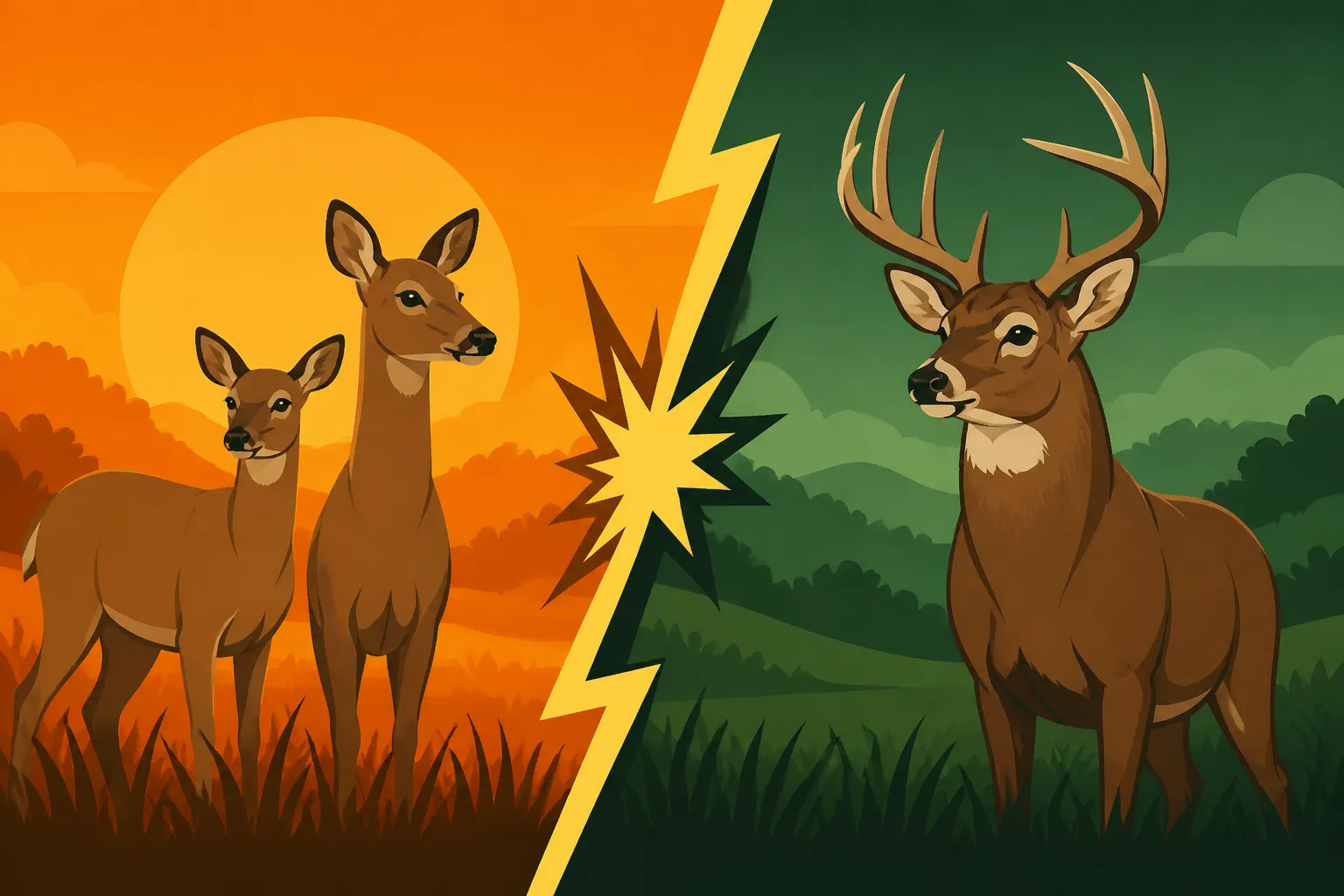
Doe Decoys Versus Buck Decoys
When you’re out in the Iowa timber or overlooking a vast soybean field, few things get your heart pumping like the thought of a mature buck stepping into view. But sometimes, those big boys need a little convincing, and that’s where deer decoys come into play. It’s a classic dilemma many hunters face: do you set up a doe decoy, hoping to entice a cruising buck, or do you opt for a buck decoy, challenging a dominant male to a confrontation? This guide will dive deep into the nuances of both, helping you understand when and why each might be your secret weapon.
Understanding Deer Behavior and Decoy Psychology
The effectiveness of any decoy hinges entirely on your ability to understand what's going through a deer's mind when it sees a static, lifelike form in its territory. It's not just about putting plastic in a field; it's about mimicking a social interaction that triggers a specific response, whether it's curiosity, dominance, or breeding interest. The season, the location, and even the individual buck's personality can drastically change how a decoy is perceived.
The Allure of a Lone Doe Decoy
There’s something inherently non-threatening about a lone doe, especially to a buck driven by the primal urge to breed. When a buck spots a doe decoy, his first thought isn't usually "danger" but "opportunity." This makes the doe decoy a generally safer bet, particularly during the early and pre-rut phases when bucks are actively seeking receptive does but might not be quite as aggressive. She represents a potential mate, a chance to procreate, and for many bucks, that's an irresistible draw.
Consider a crisp October morning when you're perched on the edge of a timber line, watching deer filtering out into a picked cornfield. A lone doe decoy positioned strategically can act as a magnet. A young buck might cautiously approach, looking for a breeding partner, while an older, more dominant buck might circle downwind, trying to scent-check her before committing. She’s a beacon, silently announcing availability, and this can be incredibly effective when bucks are actively cruising and searching for the first hot does of the season.
The beauty of a doe decoy is its versatility. She doesn't usually challenge a buck, so the risk of spooking him is significantly lower. Instead, she invites him in. This is particularly valuable when you're hunting areas with high hunting pressure, where bucks might be wary of direct confrontation. A doe feeding peacefully or standing attentively can provide the confidence a cautious buck needs to step into range, making her a staple in many Iowa hunters' arsenals.
The Challenge and Reward of a Buck Decoy
Now, a buck decoy is a whole different beast. This isn't about inviting; it's about challenging. A buck decoy screams "intruder" or "competitor," especially if you’re using a larger, more aggressive posture. When a dominant buck sees another buck in his perceived territory, especially during the peak rut, his testosterone-fueled brain often defaults to confrontation. This can lead to some truly exhilarating, heart-stopping encounters, but it also comes with higher risks.
Imagine the peak of the Iowa rut in early November. Bucks are actively fighting, chasing, and tending does. Setting up a buck decoy in a high-traffic area, perhaps near a known scrape line or a common travel corridor, can be incredibly effective. A mature buck might see this "intruder" and decide it's time to assert dominance. He could come in bristled up, ears laid back, ready for a fight, providing a perfect shot opportunity as he focuses on the decoy.
However, the challenge lies in the unpredictability. A younger, less dominant buck might see a buck decoy and simply veer off, not wanting a fight he knows he can't win. An older, wily buck might hang up at a distance, trying to get a better read on the situation, or circle widely to catch wind, potentially busting your setup. The reward of a buck decoy is high when it works, but it requires a keen understanding of buck behavior and the current phase of the rut to minimize the chances of alarming deer rather than attracting them.
When and How to Deploy Each Decoy Type
Choosing between a doe and buck decoy isn't just about the deer species; it's about understanding the nuances of their behavior during different times of the year and setting up your decoy to tell the most convincing story. The best decoy in the world won't work if it's placed improperly or at the wrong time.
Strategic Placement for Doe Decoys
When you're deploying a doe decoy, you want to create a scene that's inviting and natural. Think about where a real doe would feel comfortable feeding or resting. Often, this means positioning her slightly out in the open but within easy view of a travel corridor or a field edge where bucks are likely to pass. The key is to make her look accessible and calm, almost a silent invitation for a buck looking for companionship.
Consider the wind direction carefully; it's perhaps the most critical factor. Bucks will almost always try to approach a doe decoy from downwind to scent-check her, ensuring she's a receptive female and not a threat. Position your decoy so that any buck circling downwind will pass through your shooting lane. You might place her facing slightly away from your stand, indicating she's relaxed and unconcerned. This subtle body language can make a huge difference. For more insights on this, check out our detailed guide on Decoy Placement and Wind Direction. Many experienced Iowa hunters will put their doe decoy about 20-30 yards from their stand, giving a buck plenty of room to maneuver while keeping him in bow or shotgun range.
Furthermore, ensure your doe decoy is visible but not glaringly out of place. Avoid placing her directly in the middle of a wide-open field unless it’s a massive agricultural field where deer are accustomed to seeing movement. A better spot might be near a subtle pinch point, a bend in a creek, or a natural funnel that deer already use. The goal is to make her blend into the environment naturally, looking like she’s just casually feeding or standing, catching the eye of a cruising buck without raising any immediate red flags.
Aggressive Tactics with Buck Decoys
Deploying a buck decoy requires a more assertive approach, designed to trigger a territorial response. This isn't about blending in; it's about standing out as a perceived challenge. During the peak rut, when bucks are testosterone-fueled and constantly seeking to establish dominance, a well-placed buck decoy can be a game-changer. You're trying to evoke anger, not curiosity.
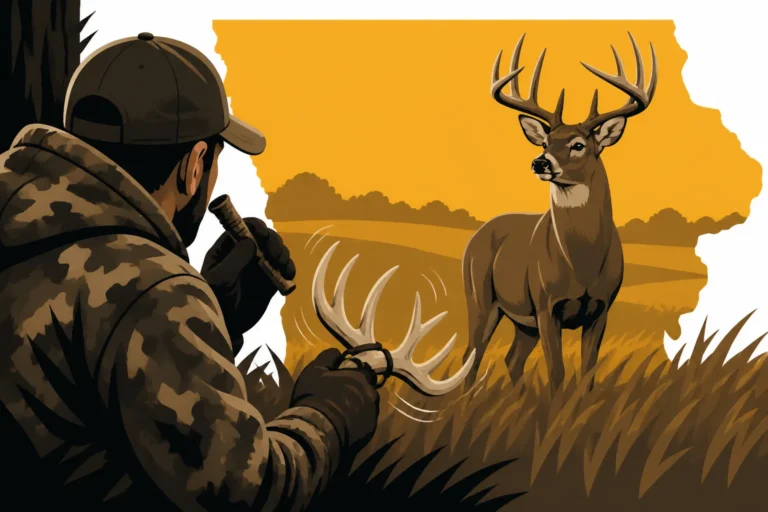
One of the most effective strategies is to position your buck decoy quartering away or directly facing away from your stand. This mimics a buck that is either ignoring an approaching rival or perhaps trying to walk away, which can sometimes provoke an even stronger reaction. The approaching buck might try to get in front of the decoy or broadside it, offering you a prime shot opportunity. You want the approaching buck to focus solely on the "intruder" and not on your location. For a truly aggressive setup, consider pairing your buck decoy with calls like rattling antlers or grunts. Our guide on Rattling and Grunting During the Iowa Rut can help you perfect those sounds to really sell the illusion.
Unlike a doe decoy, you might even consider placing your buck decoy in a more prominent, almost challenging position, such as on a slight rise or at the intersection of two major trails. However, be acutely aware of the wind. An approaching buck will still try to get downwind to scent-check, and if he catches your scent, your hunt is over. Many hunters use the wind to their advantage, ensuring any circling buck is forced into a shooting lane before he can get a full whiff. For a complete understanding of how to use various decoy types in different situations, our Decoying an Iowa Whitetail Buck article offers comprehensive tips. The whole point here is to make the approaching buck think he needs to either fight or run off this new competitor.
Factors to Consider Beyond Decoy Type
While the choice between a doe and buck decoy is primary, many other elements contribute to a successful decoying effort. These finer points can often be the difference between a buck committing fully to your setup and hanging up just out of range, or worse, busting you entirely.
Timing is Everything: Matching Decoys to the Rut Phase
Understanding the exact phase of the rut is paramount to successful decoying. The behavior of bucks shifts dramatically throughout the breeding season, and your decoy strategy needs to adapt accordingly. Using the wrong decoy at the wrong time can be detrimental, either by being completely ignored or by actively alarming deer.
During the early stages, often called the pre-rut in late October, bucks are still getting geared up. They're making scrapes, rubbing trees, and starting to cruise for the first does coming into estrus. At this point, a lone doe decoy is typically your best bet. Bucks are looking for receptive females, and a doe decoy signals opportunity without posing a direct threat. You might even find success with a small, submissive buck decoy to avoid intimidating younger bucks. Our guide on Hunting the Iowa Pre-Rut in Late October provides more context on buck behavior during this critical phase. This is when they're still feeling out the landscape, not yet in full-on battle mode.
As the rut progresses into its peak, usually around the first and second weeks of November, buck behavior becomes much more aggressive and territorial. This is when a buck decoy shines. Bucks are now actively seeking fights and defending their breeding rights. A larger, aggressive buck decoy can challenge a dominant male, drawing him in for a confrontation. Sometimes, combining a buck and a doe decoy (a breeding pair) can be exceptionally effective, infuriating a lone buck who sees a rival with a potential mate. For precise timing, refer to our article on When the Iowa Rut Peaks to dial in your tactics.
Location, Location, Location: Open Fields vs. Timber
The landscape you're hunting in Iowa significantly influences how and where you deploy your decoys. A wide-open agricultural field calls for a different strategy than a dense timber block or a river bottom. Visibility, natural travel patterns, and typical deer movement must all be factored into your decision.
In open fields, especially picked corn or soybean fields that deer frequent, decoys can be incredibly visible from a distance, which is both an advantage and a disadvantage. A decoy here needs to look realistic and be positioned where a cruising buck is most likely to spot it without becoming suspicious. Often, placing a decoy on a field edge, where deer are already transitioning between cover and food, is a prime location. This allows bucks to see the decoy, but also gives them some natural cover to approach from. Our article on Using a Decoy on a Field Edge offers excellent tips for these scenarios. You don't want the decoy to stick out like a sore thumb in the middle of a hundred-acre field unless you're trying to draw a buck from a very long distance.
Conversely, in denser timber or along creek corridors, visibility is limited, and you typically have much shorter shooting lanes. Here, decoys might need to be positioned closer to your stand, perhaps at the bend of a trail or in a small opening that bucks use as a funnel. The goal is to maximize the time a buck has to react once he sees the decoy within his limited field of view. Realism becomes even more critical in these tight quarters, as a buck will be much closer when he spots the decoy. The closer the range, the more important every detail of your decoy becomes, from paint scheme to realistic texture.
Scent and Realism: Sealing the Deal
No matter how perfectly you time your decoy or how strategically you place it, if it smells like human or looks like a toy, your efforts will likely be in vain. Deer, especially mature whitetails, have an incredible sense of smell and highly developed eyesight. Scent control and realism are absolutely critical for sealing the deal.
First and foremost, treat your decoy with the same scent-eliminating rigor you would your hunting clothes. Wear gloves when handling it, spray it down with scent killer, and store it in a scent-free container if possible. Any foreign odor, particularly human scent, can instantly spook a deer, rendering your decoy useless. Some hunters even use natural scents like doe estrus or buck urine near their decoys, especially with doe decoys during the rut, to add another layer of realism. Just be mindful of Iowa's baiting rules when considering any attractants. Our guide on Ozone and Scent Control Claims dives into different methods to minimize your scent footprint in the field.
Beyond scent, realism in appearance is key. Choose decoys that have realistic coloring, posture, and size for the deer in your area. Avoid cheap, shiny plastic decoys that reflect light unnaturally. Many modern decoys from brands like Primos or Montana Decoy offer incredible detail and realistic movement features that can make a huge difference. Before you even think about setting up a decoy, leveraging tools like GoHunt can help you identify high-traffic areas and understand local deer populations, which can inform your decoy choice and placement. A buck that is focused on a highly realistic decoy is less likely to notice you drawing your bow or raising your gun.
Making the Choice: Doe Decoy or Buck Decoy?
Ultimately, the decision between a doe and buck decoy often comes down to balancing risk and reward, combined with your understanding of current deer behavior. There's no single "best" answer, as conditions are constantly changing in the Iowa woods.
Pros and Cons of Each Decoy Type
Let's break down the main advantages and disadvantages of using a doe versus a buck decoy, to give you a clearer picture of when each might be your best option. This isn't just theory; it's born from countless hours in the field, watching how deer react.
| Feature | Doe Decoy | Buck Decoy |
|---|---|---|
| Primary Appeal | Breeding opportunity, non-threatening presence. | Territorial challenge, rivalry. |
| Risk of Spook | Lower. Deer are generally less threatened, more curious. | Higher. Can intimidate smaller bucks or make wary bucks hang up. |
| Best Rut Phase | Early-rut (pre-rut), early November when bucks are cruising for first receptive does. | Peak rut (mid-November), when bucks are most aggressive and fighting. |
| Buck Reaction | Approaches cautiously, circles downwind to scent-check, often tries to posture or court. | Approaches aggressively, often bristled, may paw ground, sometimes circles or tries to get in front for a fight. |
| Versatility | Can be effective throughout the season (with less aggressive postures) for general attraction. | Highly effective during peak rut but limited success outside of aggressive phases. |
| Calling Combo | Best with soft grunts, doe bleats, or estrus bleats to signal receptiveness. | Best with aggressive grunts, snort-wheezes, and rattling to challenge. |
| Setup Strategy | Position for downwind approach, often slightly relaxed posture. | Position as a challenge, often facing away or broadside, aggressive posture. |
This table provides a quick reference, but remember, these are guidelines, not unbreakable rules. Every hunt, every buck, and every day in the field can present a unique scenario. The true art of decoying lies in reading the situation and adapting. When scouting your hunting areas, especially if you're exploring new ground, using a resource like GoHunt can provide invaluable aerial views and property line information to help you select ideal decoy locations.
The Hybrid Approach and Advanced Strategies
Sometimes, the most effective strategy isn't choosing between one or the other, but combining them, or adjusting your setup on the fly. The deer woods are dynamic, and your tactics should be too. A hybrid approach often involves using multiple decoys to create a more compelling scene.
One popular and highly effective strategy is the "breeding pair" setup: a doe decoy paired with a smaller, subordinate buck decoy. The doe signals opportunity, while the smaller buck acts as an irritant. A dominant buck seeing this scene will often be enraged by the sight of a rival, even a small one, tending a receptive doe. He'll come in hot, looking to run off the smaller buck and claim the doe for himself. This scenario can draw in some of the biggest, most aggressive bucks in the area, offering a high-stakes, high-reward encounter.
Another advanced strategy involves dynamically adjusting your setup. If you've been using a buck decoy during the peak rut and find that bucks are hanging up or skirting wide, try switching to a lone doe decoy, or even just leaving the buck decoy head-down in a feeding posture to make him appear less threatening. Or, if you're seeing only younger bucks, a smaller, more submissive buck decoy might work better than a massive, dominant one. Don't be afraid to experiment, even within a single hunt. A lot of seasoned hunters, with experience gathered from years of using platforms like GoHunt for their initial scouting, have learned that flexibility is key. Observe how deer are reacting, and be prepared to change your story. The more convincing and adaptable your setup, the better your chances of bringing that wary Iowa whitetail into range.
Disclaimer
Hunting is an inherently dangerous activity. Always prioritize safety, understand and follow all Iowa Department of Natural Resources regulations, and obtain appropriate licenses and permissions. The information provided here is for educational and entertainment purposes only and should not replace professional guidance or personal judgment.