Decoying an Iowa Whitetail Buck
It's incredibly frustrating when you've spent countless hours scouting, hanging stands, and perfecting your calling, only to have a mature Iowa buck skirt your setup just out of range. That feeling of being almost there, yet unable to close the deal, is something every hunter knows. This guide is all about adding a powerful, visual element to your hunting arsenal – the whitetail decoy – to turn those "almost" moments into undeniable shot opportunities, especially when those big Iowa bucks are on the prowl.
The Psychological Edge: Why Decoys Work on Iowa Whitetails
There's something deeply primal about a deer decoy that just taps into a whitetail's core instincts. It's not just a plastic form; it's a visual cue that can stir up a buck's aggression, curiosity, or desire to breed. In Iowa, where big bucks roam and competition can be fierce during the rut, a well-placed decoy can be an absolute game-changer. It gives deer a reason to commit, to come into bow or gun range, and sometimes, even to ignore your presence entirely.
Mimicking a Rival or Mate
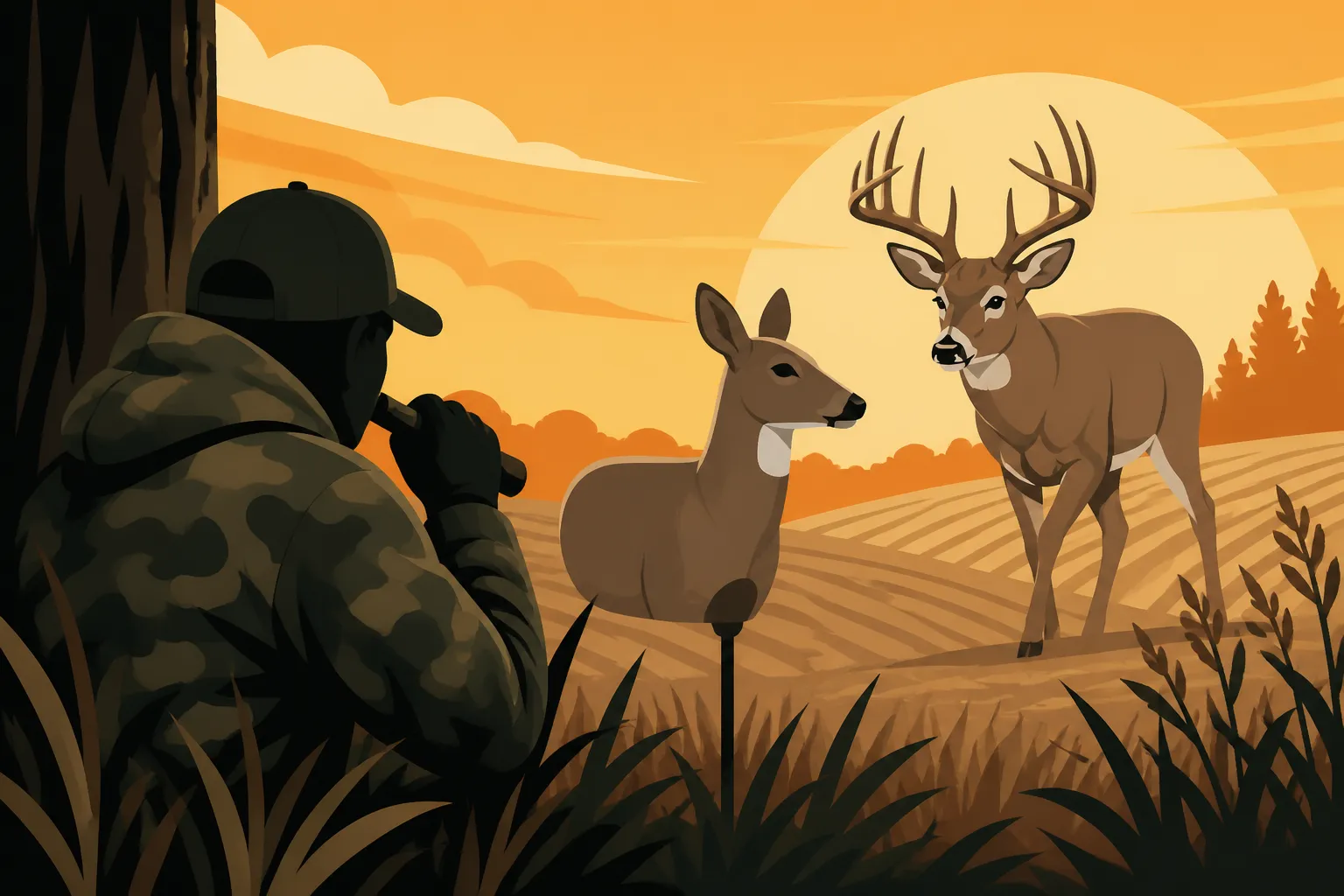
Imagine being a mature Iowa buck, cruising the timber fringes during the peak of the rut. You’re looking for a receptive doe, or perhaps a rival buck to intimidate. Suddenly, you see another deer standing confidently in an open field or a timber clearing. This isn't just a random deer; it's a visual challenge or an enticing opportunity. If it's a buck decoy, it instantly triggers that territorial, aggressive instinct. He sees a trespasser, a competitor trying to cut in on his territory or potential mates. This can draw him in, often with his hackles raised and a chip on his shoulder, ready for a confrontation. If it’s a doe decoy, it sparks an entirely different, but equally powerful, instinct: the urge to breed. He sees a potential mate, perhaps one that appears unbred or simply enticing. This can pull him directly into your setup, often circling downwind to scent-check, which is precisely what you want to happen. The beauty of the decoy is that it provides a specific, tangible focal point for the buck's attention, shifting it away from your tree stand or ground blind.
Capitalizing on the Rutting Instinct
The rut in Iowa is a magical time, typically peaking in the When the Iowa Rut Peaks around the first week of November. During this period, a buck's brain is heavily influenced by hormones, making him less cautious and more reactive to visual stimuli. This heightened state is exactly what makes decoying so effective. While rattling and grunting are powerful auditory tools, adding a visual element can seal the deal. A buck that might hesitate at the sound of a grunt call might commit immediately when he sees what he thinks is the source of that sound – especially if it’s a rival buck or a lone doe. The rut is a time of intense competition and breeding activity, and a decoy, whether it's a challenging buck or a receptive doe, plays right into this natural drama. It exploits the buck's biological imperative to dominate and reproduce, drawing him in for a closer look, a fight, or a breeding opportunity. This is particularly potent during the Hunting the Iowa Pre-Rut in Late October when bucks are starting to move more aggressively, testing boundaries and searching for does.
Choosing Your Player: Buck, Doe, or Fawn Decoys
Decoys aren't one-size-fits-all. The type of decoy you choose should align with the time of year, the specific hunting scenario, and the message you want to send to a cruising buck. Each type of decoy elicits a different response, and understanding these nuances is key to selecting the right one for your Iowa hunt.
The Dominant Buck Decoy Strategy
A buck decoy is primarily an aggression trigger, designed to challenge the dominant bucks in the area. When you put out a buck decoy, you’re essentially waving a red flag in front of a bull. Most hunters opt for a 1.5 to 3.5-year-old buck decoy, often referred to as a "challenger" buck. This size is usually large enough to draw the attention of mature bucks who want to assert dominance, but not so overwhelmingly large that it intimidates younger, less confident bucks away. You'll want to place your buck decoy quartering away from your shooting position, presenting a broadside or slightly quartering-away shot as the approaching buck typically circles to face the decoy head-on. This setup also protects the decoy's face from the incoming buck's antlers, which can prevent damage to your investment.
One common tactic is to pair a buck decoy with vocalizations. Try a few aggressive grunts or even a snort-wheeze, and watch how a buck decoy can turn a hesitant buck into an enraged competitor. This is especially effective during the peak of the rut, say the First Week of November Stand Choice, when bucks are less tolerant of perceived intruders. Remember to keep the decoy clean and free of human scent – a clean decoy is a convincing decoy. Brands like Montana Decoy and Dave Smith Decoys (DSD) offer lightweight, realistic options that are popular with serious hunters.
Subtle Allure of the Doe Decoy
A doe decoy, on the other hand, is all about attraction. It's designed to entice bucks that are searching for a mate, and it often works by appealing to their softer side (if bucks can be said to have one). Doe decoys are incredibly versatile and can be effective throughout the entire rut, from the pre-rut through the post-rut, and sometimes even in the early season when bucks are still bachelor groups. A lone doe decoy can appear vulnerable and available, drawing in cruising bucks who might be more cautious approaching a buck decoy.
For maximum effectiveness, consider pairing your doe decoy with a little curiosity scent, perhaps a subtle estrus scent (used sparingly and legally, of course). Place the doe decoy looking towards your stand, slightly quartering, as if she's grazing or scanning the area. This pose makes her appear relaxed and natural. A buck will often approach from behind, scent-checking the decoy before attempting to breed. This approach often gives you a great broadside shot opportunity. Doe Decoys Versus Buck Decoys offers a deeper dive into the pros and cons of each. Sometimes, a well-placed doe decoy is all it takes to calm a buck's nerves and bring him into range, especially if he’s seen other does in the vicinity but hasn’t been able to pin one down.
Adding Realism with Fawn Decoys
While less common, fawn decoys can add another layer of realism and intrigue to your setup. A single fawn decoy can be placed near a doe decoy to simulate a family group, suggesting safety and a natural environment. This can make a cautious buck feel more comfortable approaching the area. However, the most potent use of a fawn decoy is often in conjunction with a doe decoy and a distressed fawn bleat call. This mimics a fawn in trouble, which can attract a protective doe, and consequently, any buck that might be trailing her or interested in breeding her.
A fawn decoy alone might not be a primary draw for a mature buck, but it can make your overall setup more believable. For instance, if you're hunting a food plot on the edge of a timber block, placing a doe and a fawn decoy together can present a picture of contentment that draws in other deer. This strategy requires a bit more setup and careful planning, but the added realism can pay dividends, especially if you're trying to appeal to the more wary, older bucks that have seen it all. Always consider the whole picture: the type of cover, the food sources nearby, and the expected travel routes of the deer.
Timing is Everything: When to Deploy Your Decoy in Iowa
Knowing when to put out a decoy is just as important as knowing what type to use. The whitetail rut is a dynamic period, and a decoy's effectiveness can ebb and flow with the different phases of buck behavior. Getting your timing right means capitalizing on those specific hormonal and behavioral triggers that make decoys so powerful.
Pre-Rut Aggression and Early November Peak
The pre-rut, typically in late October, is a prime time to introduce a buck decoy. Bucks are starting to feel the urge, rubbing and scraping more, establishing their dominance hierarchy, and looking for the first does to come into estrus. They are more willing to challenge perceived rivals. This is when you can really get a rise out of them with an aggressive buck decoy. A smaller, challenger buck decoy can draw in a more dominant buck looking to scare off competition without risking a full-blown fight against a giant. Using scouting tools like GoHunt's mapping features can help you pinpoint historical scrape lines and rub routes where these territorial displays are common, giving you ideal spots to set up.
As we move into early November, the rut hits its peak. This is when does are in full estrus and bucks are constantly cruising, searching, and breeding. Both buck and doe decoys shine during this period. A buck decoy can draw in a rival, while a doe decoy can bring in a lovesick buck looking for a mate. I often find this to be the most exciting time for decoying, as bucks are often so focused on the visual stimulus that they might approach even if they wind you slightly. This intense activity period makes for some of the most memorable encounters. Don't be afraid to combine a decoy with other tactics, like a few well-timed grunts and bleats, to amplify the appeal.
Post-Rut Opportunities
Even after the main rut winds down, often in mid-to-late November, decoys can still be effective, though the strategy shifts. During the post-rut, bucks are often exhausted from their earlier exertions, but they're still looking for any remaining unbred does. A doe decoy can be particularly effective now, as she represents a potential last chance for a buck to breed before the winter sets in. Bucks are generally less aggressive, so a buck decoy might not be as potent, but a lone doe can still pique their interest.
Consider hunting near late-season food sources like picked cornfields or standing soybeans. Bucks will be trying to replenish their energy, and if they spot a lone doe in a prime feeding area, they might just commit. This is a great time to pair a doe decoy with minimal, gentle calling, like soft bleats, to give the impression of a calm, contented deer. The goal here isn't to provoke aggression, but to offer an easy, low-effort breeding opportunity for a tired buck.
Weather and Wind Considerations
Weather plays a huge role in decoying success. Cold, crisp days with stable winds are often ideal, as deer tend to be more active. High winds can be a double-edged sword: they can add natural movement to your decoy, making it more realistic, but they can also make it difficult for deer to hear calls and increase the chances of your decoy blowing over. On calm days, consider adding a tail flicker or a head bobber to your decoy to simulate subtle movement.
Wind direction is paramount for any hunting setup, and even more so with a decoy. You want the approaching buck to approach from downwind of your decoy, but ideally, also downwind of you. This can be tricky, but proper Decoy Placement and Wind Direction is essential. Bucks almost always circle downwind to scent-check a new deer. Position your decoy so that when the buck circles downwind of it, he is still upwind or crosswind of your stand. This forces him into your shooting lane without him winding your actual position. Using an app like GoHunt can help you visualize wind direction and thermal drifts, especially when hunting river breaks or rolling timber, allowing for more strategic placement.
Strategic Placement: Where to Set Your Decoy for Success
You can have the most realistic decoy in the world, but if it's placed in the wrong spot, it's just an expensive lawn ornament. Strategic placement is about understanding deer travel patterns, sight lines, and how a deer will naturally approach the decoy. It's about funneling that buck into your shooting window.
Open Field Edges and Food Sources
One of the most classic and effective places to deploy a decoy is along open field edges, particularly those bordering food sources like picked corn, soybeans, or lush alfalfa fields. Bucks frequently cruise these edges, especially during the rut, scent-checking for does that might be feeding or traveling between bedding and feeding areas. Placing your decoy 20-30 yards out into the field, or right on the edge where the field meets the timber, can be incredibly effective. This allows the decoy to be highly visible to cruising bucks.
When setting up on a field edge, think about the prevailing wind. If the wind is coming from the west, and bucks typically travel along the north edge, you might place your decoy to the east, allowing bucks to see it and then circle downwind to the west, putting them broadside to your stand positioned further east along the timber line. This funneling effect is crucial. Consider how the decoy looks from a deer's perspective, not just yours. Is it silhouetted against the sky? Does it blend naturally with the surroundings? Having a natural backdrop, like a brush pile or a few trees, behind the decoy can help it appear more grounded and less out of place. This is especially true when hunting Standing Corn and Bean Field Deer Patterns late in the season, where a decoy can stand out effectively against the crop residue.
Timber Openings and Travel Corridors
Don't limit your decoy use to open fields. Timber openings, logging roads, old clear-cuts, or natural pinch points within the woods can be equally, if not more, effective. These areas are often natural travel corridors or staging areas where deer feel comfortable pausing. A decoy here offers a visual anchor in an otherwise dense environment. A small food plot tucked away in the timber, for example, is a perfect spot for a doe decoy.
When hunting timber, visibility is key. You don't want the decoy to be so hidden that deer don't see it, but you also don't want it stuck in an unnatural clearing. Look for those subtle openings or sparse areas where a deer might naturally stop to browse or scent-check. Placing a buck decoy within a timber opening, perhaps near a fresh scrape line, can infuriate a dominant buck. Remember, you want the decoy to be visible from typical deer travel routes. Use your binoculars to scan the expected approach routes and ensure the decoy is easily spotted. For more on navigating these environments, check out Scouting Iowa Timber and River Bottoms.
Understanding Wind Direction and Shot Angles
This cannot be stressed enough: wind direction is everything when using a decoy. A buck will try to scent-check your decoy. If he smells human scent on the decoy, or worse, winds you as he circles the decoy, your hunt is over. Always position your decoy so that the prevailing wind carries your scent away from the decoy and the deer's likely approach path.
Let's break down Wind and Thermals in River Breaks for a moment, as an example. If you're hunting a river bottom, thermals often drop in the evening. You might set your stand to account for this, but your decoy needs to work with it too. A common tactic is to place your decoy directly upwind of your shooting position, facing you. This encourages the buck to approach from behind the decoy and then circle downwind of the decoy, which should put him broadside for a shot, but still upwind of your actual location. The distance between your stand and the decoy should be your optimal shooting range – typically 20-30 yards for bowhunters, or 50-70 yards for shotgun or straight-wall rifle hunters. Always visualize the "killing funnel" you're trying to create. Use your rangefinder to mark distances from your stand to the decoy and beyond, so you know exactly when to take the shot.
| Decoy Type | Best Time to Use | Primary Goal | Recommended Placement | Key Considerations |
|---|---|---|---|---|
| Buck Decoy | Pre-Rut, Peak Rut | Trigger Aggression | Visible field edges, timber openings, near scrapes. Quartering away from stand. | Dominant buck vs. challenger buck size. Clean scent. |
| Doe Decoy | Pre-Rut, Peak Rut, Post-Rut | Attract Mates | Food sources, travel corridors. Looking towards stand, slightly quartering. | Add estrus scent cautiously. Enticing pose. |
| Fawn Decoy | Early Season, Rut | Add Realism, Attract Does | Near doe decoy, in natural groupings. | Can be used with distressed fawn calls. Secondary attractor. |
Making It Believable: Scent, Movement, and Concealment
A decoy is a visual tool, but its effectiveness is drastically enhanced when you engage a deer's other senses: smell and hearing. Making your decoy setup as natural and believable as possible means paying attention to the small details that can make or break an encounter.
Eliminating Human Odor
This is foundational to all deer hunting, but it becomes even more critical when deploying a decoy. If a buck catches a whiff of human scent on or around your decoy, he's gone, and he's likely to associate that area with danger for a while. Think of it from his perspective: he sees another deer, but then smells a predator. That's a red flag. So, before you even take your decoy out of its bag, treat it like another piece of your critical hunting gear. Wear scent-free gloves when handling it. Spray it down with a good scent eliminator, or better yet, leave it outside to air out for several days before your hunt.
Some hunters even go so far as to rub local dirt or natural elements on their decoys to help them blend in with the environment's natural odors. Avoid strong, artificial cover scents directly on the decoy itself, as these can sometimes be unnatural and alert wary deer. Focus instead on cleanliness. Just like you'd meticulously Scent Control Products and What They Do for yourself, do the same for your decoy. This attention to detail can be the difference between a buck committing fully or doing a hasty retreat.
Adding Subtle Movement and Sound
Many modern decoys offer options for adding movement, and these can be invaluable, especially on calm days. A static decoy can look unnatural, whereas even a slight head tilt or tail flick can bring it to life. Some decoys come with built-in mechanisms for movement, or you can improvise. A simple strip of cloth tied to the tail of a doe decoy, fluttering in a light breeze, can mimic a flicking tail. A lightweight stick propped under the head, allowing it to bob gently, can simulate grazing.
Consider the ambient sounds of the environment. If your decoy is meant to be a grazing doe, maybe a subtle "mouth bleat" or a few soft grunts from your position can enhance the illusion. If it's a challenging buck, a soft rustle of leaves as if he's pawing the ground, followed by a grunt, can create a convincing scenario. However, err on the side of subtlety. Too much movement or sound can actually alert deer that something is off. The goal is to mimic natural behavior, not to put on a show. Sometimes the rustle of a lightweight, packable decoy from a brand like Montana Decoy in a slight breeze is all the movement you need.
Camouflaging Your Setup
When using a decoy, you are essentially creating a focal point that will draw a deer's attention to a specific spot. This means your own concealment becomes even more important. While the buck is focused on the decoy, his peripheral vision is still working, and any unnatural movement from your stand or blind will be picked up. If you're hunting from a ground blind, ensure it's well-brushed in. Check out Brushing In a Ground Blind for tips on how to effectively hide your setup. If you're in a treestand, make sure you're properly silhouetted against the timber, not the sky, and have plenty of cover.
Think about shooting lanes. Your decoy should draw the deer into an open shooting lane, but you need clear shooting lanes from your position to the decoy, and importantly, to the likely approach path a buck will take as he circles the decoy. Clear any branches or obstructions that might impede your shot. Remember, the buck will be looking at the decoy, giving you a precious window of opportunity to draw your bow or raise your firearm unnoticed, especially if you're practicing Hunting From a Blind Without Movement.
Reading the Reaction: How Whitetails Approach a Decoy
Once you've deployed your decoy and settled in, the real anticipation begins. You spot a deer, and now the critical phase of reading its body language and reacting appropriately starts. Whitetails, especially mature bucks, are incredibly perceptive, and their approach to a decoy can tell you a lot about their intentions and mood.
Aggressive vs. Cautious Approaches
When a buck spots a decoy, his initial reaction can vary wildly. An aggressive approach, especially to a buck decoy, is usually characterized by stiff-legged walking, hackles raised, ears laid back, and sometimes even pawing the ground or rubbing antlers on saplings. These bucks are looking for a fight. They might even posture, turning broadside to the decoy to display their size. This is a thrilling scenario, as the buck's focus is almost entirely on the perceived rival, making him less aware of your presence. If you see this, hold still, be ready, and don't make any sudden movements.
A cautious approach, on the other hand, might involve the buck stopping frequently, lowering his head, staring intently, and circling widely, often trying to get downwind. This is a common reaction to a doe decoy or a buck decoy if the buck isn't highly aggressive. He's curious but wary. He's trying to gather more information with his nose before committing. This is where your scent control and wind strategy truly pay off. If he detects anything amiss, he'll likely disappear as quickly as he arrived. For these cautious approaches, patience is key. Avoid calling unless absolutely necessary, and let him come to you on his terms.
When to Engage with Calls
Calling in conjunction with a decoy can be incredibly effective, but it needs to be timed perfectly. If a buck sees your decoy and is already on a direct path, actively approaching, you might not need to call at all. Let the visual do the work. However, if a buck spots the decoy, hesitates, and seems unsure, a well-timed, subtle call can often tip the scales and convince him to commit.
For a buck decoy, a few aggressive grunts or a snort-wheeze can escalate an already aggressive approach or turn a cautious one into an angry charge. For a doe decoy, a soft estrus bleat or a few contented doe grunts can make her seem more inviting and real. The key is to wait until the buck is looking away from your position before making a call, masking your location. Never over-call. Less is often more. Think of your calls as enhancing the decoy's illusion, not replacing it. If you're practicing Rattling and Grunting During the Iowa Rut, integrate these sounds with your decoy setup.
Knowing When to Shoot
This is the moment of truth. With a decoy, bucks often present unique shot opportunities because their focus is so intensely fixed on the fake deer. For a buck decoy, they might walk right up to it, often turning to face it head-on, or circling to challenge its flank. For a doe decoy, they might circle downwind, or approach from behind, mimicking breeding behavior. Your shot opportunity will often come when the buck presents a quartering-away or broadside shot as he is positioning himself relative to the decoy.
Always wait for a clean, ethical shot. Don't get caught up in the excitement and take a marginal shot. If the buck is facing the decoy head-on, wait for him to turn. He will eventually reposition himself. Remember your pre-determined ranges around the decoy and be confident in your shot. With a bow, drawing while the buck's head is behind the decoy or obscured by terrain can give you the advantage. For gun hunters, patience is still paramount – ensure you have a clear line of sight to the vitals.
Common Decoying Mistakes and How to Avoid Them
Decoying is an art form, and like any hunting technique, it comes with its share of pitfalls. Avoiding these common mistakes can significantly increase your success rate and prevent frustrating encounters that end with a buck spooking. Learning from the experiences of others, and reflecting on your own hunts, is how you truly master this skill.
Ignoring Scent Control
This is, without a doubt, the most common and detrimental mistake in decoying. You can have the most expensive, hyper-realistic decoy, but if it smells like you, it's a bust. Bucks rely heavily on their sense of smell, especially when approaching another deer they haven't encountered before. They will circle downwind. If they get a whiff of human odor from the decoy itself, or from your trail leading to it, they'll often "blow" (snort-wheeze) and bolt, alerting every other deer in the area.
To avoid this:
- Handle with care: Always wear rubber or latex gloves when touching your decoy. Treat it like a scent-sensitive piece of clothing.
- Air it out: Store your decoy outside or in a shed, not in your garage or house where it can pick up household odors.
- Scent elimination: Spray your decoy thoroughly with a high-quality scent eliminator before heading into the woods. Some hunters even put their decoys in large scent-eliminating bags.
- Approach silently: Plan your access route carefully to your stand and decoy. Don't drag your decoy through heavy brush or areas where you'll leave a strong scent trail. Access Routes That Do Not Bump Deer are just as important for your decoy as they are for you.
Poor Placement and Visibility
Another frequent error is improper decoy placement. This can mean several things: placing it where it's not visible, placing it where it looks unnatural, or placing it too far away or too close to your stand.
- Visibility issues: A decoy needs to be seen. Don't hide it behind thick brush or in a dip in the terrain where a cruising buck won't spot it until he's too close or already downwind of you. Use elevation and open areas to your advantage.
- Unnatural appearance: Ensure the decoy is set up to mimic natural deer behavior. A buck decoy facing directly into a fence or a doe decoy standing awkwardly in chest-high grass can look out of place. Consider the terrain and surrounding vegetation. The title Using a Decoy on a Field Edge offers great insights into optimal visibility.
- Range errors: Placing the decoy too far out means you might get a visual response, but the buck might still be out of comfortable shooting range. Too close, and a buck might get too agitated or suspicious before you can get a shot off. For bowhunting, 20-30 yards is ideal. For firearms, adjust accordingly, but remember the buck will likely circle, bringing him closer.
Being Impatient or Over-Aggressive
Patience is a virtue in all forms of hunting, but especially with decoying. When a buck spots your decoy, the first instinct might be to start calling, rattling, or twitching the decoy for movement. Often, this is the wrong move.
- Let them work: Give the deer time to process what they're seeing. A buck might pause, observe, and then slowly commit. Rushing the encounter can spook a wary deer.
- Don't over-call: As discussed, calling can enhance the decoy's appeal, but excessive or poorly timed calling can scream "fake!" or "hunter!" Wait until the buck hesitates or seems to lose interest before trying a soft, subtle call. If he's already on a string heading to the decoy, remain silent.
- Resist movement: Avoid fidgeting or making unnecessary movements in your stand or blind. The buck's focus might be on the decoy, but any sudden, unnatural movement from your position will catch his eye. This is especially important when you're setting up a Ground Blinds in Iowa Farm Country where movement inside can be easily detected.
By being mindful of these common mistakes, you can drastically improve your decoying game and increase your chances of bringing that Iowa whitetail into range for a shot. It’s all about attention to detail, understanding deer behavior, and applying your knowledge with patience and precision.
Disclaimer
Hunting is an inherently dangerous activity. Always prioritize safety, follow all local, state, and federal hunting regulations, and ensure you have proper training and licensing. The advice provided here is for informational purposes only and should not replace professional guidance or personal judgment. Be aware of your surroundings and always know your target and what is beyond it.