December Cold Front Deer Movement
It's easy to get discouraged when December rolls around and the high-octane rut activity of November seems like a distant memory, leaving you wondering if all the big bucks simply vanished. Many hunters struggle to pinpoint consistent deer movement once the breeding frenzy winds down and bitter cold sets in. This guide will dive deep into how those sharp December cold fronts actually influence deer behavior in Iowa, providing you with the insights and strategies to tag a late-season whitetail when others have already hung up their gear.
Decoding Late-Season Deer Activity
Once the calendar flips to December in Iowa, the deer woods transform. The frantic, often unpredictable cruising behavior of bucks during the peak rut gives way to a more subdued, survival-focused pattern. Understanding this fundamental shift is crucial for any hunter hoping to fill a tag in the late season.
The Post-Rut Lull and Recovery Phase
Immediately following the peak of the rut in mid-November, deer, especially bucks, enter a recovery phase. They've spent weeks, sometimes months, burning massive amounts of energy chasing does, fighting rivals, and often neglecting food intake. Their body fat reserves are depleted, and they're worn out. This period often feels like a "lull" to hunters because deer activity during daylight hours can drop significantly. They're trying to regain weight and conserve energy, meaning less random travel and more focus on efficient feeding and bedding.
You might notice that deer seem to disappear from areas they frequented just a few weeks prior. This isn't because they've vanished, but because their priorities have shifted dramatically. Instead of scent-checking every corner of the timber, they're now prioritizing calorie intake and finding the warmest, most protected bedding cover. It's a tough time for hunters who are still expecting the chaos of the rut, and it can be disheartening to sit through long, uneventful mornings. Patience becomes even more of a virtue, but it also means adapting your tactics entirely.
Shifting Priorities: Food, Cover, and Conservation
As December progresses and temperatures continue to drop, the deer's focus narrows down to two primary drivers: food and thermal cover. Their biological imperative is now to simply survive the winter. This means they're constantly seeking out the highest-calorie food sources available and bedding in the thickest, most secluded cover that offers protection from the wind and cold. This contrasts sharply with early season patterns where deer might browse a wider variety of plants or bed in more open areas.
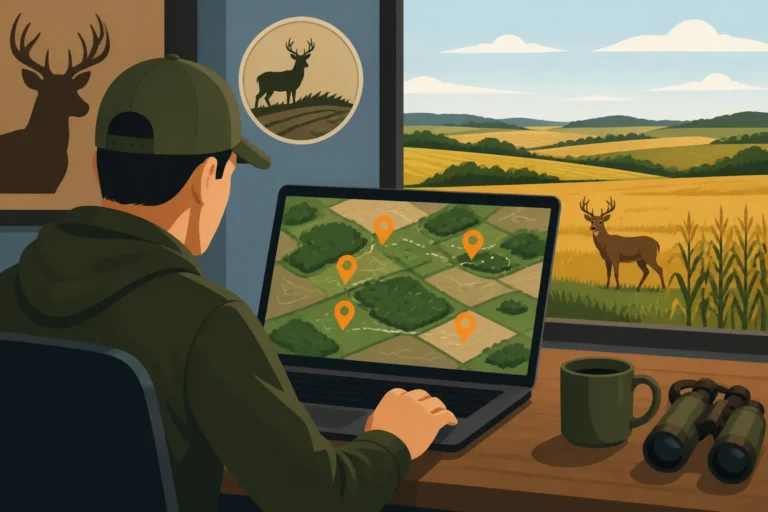
In Iowa's agricultural landscape, this often translates to deer concentrating heavily on remaining crop fields, especially standing corn or picked bean fields with residual beans. They're also looking for browse in timber, but the energy return on those options is often lower. For thermal cover, they'll gravitate towards dense cedar thickets, south-facing slopes that catch the sun, or deep creek bottoms protected by heavy timber. When you're out there, you need to think like a deer whose sole purpose is to stay warm and eat enough to make it through the night. Identifying these critical resources on an aerial map using tools like GoHunt can be incredibly effective for narrowing down your hunting areas.
How December Cold Fronts Trigger Movement
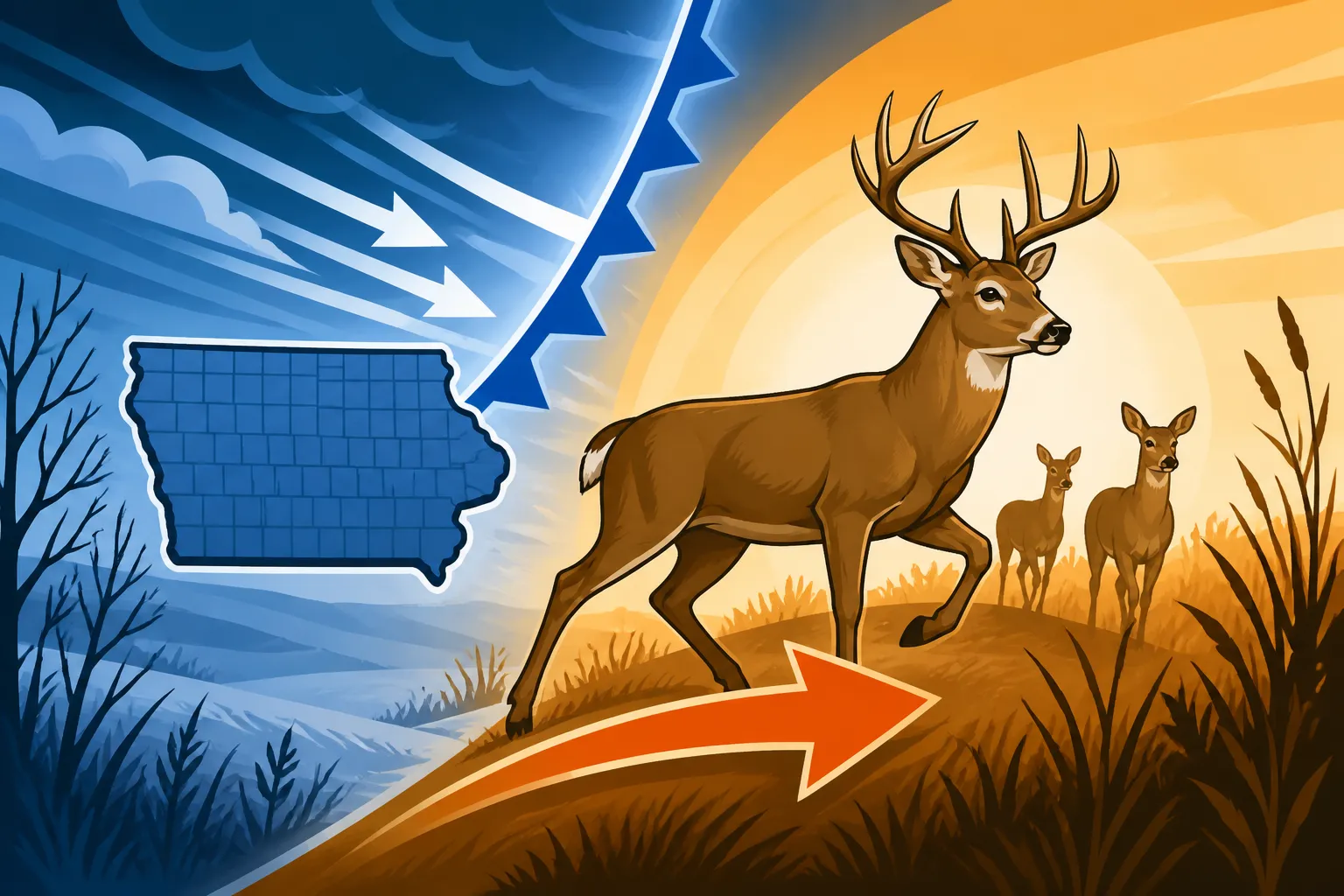
While the post-rut can feel like a downturn, December cold fronts are often the catalysts that re-ignite significant deer movement, turning a slow hunt into an action-packed outing. Understanding the "why" behind this movement is key to predicting when and where to be.
The Biological Imperative to Feed
When a significant cold front sweeps across Iowa, bringing with it a sharp drop in temperature, deer feel an immediate and intense pressure to feed. Their bodies require a tremendous amount of energy to maintain core temperature in bitter cold. This isn't just about comfort; it's about survival. They know, almost instinctively, that a prolonged period of severe cold could mean starvation if they haven't adequately fueled up.
This biological imperative overrides some of their usual caution, particularly if they haven't had a chance to feed heavily before the front hit. They will often move earlier in the afternoon and stay out longer into the morning, driven by the sheer need for calories. It's not uncommon to see deer, including mature bucks, on their feet in daylight during these cold snaps, especially just before and immediately after the coldest part of the front passes. They are essentially topping off their tanks or frantically searching for fuel that they couldn't access during the harshest weather. This makes "Late-Season Food Source Hunting in Iowa" incredibly effective during these periods.
Timing is Everything: Pre-Front and Post-Front Activity
Deer movement in relation to a cold front isn't constant; it typically peaks at specific times. The best periods often occur in the 24-48 hours before the coldest temperatures arrive and then again in the 24-48 hours after the bitterest part of the front has passed and temperatures begin to moderate slightly.
- Pre-Front: As a cold front approaches, there's often a dip in barometric pressure, followed by a slight rise just before the front actually hits. Deer seem to sense this change. They will often feed heavily in anticipation of the severe weather, knowing that movement might be difficult or energetically costly during the front itself. This can lead to increased daylight activity, especially in the late afternoon.
- Post-Front: Once the extreme cold has settled in for a day or two, and perhaps a high-pressure system begins to build, deer will again become active. They've likely been holed up in thick cover, conserving energy, and are now ravenous. The first sunny, crisp day after a few brutally cold ones can be magical. The air is still frigid, but the sun's warmth and the stable, high pressure encourage movement back to vital food sources.
Understanding these windows allows you to plan your hunts more effectively, ensuring you're in the stand when the deer are most likely to be moving. It requires diligent weather monitoring, perhaps using detailed forecasts available through platforms like GoHunt that provide hourly temperature and pressure readings.
Pressure Systems and Snow Cover's Role
Beyond temperature drops, the accompanying barometric pressure changes and the presence of snow significantly impact how deer react to a cold front. A rapidly falling barometer usually signals an incoming storm and can get deer moving to feed ahead of it. Once a stable, high-pressure system moves in after a cold front, often accompanied by clear skies, it can also lead to increased activity as deer feel more comfortable moving under stable conditions.
Snow cover, especially deep snow, adds another layer of complexity. While a light dusting of fresh snow can sometimes make deer more visible and trackable, deep, crusty snow can make travel difficult and noisy for them, causing them to reduce movement to conserve energy. However, deep snow also highlights available food sources. If standing corn or a brassica field is the only easily accessible food above the snow line, deer will concentrate there heavily. A fresh snowfall after a cold snap can make for some of the best hunting, as deer are forced to travel established trails to reach cleared or elevated food, and their tracks are easy to read.
Strategic Hunting Approaches During Cold Fronts
Capitalizing on December cold fronts requires a specific set of strategies that differ greatly from rut hunting. You'll need to focus on deer's most immediate needs: food and thermal cover.
Pinpointing Prime Food Sources
During December cold fronts, food becomes the undisputed king. Deer need calories, and they need them efficiently. This means focusing your efforts on the highest-energy food sources available. In Iowa, this almost always means agriculture. Standing corn is a gold mine; it provides both high-calorie food and thermal cover from wind and snow. Picked bean fields, especially those with some residual beans left on the ground, are also major attractions. Brassica plots, like turnips or rape, which become sweeter after a hard freeze, are another excellent choice if you have access to them.
Don't overlook overlooked natural food sources either, especially if agricultural fields are scarce or heavily hunted. Oak ridges that still hold acorns, or thickets of briars and honeysuckle that provide browse, can be magnets, particularly if they are near good bedding cover. The key is to scout these areas thoroughly, looking for fresh tracks and droppings to confirm deer are actively feeding there. Remember, these deer are trying to pack on weight, so they'll seek out the most nutritious options. This makes understanding "Standing Corn Late in the Iowa Season" a game-changer.
Locating Thermal Bedding Areas
Just as important as food is warm, protected bedding cover. When temperatures plummet, deer will seek out areas that shield them from the wind and trap what little warmth is available. South-facing slopes are prime because they get the most direct sunlight, especially on sunny post-front days. Thick stands of evergreens like cedars, or dense brush and briar thickets, offer incredible thermal protection. Deep creek bottoms or river breaks can also be excellent, as the terrain itself provides a wind block.
Your strategy here is to find the bedding areas and then locate the most direct, efficient travel corridors between those beds and the best food sources. These paths might be very tight, following fence lines, ditches, or creek banks, especially if the ground is covered in snow. When you're "Reading Aerial Imagery for Bedding Cover," look for these dense, protected pockets. Setting up stands or ground blinds along these pinch points, especially downwind, can intercept deer as they move from bed to feed.
Stand Placement for Late-Season Success
Late-season stand placement is all about intercepting deer as they move from thermal bedding to prime food sources, typically in the late afternoon, or from food back to bed in the morning. This often means setting up closer to the food source than you might during the rut, or even right on the edge of it. Because deer are often moving primarily during the last hour or two of daylight, you need to be in a position to catch them as soon as they step out.
Consider low-impact access. The last thing you want to do is spook deer from their primary food or bedding area. Plan your entry and exit routes carefully, using terrain features, ditches, or existing trails to stay concealed. Ground blinds can be particularly effective in December, especially if brushed in well, as they offer warmth and concealment in wide-open field edges. For treestands, focus on transition lines, fence crossings, or those interior travel corridors that connect thickets to food. Be mindful of the wind, always. Deer are on high alert, and their noses are their best defense.
| Factor | Pre-Cold Front Deer Movement | Post-Cold Front Deer Movement |
|---|---|---|
| Urgency to Feed | High, in anticipation of harsh weather | Extremely High, due to caloric deficit |
| Daylight Activity | Increased, especially late afternoon | Increased, often mid-day and late afternoon |
| Travel Patterns | More direct to major food sources | Highly focused on efficient routes to food |
| Bedding Choice | Still seeking good cover, but less critical | Heavily concentrated in thermal cover |
| Barometric Pressure | Often falling, then slightly rising | Stable and high, clear skies typically |
| Key Strategy | Ambush near food sources before the worst hits | Ambush near food from thermal cover |
Essential Preparations for December Hunting
Successfully hunting December cold fronts isn't just about deer behavior; it's also about being adequately prepared for the challenging conditions that Iowa winter throws at you. Your comfort and safety directly impact your ability to stay in the stand and remain focused.
Staying Warm on Long Sits
December in Iowa can be brutally cold, and sitting still in a tree stand or ground blind for hours on end can quickly lead to discomfort or even dangerous situations if you're not properly dressed. Layering is paramount. Start with good quality base layers that wick moisture away from your skin. Add insulating mid-layers like fleece or down, and top it off with a heavy, windproof, and waterproof outer shell. Don't forget extremities: an insulated hat, neck gaiter, heavy mittens (with hand warmers inside), and insulated boots are non-negotiable.
Consider bringing an insulated seat cushion or even a small, portable heater for a ground blind. Chemical hand warmers and toe warmers are your best friends on these frigid hunts; put them in your boots, gloves, and even your pockets. "Staying Warm on a December Sit" isn't just about comfort, it's about being able to focus on the hunt, not on shivering. Hydration and a hot thermos of coffee or broth can also make a huge difference in your core temperature and morale.
Gear Considerations for Cold Weather
Your gear needs to be up to the task of extreme cold. Batteries in rangefinders, phones, and trail cameras drain much faster in freezing temperatures, so carry spares and keep electronics close to your body heat. Your bow string or muzzleloader can be affected by moisture and cold, so ensure they are protected. If you're "Late Muzzleloader Deer Hunting in Iowa," keeping your powder dry is an absolute must.
A good deer cart or a robust drag harness is also crucial if you tag out, especially if snow is on the ground. "Getting a Deer Out of an Iowa Creek Bottom" or across a snowy field is hard enough, let alone adding a heavy buck to the mix. Think about what you'd need for an emergency, too: extra layers, a headlamp with fresh batteries, a fire starter, and a small first-aid kit are always wise additions to your pack when venturing into the cold, late-season woods.
Persistence and Patience Pay Off
Hunting in December, especially during cold fronts, can be mentally and physically demanding. Days are short, and the weather can be unforgiving. You might spend hours in frigid conditions without seeing a single deer. This is where persistence truly pays off. The hunter who sticks with it, despite the cold and the slow periods, is often the one who gets an opportunity.
Remember that deer, even big bucks, are creatures of habit, especially when driven by the basic needs of food and survival. If you've done your scouting, identified the key food sources and thermal cover, and set up strategically, your chances are much higher during those brief windows of intense activity that cold fronts create. Don't give up just because it's cold or because you haven't seen much activity for a few hours. That big buck might be waiting for the last 15 minutes of daylight to step out onto a "Picked Bean Field in October," but now in December, it's for survival. Stay focused, stay warm, and remember that these are some of the most challenging but also most rewarding hunts of the year, often leading into opportunities for "Iowa January Antlerless Hunts."
Disclaimer
Hunting is an inherently dangerous activity. Always prioritize safety, understand and follow all Iowa Department of Natural Resources regulations, and obtain appropriate licenses and permissions. The information provided here is for educational and entertainment purposes only and should not replace professional guidance or local laws.