Standing Corn Late in the Iowa Season
The late season in Iowa can be a real head-scratcher. Just when you think you've got deer patterned, they seem to vanish into thin air, often disappearing into the vast, protective embrace of standing cornfields. It's a frustrating phenomenon that leaves many hunters wondering how to even begin. This comprehensive guide is designed to help you unravel the mysteries of deer behavior in standing corn during the late Iowa season, providing actionable strategies to punch your tag when temperatures drop and other cover fails.
Why Standing Corn Becomes a Late-Season Deer Magnet in Iowa
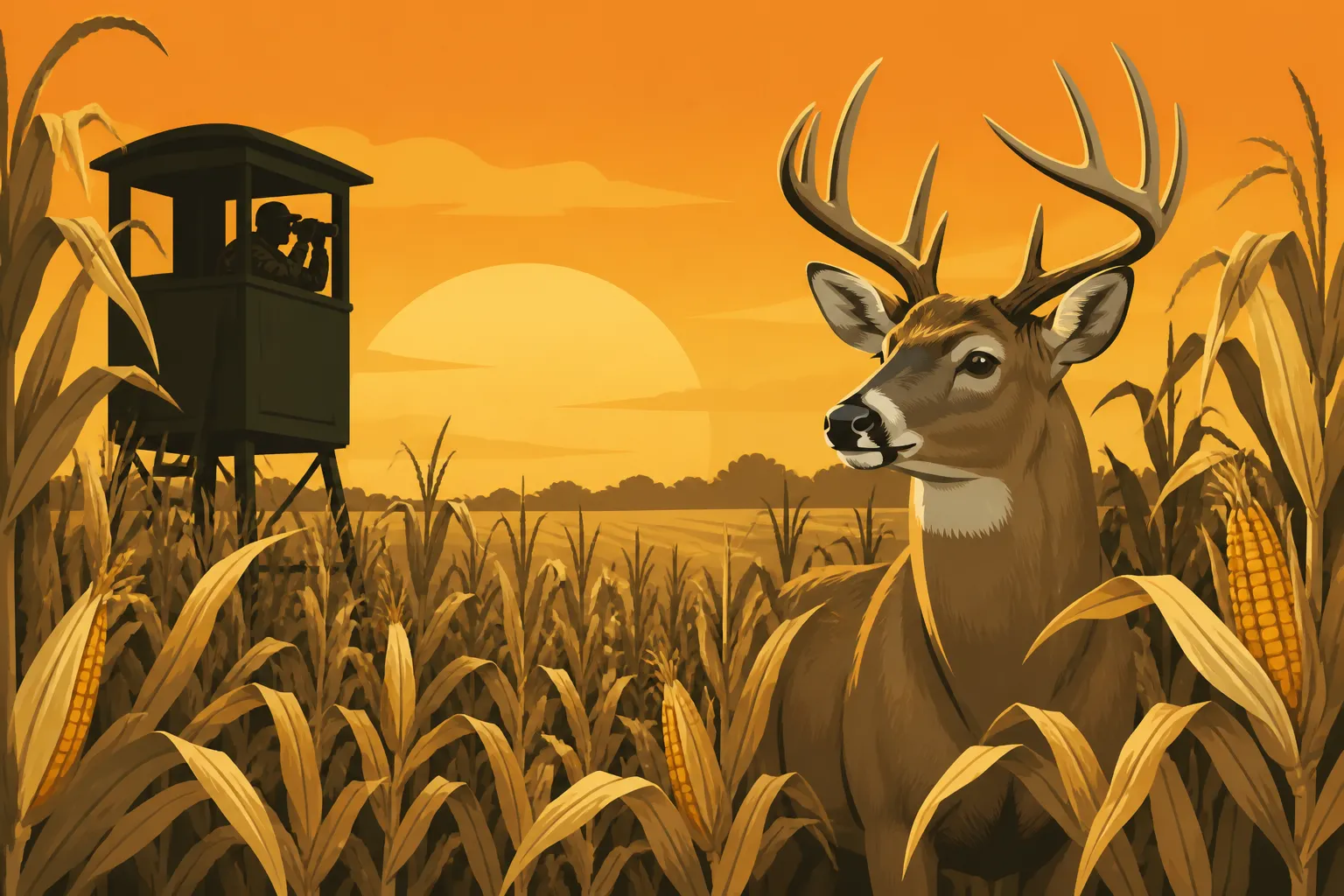
As winter truly sets in across Iowa, the landscape transforms, and with it, deer behavior shifts dramatically. The once lush green fields and open timber stands that held deer in early fall become barren and cold. This is precisely when standing corn, often overlooked or deemed unhuntable by many, becomes an absolute sanctuary for whitetails. It’s not just one factor that draws them in, but a powerful combination of elements that make it irresistible.
Thermal Cover and Protection from Elements
Imagine you're a deer, facing biting northwest winds and temperatures plummeting below freezing. Where do you go? Exposed timber, even dense stands, often offers little reprieve from the wind and chilling cold. This is where standing corn shines as unparalleled thermal cover. The dense, tall stalks act as a natural windbreak, creating pockets of calmer, warmer air within the field.
Think of it like this: on a sunny, cold day, you can step out of the wind and immediately feel a few degrees warmer. Deer experience this on a much larger scale within a large block of standing corn. The stalks trap what little solar radiation there is, providing crucial warmth. Furthermore, they offer excellent shelter from snow, sleet, and freezing rain. A deer can bed down deep inside a cornfield, largely protected from the elements, conserving precious energy that would otherwise be spent shivering. This becomes particularly vital during the brutal cold fronts that sweep through Iowa in December and January. It's a critical reason why you might see a sudden influx of deer into these fields once the weather turns truly nasty.
A Consistent and Accessible Food Source
Beyond the shelter, standing corn offers a nutritional goldmine. While many fields are picked clean by late November, some landowners choose to leave certain fields standing well into or even through the winter. This becomes an immediate draw for deer desperately seeking high-calorie food sources. The ears of corn that have fallen to the ground, or even kernels clinging to stalks, provide a readily available buffet.
Deer in the late season are operating on a severe energy deficit. The rut has taken a heavy toll, and now they're facing extreme cold. Every calorie counts. A cornfield provides easily digestible carbohydrates that are essential for building back fat reserves and simply surviving the winter. When snow blankets other food sources like brassicas, clover, or even remaining soybean fields, the corn often stands tall enough for deer to still access the ears or fallen kernels. It's a reliable, high-energy food source that allows them to minimize travel, reducing their exposure to predators and harsh weather conditions. This consistent supply makes certain standing cornfields prime locations for deer to both bed and feed, sometimes within the same hundred-yard radius. The combination of thermal cover and abundant food creates an irresistible haven for whitetails when conditions outside are at their worst.
Scouting Strategies for Standing Corn in Winter
Hunting standing corn effectively in the late season requires intelligent and cautious scouting. You can’t just walk in blindly, as you’ll likely bump every deer in the county. The key is to gather as much information as possible without disturbing the deer that have found refuge there. This means employing a mix of modern technology and careful, on-the-ground observation.
E-Scouting and Aerial Reconnaissance
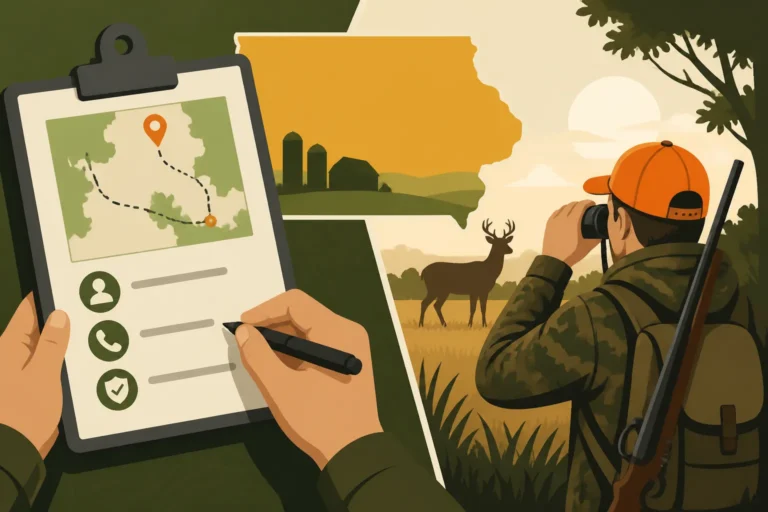
Before you ever set foot near a standing cornfield, your computer or phone can be your best friend. Digital mapping applications like GoHunt or onX Hunt are invaluable for identifying potential hotspots. Start by looking for large blocks of standing corn that are adjacent to known bedding areas like thick timber, CRP fields, or dense creek bottoms. Deer won't travel far from their sanctuary if they don't have to.
When you're looking at aerial imagery, pay close attention to the contours and features within and around the cornfield. Look for subtle terrain changes like draws, ditches, or swales that run through the corn. These often act as natural travel corridors, funnels, or even internal bedding points. Are there any small, unharvested pockets within a larger picked field, or is the entire field standing? Identify where the corn meets other cover types. A critical area to note is an Inside Corners of Crop Fields where a patch of standing corn meets timber or a brushy fenceline. Deer often stage or enter/exit fields at these points. Also, look for any distinct points or fingers of corn that extend out into other cover, or conversely, areas where timber or brush pushes into the corn. These are all potential pinch points where deer movement might be concentrated. Use the historical imagery features on these apps to see which fields were standing in previous years, as deer often utilize the same types of cover year after year. This virtual reconnaissance is your first, least intrusive step to understanding the puzzle. You might even mark potential parking areas and access routes that avoid bedding areas, crucial for a stealthy approach.
On-the-Ground Reconnaissance Without Bumping Deer
Once you’ve done your digital homework, it’s time for some cautious on-the-ground observation. The operative word here is caution. The last thing you want to do is march into a standing cornfield and spook every deer out of it. Your goal is to confirm patterns and identify specific entry/exit points without ever truly entering the deer’s sanctuary.
This means observing from a significant distance, ideally from a vantage point that offers a clear view of the field edges, especially at dawn and dusk. Use binoculars or a spotting scope to watch where deer enter and exit the corn. Look for beaten-down trails along the edges. If there’s snow on the ground, this becomes significantly easier. Fresh tracks leading in and out of the corn are gold. Pay attention to the size of the tracks – are they primarily does and fawns, or are there some bigger buck tracks mixed in? Look for rub lines and scrapes that run parallel to the corn, indicating buck activity. Sometimes, bucks will travel just inside the corn, or parallel to its edge, before committing to exiting or entering. During midday, you might consider walking very carefully, well downwind, along the outside perimeter of the field, looking for tracks and entry points without stepping foot inside the standing corn itself. Focus your efforts on the areas identified during your e-scouting that seem to offer the best transitions from corn to other cover. This might be a narrow creek corridor, a ditch, or even just a subtle change in elevation. The goal is to confirm deer are using the corn, identify where they're using it, and then formulate a plan to intercept them. Remember, any intrusion can quickly sour a good late-season spot, so minimize your impact at all costs.
Tactical Approaches to Hunting Standing Corn
Once you've pinpointed areas where deer are using standing corn, the next step is to strategize your hunt. Due to the dense nature of cornfields, conventional tactics often need to be adapted or completely rethought. It's about playing the wind, understanding deer movement, and sometimes, being willing to take a more aggressive approach.
Edge Hunting and Ambush Points
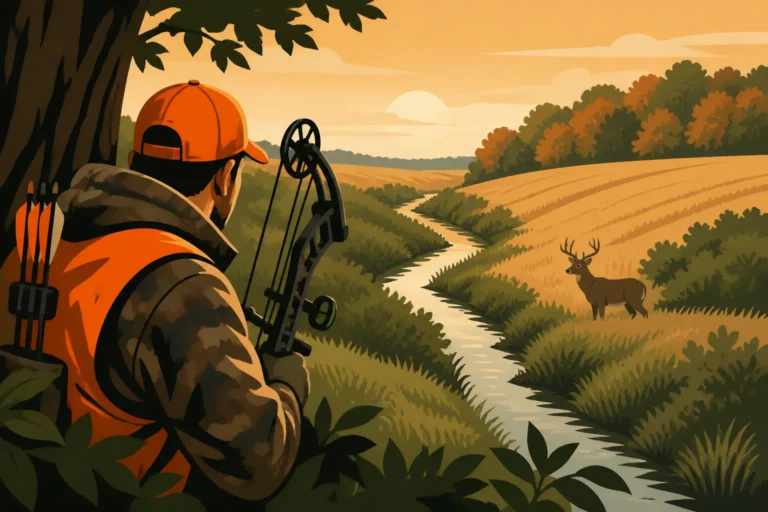
The most common and often most effective tactic for hunting standing corn is to set up along its edges. Deer, especially mature bucks, are often reluctant to venture too far into open picked fields during daylight hours in the late season. However, they will travel along the protected edge of standing corn, or stage just inside it before venturing out to feed, or emerge directly from it to access other food or water sources.
Your best bet for success will involve placing a stand or setting up a Ground Blinds in Iowa Farm Country on the downwind side of the corn, particularly where it butts up against thicker cover like timber, a CRP field, or a brushy draw. Look for natural funnels or pinch points. These could be subtle, like a timber finger that extends into the corn, or obvious, like a narrow strip of standing corn between two picked fields. Areas where Timber Points Between Two Fields create a natural funnel are excellent. Consider afternoon hunts, as deer will often be moving from their bedding areas within the corn to a secondary food source or water. They may travel along the edge for quite some time before presenting a shot. Wind direction is absolutely paramount here; you need to be set up so your scent blows away from where you expect deer to emerge or travel. Be patient, minimize movement, and be ready for a shot to present itself quickly. Deer emerging from dense cover can appear almost silently.
Strategic Drives and Pushes
Sometimes, deer are simply locked down deep inside a large standing cornfield, and edge hunting isn't cutting it. In these situations, a strategic drive or push can be incredibly effective, especially during shotgun seasons. This is not about a chaotic free-for-all; it requires careful planning, good communication, and strict adherence to safety protocols.
For a successful drive, you need to have a good idea of where the deer are likely to be bedding within the corn and where they will want to escape. Often, deer will try to skirt the edges of the drive, or they will head for the thickest cover available, such as an adjacent timber block or a creek bottom. Two or three hunters can effectively push a significant section of corn. One or two hunters act as "pushers," walking slowly and deliberately through the corn, while others are strategically positioned as "blockers" or "posters" along anticipated escape routes. These routes might include a brushy fenceline, a ditch crossing, or an adjacent timber edge. For example, a small timber drive can be just as effective as Shotgun Season Drives in Small Timber when applied to a cornfield edge. Safety is paramount: know where every hunter is at all times, wear blaze orange as required, and communicate clearly using radios or pre-arranged signals. Understand the rules for Party Hunting Rules and Safe Drives in Iowa to ensure everyone is compliant. This tactic works best with a prevailing wind that pushes deer towards your blockers, but also allows pushers to move with a favorable wind.
Mobile and Aggressive Tactics
For the truly adventurous or those facing vast cornfields with dispersed deer, mobile and aggressive tactics can sometimes pay off, though they carry a higher risk of bumping deer. Still-hunting through standing corn, for instance, requires exceptional woodsmanship, intimate knowledge of wind and thermals, and extremely quiet movement.
This approach involves moving very slowly, pausing frequently, and scanning constantly for any sign of deer. It's best attempted on days with some wind to help muffle your sounds, or even better, during a light snowfall when fresh tracks make following easier and soft snow cushions your steps. You're looking for deer bedded down, often in small pockets or thicker sections within the field. This is not a tactic for the faint of heart, as it's easy to blow out deer. However, if you spot a deer and the wind is right, it can lead to an exciting stalk. Another mobile option is using a Mobile Saddle Hunting in Iowa setup. If you identify a specific pattern or a hot spot deep within a large field, a nimble saddle hunter might be able to get in and set up quickly on a suitable tree on the edge of a suspected travel lane or bedding area. This allows for quick, low-impact adjustments based on real-time observations, offering flexibility that a fixed stand might not. These aggressive tactics are often a last resort when traditional ambushes aren't yielding results, but they can be incredibly rewarding for those willing to take the chance.
Gear and Considerations for Late-Season Corn Hunts
Hunting standing corn in the dead of winter presents unique challenges, making your gear choices and preparation critical. It's not just about staying warm; it's about being effective, safe, and ready for what the dense cover demands.
Cold Weather Gear and Scent Control
Late-season Iowa hunting means dealing with bitter cold, strong winds, and often snow or freezing rain. Your clothing system must be up to the task. Layering is key, starting with moisture-wicking base layers, insulating mid-layers, and a waterproof/windproof outer shell. Think about high-quality insulated boots, a warm hat, and heavy gloves or mittens. Staying warm on a long, static sit is crucial, so consider chemical hand and foot warmers. Read up on strategies for Staying Warm on a December Sit to maximize your comfort and endurance.
Scent control becomes even more critical when deer are concentrated in dense cover like standing corn. Any foreign scent can quickly alert deer to your presence, especially if you're trying to still-hunt or push through the field. Shower with scent-free soap, use scent-eliminating sprays on your clothes, and store your hunting gear in airtight containers. Consider using rubber boots, as they retain less human odor than porous materials. Deer in standing corn are often bedded extremely close, and a single whiff of human scent can send them busting out.
Weapon Choice and Shot Angles
The dense nature of standing corn means that shot opportunities will often be at close range, and visibility can be severely limited. This has implications for your weapon choice and your understanding of shot angles.
For late-season gun hunts, a shotgun with slugs or a straight-wall cartridge rifle (like a .350 Legend or .450 Bushmaster) are excellent choices. They offer significant knockdown power at close to moderate ranges, and their projectiles are less likely to over-penetrate or ricochet through dense cover compared to high-powered rifle rounds. Accuracy at 50-75 yards is usually all you need. If you're bowhunting, ensure your broadheads are sharp and your bow is perfectly tuned for optimal penetration. Because deer can appear suddenly and close, you might have limited time for a shot, and the angle could be awkward. Practice shooting from various positions – kneeling, sitting, or even through small lanes you've mentally cleared. Always aim for vital organs, understanding that a deer quartering away from you might offer the best shot through the ribs. Revisit proper Shot Angles From an Elevated Stand to ensure you're prepared for whatever shot presents itself, keeping in mind that in a cornfield, you might be at ground level or only slightly elevated.
Post-Shot Recovery in Dense Cover
Perhaps the most challenging aspect of hunting standing corn is blood trailing after the shot. The dense stalks, uneven ground, and limited visibility make tracking incredibly difficult, even with a good blood trail.
It’s absolutely critical to wait a sufficient amount of time after the shot, especially if you didn't see the deer go down or if the shot wasn't perfect. Give the deer time to expire. A good rule of thumb is to wait at least 30-60 minutes for a solid hit, and 4-6 hours (or even until morning) for a questionable hit. Mark the exact spot of the shot and the deer's last known direction of travel. When you begin tracking, move slowly and methodically, marking every sign of blood with flagging tape or toilet paper. A strong headlamp and a tracking partner are invaluable. If there's no snow, a blood trail can be nearly impossible to follow. In such cases, expanding your search perimeter in concentric circles from the last blood you found is often the only way. Having a plan for Waiting Before Taking Up a Blood Trail is essential. Be prepared for a tough recovery, but persistence often pays off. Knowing the layout of the cornfield and any adjacent thicker cover can help you anticipate where the deer might have tried to escape.
| Tactic | Pros | Cons | Ideal Conditions |
|---|---|---|---|
| Edge Ambush | Least intrusive, high success rate for patient hunters | Requires deer to leave corn, limited shot opportunities | Predictable deer movement patterns, favorable wind, late afternoon |
| Strategic Drives | Can dislodge deer from deep cover, effective for groups | High risk of bumping deer, requires coordination & safety | Moderate field size, clear escape routes, good communication, gun seasons |
| Still-Hunting | Highly active, allows for adaptive hunting | Very high risk of bumping deer, challenging tracking | Light snow cover, windy day, skilled hunter, intimate field knowledge, bow/gun |
Disclaimer
Hunting is an inherently dangerous activity. Always prioritize safety, understand and follow all Iowa hunting regulations, and obtain appropriate licenses and permissions. The information provided here is for educational purposes and should not replace proper hunter education or professional guidance. Stay safe and happy hunting!